REVIEW · FLORENCE
Art and History in Florence: Small Group Walking Tour
Book on Viator →Operated by FLORENCE TOURS - ENJOY BIKING · Bookable on Viator
Florence runs on stories. This small-group walking tour strings together the city’s top landmarks with centuries-spanning commentary and guided stops designed to help you connect the dots fast. You’re moving through some of Florence’s most recognizable art and history sites in about 1 hour 35 minutes, with audioguide systems to back up what your guide is saying.
I really like two things about this experience: the tight route of major sights and the way guides turn buildings and statues into something you can understand right away. Guides you may encounter include Francesco and Julia, plus John Lorenzo, Giovanni, Carmen, Monica, and even Raffaello, and the consistent theme is clear, engaging storytelling in fluent English.
One possible drawback: museum and church entry costs extra at several stops (Palazzo Medici Riccardi, Santa Maria del Fiore, Museo Casa di Dante, Palazzo Vecchio, Le Gallerie Degli Uffizi, and Palazzo Pitti), so plan for additional tickets if you want to go inside.
In This Review
- Key things to know before you go
- A 1 hour 35 minute route that helps you read Florence
- Starting at Palazzo Medici Riccardi: where style meets power
- San Lorenzo as your free breather in the middle of the story
- Santa Maria del Fiore: the Duomo stop you’ll remember
- Museo Casa di Dante: a quick hit on Florence’s ideas
- Palazzo Vecchio and Piazza della Signoria: where civic power shows up
- Le Gallerie Degli Uffizi: seeing the gallery focus without the ticket cost
- Ponte Vecchio: a free stop that works as a visual reset
- Palazzo Pitti and Boboli Gardens: the Medici dynasty moves south
- Why the audioguide systems work so well on a short walk
- Guide quality is the secret ingredient
- Price and value: what $30.01 buys you (and what it doesn’t)
- What I’d do to get the most out of it
- Who should book this Florence art-and-history walk
- Should you book Art and History in Florence (Small Group Walking Tour)?
- FAQ
- How long is the Art and History in Florence walking tour?
- What is the group size for this small group tour?
- Is the tour offered in English?
- Do I need tickets for museums or churches on this tour?
- Do I get an audioguide?
- Where does the tour start?
- Where does the tour end?
- Is the meeting point near public transportation?
- When will I receive confirmation after booking?
- Is free cancellation available?
Key things to know before you go
- Small-group pacing for an easier listen and a more personal feel
- Major Florence highlights packed into one 1 hour 35 minute walk
- Admission varies by stop, with some free entry and others not included
- Audioguide systems support the guide’s explanation on the move
- Good guide flexibility shows up in real examples, like timing around shorter lines
A 1 hour 35 minute route that helps you read Florence
If Florence feels like a blur of domes, palaces, and statues, this tour is a smart fix. It’s built as an overview walk: you hit the main anchors of Florence’s art and civic power, then your guide gives the context so things stop looking random.
The tour is offered in English and capped at a maximum of 50 travelers, which matters more than it sounds. With a smaller group, you can actually track what’s being explained instead of playing detective from the back of the line. You also get a mobile ticket, so you’re not stuck printing anything.
You can also read our reviews of more walking tours in Florence

Starting at Palazzo Medici Riccardi: where style meets power
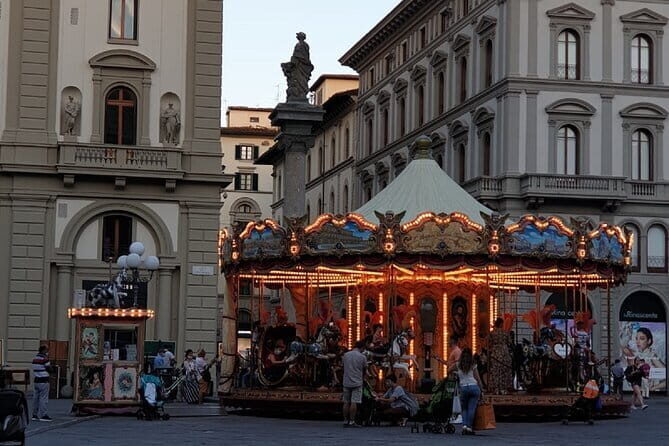
Your first stop is Palazzo Medici Riccardi, and it sets the tone for the whole day. Even with only about 10 minutes here, it’s a strong “read the building” moment: this is the kind of place where architecture and influence are tightly linked.
Important practical note: admission is not included at this stop. That means you should treat it as an orientation stop unless you’re planning to pay for entry on your own. Still, getting a guided foundation at the start makes your later visits feel more meaningful, because you’ll already know what questions to ask.
San Lorenzo as your free breather in the middle of the story
Next you’ll go to San Lorenzo (about 10 minutes), and the good news is admission ticket is free. That makes it easier to choose how much you want to do here without immediately thinking about costs.
This is also one of those stops that can help you reset your brain. Florence is often explained as art first, but churches and religious spaces are part of how the city’s power and worldview got expressed. If your guide is the type who explains religious influence clearly (many guides on this tour get mentioned for that kind of clarity), you’ll be able to connect the dots quickly.
Santa Maria del Fiore: the Duomo stop you’ll remember

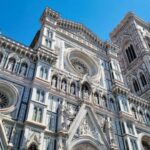
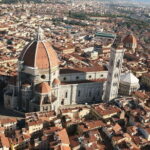
You’ll then spend about 10 minutes at Cathedral of Santa Maria del Fiore. Admission is not included, so you’ll likely get a guided look and key framing around what you’re seeing rather than a guaranteed museum-style deep dive.
That said, the tour can be flexible depending on the day. One example included a group getting into the Duomo when the line was shorter than expected, and that kind of timing can make a huge difference. Don’t count on it, but do know this: a strong guide knows when the moment is right to add something useful.
Museo Casa di Dante: a quick hit on Florence’s ideas
The tour continues to Museo Casa di Dante for another ~10-minute stop. Admission is not included, so again, it’s best approached as a guided orientation unless you choose to add the ticket yourself.
Dante is one of those “you’ll see the name everywhere” figures in Florence, so even a short stop can help you understand why his connection matters in the city’s larger cultural story. If you’ve read a bit of The Divine Comedy or you’re interested in literature, this is a good place to connect that interest to the streets.
You can also read our reviews of more historical tours in Florence





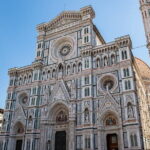
Palazzo Vecchio and Piazza della Signoria: where civic power shows up
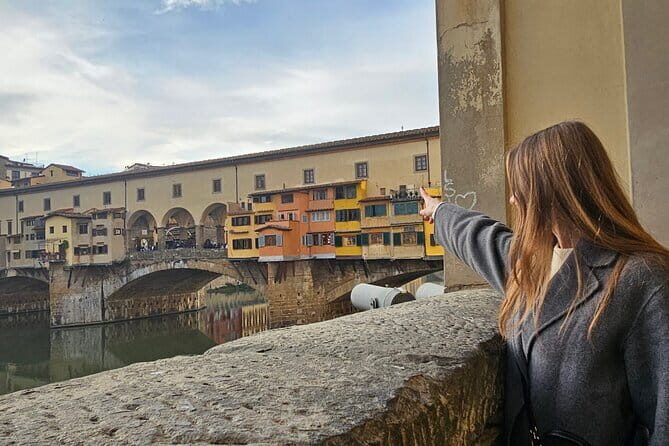
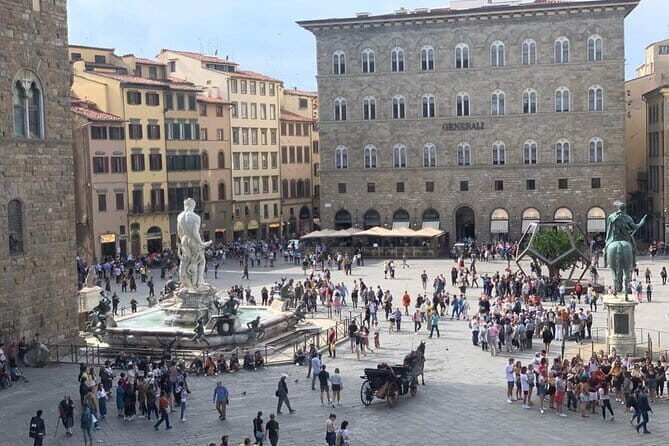
Now comes Palazzo Vecchio, followed by Piazza della Signoria. Both are quick stops at about 10 minutes each, and admission is not included at Palazzo Vecchio while Piazza della Signoria is free.
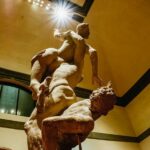
This pair of stops is where the tour starts feeling less like a checklist and more like a lesson. You’ll get explanations tying together Florence’s ruling families, how power was displayed, and why art and sculpture weren’t just decoration. One theme that comes up in guide feedback is practical interpretation: how to read statues, why certain figures ended up in certain places, and how that reflects the ambitions of the people who paid for it.
Le Gallerie Degli Uffizi: seeing the gallery focus without the ticket cost
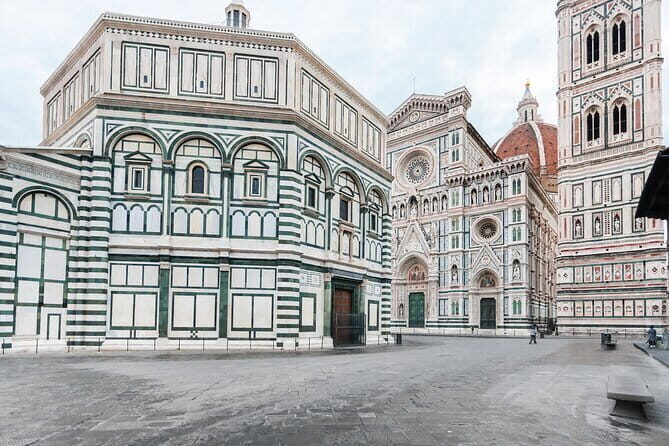
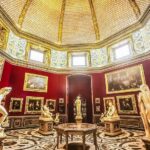
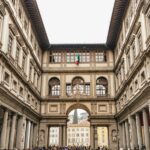
You’ll then reach Le Gallerie Degli Uffizi for about 10 minutes. Admission is not included here, so the value is mostly in the framing: your guide puts the Uffizi area into context so later, when you (or your group) plans an inside visit, it won’t feel like you’re starting from scratch.
If you love art and you’re already thinking about a future Uffizi day, this stop is still worthwhile because it helps you understand what kind of experience the galleries offer. It can also help you decide how much time you’ll need if you go back later.
Ponte Vecchio: a free stop that works as a visual reset

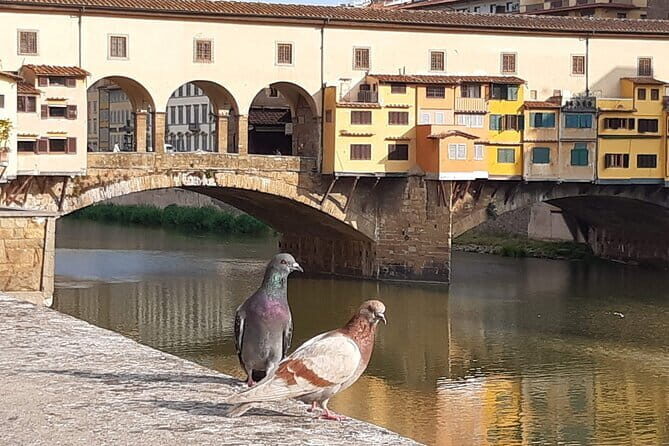
Next is Ponte Vecchio, with free admission and around 10 minutes on the stop. Even if you’re not buying tickets for anything here, it functions as a breather in the walk: you get a change of pace and a chance to absorb the city’s scale between the major set pieces.
Guides are often good at helping you look instead of just pass through. If you pay attention, Ponte Vecchio becomes less of a famous name and more of a real place in the story your guide is telling.
Palazzo Pitti and Boboli Gardens: the Medici dynasty moves south
The final stop is Palazzo Pitti, with about 15 minutes on site and admission not included. This is one of the most story-rich parts of the route because Palazzo Pitti wasn’t just another big building. It’s described as the last residence of the Medici family, built by merchant Luca Pitti as a show of wealth against the Medici.
In 1549, Eleanor of Toledo, wife of Cosimo I, bought the palace. The information tied to the site also points out that Boboli Gardens were laid out behind it, and that after Cosimo I moved there, the palace became the official seat of the Medici dynasty of grand dukes. That sequence gives you a clear political timeline, and even a short stop can help you remember Florence as a place where power shifted locations and used architecture to make it real.
Palazzo Pitti also connects to multiple areas you might see on your own (the tour info lists the Galleria Palatina, Appartamenti Reali, Galleria D’Arte Moderna, Galleria del Costume, Museo degli Argenti, and Boboli Gardens). Since none of that entry is included, treat this moment as guided context and a strong reason to plan a separate ticketed visit if you’re a “show me inside” person.
Why the audioguide systems work so well on a short walk
This tour includes guided commentary plus audioguide systems. On a fast-moving walking route, that combo is practical. The guide gives the big storyline in real time, and the audioguide helps you catch details you might miss while you’re looking up at façades or trying to stay oriented.
Small-group tours can sometimes feel like “everyone is whispering over everyone.” Here, the mix of close guidance and audioguide support helps keep the experience coherent, which matters when your time is limited to about 1 hour 35 minutes.
Guide quality is the secret ingredient
A walking tour lives or dies on the guide. What stands out in the guide examples connected with this experience is how they bring the city to life with warmth and precision, and how they explain art and architecture without dumping a textbook onto your feet.
Names that come up include Francesco (often described as energetic and humorous), Julia (praised for tailoring and going above and beyond), Giovanni (noted for clear English and a teaching style), and Carmen (highlighted for giving helpful insight and practical food ideas). Some guides are also described with specific strengths, like turning statues into something you can actually interpret, or adding local food and wine tips.
Also, pacing feedback is strong. Some groups report that the walk is easy to follow, with shade considered for explanations. If you’re traveling with kids or you want a guided experience without rushing, this matters.
Price and value: what $30.01 buys you (and what it doesn’t)
At $30.01 per person, this is positioned as an affordable way to get your bearings and learn the big relationships behind Florence’s art and power. The key value here is not that you’re buying museum tickets. It’s that you’re buying a guided narrative and a structured way to see major landmarks in a short time.
The catch is consistent: entrance tickets are not included for many of the major stops. If you want inside access at the Duomo, the Uffizi, or Palazzo Pitti, you’ll pay those costs separately. If you mainly want orientation, exterior context, and a clear story you can build on later, this price makes sense.
What I’d do to get the most out of it
Here’s how you make this tour work for you:
- Wear comfortable shoes. You’re doing a lot of walking in 1 hour 35 minutes.
- Bring a light rain layer if weather looks sketchy. One group booked last minute on a rainy day and the guide still delivered a great experience, even adding extra stops.
- If you’re planning museum days afterward, decide in advance what you want inside. This tour helps you prioritize, so your paid time in Florence feels smarter.
If you love both art and political history, you’ll get extra satisfaction from the way the guide explains relationships between families, buildings, and public spaces. If you’re traveling with a partner and want a shared “aha” experience, the small group size helps you stay engaged without talking over each other.
Who should book this Florence art-and-history walk
Book it if you want:
- A first-time Florence orientation that actually teaches you what you’re looking at
- A time-efficient overview before you pick which museums to pay for
- A guided experience led in English with an audience-sized group
You might look for a different option if you already know exactly which museums you want to enter and you’d rather spend the full time inside. This tour is built to move and explain, not to replace ticketed museum time.
Should you book Art and History in Florence (Small Group Walking Tour)?
Yes, if you want to get oriented fast and you like explanations that connect buildings, art, and civic power instead of just pointing and moving on. The strong point is the combination of a short, well-paced walk plus storytelling that makes Florence feel legible.
If you’re the type who hates the idea of paying extra for entrances, do the math first. Plan a budget for any paid stops you want to enter on top of this tour. Otherwise, this is a solid, story-driven way to start (or reset) your Florence trip, and it can set you up for better museum choices for the rest of your stay.
FAQ
How long is the Art and History in Florence walking tour?
It lasts about 1 hour 35 minutes.
What is the group size for this small group tour?
The maximum group size is 50 travelers.
Is the tour offered in English?
Yes, it is offered in English.
Do I need tickets for museums or churches on this tour?
Entrance is not included for several stops, including Palazzo Medici Riccardi, Cathedral of Santa Maria del Fiore, Museo Casa di Dante, Palazzo Vecchio, Le Gallerie Degli Uffizi, and Palazzo Pitti. Some stops are listed as free (San Lorenzo, Piazza della Signoria, and Ponte Vecchio).
Do I get an audioguide?
Yes. The tour includes guided visit and use of audioguide systems.
Where does the tour start?
It starts at Florence ToursVia Camillo Cavour, 21R, 50129 Firenze FI, Italy.
Where does the tour end?
It ends back at the meeting point.
Is the meeting point near public transportation?
Yes, it is near public transportation.
When will I receive confirmation after booking?
Confirmation is received at the time of booking.
Is free cancellation available?
Yes, you can cancel up to 24 hours in advance for a full refund. If you cancel less than 24 hours before the start time, the amount paid is not refunded.


More Walking Tours in Florence


More Tours in Florence





More Tour Reviews in Florence
- Tuscany Day Trip from Florence: Siena, San Gimignano, Pisa and Lunch at a Winery
★ 5.0 · 21,634 reviews - The Best tour in Florence: Renaissance & Medici Tales – guided by a STORYTELLER
★ 5.0 · 12,316 reviews