REVIEW · ASSISI
Assisi and the Second World War – Heroes by chance and by vocation
Book on Viator →Operated by Umbria guida turistica ed escursionistica · Bookable on Viator
War can be quiet. Until it isn’t.
This guided walk through Assisi focuses on a lesser-known moment from 1943 to 1945, when local people inspired by St. Francis put their own safety on the line to protect others. I like how the story moves through real places, not just talking points, and I also like the small-group format (up to 6) that keeps the pace human. One thing to consider: this isn’t built around the big Franciscan sights you might already have on your list, so if you want extra time at the Basilica of St. Francis or Basilica of St. Clare, plan for that separately.
You also get a neat mix of mood and evidence. You’ll see a Romanesque cathedral tied to local bishops, then step into a museum space built around photos, videos, and documents, and finish with hands-on craft culture in the center. The potential drawback is timing: the route is tightly scheduled for a 2 to 3 hour window, so if you’re also juggling a train, keep your buffer time generous.
In This Review
- Key highlights and what to watch for
- A WWII story told through Assisi’s quiet corners
- San Rufino Cathedral and Bishop Placido Nicolini’s tomb
- Santa Chiara square and the Brizi printers’ workshop connection
- Museo della Memoria: photos, videos, and documents
- Monastero Clarisse S. Quirico and wartime shelter
- The passage road where a protagonist lived
- Piazza del Comune and Assisi’s working craft culture
- Libreria Marco Zubboli atelier and old tools, new products
- Price, group size, and time value in 2–3 hours
- Who should book this tour, and who should choose something else
- Should you book Assisi and the Second World War tour?
- FAQ
- FAQ
- How long is the Assisi WWII Heroes tour?
- What is the group size?
- Where does the tour start and end?
- Which admissions are included, and which are not?
- Is there a museum stop?
- Is the tour physically demanding?
Key highlights and what to watch for
- Unsung WWII rescuers in Assisi (1943–1945): the tour keeps attention on people whose names are not widely known.
- Stops that connect story to stone: each location is chosen because it mattered during the period.
- Museo della Memoria uses real media: photos, videos, and documents help the history land.
- Monastero Clarisse S. Quirico and wartime shelter: you’ll hear how the nuns housed displaced families for months.
- Craft time at Piazza del Comune and Libreria Marco Zubboli: the day ends with a practical link between past and present.
A WWII story told through Assisi’s quiet corners
Assisi has a reputation for peace and prayer. This tour takes that familiar setting and adds a darker layer. The theme is simple: ordinary courage, inspired by St. Francis, showing up when the stakes turn lethal. The goal is not only to learn facts, but to walk through the city’s “seraphic” spaces while you feel the pressure of the years 1943–1945.
You’ll move between religious sites, a museum built for memory, and civic squares where everyday life continued. That matters because the best way to understand a rescue network is to see where people actually moved, met, worked, and hid—often without dramatic fanfare.
The pace stays manageable. You need moderate fitness, but it’s not a punishing hike. Still, you should expect walking between stops and short time at each place, which keeps the story flowing but limits free wandering.
You can also read our reviews of more tours and experiences in Assisi.

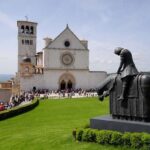
San Rufino Cathedral and Bishop Placido Nicolini’s tomb
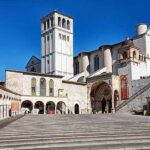
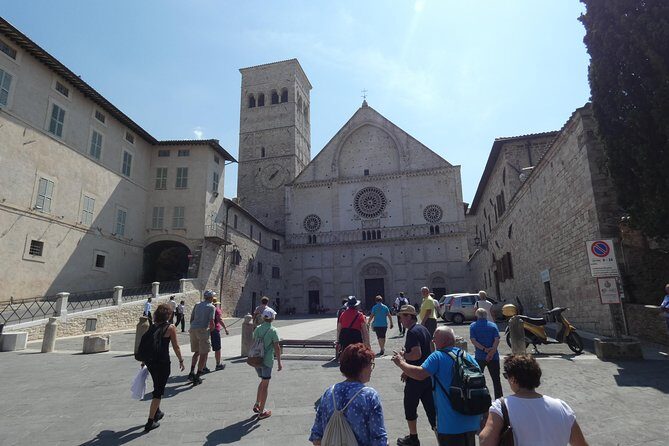
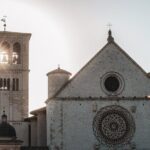
Your first stop is the Cathedral of San Rufino, a Romanesque church that’s described as the only one in the city. Even if you’ve seen other Romanesque churches, this one has a local focus that sets the tone right away: it’s not just architecture, it’s a resting place tied to church leadership.
You’ll spend about 20 minutes here, and the visit includes an admission ticket. The standout detail is the tomb of Bishop Placido Nicolini, set within the cathedral’s role as a sepulcher of bishops. That’s an important anchor for the tour’s theme. In wartime, institutions can both constrain and protect, and the cathedral symbolizes how Assisi’s religious structures existed alongside the human choices people made during the conflict.
Practical tip: if you’re the type who likes to take photos, do it quickly at the start. Some visitors later wish they had slowed down at the cathedral, but the route doesn’t pause long here.
Santa Chiara square and the Brizi printers’ workshop connection
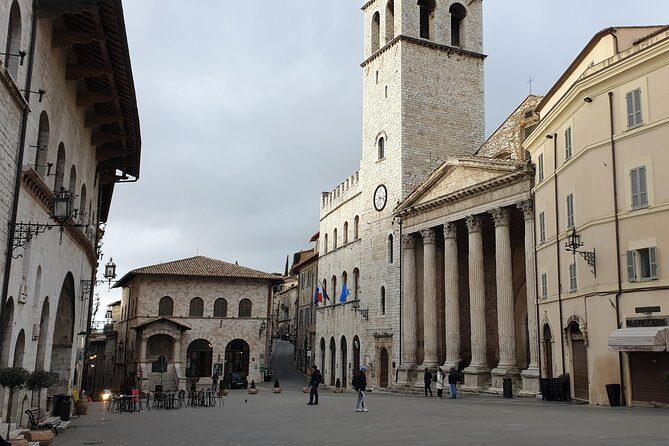
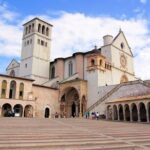
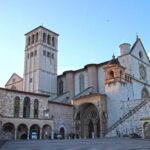
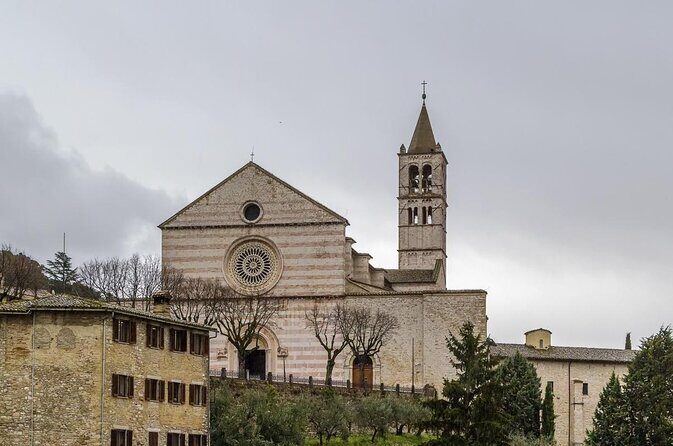
Next is Basilica di Santa Chiara, with the story centered on the square outside. The tour focuses on a specific local trade: the Brizi printers and their workshop. This is the kind of detail that makes the history feel real. Printing and communication sound abstract until you connect them to people’s ability to spread information, create materials, or support the efforts needed to protect others.
You’ll have around 10 minutes here. That’s short, but it’s purposeful: the square is described as a connecting point between multiple protagonists in the story. In other words, the guide isn’t just showing you where a building stands. They’re using the geography of the square to show how different lives could intersect.
A good mindset for this stop: don’t expect it to be purely visual. Treat it like a “why this location mattered” lesson. If you ask questions, come ready with specific ones, because short, tight stops leave less time for long back-and-forth.
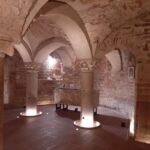
Museo della Memoria: photos, videos, and documents
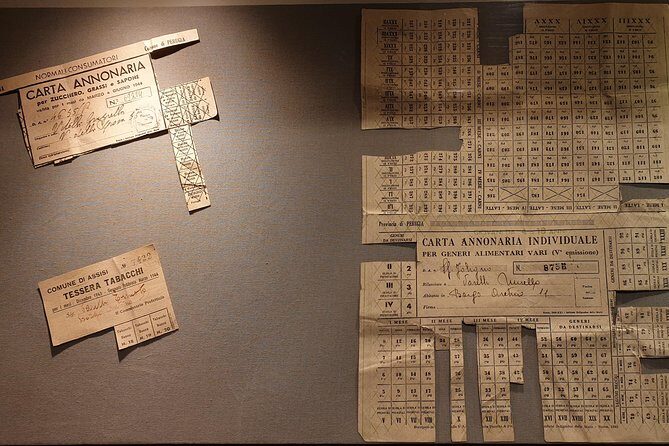
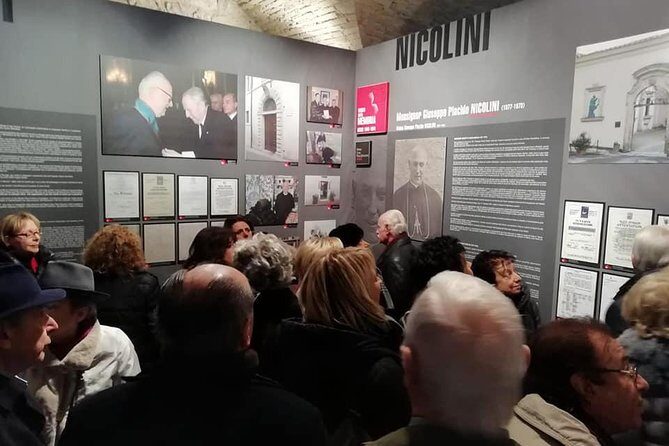
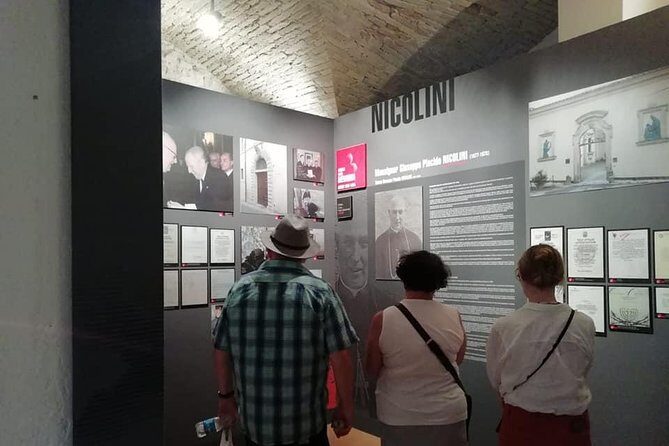
If you want proof that this tour is more than vibes, make time for Museo della Memoria. You’ll spend about 50 minutes here, and admission is not included in the tour price. The museum ticket is listed as €3.00 per person.
The format is also clear: the museum uses photos, videos, and documents to bring facts, places, and characters into focus. I like this approach because it lowers the chances of the story turning into only spoken narration. Your brain can “see” the era through preserved materials, which helps especially when the topic is heavy.
A consideration: because the tour is scheduled tightly, you may not have time to read every label slowly. If you prefer deep, label-by-label museum time, aim to linger after the tour if your schedule allows. But if your priority is to understand the overall narrative, the museum stop hits the right length.
Monastero Clarisse S. Quirico and wartime shelter
One of the most emotionally important stops is Monastero Clarisse S. Quirico. This is where the tour leans hardest into the theme of hospitality as protection.
You’ll have about 15 minutes here, with an admission ticket included. The story centers on displaced and persecuted people who were sheltered by the nuns. The tour notes that they managed to house dozens of people, including entire families, and that it could last for months. That’s not a casual act. That’s sustained risk, time, and care.
If available, the tour says you may be able to speak with one of the nuns. You should treat this as a bonus, not a guarantee. Either way, the experience is built around the monastery’s role becoming a kind of “city” for new arrivals.
My practical advice: this is not a place for racing through. Keep your questions respectful and simple. If you want to understand the scale of what happened, ask how daily life at the monastery adapted during the period.


The passage road where a protagonist lived
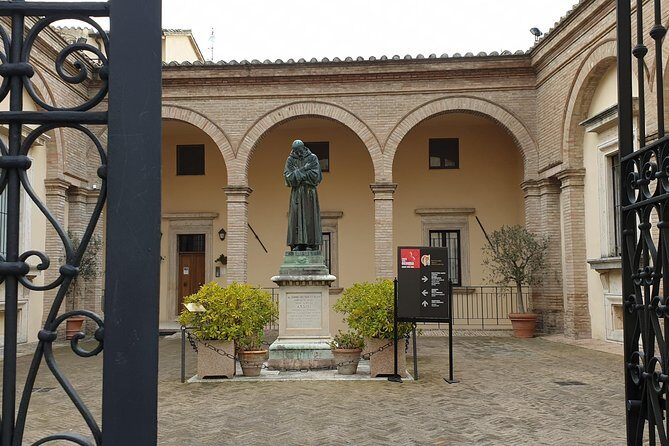
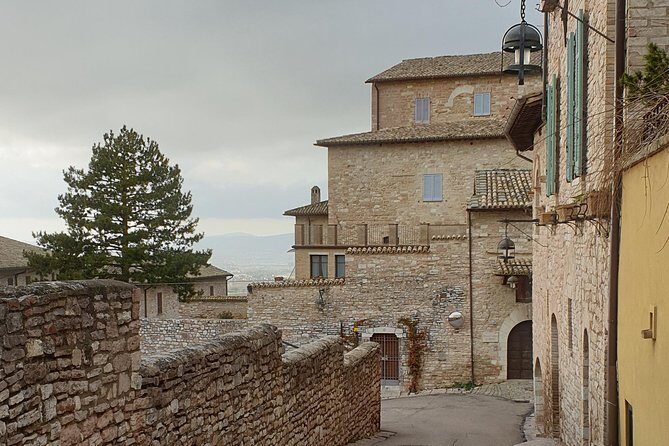
Between the major anchors (cathedral, square, museum, monastery), you’ll also encounter a smaller stop: a passage road tied to one of the protagonists’ homes. The tour doesn’t spend long here, but that’s exactly the point. In real rescue stories, people don’t only appear at famous sites. They exist in back streets, corridors, and routes most visitors never notice.
This segment is a reminder that “history” isn’t just grand events. It’s logistics. It’s movement. It’s knowing where someone lived, how they traveled, and how the city’s layout shaped what was possible.
If your mind tends to wander when there’s no big building to look at, use this moment to switch from sightseeing to thinking. Picture the street as a path people had to take carefully.
Piazza del Comune and Assisi’s working craft culture
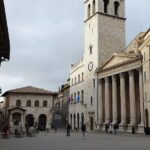
The tour ends its historical track by stepping into Piazza del Comune, where the story connects to present-day life through handmade products. You’ll also visit one of the craft shops still active in the city.
This stop is about 10 minutes, and an admission ticket is included. It’s a smart way to rebalance your emotions after the museum and monastery. You leave with something tangible: the sense that the city’s identity continues through work, not just through memorials.
What makes this valuable is not the shopping aspect. It’s the symbolism. After learning how people relied on each other during a crisis, you see that Assisi still relies on skilled hands today. Even if you don’t buy anything, you’ll leave with a better sense of how the city keeps moving.
Tip: if you do want a small souvenir, keep it to something easy to carry. The tour is time-limited and you won’t want heavy bags at the final stop.
Libreria Marco Zubboli atelier and old tools, new products
Your final stop is Libreria Marco Zubboli, described as a place where you can physically experience the care behind craftsmanship. The focus here is on old tools producing new products, and you’ll have about 30 minutes in the atelier.
This stop feels like the tour’s emotional “closing chord.” You spend earlier parts of the route learning about people who acted in crisis. Here, you see the long arc of skill and care continuing. It’s also a satisfying contrast: the day shifts from survival stories to everyday creativity that doesn’t require explanation.
If you enjoy bookstores or craft workshops, you’ll likely appreciate the longer time here compared with the other stops. If you’re not that type, the stop still works because it helps reset the mood without pretending the past didn’t hurt.
Price, group size, and time value in 2–3 hours
The price is listed as $243.10 per group (up to 6), for a 2 to 3 hour guided experience. That’s a per-group model, not per person, which can be good value if you’re traveling with a partner or small family.
Here’s the practical way to judge value: you’re paying for a guided narrative across multiple sites, including several admission tickets. Museum entry is extra, but the rest of the route includes included admissions at key points. For a short timeframe, the tour gives you a structured path through Assisi’s WWII-related places, rather than leaving you to piece it together on your own.
Still, keep your expectations aligned with the format. Because it’s compact and tightly scheduled, the tour trades “optional time to wander” for “story continuity.” If you love to linger at churches and you hate being moved along, you might feel squeezed. If you prefer focus and momentum, this schedule usually works well.
Also note it’s a private tour/activity for your group only. That can make a difference for questions, photos, and pacing.
Who should book this tour, and who should choose something else
I’d point you toward this tour if you want history grounded in place, not history floating in a lecture hall. The theme of rescuers inspired by St. Francis connects Assisi’s identity with a human reality from 1943–1945. If that topic matters to you, you’ll appreciate how the itinerary uses the city’s geography to tell the story.
You’ll also like it if you enjoy a blend of places:
- a cathedral with a named bishop’s tomb,
- a square tied to a printing workshop,
- a museum using photos, videos, and documents,
- a monastery where shelter played a central role,
- and craft stops that show continuity into the present.
You might want to look elsewhere if your main goal is classic Franciscan sightseeing. This experience is built around the WWII narrative, and it doesn’t plan extra time for the biggest artistic stops many visitors go out of their way to see. In other words, it’s a story tour first.
Finally, if you have a strict train schedule, give yourself a cushion. This is timed and paced for the theme, so rushing will make it less satisfying.
Should you book Assisi and the Second World War tour?
If your ideal day in Assisi includes thoughtful history, real places, and a clear narrative, I think you should book it. The structure is built to connect 1943–1945 heroism to the city you’re walking through, with enough museum time to make the story stick.
I’d only hesitate if you need lots of unstructured time to explore the most famous basilicas, or if you’re very sensitive to tight timing when you travel. For most people looking for depth without turning the day into a classroom, this hits a good balance.
FAQ
FAQ
How long is the Assisi WWII Heroes tour?
It runs about 2 to 3 hours.
What is the group size?
It’s a private tour/activity for your group, up to 6 people.
Where does the tour start and end?
It starts at Parcheggio B Assisi (06081 Assisi, Province of Perugia, Italy) and ends at Piazza del Comune (06081 Assisi PG, Italy).
Which admissions are included, and which are not?
Admissions are included at multiple stops, but the Museo della Memoria entrance ticket is not included. The museum ticket is €3.00 per person.
Is there a museum stop?
Yes. Museo della Memoria is part of the route and takes about 50 minutes.
Is the tour physically demanding?
You should have moderate physical fitness, since the tour involves walking between stops.