REVIEW · ASSISI
Assisi: Crypt of San Rufino and Roman Forum Underground Tour
Book on GetYourGuide →Operated by UMBRIA CON ME · Bookable on GetYourGuide
Assisi is more than what you see above ground. This guided walk takes you under the Cathedral of San Rufino and into the Roman Forum area beneath the town, so you can connect the medieval faith of Assisi with the Roman layers still under your feet, starting with the Crypt of San Rufino.
Two things I really like about this experience are the official Assisi guide (it shows in how clearly the story is told) and the chance to see specific, named places you’d never notice on your own, like the crypt’s 11th-century fabric and the Roman forum remains under today’s square.
One possible drawback: this is a 2-hour, mostly underground tour. If you want lots of big outdoor views and street time, you’ll find this leans quiet, cool, and enclosed compared with typical Assisi walks.
In This Review
- Key things to know before you go
- Entering Assisi’s layers: why this tour is worth your time
- Meeting at the Cathedral of San Rufino: get your bearings fast
- The Diocesan Museum and Crypt of San Rufino: 11th-century faith below the nave
- Romanesque cloister leftovers: what you’re really looking at
- Roman Forum and Archaeological Museum: the city square’s secret basement
- What the 2 hours feels like (and how to pace your visit)
- Guide quality: the Alessandra factor
- Who this tour suits best
- Should you book the Assisi Crypt of San Rufino and Roman Forum Underground Tour?
- FAQ
- FAQ
- How long is the Assisi Crypt of San Rufino and Roman Forum Underground Tour?
- Where does the tour start?
- What languages are offered?
- Is this a small group tour?
- What are the main sites included in the tour?
- How much time is spent in each part of the experience?
- Where does the tour end?
- Is free cancellation available?
- Can I reserve without paying right away?
- Is there an official guide included?
Key things to know before you go
- Small group size (up to 10): easier questions, less crowd noise while you’re looking closely.
- Official Assisi guide, live: English or Italian, with explanations meant to fit the sites you’re standing in.
- San Rufino crypt + Diocesan Museum: Roman and medieval material gathered in one focused circuit.
- Roman sarcophagus story: the Selene and Endymion imagery is tied to Saint Rufinus.
- Roman Forum under Town Hall Square: you’ll see temple bases, a cistern area, and seating for magistrates.
- Two equal segments: about an hour in the museum/crypt and about an hour in the Roman forum area.
Entering Assisi’s layers: why this tour is worth your time
Assisi works on two levels at once. Above ground, it’s all churches, stone façades, and the spiritual pull of Saint Francis. Under ground, you get the older idea that places are built on top of other places, sometimes literally protecting what came before.
This tour is built for that feeling. You start at the Cathedral of San Rufino, then move through the Diocesan Museum and its crypt spaces, and finally go beneath the modern town setting to the Roman Forum and Archaeological Museum. The best part for me is that the itinerary doesn’t jump randomly. It connects sacred space to Roman urban life in a way that makes the city feel like one continuous story instead of separate monuments.
You’ll also appreciate how the experience is structured: two guided blocks, each around an hour. That timing matters because it keeps your attention where it should be—on what you’re seeing—without turning the visit into a speed-run.
You can also read our reviews of more tours and experiences in Assisi.


Meeting at the Cathedral of San Rufino: get your bearings fast
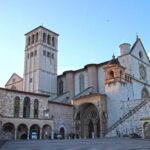
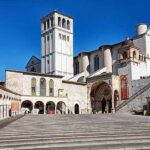
You’ll meet in front of the entrance of the Cathedral of San Rufino. That location is more than a convenient start point. It sets the tone: this is a tour about the Cathedral complex and what’s under it.
From there, the guide leads the group into the Diocesan Museum section. Even if you know Assisi only from postcards, you’ll likely have the same reaction the first time you step into these underground or basement-level spaces: it feels like the city is revealing a side of itself you usually miss. If you’re used to seeing churches mainly from the outside, this is a nice correction.
Practical tip: wear shoes you’re comfortable in for an extended walking visit and expect the lighting to be dimmer in the crypt areas. That’s not a complaint—it’s part of the atmosphere and how these spaces preserve their materials.
The Diocesan Museum and Crypt of San Rufino: 11th-century faith below the nave
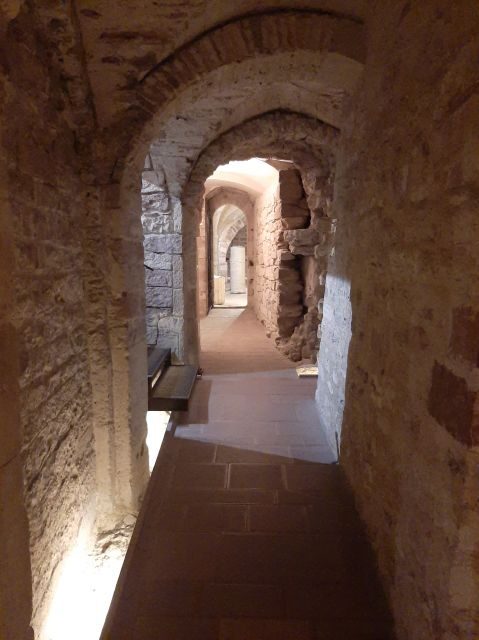
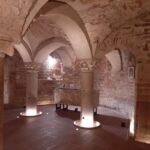
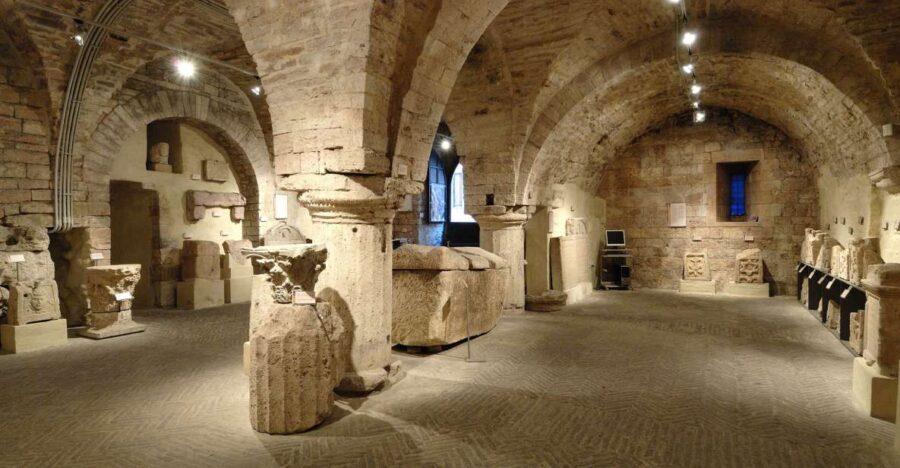
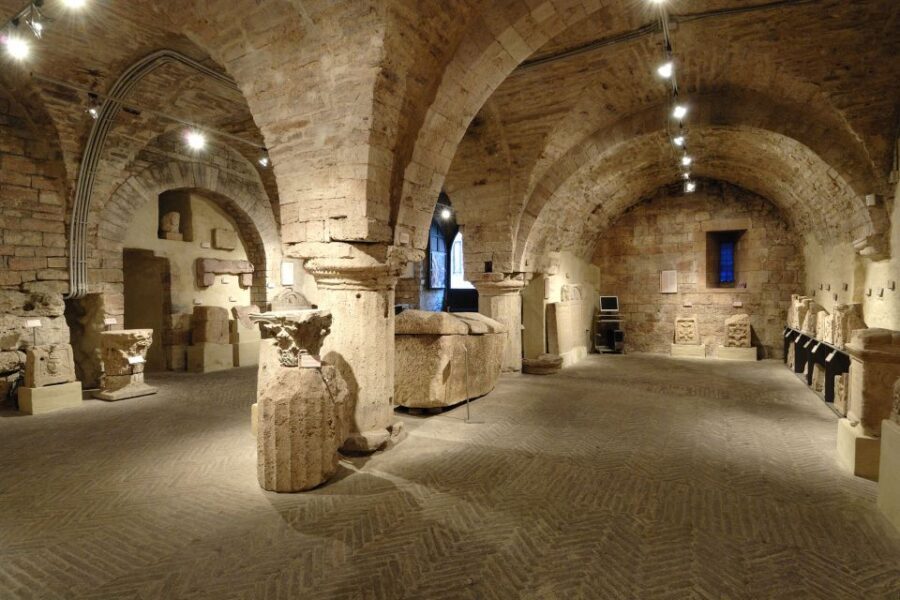
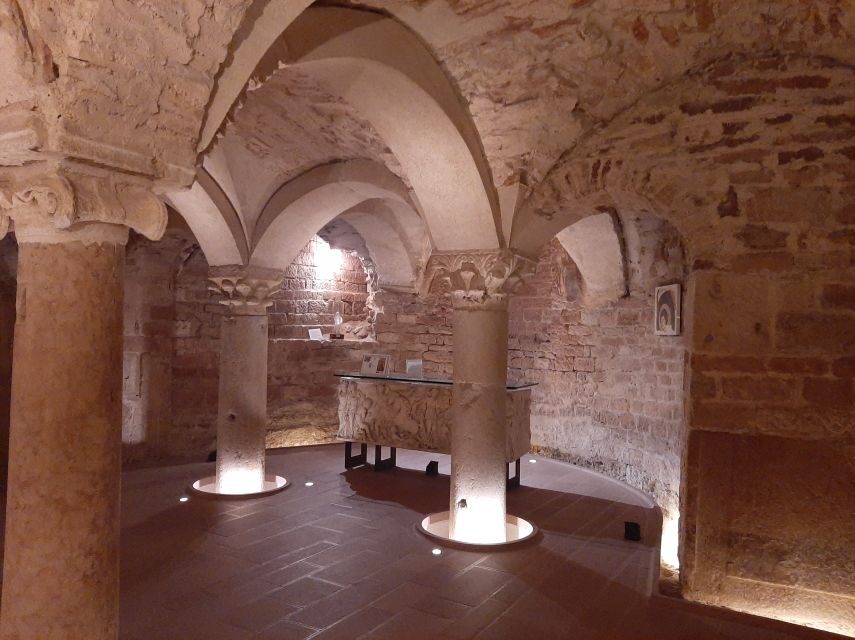
This is the heart of the tour. The Diocesan Museum and Crypt of San Rufino are where you go from Assisi’s street-level look to the physical reality of the Cathedral’s underground history.
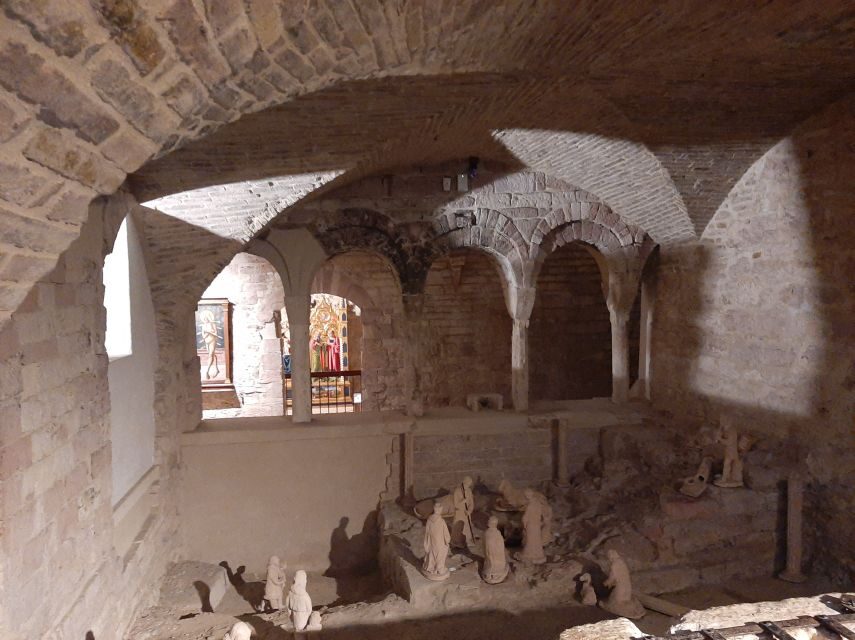
Inside, you’re introduced to elements tied to the Cathedral complex and the crypt spaces beneath it. The guide points out the evocative basement areas of the palace that include the remains of a Romanesque cloister. That’s a big deal because it’s not just a single room or one artifact. You’re seeing architectural leftovers and the way medieval religious life shaped the spaces around worship.
Then comes the crypt of the Basilica Ugoniana, dating to the 11th century. You’ll also hear about some very rare frescoes from the same period. For me, that’s one of the reasons this tour feels more valuable than a standard church visit: the guide is helping you read the room, not just look at it.
The tour also highlights a Roman sarcophagus decorated with the myth of Selene and Endymion. The practical and emotional hook is that this sarcophagus once housed the coffin of the patron saint Rufinus. That kind of layered reuse—Roman object, later Christian significance—helps you understand why Assisi’s underground spaces feel so intense. You’re not looking at two unrelated histories; you’re looking at one place holding onto multiple meanings.
And there’s a Francis connection too: the crypt is described as one of the places where Francis used to retire in prayer when he preached in the Cathedral. Even if you’re not deeply religious, that detail lands. It puts a human rhythm into stone, making the crypt feel like a lived space rather than a sealed exhibit.
Possible drawback to consider here: because the crypt and museum spaces are underground, you’ll rely on the guide’s narration to keep the story clear. If you’re sensitive to low light or need lots of visual pacing, come prepared to slow down and listen.
Romanesque cloister leftovers: what you’re really looking at
One of the most useful parts of the tour is the way the guide frames what’s left behind in the basement areas. The remains of a Romanesque cloister are not just decorative trivia. In a Romanesque context, cloisters are about community rhythm—movement, prayer, and structure—so when you see remnants below the Cathedral, it helps you picture how the religious complex functioned over time.
You’ll likely spend time orienting yourself: where you are under the nave, what portions remain from which periods, and how the museum and crypt relate spatially. It’s exactly the sort of information you don’t get by walking in independently, because you’d be guessing.
This part is also where the tour’s small group size works in your favor. With up to 10 participants, it’s easier to stop, look closely, and ask follow-up questions. It’s also easier for the guide to keep everyone focused when you’re surrounded by old stone and slow-moving lines.
Roman Forum and Archaeological Museum: the city square’s secret basement
After the crypt and museum segment, the tour shifts from sacred underground spaces to an archaeological setting under the modern town center. This section is where Assisi stops being just a Francis story and becomes a Roman city story, too.
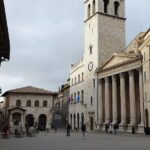
You’ll visit the Roman Forum beneath today’s Town Hall Square. The square is dominated by the Roman Temple of Minerva. That matters because it gives you a “map” above ground, then lets you compare it with what’s preserved below. The Roman Forum remains were found during excavations in 1836, which is a reminder that archaeology often begins with chance and then becomes a careful unrolling over time.
What you’ll see includes:
- the base of the temple
- access gates to a monumental cistern
- a podium with seats for magistrates
- a small temple dedicated to Castor and Pollux
For me, the most interesting piece is the podium and magistrates seating. It’s one thing to know that Romans governed; it’s another to stand in a preserved layout and realize how public decisions literally had a stage. The cistern access is also a clever detail because it connects forum life with infrastructure. Food, water, and civic order weren’t separate topics back then—they were all part of running a city.
You’ll also get a sense of scale and purpose. Even though you’re under a square that looks modern, the forum remains explain why people built civic life where they did: visibility, access, and connection to major temples.



What the 2 hours feels like (and how to pace your visit)
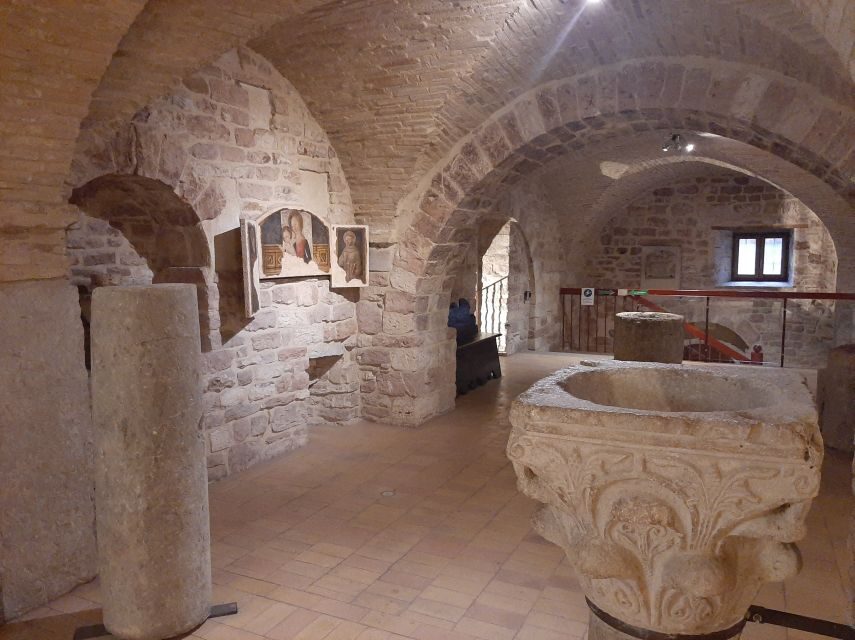
This tour lasts about 2 hours. It’s split into two guided sections of around an hour each, first at the Diocesan Museum and crypt area, then at the Roman Forum and Archaeological Museum.
That pacing is good for two reasons:
1) You get enough time to absorb each “mode” of the city—religious medieval layers first, then Roman civic layers.
2) You avoid fatigue that can come from longer museum marathons where you stop remembering what you saw.
The biggest thing you should do is slow down. Underground details reward patience. If you rush, you’ll miss the guide’s connections between objects (like the sarcophagus and Rufinus) and between spaces (like how the cloister remains fit into the Cathedral complex).
Group size also helps. With a small group limited to 10, the tour doesn’t feel like a conveyor belt. That’s especially helpful if you enjoy asking practical questions, like what the site dates correspond to or why an object was reused.
Guide quality: the Alessandra factor
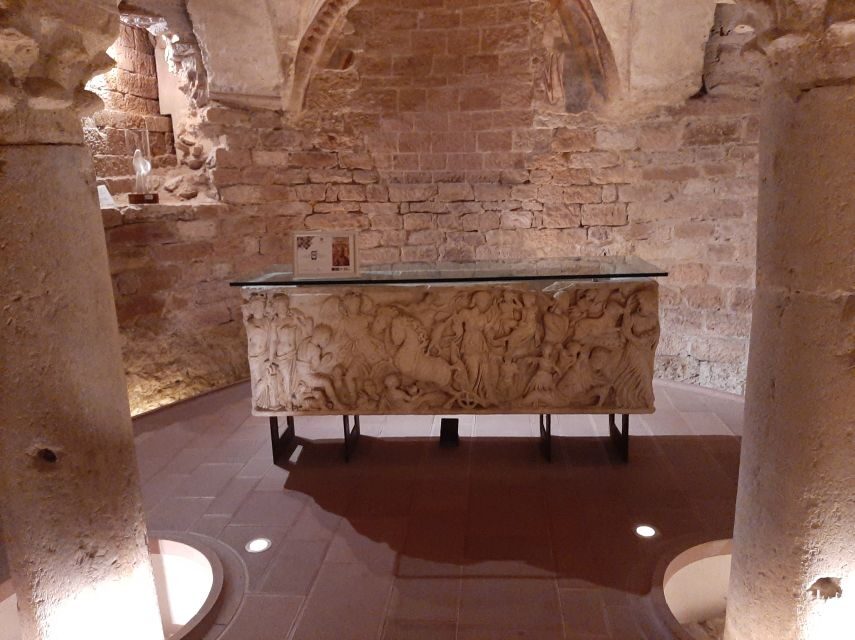
The experience is led by a live guide in English or Italian, and the small group setup puts you close enough to actually hear the explanation and see what the guide is referring to.
One name that comes up clearly is Alessandra. People praise her guidance and the way she connects what’s underground to what you’ve already seen above ground. That makes sense: the tour is designed for exactly that mental link. You look at Assisi’s famous surfaces, then you come down and learn what was built under them—and why.
If you’re the type who learns best when someone talks you through the story, you’ll likely appreciate this guide-led approach more than audio options or self-guided wandering.
Who this tour suits best
This tour fits you best if you like:
- the idea of history in layers—Roman, Romanesque, and medieval faith in one circuit
- church spaces where you can see specific dates and materials rather than generic descriptions
- small-group guidance where you can hear and ask questions
- a tour that connects the Francis story to the physical city setting
It’s also a great option if you’ve already done a few Assisi highlights and want something less obvious. The crypt and Roman forum setting are the kind of sites that make Assisi feel bigger than its postcard reputation.
If you’re the type who needs bright, outdoor sights all day, plan to pair this with time above ground before or after. That way you get both the underground story and the classic Assisi atmosphere.
Should you book the Assisi Crypt of San Rufino and Roman Forum Underground Tour?
If you want one efficient, guided way to see what most visitors miss, book it. The combination is strong: Crypt of San Rufino with the Diocesan Museum on one side, and the Roman Forum under Town Hall Square with clearly described forum structures on the other. The official guided format and small group limit make it feel worth your time instead of like a quick basement stop.
Skip it only if you strongly prefer outdoor sightseeing and dislike spending most of the visit underground. Otherwise, this is a high-value Assisi experience because it turns the city into a timeline you can literally walk through.
FAQ
FAQ
How long is the Assisi Crypt of San Rufino and Roman Forum Underground Tour?
It lasts about 2 hours.
Where does the tour start?
The meeting point is in front of the entrance of the Cathedral of San Rufino.
What languages are offered?
The live guide offers English and Italian.
Is this a small group tour?
Yes. The group is limited to 10 participants.
What are the main sites included in the tour?
You visit the Diocesan Museum with the crypt of San Rufino, plus the Roman Forum and the Archaeological Museum.
How much time is spent in each part of the experience?
The Diocesan Museum with the crypt is guided for about 1 hour, and the Roman Forum and Archaeological Museum is guided for about 1 hour.
Where does the tour end?
It finishes at the Roman Forum and Archaeological Museum.
Is free cancellation available?
Yes. You can cancel up to 24 hours in advance for a full refund.
Can I reserve without paying right away?
Yes. You can reserve now and pay later.
Is there an official guide included?
Yes. The tour includes a live guide of Assisi (official-style local guidance).