REVIEW · BOLOGNA
Bologna : a walk into history
Book on Viator →Operated by Elisa Cornacchia · Bookable on Viator
Bologna reads like a map of time. This private walking tour is a fast way to understand why Bologna looks the way it does today, using Piazza Maggiore and the surrounding streets as your opening lesson in the city’s layout and changes over centuries. I especially loved having Elisa Cornacchia make big landmarks feel personal, and I liked the practical pacing that keeps you moving without feeling rushed. One thing to consider: it’s a walking tour that includes churches and stepped, uneven areas, so comfortable shoes matter.
You also get a smart mix of sights and context, not just photos. In three hours, you’ll hit major stops like the San Petronio Basilica and the Quadrilatero food district, plus quieter corners such as Finestrella and the Jewish ghetto streets via De’ Giudei.
The biggest payoff is how the stories connect. You’ll leave with a clearer mental map—where to go next in Bologna, and what to look for when you pass the same buildings on your own.
In This Review
- Key highlights at a glance
- Why this Bologna walk feels like the best shortcut
- Piazza Maggiore and Via Rizzoli: starting with the city’s original idea
- San Petronio Basilica: understanding why the Bolognese care
- Archiginnasio: the first seat of Bologna’s university life
- Quadrilatero food district: walking through daily life
- Palazzo della Mercanzia: traders and the medieval economy
- Santo Stefano: the seven churches idea and the symbols
- Le Due Torri: why the towers became Bologna’s symbol
- Via De’ Giudei: walking through the Jewish ghetto history
- Finestrella: Little Venice and a different view of Bologna
- What you get from Elisa Cornacchia’s guiding style
- Morning vs afternoon: when to book for your energy level
- Price and value: when $209.44 per group makes sense
- Who should book this Bologna history walk
- Should you book? My straight answer
- FAQ
- What is the duration of the tour?
- Is it a private tour?
- How much does the tour cost?
- Where does the tour start and end?
- What time does the tour begin?
- Do I need an entrance ticket for the stops?
- Is there a mobile ticket?
- What language is the guide?
- How flexible is cancellation?
- Is the tour suitable for most people?
Key highlights at a glance
- A private group setup (up to 10) means questions don’t get lost in the crowd
- Elisa Cornacchia guides with clear stories and steady, friendly momentum
- UNESCO Bologna on foot with a route that blends palaces, churches, and markets
- Quadrilatero market streets give you a real feel for local food culture
- Santo Stefano’s Sancta Jerusalem concept turns a church complex into an easy-to-grasp puzzle
- Finestrella at water level helps you see Bologna as it looked to locals in the past
Why this Bologna walk feels like the best shortcut
Bologna can be a lot on your first day. You’ll see impressive facades, busy streets, and serious churches—but it takes time to learn what all those details mean. This tour gives you a guided thread through the center so you’re not just sightseeing.
The format is also a strong value for your time. It’s 3 hours at a walking pace that feels efficient, and it’s priced per group (up to 10). That can be great if you’re traveling with family or friends and want more conversation than a big group tour.
I also appreciate the focus on “why.” This isn’t just where a building is. You’ll hear the original city plan idea at Piazza Maggiore, why certain places mattered to the Bolognese, and how different communities shaped streets like via De’ Giudei.
One more detail: the tour uses a mobile ticket and starts and ends at Via dell’Indipendenza. That’s helpful because you can easily base your day around that area.
You can also read our reviews of more walking tours in Bologna

Piazza Maggiore and Via Rizzoli: starting with the city’s original idea
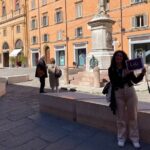
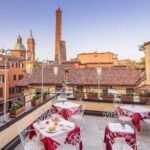
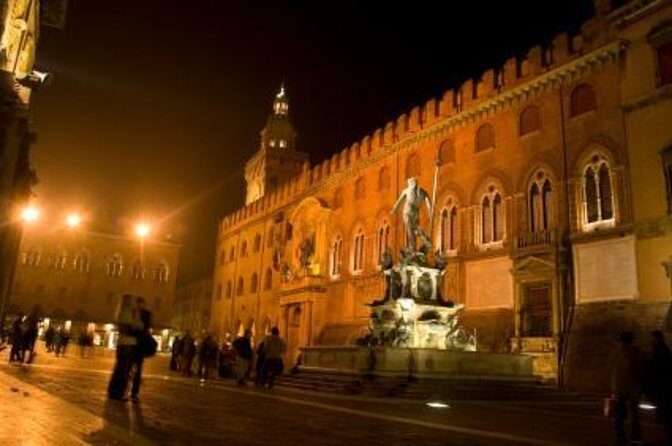
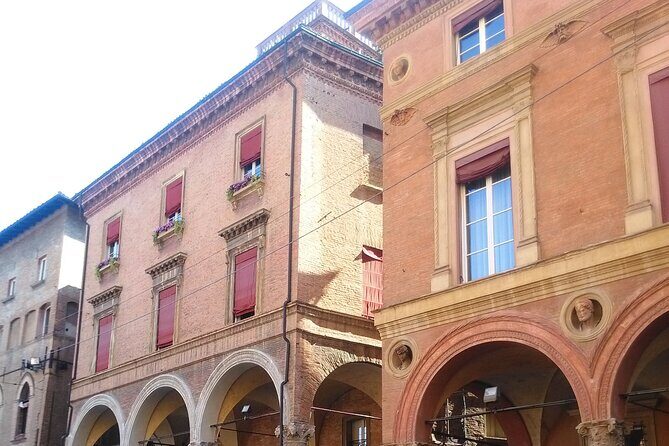
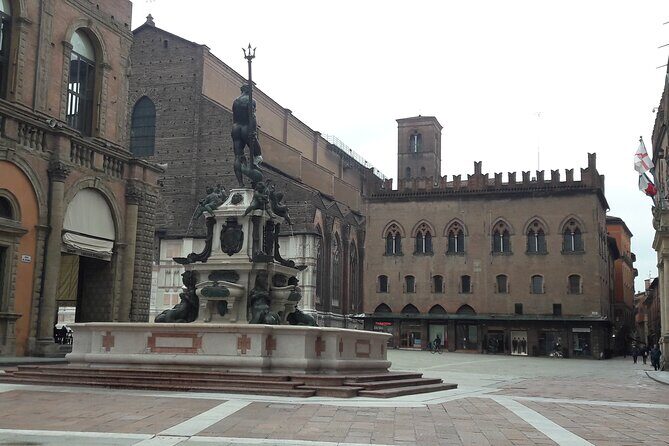
You begin at Via dell’Indipendenza, then arrive at Piazza Maggiore, Bologna’s big central stage. This stop matters because you’re not only looking at architecture—you’re learning how Bologna’s plan evolved, using the connection to via Rizzoli as part of the story.
Expect a guided look at the square’s important palaces and how the city’s layout shifted over time. Even if you think you already know what a piazza looks like, this kind of explanation changes how you “read” the space afterward.
A small practical note: this is a good start if you want orientation fast. You’ll get a baseline that makes the next stops feel connected rather than random.
San Petronio Basilica: understanding why the Bolognese care
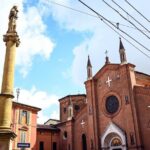
Next comes the Basilica di San Petronio, one of Bologna’s defining churches. Your guide introduces Petronius, Bologna’s patron saint, and explains why this place is important for local identity, not just for sightseeing.
You’ll also get help noticing key works of art inside. That’s a big deal because churches can be overwhelming when you don’t know what to look for, or when you’re trying to scan everything at once.
Time here is short, so don’t expect a long sit-down. Instead, think of it as a “best of” pass, with guided attention that you can build on later if you return.
Archiginnasio: the first seat of Bologna’s university life
After the basilica, you’ll visit the Archiginnasio di Bologna, known as the first official seat of the university. This stop gives you a different angle on Bologna: not just churches and markets, but learning and institutions that shaped the city.
One key consideration: entrance to the Archiginnasio is not included. The tour is still worth it, but you should plan to add the ticket cost on top of the base price.
If you like history that connects everyday life to big ideas—education, civic culture, long-term influence—this part will feel especially satisfying.
Quadrilatero food district: walking through daily life
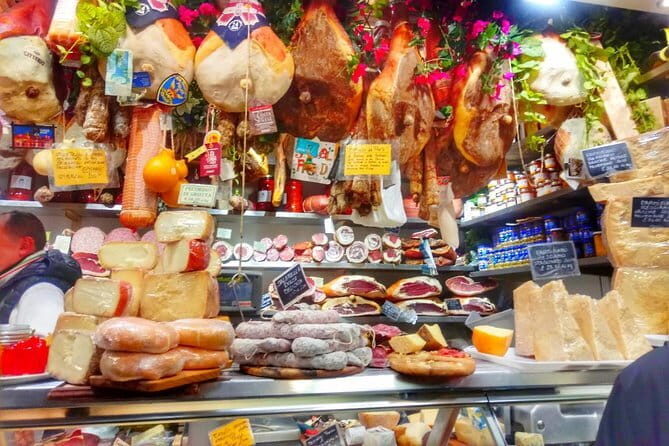
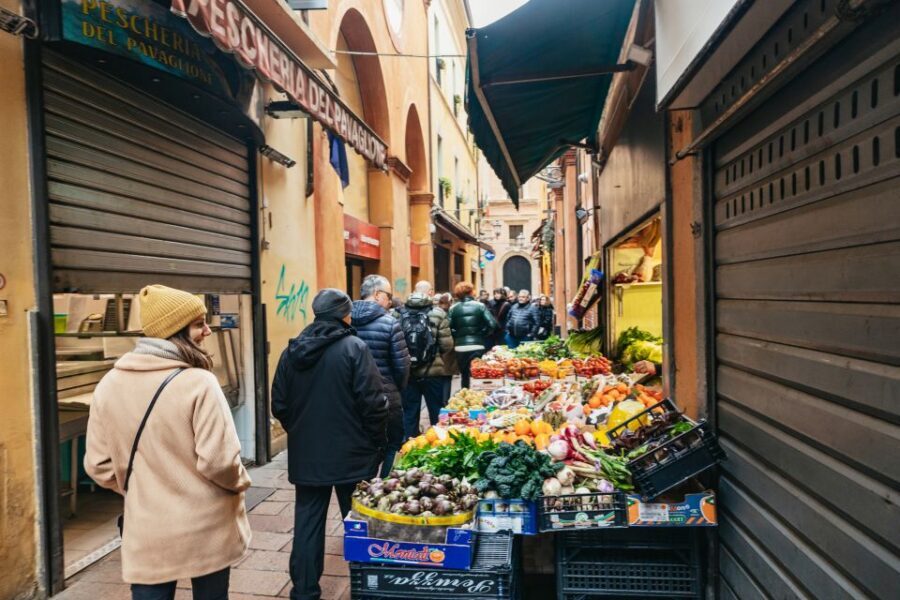
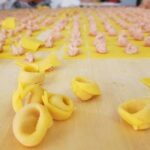
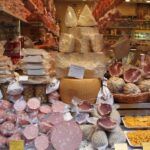
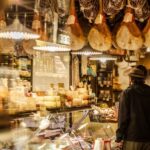
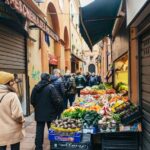
Then you head into the Quadrilatero, Bologna’s famous food district. This is where the city’s daily market energy shows up, and it’s one of the best places to learn how Bologna thinks through food.
You’ll walk through the area where local food market life happens every day. Even if you’re not buying anything, you’ll get a sense of how tightly the streets, commerce, and community have stayed linked.
This stop is also a great reminder that “history” isn’t only monuments. It’s built into routines, like how people eat and trade in the same neighborhoods over generations.
If you want a food moment, bring your appetite mindset. You can use the tour to learn the layout first, then decide later what to try.
You can also read our reviews of more historical tours in Bologna
Palazzo della Mercanzia: traders and the medieval economy
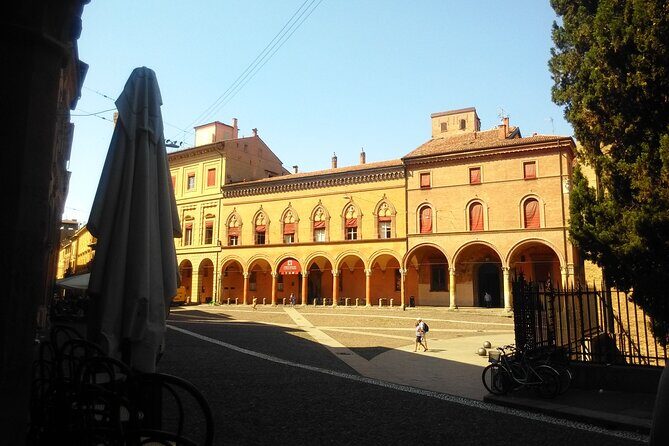
Next is Palazzo della Mercanzia, tied to Bologna’s Middle Ages and foreign traders entering town. Your guide explains the building’s role and what it tells you about how Bologna handled visitors and business.
This is a shorter stop, but it’s one I like. You see how the city didn’t just grow by luck or art—it grew by trade and organized structures for commerce.
If you enjoy “how the city worked,” you’ll appreciate this more than the average quick photo stop.
Santo Stefano: the seven churches idea and the symbols
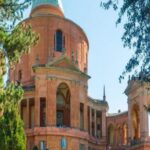
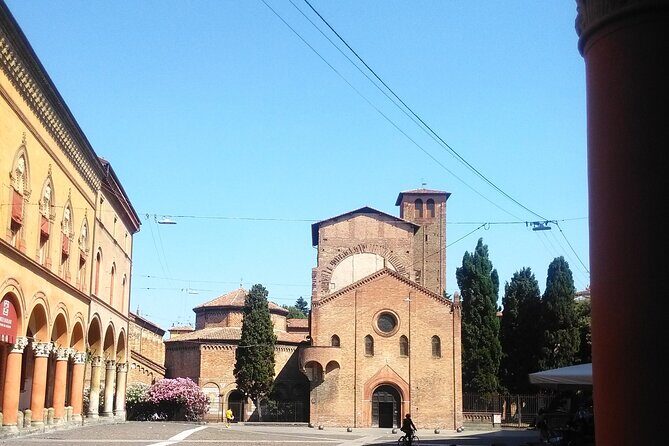
The tour continues to Basilica – Santuario di Santo Stefano, a complex known as the seven churches, often referred to as Sancta Jerusalem. Your guide connects it to the Saint Sepulcher, then helps you understand ancient symbols you can see inside.
This is the stop where the stories can really click, because the concept is clear and memorable. You’re not just hearing random facts; you’re learning a way to interpret what you’re seeing.
Time here is about 15 minutes, which is enough for the guided overview. You won’t have unlimited browsing time, so wear patience like a tool: let the guide point, then look closely yourself.
If you like places that mix architecture with meaning, this is one of the strongest segments of the route.
Le Due Torri: why the towers became Bologna’s symbol
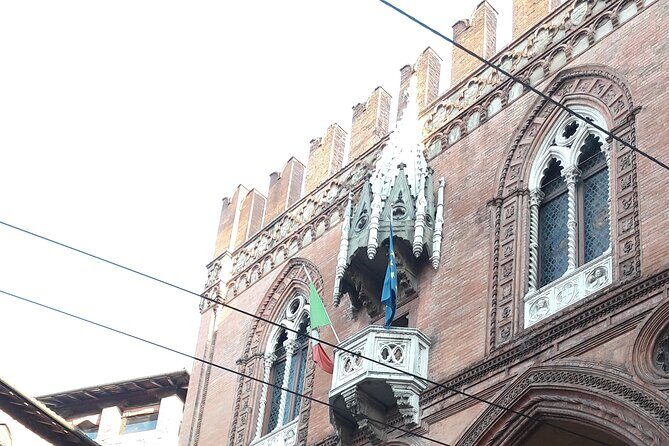
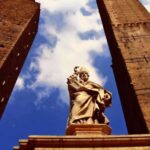
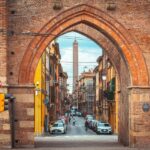
At Le Due Torri—Torre degli Asinell and its companion—you’ll stop by the two towers and learn their ancient function. Your guide also explains why they became a symbol for Bologna.
This works well because the towers are visually dramatic, but their meaning can be hard to grasp without context. With a guide, they turn from “cool photos” into a story about the city’s structure and identity.
Expect another quick, focused moment here. It’s short enough to keep energy high, but long enough to understand the point.
If you’re curious about climbing or longer views, note that the tour itself doesn’t say you’ll do tower entry. It’s presented as a stop to understand what you’re seeing.
Via De’ Giudei: walking through the Jewish ghetto history
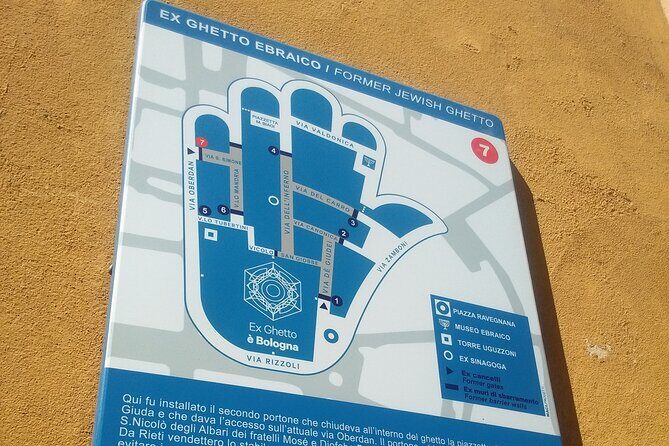
Then you’ll walk down Via De’ Giudei, where the route passes through narrow streets tied to the Jewish ghetto. Your guide explains how Jews were forced to live there until Italian Unification.
This stop carries weight. It’s not staged as a dramatic “show,” but it gives you a framework for what the streets meant and why that history matters.
Because the area is narrow, it also gives you an everyday feel—how a city constrains and shapes people physically and socially. It’s the kind of context that helps you avoid treating historic areas like a theme park.
Wear respectful pacing here. You’ll get more from it if you slow down your brain as well as your feet.
Finestrella: Little Venice and a different view of Bologna
Finally, you’ll reach Finestrella, known for its hidden corner reputation and often described as a little Venice. Your guide shows you this “window” viewpoint and helps you understand how Bologna looked in the past from that angle.
This is a satisfying ending because it’s visual and different from the heavier church-and-palace stops. It also helps you remember that Bologna’s history isn’t only stone and scripture—it’s also water, movement, and how people lived near it.
Time here is about 10 minutes, so it’s a good moment to take photos and then reflect on the route you just walked. If you keep looking at the city after the tour, this stop gives you an anchor.
What you get from Elisa Cornacchia’s guiding style
This tour is led by Elisa Cornacchia, and the vibe of the experience is guided clarity. The common thread is that she answers questions naturally and keeps the walking flow smooth for nearly 3 hours.
I like tours where you don’t have to chase the guide’s attention. Here, the pace feels thoughtful: enough time at each stop to understand the main point, and enough momentum to keep you engaged.
Also, I’d consider this a good choice if you like your history explained in plain language. The focus is on stories behind landmarks, plus practical “what to notice” guidance that sticks.
Morning vs afternoon: when to book for your energy level
The tour offers a choice of morning or afternoon, so you can fit it around your eating and sightseeing plans. If you prefer softer streets for photos and fewer mid-day crowds, morning often feels easier.
If you already planned a slower start day, afternoon can work well too. The route is structured so you’re not stuck waiting around—you keep moving stop to stop.
Either way, starting near Via dell’Indipendenza makes it simple to connect with other plans. You can build your day around that area without complicated transfers.
Price and value: when $209.44 per group makes sense
The price is $209.44 per group up to 10, for about 3 hours. That pricing structure matters because it changes who the tour is best for.
If you’re traveling as a couple, it can still feel reasonable because you’re paying for a private guide and a tight route through major UNESCO-linked sights. If you’re with friends or family, it’s often even better value—your per-person cost drops while you keep a conversational experience.
You should also factor in the one obvious extra: Archiginnasio entrance is not included. I don’t know the exact cost from the provided details, but it’s clearly identified as an additional expense.
Overall, I see this as a “buy time and understanding” purchase. Instead of spending hours piecing together why Bologna matters, you get a guided walk that teaches you how to see.
Who should book this Bologna history walk
This tour fits best if you:
- want to understand Bologna fast, without reading a library first
- like guided explanations of landmarks, art, and city layout
- prefer a private group setting where questions are welcome
- enjoy food districts as part of the historical story (the Quadrilatero is a key stop)
It may be less ideal if you:
- need a fully flat, low-step route (the experience includes churches and steps)
- want to spend long minutes inside buildings on your own
If you’re comfortable walking for a few hours and you like stories that connect places, you’ll likely feel happy you booked.
Should you book? My straight answer
I’d book this if your goal is to leave Bologna with a real mental map and a set of stories you can carry into the rest of your trip. The route hits the right mix: big squares, key basilicas, the university legacy at Archiginnasio, the Quadrilatero for local food culture, and the symbolic side of Santo Stefano.
I also think the guide choice—Elisa Cornacchia—adds value because the experience is paced, engaging, and tuned for questions. Just go in with good walking shoes and a plan to cover the Archiginnasio entry ticket.
FAQ
What is the duration of the tour?
The tour lasts about 3 hours.
Is it a private tour?
Yes. It’s private, and only your group participates. The group size can be up to 10.
How much does the tour cost?
The price is $209.44 per group (up to 10).
Where does the tour start and end?
It starts and ends at Via dell’Indipendenza, Bologna BO, Italy.
What time does the tour begin?
The start time shown is 10:00 am.
Do I need an entrance ticket for the stops?
Most stops are listed as free. Entrance to the Archiginnasio di Bologna is not included.
Is there a mobile ticket?
Yes, the tour includes a mobile ticket.
What language is the guide?
The tour may be operated by a multi-lingual guide, depending on availability.
How flexible is cancellation?
You can cancel for a full refund up to 24 hours before the experience starts.
Is the tour suitable for most people?
The information says most travelers can participate.