REVIEW · FLORENCE
Florence: Accademia Ticket & Audio Guided Tour with Host
Book on GetYourGuide →Operated by ACCORD Italy Smart Tours · Bookable on GetYourGuide
Accademia runs smoother with a guide and skip-the-line. The big draw here is reserved time entry plus a live host who helps you connect what you’re seeing to the stories behind it, especially around Michelangelo’s David. One heads-up: it’s only a 1-hour experience, so you’ll need to pick what you want to linger on.
I like that the multilingual audio guide gives you pre-recorded commentary for over twenty masterpieces, so you can keep moving without feeling lost in labels and hallways. It’s also the kind of setup that works well even if your Italian is “thank you and goodbye.”
You’ll meet at Via Ricasoli 57, near the Accademia entrance (just in front of Carrefour Express). Look for an assistant in a yellow vest with an ACCORD ID badge, and plan to arrive 15 minutes early so the security check and timed entry don’t eat your museum time.
In This Review
- Key things to know before you go
- Accademia in One Hour: What This Smart Tour Does for You
- The main trade-off
- Via Ricasoli 57 Meeting Point and the Security Reality Check
- Inside the Accademia: David Photo Stop and the Main Highlights Circuit
- Your David moment
- What else you’ll see
- A realistic expectation about coverage
- Audio Guide Languages and How to Use Them Smartly
- How to get the most from audio in a crowded museum
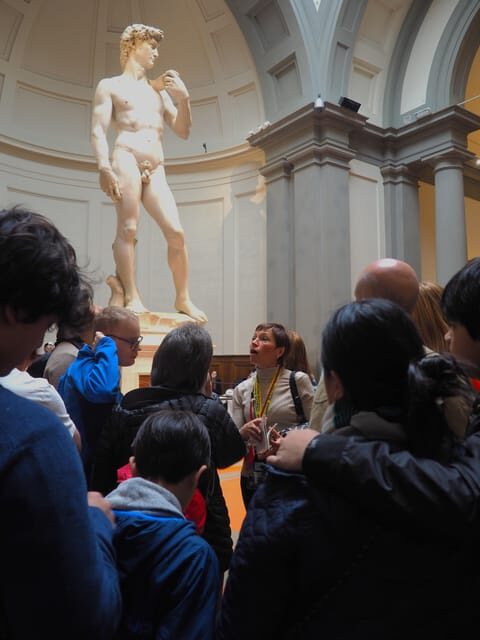
- Live Host Q&A: When the Human Touch Matters
- Group size can affect the feel
- Rules You Must Know: No Video, Photo Stop Timing, and Water Limits
- The photo stop detail vs. the no-photo rule
- What to bring
- Price and Value at $46: Is It Worth It Versus DIY?
- Who This Tour Fits Best (and Who Should Skip It)
- Who might not love it
- Wheelchair access
- Should You Book This Accademia Ticket & Audio Tour?
Key things to know before you go
- Reserved time entry helps you avoid the worst of the line chaos.
- Live host Q&A in English and Italian keeps the art from turning into a guessing game.
- Audio in many languages covers more than twenty major works.
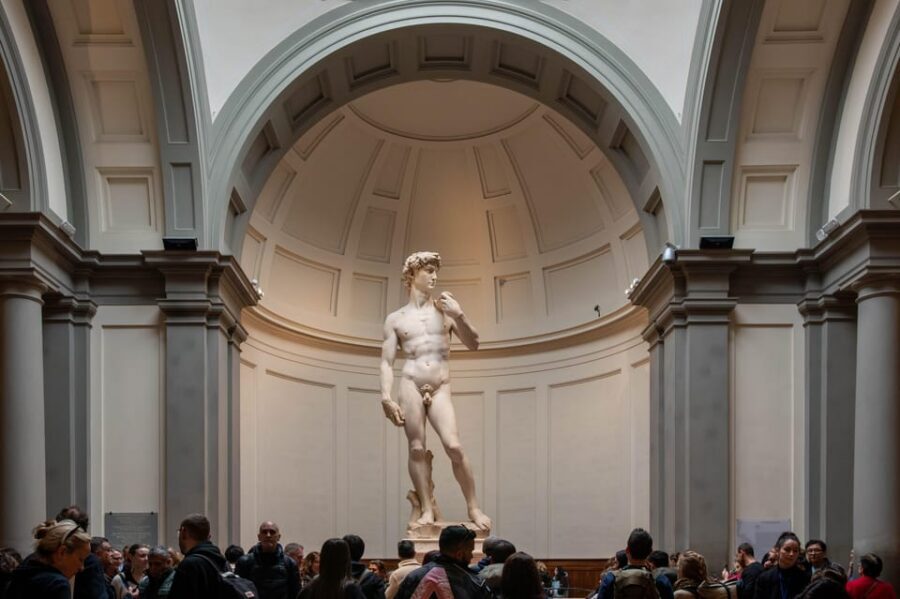
- David is the focal photo stop, with guided time built in.
- Museum rules are strict: no video recording and no photography inside.
- Plan for security screening; admission can be slightly delayed during peak periods.
Accademia in One Hour: What This Smart Tour Does for You
If you’ve ever shown up to the Accademia Gallery in Florence, you already know the issue: you can spend your trip time “waiting to start.” This ticket approach fixes that by pairing a reserved admission window with a one-hour guide structure, so you can get to the good stuff faster.
The tour experience is built around a simple idea: you get both context and momentum. The audio guide handles the statue-by-statue explanations in your selected language, while the on-site host helps when you have questions the recording doesn’t cover. That matters in a museum like the Accademia, where you’re not just looking at objects—you’re looking at ideas: power, patronage, faith, politics, and craftsmanship, all packed into marble and bronze.
You’ll also notice the focus on major hits rather than trying to cover everything. That’s not a problem. In fact, for many visitors, it’s the best way to keep the museum from feeling like a blur. You’ll leave with clear takeaways, not just a foggy memory of “cool statues.”
You can also read our reviews of more tours and experiences in Florence
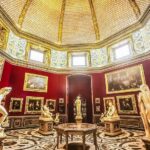
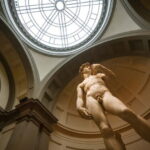
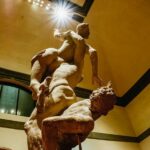
The main trade-off
Because the guided portion is short, it won’t feel like a slow, everything-in-detail lecture. Think of it as the smart opening chapter. If you’re the type who wants long stretches at one work, you’ll still need additional free time after the guided hour to do that.
Via Ricasoli 57 Meeting Point and the Security Reality Check
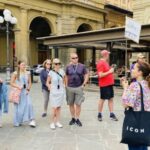
Your success here starts before you even enter the museum. Meet at Via Ricasoli, 57, at the entrance area for the Accademia Gallery, right in front of Carrefour Express. The assistant wears a yellow vest and has an ACCORD ID badge, which makes it easier to confirm you’re in the right place.
Arrive early. Everyone has to do a security check line, and during busy periods museum access can be regulated based on how many people are inside. That means your entry might be slightly delayed even with a timed ticket. The key is that the guide-and-ticket setup generally keeps you from getting stuck in the longest part of the chaos.
Also, bring a valid ID or passport and be ready to show it at the meeting point. The tour data is explicit about ID requirements, so don’t assume you can skate by with only a phone.
A few other practical notes help you avoid last-minute stress:
- It runs rain or shine.
- You’ll be asked to stick to museum restrictions on items you bring inside.
- You’ll want to plan around crowd-control timing rather than expecting instant entry.
Inside the Accademia: David Photo Stop and the Main Highlights Circuit
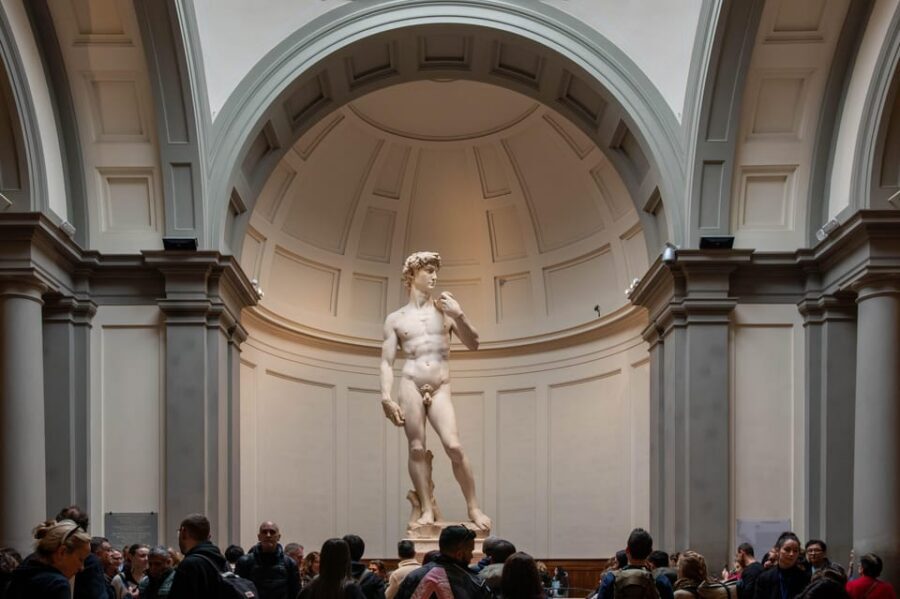
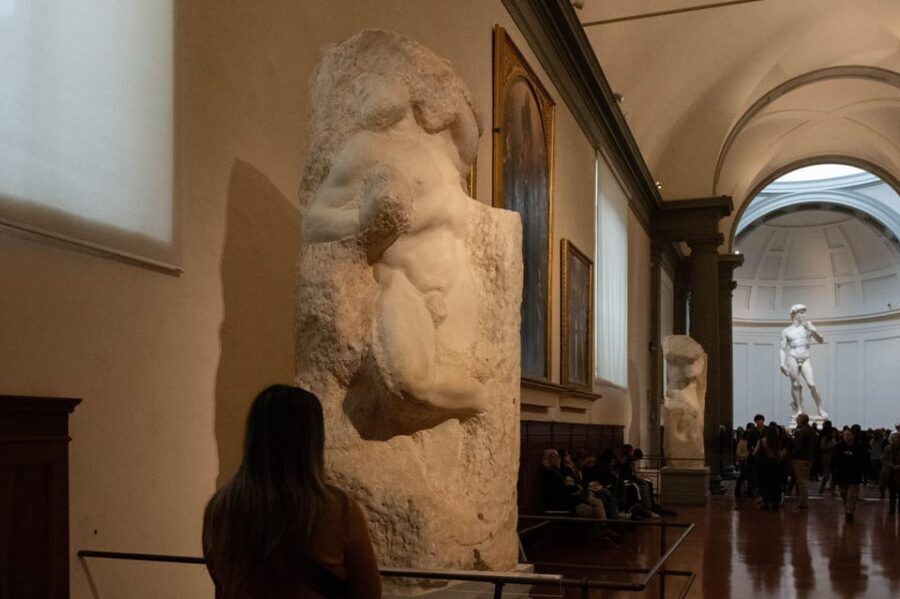
Once you’re in, the tour rhythm is straightforward. You start with the guided route through the Accademia Gallery halls, then you zero in on Michelangelo’s David with a dedicated moment for photos and orientation.
Your David moment
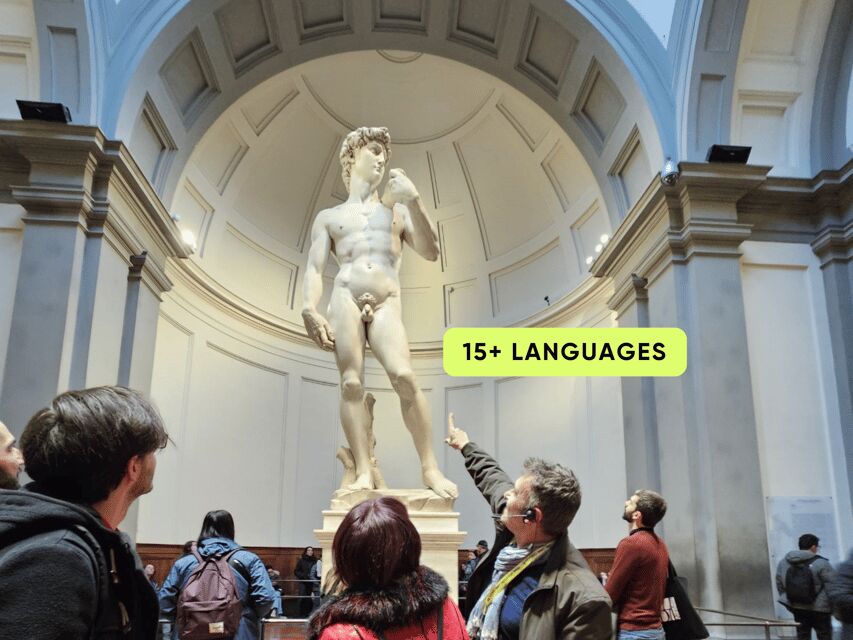
David is the superstar here, and the format reflects that. You’ll get a guided segment and a photo stop around David (about 20 minutes). The practical value of this stop isn’t only the photos—it’s the way the guide helps you look.
A statue like David can feel “famous but confusing” when you first see it. Standing there with a guide’s explanation helps you clock the details you might miss if you were rushing. Even if you’ve seen reproductions online, seeing the scale in person changes the experience, and having context helps you understand why that sculpture became a cultural benchmark.
You can also read our reviews of more guided tours in Florence
What else you’ll see
The tour’s audio component covers over twenty masterpieces, which is a big reason this format works. Instead of relying on you to read every wall label, the audio guide gives you a running story in the language you chose.
You should expect the guided portion to focus on the biggest, most important works first, then the audio to fill in the rest as you move through the museum. This is usually the right balance: you get the human explanation for the anchor pieces, then the recording keeps you informed without you having to wait for one-on-one time.
A realistic expectation about coverage
A tour like this is designed to fit an hour. That can mean you get the core highlights with the host, then you may have less guided detail for every single corner of the museum afterward. If you’re the kind of person who wants continuous narration for every gallery, you might prefer a longer guided option—but for many visitors, the “best highlights plus audio” formula is exactly right.
Audio Guide Languages and How to Use Them Smartly
The audio guide is a major part of the value. You get pre-recorded multilingual commentary for more than twenty masterpieces, and it’s available in a long list of languages. Based on the tour details, options include English, Italian, French, Spanish, German, Russian, Japanese, Chinese, Polish, Dutch, Korean, Portuguese, Turkish, Hungarian, Greek.
That range matters for two reasons:
- You can actually stay in your comfort language while you’re surrounded by Italian names and art terms.
- You don’t lose time searching for translations on your phone.
How to get the most from audio in a crowded museum
Here’s how I’d use it to avoid the common audio-tour problem—half-listening while you get jostled by crowds.
- Start audio right away after your check-in, so you’re not piecing together context while you’re already looking at David.
- If you feel distracted, pause audio for a second and then restart. A short reset can keep you from missing the key point.
- Use the audio like a guide for your eyes. If it mentions a specific detail, slow down for that exact moment.
The audio guide can also help when you’re moving through sections where you can’t always hear the host clearly over the museum noise. That’s especially useful if you’re visiting with friends who may have different interests.
Live Host Q&A: When the Human Touch Matters
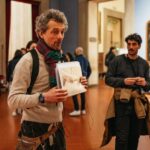
The biggest difference between a pure self-guided ticket and this format is the live host. The host is fluent in English and Italian, and they’re there specifically so you can ask follow-up questions.
That changes how you experience the art. Instead of just hearing facts, you can ask the kind of questions that make the sculpture connect to real human motivations. Why was it made this way? What does a pose suggest? Why did certain details become so famous?
In past runs, a guide named Barbara has been praised for being friendly, attentive, and genuinely helpful with questions. That kind of energy matters, because even a small clarification can change how you look at the next sculpture.
Group size can affect the feel
In smaller groups, the host can shift into a more personal pace. You’re still working within a set timeline, but you often get clearer answers and fewer “we’ll cover it next time” moments.
Rules You Must Know: No Video, Photo Stop Timing, and Water Limits
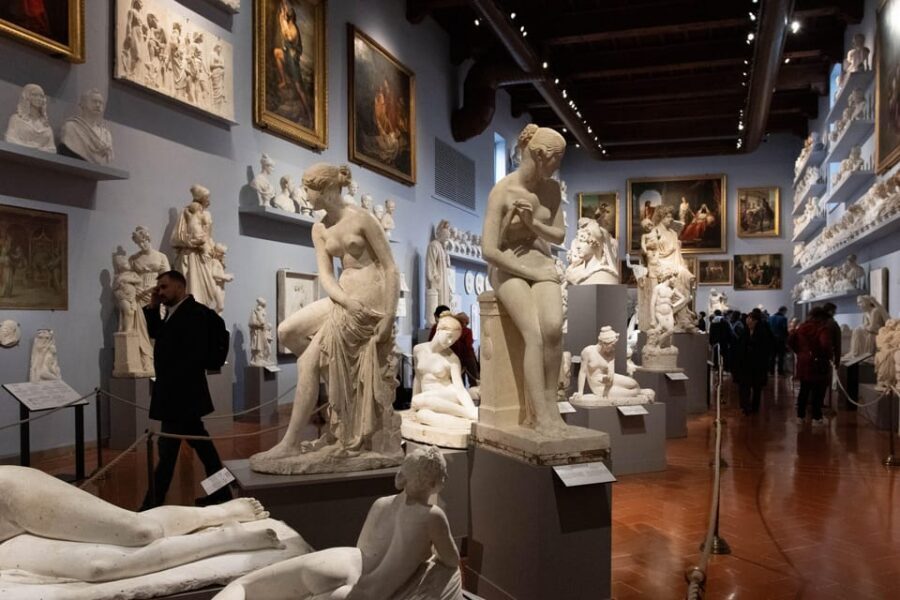
Accademia runs with museum rules that you need to respect, so you don’t lose time at the entrance.
From the tour info:
- No video recording
- Photography inside is not allowed
- You can bring only one bottle of water (maximum 500 ml) into the museum
- No pets
- No luggage or large bags inside
And remember: security screening happens for every visitor, and your admission may be slightly delayed during peak traffic to manage safety.
The photo stop detail vs. the no-photo rule
You’ll have a guided photo stop around David, and that can sound like cameras are part of the plan. But since the tour data also states photography inside isn’t allowed, you should treat that photo stop as a guided positioning moment rather than an excuse to ignore museum policy.
In practice, the safest approach is simple: follow the museum’s on-site rules first. If the staff allow any photography in the specific area, you’ll be told how. If they don’t, you won’t waste time arguing with policy.
What to bring
- Your passport or ID card
- A driver’s license (the tour info lists it as something to bring)
- A single small bottle of water if you need it
Leave luggage and bulky items at home if you can. If you’re traveling light, you’ll enjoy the visit more.
Price and Value at $46: Is It Worth It Versus DIY?
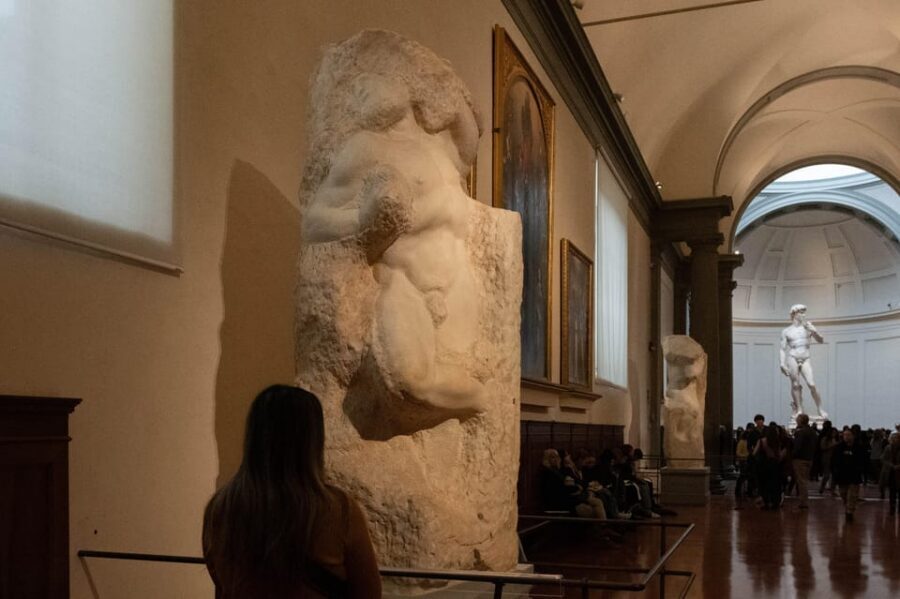
At about $46 per person and roughly one hour, this tour is priced for people who want a structured start and don’t want to bargain with long lines.
Here’s what you’re really paying for:
- Reserved time entry, which saves the biggest time sink in Florence museum plans
- A live host who answers questions in English/Italian
- A multilingual audio guide covering over twenty masterpieces
- Help at the start, thanks to an on-site check-in assistant
If you’re the kind of visitor who loves reading every label, you might feel the hour is short. But if you want to see David and understand what you’re looking at without spending time figuring out where to go next, the value is strong.
Also consider what you get in stress reduction. In a museum environment where admission can be regulated and security checks are mandatory, having a reserved-time plan and an assistant to point you the right direction matters as much as the art itself.
One caution based on experience from this type of format: at this price point and duration, you should not expect a slow, deep, gallery-by-gallery masterclass. You’re paying for highlights plus context, not for full museum coverage with constant narration.
Who This Tour Fits Best (and Who Should Skip It)
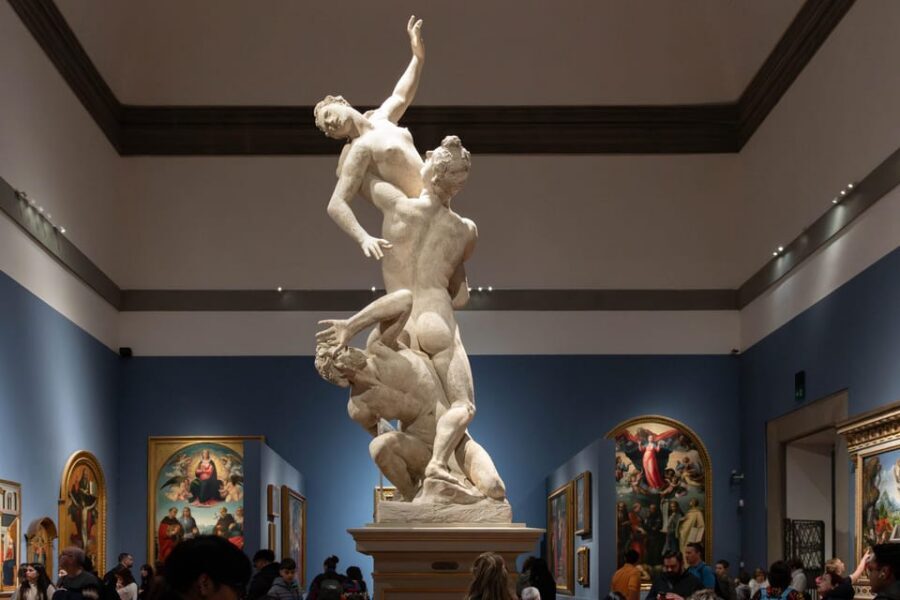
This experience tends to fit best if you:
- Want skip-the-line entry behavior without getting stuck on logistics
- Like having structure for your first Accademia visit
- Want multilingual audio because you prefer hearing art stories in your own language
- Enjoy asking questions and getting quick answers on the spot
Who might not love it
The tour data says it is not suitable for hearing-impaired people. If that affects your group, you’ll want a different style of tour that accommodates hearing needs.
Also, because photography is restricted and the museum has strict rules about bags and recording, this isn’t a good choice if your plan depends on lots of video or unrestricted photo shooting.
Wheelchair access
Wheelchair accessibility is listed for this activity. If you use a wheelchair, this is a plus, and you’ll still want to follow any on-site instructions from museum staff during security screening.
Should You Book This Accademia Ticket & Audio Tour?
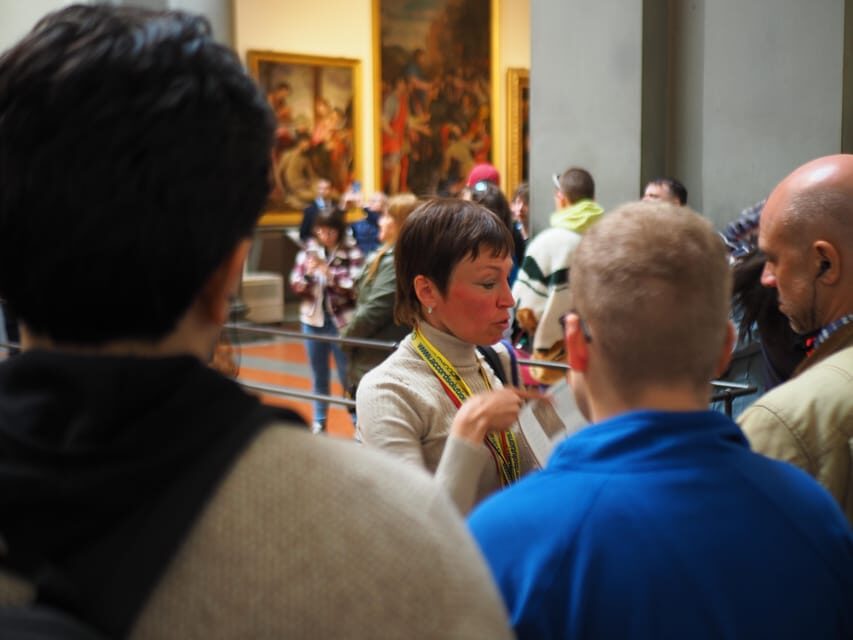
If you’re visiting Accademia as a “first time, make it count” stop, I’d book it. The combination of reserved time entry, a live host, and a multilingual audio guide is exactly what turns the gallery into an understandable, memorable experience instead of a line-to-statue sprint.
Book it if you want:
- Clear guidance to find the main highlights fast
- Audio support that keeps you informed without constant questions
- A simple, time-limited plan that works well for a one-hour window
Skip it if you need continuous guided narration for every room, or if the hearing format won’t work for your group. And if you’re sensitive to strict museum rules around photography and recordings, plan your expectations before you arrive.
Either way, show up at Via Ricasoli 57 early, bring your ID, and be ready for security screening. Once you’re inside, the David-focused structure plus the audio stories give you a strong foundation for understanding what you’re seeing.


More Tickets in Florence
More Tours in Florence


More Tour Reviews in Florence
- Tuscany Day Trip from Florence: Siena, San Gimignano, Pisa and Lunch at a Winery
★ 5.0 · 21,634 reviews - The Best tour in Florence: Renaissance & Medici Tales – guided by a STORYTELLER
★ 5.0 · 12,316 reviews