REVIEW · FLORENCE
Florence: Best Of – with Tour Leader & Multilingual Audio Guide
Book on Viator →Operated by ACCORD Italy Smart Tours & Experiences · Bookable on Viator
Florence feels like a museum on the move. This tour is built for speed with small-group pacing and earphones so you can enjoy major sights without constantly stopping for explanations. I like that it links big-name landmarks with practical street-level orientation, so the city makes sense fast.
I also like the optional lunch add-on (Florentine schiacciata or a charcuterie board, depending on what you select). The main thing to consider is the format: it covers a lot in about 2.5 hours, so the pace can feel fast if you prefer long photo breaks or slower wandering.
In This Review
- Quick hits before you go
- Why this Florence highlights walk works in 2.5 hours
- Meeting point flow: where you start and how the route lands
- Stop by stop: Uffizi square, Piazza della Repubblica, and Ponte Vecchio
- Piazzale degli Uffizi (10 minutes)
- Piazza della Repubblica (10 minutes)
- Ponte Vecchio (10 minutes)
- Palazzo Vecchio and Piazza della Signoria: politics and sculpture in one place
- Palazzo Vecchio outside (10 minutes)
- Piazza della Signoria (10 minutes)
- Santa Croce and the Bargello: two different takes on Renaissance Florence
- Basilica di Santa Croce (time on the walk)
- Museo del Bargello (time on the walk)
- Duomo area and Via de’ Tornabuoni: the skyline landmarks and the luxury street
- Cathedral of Santa Maria del Fiore area (10 minutes)
- Via de’ Tornabuoni (10 minutes)
- Palazzo Pitti and what to do with that information
- Palazzo Pitti (10 minutes)
- Earphones, multilingual audio, and the pacing reality check
- Price and value: is $17.54 really worth it?
- Lunch option: schiacciata or charcuterie board
- Who should book this tour (and who should not)
- Should you book this Florence Highlights tour?
- FAQ
- Is entry to museums included on this tour?
- How long is the Florence Best Of walking tour?
- What is included with the tour price?
- Is lunch part of the experience?
- How big is the group?
- Where do I meet, and where do we end?
- Can I cancel for free?
Quick hits before you go
- Max 15 people means the guide can actually keep track of the group
- Earphones included help you hear the guide clearly as streets get crowded
- No entry tickets needed for the walking highlights (though some sights are ticketed on your own)
- Family-friendly route through central neighborhoods that are easy to navigate on foot
- A multilingual audio track created by an art historian adds background beyond street commentary
- Lunch option can save you time later, especially on a first day in Florence
Why this Florence highlights walk works in 2.5 hours
If you only have a short window in Florence, this kind of walking tour is a smart way to get your bearings. Instead of picking one museum and calling it a day, you get a guided circuit through the core sights that define the city’s look and feel: Arno views, Medici-era landmarks, the Duomo complex area, and the streets that lead toward major palaces.
What makes it work is the balance of “see it” and “know what you’re seeing.” You’re outside, looking at the architecture, the squares, and the bridges. At each stop, you get enough context to place what you’re seeing in Florence’s story, without needing to purchase timed-entry tickets just to participate.
And because the group is limited to 15, you’re less likely to feel swallowed by the crowd. You still need steady walking shoes, but you’re not shuffling along in a mass.
You can also read our reviews of more guided tours in Florence
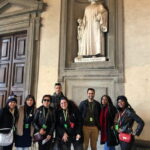
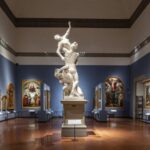
Meeting point flow: where you start and how the route lands
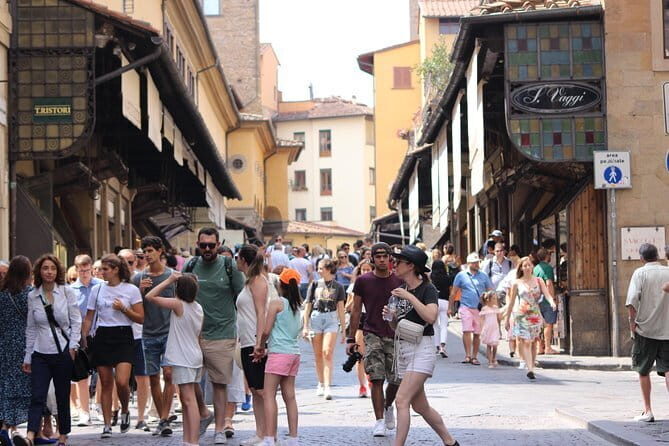
The tour starts at Piazza di Madonna degli Aldobrandini, 8 (near Fontana del Porcellino area), and it ends at Piazza del Mercato Nuovo, by the Fontana del Porcellino. That end point matters because it’s a natural place to keep exploring immediately—especially if you want to wander toward the Duomo area next, or you’re looking for cafés in the center.
The meeting point rule is simple: arrive 15 minutes early. Florence is compact, but getting a group to depart on time in the center takes coordination. If you arrive late, you risk being separated from the start flow, and then the “easy orientation” part of the tour can slip away.
Also note the tour can be operated by a multi-lingual guide. One of the reviews included a guide named Isabella, and others mentioned people like Yaniel, Natalia, Remo, Claudio, Laura, and Valeria. The specific guide changes, but the goal is consistent: tell the story clearly while keeping you moving.
Stop by stop: Uffizi square, Piazza della Repubblica, and Ponte Vecchio
Piazzale degli Uffizi (10 minutes)
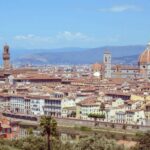
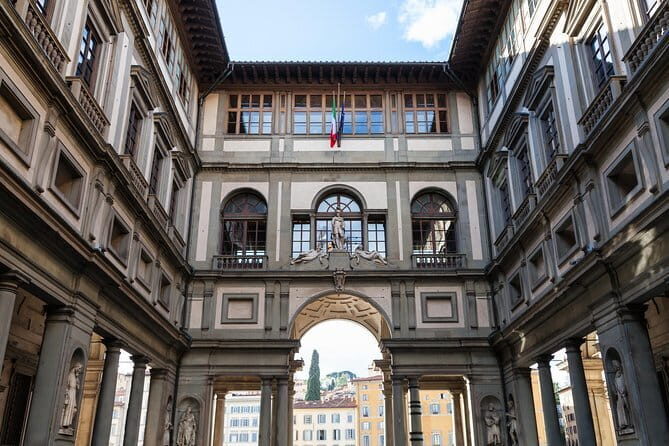
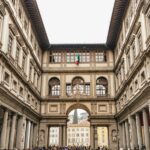
Your first big moment is the square in front of the Uffizi Gallery. Even if you’re not entering the museum on this walk, the viewpoint gives you a real sense of how Florence sits along the Arno. You also get a clean frame for the historic center and the energy around Palazzo Vecchio nearby.
This is a good opener because it gives you something immediately memorable: a view, a focal landmark, and a sense of direction. After this first stop, everything else starts to connect better.
Piazza della Repubblica (10 minutes)
Then you shift to Piazza della Repubblica, a classic central square lined with historic architecture and packed with everyday life. You’ll notice the elegant arches and the kind of “Florence day-to-night” atmosphere that squares here are known for.
This stop is less about one building detail and more about learning how Florence “works” in public space—how people actually move between museums, shopping streets, and cafés.
You can also read our reviews of more tours and experiences in Florence


Ponte Vecchio (10 minutes)
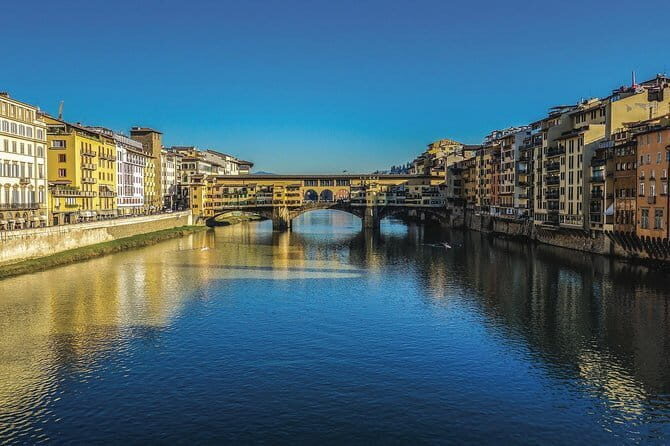
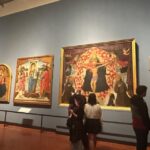
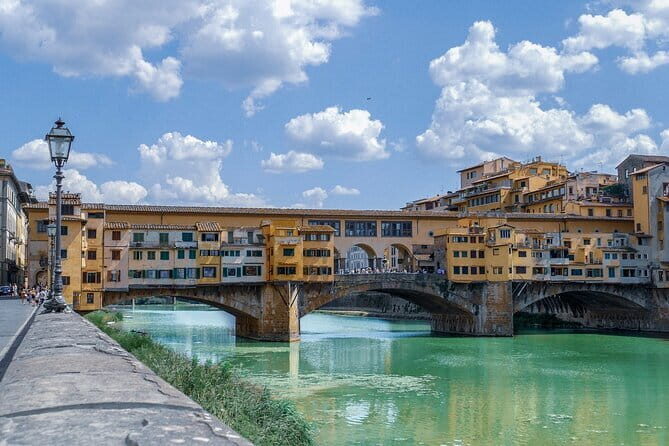
Next up is Ponte Vecchio, the medieval stone bridge that became famous for its shops along the sides. You’ll walk through the visual logic of the bridge: long perspective over the river, buildings stacked around it, and the way the shops shape the skyline from different angles.
Ponte Vecchio is also one of those places where a little context changes everything. It survived dramatic periods in Florence’s past, and the bridge’s transformation—from older trades to its present-day shop-lined form—is part of why it still feels iconic.
One practical tip for this area: if you want your best photos, you’ll need to step slightly away from the densest crossings. The guide’s timing helps, but the bridge is popular, so be ready to work for clear shots.
Palazzo Vecchio and Piazza della Signoria: politics and sculpture in one place
Palazzo Vecchio outside (10 minutes)
From the outside, Palazzo Vecchio is a big, solid presence—medieval-looking, heavy on stone, and unmistakable in the way it towers over the surrounding blocks. Even without entering, you can read the building like a landmark: the scale, the decorative façade, and the dominant clock/tower element that anchors the square.
This stop helps you understand why Florence’s political heart and its art culture overlap so often. You’re standing in the vicinity of the decisions that shaped patronage, art, and power.
Piazza della Signoria (10 minutes)
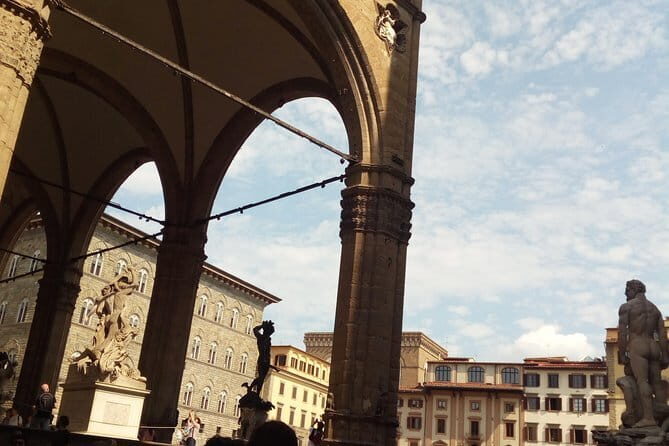
Then comes Piazza della Signoria, the square packed with famous works and replicas, plus the serious architectural framing of Palazzo Vecchio and the nearby structures. This is where you’ll see how Florence treats public space like an open-air gallery.
It’s also a place to catch “easy wins” for orientation. The guide points out where to look, so if you later return on your own, you’ll know what you’re spotting and why.
Santa Croce and the Bargello: two different takes on Renaissance Florence
Basilica di Santa Croce (time on the walk)
Santa Croce is one of those churches that feels more like a cultural monument than just a place to worship. You’ll get the Gothic flavor of the architecture and, most importantly, the idea that Florence remembers key figures here—through tombs and memorials linked to names like Michelangelo, Galileo, and Machiavelli.
If you like when a building has meaning beyond its façade, this stop delivers. It’s not just “pretty church” energy; it’s tied to the minds and movements Florence championed.
Museo del Bargello (time on the walk)
Next, you’ll be near the Museo del Bargello, a former medieval palace that served as town hall and prison. This setting matters: it gives you a sense of how the city used buildings for governance and control, and later repurposed them for art.
The museum is known for Renaissance sculpture, including works associated with artists like Donatello, Michelangelo, and Verrocchio, plus decorative arts. On this tour, you’re in the street-level viewing zone, but the explanation helps you decide whether to add a museum ticket later during your stay.
If you’re the type who hates committing to museum reservations too early, this is a perfect “taste now, decide later” stop.
Duomo area and Via de’ Tornabuoni: the skyline landmarks and the luxury street
Cathedral of Santa Maria del Fiore area (10 minutes)
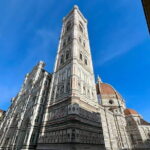
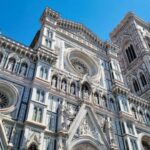
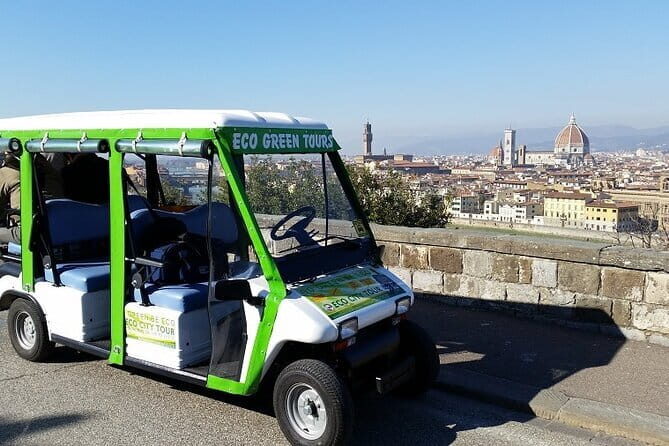
The tour brings you to the Duomo di Santa Maria del Fiore complex area, centered on Piazza del Duomo. You’ll see the grand dome designed by Brunelleschi, and the overall ensemble feel of Baptistery of St. John and Giotto’s Campanile.
Even if you don’t go inside during the walk, this stop is a turning point. It’s where Florence becomes unmistakable in the skyline sense. After this, it’s easier to orient yourself back in the city.
One practical note: the Duomo area is always active. Wear shoes that handle cobblestones, and expect it to be busy around the square.
Via de’ Tornabuoni (10 minutes)
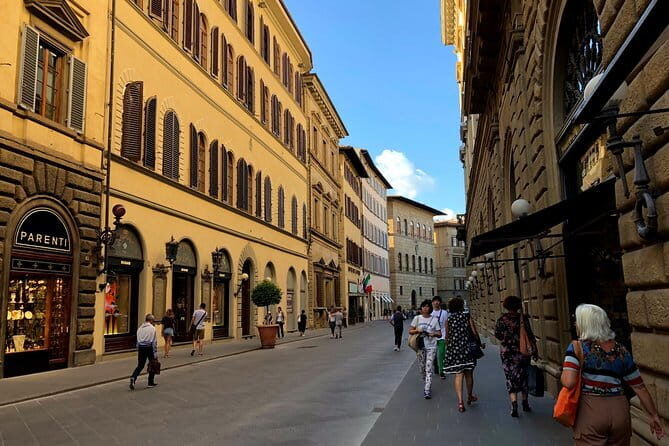
Next is Via de’ Tornabuoni, a polished street that connects toward Piazza Santa Trinita and on to Ponte Santa Trinita. The guide frames it as a historic Renaissance “living room” where noble palaces line the street, then points out how it became known for high-fashion boutiques and jewelry shops.
This stop is ideal if you like seeing contrasts. You just saw Florence’s religious and civic power zones; now you shift toward style, commerce, and elegance—all in the same walk.
Even if you don’t shop, it helps you understand how Florence’s neighborhoods evolved.
Palazzo Pitti and what to do with that information
Palazzo Pitti (10 minutes)
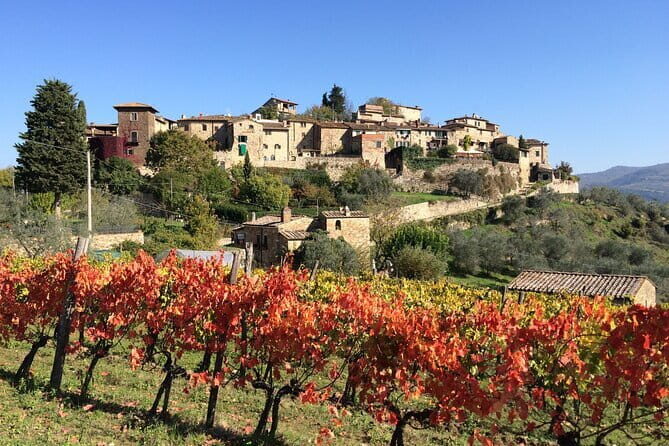
Finally, the walk reaches Palazzo Pitti, a Renaissance palace that became the seat of powerful rulers and later the Italian royal residence. From outside, you’ll grasp the scale, but the bigger value is what the guide helps you map out for later.
Palazzo Pitti is home to major art collections like the Palatine Gallery, with works by artists including Raphael, Titian, and Caravaggio, plus gardens such as the Boboli Gardens. On this tour, you’re mainly gathering the orientation and the “why it matters,” so you can decide whether to return for a longer museum-and-gardens day.
If you have only one full day left, this stop gives you enough structure to pick a smart follow-up plan.
Earphones, multilingual audio, and the pacing reality check
This tour includes earphones so you can hear the guide clearly while staying in the flow. It also uses a multilingual audio track created by an art historian, which helps you get more background even when street noise is high.
That said, Florence is crowded and walking tours require momentum. A few people experienced issues like not understanding the guide well due to accent, or difficulties keeping up in the crowd. Your best move is simple: if you struggle to hear, raise your hand early and check that your earphones are working. Don’t wait until the tour is half over.
Pace is the other consideration. The itinerary covers multiple major sights in one circuit, so you’re not doing slow “museum tempo.” The format is great for first-time orientation, but it might feel tight if you want frequent, long breaks for photos.
On the bright side, you’ll likely get a guide who adds human touches. Guides named Valeria and Natalia were mentioned for turning streets into stories, plus adding practical pointers for where to eat and what areas to revisit after the tour.
Price and value: is $17.54 really worth it?
At about $17.54 per person, this is priced like an efficient “orientation engine.” You’re paying for a professional guide, earphones, and the multilingual audio content. That’s a lot of service for a walking tour price.
Also, the tour doesn’t require you to buy entry tickets during the walk. That matters because museum prices in Florence can add up fast, and timed entries can eat planning energy. Here, you’re learning where to go and what to look for, then you can choose what’s worth your money later.
The only possible value dip is if you’re expecting a full ticketed museum day. This is a city walking tour with major exterior highlights. If you want interiors, you’ll need to plan those separately.
If you choose the lunch option, it can turn the tour into a time-saver too: you don’t have to hunt for food right after you’re done navigating the center.
Lunch option: schiacciata or charcuterie board
The experience includes lunch for participants who select that option, with choices listed as Florentine schiacciata or a charcuterie board. Lunch on a guided route is handy in Florence because you avoid the “we’ll figure it out later” trap when the streets are busy and you’re hungry.
If you don’t select the lunch option, you still end the tour in a central area where you can find food easily, but your day flow will be more on you.
One small planning note: some departure details can vary. A couple of people mentioned gelato timing changes, so don’t count on a final sweet stop unless it’s explicitly stated for your specific departure.
Who should book this tour (and who should not)
Book this if you:
- Want a first-day orientation through Florence’s most famous central landmarks
- Like hearing context as you walk, especially around Ponte Vecchio, the Duomo area, and major squares
- Prefer a small-group format and you’re okay with an energetic route
- Might add a museum visit afterward (Bargello and Palazzo Pitti are right there on your mental shortlist)
Skip or choose carefully if you:
- Need a slow, no-rush pace with long stops at fewer sites
- Get frustrated if you can’t hear the guide well right away—check your earphones early
- Plan to rely on this as a ticketed museum day (it’s primarily a walk and look from the outside)
Should you book this Florence Highlights tour?
I’d book it if you want Florence to click quickly. This is the kind of tour that helps you return to the city afterward and feel like you understand where you are, not just what it looks like.
I’d think twice only if you’re very sensitive to audio clarity or you hate moving from stop to stop. The best version of this experience is the one where you treat it as a guided map plus story, then use your free time to go back to the places that really grab you.
If you’re short on time and want an efficient, friendly way to see the heart of Florence, this is a good call.
FAQ
Is entry to museums included on this tour?
No. It’s a walking tour, so entry tickets aren’t included for the stops you see from outside.
How long is the Florence Best Of walking tour?
It runs about 2 hours 30 minutes.
What is included with the tour price?
You get a professional tour leader, earphones to hear the guide, and multilingual audio contents created by an art historian. Lunch may be included if you select that option.
Is lunch part of the experience?
Lunch is included only if you choose the lunch option. The listed choices are Florentine schiacciata or a charcuterie board.
How big is the group?
The tour has a maximum of 15 travelers.
Where do I meet, and where do we end?
Meet at Piazza di Madonna degli Aldobrandini, 8, 50123 Firenze FI, Italy. End at Piazza del Mercato Nuovo, 50123 Firenze FI, Italy near Fontana del Porcellino.
Can I cancel for free?
Yes. You can cancel up to 24 hours in advance for a full refund. If you cancel less than 24 hours before the start time, the amount paid won’t be refunded.

More Guided Tours in Florence
More Tours in Florence


More Tour Reviews in Florence
- Tuscany Day Trip from Florence: Siena, San Gimignano, Pisa and Lunch at a Winery
★ 5.0 · 21,634 reviews - The Best tour in Florence: Renaissance & Medici Tales – guided by a STORYTELLER
★ 5.0 · 12,316 reviews