REVIEW · FLORENCE
Florence: Dante and The Jubilee Guided Tour
Book on GetYourGuide →Operated by Itinerantour · Bookable on GetYourGuide
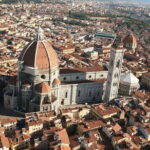
This tour is a medieval story walk, not a museum lecture. Dante and the Jubilee connect in a way that makes Florence feel like it’s speaking back to you, from the Duomo area to the city corners linked to Dante’s life.
Two things I especially like: the focus on how the 1300s Jubilee idea shaped religious pilgrimage and hope, and the way the guide uses street-level anecdotes and curiosities to bring medieval Florence to life. One thing to consider is that the tour runs in Italian, so if you’re not comfortable with the language, plan to follow best you can with the guide’s explanations and the short stop lengths.
In This Review
- Key things you should know before you go
- Pope Boniface VIII, the Jubilee, and why Dante fits
- Finding your guide and starting at Santa Maria del Fiore
- Florence through Dante’s eyes: the main walking flow
- House of Dante: a brief stop that matters
- Santa Croce: understanding Florence’s moral and cultural center
- Piazza della Signoria: power, art, and the city’s political heartbeat
- Orsanmichele: the short stop that often leaves you wanting more
- The pacing, earphones, and how to make the most of 1.5 hours
- Price and value: is $51.24 fair for this kind of guided story?
- Who this Jubilee-and-Dante tour fits best
- Should you book this Florence Dante and Jubilee tour?
- FAQ
- How long is the Dante and Jubilee guided tour?
- What’s included in the price?
- Where do I meet the guide?
- Is the tour in English?
- Is this a Jubilee-only tour?
- Is the tour wheelchair accessible?
- Can I cancel for a refund?
Key things you should know before you go
- Jubilee-only special edition: it’s run specifically for the occasion of the Jubilee, so the theme stays tight.
- Outdoor walk with short guided stops: you’ll move through central sights in about 1.5 hours.
- Radio and earphones included: it helps you hear the guide clearly while walking.
- Guides you through Dante’s context: the story starts with the Jubilee tradition tied to Pope Boniface VIII.
- Emanuela gets standout praise: she’s described as passionate, prepared, and reassuring on the route.
Pope Boniface VIII, the Jubilee, and why Dante fits
The heart of this experience is the Jubilee tradition that Pope Boniface VIII set down in the 1300s. The tour frames it with a biblical message of liberation, plus the spiritual meaning of pilgrimage, aimed at hope for a renewed world.
Then it makes a smart leap: the guide links that tradition to why Dante wanted his journey of salvation and redemption to show up in the Divine Comedy. The result is not just “Dante trivia.” It’s a lens for reading what you see in Florence, especially when you’re walking through neighborhoods that feel frozen in medieval time.
If you like travel that has a clear idea, this works well. You’re not bouncing between random highlights. You’re following a theme that explains why Dante’s Florence mattered.
You can also read our reviews of more guided tours in Florence
Finding your guide and starting at Santa Maria del Fiore
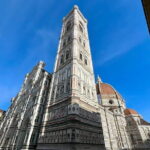
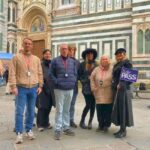
You meet at the Campanile di Giotto on the baptistery side. Look for the guide holding an Itinerantour sign so you can get moving quickly without guesswork.
Even though the walking sequence begins at the Duomo area, the starting point is set up to help you orient fast. From there, you’re in the right mindset: the tour uses the cathedral setting as a symbolic “first chapter,” then walks you outward through the kind of city Dante would have known.
Practical tip: this is an outdoor walk, so dress for weather and be ready to move steadily. The time blocks at each stop are short, so you’ll want to stay present and not get distracted by side streets unless your guide suggests it.
Florence through Dante’s eyes: the main walking flow
The route is built around a simple idea: you’ll see Florence as a medieval person might, with faith, politics, and daily life all tangled together. The guide’s job is to point out what a modern visitor might glide past—meaning, symbols, and small historical threads.
That’s where the “mentality of the Middle Ages” part becomes more than a slogan. The tour uses context to make buildings and squares feel connected to the thoughts that shaped Dante’s writing—especially the feeling that pilgrimage can be both physical movement and spiritual transformation.
You’ll also hear lots of anecdotes and curiosities, the kind that make you look twice at an archway or a façade. It’s the difference between seeing a place and understanding what it might have meant.
House of Dante: a brief stop that matters
Next you’ll visit the House of Dante for about 10 minutes. The stop is short, so don’t expect a long, slow museum-style experience. Instead, it’s timed for impact: a quick step into the human side of Dante’s story.
This is a useful moment for grounding everything. When the earlier parts focus on ideas—Jubilee tradition, pilgrimage, hope—this stop brings the story closer to a real person and a specific Florentine setting.
If you’re the type who likes your cultural travel to connect to names and places, this stop will land well. Even at 10 minutes, it helps you keep the theme anchored in Dante’s life rather than floating in general history.
Santa Croce: understanding Florence’s moral and cultural center
The tour continues to the Basilica of Santa Croce, with a guided visit around 15 minutes. This stop fits the tour’s bigger theme because it’s a place where Florence’s identity shows up through art, faith, and public meaning.
What you’ll get here is less about checking boxes and more about the logic of why Dante’s world would keep circling back to spirituality and civic life. The guide’s explanations help you connect the religious atmosphere of the Jubilee idea to the kinds of values that shaped medieval Florence.
A small caution: Santa Croce can be visually busy. Use the guide’s timing and cues as your “filter,” especially if you’re trying to absorb a lot in a short window.
- Tuscany Day Trip from Florence: Siena, San Gimignano, Pisa and Lunch at a Winery
★ 5.0 · 21,634 reviews - The Best tour in Florence: Renaissance & Medici Tales – guided by a STORYTELLER
★ 5.0 · 12,316 reviews



Piazza della Signoria: power, art, and the city’s political heartbeat
Then it’s on to Piazza della Signoria, another guided stop of about 15 minutes. This square is a key stage for Florence—part public space, part power display—so it’s a natural place for a Dante-focused walk.
In this setting, the Middle Ages theme becomes more tangible. You’re not just hearing about ideas; you’re standing in a civic space where history, reputation, and authority have long been on display. The guide’s anecdotes and curiosities can help you read the square with a more informed eye.
If you enjoy architecture and city planning, you’ll likely appreciate how the route uses the piazza as a kind of “outdoor classroom.” It’s a quick segment, but it’s designed to change how you look at Florence’s public face.
Orsanmichele: the short stop that often leaves you wanting more
Next you’ll pass through Orsanmichele for about 5 minutes. It’s the shortest stop on the walk, which means the guide likely keeps the focus tight—pointing out details you might miss without context.
This is one of those “blink and it’s gone” moments. But it can still be valuable, because the point is to leave you with at least a few concrete images and meanings from the building, not to exhaust it in a rushed visit.
If you’re hoping for a longer deep-dive at Orsanmichele, this route may feel like a teaser. On the other hand, if you prefer a thematic walk with variety and forward motion, this short stop keeps the pace from dragging.
The pacing, earphones, and how to make the most of 1.5 hours
The whole guided portion runs about 1.5 hours, with the timing split across multiple central locations. That format is great when you want the big story beats without committing to half a day or more.
You also get radio and earphones, which is a big deal on a walk like this. It helps you hear the guide clearly while moving through crowded or noisy areas, and it reduces the stress of trying to stand at the exact perfect spot for audio.
To enjoy this most, treat it like a guided conversation with stops. Don’t try to photograph every second. Instead, listen for the explanations that connect one place to the next.
And yes, you may feel the route moves quickly. That’s not a flaw; it’s the design. The tour is built for theme and flow.
Price and value: is $51.24 fair for this kind of guided story?
At $51.24 per person, you’re paying for a live guide, plus the included radio/earphone setup, and for an experience that’s specifically tied to the Jubilee occasion. It’s not a cheap “wander and hope” option, but it also isn’t overpriced for what you get.
Here’s where the value shows up:
- You get a coherent theme (Jubilee tradition and Dante’s connection), not a random selection of sights.
- You save time on interpretation, since the guide turns buildings and squares into meaningful story points.
- The earphones make the short route usable, which matters when stops are brief and the group is moving.
If you’re the kind of traveler who reads plaques and then shrugs, a guided thematic walk like this is often worth it. If you already know a lot about Dante and medieval Florence, you might still enjoy the route, but you’ll get more out of it if you’re okay learning as you go.
Who this Jubilee-and-Dante tour fits best
This tour is a strong match if you want Florence with a clear narrative thread. It works especially well for you if:
- You enjoy literature-related travel and want Dante’s story connected to real places.
- You like religious history when it’s explained through ideas and lived settings.
- You prefer outdoor walking tours with short, targeted stop times.
It’s also a decent choice for first-time Florence visitors who feel overwhelmed by choice. The route has shape, and the guide’s explanations help you connect the sights into a single story.
If you want a long, slow, architecture-only visit, you might find the shorter stops too brief. But for a themed experience that makes Florence feel like a medieval stage, it’s a smart use of time.
Should you book this Florence Dante and Jubilee tour?
Book it if you want a guided walk with a strong theme and you’re comfortable with an Italian-led explanation. The Jubilee focus gives the tour a reason to exist, not just a list of famous stops, and the route’s structure helps you see Florence through Dante’s world instead of as disconnected landmarks.
Skip it (or plan differently) if you need long on-site time at each attraction, or if Italian narration is a deal-breaker for you. In that case, the pace and language format may limit what you can fully absorb.
If you’re on the fence, I’d treat this as a “story-first” experience. When you like ideas that turn into street-level meaning, this one is easy to get excited about.
FAQ
How long is the Dante and Jubilee guided tour?
The tour lasts about 1.5 hours, with starting times depending on availability.
What’s included in the price?
You get a live tour guide and radio/earphones to help you hear during the walk.
Where do I meet the guide?
Meet at the Campanile di Giotto on the baptistery side. Look for the guide with the Itinerantour sign.
Is the tour in English?
No. The live tour guide language is Italian.
Is this a Jubilee-only tour?
Yes. It’s a special edition run only on the occasion of the Jubilee.
Is the tour wheelchair accessible?
Yes, the activity is wheelchair accessible.
Can I cancel for a refund?
Yes. Free cancellation is available up to 24 hours in advance for a full refund.


More Guided Tours in Florence


More Tours in Florence



More Tour Reviews in Florence
- Tuscany Day Trip from Florence: Siena, San Gimignano, Pisa and Lunch at a Winery
★ 5.0 · 21,634 reviews - The Best tour in Florence: Renaissance & Medici Tales – guided by a STORYTELLER
★ 5.0 · 12,316 reviews