REVIEW · FLORENCE
Florence, Guided Bike Tour to Discover the Secrets
Book on Viator →Operated by Secrets of Florence, Bike Tour with AL · Bookable on Viator
Florence has a way of speeding up your heart. This 2-hour guided bike tour strings together the city’s biggest landmarks and a bunch of lesser-seen details, fast. You’ll get clear explanations as you roll past the Duomo, the Baptistery, Medici-era power spots, and the Arno’s most famous bridge.
Two things I really like about this experience: the tight timing (it’s short enough to fit any schedule) and the way the guide turns stops into stories instead of photo breaks. A second strong point is the stop selection, which mixes major sights with quick hits like the Buchette del vino and the Ferragamo museum—no wasted time.
One consideration: two stops don’t include admission (the Battistero di San Giovanni and Palazzo Strozzi). If you want to go inside those, budget a little extra—or be ready to admire the exteriors if you’re trying to keep everything on one ticket.
In This Review
- Key highlights before you book
- Rolling into Florence: how the 2 hours actually work
- Duomo time: Santa Maria del Fiore and the Lady of the Flower
- Baptistery stop: San Giovanni’s 1059 consecration, and the Mars story
- Piazza della Repubblica: the Roman grid under modern streets
- Palazzo Strozzi: Renaissance power and why buildings had to move
- Via de’ Tornabuoni: the fancy Florence street (and why it’s popular)
- Buchette del vino at Finestra delle Belle Donne: a tiny tradition with big charm
- Ferragamo’s museum: shoes, fashion, and an Italian creative mindset
- Ponte Vecchio: the only bridge for centuries, rebuilt after flood, saved in war
- Porcellino luck ritual: touch the nose, and the coin test
- Piazza della Signoria: the Old Palace and Florence’s civic center
- Price and value: what $33.42 buys you in real sightseeing time
- Who should take this bike tour (and who might not)
- Should you book Secrets of Florence on a bike?
- FAQ
- How long is the Florence guided bike tour?
- Where does the tour start?
- What is the price per person?
- Is there a mobile ticket?
- How far in advance do people usually book it?
- How big is the group?
- Do admission tickets cost extra?
- Is confirmation provided after booking?
- Are service animals allowed?
- What’s the cancellation window?
- Is there a minimum number of travelers?
Key highlights before you book

- Small group size (max 8): easier questions, better pacing, less waiting.
- Two-hour route through top Florence spots: Duomo, Ponte Vecchio, Piazza della Signoria, plus extras.
- Free admissions on multiple stops: you get more value from the tour price than you might expect.
- A guide who keeps it friendly and story-driven: especially when asking questions on the fly.
- Florence details you’ll miss on your own: like the Buchette del vino and the Porcellino luck ritual.
Rolling into Florence: how the 2 hours actually work

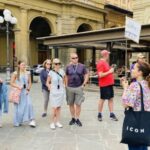
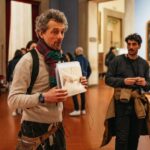
This tour is built for people who want Florence’s “greatest hits,” but without spending the whole day in museums. The total time is about 2 hours, and the route covers a smart mix of monuments, squares, and streets. The pacing matters here: it’s not a slow stroll, so you’ll see a lot while still getting the context behind what you’re looking at.
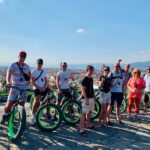
You start at Via della Pergola, 19 (50121 Firenze FI), and the activity ends back at the same spot. With a maximum of 8 people, the group usually moves without the constant stop-and-go you get with larger tours. You also get a mobile ticket, which is handy when you’re juggling phone maps, photos, and tickets for other sights that day.
If you’re the type who likes to understand what you’re seeing—why the building is where it is, what it means for the city, what locals still do—this format fits you well. If you prefer long, silent museum time, you might want to pair this with one or two slower add-on visits after.
You can also read our reviews of more cycling tours in Florence
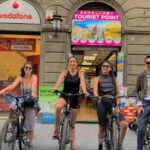
Duomo time: Santa Maria del Fiore and the Lady of the Flower
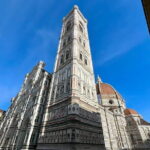
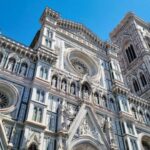
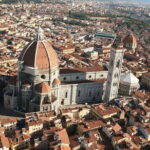
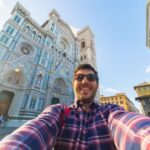
Your first major stop is the Cattedrale di Santa Maria del Fiore—the Duomo. This church is one of the largest in the world, and the name carries the identity of Florence itself. Santa Maria del Fiore connects the cathedral to Florentia, the city associated with flowers and the Florentine lily emblem.
You’ll have about 20 minutes here. That’s enough time to orient yourself, spot key architectural features, and take photos without feeling you’re racing through everything. One big value point: admission is free for this stop (per the tour info).
Practical tip: the Duomo area can get crowded. If you’re arriving from other parts of Florence, give yourself time to get your bearings first, then use this stop to make sense of the bigger cathedral complex—so later streets and viewpoints feel more connected.
Baptistery stop: San Giovanni’s 1059 consecration, and the Mars story

Next you’ll head to the Battistero di San Giovanni—the Baptistery people associate with Dante’s famous words, My St. John, the beautiful. The structure you see today was consecrated in 1059 by Pope Niccolò II, but the site’s past seems longer and more complicated.
Here’s one of the coolest parts: it was long believed the baptistery originated as a pagan temple dedicated to Mars, then later converted to Christian worship. Whether you take the story as literal or symbolic, it gives you a sense of how layered Florence’s meaning is—new faith and old places sharing the same ground.
This stop is short, about 5 minutes, and admission is not included. So think of it as a quick hit to understand what you’re looking at, not a full interior visit (unless you plan to pay separately on the day).
Piazza della Repubblica: the Roman grid under modern streets

You then roll into Piazza della Repubblica, described as the most famous squares in Florence and centered on the Roman city layout. The tour points out that the present site of the Colonna dell’Abbondanza marks the intersection of the Roman axes—the cardo and the dicomano.
In plain terms: this is one of those places where Florence keeps showing you older plans beneath newer buildings. You can stand in a beautiful square and still imagine the Roman city geometry underneath.
You’ll get about 15 minutes here, and admission is free. This is a good stop for a breather too, because the route continues with palaces and streets that are more “look and listen” than “sit and admire.”
Palazzo Strozzi: Renaissance power and why buildings had to move

After the Roman-era square, you shift into Renaissance aristocratic architecture with Palazzo Strozzi. This palace is a classic example of how wealthy Florentine families asserted status. The ground plan was so regular that it often required the demolition of pre-existing constructions, which is a wild way to think about power: rearranging the city to fit the family.
The visit here is about 10 minutes, and admission is not included. That means you’ll mainly get the exterior and the architectural logic rather than a full museum-style walkthrough.
If you’re the kind of person who likes to understand what a facade is communicating—order, wealth, authority—this stop delivers without demanding a long ticketed commitment.
You can also read our reviews of more guided tours in Florence
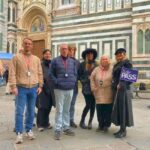
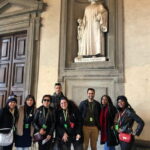
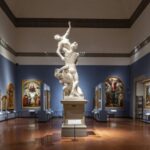
Via de’ Tornabuoni: the fancy Florence street (and why it’s popular)

Next comes Via de’ Tornabuoni, often described as the fanciest street in Florence: wide sidewalks, impressive buildings, and high-profile designer shopping. It’s a quick stop, about 10 minutes, and admission is free.
This is the kind of street that can feel “modern” compared to churches and palaces. That’s not a flaw. It shows you Florence didn’t stop at Renaissance art. The city keeps attracting luxury—and the street layout, the building style, and the energy around it help explain why.
Use this stop to reset your pacing and grab photos along a straight line. Then you’ll move into smaller, more playful details that are easy to miss unless someone points them out.
Buchette del vino at Finestra delle Belle Donne: a tiny tradition with big charm

One of the most fun parts of the route is a stop tied to Finestra delle Belle Donne. The tour notes that it’s easy to get lost wandering central Florence, admiring the big Renaissance masterpieces—and overlook the smaller stuff.
Here you’re looking for the Buchette del vino, the tiny wine outlets. They’re the kind of detail that makes Florence feel lived-in rather than museum-silent. The idea is simple, but the effect is great: you start noticing how people once moved goods and social life through everyday architecture.
You’ll have about 15 minutes, and admission is free. If you like learning small customs—especially ones tied to how buildings worked—this stop is worth the time even if you’re not a wine person.
Ferragamo’s museum: shoes, fashion, and an Italian creative mindset

Then you get a very different flavor: Museo Salvatore Ferragamo. The museum was founded by the Ferragamo family in May 1995 to introduce an international audience to Salvatore Ferragamo’s artistic qualities and his role in footwear and global fashion.
This stop is about 10 minutes, and admission is free (for the tour stop). It’s short, so you won’t be able to read everything and study every object. But as a quick thematic shift, it works: you go from stone and saints to design and craftsmanship.
If you enjoy the intersection of art and practical objects—like how footwear becomes a creative expression—this museum makes a nice contrast to the more religious and political landmarks earlier in the route.
Ponte Vecchio: the only bridge for centuries, rebuilt after flood, saved in war
No Florence bike tour is complete without Ponte Vecchio. The tour reminds you that Ponte Vecchio sits close to a Roman crossing and was the only bridge across the Arno until 1218. The current bridge was rebuilt after a flood in 1345.
Then comes the wartime detail that gives this bridge extra weight: during World War II, it was the only bridge across the Arno that fleeing Germans did not destroy. That fact changes how you look at the place. It’s not just charming scenery; it’s a survivor.
You’ll have about 5 minutes, and admission is free. That’s quick, but the bridge is so visually strong that even a short stop gives you a lot to process—especially if you already learned the Roman and rebuilding timeline.
Tip: if it’s crowded, don’t force it. Find a spot to look across the water and let the story sink in before snapping photos.
Porcellino luck ritual: touch the nose, and the coin test
Next is Fontana del Porcellino—the boar statue tied to a well-known luck ritual. The basic custom is simple: touch the statue’s nose, and it’s supposed to bring good fortune. The tour info goes further with a specific ritual detail that most people don’t know.
While rubbing the nose with one hand, hold a coin in the boar’s open mouth and let it drop. If it falls through the grating, luck is guaranteed. If not, you can try again.
You’ll spend about 5 minutes here, and admission is free. This stop is fun because it’s interactive. It’s also a good reminder that Florence’s art includes everyday rituals, not just big-ticket architecture.
Piazza della Signoria: the Old Palace and Florence’s civic center
The final stop is Piazza della Signoria, home to Palazzo della Signoria—also known as the Old Palace. This is Florence City Hall and has also functioned as a museum and major landmark in the Renaissance heart.
You’ll have about 15 minutes. Think of this as the political and civic counterpoint to the earlier stops: churches, trade streets, family palaces, and now the center of government.
Admission is free for this stop in the tour info. This is a great place to gather your thoughts before you bike back—especially since Piazza della Signoria helps tie the whole route together. You finish with the city’s power at street level, not just in art books.
Price and value: what $33.42 buys you in real sightseeing time
The price is $33.42 per person, and this is typically booked about 11 days in advance on average. That short lead time is a clue: the schedule likely fills because this is an efficient way to get oriented.
Here’s where the value shows up. In just 2 hours, you’re covering a high-density slice of Florence—church, baptistery, civic square, palace architecture, design museum, and the Arno. Even if some stops are brief, the guided storytelling helps you connect the dots instead of just collecting photos.
Also, notice the admission pattern: Duomo is free, and many stops are free to view on the tour. The Battistero di San Giovanni and Palazzo Strozzi do not include admission, so you may want to decide ahead of time whether you’re willing to pay for interior time.
If you want the best deal, show up hungry for explanation. This tour is priced like a guided experience, not like a full museum day. If you show up for the stories, you’ll feel like the time is well spent.
Who should take this bike tour (and who might not)
This tour is a great match for you if:
- you want a short, structured introduction to Florence
- you like architecture plus context, not just landmarks
- you appreciate a guide who keeps things friendly and answer-heavy
- you’re traveling with a schedule constraint and still want a “real Florence” feel
It may be less ideal if:
- you want long interior museum visits at each stop
- you hate missing out on paid admissions at sites where the tour doesn’t include entry
- you prefer slow, quiet wandering over guided pacing
The good news is that the tour notes say most people can participate, and service animals are allowed. If you’re comfortable biking at a moderate pace through central Florence, you’ll likely enjoy the flow.
Should you book Secrets of Florence on a bike?
Yes, I’d book it if you want a fast, well-structured way to understand what makes Florence tick. The small group size (max 8) and the mix of major monuments plus practical, street-level details make it feel like more than a highlights loop.
I’d also book it if you’re the kind of person who enjoys learning a few memorable facts that change how you look: why the Duomo’s name connects to the city’s identity, the Mars-to-Christian idea around the Baptistery site, the Roman axes in Piazza della Repubblica, and Ponte Vecchio’s survival through war.
Just go in with one mindset: this is a 2-hour orientation and storytelling ride, not an all-day museum marathon. If that matches your travel style, it’s a solid use of time in Florence.
FAQ
How long is the Florence guided bike tour?
The tour duration is about 2 hours.
Where does the tour start?
It starts at Via della Pergola, 19, 50121 Firenze FI, Italy, and ends back at the same meeting point.
What is the price per person?
The price is $33.42 per person.
Is there a mobile ticket?
Yes, the tour uses a mobile ticket.
How far in advance do people usually book it?
On average, it’s booked about 11 days in advance.
How big is the group?
The tour has a maximum of 8 travelers.
Do admission tickets cost extra?
Admission is free for some stops, but admission is not included for Battistero di San Giovanni and Palazzo Strozzi.
Is confirmation provided after booking?
Yes, you receive confirmation at the time of booking.
Are service animals allowed?
Yes, service animals are allowed.
What’s the cancellation window?
You can cancel for a full refund up to 24 hours before the experience starts. If you cancel less than 24 hours before, the amount paid is not refunded.
Is there a minimum number of travelers?
Yes. If the minimum isn’t met, the tour may be canceled, and you’ll be offered a different date/experience or a full refund.


More Cycling Tours in Florence
More Tours in Florence


More Tour Reviews in Florence
- Tuscany Day Trip from Florence: Siena, San Gimignano, Pisa and Lunch at a Winery
★ 5.0 · 21,634 reviews - The Best tour in Florence: Renaissance & Medici Tales – guided by a STORYTELLER
★ 5.0 · 12,316 reviews