
REVIEW · FLORENCE
Florence: Visit to Frederick Stibbert’s Villa and Park
Book on GetYourGuide →Operated by Florence Tours by Made of Tuscany · Bookable on GetYourGuide
A museum on a hill with surprises for days. Stibbert Museum is one of those rare Florence stops where you’re not just looking at objects—you’re stepping into Frederick Stibbert’s offbeat world. I love the mix: 20,000 pieces that range from weapons and armor to furnishings, tapestries, and paintings. I also like how the setting itself feels intentional, with displays staged in very atmosphere-rich rooms. One possible drawback: with only about two hours, you’ll need to choose a few favorite sections rather than trying to see everything in full detail.
This visit also gives you a break from the city heat. The villa sits roughly ten minutes from the historic center, and the park adds a calm, shady walk that’s especially welcome on hot days. Expect a private, guided experience that moves at a human pace, not a sprint—though if you’re the type who can spend an hour on a single suit of armor, you’ll wish you had more time.
In This Review
- Key things that make this Florence Stibbert Museum visit work
- Frederick Stibbert’s villa-museum: the real reason it’s memorable
- Price and time: is $178.42 per person worth it?
- Meeting at the entrance and how the guided flow keeps it easy
- Stop 1 to 2: the Stibbert Museum guided tour and what you’ll actually focus on
- The armor and weapons section: more than knights and swords
- The rest of the collection: furnishings, tapestries, paintings, and why it matters
- Stop 3: the Giardino del Museo Stibbert walk in a romantic English-style park
- What the guided visit adds (and what it can’t do)
- Who should book this Stibbert Museum and park tour
- Practical tips to get the most out of your two hours
- Should you book this Stibbert Museum and Park tour?
- FAQ
- How long is the Stibbert Museum and Park tour?
- What’s included in the experience?
- Where do I meet for the tour?
- What languages are the tours offered in?
- Is the tour wheelchair accessible?
- What ID should I bring?
Key things that make this Florence Stibbert Museum visit work

- A collector-built villa-museum where rooms feel arranged for story, not just storage
- 20,000 objects spanning Europe, the Middle East, Asia, and the Far East
- Armor with Medici connections, including the armor tied to Giovanni dalle Bande Nere
- A romantic English-style park with stone animals and architectural touches made by Stibbert
- A guided visit in multiple languages with skip-the-ticket-line convenience
Frederick Stibbert’s villa-museum: the real reason it’s memorable

Florence has plenty of “greatest hits” museums. Stibbert is different. Instead of a museum built to educate the masses, this one feels like a personal universe that an extravagant collector created and then left behind intact.
Frederick Stibbert was English by origin and clearly knew his way around European antiques. The collection reflects that global, old-world buying mindset: you see pieces sourced from Europe, the Middle East, Asia, and the Far East. In other words, this isn’t just medieval knights and then the tour ends. It’s more like a nineteenth-century cabinet of curiosities, except in a two-storey villa and with enough objects to keep your brain busy for days.
What I like most is the blend. Weapons and armor are the headline, sure, but you’re also surrounded by furnishings, tapestries, and paintings. That matters because it helps you see armor as part of everyday taste and status—not just as a weapon. You start noticing how design, materials, and display all work together to tell a story about power, craft, and culture.
You can also read our reviews of more tours and experiences in Florence.
- Tuscany Day Trip from Florence: Siena, San Gimignano, Pisa and Lunch at a Winery
★ 5.0 · 21,634 reviews



Price and time: is $178.42 per person worth it?

At $178.42 per person for a tour that runs about two hours, you should treat this as a focused specialist experience. This price isn’t meant for a casual wander. You’re paying for two things you feel immediately: an expert authorized guide and a well-paced visit that starts in the right place and keeps you from getting lost in the sheer amount of stuff.
If you love museum context—why objects were collected, how they connect, what makes the displays rare—this can feel like good value. The guide helps you move beyond surface descriptions, especially with a collection this unusual. If you’re hoping for a long, slow self-guided museum day, this short duration may feel limiting. With only two hours, you’ll likely prioritize highlights: the armor and weapons section first, then the park walk.
A practical way to judge value: go if the word “armor” makes you curious rather than bored. Go if you want a guided narrative in a place that feels designed by one eccentric mind. Skip it if you need broad, general art highlights across many centuries.
Meeting at the entrance and how the guided flow keeps it easy

You meet in front of the entrance of the Stibbert Museum. The tour ends right back at the meeting point, so there’s no awkward “now find your way back on your own” moment.
Because this is a guided visit for a private group, you’re not fighting crowds. That helps with a museum like this, where the displays can get intense in volume. A good guide becomes your filter—helping you spot what matters and connect themes without overwhelming you.
Also worth noting: the tour includes skip-the-ticket-line entry. That’s not glamorous, but it’s smart. In Florence, time disappears quickly. Getting in smoothly means you’re spending your limited two hours actually looking, not standing.
Languages are offered in English, German, French, Italian, and Spanish. If you want to understand the collection details clearly, choose the language you’re most comfortable with. It’s one of those museums where nuance matters.
Stop 1 to 2: the Stibbert Museum guided tour and what you’ll actually focus on
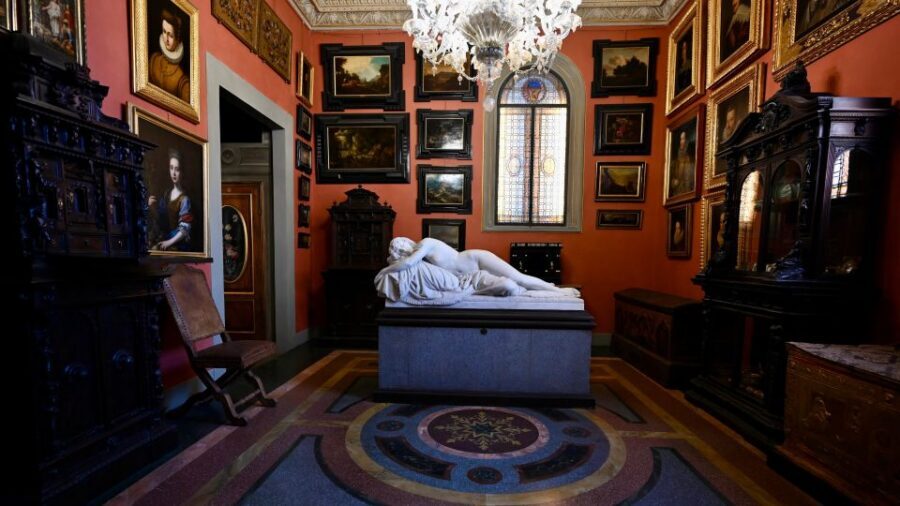
Inside, the focus is naturally on the collection. The museum is famous for weapons and armor, but the bigger story is how Stibbert assembled a world in one place. The collection includes around 20,000 pieces, drawn from multiple regions. You’re not just looking at one culture’s martial history—you’re seeing Stibbert’s interest in the history of different peoples.
The villa’s layout (including two floors) also changes how you experience it. You’re moving through rooms where objects are grouped in ways that feel theatrical. That’s partly the collector’s design style: Stibbert arranged things so you feel the vibe of an era or setting rather than just ticking off categories.
What to expect in a guided format:
- You’ll get context about Stibbert himself—an Englishman who became influential in the European antiques market.
- You’ll learn how the collection reflects his curiosity about varied histories.
- You’ll get help choosing what to look at first so you don’t miss key pieces in the rush.
If you’re traveling with kids, this is one of those places that can actually hold attention. Armor is visual. Weapons are tangible in your imagination. And the guide can turn objects into stories without making it feel like a lecture.
Possible drawback: if you’re mainly interested in one narrow theme (like only Renaissance armor), you may wish you had more than two hours to go deeper. This visit is built for breadth plus highlights, not for obsession-level study.
The armor and weapons section: more than knights and swords
Yes, you’re going to see armor. But here’s the twist: the museum’s armor is also about connections. One standout fact you should know going in is that among the precious armor is the one associated with Giovanni dalle Bande Nere, a famous Medici leader. That single detail gives the collection a real anchor in Florentine power history.
A good guide will help you see what’s special about this kind of object:
- Armor isn’t only metal and straps. It’s craft.
- It’s also identity. How someone dressed could signal rank, allegiance, and cultural style.
- Display matters. Seeing armor alongside other decorative arts can make it feel like part of a life, not a battlefield relic.
I also like that you’re shown the “collector brain” behind the setup. Stibbert’s life was built around acquiring and curating. His fin de siècle era obsession created a museum where weapons and armor aren’t isolated; they sit inside a wider aesthetic universe that includes tapestries, furnishings, and paintings.
So if you’re worried this will feel like a dark hall of swords, don’t. The rooms are staged in evocative environments, and that changes your experience fast.
- Tuscany Day Trip from Florence: Siena, San Gimignano, Pisa and Lunch at a Winery
★ 5.0 · 21,634 reviews - The Best tour in Florence: Renaissance & Medici Tales – guided by a STORYTELLER
★ 5.0 · 12,316 reviews



The rest of the collection: furnishings, tapestries, paintings, and why it matters

If you only care about metalwork, you’ll still get something useful from the rest of the collection. Those non-weapon objects explain the larger goal: Stibbert didn’t collect armor as a hobby. He collected to build a complete world.
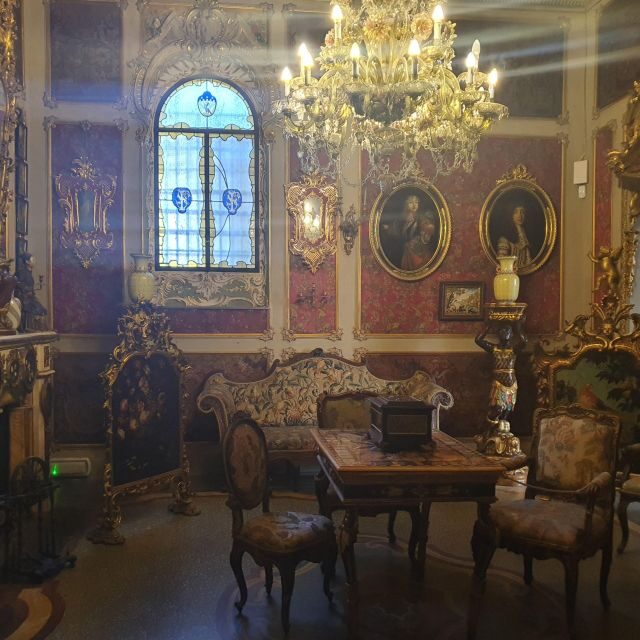
Furnishings and tapestries bring in texture and domestic scale. Paintings add an extra layer—views, symbolism, and the mood of an era. When those objects share space with weapons and armor, you start seeing patterns. You can connect art style to status. You can connect materials to wealth. You can even connect why someone would want a particular set of objects in their home.
This is also where families often relax. Kids can bounce between categories. Adults can get a break from the intensity of armor details. A guide can help keep it playful without turning it into silliness.
Stop 3: the Giardino del Museo Stibbert walk in a romantic English-style park

After the museum rooms, the park is your reward. This is the part that makes the tour feel like more than just galleries.
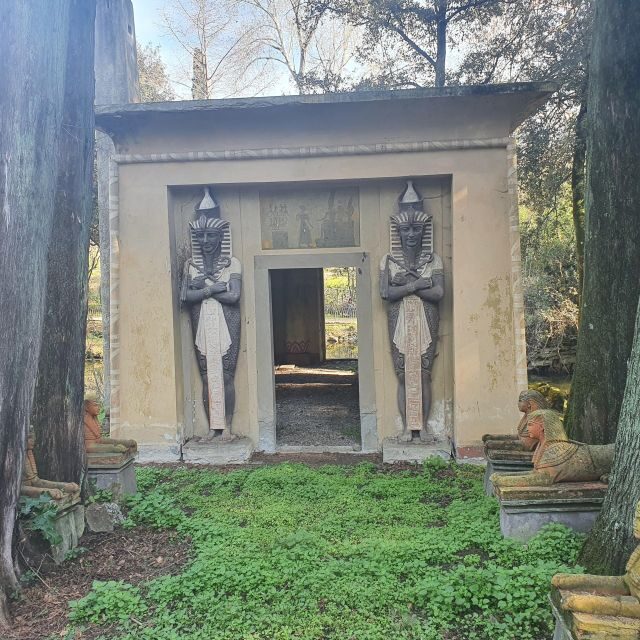
The Stibbert park is described as a typical romantic English park, and you can feel that in the layout and the “designed nature” vibe. It’s dotted with architectural furnishings and stone animals created and built by Stibbert himself. That detail matters. These aren’t generic garden decorations. Stibbert shaped the environment the same way he shaped his collection: by building his own world.
The park also holds plants that were imported from the East, plus rare specimens preserved from the floral exhibitions Stibbert loved. So even if your knowledge of botany is basic, you can still enjoy the sense that the garden is part of the collector’s global theme.
Practical takeaway: bring a little water and take it easy on steps. The park walk is usually the calmer segment, but you’ll still be moving. On hot days, the shade can be a lifesaver, which is exactly why this is often recommended as a summer refresher.
What the guided visit adds (and what it can’t do)
A guide matters most here because the collection is massive: about 20,000 pieces. Without guidance, you’d likely drift. With guidance, you get a path: you hit key rooms, learn the why behind the buying, and leave with a few strong images instead of just a blur of objects.
That said, no guide can stretch two hours into a full museum day. Stibbert Museum is the kind of place where you could happily spend longer if you’re deeply into armor history or decorative arts. If that’s your vibe, treat this as a high-impact taste, then plan a follow-up return on your own.
One more subtle benefit: a guided pace can make the museum feel less intimidating. When you’re surrounded by so many items from different regions, you don’t want to feel lost. A good guide keeps the mental map clear.
Who should book this Stibbert Museum and park tour

This is a strong fit if you:
- Like museums with personality, not cookie-cutter displays
- Are interested in weapons and armor but also want the decorative arts context
- Enjoy horticulture-friendly breaks between museum rooms
- Travel with children and want a place where the visuals do the heavy lifting
It may not be ideal if you:
- Prefer long self-paced museum wandering
- Only care about one time period or one narrow theme
- Want an easy “art highlights of Florence” experience instead of a specialist collection
For most people, it lands in the sweet spot: a guided dose of something unusual, plus an outdoor decompression moment.
Practical tips to get the most out of your two hours
Here’s how to set yourself up for a smooth visit.
First, wear comfortable shoes. You’ll spend time in the villa rooms and then walking the park. Even if the pace is gentle, you don’t want sore feet cutting your curiosity short.
Second, go in ready to look at craftsmanship. Even if you’re not a historian, you can appreciate materials, design, and the sense of handwork. That’s the quickest way to make the armor section feel rewarding instead of repetitive.
Third, if you’re traveling in a mixed group—some art people, some kids, some weapon fans—this tour helps because it spans categories. The guide can keep switching gears between weapons, furnishings, tapestries, and paintings while you’re still all together.
Fourth, bring your ID. A passport or ID card works, and a copy is accepted. That’s a small thing, but it avoids stress at entry.
Should you book this Stibbert Museum and Park tour?
Book it if you want an unusual Florence museum experience with a real point of view. Stibbert Museum gives you weapons and armor, yes—but it also wraps that in furnishings, tapestries, and paintings, all staged inside a collector’s two-storey villa world. Then you cool down with a shaded walk in a romantic English-style park featuring Stibbert-made stone animals and architectural touches.
I’d also recommend it if you’re traveling with kids or you’re visiting in summer and want that park payoff instead of another hour indoors. The guided format and skip-the-ticket-line element help you make the most of a short visit.
Skip it if your idea of value is a long, unstructured museum day or if you’re not interested in a specialist collection that mixes martial objects with decorative arts.
FAQ
How long is the Stibbert Museum and Park tour?
The tour duration is 2 hours.
What’s included in the experience?
You get an expert authorized guide and ticket entrance, plus skip-the-ticket-line entry.
Where do I meet for the tour?
You meet in front of the entrance of the Stibbert Museum. The tour ends back at the meeting point.
What languages are the tours offered in?
The live guide is available in English, German, French, Italian, and Spanish.
Is the tour wheelchair accessible?
Yes, the experience is wheelchair accessible.
What ID should I bring?
Bring a passport or ID card. A copy is accepted.



More Tour Reviews in Florence
- Tuscany Day Trip from Florence: Siena, San Gimignano, Pisa and Lunch at a Winery
★ 5.0 · 21,634 reviews - The Best tour in Florence: Renaissance & Medici Tales – guided by a STORYTELLER
★ 5.0 · 12,316 reviews