REVIEW · MONTEPULCIANO
Montepulciano: Italian Cooking Class at a Tuscan Farm
Book on GetYourGuide →Operated by Valdichiana Living · Bookable on GetYourGuide
Food lessons on a real farm beat theory. This 3-hour Tuscan cooking class focuses on seasonal, local ingredients and practical steps you can actually repeat later. I especially like the no-nonsense, hands-on guidance that gets you working quickly, and the way the menu stays true to the Valdichiana Senese home-kitchen tradition (bruschetta, handmade pici, sauce, then dessert). One thing to consider: transportation isn’t included, and the farmhouse meeting spot is only confirmed after you book.
The pace is geared for a small group (up to 10), so you get real attention while you learn. Expect a warm welcome, a glass of wine during the cooking, and a meal that you sit down to and enjoy at the end.
If you want Tuscany through food—not just food as a souvenir—you’ll likely love this format. You cook, you taste, and you leave with clearer ideas about how Tuscan cooking works.
In This Review
- Key things that make this class work
- A Tuscan farmhouse setting and small-group pace
- Welcome drink, then bruschetta and croutons first
- Handmade pici pasta: the classic Siena-area pasta lesson
- Sauce making with seasonal logic (and another wine break)
- Dessert finish and the joy of eating your own meal
- Price and value for $164.26 per person
- Where timing and logistics matter (and where they don’t)
- Who this is best for in Tuscany (and who might want another option)
- Should you book this Tuscan cooking class?
- FAQ
- What dishes will I make during the class?
- Is lunch or dinner included?
- How long is the cooking class?
- What’s included in the price?
- Do I need transportation to reach the farmhouse?
- What languages will the host or greeter speak?
- Is there free cancellation?
- Is the group size small?
Key things that make this class work
- Start with bruschetta and croutons in a straightforward, step-by-step way (tomato and basil, plus extra-virgin olive oil)
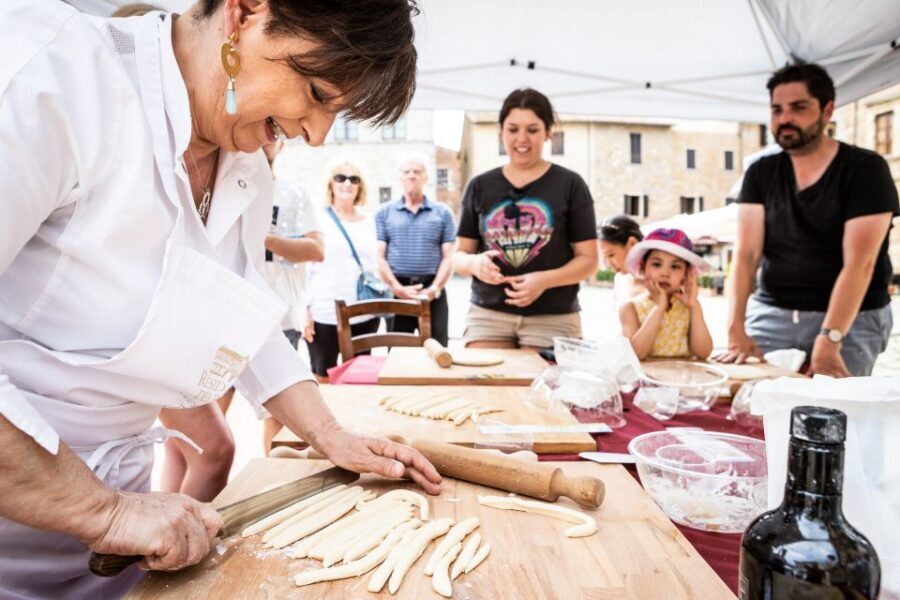
- Learn pici the handmade way by mixing water and flour into dough for the classic Siena-area pasta
- Make sauce from scratch, then keep momentum with a wine break between cooking steps
- Finish with homemade dessert, not just a stop at sweets on the menu
- Eat what you cooked at a farm table with local wines, turning the lesson into the meal
- Small-group setting (limited to 10) makes the instruction feel personal
A Tuscan farmhouse setting and small-group pace
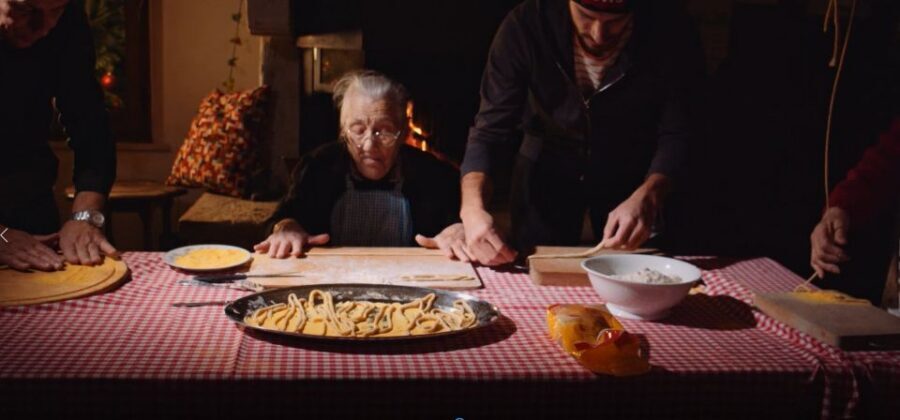
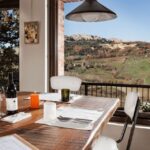
This experience is built around a simple idea: learn Tuscan cooking by doing it on a working-feeling farm, not in a big demo kitchen. You’re learning from people who cook the way kitchens in this region have long cooked—practical, seasonal, and based on ingredients that were (and still are) locally available.
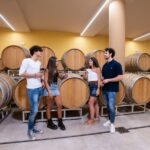
The small group size (limited to 10 participants) matters more than it sounds. When a class is crowded, you watch. When it’s small, you get hands-on time and you can ask questions without feeling rushed. That’s a big part of why this feels like an introduction to real Italian cooking rather than a performance.
You also get an English/Italian host or greeter, which helps if your Italian is “survive-on-menu-only.” Even if you don’t speak much, the process is physical—mix, shape, cook, taste—so you’re not left guessing.
Finally, you’ll eat where you cook. That’s not a minor detail. It changes how you remember what you did because you can connect technique to flavor immediately, at the table, paired with local wines.
You can also read our reviews of more cooking classes in Montepulciano
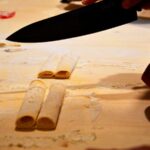
Welcome drink, then bruschetta and croutons first
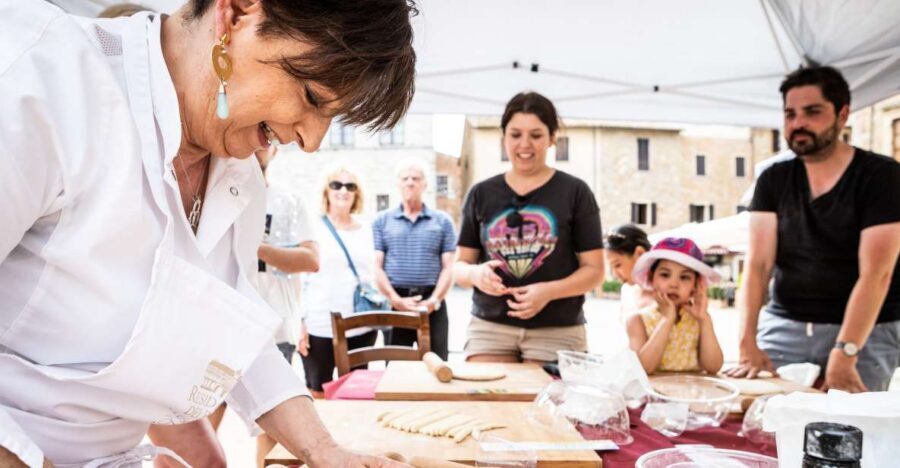
You’ll begin with a welcome drink, which sets the tone—relaxed, social, and ready for food work right away. Then you jump into the first cooking steps: bruschetta and croutons in Tuscan style.
This is a smart entry point. Bruschetta is simple, but it teaches you how Tuscan cooking values balance—good olive oil, fresh flavor from tomato and basil, and bread that’s treated with care. Instead of vague “add seasoning,” you work through clear steps that help you understand what makes the topping taste right.
You’ll also see variations, such as bruschetta with tomato and basil and croutons that highlight Tuscan extra virgin olive oil. It’s a reminder that in this region, olive oil isn’t an afterthought. It’s a core ingredient, and the way it’s used can change everything about the final bite.
Between cooking stages, wine is part of the rhythm. That’s not just a perk. It keeps the atmosphere light while you move from chopping and assembling into dough work later.
Handmade pici pasta: the classic Siena-area pasta lesson
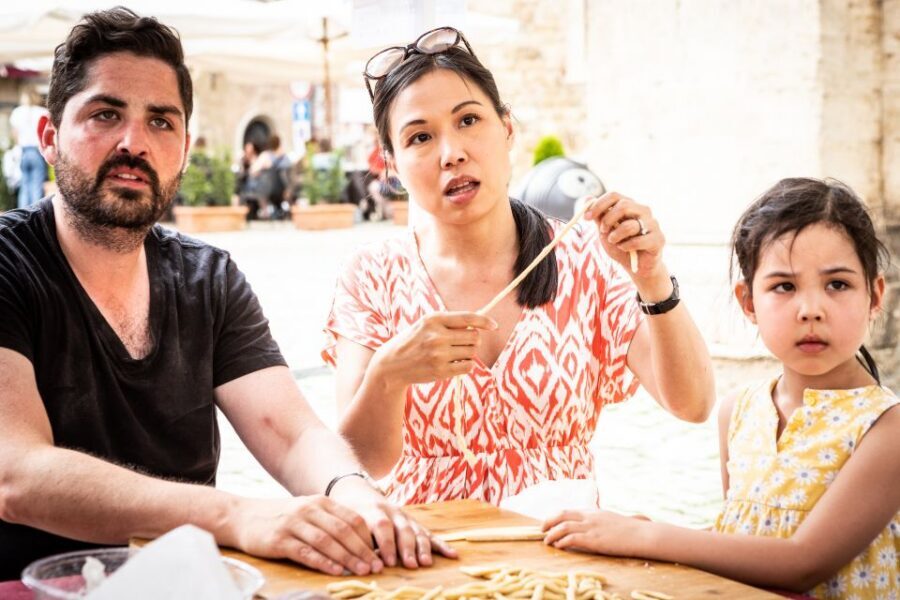
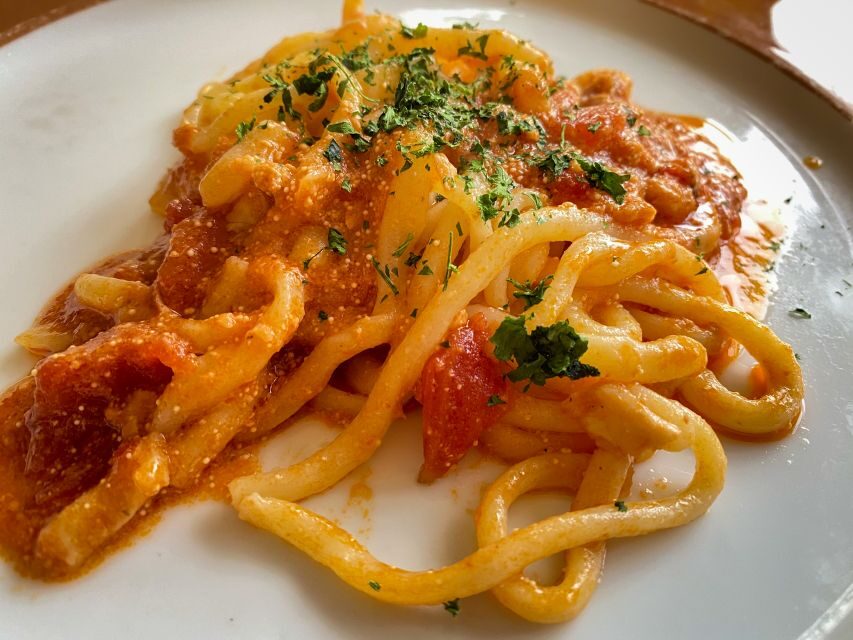
Next comes the most distinctive part of the menu: pici, a handmade pasta typical of the Province of Siena. If you’ve never made pasta dough before, this is still approachable because the class focuses on practical mixing and shaping rather than fancy machinery.
The key step is mixing water and flour to make the dough for pici. That might sound basic, but it’s exactly how you learn: the dough’s texture and handling guide the result. You’re not just dumping ingredients—you’re building a feel for how the dough comes together, then turning it into the shape that defines pici.
Why this matters for you as a traveler: pici teaches technique in a way that feels transferable. Once you understand dough behavior—how it looks, how it feels in your hands—you start thinking differently about pasta at home. It also makes your meal more satisfying because the pasta is entirely yours, not something that arrived ready-made.
And because this is a small group, the instruction can stay tied to what you’re doing in the moment. That’s the difference between learning pasta as a concept and learning pasta as a skill.
Sauce making with seasonal logic (and another wine break)
After pici, you move to making an excellent pasta sauce. The class approach emphasizes simplicity and taste—Tuscan cooking has a long tradition of creating satisfying meals with what’s available, especially in the sharecropping era. The message here is clear: don’t overcomplicate. Build flavor, then let the ingredients do the work.
One advantage of learning sauce in this structure is that you get to see how it connects to the pasta you just made. You’re not cooking sauce in isolation. You’re cooking it as part of a full meal arc.
Also, wine shows up between preparation steps. That timing helps you stay focused. You’re doing steady work—mixing, shaping, cooking—so having that reset keeps the energy up without turning the class into a long, heavy session.
If you’re the kind of person who hates classes that feel like homework, this pacing helps. You’re always moving forward, and the wine break is tied to the workflow.
Dessert finish and the joy of eating your own meal
You won’t just learn the main course. The lesson ends with a homemade dessert, completing the full Tuscan meal flow.
This final course matters for two reasons. First, it rounds out the class so you leave with a complete sense of how locals think about a meal. Second, it lets you practice that last step—finishing strong. A lot of cooking experiences stop at the main dish. Here, you get the full arc, which makes it feel more like a real farm meal than a quick demo.
Then the table is set with the freshly cooked dishes. At this point, your role changes from cooking to tasting, and you get paired with local wines.
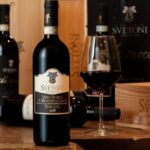
That pairing is more than just “a drink with lunch.” It reflects how food is typically experienced in the region: ingredients, cooking method, and local wine all working together. When you’ve just made the food, you’re far more sensitive to what the wine adds—especially how it matches the olive oil, the pasta’s texture, and the sauce’s flavor.
And yes, you’ll be able to enjoy everything you made while it’s still fresh. That’s one of the best parts of a class like this: you don’t have to imagine how it tastes later. You taste it right away.

Price and value for $164.26 per person
At $164.26 per person, the cost isn’t low, but it’s not inflated for what you’re getting. Here’s where the value comes from:
- You cook multiple dishes across a full meal: bruschetta, pici, sauce, and dessert.
- The class includes a welcome drink and local wines with your meal.
- You’re in a small group capped at 10, which usually means more time and more guidance.
- The experience includes lunch or dinner (depending on the session).
What you should weigh as a practical traveler: transportation is not included. If you’re coming from far away or relying on public transit, your total cost can rise due to getting to the farmhouse.
Also, the farmhouse meeting point is only communicated after booking confirmation. That’s common for rural farm experiences, but it means you should plan to check your details promptly after you book so you’re not scrambling the day-of.
If you want value, this is the kind of experience where the food and drinks are part of the learning, not an optional extra. You’re paying for the full package: instruction plus the meal built from your own work.
Where timing and logistics matter (and where they don’t)
The class runs about 3 hours. Starting times vary, so you’ll want to check availability for the slot that fits your day in Tuscany. If you’re trying to stack multiple activities, I’d treat this as a centerpiece block—because once you’re cooking and eating, it’s not the kind of activity you want to rush.
The biggest logistic detail is the location: the farmhouse for the cooking class is shared after confirmation. That means you should keep your itinerary flexible enough to adapt to where that final address sits.
You’ll also end back at the meeting point. That reduces stress at the end—no awkward “now find your way” feeling after dinner.
Language is also handled well. The host or greeter offers English and Italian, which helps you follow steps and ask questions without losing the thread.
Who this is best for in Tuscany (and who might want another option)
This cooking class is a strong fit if you want hands-on Tuscany and you like learning by doing. It’s also ideal if you’re traveling with friends or a partner and you want something social that still feels authentic: cooking together, drinking wine between steps, then sharing the meal.
It’s especially suited for:
- Food-focused travelers who want to understand Tuscan cooking techniques, not just taste them
- People who enjoy small-group instruction with real guidance
- Anyone who wants to try pici and make a full Tuscan meal in one go
It may not be the best fit if:
- You don’t have an easy way to reach a rural farmhouse (since transportation isn’t included)
- You prefer purely scenic or strictly sightseeing days, because this is very centered on cooking and eating
Should you book this Tuscan cooking class?
I’d book it if you want Tuscany through the kind of food that locals actually cook and eat—olive oil-forward, simple but flavorful, built around seasonal ingredients. The small group size and practical workflow make it feel like you’re learning steps you can repeat, not just watching someone else cook.
I’d think twice if getting to the farmhouse is going to be a hassle for you, because transportation isn’t included and the exact location isn’t revealed until after confirmation. If you can solve that piece, the experience is a great way to spend a memorable few hours eating well and learning real techniques tied to this region.
FAQ
What dishes will I make during the class?
You’ll prepare bruschetta, pasta, and pasta sauce in a Tuscan style. The session also includes making croutons and a homemade dessert.
Is lunch or dinner included?
Yes. The experience includes lunch or dinner along with the cooking class.
How long is the cooking class?
The duration is 3 hours. Starting times vary, so check availability for the session you want.
What’s included in the price?
The included items are a welcome drink, the Tuscan cooking class, and lunch or dinner.
Do I need transportation to reach the farmhouse?
Yes. Transportation service is not included, so you’ll need to arrange your own way to the farmhouse.
What languages will the host or greeter speak?
The host or greeter offers support in English and Italian.
Is there free cancellation?
Yes. You can cancel up to 24 hours in advance for a full refund.
Is the group size small?
Yes. This is a small group experience limited to 10 participants.