REVIEW · MONTEPULCIANO
Montepulciano: Tuscan Cooking Class Traditional Pasta Menu
Book on GetYourGuide →Operated by Tuscan Cooking Classes by le Caggiole · Bookable on GetYourGuide
Pasta lessons with a view feel like vacation. This class in Tuscany pairs hands-on cooking with warm family hospitality and guided wine tasting, so you’re not just watching food happen. One thing to plan for: most of the lesson is done standing, so it may be tough if you struggle with that.
I like that it stays intimate, capped at 8 people, with instructors speaking English and Italian. You’ll meet Giacomo at the terrace, learn the family’s approach to ingredient quality, and then roll up your sleeves for fresh pasta and tiramisu. If you’re bringing kids under 12, using a wheelchair, or dealing with gluten intolerance, this one isn’t a fit based on the activity guidelines.
In This Review
- Key Highlights Worth Your Time
- Arriving At Le Caggiole: Tuscany’s Kitchen Starts With A Welcome
- Terrace Briefing And The Organic Farm Philosophy
- Choosing Ingredients Like A Tuscan: Where Skill Starts
- Fresh Pasta Day: Making Two Traditional Types
- Pappardelle: Big, Comfortable, Traditional
- Pici: Hand-Shaped Texture With A Tuscan Attitude
- Tiramisu With Terrace Views: The Sweet Finale
- Wine Pairing With A Sommelier: What To Taste And Why
- The Big Table: Your 4-Course Tuscan Menu
- Price And Value: What $183.52 Really Buys
- Logistics That Affect Your Comfort
- Who Should Book This Montepulciano Cooking Class
- Should You Book It?
- FAQ
- What will I learn to cook during the class?
- What food is included in the 4-course menu?
- How long is the experience?
- Is this a large group or small group?
- Are wines included, and who selects them?
- Is transportation included from Montepulciano?
Key Highlights Worth Your Time
- Small group (max 8) for more time at your station and better attention
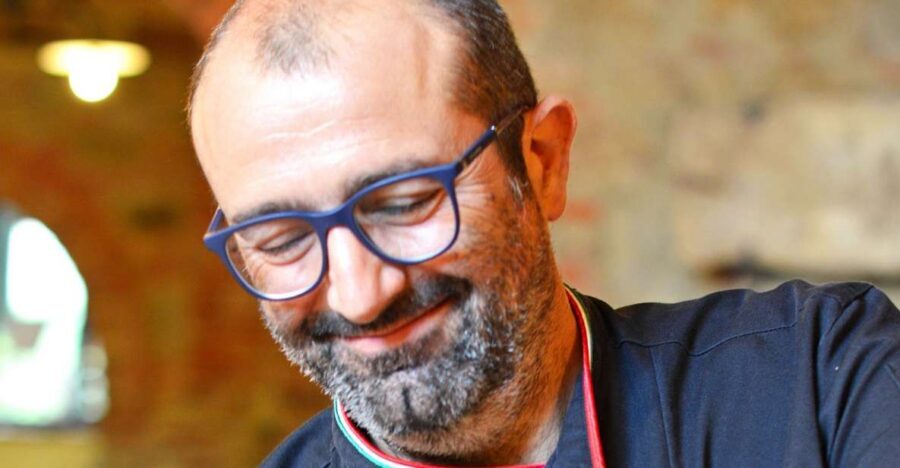
- Meet Giacomo on the panoramic terrace and hear how the family grows and selects ingredients
- Hands-on fresh pasta with 2 traditional types, including pappardelle and pici
- Tiramisu made during the class, not as an afterthought
- 3 selected wines chosen by a sommelier alongside what you’re cooking and eating
- 4-course meal at the big table, with the finished dishes matched to the wines
Arriving At Le Caggiole: Tuscany’s Kitchen Starts With A Welcome
This cooking class is built around the idea that good food begins before the stove ever heats up. You’ll start by meeting your guide at Tuscan Cooking Classes by le Caggiole, not in a generic studio. The atmosphere is meant to feel like you’ve stepped into a real home kitchen, with views to match.
Getting there is straightforward if you drive. If you’re coming from Montepulciano’s old town, follow signs toward Ospedale. After about 2 kilometers, look for two yellow barrels under two large trees on the right side of the main road. If you prefer GPS, the coordinates provided are 43.115601, 11.803996.
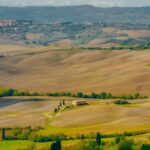
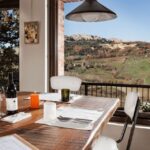
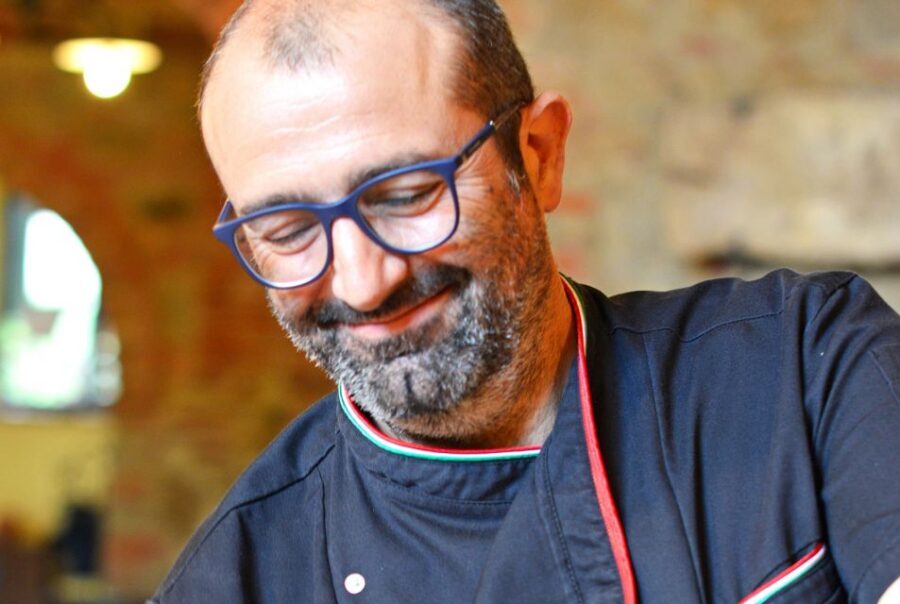
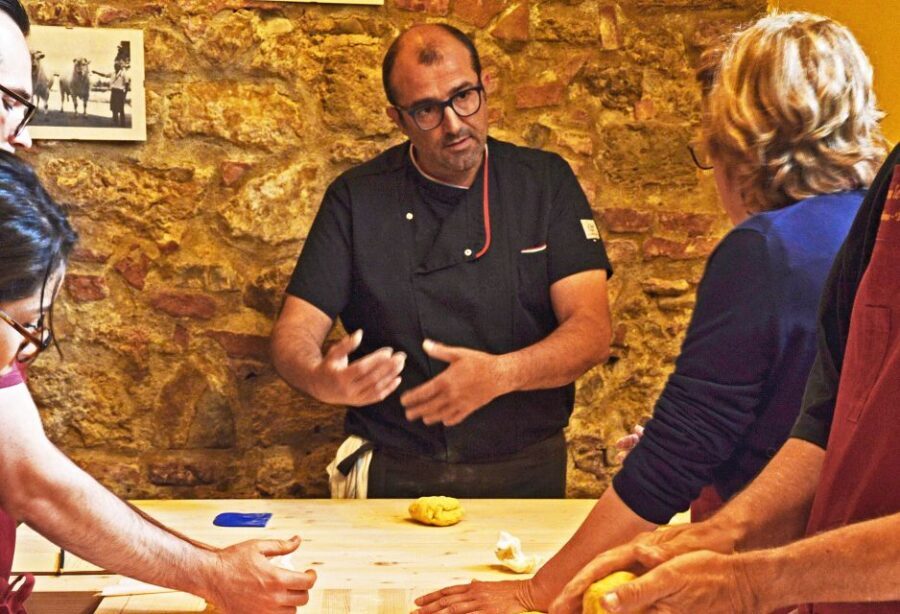
Once you arrive, you’ll gather outdoors to kick things off. Giacomo and your classmates meet on a panoramic terrace, where you get the program and a sense of the day’s pace. This early terrace moment matters because it sets the tone: ingredients, family methods, and why certain choices get repeated in Tuscan kitchens.
You can also read our reviews of more cooking classes in Montepulciano

Terrace Briefing And The Organic Farm Philosophy
After the first hello, the focus shifts quickly to how the family thinks about food. You’ll hear about the family’s organic farm and sustainable production systems, plus how that connects to cooking. It’s not just a feel-good story—quality starts with ingredient decisions, and the class keeps returning to that point.
You’ll learn that the kitchen philosophy centers on selecting the best ingredients before you cook. For you, that translates into skills you can actually use later. You’ll pay attention to what makes certain pasta shapes work, how sauces and pairings influence what you taste, and how to treat simple ingredients with respect.
Also, the group is small enough that questions don’t get lost. You can ask about what you’re seeing and doing—especially if you’re the type who likes to understand the why, not just the how.
Choosing Ingredients Like A Tuscan: Where Skill Starts
One of the most practical parts of this experience happens before cooking gets messy. You’ll be guided through the ingredient selection process, then move into making pasta. This step is quietly important because it turns the class from a demo into real training.
In a lot of cooking experiences, you’re handed ingredients and told to follow along. Here, you’re encouraged to think about ingredient quality first. That’s how you build judgment, not just recipes.
And the class doesn’t treat ingredients as abstract. You learn what goes into your pasta and what it should taste like when it’s right. Even if you’re not a confident cook, you’ll leave with a clearer sense of what matters in Italian cooking: freshness, balance, and consistency.
Fresh Pasta Day: Making Two Traditional Types
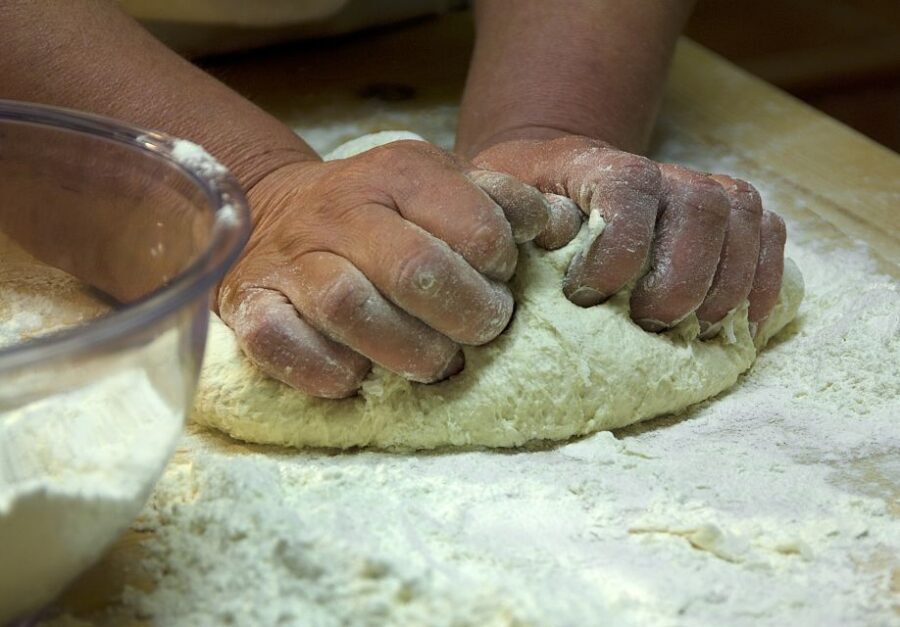
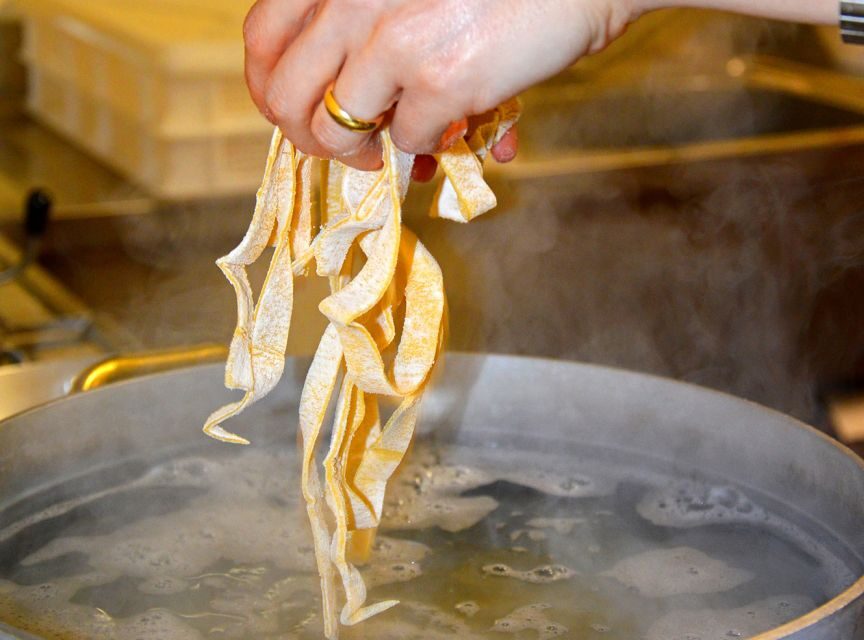
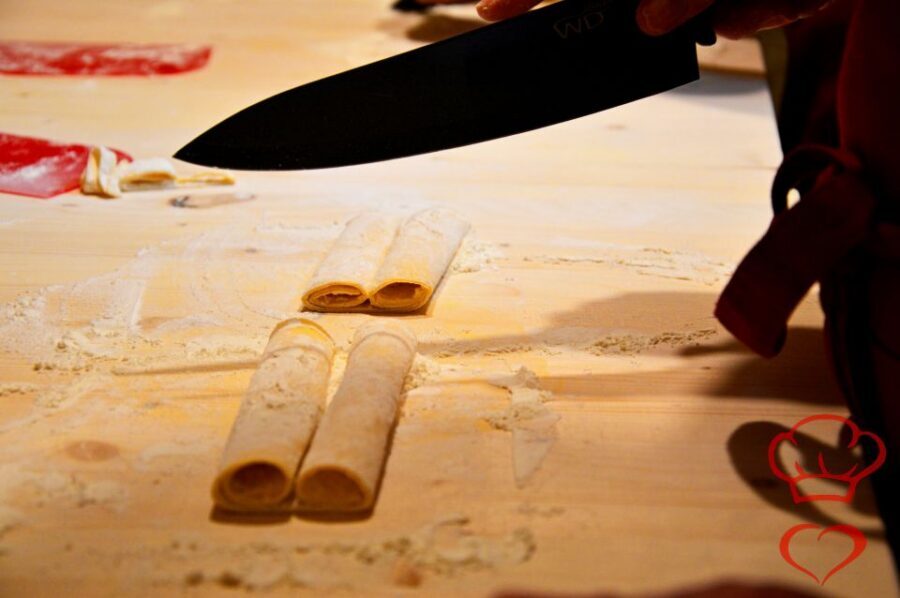
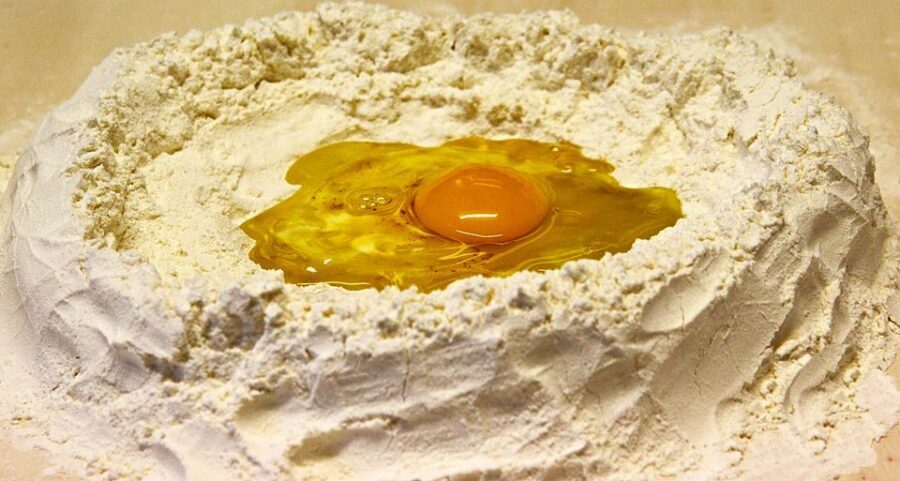
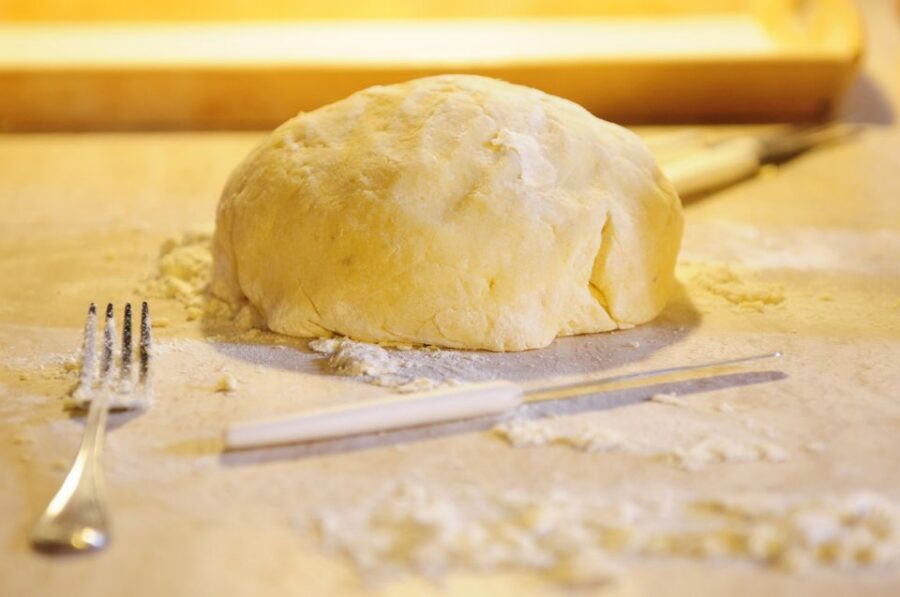
The core of the lesson is learning to make two fresh pasta dishes, then eating them as part of a larger meal. The highlight types include pappardelle and pici, with the class built around traditional methods rather than fancy gimmicks.
You’ll likely spend a good chunk of the time standing and working at your station—so wear comfortable shoes and clothes you can move in. The good news is that standing also keeps you engaged: you’re not waiting around. You’re rolling, shaping, and cooking in a way that sticks in your hands.
Here’s why that hands-on focus is valuable for you:
- You get practice with dough and shaping, not just a plate at the end.
- You learn how pasta type affects the eating experience and sauce behavior.
- You build confidence for making pasta again later, even if it’s just at home on a weekend.
Pappardelle: Big, Comfortable, Traditional
Pappardelle is wide and hearty. In this course, it’s part of the menu you taste, and it also reflects the Tuscan tendency to treat comfort food like it deserves technique. Wide ribbons are great at holding onto flavor, and the shape makes the whole dish feel substantial.
You can also read our reviews of more tours and experiences in Montepulciano
Pici: Hand-Shaped Texture With A Tuscan Attitude
Pici are famously “hand-made” in spirit, and they’re a great pasta choice if you want something different from the usual shapes. The class experience includes pici in the final 4-course tasting meal, so you’re not just learning it—you’re also seeing how it tastes once everything comes together.
If you love traditional Italian food, this pairing makes the class more interesting. You get two pasta styles with different textures, which makes your final meal feel varied instead of repetitive.
Tiramisu With Terrace Views: The Sweet Finale
Then comes the part most people remember later: dessert. You’ll learn how to prepare tiramisu and taste it at the end, soaking up the views from the terrace while you do.
Tiramisu can look complicated, but the value of this class is that you’re taught during the experience. You’re not trying to figure it out from a recipe at home after the fact. You’ll see how each step fits together and what the end result should feel like.
Because tiramisu is finished as part of the experience’s atmosphere—views, family energy, and the sense of a meal coming to a close—it feels like a real Tuscan event rather than a quick dessert stop.
Wine Pairing With A Sommelier: What To Taste And Why
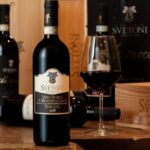
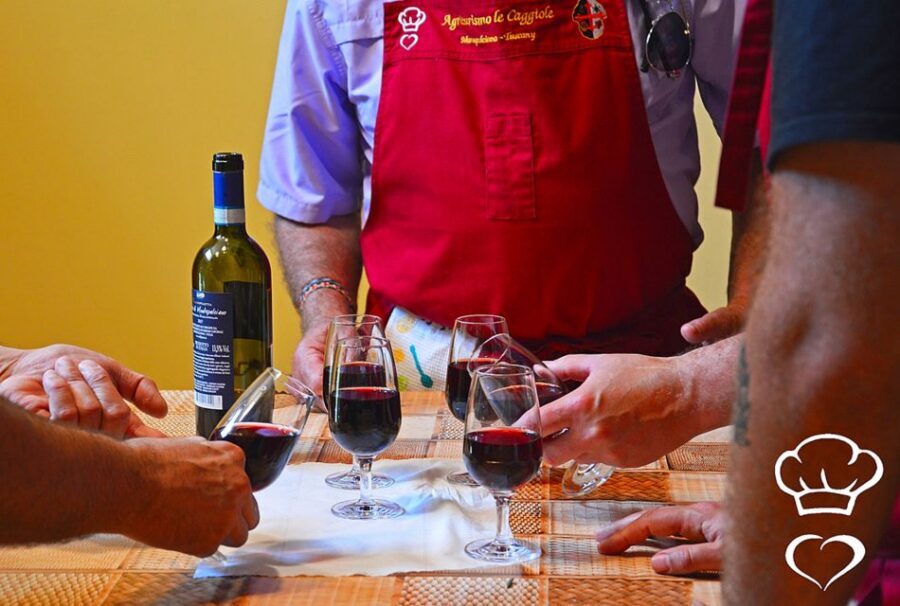
Food here is paired with wine selected by a sommelier, and you’ll taste 3 selected wines during the experience. That matters because it turns the meal into something you can learn from, not just something you consume.
You’ll be tasting wines alongside the dishes as the day progresses—so you can connect flavors. If you’re the type who likes to learn why one wine works with another, this is a smart way to spend time in Tuscany. It trains your palate in a practical direction.
Also, since your meal includes multiple courses, you get a chance to notice how the wine choices shift with what you’re eating. That’s one reason this class feels more “complete” than a pasta demo.
The Big Table: Your 4-Course Tuscan Menu
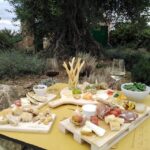
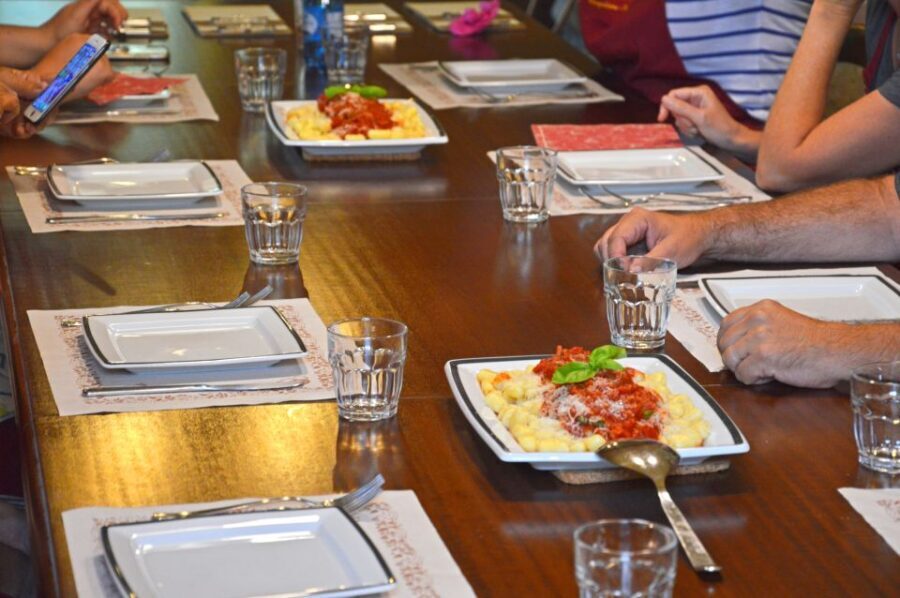
At the end of the class, you sit down around a large table to taste a 4-course menu. The meal structure includes:
- A typical Tuscan appetizer
- Pappardelle
- Pici
- Tiramisu, enjoyed after you’ve finished the cooking
This is one of the best parts for you because you get to eat what you helped make. It also makes the day feel cohesive: learning leads to tasting, and tasting leads back to understanding.
There’s something extra satisfying about finishing a meal in the same space where the class began—especially when you’re doing it as a small group. The pace stays relaxed, and the conversation usually turns toward what you cooked, what you liked, and how you’d repeat it at home.
Price And Value: What $183.52 Really Buys
The price is $183.52 per person for a 3.5-hour experience. On paper, that can sound like a splurge—so here’s the value breakdown that matters.
You’re paying for:
- A small group format (limited to 8 participants)
- Hands-on cooking instruction for 2 fresh pasta dishes plus tiramisu
- A full 4-course menu, including typical Tuscan appetizer, pappardelle, pici, and tiramisu
- 3 selected wines chosen by a sommelier
- Included equipment and tools, plus recipes and pictures
Also, transportation isn’t included, so you’ll want to factor in how you’ll get to the meeting point. But once you account for the food, wine, instruction, and meal, the cost starts to look more like a complete evening with training built in.
In short: this is best value if you want to cook, eat, and drink in a guided way—rather than just sample a restaurant meal.
Logistics That Affect Your Comfort
This experience is designed for adults and active participants, with a few rules that impact your day.
Important practical notes:
- Bring comfortable shoes and comfortable clothes.
- Most of the lesson is done standing, so it’s not recommended if you have difficulty standing for extended periods.
- It’s not suitable for wheelchair users.
- It’s not suitable for children under 12.
- No pets.
- No video recording or audio recording.
Food needs matter here too. You need to inform the provider about any food intolerance or allergies before booking so they can evaluate whether a dish can be changed. After booking, menu change requests can’t be taken into consideration. And gluten intolerance is specifically called out as not suitable, so if that applies, it’s safer to look for a different option.
One more small detail: you’ll get recipes and pictures, which helps you recreate the dishes later. That’s a nice extra, especially if you care about getting things right at home.
Who Should Book This Montepulciano Cooking Class
This class is a strong match if you want real Tuscan cooking skills, not just a seat at a table. I think it’s especially good for:
- Couples or small groups who like a close, hands-on format
- Food lovers who care about ingredient quality and traditional methods
- Travelers who enjoy wine experiences with actual guidance from a sommelier
- Anyone curious about Tuscan pasta beyond spaghetti and pizza toppings
If you prefer fully seated experiences, need wheelchair access, have gluten intolerance, or are traveling with young children, it probably won’t feel comfortable. Also, if you’re hoping for a lot of passive sightseeing time, this is cooking-focused, so plan your expectations around making food.
Should You Book It?
If your idea of a great Tuscan day includes learning dough basics, shaping pasta by hand, and then eating a full meal with wine pairings, I’d book it. The small group limit and the family-style atmosphere make the experience feel personal, and the combination of pappardelle, pici, and tiramisu gives you real variety.
If you’re short on time or want minimal standing, look elsewhere. But if you can handle a few hours on your feet, this is one of those rare classes where the cooking and the tasting actually support each other. You’ll leave with recipes, a better palate, and pasta skills you can use back home.
FAQ
What will I learn to cook during the class?
You’ll learn to prepare two fresh pasta dishes and tiramisu, and then you’ll taste everything as part of the included meal.
What food is included in the 4-course menu?
The tasting includes a typical Tuscan appetizer, pappardelle, pici, and tiramisu.
How long is the experience?
The duration is about 3.5 hours. Starting times vary, so you’ll want to check availability.
Is this a large group or small group?
It’s a small group experience, limited to 8 participants.
Are wines included, and who selects them?
Yes. You’ll taste 3 selected wines, chosen by a sommelier.
Is transportation included from Montepulciano?
No. Transportation is not included, so you’ll need your own plan to reach the meeting point.