REVIEW · ASSISI
Guided Tour of Assisi. Francesco, Chiara and Carlo Acutis
Book on Viator →Operated by Begoña Sánchez · Bookable on Viator
Assisi can feel overwhelming fast. This guided route keeps you moving with a clear story arc, from Francis of Assisi to Carlo Acutis, and then out into town. The pace is built for real sightseeing time, with stops that mix big religious monuments and everyday street-life.
I especially like how the tour focuses on what you actually came for: the tomb of San Francesco, the fresco world of the Upper and Lower Basilicas, and the Dispossession theme tied to Carlo Acutis. I also like that you get practical local guidance along the way, not just art-and-saints facts.
One consideration: Assisi schedule rules can change the experience on Sundays and holidays. The basilica focus may shift to outside explanations, and access can be affected by services, so your timing matters.
In This Review
- Key highlights at a glance
- Why this Assisi tour works: the Francis–Chiara–Carlo connection
- Meeting point and group style: a private tour that keeps things sane
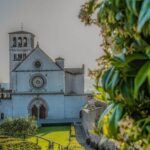
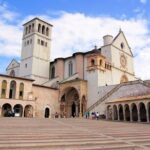
- Stop 1: San Francesco’s tomb and the Upper vs Lower Basilica plan
- The tomb: why it’s the anchor of everything
- Lower Basilica: Franciscan virtues in painted form
- Upper Basilica: life of Francis and the people around him
- Sunday and holiday note (important)
- Stop 2: Sanctuary of Dispossession and Carlo Acutis’ resting place
- Francisco’s renunciation theme
- A layered site: early cathedral on Roman-era remains
- Carlo Acutis and the modern faith angle
- Stop 3: Piazza del Comune and the medieval measurement detail you’ll actually remember
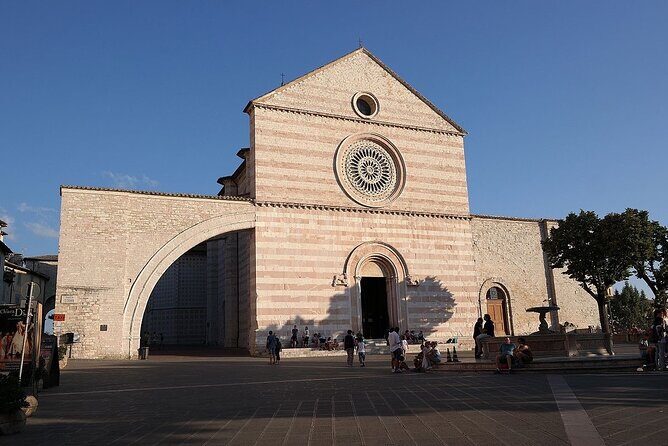
- Stop 4: Piazza Santa Chiara ending view plus pointers for Santa Clara
- Price and value: what $211.24 gets you in practical terms
- Timing tips for a smooth 2.5-hour day in Assisi
- Who should book this tour (and who might skip it)
- Should you book this Guided Tour of Assisi: Francesco, Chiara and Carlo Acutis?
- FAQ
- What is the duration of the Guided Tour of Assisi: Francesco, Chiara and Carlo Acutis?
- How much does the tour cost and is it offered in English?
- Where do we meet and where does the tour end?
- What is included in the price?
- Are any stops free or do we need tickets for each location?
- Is this tour private?
Key highlights at a glance
- San Francesco tomb time: you get real moments there, not a rushed pass-through
- Upper and Lower Basilica contrast: life-of-Francis stories plus major fresco cycles
- Carlo Acutis at the Sanctuary of Dispossession: the meaning of renunciation plus a modern faith angle
- Piazza del Comune payoff: Roman-era sights, medieval measurement details, and easy snack breaks
- End at Piazza Santa Chiara: great valley views and pointers for seeing key pieces in Santa Clara
Why this Assisi tour works: the Francis–Chiara–Carlo connection
This tour is built around three linked spiritual threads that make Assisi make more sense. You start with San Francesco d’Assisi, then you shift to the place associated with the idea of dispossession, and you finish with sights connected to Santa Chiara (and the Poor Clares). In the middle, Carlo Acutis anchors the story for younger travelers and families.
What I like about this format is that it doesn’t just stack monuments. It explains why the stones matter: Francis’s choices, Clare’s legacy, and Carlo’s message about living faith with today’s tools. If you’ve ever stood in a church and thought, I get the artwork, but what am I supposed to feel or remember, this route is designed to fix that.
It’s also a good “first Assisi” tour. In about 2 hours 30 minutes, you’ll cover the core area most people want, while still having enough time to look up at details instead of only staring at doors.
You can also read our reviews of more guided tours in Assisi
Meeting point and group style: a private tour that keeps things sane
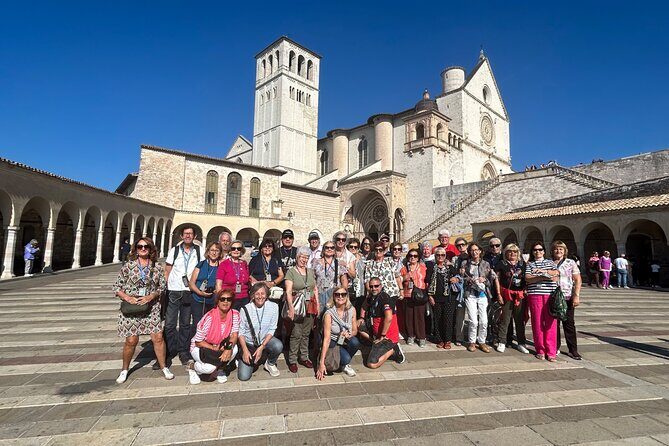
You meet at the Papal Basilica and Sacred Convent of Saint Francis area, at Piazza Inferiore di S. Francesco, 2. The ending point is Piazza Santa Chiara, right by the Basilica area, where you can hop into an aperitivo or lunch nearby.
Because it’s private, only your group participates. That matters in Assisi, where crowds can turn a walking tour into a shoulder-bumping exercise. Here, you can ask questions without competing with dozens of other voices.
Also, the tour is in English and uses an audio system inside the Basilica of San Francesco. That’s useful because churches are quiet in a way that can make spoken explanations hard to hear. With the audio, you’re less likely to miss the key parts while also trying to look at frescoes.
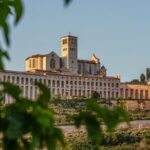
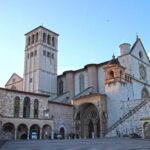
Stop 1: San Francesco’s tomb and the Upper vs Lower Basilica plan
You begin at the Lower Basilica square, near the basilica information office. Then you head into the story.
The tomb: why it’s the anchor of everything
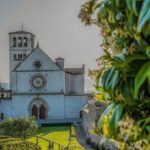
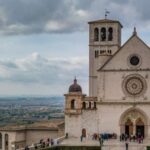
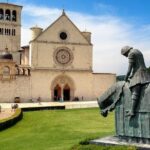
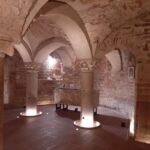
The visit begins at the tomb of San Francesco, where his mortal remains have rested for 800 years. That number is not just trivia. It helps you slow down and treat the space with the respect it deserves. You’re not just learning dates—you’re standing where a long memory lives.
Lower Basilica: Franciscan virtues in painted form
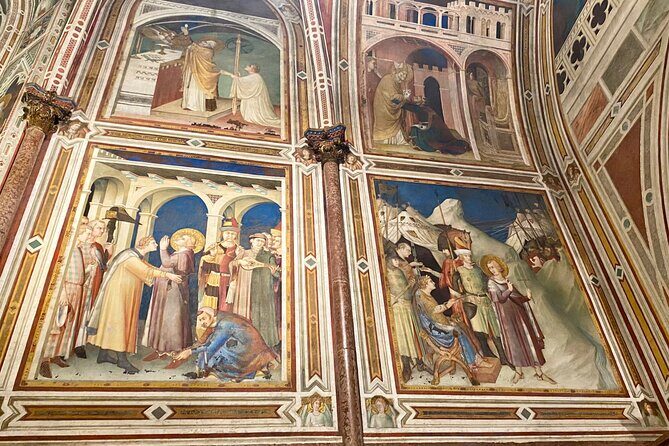
In the Lower Basilica, the painted decorations are meant to connect Francis’s life to Franciscan virtues. The guide helps you see the link between Francis as an example and the religious meaning behind the imagery.
If you like art more when you know what to look for, this part is a win. You’re shown the theme first, then you get to walk through it with eyes that know where to land.



Upper Basilica: life of Francis and the people around him
In the Upper Basilica, the focus shifts to Francis’s life in context—how his time worked and who he met, including popes and nobles, plus the “simple people” who were part of his world.
The big visual payoff is the scale of the frescoes: more than 5,000 square meters, tied to major names like Giotto, Cimabue, Simone Martini, and Pietro Lorenzetti. Even if you’re not an art scholar, that list helps you understand that this is not a small decoration job. It’s a major artistic statement.
Sunday and holiday note (important)
There’s a specific caveat: on Sundays and holidays, the basilica explanation may happen from outside, and you may rely on free entry rather than full guided movement inside.
If you’re traveling on a Sunday, I’d treat this tour as a maybe-you-get-everything experience, not a guaranteed every-room experience. On busy religious days, access and timing can be controlled in ways that are out of the guide’s hands.
Time on Stop 1: about 1 hour.
Tickets: your San Francesco basilica ticket is included, and the audio system inside the basilica is included.
Stop 2: Sanctuary of Dispossession and Carlo Acutis’ resting place
After San Francesco, the tour turns to a place that explains a key idea: dispossession. This stop is at Parrocchia Santa Maria Maggiore – Frati Cappuccini Assisi, also known as a sanctuary connected to dispossession.
Francisco’s renunciation theme
Here, you’ll learn about Francis renouncing his rich family inheritance. That’s the emotional pivot of the tour. Francis’s spirituality isn’t just about beautiful churches. It’s about choices that carry weight—and that theme helps you interpret what you’re seeing.
A layered site: early cathedral on Roman-era remains
The stop also sits on top of older history. It’s described as the first cathedral of Assisi built on the remains of a Roman-era house. So you’re seeing a religious site layered over time, which is one of Assisi’s core charms: past keeps showing up under your feet.
Carlo Acutis and the modern faith angle
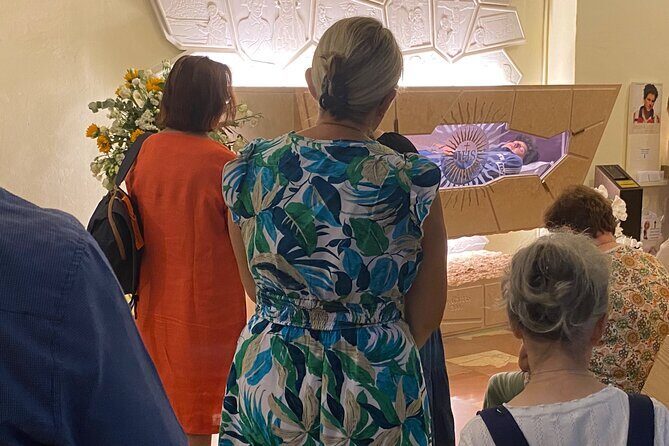
The sanctuary is also where thousands of pilgrims come to venerate the remains of Carlo Acutis. He’s described as a guide of young Christians who connect religious values with new technologies.
This is one of the most practical parts of the tour for families. Even if your kids aren’t into frescoes, the Carlo angle gives a bridge between faith and daily life. For older visitors, it offers a reminder that Assisi isn’t only medieval—it’s still speaking today.
Time on Stop 2: about 45 minutes.
Tickets: this stop is described as free entry.
Stop 3: Piazza del Comune and the medieval measurement detail you’ll actually remember
From the religious heart, you move into a square that keeps the tour grounded in real city life: Piazza del Comune.
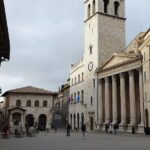
This is where you get to connect the ancient layers of Assisi. The buildings around the plaza go back more than 2,000 years, and there’s a Roman temple in the mix: Santa Maria sopra Minerva, right next to the Palazzo del Capitano del Popolo.
Then comes a small detail that feels surprisingly human: at the base of the bell tower, there’s a tombstone showing length measurements used in medieval Assisi. You might not notice it on your own unless someone points it out, but once you do, it becomes a neat reminder that cities ran on practical systems, not just legends.
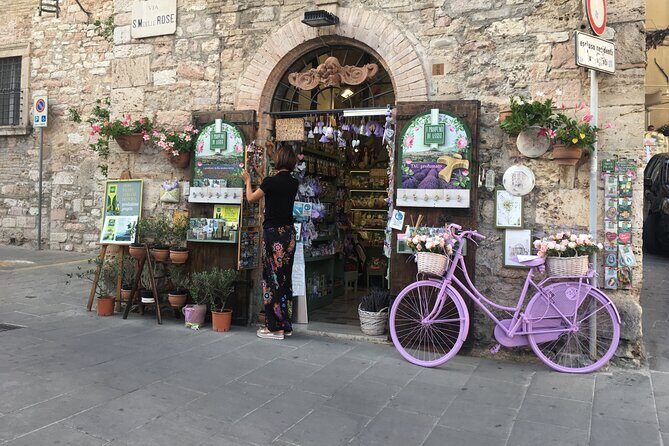
And yes, this is also the smart break spot. The tour gives you time to sit, snack, and people-watch, with options like a glass of wine, pasta with truffle, ice cream, and browsing typical shops.
Time on Stop 3: about 30 minutes.
Tickets: free.
Practical tip: use this stop to rest your feet. The rest of Assisi can still involve stairs and uneven stone, and you’ll thank yourself later.
Stop 4: Piazza Santa Chiara ending view plus pointers for Santa Clara
The tour ends at Piazza Santa Chiara, where you get a view over the valley at the foot of Assisi. This is a good emotional landing spot after basilicas. It gives you perspective: this isn’t only about buildings, it’s about the geography that shaped pilgrimage routes.
The guide also shares optional information if you want to go inside the Basilica of Santa Clara (Poor Clares). The key items mentioned are:
- the Crucifix of San Damiano, where Francis discovered his religious vocation
- the tomb where the founder’s remains rest
Even if you don’t enter, this stop helps you understand what you’d be looking for if you choose to add more time on your own.
Time on Stop 4: about 15 minutes.
Tickets: free entry in this square area (the interior visit is offered as optional info).
Price and value: what $211.24 gets you in practical terms
At $211.24 per person, this isn’t a bargain-basement walking tour. So the value has to be about more than just coverage.
Here’s what you’re paying for, in a concrete way:
- A private, English-guided route over the main Assisi core
- Tickets to the Basilica of San Francesco included
- An audio system inside San Francesco, which improves the experience in a quiet space
- Enough time to actually slow down at key religious and art moments, including the tomb of San Francesco and the Carlo Acutis area
If you’re traveling as a couple or small group, the “cost per adult” can still feel like a lot, but you’re not stuck in a noisy herd. That can be worth it at places like San Francesco where short attention spans and long lines collide.
What to budget extra: a tip is not included, and you’ll likely want a snack or drink during the Piazza del Comune and Piazza Santa Chiara breaks. If you decide to add any interior visits beyond what’s guided, you’ll need to check what’s covered and what isn’t.
Timing tips for a smooth 2.5-hour day in Assisi
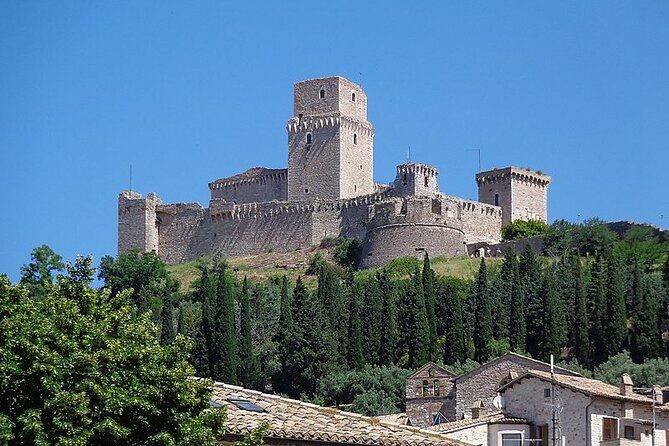
This tour is about 2 hours 30 minutes. That’s a realistic length for Assisi if you’re comfortable with walking between levels and squares.
Here are the timing realities to keep in mind:
- Basilica access can change on Sundays and holidays. The tour notes that explanations may happen outside, and access may be affected by services. If your schedule allows, a weekday is calmer.
- Plan your arrival with margin. One review experience flagged that parking can be tough and can delay your start. If you’re driving, don’t treat your parking spot like a guaranteed quick walk.
- Use the mid-tour city square time wisely. Piazza del Comune is your built-in reset.
If you want the best day, pair this with a slower afternoon for wandering. Don’t stack it right before you need to catch a train with no buffer.
Who should book this tour (and who might skip it)
I’d book it if:
- you want a clear, guided story connecting Francis, Clare, and Carlo Acutis
- you care about understanding art and religious meaning, not only taking photos
- you travel with someone who needs structure to keep enjoying sacred spaces
- you prefer a smaller-feeling experience with only your group
I’d think twice if:
- your plans depend on full indoor access on a Sunday or holiday (the tour warns that the approach can shift)
- you’re price-sensitive and just want self-guided highlights with no guidance
- you’re skipping all walking and want minimal steps (this route is focused on a walkable circuit)
Should you book this Guided Tour of Assisi: Francesco, Chiara and Carlo Acutis?
Yes—if your goal is to understand Assisi’s heart in a short window. The biggest reason is the tour’s shape: tomb time, Upper/Lower Basilica contrast, and Carlo Acutis tied to a clear theme of faith in action today.
If you’re going on a Sunday, I’d only book if you’re okay with the possibility of more outside explanation during the basilica portion. And if you drive, give yourself extra time for parking and the walk from wherever you end up.
In a place like Assisi, this tour is the kind of “guided backbone” that helps the rest of your day click.
FAQ
What is the duration of the Guided Tour of Assisi: Francesco, Chiara and Carlo Acutis?
The tour lasts about 2 hours 30 minutes.
How much does the tour cost and is it offered in English?
It costs $211.24 per person, and it is offered in English.
Where do we meet and where does the tour end?
You start at Piazza Inferiore di S. Francesco, 2, 06081 Assisi PG, Italy and end at Piazza Santa Chiara, 06081 Assisi PG, Italy.
What is included in the price?
Included are all fees and taxes, tickets to the Basilica of San Francesco, and an audio system inside the Basilica of San Francesco.
Are any stops free or do we need tickets for each location?
The tour notes that the stop at Parrocchia Santa Maria Maggiore – Frati Cappuccini Assisi is free, and the stops at Piazza del Comune and Piazza Santa Chiara are also free. Additional interior choices at Santa Chiara are presented as optional information.
Is this tour private?
Yes. It’s listed as a private tour/activity, so only your group participates.