REVIEW · FLORENCE
Journey Through Time in Volterra – Exclusive Private Tour
Book on Viator →Operated by Luisa Quaglia · Bookable on Viator
Volterra compresses centuries into a small, walkable loop. This private tour takes you through the walled, mountaintop town of Volterra with a guide who explains what you’re seeing—from the Etruscan gate to the Roman theater—and helps you connect the dots fast.
Two things I really liked: the chance to ask questions and get clear answers in real time with Luisa Quaglia, and the way she teaches you to understand major sites from the street without needing to hunt tickets or squeeze into long lines. Panoramic viewpoints also make the whole route feel like more than a checklist.
One consideration: this is a short, focused 2-hour walk, and the plan keeps most stops outside—like the cathedral area and the theater viewpoints—so if you’re hoping for inside visits, you’ll need to plan something else separately.
In This Review
- Key Points to Know Before You Go
- Volterra’s Timeline in a Walled, Mountaintop Town
- Your 2-Hour Private Walk With Luisa Quaglia
- Piazza dei Priori: Volterra’s Communal Heart at Street Level
- Porta all’Arco: The Rare Etruscan Gate You Can Actually See
- Cattedrale di Santa Maria Assunta Square: Early Leadership and What’s Nearby
- Teatro Romano: Understanding the Roman Theater From the Right Spot
- The Alabaster Craft Thread You Might See Along the Way
- Price and Value: What $248.05 Per Group Buys You
- Meeting Point and How the Tour Ends at Teatro Romano
- Who This Tour Fits Best (And Who Should Skip It)
- Should You Book This Volterra Private Tour?
- FAQ
- How long is the private tour through Volterra?
- What is the group size for this private tour?
- What language is the tour offered in?
- Are admission tickets needed for the stops?
- Does the tour include visits inside the cathedral or other buildings?
- Where do we meet, and where does it end?
- What if the weather is bad or plans change?
Key Points to Know Before You Go
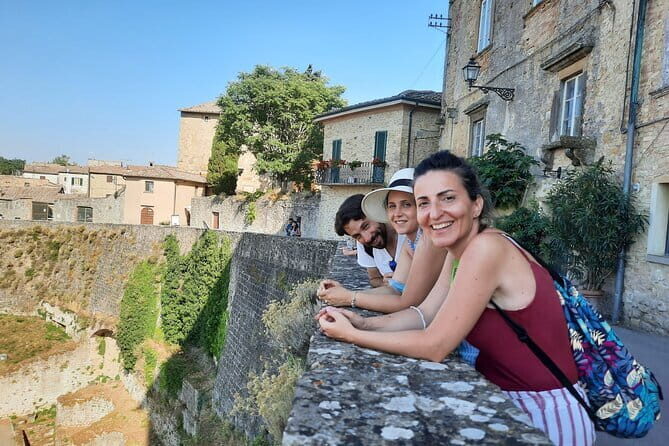
- Private guide, private group: only your group joins, so the pace and Q&A can match you
- Ticket-free stop types: the listed stops are marked free admission
- Etruscan to Roman in one loop: Porta all’Arco to Teatro Romano with medieval stops in between
- Explain-from-here viewpoints: the theater gets interpreted without going inside
- Short time, strong payoff: about 2 hours to get your bearings and a timeline you’ll remember
Volterra’s Timeline in a Walled, Mountaintop Town
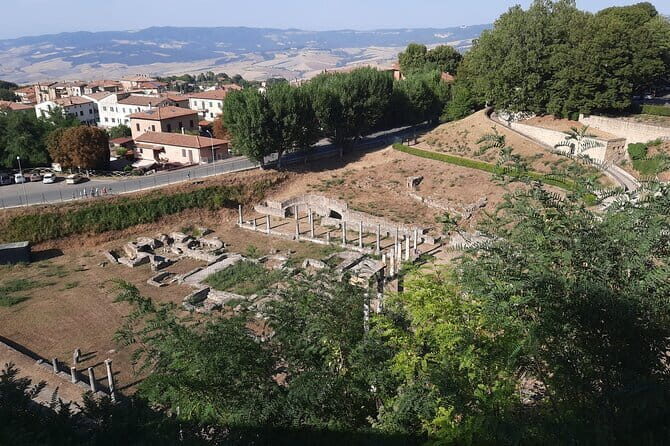
Volterra sits above the countryside, inside old walls, so the city already feels like a story. You’re not just looking at monuments—you’re stepping into a place where Etruscan, Roman, and medieval layers overlap in the streets and squares.
The big advantage of a private guide here is speed with meaning. In two hours, you’ll get context that would take you much longer to piece together alone—especially because Volterra’s highlights aren’t always labeled in a way that’s easy for first-time visitors. With Luisa Quaglia, you’ll be guided to the right spots and taught what to look for, then allowed to ask follow-up questions.
And yes, the views matter. Even when you’re not at a formal viewpoint, Volterra’s elevated position gives you that “I’m on top of things” feeling that makes the history land.
You can also read our reviews of more private tours in Florence

Your 2-Hour Private Walk With Luisa Quaglia
This experience is built for a compact route with a professional and licensed tour guide. It’s offered in English, and you’ll use a mobile ticket. The tour is private, so it’s just your group (up to 10 people), which is ideal if you want a calmer pace or you’re traveling with family and want everyone to hear the explanations.
Think of it like a guided highlight lesson rather than a long walking day. Each stop is timed at about 20 minutes, so you’re moving steadily—enough time to understand each era without dragging the schedule.
The biggest practical thing: since the route is in Volterra, you should expect walking on uneven old-city streets. Nothing in the info suggests it’s a technical climb, but it is a hill town, and you’ll feel it if you’re not used to city walking.
Piazza dei Priori: Volterra’s Communal Heart at Street Level
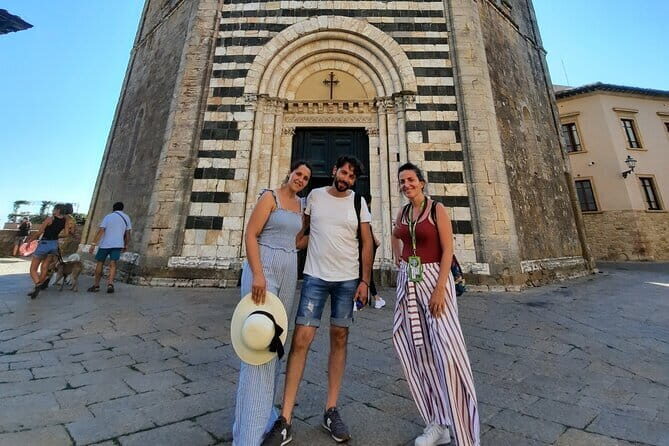
You start in Piazza dei Priori, the center of Volterra’s communal age. This square is overlooked by the most important buildings from that period—especially Palazzo dei Priori and Palazzo Pretorio—and the buildings create the feeling that the square was the city’s stage.
What I love about starting here is that it gives you a mental anchor. Before you move outward into Etruscan and Roman material, you get a sense of the town’s civic power during the communal era. In plain terms: this is where governing and public life would have happened, and the architecture around the square tells you that.
Because the stop is about 20 minutes and ticket-free, you won’t feel rushed, but you’ll also keep momentum. You’ll learn what to notice in the surrounding structures—especially the clues still visible from that era—so when you later see older gates and theaters, you’ll be better at placing them in the right timeline.
Porta all’Arco: The Rare Etruscan Gate You Can Actually See
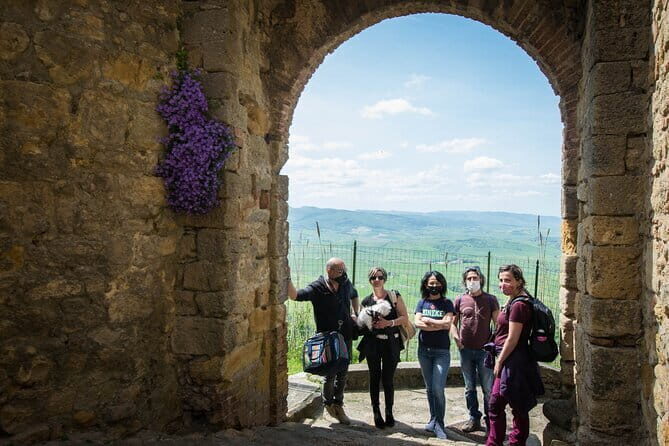
Next comes Porta all’Arco, and this stop is one of the clearest “you are looking at ancient city infrastructure” moments on the route. Volterra was a powerful Etruscan city, and this gate preserves rare traces of that past.
An Etruscan city gate is not just a pretty stone reminder. It’s the functional entrance point to the city, and it helps you understand how Volterra controlled movement and identity long before Roman rule. When you’re standing there, you get to imagine the entrance flow—people, trade, guards, and the sense of a place that mattered.
A private guide helps a lot here because it’s easy to stare at the gate like a photo subject. Luisa Quaglia can point out what makes this example stand out as an Etruscan city gate and why it’s considered rare. That turns a quick stop into a real “aha.”
Cattedrale di Santa Maria Assunta Square: Early Leadership and What’s Nearby
The tour continues at Cattedrale di Santa Maria Assunta (Duomo di Volterra). Here, you focus on the square rather than going inside. The square is overlooked by Volterra’s key religious buildings, including the cathedral, the baptistery, and the former hospital.
One of the most interesting contextual details you’ll hear is about the birthplace of the second pope after St. Peter: St. Linus. The connection matters because it ties Volterra to early Church history, not just medieval architecture. The early evangelization led to an early diocese that became influential and wealthy through the Middle Ages and beyond.
Why the square-only approach works: you still get the “wow” of the religious complex without losing time on an interior visit. Also, keeping it outside lets you keep your bearings—important in a small, layered town like this.
The trade-off is straightforward: if you want to go inside the cathedral or spend extra time with indoor art and interiors, this tour won’t cover that part.
- Tuscany Day Trip from Florence: Siena, San Gimignano, Pisa and Lunch at a Winery
★ 5.0 · 21,634 reviews - The Best tour in Florence: Renaissance & Medici Tales – guided by a STORYTELLER
★ 5.0 · 12,316 reviews



Teatro Romano: Understanding the Roman Theater From the Right Spot

Even after the Romans conquered Volterra, it stayed important. That continuity is one reason the Roman theater feels meaningful rather than random. You’ll spend about 20 minutes at Teatro Romano, and the tour focuses on understanding it from a vantage point that allows explanation without going inside.
This is a smart setup for most visitors. Roman theaters are about the relationship between space, sound, seating, and view lines. If you’re only snapping pictures, you might miss how the theater was used and why it mattered. From the right outside position, your guide can help you “read” the structure—how it functioned in the city and how it fits the wider timeline.
Ending with this theater viewpoint is also satisfying. You start with an Etruscan gate, pass civic medieval power in Piazza dei Priori, stop in the cathedral square for early Church context, then land on Rome. It feels like closing the loop on Volterra’s layered identity.
And if you’re the type who loves pictures with context, this is where you’ll want to slow down. The viewpoint and the explanations together make your photos more than souvenirs.
The Alabaster Craft Thread You Might See Along the Way
Volterra has a strong alabaster identity, and part of the experience can include learning how the stone gets converted into beautiful statues. One review specifically mentions this as part of the overall feel of the tour.
I’d treat this as the “craft and local character” thread that can add texture to all the monuments you’re seeing. The architectural stops can sometimes feel like separate eras on a page. When you add the alabaster angle, Volterra becomes more human—more like a living town with skills and materials, not just ruins.
If this is a priority for you, ask your guide at the start whether and when the alabaster story comes into play for your route. In a private tour, that kind of micro-adjustment is usually possible.
Price and Value: What $248.05 Per Group Buys You
The price is $248.05 per group, up to 10 people, for about 2 hours. That can sound like a lot if you’re thinking per person at first glance—but the math changes quickly with a group.
Here’s a practical way to judge value:
- For 2 people: roughly $124 per person
- For 4 people: about $62 per person
- For 6 people: about $41 per person
- For 10 people: about $25 per person
So for couples or solo travelers, this is more of a “quality time and clarity” purchase. For small groups, it’s often a bargain compared to separate tickets, separate guides, and the time you’d spend trying to decode Volterra on your own.
Also remember what’s included: a professional and licensed tour guide. Not included is private transportation, so you’re expected to meet in Volterra and handle your own getting around locally. The payoff is that the guide time is concentrated where it matters: at the actual sights, with explanations tailored to your questions.
One more practical note: the tour is often booked about 41 days in advance on average. If your dates are fixed, don’t wait until the last minute. Volterra is popular, and private tours can fill up when schedules align.
Meeting Point and How the Tour Ends at Teatro Romano
You’ll meet at Piazza Martiri della Libertà, 56048 Volterra PI, Italy. The tour ends at Teatro Romano, 56048 Volterra, Province of Pisa, Italy.
That matters because you can plan your next move. Ending near the Roman theater means you’re finishing in a high-interest zone, which can make it easier to continue exploring on foot after the tour. If you’re planning lunch or a longer walk afterward, check your route before you go so you don’t scramble at the end.
Also, the start location is in central Volterra, which is convenient for most people staying nearby or already in town. If you’re coming from outside, you’ll want to factor in local travel time, since the tour itself doesn’t include transport.
Who This Tour Fits Best (And Who Should Skip It)
This private Volterra walk is a great match if:
- you want a guided timeline across Etruscan, Roman, and medieval periods in one compact loop
- you like asking questions and getting detailed answers on the spot
- you’re traveling with a small group and want everyone to hear the same story without crowd pressure
- you prefer meaningful explanations more than ticket-heavy museum time
It may not be the best fit if you:
- want to spend lots of time inside churches or historic buildings (this walk keeps focus outside and squares rather than interior tours)
- prefer a longer, slower exploration day where you can linger for 45–60 minutes at each stop
- don’t enjoy uphill, uneven old-town walking at all
Should You Book This Volterra Private Tour?
If you want Volterra to make sense quickly, I think this is a strong booking choice. The route is short, the sights are major, and the guide experience is clearly the centerpiece—especially with Luisa Quaglia, whose explanations and Q&A style help you connect eras instead of treating each stop like a separate postcard.
I’d book it if your goal is clarity, context, and a memorable “timeline walk” that ends at Teatro Romano with great perspective. I’d hesitate only if you’re specifically hunting for inside cathedral visits or a longer archaeological deep-set.
If your schedule allows it, reserve ahead and wear comfortable shoes. Volterra is worth it, and with this format, you’ll actually understand why.
FAQ
How long is the private tour through Volterra?
It lasts about 2 hours.
What is the group size for this private tour?
It’s for a group up to 10 people, and it’s private for only your group.
What language is the tour offered in?
The tour is offered in English.
Are admission tickets needed for the stops?
The stops listed are marked as free admission.
Does the tour include visits inside the cathedral or other buildings?
No. The walking plan includes visits to the relevant squares, but it does not include tours inside the buildings.
Where do we meet, and where does it end?
You meet at Piazza Martiri della Libertà, 56048 Volterra PI, Italy, and the tour ends at Teatro Romano, 56048 Volterra.
What if the weather is bad or plans change?
The experience requires good weather. If it’s canceled due to poor weather, you’ll be offered a different date or a full refund. You can cancel up to 24 hours in advance for a full refund. Service animals are allowed, and most travelers can participate.

More Private Tours in Florence

More Tours in Florence


More Tour Reviews in Florence
- Tuscany Day Trip from Florence: Siena, San Gimignano, Pisa and Lunch at a Winery
★ 5.0 · 21,634 reviews - The Best tour in Florence: Renaissance & Medici Tales – guided by a STORYTELLER
★ 5.0 · 12,316 reviews