REVIEW · LUCCA
Lucca: City Highlights Walking Tour
Book on GetYourGuide →Operated by Florence Tours by Made of Tuscany · Bookable on GetYourGuide
Lucca has a slow, confident rhythm, and this small-group highlights tour helps you catch it fast. You start at Saint Maria Gate and move through the city’s most recognizable corners with an expert guide, including how Piazza Anfiteatro became that famous oval shape. It’s a practical way to understand what you’re looking at, not just where to stand for photos.
Two things I especially like are the mix of architecture and atmosphere, from the Baroque elegance of Palazzo Pfanner to the calmer church-centered squares. And you also get real time on Via Fillungo, Lucca’s main shopping street, where you can do a little retail therapy and grab a bite while you’re already in the right place.
One consideration: this is a walking tour. Bring comfortable shoes, because you’ll cover several stops in about two hours, and the activity is marked as not suitable for people with mobility impairments even though it’s listed as wheelchair accessible—so it’s worth checking directly before you go.
In This Review
- Key points to know before you go
- Saint Maria Gate: your start for fast Lucca orientation
- Piazza Anfiteatro’s oval shape: Roman roots in plain sight
- Palazzo Pfanner: Baroque elegance and gardens with real presence
- Fortress-style Lucca and the church-square focus at Piazza San Martino
- Via Fillungo: shopping street time that still feels like sightseeing
- Teatro del Giglio and Piazza del Giglio: history in performance mode
- Lucca’s walls near Porta San Pietro: the view payoff
- Price and value: is $195.42 for 2 hours worth it?
- Timing that fits real travel days
- Who should book this Lucca walking tour
- Should you book this Lucca highlights walk?
- FAQ
- How long is the Lucca city highlights walking tour?
- Where does the tour start and end?
- What’s included in the price?
- What’s not included?
- Is the tour private or group-based?
- What languages is the live guide available in?
- Is there wheelchair accessibility?
- What should I bring?
- Can I cancel for a full refund?
- Do starting times vary?
- What’s the group size like?
Key points to know before you go
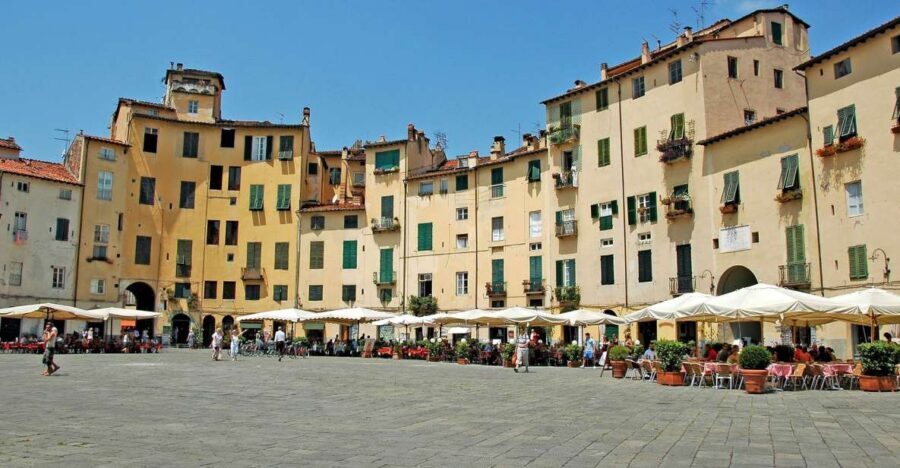
- Oval Piazza Anfiteatro built on the ruins of a Roman arena
- Palazzo Pfanner with Baroque-style architecture and opulent gardens
- Via Fillungo for a smooth stop that combines sightseeing with shopping and snacks
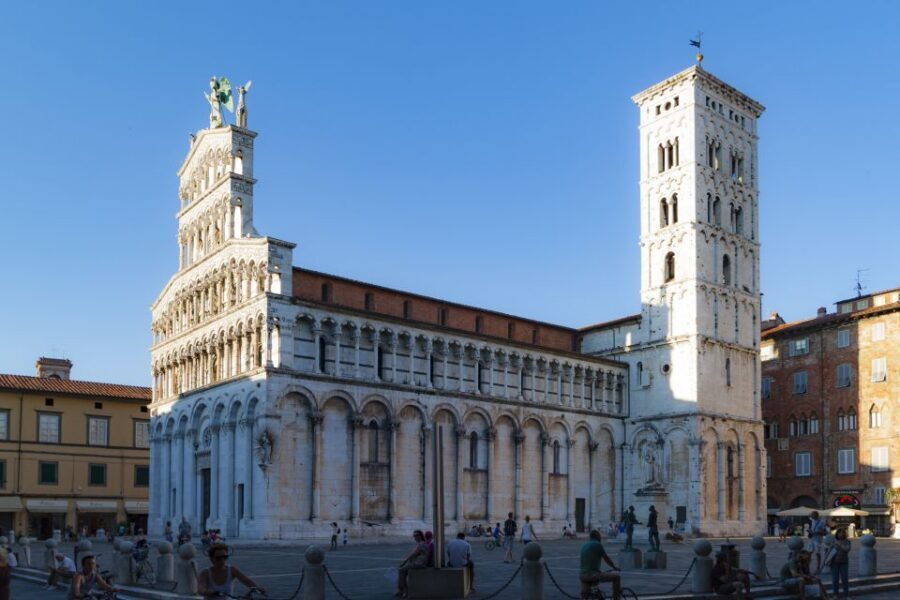
- Lucca Cathedral (built in 1070) and the monument-heavy Piazza San Martino area
- Teatro del Giglio and Piazza del Giglio, tied to Lucca’s performing-arts past
- Lucca’s walls near Porta San Pietro for panoramic views
Saint Maria Gate: your start for fast Lucca orientation
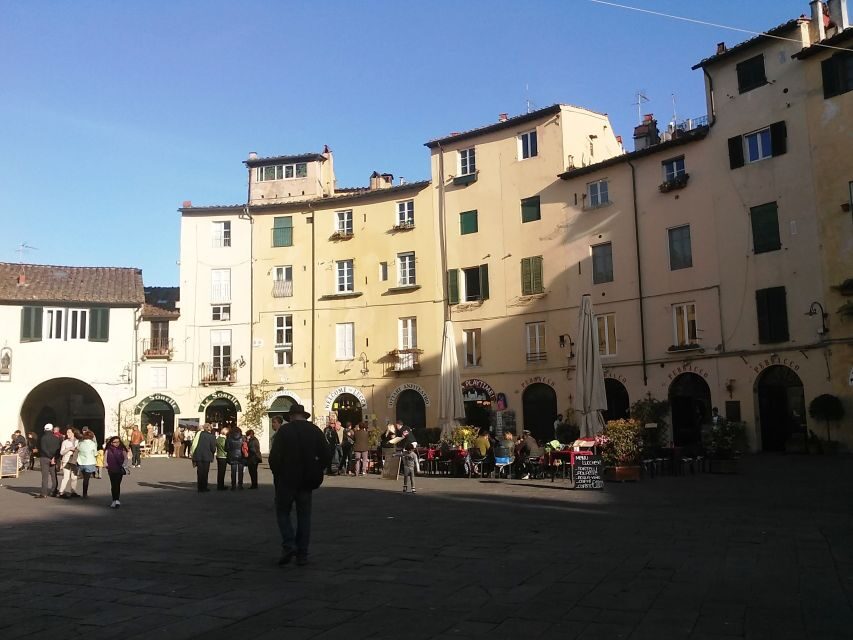
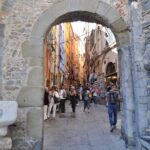
I like tours that start where the city makes sense, and this one begins in front of Saint Maria Gate in Piazza Santa Maria, 42. From the first minutes, your guide frames Lucca’s layout and what to watch for as you walk, including the connection between the city’s older layers and what you see today.
You’ll then head toward Piazza Anfiteatro, learning the basic story behind the square before you even reach it. That matters, because the more you understand the why, the less the walk feels like random stop-and-go.
You can also read our reviews of more walking tours in Lucca
Piazza Anfiteatro’s oval shape: Roman roots in plain sight
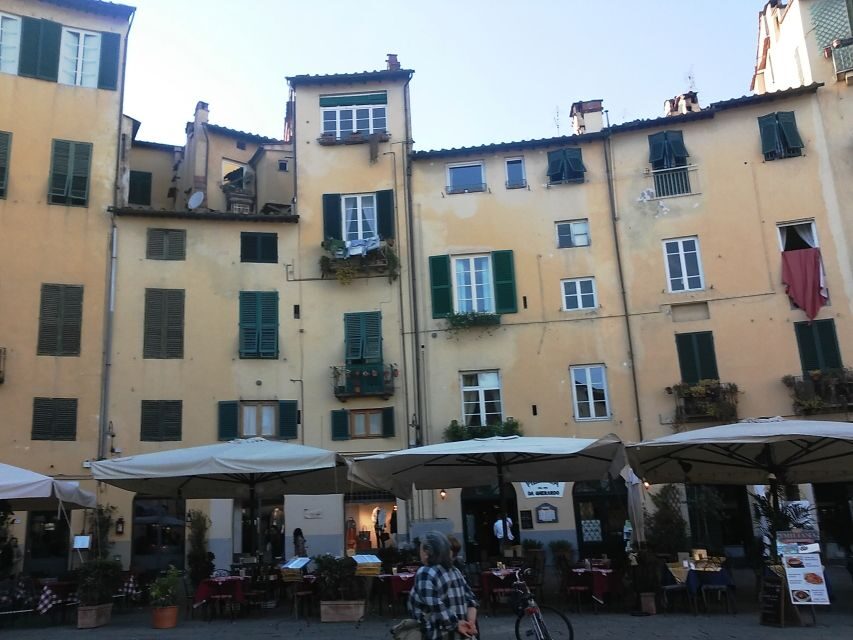
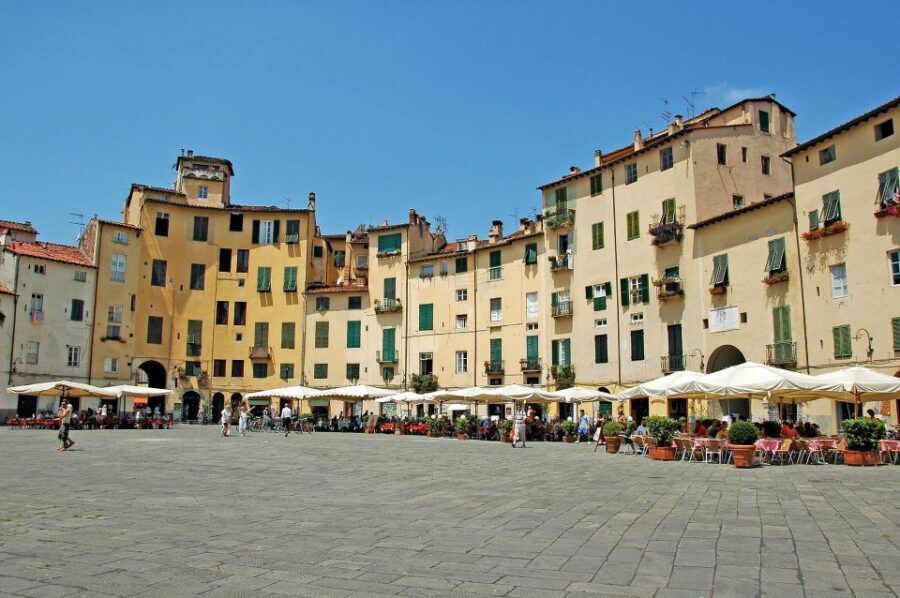
The heart of the tour is Piazza Anfiteatro, Lucca’s dramatic amphitheater square. Your guide explains why it has that unmistakable oval shape, tied to how the newer structure was built on the ruins of a Roman arena. It’s one of those Lucca details that sounds simple until you’re standing there and the geometry starts to make sense.
If you care about how cities adapt old infrastructure into new uses, this stop delivers. You’re not just looking at an interesting plaza—you’re learning how the city’s physical past shaped the street-plan you’re walking through.
A small practical tip: wear shoes with grip. You’ll be moving along historic surfaces, and the tour is timed at about two hours total.
Palazzo Pfanner: Baroque elegance and gardens with real presence
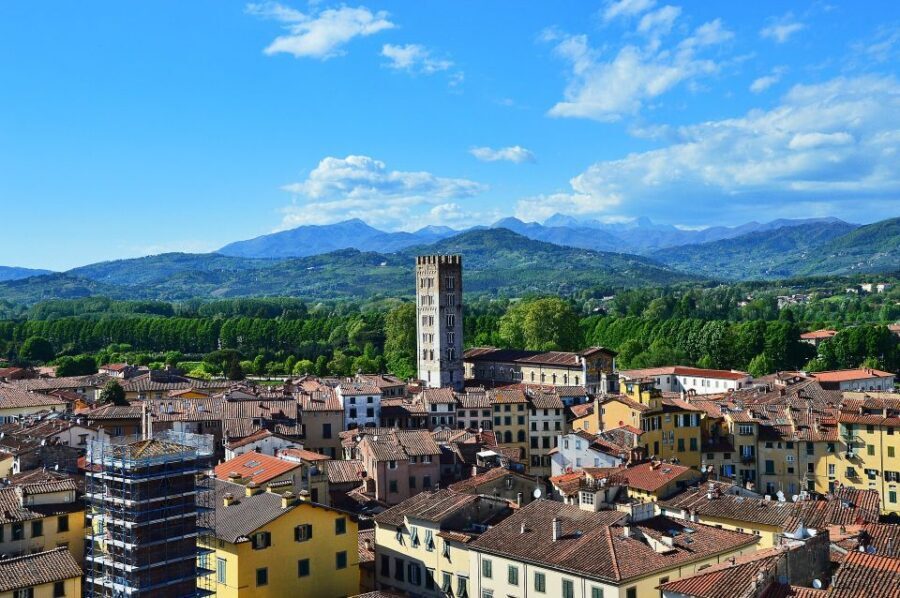
Next comes a palate change. You’ll head toward Palazzo Pfanner, a palace known for Baroque-style architecture and opulent gardens. Even if you’re not a hardcore architecture buff, it’s a great visual break from the more civic-and-church-heavy parts of the center.
This stop is valuable because it shows Lucca’s different sides: not only forts and churches, but also wealth, taste, and the kind of garden setting that signals status. It also helps you reset your attention before you move into the main squares and the cathedral area.
Fortress-style Lucca and the church-square focus at Piazza San Martino
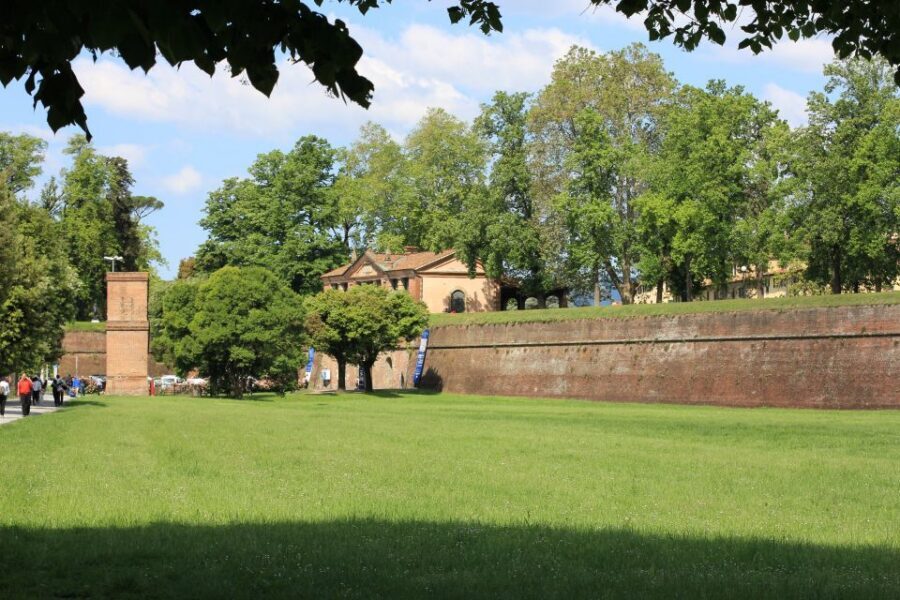
Lucca’s historic core is shaped by fortress-style architecture from the 16th and 17th centuries, and you feel that while walking the center. The city is described as peaceful and slow-paced, and that matches what the route emphasizes: you’ll have time to look at facades and how the streets connect.
The tour moves on to Piazza San Martino, home to several important monuments. The key landmark here is Lucca Cathedral, built in 1070, which your guide covers as part of the walking sequence. Seeing the cathedral in context—before and after with nearby monuments—helps you understand the whole square as one unit, not a single stop on a checklist.
If you’re visiting Lucca for the first time, this is one of the most meaningful parts of the tour because it turns the phrase city of a hundred churches into something concrete: you learn why church-centered squares matter in this town.
Via Fillungo: shopping street time that still feels like sightseeing
After the heavier monuments, you’ll walk down Via Fillungo, Lucca’s main shopping street. This is one of the best “human scale” parts of the itinerary because it’s not only about buildings; it’s about daily life.
This stretch is built into the tour for a reason: it’s where you can grab a bite to eat and do some light shopping while still staying on a guide-led route. You get to move at a more relaxed rhythm, which fits Lucca’s slow pace. Even if you don’t plan to buy anything, it’s a good place to pause and watch the flow of the street.
Practical note: since food and drinks aren’t included, decide in advance whether you want a quick snack or a longer break. The tour timing won’t turn into a sit-down meal, but it gives you the chance to refuel.
You can also read our reviews of more city tours in Lucca
Teatro del Giglio and Piazza del Giglio: history in performance mode
From the church-focused areas, the route continues to Teatro del Giglio, described as Lucca’s historic city theater and opera house. You’ll also spend time around Piazza del Giglio (at 1/A) as part of the guided stops.
I like this pivot because it keeps the tour from becoming only sacred architecture. The theater connection adds a different kind of cultural story—what Lucca staged and celebrated, not just what it built for worship and defense.
This section is also a good reset for your legs. By now, you’ve learned the city’s structure and key landmarks. The theater stop helps tie those pieces together with a sense of civic identity.
Lucca’s walls near Porta San Pietro: the view payoff
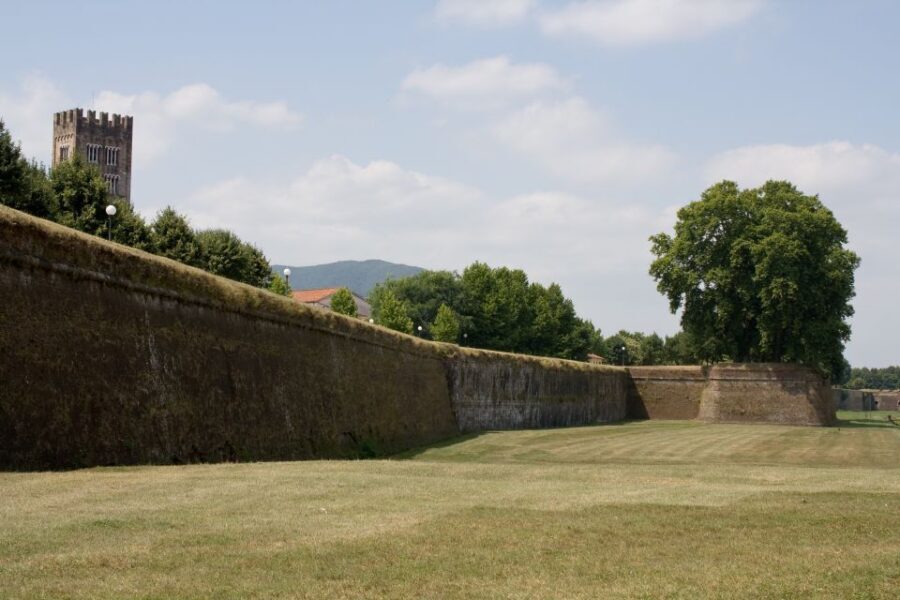
The tour finishes with one of Lucca’s most rewarding walk styles: moving along the walls in front of Porta San Pietro. This is where you get panoramic views that show you how the city sits—compact, historic, and built for an older kind of life.
This is a great last act because it changes your perspective. Instead of reading buildings at street level, you see the city as a whole. If you want a mental map for the rest of your Lucca day, this is where it clicks.
Bring a little patience here. Views are worth it, but the tour pace is still active, so you’ll want to be ready to look quickly and then keep moving.
Price and value: is $195.42 for 2 hours worth it?
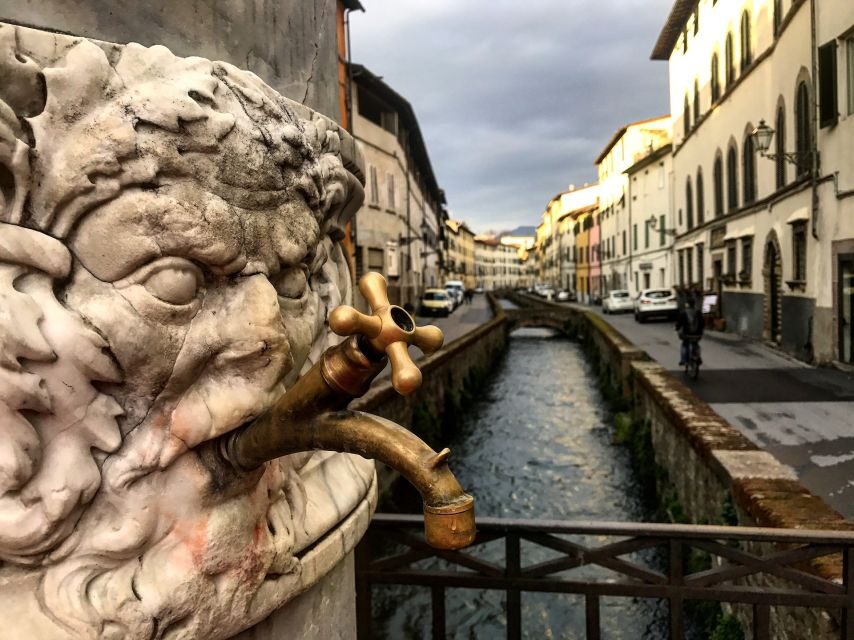
At $195.42 per person for about two hours, you’re paying for a guided walk that hits multiple landmark zones in one trip: Piazza Anfiteatro, Palazzo Pfanner, the cathedral area at Piazza San Martino, Via Fillungo, Teatro del Giglio, and the wall views near Porta San Pietro.
What makes the price feel reasonable is the structure. You’re not just walking from place to place—you’re getting explanations tied to what you’re seeing: how Piazza Anfiteatro’s oval form connects to Roman ruins, what to notice at Palazzo Pfanner, and why the cathedral area is central to Lucca’s famous church density.
The not-so-fun part: food and drinks aren’t included, and hotel pickup/drop-off isn’t offered. That means you’ll want to plan a snack stop yourself around Via Fillungo or bring a light plan for before or after the tour.
The good news: it’s a private group, with an expert guide, so you’re not stuck in a giant crowd. For a 2-hour window, that’s the kind of value that actually helps you enjoy Lucca instead of feeling rushed.
Timing that fits real travel days
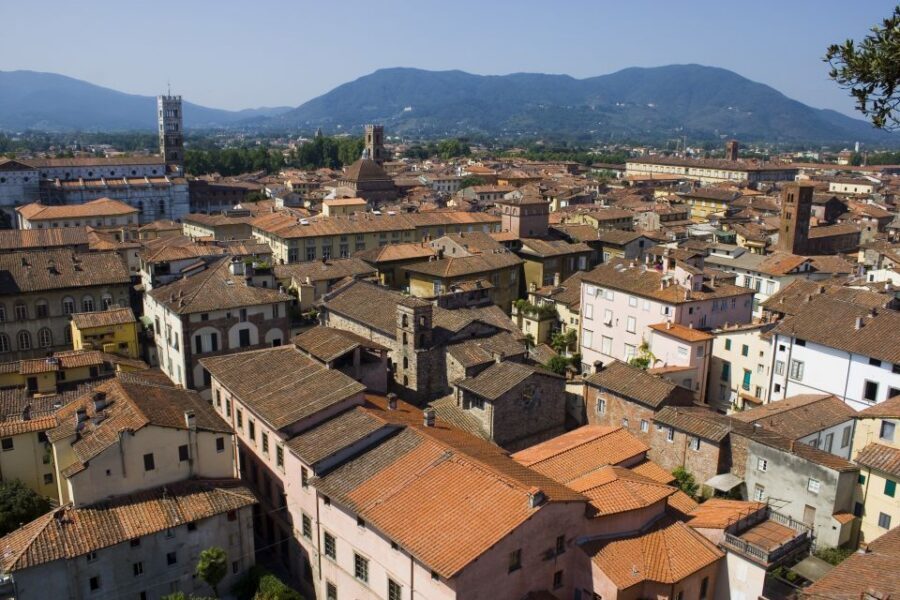
This tour runs for about 2 hours, and starting times depend on availability. I like this format for travelers who want a strong orientation but don’t want to spend half a day locked to one activity.
The route also makes sense: you start at a major gate, move inward to key squares and monuments, then end with wall views. It’s a natural flow that keeps your legs from burning out too early and gives you the best wide-angle moment at the end.
One small tip: if you’re planning a longer Lucca day, schedule this early enough that you’ll still want to wander afterward. You’ll see the city differently once you understand the oval square, the cathedral zone, and the defensive-wall vantage points.
Who should book this Lucca walking tour
This fits you best if:
- You want a high-impact orientation to Lucca’s most recognizable highlights in two hours
- You enjoy learning how architecture and city planning explain what you’re seeing
- You want a mix of monuments and a real street moment on Via Fillungo
It might not fit if you need minimal walking. The activity is flagged as not suitable for people with mobility impairments, even though wheelchair accessibility is listed. If that matters for you, confirm details with the provider before booking.
Languages are also a strong point. The live guide can work in Italian, English, French, German, and Spanish, which makes it easier to find a guide style that matches your comfort level.
And yes, punctuality counts. The tour guide Giada is noted for being on time and delivering the tour within the advertised two-hour window, with clear explanations of Lucca’s history and a strong overview of the main stops.
Should you book this Lucca highlights walk?
If you want the fastest path to understanding Lucca, I’d book it. The route covers the big visual anchors—Piazza Anfiteatro, the cathedral area, Palazzo Pfanner, and the walls—and the guide turns them into a story you can remember.
I’d skip it only if your schedule can’t handle sustained walking, or if you want food included as part of the experience. Otherwise, this is a smart use of time: guided, compact, and built around the places that give Lucca its distinct shape and pace.
FAQ
How long is the Lucca city highlights walking tour?
It’s listed as a 2-hour walking tour.
Where does the tour start and end?
It starts in front of Saint Maria Gate, Piazza Santa Maria, 42, 55100 Lucca LU, Italy, and ends back at the same meeting point.
What’s included in the price?
The tour includes an expert guide and the walking tour.
What’s not included?
Hotel pickup and drop-off, plus food and drinks, are not included.
Is the tour private or group-based?
It’s listed as a private group.
What languages is the live guide available in?
The guide can operate in Italian, English, French, German, and Spanish.
Is there wheelchair accessibility?
The activity is listed as wheelchair accessible, but it also says it is not suitable for people with mobility impairments. If this affects you, check directly with the provider.
What should I bring?
Wear comfortable shoes.
Can I cancel for a full refund?
Yes. Free cancellation is listed up to 24 hours in advance for a full refund.
Do starting times vary?
Yes. Starting times depend on availability, since the duration is fixed at about two hours.
What’s the group size like?
It’s a private group, but no exact headcount is provided in the tour details.