REVIEW · FLORENCE
Medici Legends & Renaissance Wonders: Florence Small Group Tour
Book on Viator →Operated by All Around Florence · Bookable on Viator
Florence feels different through Medici eyes. This tight walk gives you a small-group view (max 15) of big landmarks plus the less-obvious Medici connections, all told with a whisper system so you can actually hear the stories. One thing to keep in mind: the focus is more “Florence through Medici influence” than a slow, museum-deep dive into every single Medici site.
I like that the route is built for time-poor travelers: you see the Duomo complex, Palazzo Vecchio, and Ponte Vecchio without spending the whole day in transit. You also get quick, high-value context at places that would otherwise feel like photo stops.
The possible drawback is that some interiors and major museums (including Uffizi) are ticket-on-your-own, so you’ll want to plan for admission costs if you want to go in. Also, the street noise can still be a factor, even with headsets—so if you’re sensitive to sound, choose a good spot near the guide.
In This Review
- Key things to know before you go
- Starting Point and What the “Medici Lens” Changes
- Basilica di San Lorenzo: Where Medici Power Becomes Permanent
- Biblioteca Medicea Laurenziana: Michelangelo, Manuscripts, and Reputation
- Cappelle Medicee: The New Sacristy as Michelangelo’s Message
- Palazzo Medici Riccardi: Banking Family Architecture
- Duomo Complex: Cathedral, Baptistery, Dome, and Campanile
- Florence Cathedral (Santa Maria del Fiore)
- Baptistery di San Giovanni
- Cupola del Brunelleschi
- Campanile di Giotto
- Piazza della Signoria and Palazzo Vecchio: The Political Stage
- Ponte Vecchio to Palazzo Pitti: From Trade Bridge to Royal Residence
- Gallerie degli Uffizi: Renaissance Art, Family Patronage, and Scale
- Pace, Sound System, and Who This Tour Fits Best
- Price and Value: What $119.77 Really Covers
- Should You Book This Medici Legends & Renaissance Wonders Tour?
- FAQ
- How long is the Florence Medici Legends & Renaissance Wonders tour?
- How many people are in the group?
- Is the tour offered in English?
- Are admission tickets included for the sights?
- What’s included in the tour price besides the guide?
- Where does the tour start and where does it end?
- What time does the tour begin?
- Do I need to tip?
- What is the cancellation policy?
- What happens if the tour can’t run due to weather or minimum numbers?
Key things to know before you go

- Medici connections at major landmarks: You connect burials, banking power, and Renaissance patronage to what you’re seeing.
- Max 15 people: Smaller groups help the guide keep the story coherent and keep pace manageable.
- Whisper system included: Handy on crowded sidewalks, and especially useful for frequent explanations.
- Uffizi-focused time: You’ll get a guided “walk through the collection” concept across many halls.
- Tickets not included: You’ll likely need to budget separately for admission where entry is required.
Starting Point and What the “Medici Lens” Changes
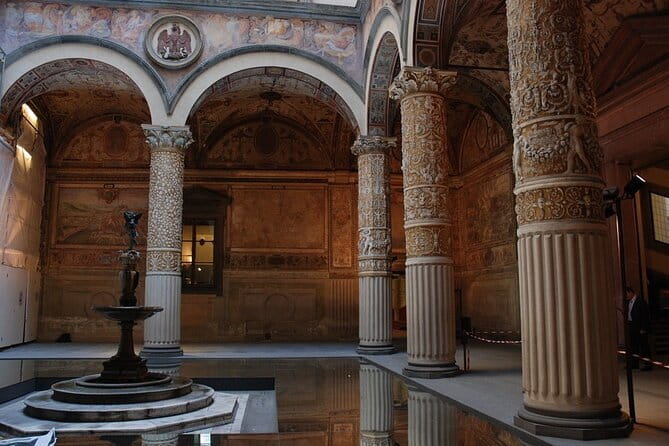
Your tour meets at Caffè Scudieri Firenze, Piazza di San Giovanni 19R, and it runs for about 1 hour 45 minutes. You’ll finish near Ponte Vecchio, so the experience naturally ends in one of Florence’s most photogenic areas.
What I like about this approach is that it stops you from treating Florence like a checklist. Instead of just seeing marble and domes, you keep asking a sharper question: how did the Medici make this city look, feel, and function as power?
Even the route order matters. You start with where the family is buried and where ideas were stored, then you move outward to the political squares, the bridge shops, and finally the art vault of the Renaissance. It’s a story engine, not a bus ride.
You can also read our reviews of more tours and experiences in Florence.
- Tuscany Day Trip from Florence: Siena, San Gimignano, Pisa and Lunch at a Winery
★ 5.0 · 21,634 reviews

Basilica di San Lorenzo: Where Medici Power Becomes Permanent
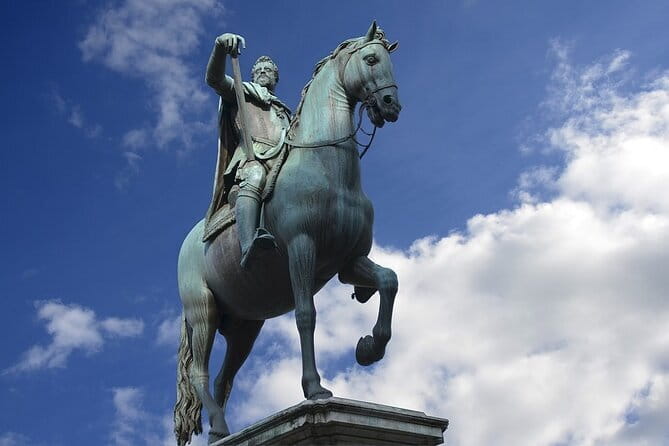
The walk begins at Basilica di San Lorenzo, right in Florence’s main market district area. This church is one of the largest in the city and, crucially, it’s the burial place for principal Medici family members—from Cosimo il Vecchio through Cosimo III.
Here’s the practical value: you learn to read monuments as messages. When you’re staring at a church like this, it’s easy to think it’s only about faith. With the Medici framing, it becomes about legacy, legitimacy, and control—built into stone and sustained over generations.
Note the stop is short, so you shouldn’t expect a full interior visit unless you also buy tickets separately where needed. Use this moment to locate what makes the place Medici-specific, then let that idea carry you forward.
Biblioteca Medicea Laurenziana: Michelangelo, Manuscripts, and Reputation
Next comes the Biblioteca Medicea Laurenziana. The big story here is patronage: it was built thanks to the Medici pope Clement VII, and the library was designed to show the Medici weren’t just merchants—they belonged to an educated, ecclesiastical world.
This stop also highlights Michelangelo’s involvement and the architectural style associated with Mannerism. Even if you only get a quick look, it helps you notice how the building itself is doing marketing for the family: status by design.
Because the visit time is brief and admission isn’t included, treat it like a “set the context” stop. If you care about architecture, use the time to spot how form and function signal prestige.
Cappelle Medicee: The New Sacristy as Michelangelo’s Message
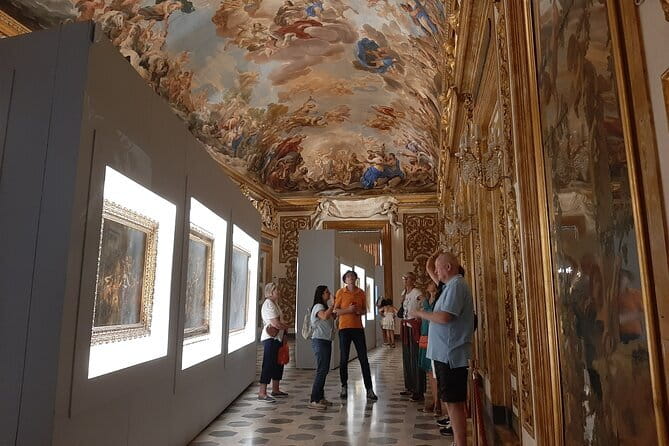
Then you head to the Medici Chapels (Cappelle Medicee), built between the 16th and 17th centuries as extensions to Brunelleschi’s earlier church. Their purpose is explicit: to celebrate the Medici family and underline their role as patrons and Grand Dukes of Tuscany.
The key highlight is the Sagrestia Nuova (New Sacristy), designed by Michelangelo. In practical terms, this is one of those places where art and politics merge. You’re not just looking at religious space; you’re watching a family write their story into sacred design.
Because you’re only there briefly, plan your attention. Don’t try to memorize everything. Instead, watch for how the space communicates Medici identity—what feels grand, what feels staged, and what feels meant to last.
Palazzo Medici Riccardi: Banking Family Architecture
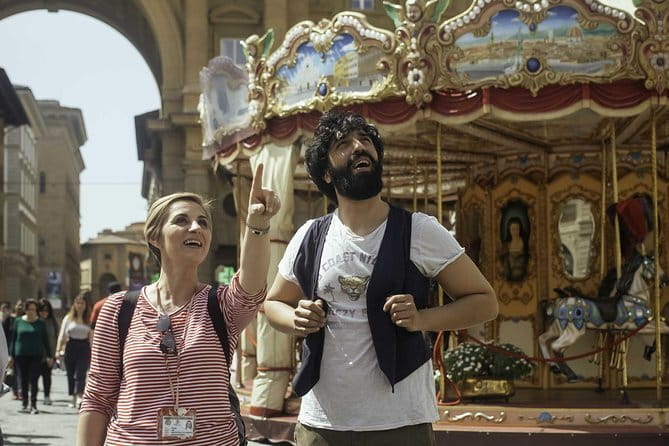
At Palazzo Medici Riccardi, you get a clear link between money and image. The palace was designed for Cosimo de’ Medici and built between 1444 and 1484, tied directly to the banking family’s rise.
This is where the “Medici lens” becomes tangible. Florence isn’t only art and cathedrals—it’s also power dressed in architecture. A palace like this helps you understand how wealth becomes influence, and influence becomes visible.
If you’re hoping for a full museum-style visit, keep your expectations realistic. Admission isn’t included for this stop, so you may mainly get exterior viewing plus story context unless you purchase entry separately.
- Tuscany Day Trip from Florence: Siena, San Gimignano, Pisa and Lunch at a Winery
★ 5.0 · 21,634 reviews - The Best tour in Florence: Renaissance & Medici Tales – guided by a STORYTELLER
★ 5.0 · 12,316 reviews

Duomo Complex: Cathedral, Baptistery, Dome, and Campanile
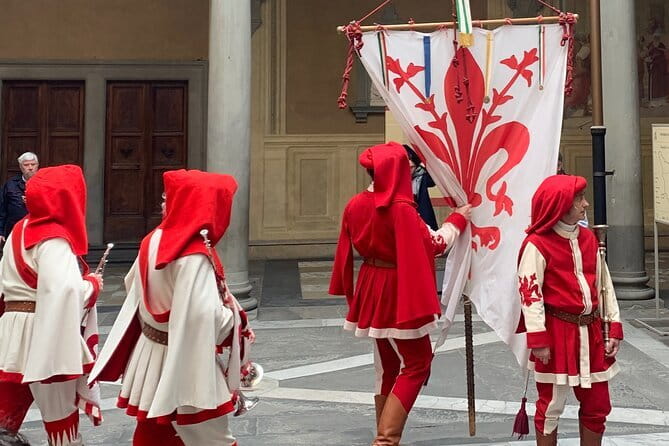
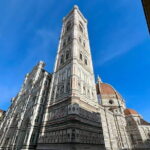
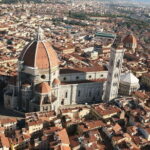
The tour then shifts into one of Florence’s most dramatic zones: the Piazza del Duomo area, with the cathedral complex (UNESCO World Heritage site). You’ll see the cathedral (Santa Maria del Fiore), the Baptistery of St. John, Giotto’s Campanile, and Brunelleschi’s dome—often with a second view of the cathedral façade later.
Florence Cathedral (Santa Maria del Fiore)
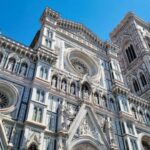
The cathedral began in 1296 in the Gothic style, based on a design by Arnolfo di Cambio. A key visual payoff is the richly decorated façade with white, green, and pink marble.
Practical tip: use the façade colors as your anchor. When you later walk away, your brain tends to remember details like color bands and structure lines. That makes the rest of the tour feel connected instead of fragmented.
Baptistery di San Giovanni
Across the same hub area is the Florence Baptistery, constructed between 1059 and 1128 in the Florentine Romanesque style. It’s an “older layer” moment right next to everything new-looking.
This helps you avoid a common mistake: thinking Florence’s greatness started in one era. The Medici story here is about how different periods build on each other, and how power keeps finding ways to leave marks.
Cupola del Brunelleschi
Then you look at Brunelleschi’s dome, described as one of the biggest architectural mysteries of its time. It was the largest in the world at one point and remains the largest brick dome ever constructed.
Even if you don’t have time for deep technical explanations, the point is clear: engineering can be a form of prestige. Florentines built something so huge it changed expectations about what’s possible.
Campanile di Giotto
Giotto’s Campanile sits adjacent to the cathedral and the baptistery. It’s known for rich sculptural decorations and polychrome marble encrustations—classic Florentine Gothic drama.
If you want a simple way to “read” the tower, focus on the textures: sculpture and color bands. That’s how you turn a tower from a silhouette into a story.
And yes, you’ll see the cathedral area more than once. That’s not accidental. Getting repeated sightlines makes it easier to connect the architecture to the larger Renaissance narrative you’ll hit at Uffizi.
Piazza della Signoria and Palazzo Vecchio: The Political Stage
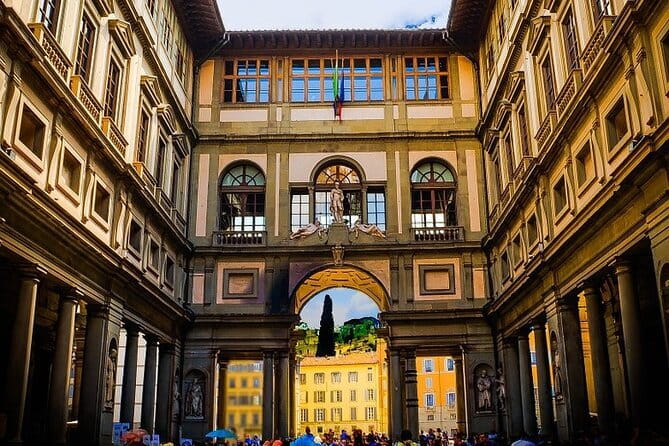
After the Duomo zone, you move into the civic heart: Piazza della Signoria and Palazzo Vecchio. Palazzo Vecchio is Florence’s town hall, a fortress-palace that’s among the most impressive civic buildings in Tuscany.
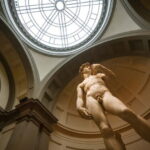
Here’s a useful detail: look toward the square where there’s a copy of Michelangelo’s David statue and the adjacent Loggia dei Lanzi filled with statues. Even if you’re not going into every space, you’re seeing how Florence displays power in public.
Piazza della Signoria itself is an L-shaped gathering place. It’s a classic “city room,” where locals and tourists both funnel through—plus it acts like a gateway area toward Uffizi.
Short visit time means you won’t get a full tour of rooms here, but you do get the bigger point: Renaissance art didn’t exist in a vacuum. It lived next to law, government, and status.
Ponte Vecchio to Palazzo Pitti: From Trade Bridge to Royal Residence
Then comes Ponte Vecchio, the Old Bridge over the Arno River and the oldest bridge in Florence. What makes it famous is the shops built along it.
Originally, those shops belonged to butchers, tanners, and farmers. Today, the tenants are jewelers and art dealers. That shift is a mini lesson in economic change, and it fits perfectly with the Medici framing—money always evolves, and the city adapts.
From there, you head toward Palazzo Pitti. The Medici bought it in 1549, and it became the chief residence of the ruling families of the Grand Duchy of Tuscany. Over time it grew into a major treasure house holding paintings, plates, jewelry, and other luxury possessions.
This stop is often where “Medici influence” clicks for first-time visitors. You stop seeing palaces as isolated buildings and start seeing them as containers for art, wealth, and display.
Even though you may only get a brief look, the key is the idea: power needs a stage, and the stage needs walls that can hold masterpieces.
Gallerie degli Uffizi: Renaissance Art, Family Patronage, and Scale
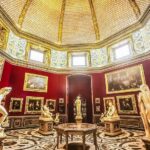
The tour’s big art finale is Gallerie degli Uffizi, one of Italy’s most important and most visited museums. It’s also one of the largest and best-known collections for Renaissance paintings.
You’ll encounter works associated with major artists like Michelangelo, Leonardo da Vinci, Raphael, and Botticelli, with coverage spanning paintings from the 12th through the 16th century (as the guided journey is described).
Two practical realities to keep in mind:
First, admission tickets are not included, so you should plan and budget for entry.
Second, Uffizi is a big place, so the guided framing matters. A short walk without context can feel like thousands of frames. A guided story helps you spot connections you’d otherwise miss.
Also, use this stop to match art to identity. In a Medici-themed tour, Uffizi isn’t only about who painted what. It’s also about who made collecting feel like a civic duty and a family legacy.
Pace, Sound System, and Who This Tour Fits Best
This is a walking tour with many stops—each one timed around about five minutes. That means the pace is designed to be efficient, not slow wandering. If you like your history with a light pace and clear story structure, you’ll probably enjoy it.
The tour includes a whisper system, which is meant to help you hear the guide better in street noise. In my experience of Florence tours like this, it helps a lot, but you still get better sound if you stand closer to the guide and avoid being too far to the side.
I also took note of guide feedback from the people who loved the experience. Names that came up strongly include Manuel, Martina, Amanda, and Giacomo. People praised guides for bringing the Medici story alive, using humor and even role-playing, and for pointing out details like crests and family symbols that are easy to miss on your own. One guide was especially attentive with a guest who wore hearing aids, checking in so they could follow along.
This tour fits well if:
- you’re visiting Florence for the first time and want bearings fast
- you want a Medici-shaped overview rather than a single-site deep dive
- you’re traveling with kids around 10+ who still enjoy a good story thread
If you’re a senior who needs clearer audio, don’t assume the street noise will magically disappear. Pick your spot early and ask the guide for positioning if you struggle to hear.
Price and Value: What $119.77 Really Covers
At $119.77 per person for about 1 hour 45 minutes, you’re paying for two main things: a licensed guide and efficient access to a lot of high-impact sights. You’re also getting a small group cap (max 15) and a whisper system, which directly affects the quality of the explanations.
What you’re not paying for is admission. The tour notes that tickets aren’t included for stops like San Lorenzo, the Medici sites, and especially Uffizi. So the true cost depends on what you want to enter versus what you’re happy to view from outside.
Here’s the value math I’d suggest: if you want an orientation tour that helps you return later with better questions, this price can make sense. If you already know the Medici story and you mainly want museum time, you might prefer a more focused single-site plan where you control the pace.
One more value angle: the tour ends near Ponte Vecchio. That makes it easy to keep walking on your own afterward, grabbing gelato and deciding what to revisit.
Should You Book This Medici Legends & Renaissance Wonders Tour?
Book it if you want a smart, story-driven introduction to Florence through the Medici family—fast, organized, and small-group sized. It’s especially good early in your trip, when you most need context to make the city click.
Skip or rethink if you’re hoping for lots of unhurried time inside Medici-specific museums, because tickets aren’t included and the stops are short. Also reconsider if you already planned to focus heavily on Uffizi and want a longer art-first visit with more time per room.
If you do book, give yourself a little buffer for tickets and expect that weather matters. This experience requires good weather, and there’s a minimum traveler requirement, so it may be rescheduled if the group doesn’t meet the threshold.
FAQ
How long is the Florence Medici Legends & Renaissance Wonders tour?
It lasts about 1 hour 45 minutes.
How many people are in the group?
The tour has a maximum of 15 travelers.
Is the tour offered in English?
Yes, it’s offered in English.
Are admission tickets included for the sights?
No. Admission tickets are not included for the listed stops.
What’s included in the tour price besides the guide?
You get a licensed tour guide, a small group experience, and a whisper system. You also receive a mobile ticket for the tour.
Where does the tour start and where does it end?
It starts at Caffè Scudieri Firenze, Piazza di San Giovanni 19R, 50123 Firenze FI, Italy, and ends near Ponte Vecchio, 50125 Firenze FI, Italy.
What time does the tour begin?
The start time is 12:15 pm.
Do I need to tip?
Tips and gratuities are optional.
What is the cancellation policy?
You can cancel for a full refund up to 24 hours in advance of the experience start time.
What happens if the tour can’t run due to weather or minimum numbers?
It requires good weather. If it’s canceled due to poor weather, you’ll be offered another date or a full refund. If it’s canceled because the minimum number of travelers isn’t met, you’ll be offered a different date/experience or a full refund.

More Tour Reviews in Florence
- Tuscany Day Trip from Florence: Siena, San Gimignano, Pisa and Lunch at a Winery
★ 5.0 · 21,634 reviews - The Best tour in Florence: Renaissance & Medici Tales – guided by a STORYTELLER
★ 5.0 · 12,316 reviews