REVIEW · FLORENCE
Michelangelo’s David & More: Early Entry Guided Tour
Book on GetYourGuide →Operated by BellaVita tour · Bookable on GetYourGuide
Seeing Michelangelo’s David in the morning hits different. This early-entry, small-group tour gets you into the Accademia Gallery ahead of the big crowd wave, with a licensed English guide who keeps the focus tight and the stories clear.
I like that you get David up close instead of treating it like a quick photo stop. I also like the added “what you’re really looking at” layer—especially the unfinished Prisoners and the workshop-style plaster display that explains how Renaissance sculpture actually worked. One thing to plan for: the entry rules are strict (no backpacks/large bags), so you’ll want to travel light and arrive on time.
In This Review
- Why this tour works (and what to watch for)
- Key highlights you’ll actually care about
- Early Access to Accademia: Your best chance to see David calmly
- Michelangelo’s David: what the guide helps you see
- The unfinished Prisoners: Michelangelo mid-thought
- Giambologna’s Rape in plaster: the workshop lesson
- Renaissance paintings: connecting patrons, power, and style
- How the one-hour schedule actually plays out
- Meeting point, audio, and small-group comfort
- Practical rules inside the Accademia (so you don’t get stuck)
- Price and value: is $78 worth it?
- Who this early-entry David tour fits best
- Should you book Michelangelo’s David & More early entry?
- FAQ
- Where do I meet the guide for this tour?
- How long is the tour?
- Is the tour in English?
- Does this ticket skip the ticket line?
- What items are not allowed inside?
- Is the tour wheelchair accessible?
- Do children need ID?
Why this tour works (and what to watch for)
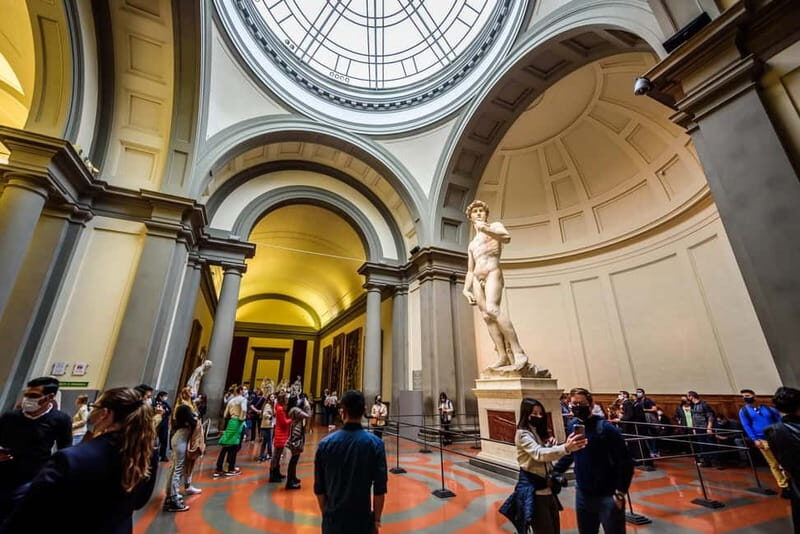
The tour format is simple: meet at Piazza delle Belle Arti, step into the gallery, and spend your 1-hour guided window seeing the most famous works in a way that makes you look longer, not faster. If the guide is Anna, she’s specifically praised for being informative and passionate, and reviews also flag that the microphone/headset setup works without glitches—helpful when you’re standing close to huge art.
The main drawback is practical: you can’t bring oversize luggage, backpacks, or large bags inside the gallery, and flash photography is off-limits. If you’re used to carrying a daypack, you’ll need a plan (usually leaving it behind before you go in).
Key highlights you’ll actually care about
- Early entry timing means less crowd pressure and more time to study David
- A licensed English guide keeps the stories focused and easy to follow
- Unfinished Prisoners show Michelangelo mid-process, not just mid-masterpiece
- Plaster works like Giambologna’s Rape of the Sabine Women explain how ideas become sculpture
- Renaissance paintings help you connect the dots beyond one statue
You can also read our reviews of more guided tours in Florence
Early Access to Accademia: Your best chance to see David calmly
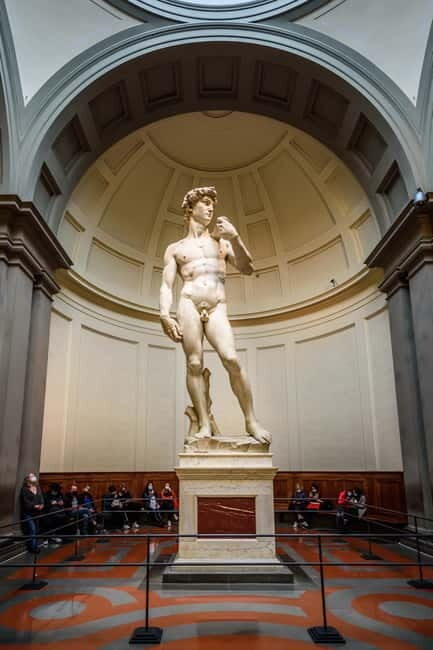
Florence is gorgeous, but the Accademia is busy. This tour’s biggest value is straightforward: you get early entry so you can see Michelangelo’s David before the galleries get packed shoulder-to-shoulder. That change in crowd level affects everything—your ability to stand still, your ability to hear explanations, and your ability to notice small details in the sculpture.
You’ll also skip the ticket line, which matters here because waiting around in the morning can eat the small window you have. The tour is built for a one-hour visit, so avoiding delays keeps your time focused on what you came for.
Practical tip: arrive 15 minutes before start at Piazza delle Belle Arti. That buffer helps if you need to figure out where the sign is located and how quickly you can get through any pre-entry checks.
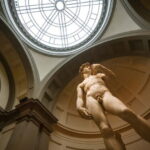
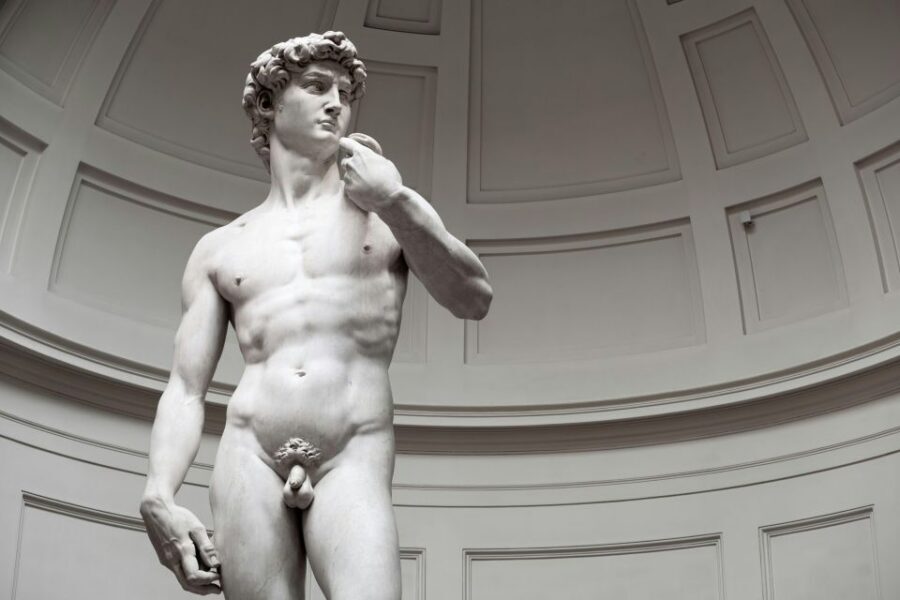
Michelangelo’s David: what the guide helps you see
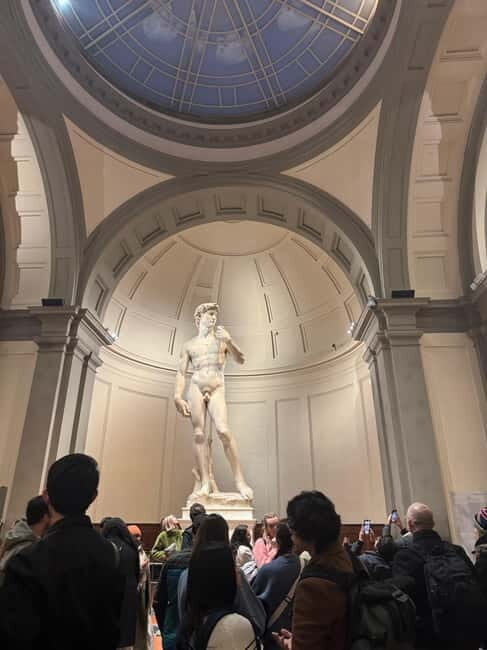
Yes, David is famous. But the point of a guided early experience is that you don’t just “see” him—you learn how to look.
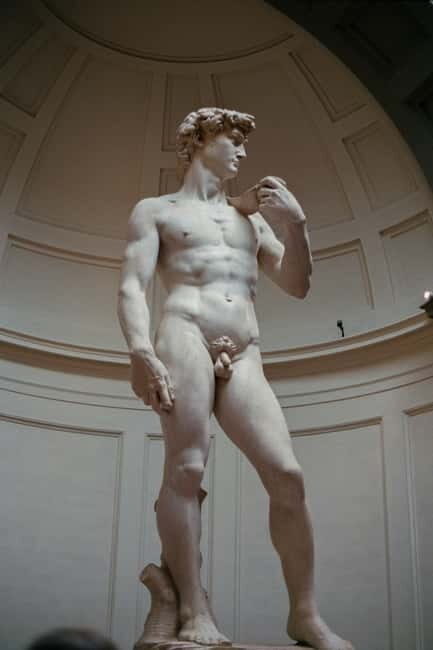
At the stop centered on David, you’ll get help interpreting what makes this sculpture so world-changing. Your guide frames David not only as a masterpiece, but as a cultural statement. You’ll also be encouraged to notice the fine balance in the pose—how the figure reads as powerful and controlled at the same time.
The big win here is pacing. In a crowd, people rush past. With a small group and live narration, you can pause where it matters: at the face, the tension in the body, and the way the surface changes as you move a few steps around. David is large, but the experience is surprisingly intimate when you aren’t fighting for space.
The unfinished Prisoners: Michelangelo mid-thought
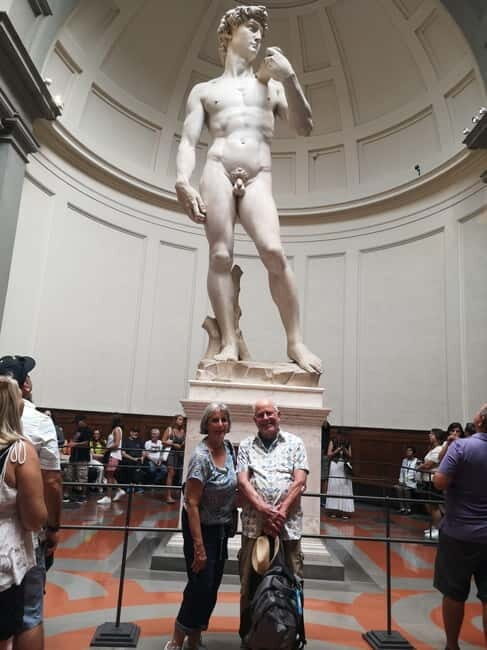
After David, the tour turns a little educational in the best way: you’ll see Michelangelo’s unfinished Prisoners. These sculptures are famous for a reason. They show the “before” stage—how the idea takes shape, and how the artist’s decisions can still be in motion.
This part helps you appreciate sculpture as process, not just result. It’s one thing to admire a finished work; it’s another to stand near fragments and half-formed figures and realize that genius often includes revisions, experimentation, and abandoning what doesn’t work.
If you like art that tells a story beyond what’s on the surface, this is the portion that can stick with you long after you leave. You’ll likely find yourself looking at stone differently for the rest of your Florence days.
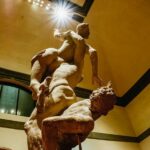
Giambologna’s Rape in plaster: the workshop lesson
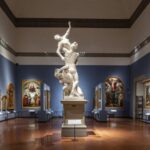
Next up is Giambologna’s Rape of the Sabine Women in plaster. Seeing it in plaster matters because it shows sculpture as construction. Plaster can make you think about the work as a model—something an artist and workshop could test, adjust, and refine.
This is a smart pairing after the Prisoners. Together, they teach you two sides of the same coin:
- Michelangelo’s thinking while a work is still forming
- A different approach to representation and planning through model materials
Even if plaster isn’t your usual obsession, this stop gives you a useful mental framework for understanding Renaissance art as a working craft, not a magic trick.
- Tuscany Day Trip from Florence: Siena, San Gimignano, Pisa and Lunch at a Winery
★ 5.0 · 21,634 reviews - The Best tour in Florence: Renaissance & Medici Tales – guided by a STORYTELLER
★ 5.0 · 12,316 reviews


Renaissance paintings: connecting patrons, power, and style
The tour doesn’t stop at sculpture. It includes Renaissance paintings, which helps you widen the view of what the Accademia contains and why the collection matters as a whole.
You’ll also hear the Medici influence woven into the story. That’s valuable because it explains why art in Florence didn’t float in a vacuum. Patrons mattered, political prestige mattered, and commissions mattered. When you hear that thread while you’re inside the gallery, you’re less likely to treat each artwork like an isolated famous object.
If you’re the type who wants context—how art connects to people, power, and place—this is where the tour earns its keep.
How the one-hour schedule actually plays out
This is a tight itinerary, and that’s a feature, not a bug. The tour moves in a straight line and ends where it starts—no confusing transfers, no long gaps.
Here’s the flow you can expect:
- Meet at Piazza delle Belle Arti. Look for the sign for BellaVita tour.
- Guided time focused on Michelangelo’s David and key supporting works (about 1 hour total).
- Back to Piazza delle Belle Arti.
The “1 hour” part is important. It means you’re not stuck in a long museum slog. But you also should be ready to pay attention right away, because early entry doesn’t mean “slow start.” You’ll want to arrive early and be ready to follow your guide’s pace.
Meeting point, audio, and small-group comfort
The meeting point is Piazza delle Belle Arti, and the guide meets you in front of the square area with a BellaVita tour sign. End point is back at the same meeting point—simple and clean.
One of the best practical notes from reviews is that the microphone/headset setup works well. In a museum, it’s easy to strain your ears or miss key details. If the audio is stable, you can actually enjoy the explanation instead of focusing on hearing it.
Because it’s an exclusive small group, you should have an easier time asking questions. That matters in this kind of museum because the most interesting bits often come from the guide’s clarifications about how you’re supposed to look.
Practical rules inside the Accademia (so you don’t get stuck)
The tour follows museum rules closely, and you’ll want to too. The main restrictions you should plan around:
- Oversize luggage and large bags/backpacks aren’t allowed inside
- No flash photography
- Plastic bottles aren’t allowed
- In the museum, only water is allowed
There’s also a kid rule: kids and children under 18 need to show an ID (ID pictures are okay). If you’re traveling with teens, bring something small and official.
Wheelchair accessibility is listed as supported, which is a good sign for planning. Still, because you’re in a museum with fixed galleries and crowds can change, you’ll want to follow the guide’s cues once you’re inside.
Price and value: is $78 worth it?
At $78 per person, you’re paying for three things working together: licensed guidance, early entry, and a time-efficient route through the Accademia’s most requested highlights.
If you’re a self-guided museum explorer, you can always buy a ticket and go at your own pace. But you’d be giving up the “how to look” value—especially for David, the unfinished Prisoners, and the plaster work, where context genuinely changes what you notice.
And early access is a real service here. If you arrive when the museum is already busy, you often lose the calm needed for close looking. This tour is designed to protect that moment.
So the question isn’t just the price. It’s what you gain by spending your limited early-entry time with a guide instead of wandering and waiting.
Who this early-entry David tour fits best
This is a strong match if:
- You want Michelangelo’s David, but you also want to understand it
- You prefer smaller groups and clearer explanations
- You like seeing works in context, including workshop-style materials like plaster
- You’re visiting Florence with limited time and want a focused plan
It may feel less ideal if:
- You’re traveling with heavy luggage or you rely on a backpack for day essentials
- You prefer long, unstructured museum wandering where the pace is entirely yours
Should you book Michelangelo’s David & More early entry?
I’d book it if your top goal is David with less crowd stress and more meaning per minute. The early timing plus the guided focus on the Prisoners and the plaster display turns a famous stop into an art experience that actually teaches you how to look.
If you’re flexible on what you carry, arrive on time, and want a smooth, high-impact visit, this is good value for a one-hour tour that targets the museum’s core highlights without wasting your morning.
FAQ
Where do I meet the guide for this tour?
You meet at Piazza delle Belle Arti. Look for the BellaVita tour sign.
How long is the tour?
The tour lasts 1 hour.
Is the tour in English?
Yes, the live tour guide is English.
Does this ticket skip the ticket line?
Yes, it includes skipping the ticket line.
What items are not allowed inside?
Oversize luggage, luggage or large bags, flash photography, and backpacks are not allowed.
Is the tour wheelchair accessible?
Yes, wheelchair accessibility is listed for this activity.
Do children need ID?
Yes. Children and kids under 18 need to show an ID (ID pictures are okay).

More Guided Tours in Florence


More Tours in Florence



More Tour Reviews in Florence
- Tuscany Day Trip from Florence: Siena, San Gimignano, Pisa and Lunch at a Winery
★ 5.0 · 21,634 reviews - The Best tour in Florence: Renaissance & Medici Tales – guided by a STORYTELLER
★ 5.0 · 12,316 reviews