REVIEW · FLORENCE
Private Florence Highlights Electric Tour
Book on Viator →Operated by Eco Florence Tour · Bookable on Viator
Florence is best when you pace it.
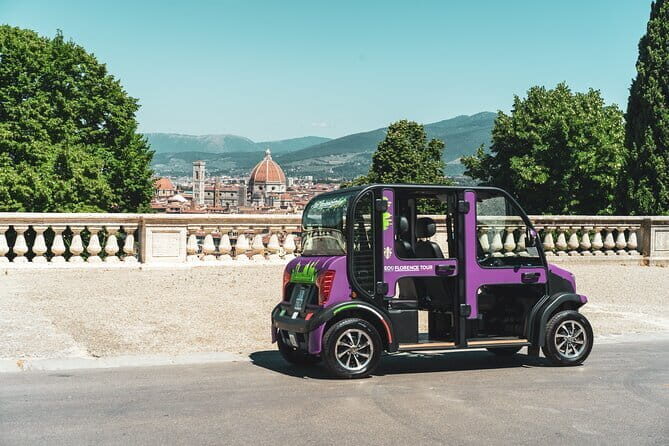
This Private Florence Highlights Electric Tour strings together the city’s most important neighborhoods and monuments in about 90 minutes, so you can get your bearings fast without doing a long walking loop.
I especially like the mix of stops: you get big-church exteriors, Medici power places, and river views that help the city make sense. I also like the practical side, since the tour includes WiFi on board, which is handy for maps and messaging while you hop between areas.
One consideration: this experience is delivered with audio guidance, not just a purely live guide. If you were expecting a full, face-to-face storytelling session the whole time, it’s worth checking that fit before you book.
In This Review
- Key highlights worth your time
- Why a 90-Minute Electric Cart Tour Works in Florence
- Meeting at Trattoria Sergio Gozzi and Starting Your Route
- Piazza Santa Croce: Start with Florence’s Most Photogenic Center of Gravity
- Biblioteca Nazionale Centrale: A Detour That Teaches You How Florence Changes
- San Miniato al Monte: The Church Stop That Feels Like a Reward
- Piazzale Michelangelo: Your Official Balcony Seat
- Oltrarno and Santo Spirito: Beyond the Arno, Where the City Feels More Human
- Ponte alla Carraia and the River Logic of Florence
- Santa Croce Again: Why You Might See It Twice
- Palazzo Medici Riccardi: Medici Power, Without Needing a Ticket Masterclass
- San Lorenzo and the Medici Chapels: The Brunelleschi-to-Mausoleum Story
- Santa Maria Novella’s Square: A Dominican Anchor in the Middle of Everything
- Ponte Santa Trinita and Ponte Vecchio: Two Bridges, Two Styles of Fame
- Palazzo Pitti and Piazza Pitti: When Florence Wants to Outdo Its Rivals
- What the Audio-Guided Format Feels Like in Real Time
- Comfort, Capacity, and the Reality of Splitting Into Two Vehicles
- Tips That Make Your 90 Minutes Go Better
- Safety and Traffic: What to Expect in a City Full of Moving Parts
- Price and Value: Is $83.45 Worth It?
- Who Should Book This Tour
- Should you book this Private Florence Highlights Electric Tour?
Key highlights worth your time
- Fast Florence circuit: you cover major sights across several neighborhoods in roughly 1.5 hours.
- Panorama at Piazzale Michelangelo: a dedicated viewpoint stop built for skyline photos.
- Medici landmarks on one route: Palazzo Medici Riccardi plus the Medici Chapels.
- River bridges with real story details: Ponte Vecchio, Ponte Santa Trinita, and what happened after floods.
- Audio format varies by how you listen: the experience may include recorded narration at some parts.
- Real guide energy shows up: several tours are praised for guides like Tommaso, Ruben, Marcello, and Michael.
Why a 90-Minute Electric Cart Tour Works in Florence
If you only have a short window in Florence, the biggest challenge is not seeing sights. It’s seeing enough sights while still feeling human at the end of the day. This electric-cart format is built for exactly that: it keeps you moving through the city while minimizing the slog of nonstop walking.
The other big win is the way the route is planned. You’re not just doing a checklist. You’re learning how Florence connects: basilicas near the Arno, Medici sites tied together, and bridges that explain how the river shaped the city.
You can also read our reviews of more private tours in Florence

Meeting at Trattoria Sergio Gozzi and Starting Your Route
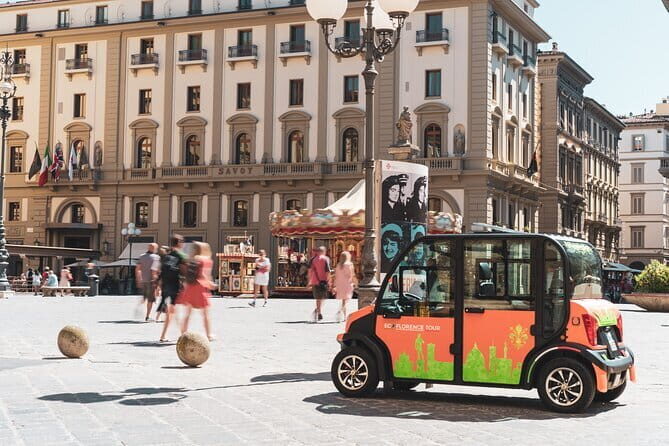
Your tour starts at Trattoria Sergio Gozzi, Piazza di San Lorenzo 8R and ends at the same address. The pickup point matters because you’re already in the historic core, close to several of the neighborhoods the route threads through.
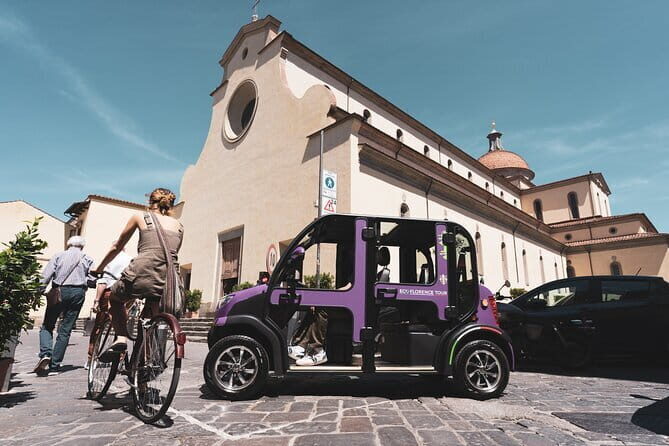
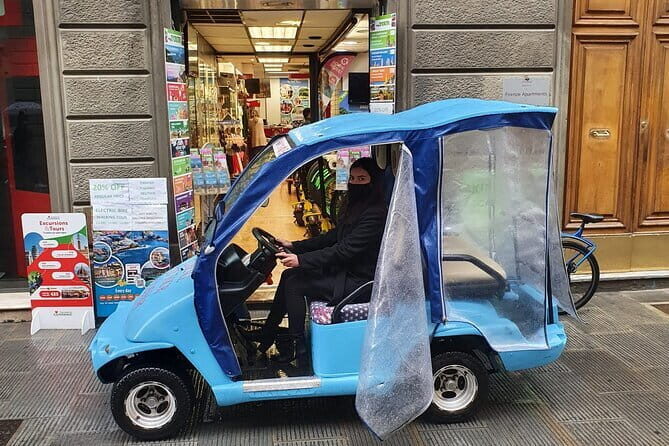
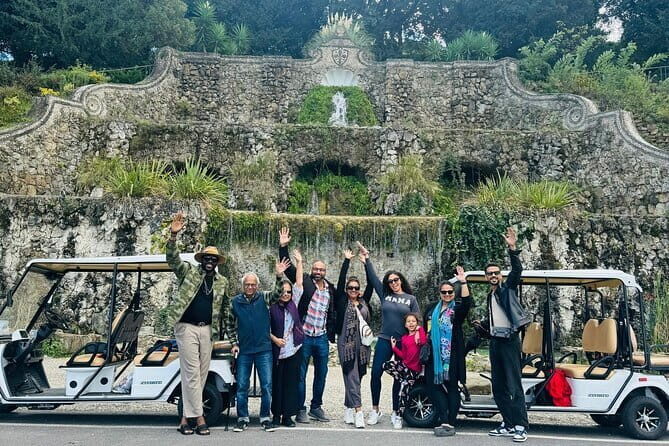
Also note this is a private service, so your group stays together. If your group is larger, you may end up in more than one electric vehicle since authorized vehicles have a maximum capacity of five passengers.
Piazza Santa Croce: Start with Florence’s Most Photogenic Center of Gravity
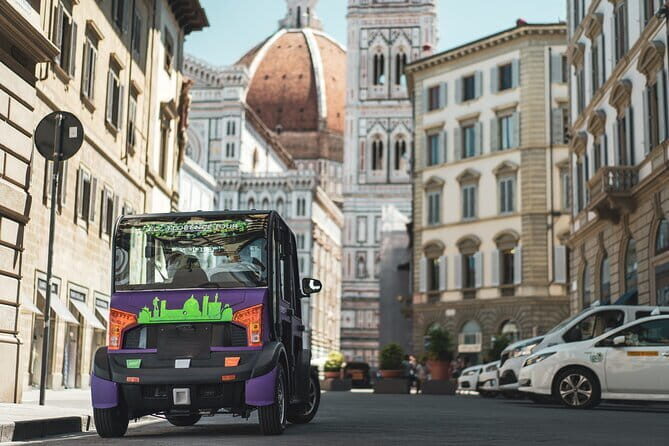
You kick off around Piazza Santa Croce and the nearby basilica area. Santa Croce Square is one of those places where the atmosphere feels instantly “Florence”—and the basilica gives you something solid to anchor that feeling. You’ll be in the city’s eastern quarter, where the Franciscan story ties into the building’s long timeline.
Timing is short here (about 5 minutes), so think of this as an orientation stop. It helps to see the church and square early, because later parts of the tour make more sense once you understand where you are relative to other neighborhoods.
Biblioteca Nazionale Centrale: A Detour That Teaches You How Florence Changes
Next is the Biblioteca Nazionale Centrale, a building from the 1930s made with pietraforte stone. This stop is interesting because it doesn’t try to be medieval. It mixes older flavors into a newer structure, showing how Florence keeps writing its story, not just freezing it in time.
You only get a few minutes (about 5), so don’t treat it like a deep museum visit. Treat it like a visual lesson: Florence’s architecture isn’t one style forever, even in a city that looks like it only has one era.
San Miniato al Monte: The Church Stop That Feels Like a Reward
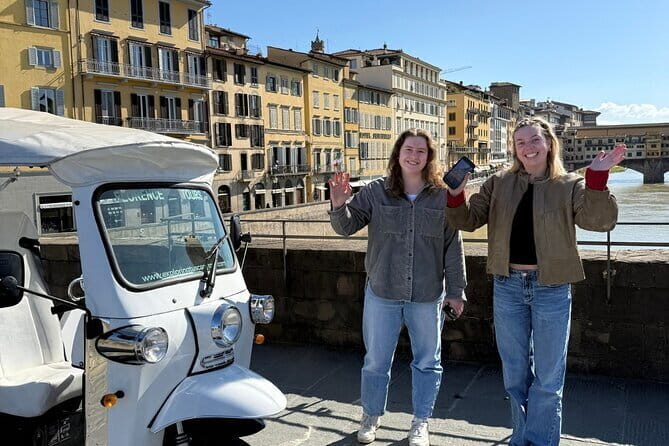
Then you climb to Basilica di San Miniato al Monte, which Florentines love partly for the views. You get a quick look at the church perched on “Mons Florentinus,” a place associated with early Christian catacombs.
This is a great stop if you like Romanesque architecture and you want a moment where the city spreads out. The downside is that you won’t have long for details; it’s about perspective and context more than slow sightseeing (about 5 minutes).
- Tuscany Day Trip from Florence: Siena, San Gimignano, Pisa and Lunch at a Winery
★ 5.0 · 21,634 reviews - The Best tour in Florence: Renaissance & Medici Tales – guided by a STORYTELLER
★ 5.0 · 12,316 reviews


Piazzale Michelangelo: Your Official Balcony Seat
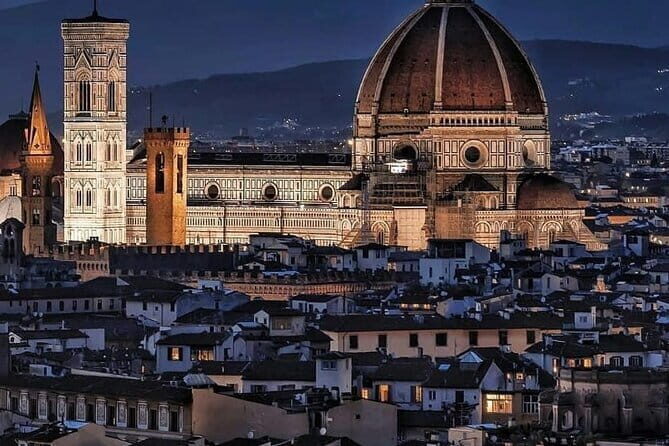
At Piazzale Michelangelo, you’re stepping into Florence’s famous skyline viewpoint. The square was created in the late 1800s (1865 to 1875) and it was designed to bring a panoramic viewing idea to Florence.
In practice, this is the stop you’ll care about most for photos and for understanding the city’s shape. The tour gives you enough time to step out, look around, and reset your brain before the route drops back into the streets.
Oltrarno and Santo Spirito: Beyond the Arno, Where the City Feels More Human
After the viewpoint, you head to Oltrarno, literally beyond the Arno. This area grew as people moved from the countryside into the city starting in the 1200s, and it expanded again when the Medici court arrived at Palazzo Pitti.
Oltrarno can feel different from the classic postcard center, and that’s the point of including it. It’s also where your route starts making sense as a loop around the river instead of a single-direction “see and leave” tour.
This stop focuses on the district and the Basilica of Santo Spirito area, with about 10 minutes allotted. You’ll see enough to understand the vibe, but you won’t be “staying” for a long interior visit.
Ponte alla Carraia and the River Logic of Florence
You also pass Ponte alla Carraia, built in 1218. The name connects to how goods were transported by cart, so even a short stop here teaches you that bridges were practical infrastructure long before they became photo spots.
This is one of the stops you’ll appreciate even if you don’t go inside anywhere. It connects Florence’s architecture to daily life: commerce, crossing points, and the river as a moving force.
Santa Croce Again: Why You Might See It Twice
You’ll come back to the Basilica of Santa Croce area later in the route. Seeing Santa Croce twice sounds redundant until you realize the timing is doing a job: it gives you another chance to absorb what you noticed at the start, without rushing.
One key practical detail: entry tickets are not included, so this tour is best for what you can see outside or in quick moments at churches you decide to enter. If you want long interior time, you’ll need separate plans with tickets and extra time.
Palazzo Medici Riccardi: Medici Power, Without Needing a Ticket Masterclass
Next is Palazzo Medici Riccardi, tied to the Medici dynasty. The palace was designed by Michelozzo and commissioned around 1445 by Cosimo the Elder.
This stop is valuable because it shows Medici influence as something you can stand in front of, not just something you read about later. Even with a short viewing window (about 5 minutes), the scale communicates the story quickly.
San Lorenzo and the Medici Chapels: The Brunelleschi-to-Mausoleum Story
You’ll then head to Basilica di San Lorenzo, built on older sacred ground. The big detail here is that it was rebuilt starting in 1419 by Filippo Brunelleschi, under the will of Giovanni di Bicci (father of Cosimo the Elder).
From there, the tour goes straight to Cappelle Medicee (the Medici Chapels), including the New Sacristy and the Chapel of the Princes. This is the point where Medici ambition becomes a kind of marble-and-space final statement.
Both stops are short (around 5 minutes each), so treat them as high-impact orientation. If you want to linger over art and tomb details, you’ll likely want a separate return visit.
Santa Maria Novella’s Square: A Dominican Anchor in the Middle of Everything
Near the later part of the route, you’ll see Santa Maria Novella (basilica and the square in front). This was an early major Florentine basilica and the home base of the Dominican order that settled there as early as the 1200s.
The square matters because it’s part of how the order gathered people for sermons. Even if your time is brief, the idea is useful: Florence’s church squares weren’t just decoration. They were social and spiritual meeting points.
Ponte Santa Trinita and Ponte Vecchio: Two Bridges, Two Styles of Fame
You stop at Ponte Santa Trinita, originally built in 1252 and later rebuilt after a 1557 Arno flood, based on a design by Bartolomeo Ammannati (a pupil of Michelangelo). Then it’s on to Ponte Vecchio, the one everyone recognizes.
Ponte Vecchio dates back to Roman times and has survived repeated Arno floods. The tour also includes the Vasari Corridor area by name and context: a private elevated passage built in 1565 in about five months connecting Palazzo Vecchio and Palazzo Pitti.
Here’s the value: bridges in Florence aren’t interchangeable. They each carry different histories, and your route makes you notice that.
Palazzo Pitti and Piazza Pitti: When Florence Wants to Outdo Its Rivals
You finish with Palazzo Pitti and Piazza Pitti. The palace was commissioned in 1440 by Luca Pitti and designed by Filippo Brunelleschi. It was meant to outshine the Medici and the Strozzi by being so large it had no equal in the city.
This ending works well because you just spent time learning Medici structures earlier. Now Pitti’s scale lands as a kind of power contest you can see with your eyes, even if you’re not touring the interior.
What the Audio-Guided Format Feels Like in Real Time
This tour is built around audio guidance, with the electric vehicle experience and short stop times. In some cases, guides have been able to add extra narration, and some visitors asked for the audio to be turned off, getting live commentary instead.
I recommend thinking of this as a hybrid: vehicle movement and scheduled viewpoints, plus recorded narration that keeps the timing tight. If you prefer a fully live, back-and-forth conversation style, you may find this less satisfying.
A common positive thread in the feedback is that some drivers and guides still bring a lot of personality. People praised guides like Tommaso and Ruben for enthusiasm and clear English, and Marcello for art and restaurant recommendations.
Comfort, Capacity, and the Reality of Splitting Into Two Vehicles
This is a private service, but vehicles are small. Authorized vehicles can handle up to five passengers, so larger groups might split. That’s not a dealbreaker, but it changes the “togetherness” feeling.
One practical upside: even when it’s split into more than one vehicle, you still follow the same general route. And you’re not forced into a crowded bus vibe.
Tips That Make Your 90 Minutes Go Better
Because the stops are short, you’ll get the most from this tour if you plan your priorities before you roll. If you care most about photos, save your careful angles for Piazzale Michelangelo and the bridge area around Ponte Vecchio.
If you care more about architecture, focus on what you can see from the street: façades, building materials, and the way churches sit relative to squares. Entry tickets aren’t included, so you decide on the fly what’s worth paying for inside.
If you’re sensitive to the audio format, it’s worth asking how it’s handled during your ride. Some people reported being disappointed at first because they thought it would be a fully guided, live English tour without recordings, and others reported success when the audio was reduced or managed.
Safety and Traffic: What to Expect in a City Full of Moving Parts
Florence streets can be tricky. Some drivers are praised for adapting to heavy traffic and even road closures without turning the tour into a scramble.
This matters because a sightseeing tour is only as good as its pacing. When the route is interrupted, a good driver can still protect the key moments—especially the viewpoints and bridge stops.
Price and Value: Is $83.45 Worth It?
At $83.45 per person for about 90 minutes, this is not a budget “transport only” option. But it can be good value if you use it for what it’s best at: covering many famous stops without spending your legs on an all-day loop.
Here’s the value logic I’d use if I were choosing for my own trip:
- If you’re juggling other plans and want a tight introduction to Florence, the tour’s stop density helps.
- If you hate slow walking between neighborhoods, the electric vehicles reduce fatigue.
- If you want to go inside multiple churches and museums, the lack of included entry tickets means you’ll still need extra time and budgeting.
In other words, it’s a smart buy for orientation and highlights. It’s not a substitute for full museum days.
Who Should Book This Tour
This works best if you:
- Want a high-impact overview in a short time.
- Prefer minimal walking while still seeing the major landmarks across Florence.
- Like practical route planning and appreciate viewpoint stops like Piazzale Michelangelo.
- Enjoy history delivered in quick pieces, whether live or via audio.
It might not be your best match if you:
- Need a fully live, constantly interactive guide to feel satisfied.
- Are very picky about sound quality from audio equipment.
- Have a group size that will split, which could affect how you experience the tour socially.
Should you book this Private Florence Highlights Electric Tour?
I’d book it if you want Florence highlights in a tight, low-effort format and you’re okay with audio-style narration. The route covers a lot of meaningful stops: Santa Croce, Medici sites like Palazzo Medici Riccardi and the Medici Chapels, plus the skyline and bridge stories that explain why the Arno matters.
Skip it or choose something else if you’re strongly focused on long interior visits, or if you want nonstop live commentary the whole time. If you do book, go in with the right mindset: this is for seeing and orienting, not for museum-length deep study.

More Private Tours in Florence

More Tours in Florence


More Tour Reviews in Florence
- Tuscany Day Trip from Florence: Siena, San Gimignano, Pisa and Lunch at a Winery
★ 5.0 · 21,634 reviews - The Best tour in Florence: Renaissance & Medici Tales – guided by a STORYTELLER
★ 5.0 · 12,316 reviews