REVIEW · FLORENCE
Private Florence Tour of Must-See Sites from Duomo to Santa Croce & Old Bridge
Book on Viator →Operated by Blue Tours · Bookable on Viator
Florence starts to click fast. This private walk connects the big landmarks—Duomo, Ponte Vecchio, Piazza della Signoria, and Santa Croce—into one clear Renaissance story, so you’re not wandering with no plan. I especially love the way you get context and trivia you can actually use, like how the Vasari Corridor reshaped what happened on the bridge. I also like the off-route stop at historic Palazzo Davanzati, which breaks the pattern of only doing the obvious photo stops.
The main trade-off is that it’s an outdoor walking tour, with a moderate pace and a moderate physical level needed. Also, it ends before the Porta dei Paradiso area, so if you want more time right at that doorway or inside the complex, you’ll need to plan extra time on your own.
In This Review
- Key highlights at a glance
- Piazza Santa Croce: the smart launch point for Florence
- Ponte Vecchio views, Porcellino, and the Vasari Corridor changes
- Piazza della Signoria: Renaissance power explained on the walk
- Piazza del Duomo: green-and-white marble and Brunelleschi’s dome
- Palazzo Davanzati and off-route storytelling without the detours
- Your guide team: Blue Badge and art historian context that sticks
- Timing, pacing, and why private changes everything
- Price and value: what $217.80 per person buys in real terms
- What you’ll probably want to add after the walk
- Should you book this private Duomo-to-Santa Croce tour?
- FAQ
- Where does the tour start?
- How long is the private walking tour?
- Is this tour private or shared with other groups?
- Is the tour mostly outdoors, and is it strenuous?
- Are kids included for free?
- What is the cancellation policy?
Key highlights at a glance
- Santa Croce as your orientation point: a guided intro that helps you understand the basilica and its setting right away
- Ponte Vecchio with Porcellino: you pass the famous little pig market area dating to the 1300s
- Vasari Corridor connections: learn how that project changed the shops along the bridge
- Piazza della Signoria explained: the square’s political history becomes easy to picture as you walk it
- Duomo area guided viewing: green-and-white marble and Brunelleschi’s dome, with key context but not a rushed checklist
Piazza Santa Croce: the smart launch point for Florence
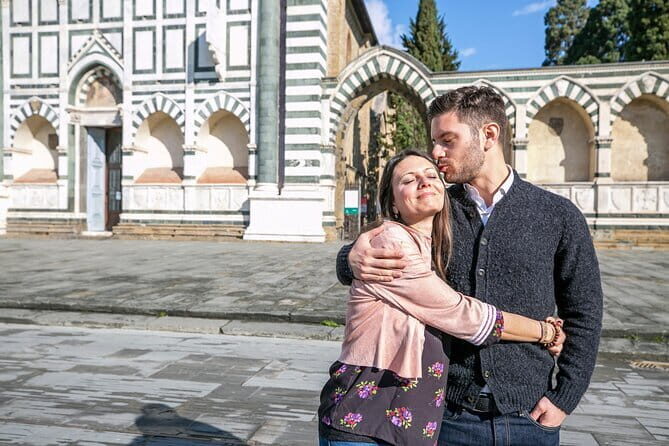
Starting in Piazza di Santa Croce puts you in the right frame of mind. Florence can feel like a puzzle made of stone streets, and this tour’s first job is to help you read that puzzle. You meet in Piazza Santa Croce and begin with guided facts about the basilica, without needing to hunt for meaning on your own. You’re only there about 30 minutes, but that’s enough time to set the “why” behind what you’re about to see next.
What I like about this first stop is how it changes your whole day. Santa Croce isn’t just a landmark you glance at; it becomes a reference point for how Florence grew, who held power, and why the city’s art and architecture feel so connected. If you’ve got limited time—just a morning or an afternoon—this kind of orientation is a huge win.
One small practical note: since it’s outdoors, bring what you’d bring for a normal walking day. Comfortable shoes matter here, because you’re doing multiple squares and sidewalks. If you’re traveling with kids, this is a good first stop too. You get structure fast, and kids under 18 are free, which makes it easier to justify doing a guided plan rather than guessing your way around.
You can also read our reviews of more private tours in Florence

Ponte Vecchio views, Porcellino, and the Vasari Corridor changes
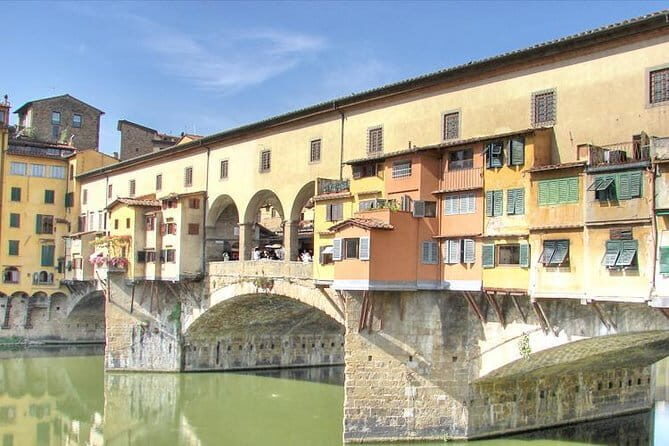
Then the tour moves you toward Ponte Vecchio, and you get the kind of “Florence postcard” moment that also comes with real story. On the way, you pass by the Porcellino market area—associated with the 1300s—and your guide ties it into what makes this place feel historic rather than staged.
Ponte Vecchio itself is one of those bridges that looks straightforward until you learn how it worked in its time. You get about 30 minutes in this area, and the best part is not only the views outward over the hills, but also what happens inward on the bridge. Your guide explains how the building of the Vasari Corridor caused a major shift to the shops that line Ponte Vecchio. That single detail helps you understand why the bridge feels different from other bridges you might see in Europe. It’s not just a crossing—it’s a designed piece of political and social life.
Here’s the practical takeaway for you: while you’re on the bridge, don’t treat it like a quick photo stop. Use the time to look outward first (the rolling hills give you scale), then turn back and focus on the bridge as a system—movement, commerce, and power all layered into one narrow span.
This stop also tends to be visually satisfying even if your history tolerance is low. You can enjoy it just for the atmosphere and still get the story you’ll later use when you talk about Florence with friends.
Piazza della Signoria: Renaissance power explained on the walk
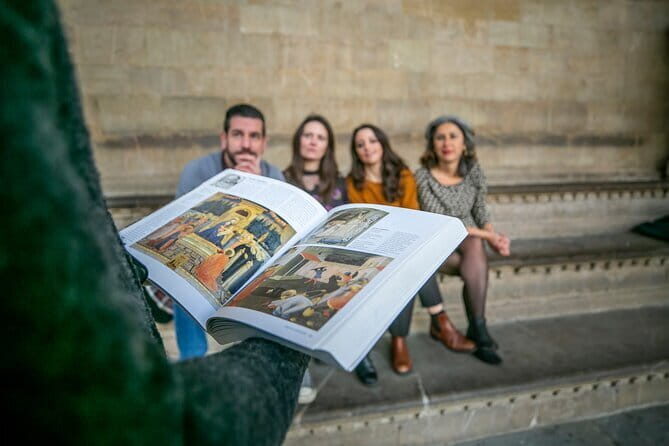
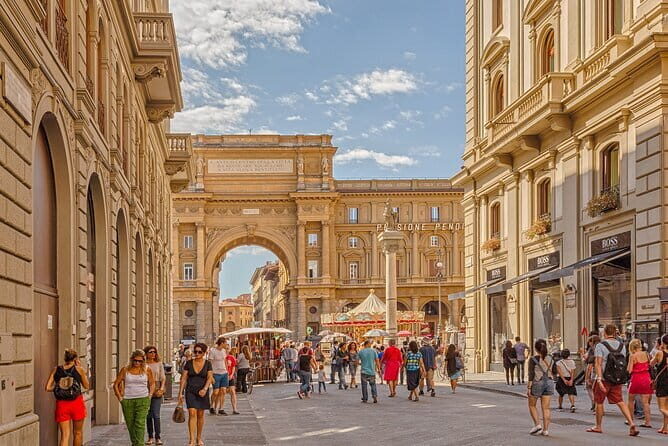
Next comes Piazza della Signoria, the political heart of Renaissance Florence. You don’t need a lecture hall for this square. You just need someone to point at the right buildings and connect the dots while you’re standing in the middle of it.
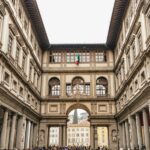
In this area, the tour’s guided framing is what makes it click. You learn that the offices of the Grand Dukes were once housed in what is now the Uffizi. Across the square, the seat of the Florentine government was in the Palazzo Vecchio. Those are big names, but without context they’re just museum and palace labels. With a guide, they become a map of governance: who ran what, where decisions were made, and how art and power lived side by side.
You spend about 20 minutes here. That might sound short, but it’s enough time to understand the square’s role and still keep the tour feeling lively instead of like a museum tour stitched onto the sidewalk. If you prefer your sightseeing to feel like walking and talking, not standing still for ages, this stop hits a good rhythm.
One consideration: this is a major public square, and it can be busy. The private setup helps because you’re not stuck behind a crowd following a script. Still, you’ll want to keep your phone ready but your eyes up—this square rewards attention to the buildings around you.
Piazza del Duomo: green-and-white marble and Brunelleschi’s dome
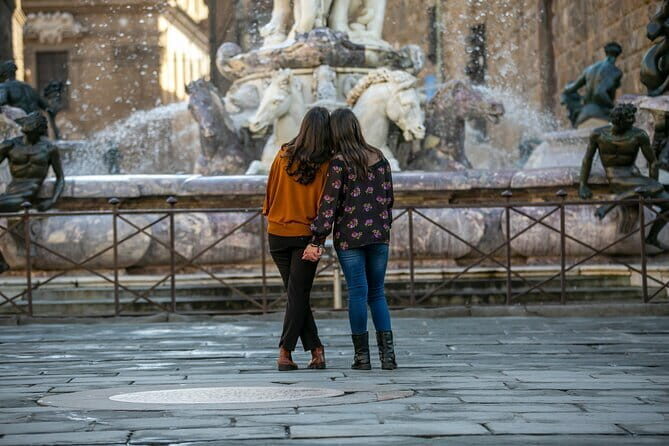
Finally, you reach Piazza del Duomo, and the architecture gets serious. The tour includes a stroll through the oldest part of the city where you can see tower houses that date from the 1300s. That’s a smart move because it bridges the gap between “this looks old” and “this is how old works.” You’re not just staring at the Duomo from far away—you’re getting the sense of how the city’s medieval layers lead into Renaissance grandeur.
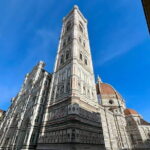
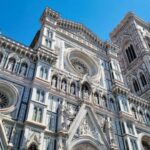
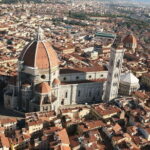
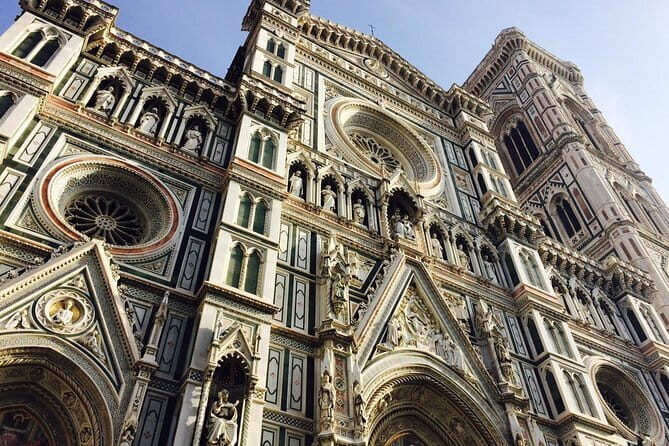
In Piazza del Duomo (about 40 minutes total), you gaze at Florence’s cathedral with its striking green and white marble. Then you learn about Brunelleschi’s dome—the architectural achievement that turned the cathedral into a Renaissance symbol you still recognize today. If you’ve ever looked at the Duomo and wondered what you’re actually supposed to notice, this is where a guide earns their pay. The dome becomes more than a big thing you see. It becomes a concept you can explain.
The tour ends before the Porta dei Paradiso area. That matters for planning: you’ll get pointed toward the wonderfully decorated doors of the Baptistery, and you’ll also hear about Giotto’s famous Bell Tower, since it’s alongside that whole complex. But if your goal is to spend extra time right at the doors or to go further into the complex, you’ll need to add that on your own after the walk.
Practical advice: aim to use these 40 minutes to look at the materials and shapes from several angles, not just one view. The Duomo area rewards slow attention, and a guided pace keeps you from rushing past what makes the marble and dome special.
Palazzo Davanzati and off-route storytelling without the detours
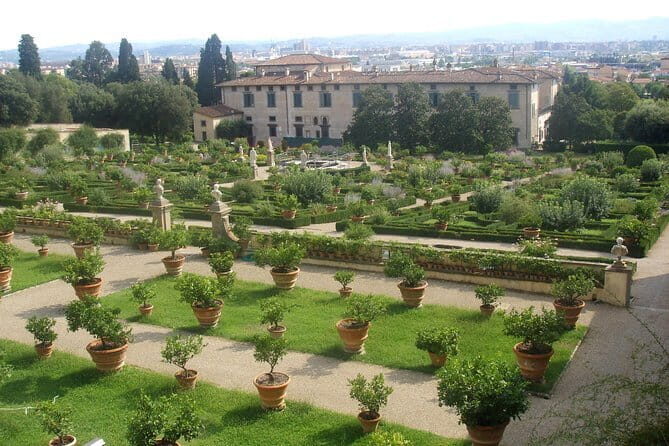
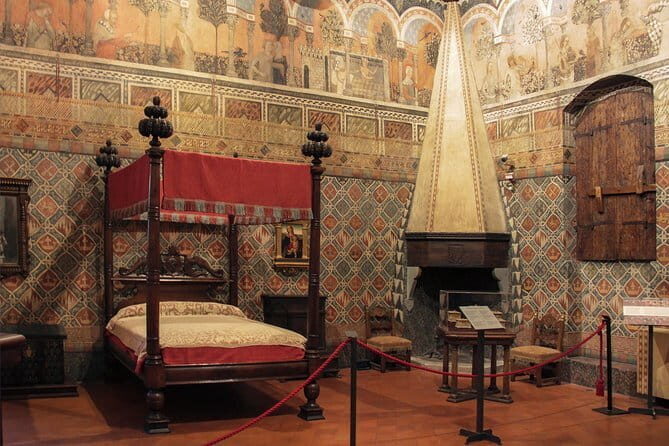
One of the highlights is the chance to venture off the beaten path, including a stop at historic Palazzo Davanzati. Even if you only get a brief look, the value is in what your guide does with it. This is the kind of location that helps you understand Florence beyond the biggest monuments. You start to see how wealth, family power, and daily life were built into the city’s fabric.
This is also where you’ll feel the difference between aimless wandering and guided navigation. Florence streets can turn into a maze fast, and a detour sounds like wasted time until someone explains what you’re seeing and why it matters. Here, the off-route stop gives you a “human scale” contrast to the grand squares. You’re reminded that Renaissance Florence wasn’t only about domes and palaces—it was also about residences, merchants, and neighborhoods evolving over time.
If you’re traveling with kids, this kind of change of scene is useful. A square is one atmosphere; a palazzo environment can feel more approachable. And since kids under 18 are free, the guide can keep the focus more flexible without worrying about making the family portion of the day feel shorter than it should.
- Tuscany Day Trip from Florence: Siena, San Gimignano, Pisa and Lunch at a Winery
★ 5.0 · 21,634 reviews - The Best tour in Florence: Renaissance & Medici Tales – guided by a STORYTELLER
★ 5.0 · 12,316 reviews



Your guide team: Blue Badge and art historian context that sticks
The tour includes a Blue Badge guide, plus a local guide and a professional art historian guide. That combination matters more than it sounds. A Blue Badge guide helps with strong interpretive grounding and accuracy. A local guide brings the street-level understanding that makes Florence feel like a living city rather than a catalog. And an art historian guide helps you make sense of why certain details exist and what they meant when they were new.
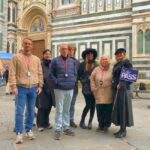
One name that comes up in the guide experience is Daniel, and the standout feedback is about how he adapts to the group. In a group of seven, the tour felt private in practice, not just on paper. Daniel is described as fantastic and as shaping the tour to the group’s requests, while still hitting the must-see list at a pace that didn’t feel like you were being dragged.
For you, this is the big lesson: your time in Florence is limited. Paying for a guide isn’t about buying facts; it’s about reducing guesswork. When the guide links Ponte Vecchio, the Uffizi, Palazzo Vecchio, and the Duomo into one storyline, you leave with a structure in your head. That structure makes the rest of your self-guided exploring much easier.
Timing, pacing, and why private changes everything
This is a private tour, and only your group participates. That matters a lot on a walking route through major sights. You’re not waiting for strangers to catch up, and you’re not stuck watching a guide talk to someone else’s interests while you tune out.
The timing is built for a 2-hour experience: about 30 minutes at Santa Croce, about 30 minutes on Ponte Vecchio, about 20 minutes in Piazza della Signoria, and about 40 minutes for the Duomo area. The route avoids turning Florence into a marathon. It also avoids the opposite problem, where a “highlights” tour becomes so short you retain nothing.
Pickup can be available from selected hotels, and you’ll also have a mobile ticket. You’re also near public transportation, which gives you flexibility if you prefer to meet the group yourself.
Physical note: the tour is outdoors with a moderate physical fitness level recommended. Service animals are allowed. If you’re bringing older travelers or anyone who needs frequent breaks, private pacing helps, but you should still plan for a walking day.
Price and value: what $217.80 per person buys in real terms
At $217.80 per person for about two hours, you’re paying for two things: expert interpretation and time saved. If you’re a first-time Florence visitor, the value is obvious. Florence rewards context. Without it, you’ll see the same monuments everyone sees, but you may miss why they matter.
This tour is also family-friendly because kids under 18 are free. That can change the math quickly if you’re traveling with a crew. And there are group discounts, which can make private guiding more affordable if you’re traveling with friends or multiple family members.
Will you get museum time? This is a walking tour experience focused on landmark understanding. The stops include free admission ticket listings for each segment, but the Duomo complex and surrounding sights often have additional options beyond what a guided walk covers. In other words, think of this as your “orientation and meaning” tour. Then you can decide what you want to deepen later.
What you’ll probably want to add after the walk

Because the tour ends back at the meeting point in Piazza Santa Croce, you’ll likely want to use the rest of your time with a plan. The walk gives you anchors: Santa Croce for the broader frame, Ponte Vecchio for the Renaissance story on commerce and influence, Piazza della Signoria for governance, and the Duomo area for design and scale.
The one place to watch is that the visit ends before Porta dei Paradiso. If that area is a top priority for you, you should plan to return afterward or spend extra time in the Duomo-Baptistery neighborhood on your own. Also, since it’s a walking tour and not a deep museum itinerary, you may want to add a Uffizi visit later if that’s where your interests pull you.
A simple strategy: use this tour to learn the “why.” Then use your remaining hours to choose the “what next” that fits your taste—art, architecture, or just getting lost in the streets now that you understand the city’s logic.
Should you book this private Duomo-to-Santa Croce tour?
If you want Florence to feel organized, not chaotic, I’d book it. This private format, guided by a Blue Badge professional and art historian level expertise, is a smart way to get real meaning from the biggest hits in just two hours. It’s especially good for first-timers, families (kids under 18 free), and small groups who don’t want to follow a generic script.
I’d hesitate only if you’re looking for a long day with lots of museum entry and deep indoor time. This tour is built for outdoor squares, guided context, and then freedom after.
If you do book it, wear shoes you trust, bring water if it’s warm, and come with at least one question you care about—something like how power shows up in architecture. A good guide like Daniel-style adaptation is at its best when you bring curiosity.
FAQ
Where does the tour start?
The tour starts at Piazza di Santa Croce, 50122 Firenze FI, Italy.
How long is the private walking tour?
It’s approximately 2 hours.
Is this tour private or shared with other groups?
This is a private tour, so only your group participates.
Is the tour mostly outdoors, and is it strenuous?
Yes, it’s an outdoor tour, and it’s recommended for travelers with a moderate physical fitness level.
Are kids included for free?
Yes. Children under age 18 are free on this family-friendly tour.
What is the cancellation policy?
You can cancel for a full refund up to 24 hours in advance of the experience start time (free cancellation).
More Private Tours in Florence

More Tours in Florence


More Tour Reviews in Florence
- Tuscany Day Trip from Florence: Siena, San Gimignano, Pisa and Lunch at a Winery
★ 5.0 · 21,634 reviews - The Best tour in Florence: Renaissance & Medici Tales – guided by a STORYTELLER
★ 5.0 · 12,316 reviews