REVIEW · FLORENCE
The Best of Florence Walking Tour in a Small Group
Book on Viator →Operated by All Around Florence · Bookable on Viator
Florence clicks into focus on foot. With a guide like Manuel (or Camilla, Simona, Samona), you get the main story of the city plus quick local context, not just a checklist. This tour keeps it intimate with a small group (15 max) and uses a whisper system so you can actually hear your guide in busy spots.
I especially like two things: first, the route stitches together the Medici era and the Renaissance power moves in real locations you can point at. Second, it ends in the perfect spot to continue your day, with the Ponte Vecchio and easy access to more exploring. You’ll also get practical recommendations for what to do next and where to eat, from someone who knows the city rhythm.
One consideration: most stops are brief views, and admission tickets are not included for many sights. If you want to go inside specific buildings, plan on extra time and possibly extra tickets.
In This Review
- Key highlights you’ll actually feel on this walk
- A 1 hour 45 tour that gives you a Florence compass
- Small group size (15 max) and the whisper system
- Starting near San Giovanni: why the first minutes matter
- Basilica di San Lorenzo: Medici burial ground and city market life
- Laurentian Library and Michelangelo’s architecture problem
- Cappelle Medicee and the New Sacristy: where sculpture tells politics
- Palazzo Medici Riccardi: banking money turned palace stage
- Duomo complex in one sweep: dome, campanile, baptistery, cathedral
- Cupola del Brunelleschi: the “big mystery” feeling
- Campanile di Giotto: Gothic sculpture you can spot
- Baptistery of St John: Romanesque roots
- Cathedral timing and ticket expectations
- Piazza della Signoria and Palazzo Vecchio: power in plain sight
- Uffizi area and what to do next (without waiting in line)
- Ponte Vecchio: where shops line an ancient crossing
- Pitti Palace: finishing on Medici power’s later phase
- How to plan your day around this tour
- Price and value: why $59.26 can be a smart purchase
- Who this Florence walking tour fits best
- Should you book it?
- FAQ
- How long is the Florence walking tour?
- What’s included in the price?
- Are admission tickets included?
- What language is the tour offered in?
- How many people are in the group?
- Where do I meet and where does the tour end?
- Is this tour suitable for most travelers and can I bring a service animal?
- What happens if the weather is bad or the minimum number of travelers isn’t met?
Key highlights you’ll actually feel on this walk
- 15 travelers max keeps questions easy and the pace comfortable
- Whisper system helps you hear clearly at the Duomo and in plazas
- Medici focus ties San Lorenzo, the Laurentian Library, and the Medici Chapels together
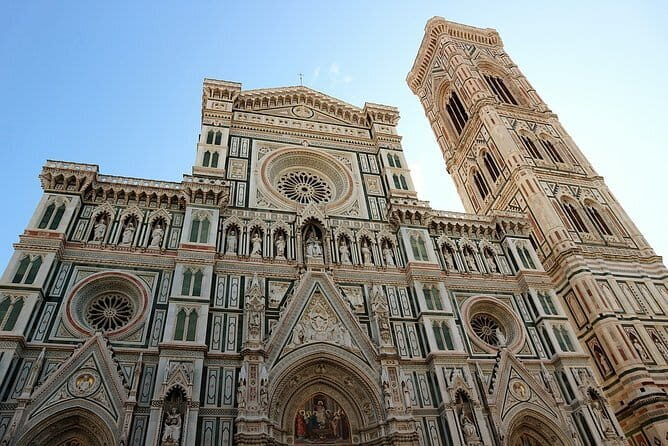
- Duomo complex orientation helps you understand dome, baptistery, and Giotto’s campanile without confusion
- End at Ponte Vecchio means you’re placed right where Florence turns into evening plans
A 1 hour 45 tour that gives you a Florence compass
Think of this as your “first-day” cheat code. Florence is gorgeous, but it’s also dense. In about 1 hour 45 minutes, you’ll walk through the historic center’s biggest names—San Lorenzo, the Medici sites, the Duomo complex, Piazza della Signoria, and the bridge that looks like a movie set.
The best part is how the tour frames what you’re looking at. Instead of you standing there like a tourist tourist, you get the why: who built what, what power the family was signaling, and how the architecture fits the story. The pace is set up for real sight-seeing on foot—long enough to understand the main ideas, short enough to keep you from losing energy.
You’re also not dropped in the middle of nowhere. The meeting point is near Piazza di San Giovanni at Caffè Scudieri Firenze, and you finish near Ponte Vecchio. That ending matters. You’re close to dinner neighborhoods and your next attractions.
You can also read our reviews of more walking tours in Florence
Small group size (15 max) and the whisper system
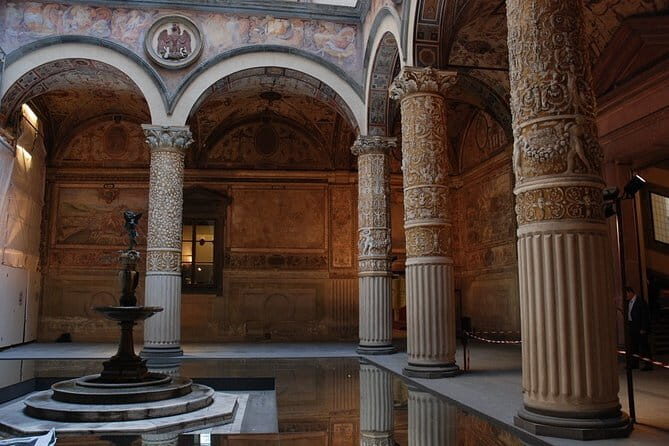
Florence is crowded, especially around the Duomo, Piazza della Signoria, and the major churches. That’s where this setup helps.
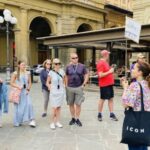
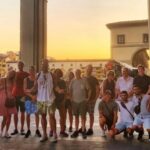
With a max group size of 15, you’ll have room to move, and it’s easier for your guide to adjust when someone asks a question. You’re not being dragged along behind a giant pack.
Then there’s the whisper system. You wear an earpiece so you can hear your guide even in noisy open-air spaces. That’s a big deal on this kind of walking tour, where you’re constantly pausing for views and quick explanations. If you’ve ever struggled to hear in a group tour, you’ll appreciate this right away.
Starting near San Giovanni: why the first minutes matter
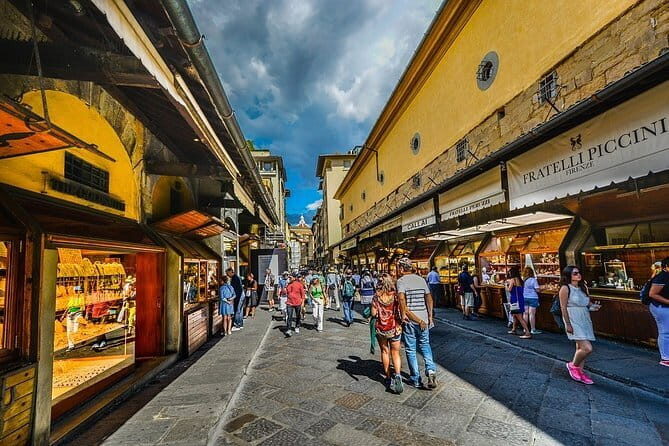
The tour begins at Piazza di San Giovanni, a smart place to start because it puts you near the Duomo complex area later, without making you do backtracking.
In the opening stretch, your guide sets the themes: Medici power, Florentine politics, and the Renaissance shift from banking wealth to cultural leadership. You’ll see how these ideas show up in buildings, tombs, libraries, and palaces—then you’ll move on before your attention starts to drift.
Basilica di San Lorenzo: Medici burial ground and city market life
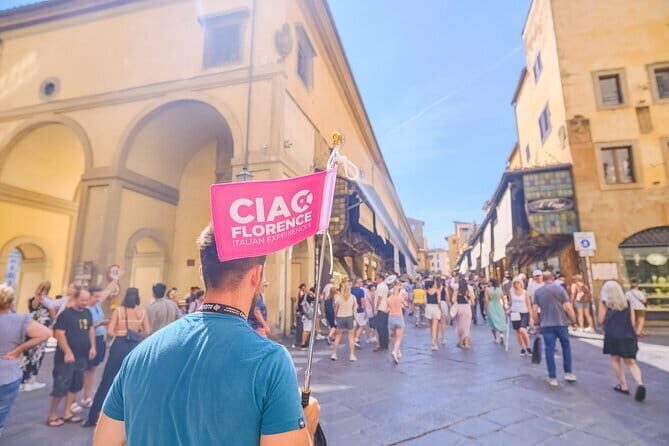
Your first stop is the Basilica di San Lorenzo. This is more than a big church. It’s tied to the Medici family—specifically as the burial place for major Medici members from Cosimo il Vecchio to Cosimo III.
What I like about arriving here early: you’re not just looking at marble. You’re learning why a church like this mattered to a ruling family. The guide can point out how Florence blended religion, power, and public reputation.
A practical note: admission tickets are not included at this stop, so if you plan to go in beyond the exterior/brief viewing, check what’s required on your day.
Laurentian Library and Michelangelo’s architecture problem
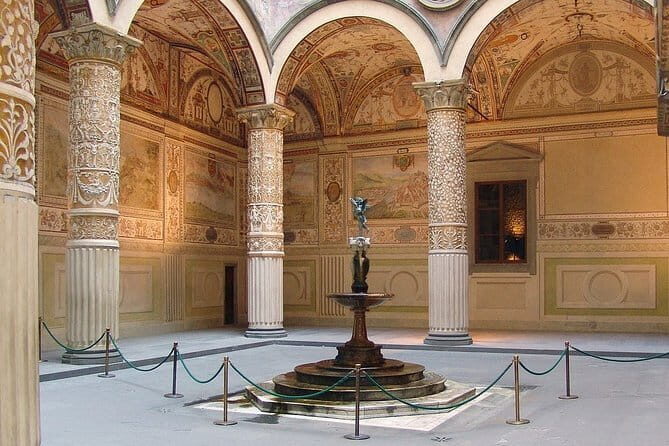
Next comes the Biblioteca Medicea Laurenziana. This library is tied to a Medici pope, Clement VII, and it was built to reposition the family. The point wasn’t just collecting books—it was sending a message that the Medici were intellectuals and church-aligned leaders, not just merchants and bankers.
The library is also famous for its architecture associated with Michelangelo and it’s described as an example of Mannerism. In plain terms: you’re looking at a style that can feel a little theatrical, not purely “balanced” in the classic way.
One drawback to know: admission tickets are not included here. So you’ll likely get the story and the key visuals from what you can access during the quick stop window.
- Tuscany Day Trip from Florence: Siena, San Gimignano, Pisa and Lunch at a Winery
★ 5.0 · 21,634 reviews - The Best tour in Florence: Renaissance & Medici Tales – guided by a STORYTELLER
★ 5.0 · 12,316 reviews


Cappelle Medicee and the New Sacristy: where sculpture tells politics
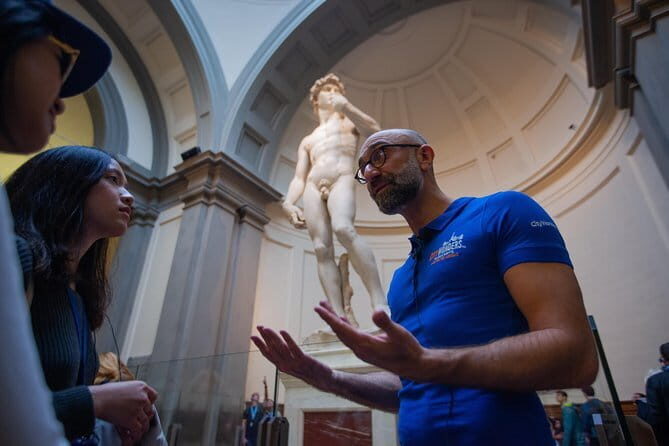
Then the walk turns toward the Medici Chapels (Cappelle Medicee). These chapels were built between the 16th and 17th centuries as extensions to Brunelleschi’s earlier church. The purpose was direct: celebrate the Medici family and reinforce their role as patrons and Grand Dukes of Tuscany.
This stop also includes the Sagrestia Nuova (New Sacristy), designed by Michelangelo. The vibe here is intensely “designed.” Even if you’re not an art expert, you can feel how the space was meant to control the story—who is honored, how their legacy is staged, and how the art supports the family’s image.
Again, admission tickets are not included. So don’t count on a long interior visit unless your plans match what’s included on the day.
Palazzo Medici Riccardi: banking money turned palace stage
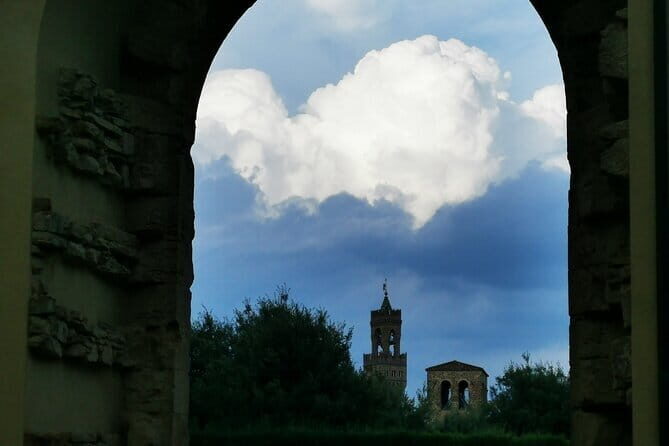
Your route includes the Palazzo Medici Riccardi, designed for Cosimo de’ Medici. Construction dates in the tour info span from 1444 to 1484, which helps you place the palazzo in the early rise of Medici power.
This is a key piece of the puzzle: you’re seeing the space where elite life, influence, and wealth lived side by side. The exterior and immediate context are part of the point on this tour, but even a short stop works if your guide explains what to look for—status, design choices, and what the family wanted outsiders to understand.
Admission tickets are not included here, so plan for a viewing-style stop.
Duomo complex in one sweep: dome, campanile, baptistery, cathedral
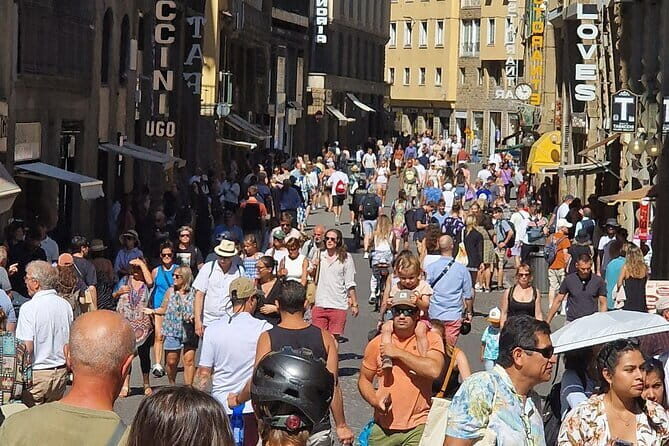
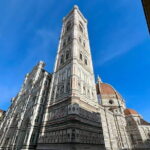
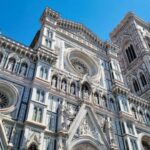
Now you hit the part most people come to Florence for: the Duomo complex.
You’ll spend time around:
- Cattedrale di Santa Maria del Fiore (the cathedral)
- Cupola del Brunelleschi (Brunelleschi’s dome)
- Campanile di Giotto (Giotto’s campanile)
- Battistero di San Giovanni (the baptistery)
The tour treats this cluster like a unified scene, which is smart. These buildings are close together, but many first-timers get them mixed up. Your guide helps you connect the names to the visuals.
Cupola del Brunelleschi: the “big mystery” feeling
The dome stop is a longer moment (about 10 minutes). It’s described as one of the biggest mysteries in art and architecture of its time and the largest brick dome ever constructed. That’s the kind of fact that makes you look up differently.
If you’re the type who likes to understand what you’re seeing rather than just snapping photos, you’ll enjoy this segment. You’ll get explanation that makes the structure more than a landmark.
Campanile di Giotto: Gothic sculpture you can spot
The Campanile di Giotto is adjacent to the cathedral and baptistery. The info emphasizes the polychrome marble encrustations and rich sculptural decorations. Even on a brief stop, a guide can point out where to look so the details become visible instead of just background texture.
Baptistery of St John: Romanesque roots
The Battistero di San Giovanni is one of the oldest buildings you’ll see, built between 1059 and 1128 in Florentine Romanesque style. It stands across from the cathedral and near the campanile, so it’s easy to frame in your mind once your guide gives you the timeline.
One note: admission tickets are not included for this stop.
Cathedral timing and ticket expectations
The cathedral stop is listed with admission ticket free. That’s helpful if you’re trying to control costs. Still, rules can change day to day, so treat it as what the tour lists—not a guarantee of unlimited entry beyond what’s open.
Piazza della Signoria and Palazzo Vecchio: power in plain sight
From the Duomo area, you walk to Piazza della Signoria, the L-shaped square in front of Palazzo Vecchio. This is the meeting place of locals and tourists, and it’s a gateway to the Uffizi area.
What makes this stop valuable is that it turns architecture into politics. Palazzo Vecchio is the city’s town hall, described as a massive fortress-palace. Your guide can help you see it as a civic statement, not just a pretty building.
You’ll also pass the Loggia dei Lanzi with its statues, plus the square’s famous art connection—so even if you don’t enter museums today, you’ll understand where the museum energy is coming from.
Admission details vary by building, and this tour lists admission tickets as not included for some parts, so treat these moments as exterior-orientation and story-based stops.
Uffizi area and what to do next (without waiting in line)
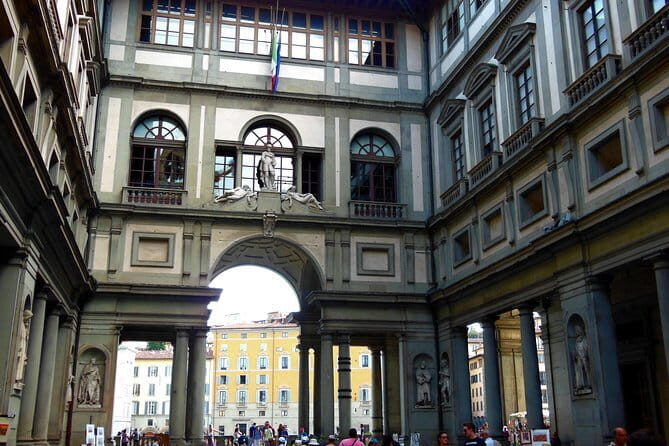
You’ll also stop by the Gallerie degli Uffizi complex. The Uffizi is described as one of Italy’s most important and most visited museums, with a huge Renaissance collection.
Here’s how I’d use this segment: think of it as planning time. Your guide can give you direction on what you want to see later and how to shape the rest of your Florence day around your art interests.
The tour stop itself is short, and admission tickets are not included. So this isn’t a museum visit, but it does help you connect the dots so you don’t feel lost when you return.
Ponte Vecchio: where shops line an ancient crossing
Your walk ends with Ponte Vecchio, the Old Bridge over the Arno River. It’s one of the oldest bridges in Florence, and it’s famous for the shops built along it.
The tour info explains a shift over time: butcher/tanner/farmer shops first, then today’s jewelers and art dealers. Even if you don’t buy anything, you’ll understand why the bridge became a commercial corridor rather than just a crossing.
Admission is listed as free for the bridge. That means this is a good payoff moment where you can stay outside, linger, and let the city texture soak in.
Pitti Palace: finishing on Medici power’s later phase
Before you truly exit the Medici story, you’ll pass Palazzo Pitti. This palazzo was bought by the Medici in 1549 and became the chief residence of the ruling families of the Grand Duchy of Tuscany. The palace grew into a treasure house as later generations gathered paintings, plates, jewelry, and luxury possessions.
Even if your time is short, the stop helps you see Medici power evolving. You start with foundations of burial and church influence, then libraries and civic architecture, then you end with the big residence that signals how far the family’s wealth turned into lifestyle and cultural display.
Admission tickets are not included for this stop, so you’re using it as context and a visual anchor.
How to plan your day around this tour
A tour starting at 12:15 pm is a smart midday move. You’ll have enough morning time for a light breakfast and getting oriented, then this lunch-time walk positions you for afternoon attractions or an early dinner.
Because many stops are ticketed separately, I suggest this strategy:
- Decide what you want to enter later (churches, libraries, chapels, museums).
- Use this walk to learn which ones matter most to you.
- Come back with a plan, not with guesswork.
Also, it’s a good idea to wear comfortable shoes. Florence sidewalks can be uneven, and the tour is designed to keep moving.
Price and value: why $59.26 can be a smart purchase
At $59.26 per person for about 1 hour 45 minutes, you’re paying for more than a route. You’re paying for someone to connect the story—Medici politics, Michelangelo-adjacent design, and the Duomo complex—so you don’t spend your first hours staring at disconnected facts.
The real value shows up in three places:
- Small group size (15 max) so you get attention.
- Licensed guide plus the whisper system, which improves comprehension in busy areas.
- The tour gives recommendations for what to do and where to eat next, which can save you time (and sometimes money) later.
Yes, admission tickets for many stops are not included. But that’s common for walking tours that focus on highlights and orientation. If you want a full museum day, you’ll likely need separate tickets anyway. This tour helps you choose well.
Who this Florence walking tour fits best
This is a strong choice if:
- You want a first-day overview of Florence’s core areas.
- You like your city stories tied to real buildings and names.
- You want a guide to help you plan what’s worth your time next.
It also fits families and mixed-age groups because guides often adapt to the group’s needs. For example, some guide styles are described as playful and engaging, including catering to kids. If you’re traveling with children, this kind of pacing can work well.
If you want hours inside museums with no walking, this probably isn’t your match. This tour is for seeing, understanding, and getting oriented.
Should you book it?
If it’s your first time in Florence—or you want a tight, smart orientation—yes, I’d book it. The combination of small group size, clear audio via the whisper system, and a route that connects Medici power to the Duomo complex makes it feel efficient without feeling rushed.
Book it especially if you’re the type who wants to understand what you’re looking at, then pick your next stops with confidence.
FAQ
How long is the Florence walking tour?
The tour lasts about 1 hour 45 minutes.
What’s included in the price?
You get a licensed tour guide, a small group experience, and a whisper system. The tour also uses a mobile ticket.
Are admission tickets included?
Admission is not included for most stops. The cathedral stop is listed as free, while other stops (like the Laurentian Library and Medici Chapels) are listed as admission ticket not included.
What language is the tour offered in?
The tour is offered in English.
How many people are in the group?
The tour caps the group size at a maximum of 15 travelers.
Where do I meet and where does the tour end?
Meet at Caffè Scudieri Firenze, Piazza di San Giovanni 19R, 50123 Firenze FI, Italy. The tour ends near Ponte Vecchio (the exact endpoint can vary slightly within the indicated area).
Is this tour suitable for most travelers and can I bring a service animal?
Most travelers can participate. Service animals are allowed.
What happens if the weather is bad or the minimum number of travelers isn’t met?
The experience requires good weather. If it’s canceled due to poor weather, you’ll be offered a different date or a full refund. If it doesn’t meet the minimum number of travelers, you’ll be offered a different experience/date or a full refund.
If you want, tell me your travel dates and whether you plan to visit the Duomo interior or Uffizi right after. I can suggest a simple next-step plan that pairs well with this route.

More Walking Tours in Florence

More Tours in Florence


More Tour Reviews in Florence
- Tuscany Day Trip from Florence: Siena, San Gimignano, Pisa and Lunch at a Winery
★ 5.0 · 21,634 reviews - The Best tour in Florence: Renaissance & Medici Tales – guided by a STORYTELLER
★ 5.0 · 12,316 reviews