REVIEW · FLORENCE
The convent of San Marco in Florence: Private Tour
Book on GetYourGuide →Operated by Florence Tours by Made of Tuscany · Bookable on GetYourGuide
San Marco has a way of slowing you down. In just two hours, you get a focused look at the convent complex that shaped fifteenth-century Florence through spirituality, art, and politics. It’s not only about pretty walls; it’s about why people like Cosimo il Vecchio de Medici cared so much about this place.
I especially love how the tour connects where you’re standing to who lived and worked here—Beato Angelico, Agnolo Poliziano, and Fra Girolamo Savonarola are central to the story. Another big plus is that you don’t just read about the art; you move through the church, façade, convent, and two cloisters, which makes the architecture feel logical instead of random.
The only real drawback to think about is language fit. The tour is offered in multiple languages, but if you’re counting on very smooth French or another specific language, double-check what you’ll actually receive so you’re not stuck translating in your head.
In This Review
- Key points worth knowing before you go
- San Marco in Florence: why this convent matters beyond the frescoes
- Meeting at the church entrance: where your 2-hour tour really starts
- Piazza San Marco orientation: 15 minutes that make the rest easier
- St. Mark’s Basilica: the heart of the complex
- Il Museo di San Marco: where you slow down and read the story
- The five San Marco areas you’ll actually walk through
- The church
- The façade
- The convent spaces
- The first cloister
- The second cloister
- Private guide value: what makes this tour feel worth $209
- Who should book this private San Marco tour
- Final verdict: should you book San Marco, private tour?
- FAQ
- FAQ
- How long is the San Marco private tour in Florence?
- Where does the tour start?
- What will I visit during the tour?
- Are entrance tickets included?
- Is it a private group?
- What languages are available for the live guide?
- Is hotel transfer included?
- Do I need ID to join the tour?
- Is ticket-line time saved?
- Can I cancel for a full refund?
- How should I handle flexible plans?
Key points worth knowing before you go
- Fifteenth-century Florence in one compact walk: church plus convent spaces, not a rushed museum hop.
- A Medici-built spiritual hub: commissioned by Cosimo il Vecchio de Medici, designed by Michelozzo.
- Savonarola’s Florence, including La Piagnona: the famous bell tied to the end of his influence.
- Five distinct areas: church, façade, convent, first cloister, and second cloister.
- Private guide quality matters: expect context that goes past basic facts.
- Language is part of the value: the experience depends on how clearly the guide speaks your language.
San Marco in Florence: why this convent matters beyond the frescoes
San Marco is one of those Florence places where the art and the life are braided together. Yes, there are many frescoes, and yes, the church is beautiful—but the deeper reason this complex is worth your time is that it was built as a whole system for a religious community and for the people who shaped the city. Cosimo il Vecchio de Medici commissioned the complex, with Michelozzo as the architect, so you can feel how power, faith, and culture met in the same walls.
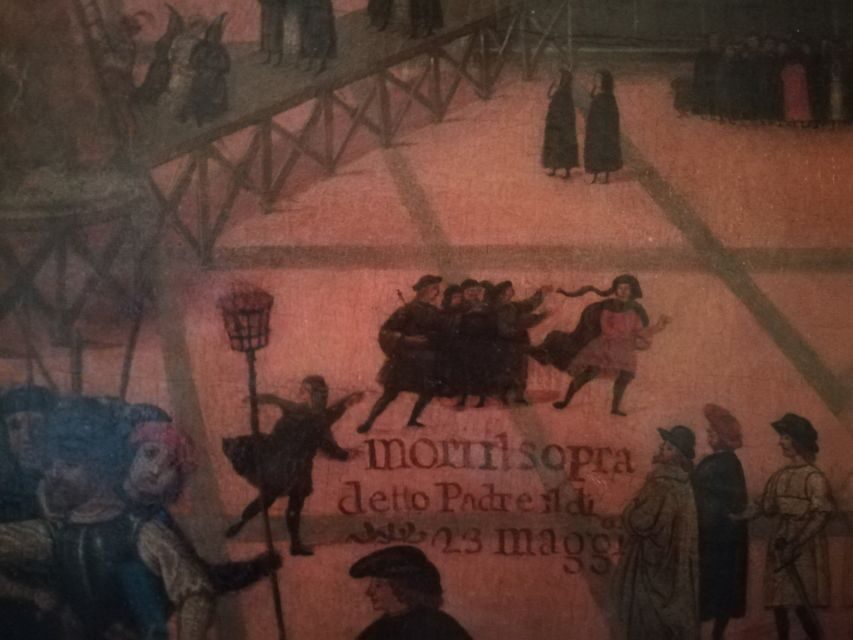
This tour also has a strong narrative anchor: the people connected to San Marco weren’t casual visitors. Fra Girolamo Savonarola, St. Antonino, Fra Angelico, Fra Bartolomeo, and Agnolo Poliziano are all part of the story of who worked here and why. If you’ve ever wondered how Florence could produce both devout art and sharp civic conflict at the same time, San Marco gives you a real answer—without needing a big textbook.
And there’s a detail I love because it makes the place human: the bell La Piagnona, nicknamed the crying one because Savonarola’s followers were constantly complaining about the Florentines. The death of Savonarola was announced with that bell. It’s the kind of clue that tells you this wasn’t a calm backdrop for art. This was a city where words, sermons, and consequences traveled fast.
You can also read our reviews of more private tours in Florence

Meeting at the church entrance: where your 2-hour tour really starts
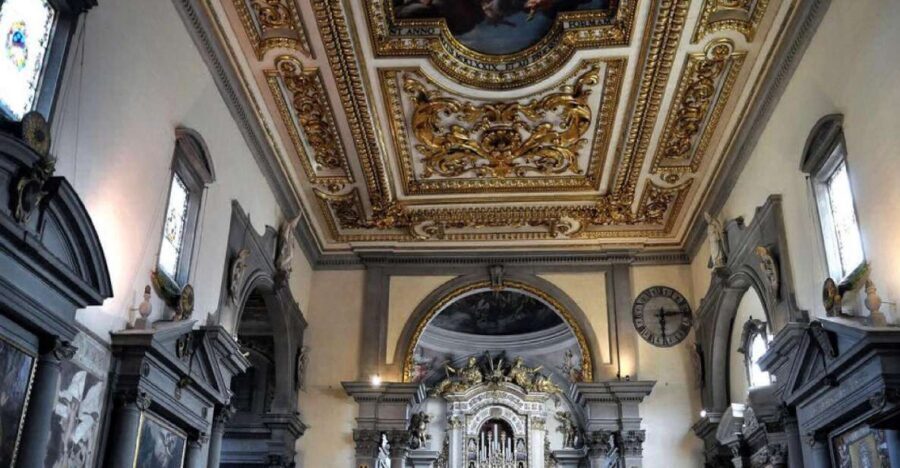
You’ll meet at the principal entrance of St. Mark’s Church. That matters because you’re not starting in the abstract. From the first minute, your guide can orient you to the overall complex—what you’re about to see, and how the church, convent areas, and cloisters connect.
The flow of the 2-hour visit is designed for people who want structure without feeling herded. You’ll begin at Il Museo di San Marco, spend time in Piazza San Marco, then move into St. Mark’s Basilica for the long stop, and return for additional time connected to Il Museo di San Marco.
No hotel transfer is included, so plan to arrive on your own. The good news: the meeting point is straightforward. The complex is in the historic center of San Giovanni, and this kind of central location is usually easy to combine with a walk afterward.
Piazza San Marco orientation: 15 minutes that make the rest easier
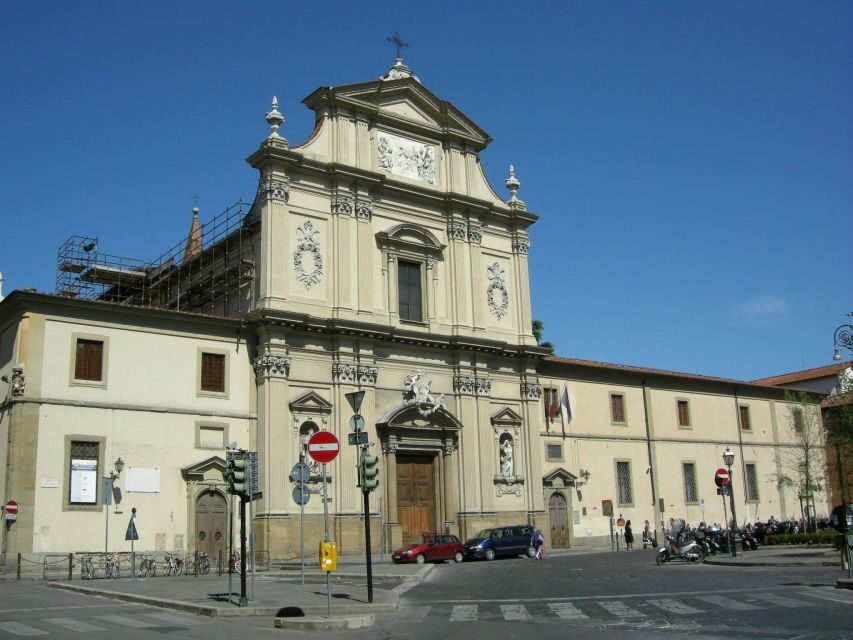
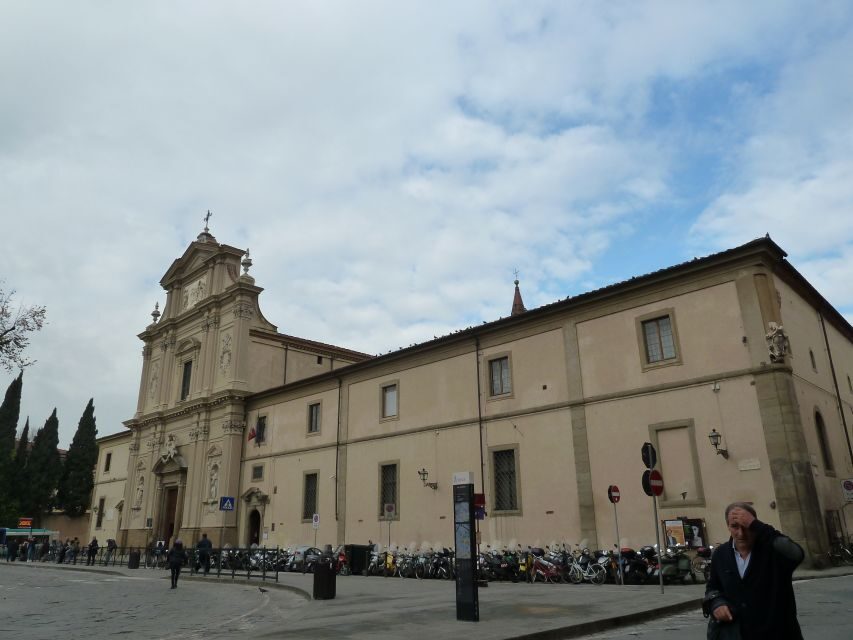
That first short stop in Piazza San Marco isn’t filler. It’s where you get context for how the complex sits inside the neighborhood and how the architecture signals importance. In a place like this, it helps to understand what you’re looking at before you start counting chapels and corridors.
Think of this as your “set the mental map” moment. If you arrive already knowing the main names—Cosimo il Vecchio de Medici, Michelozzo, Savonarola—you’ll enjoy this orientation more. Even if you don’t, the guide should help you connect exterior cues to what’s inside.
If you’re the type who likes to take photos, this is often when you’ll get the cleanest sense of the building’s presence in the square. Don’t overdo it, though. San Marco isn’t the kind of place you see once and move on. You’ll want your attention indoors.
St. Mark’s Basilica: the heart of the complex
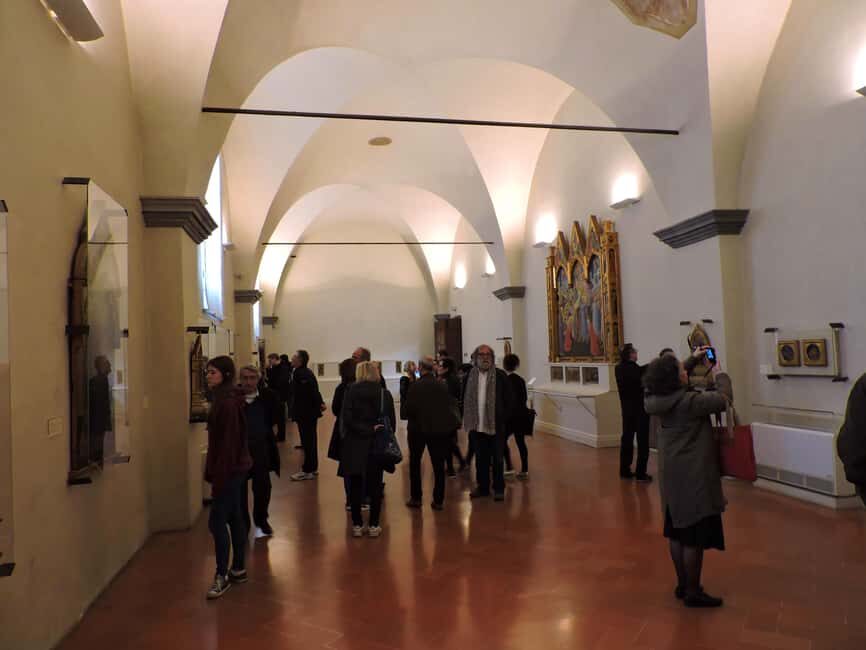
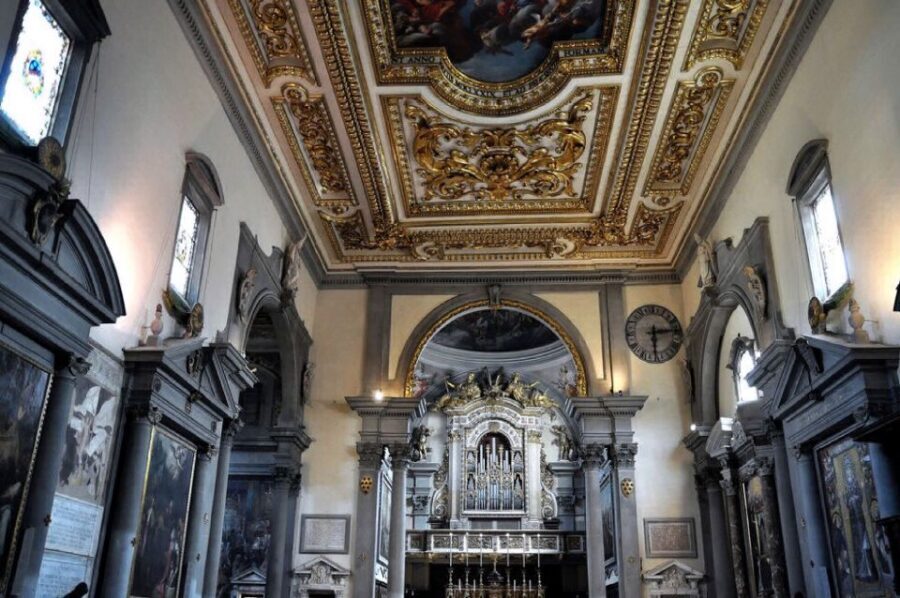
The biggest chunk of the tour is time inside St. Mark’s Basilica, with a guided visit of about an hour. This is where San Marco shifts from “interesting building” to “you’re inside a chapter of Florence.”
The architecture here is not just decoration. It’s part of how the monastery was meant to function, how people gathered, and how religious art was presented. Since the complex was commissioned by Cosimo il Vecchio de Medici, you can expect the guide to connect the design choices to the people and institutions that supported the monastery.
And because San Marco is linked to multiple major figures, the guide should keep tying the visuals to the names. Fra Angelico and Fra Bartolomeo represent the artistic and spiritual side. Savonarola brings the tension: the sermons, the followers, the public reaction. Even the bell La Piagnona fits better when you understand that Florence wasn’t a quiet stage for faith—it was a political city where influence had consequences.
If you like to listen to guides who can answer follow-up questions, this is a good place to test it. The most praised aspect of these tours is often how prepared and passionate the guide is about giving context—meaning you’re less likely to hear a rote script and more likely to hear explanations that make the building feel alive.
Il Museo di San Marco: where you slow down and read the story
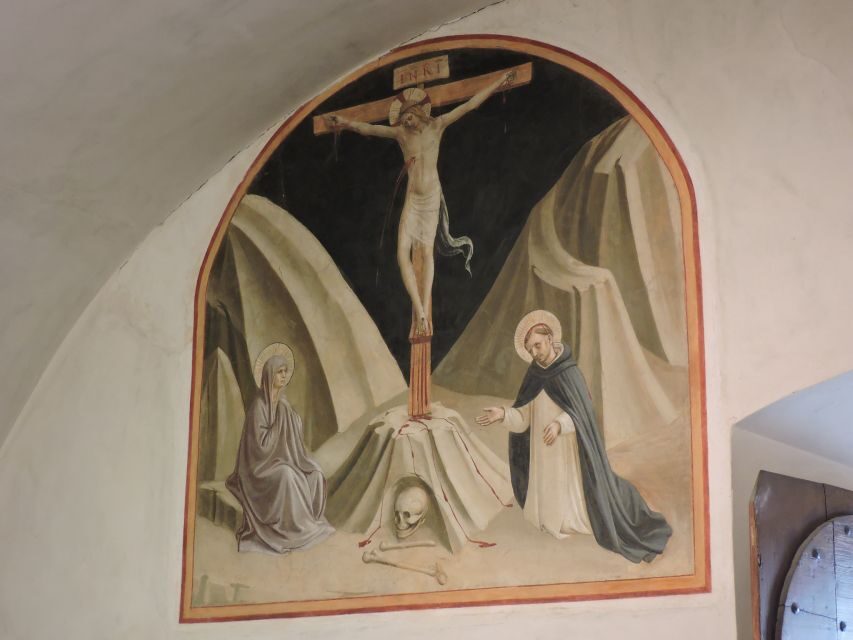
You’ll also spend guided time at Il Museo di San Marco, with two segments: a shorter look at the beginning and a longer visit after the church. That structure helps because the museum time isn’t just about objects. It’s about interpretation: how to understand what you saw in the basilica and how the convent spaces connect to it.
For you, the value of the museum stops is clarity. In churches and cloisters, your brain wants a timeline. The museum portion is the place where that timeline can click into place—especially around the figures buried or associated with the complex, including Beato Angelico and Agnolo Poliziano.
Also, if you enjoy learning through atmosphere—reading context through room flow, materials, and layout—Il Museo di San Marco is likely to fit your style. It’s easier to appreciate the cloisters when you understand how the entire monastery complex was planned.
- Tuscany Day Trip from Florence: Siena, San Gimignano, Pisa and Lunch at a Winery
★ 5.0 · 21,634 reviews - The Best tour in Florence: Renaissance & Medici Tales – guided by a STORYTELLER
★ 5.0 · 12,316 reviews


The five San Marco areas you’ll actually walk through
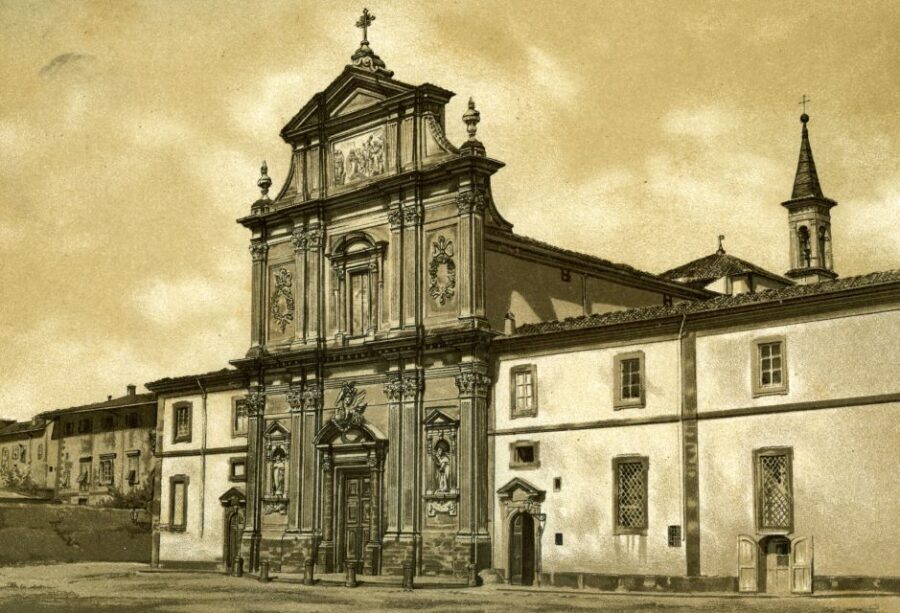
San Marco isn’t one room. It’s a complex with distinct parts, and this tour specifically includes five highly important areas: the church, the façade, the convent, the first cloister, and the second cloister.
Here’s how to get the most out of each one:
The church
This is the emotional center. Look for how the space supports devotion and how art and architecture work together. Since frescoes are a major part of what this convent is known for, keep your eyes moving slowly. Don’t rush to the next wall too fast.
The façade
The exterior cues matter more than you might think. The guide can help you read the façade not just as scenery, but as a public signal: this was meant to be seen as meaningful.
The convent spaces
This is where San Marco stops feeling like a monument and starts feeling like a workplace for spirituality and daily routine. Even if you don’t know the minutiae, the layout should help you understand how life inside a monastery creates a different rhythm than life outside.
The first cloister
Cloisters are built for a particular kind of quiet. In the first cloister, you’ll usually feel the shift from grand church space to daily contemplation. If you’re someone who likes architecture with purpose, this is where that purpose starts to show.
The second cloister
By the second cloister, you’ll be looking differently. Earlier rooms teach you how to see. Later rooms reward you for paying attention to details of movement, light, and how the complex is organized.
If you want one practical tip: don’t try to remember everything the guide says. Instead, focus on one theme—Medici influence, the artists and theologians, or Savonarola’s break with complacency. When your theme is clear, the space makes more sense.
Private guide value: what makes this tour feel worth $209
At $209 per person for a 2-hour private tour, the price only feels fair if you get good interpretation, not just entry tickets and a clock. The good part here is that the experience is built around a live guide and entrance tickets, so you’re paying for someone to help you see what you’d otherwise skim.
In a place like San Marco, self-guided visits can become a checklist. With a private guide, you get the opposite: you get connections. Cosimo il Vecchio de Medici’s role is not just a name. Michelozzo’s design is not just trivia. Savonarola’s era is not just dramatic history. A good guide should help you understand how all these pieces fit together inside the complex.
This is also why the private format matters. You can ask questions at the moment they matter, not during a pre-set museum whisper window. If your group includes art lovers, history buffs, or people who just want a better understanding of Florence’s spiritual side, the guide can usually tailor the emphasis without making you feel like you’re attending a lecture.
One caution, based on the experience feedback around language: double-check that the guide’s language matches what you want to hear. The tour is available in Spanish, English, French, German, and Italian. That’s excellent on paper, but the quality of the experience depends on clarity. If French is your priority, for example, you’ll want to make sure you’re comfortable with the level of fluency you’ll get.
Who should book this private San Marco tour
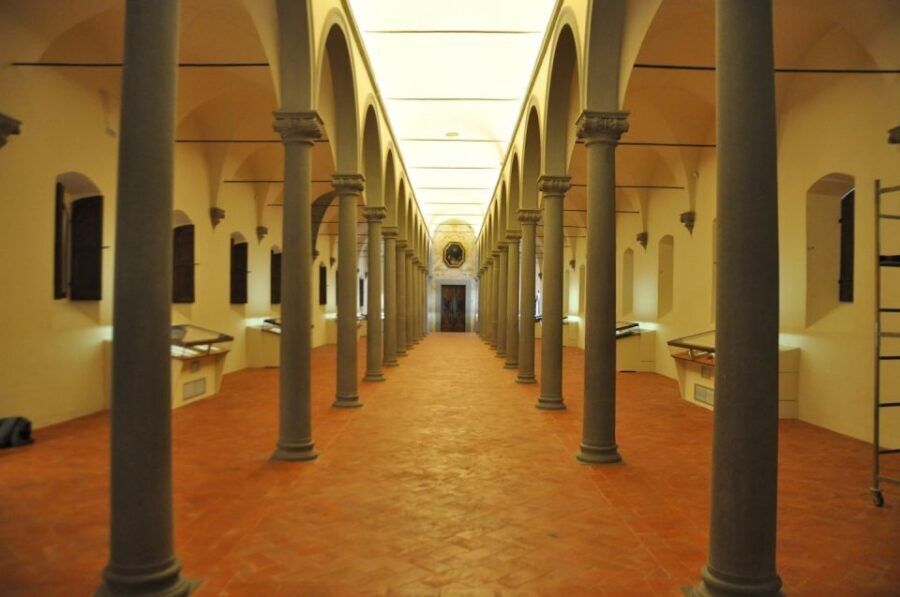
I think this tour is ideal if you meet at least one of these conditions:
- You want more than art photos. You want meaning.
- You’re interested in how Florence worked politically and spiritually, not just aesthetically.
- You like walking through a space with a clear order—church, then cloisters, then museum context.
- Your group prefers private pacing over group shuffle.
It’s also a good choice for first-time Florence visitors who want to understand a side of the city that isn’t as obvious as the big blockbuster sites. San Marco sits in the story of Florence’s quieter power centers and gives you a different angle on Renaissance culture.
If you’re the type who hates waiting and wants maximum hours per stop, you might find the two-hour structure tight. But if you want focus and you’re okay with a compact, guided route, this format is exactly the point.
Final verdict: should you book San Marco, private tour?
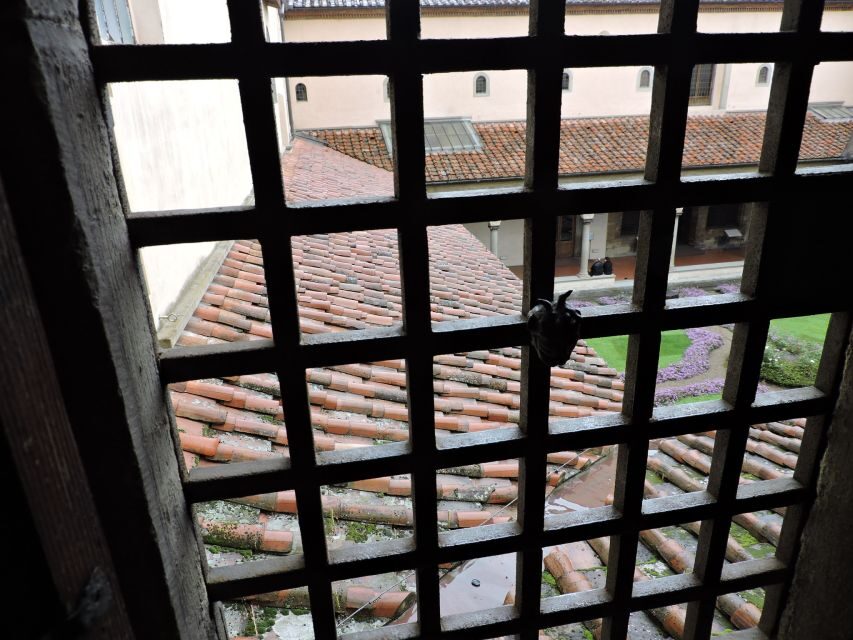
Yes, you should book this tour if you value interpretation and you want San Marco as a connected experience: church plus convent areas plus museum context, all explained by a guide who’s ready to put the pieces in place.
Skip it only if you’re mainly after a long, wandering personal visit and you don’t care about learning the why behind the building. In that case, a self-guided visit might feel more flexible. But if you want a strong narrative—Medici patronage, Michelozzo’s design, the monastery’s spiritual figures, and Savonarola’s dramatic chapter—this private, two-hour format is a smart use of time.
FAQ
FAQ
How long is the San Marco private tour in Florence?
The tour lasts 2 hours.
Where does the tour start?
The meeting point is the Saint Mark’s Church principal entrance. The visit begins at Il Museo di San Marco.
What will I visit during the tour?
You’ll visit Piazza San Marco, St. Mark’s Basilica, and Il Museo di San Marco, with a guided route through the San Marco complex areas including the church, the façade, the convent, and the first and second cloisters.
Are entrance tickets included?
Yes. Entrance tickets are included.
Is it a private group?
Yes. It’s a private group tour.
What languages are available for the live guide?
The live guide is available in Spanish, English, French, German, and Italian.
Is hotel transfer included?
No. Hotel transfer is not included.
Do I need ID to join the tour?
Yes. Bring a passport or ID card.
Is ticket-line time saved?
Yes. The tour includes skip the ticket line.
Can I cancel for a full refund?
You can cancel up to 24 hours in advance for a full refund.
How should I handle flexible plans?
The tour offers reserve now & pay later, so you can book and pay nothing today.
More Private Tours in Florence


More Tours in Florence


More Tour Reviews in Florence
- Tuscany Day Trip from Florence: Siena, San Gimignano, Pisa and Lunch at a Winery
★ 5.0 · 21,634 reviews - The Best tour in Florence: Renaissance & Medici Tales – guided by a STORYTELLER
★ 5.0 · 12,316 reviews