REVIEW · FLORENCE
Uffizi Gallery private tour with skip the line ticket
Book on Viator →Operated by Ciao Florence Tours Srl · Bookable on Viator
Skip the stress. Get to the art.
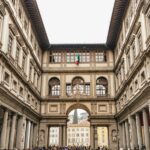
This private Uffizi Gallery tour is built for first-timers who want order in a museum that’s famous for crowds. You meet at Piazzale degli Uffizi and then walk straight in with your guide holding a sign with your name—plus a skip-the-line ticket to shorten the worst of the wait.
I really like the structure here: the tour moves chronologically, starting with the birth of the Renaissance and rolling forward through big turning points and artists you’ll recognize instantly. You also get a guide you can actually ask questions to, and you can set the pace to match your group (so it’s not just a rush-through with one-size-fits-all explanations).
One real consideration: a private tour still happens inside a very busy museum. And while the guide experience can be excellent, some people find that certain guides spend more time talking than letting you stop and study the paintings at your own speed. You won’t have headsets included, so if your guide is speaking softly or you’re near noise, you’ll rely on basic proximity.
In This Review
- Key points before you go
- Why a Uffizi private tour beats the herd
- Getting to Piazzale degli Uffizi (and finding your guide fast)
- Skip-the-line entry: what it does (and what it doesn’t)
- Your 2-hour route: from the birth of the Renaissance to Caravaggio
- Starting point: early Renaissance context (and the first big works)
- International Gothic and storytelling in paint
- The 15th-century shift: space, style, and major turning points
- Botticelli time: the part most people remember
- The big final sweep: Michelangelo, Leonardo, then Raphael/Titian/Caravaggio
- What makes this tour work (when it works best)
- Price and value: what $189.27 per person really buys
- Who should book this (and who might not)
- Should you book this Uffizi Gallery skip-the-line private tour?
- FAQ
- How long is the Uffizi private tour with skip-the-line?
- Is the skip-the-line ticket included?
- Is this tour private?
- What language is the tour offered in?
- Where do we meet for the tour?
- Is a mobile ticket included?
- Are headsets provided during the tour?
- What if my requested departure time can’t be confirmed?
- Is the tour near public transportation?
- What is the cancellation policy?
Key points before you go
- Skip-the-line ticket helps you start faster, even when the museum is packed.
- Chronological route means you learn how styles and ideas changed over centuries.
- Private, English guide lets you ask questions and match the pace to your group.
- Big-name highlights include Botticelli, Michelangelo, Leonardo, Raphael, Titian, and Caravaggio.
- Florence views from inside—yes, the museum windows give you a nice real-world break.
Why a Uffizi private tour beats the herd
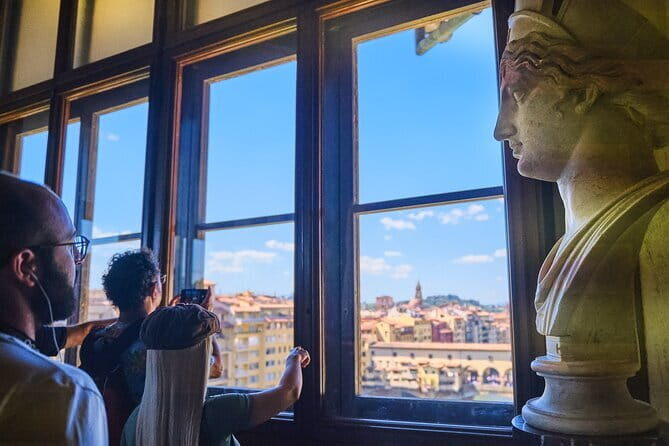
The Uffizi can feel like a maze with great signage. The good news is that with a private guide, you don’t need to play map-and-museum-chess while also trying to understand what you’re looking at. This tour is designed to get you oriented quickly, so you can move from “I’ve heard of these artists” to “I understand why they mattered.”
You’re also paying for something practical: a guide who keeps the story moving and helps you focus on the most important works without spending your limited time chasing the entire collection. In a museum where you could easily lose a whole day, that matters.
And because it’s private, your group doesn’t get swallowed into the same flow as everyone else. You’ll still see crowds in rooms, but you’re not trapped following a large group pace. That’s the difference between a sightseeing run and a meaningful visit.
You can also read our reviews of more tours and experiences in Florence
Getting to Piazzale degli Uffizi (and finding your guide fast)
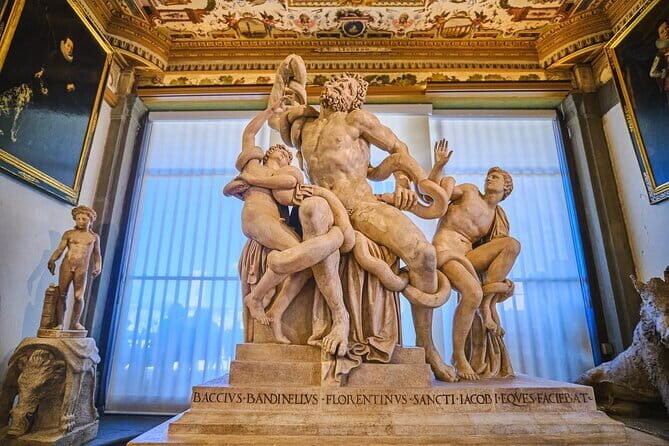
Your meeting point is Piazzale degli Uffizi, 2059, 50122 Firenze FI, Italy. You’ll meet your guide right outside, and they’ll be holding a sign with your name on it. The activity ends back at that same meeting point, which simplifies logistics.
A couple tips that help a lot:
- Arrive a bit early so you have time to locate the sign and avoid starting late.
- Wear comfortable shoes. You’re walking through multiple halls, and the museum floor and crowd flow can slow you down.
The tour is also described as near public transportation, which is useful in Florence. You shouldn’t need a car or special planning to get there—just a good starting time.
Skip-the-line entry: what it does (and what it doesn’t)
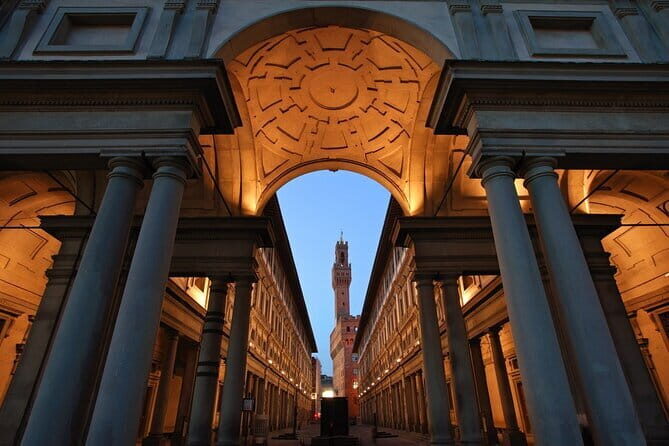
Here’s the honest version: skip-the-line doesn’t mean “no lines anywhere.” It means you avoid the longest wait at entry. Once you’re inside, the museum can still be busy in popular rooms, and people naturally cluster around the famous paintings.
Still, the payoff is real. Those minutes you save can become minutes you spend looking closely at works like Botticelli or Leonardo, where details matter.
One more thing: your departure time is subject to museum availability. If the time you selected can’t be confirmed, you’ll be contacted to agree on an alternative departure time. So it helps to keep your schedule flexible.
Your 2-hour route: from the birth of the Renaissance to Caravaggio
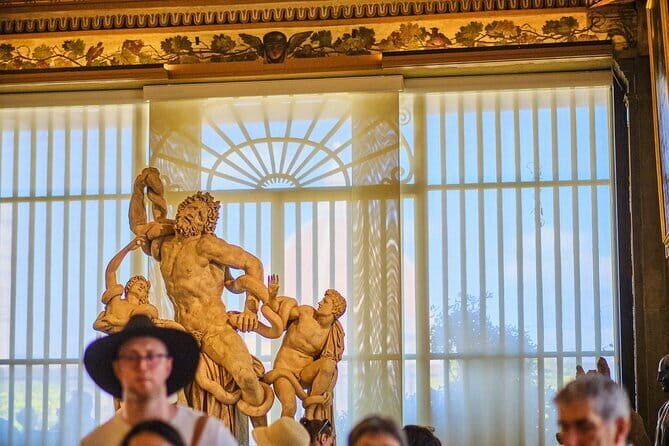
The tour is approximately 2 hours and uses a chronological plan. That’s a big deal in the Uffizi, because art history here isn’t just a list of names—it’s a timeline of changes in storytelling, perspective, and style.
You’ll start in the main Uffizi galleries and work through a sequence that’s meant to give you a clear arc, roughly moving from the 13th century into later Renaissance work. You’ll also spend extra time where the museum expects your attention—meaning you’ll actually get time with the heavy hitters, not just passing glances.
Starting point: early Renaissance context (and the first big works)
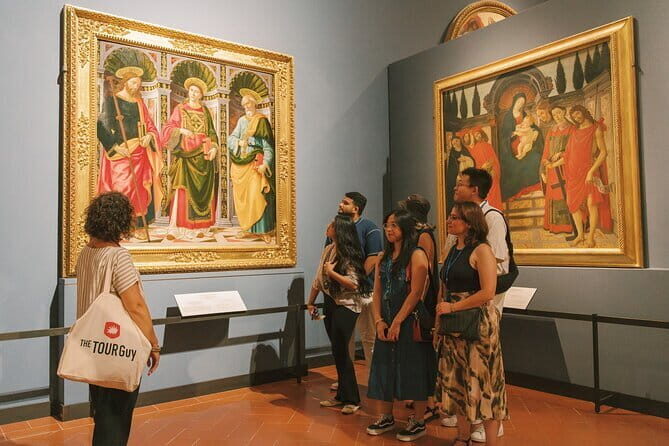
You begin with the guide taking you through the entrance quickly and then starting the story. The tour frames the opening as the birth of the Renaissance, beginning in the 13th century. Expect discussions of gothic painting too—especially pieces described as bright in color with golden accents.
One early stop is tied to how artists began shifting toward more three-dimensional ways of seeing. You’ll hear about Giotto as a breakthrough figure, the first artist highlighted here for breaking barriers with dimensional elements.
If you’re new to the Uffizi, this beginning helps you understand what changes later works are building on. It’s hard to appreciate Renaissance leaps when you don’t know what came before.
You can also read our reviews of more private tours in Florence




International Gothic and storytelling in paint
Next, you move into international gothic, another turning point. This part focuses less on simply showing figures and more on how paintings start to feel like they’re telling a story.
A key example included is Gentile da Fabriano’s Adoration of the Magi. You’ll get context for why that moment in art mattered—because it marks a shift in how artists structured narrative and attention within the artwork.
This is a strong section for first-timers. The guide isn’t just naming paintings. You’re learning what to look for: composition choices, the way scenes unfold, and how meaning gets built.
The 15th-century shift: space, style, and major turning points
As the tour continues, you hit another important moment in the 1400s with works that connect style changes to cultural context. The guide leads you to Battle of San Romano, described as a 1432 battle between Siena and Florence.
After that, you see the trend toward experimentation with three-dimensional space. Included works point to artists pushing how bodies and forms occupy the picture plane:
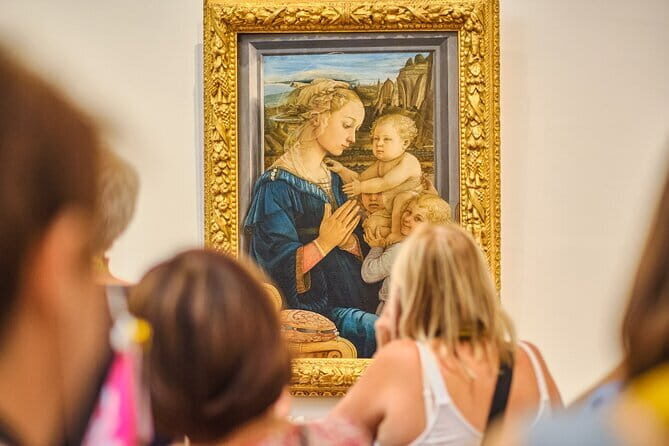
- Filippo Lippi’s Madonna with Child and Two Angels
- Piero della Francesca’s Dukes of Urbino
This part is where “Renaissance = progress” becomes tangible. You can actually feel the visual logic shifting from earlier symbolic forms toward something closer to modern spatial thinking.
Botticelli time: the part most people remember
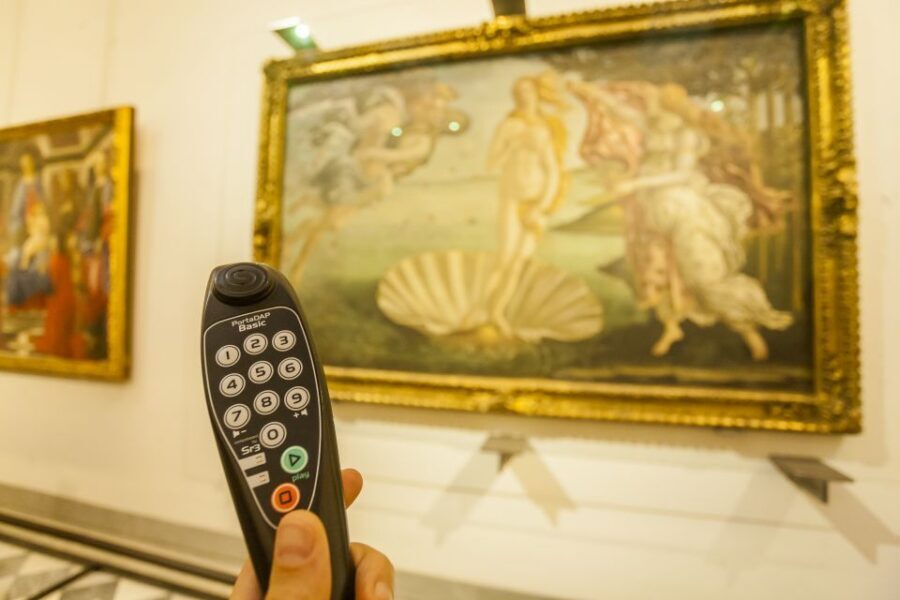
Then you move into the Botticelli-focused zone, and this is where the tour earns its hype. You’re guided through halls dedicated to his mystic, distinctive works, with extra time on:
- Primavera
- Birth of Venus
If you’ve only seen these images online, you’ll likely find this is where scale and paint details start to sink in. The guide descriptions are meant to help you read the images instead of treating them like famous posters.
You also get breaks from artwork, in a good way. The tour mentions views of Florence through tall windows as you walk through the galleries. Even when you’re surrounded by masterpieces, that kind of visual pause helps you reset.
The big final sweep: Michelangelo, Leonardo, then Raphael/Titian/Caravaggio
In the later galleries, you’ll spend time with two heavyweight anchors:
- Michelangelo’s Rondo Tondi
- Leonardo da Vinci’s Annunciation and Baptism of Christ
Then comes the closing stretch through three large halls featuring major artists, including Raphael, Titian, and Caravaggio. The tour description emphasizes variety here—different styles and different artistic personalities—so the end of your two hours feels like a changing of gears rather than a repetition of the same visual formula.
At the end of the guided portion, you’re free to explore independently. That matters because the guide time is limited, and some paintings deserve more looking once you’ve learned how to see them.
What makes this tour work (when it works best)
This experience is strongest when your guide uses the time to balance story + looking. The tour format is designed to hit highlights without making you guess your way around.
In particular, I love that the tour is set up for:
- First-time orientation: you get a map of the museum in your head, not just a list of famous names.
- Meaningful pace control: it’s described as customized to your group’s interests, which is exactly what you want in the Uffizi.
There’s also a clear pattern in how guides are described—people call out both passion for Florence and strong explanations of artwork and technique. Names that came up include Alessandro, Tiziana, Giacomo, Carmen, Francesca, and even Greta (with mixed feedback on pacing). That variety is a reminder: even with a great tour structure, how satisfying it feels depends on how your specific guide teaches you.
One more practical point: the tour includes entry tickets and guide time, but headsets are not included. If you’re sensitive to noise or you’re farther from the guide at key moments, you may need to stay closer to hear well.
Price and value: what $189.27 per person really buys
At $189.27 per person, this is not a budget ticket. So you need to decide what you’re buying.
You’re paying for:
- a private guide for about 2 hours
- the included skip-the-line ticket
- an English service
- a mobile ticket
For many people, the skip-the-line piece alone is worth it in a museum like the Uffizi, where waiting can quietly eat your time. Then you add the guide, and you’re no longer spending your limited Florence hours wandering and trying to interpret everything on your own.
There’s also mention of group discounts, which could improve value if you’re traveling as a small group and can split costs. If you’re coming solo or as a couple, private tours can still be worth it, but do your math based on what you’d pay for a guide + admission + your time saved.
Also: some tours can run longer than the stated “about 2 hours,” depending on pace and what catches your group’s attention. That can make the value feel better—just don’t plan a tight schedule afterward.
Who should book this (and who might not)
This tour is a great match if you want:
- a fast orientation to the Uffizi
- help connecting artists to major art shifts (not just facts)
- time spent on major names like Botticelli, Leonardo, and Michelangelo
- an option to ask questions and move at your group’s pace
It may be less ideal if:
- you prefer a slow, silent museum experience where you stand in front of each painting for a long time
- you really want to control every minute and don’t like any “let’s move on” feeling
- you’re worried about audio clarity (because no headsets are included)
If you’re traveling with mixed interests—say, one art lover and one “I want the classics but I don’t want a lecture”—this style often works because it hits big highlights while still offering context.
Should you book this Uffizi Gallery skip-the-line private tour?
Yes, if you want a structured, high-impact Uffizi visit and you’re okay with the idea that two hours means you’ll see the greatest hits rather than the entire museum. The combination of skip-the-line entry and a guide-led chronological route is exactly what helps you feel confident inside the maze.
I’d book it especially if:
- you’re short on time in Florence,
- you’re visiting for the first time,
- or you want help understanding what you’re looking at as you go.
I’d think twice if your ideal museum day is long stops and slow wandering, because even the best guide can’t turn a 2-hour window into a full, unhurried Uffizi day.
FAQ
How long is the Uffizi private tour with skip-the-line?
It’s approximately 2 hours.
Is the skip-the-line ticket included?
Yes, the Uffizi Gallery skip-the-line ticket is included.
Is this tour private?
Yes. It’s private, and only your group participates.
What language is the tour offered in?
The tour is offered in English.
Where do we meet for the tour?
You meet at Piazzale degli Uffizi, 2059, 50122 Firenze FI, Italy.
Is a mobile ticket included?
Yes, a mobile ticket is included.
Are headsets provided during the tour?
No. Headsets are not included.
What if my requested departure time can’t be confirmed?
Departure time depends on museum availability. If your chosen time can’t be confirmed, you’ll be contacted to agree on an alternative departure time.
Is the tour near public transportation?
Yes, it’s described as near public transportation.
What is the cancellation policy?
This experience is non-refundable and cannot be changed for any reason.

More Tickets in Florence



More Tours in Florence




More Tour Reviews in Florence
- Tuscany Day Trip from Florence: Siena, San Gimignano, Pisa and Lunch at a Winery
★ 5.0 · 21,634 reviews - The Best tour in Florence: Renaissance & Medici Tales – guided by a STORYTELLER
★ 5.0 · 12,316 reviews