REVIEW · FLORENCE
3-Hour Private Florence Walking Tour
Book on Viator →Operated by Bespoke Tuscany · Bookable on Viator
Florence makes more sense on foot. This private 3-hour walk is built for fast orientation: you move through key civic spaces, cross the iconic Ponte Vecchio, and finish by the Brunelleschi Dome so you can connect what you see to the big ideas behind it.
I especially love how the guide links art and power in Piazza della Signoria, then brings you to the bridge with the story of the goldsmith shops and the Medici’s Vasari Corridor. I’d watch one thing, though: it’s a walking tour, so plan for steady steps and some time standing at viewpoints.
In This Review
- Key things that make this tour worth your time
- How the 3-hour private format helps you actually enjoy Florence
- Piazza della Signoria: where Florence’s art and politics sit side by side
- Piazza della Repubblica: from Roman forum to Florence’s social living room
- Ponte Vecchio: the goldsmith story, the Vasari Corridor, and the view
- The Duomo front and Brunelleschi’s Dome innovation
- Price and what you’re actually paying for
- Who this private walk suits best
- A note on timing, pacing, and how to get the most out of it
- Should you book this Florence private walking tour?
- FAQ
- How long is the Florence private walking tour?
- What is the price per person?
- Is this tour private?
- Where do we meet if we are staying downtown?
- Is pickup offered?
- What language is the tour offered in?
- Which major sights are included in the walk?
- Is admission to the Duomo included?
- Do I get a ticket for the tour?
- What’s the cancellation window?
- How to contact the provider after booking or for confirmation?
Key things that make this tour worth your time
- Private pace, not a cattle-car schedule: only your group goes along for the full ~3 hours.
- Piazza della Signoria is more than photos: you get the political + art connections in one stop.
- Ponte Vecchio with context: goldsmith shops, Vasari Corridor, and what the views were designed for.
- Republic Square’s evolution: from Roman forum roots to modern social life with famous cafés.
- Duomo front without the pressure: you learn what makes the Brunelleschi Dome innovative, even if entry is extra.
- Efficient timing: short stops plus walking time add up to a strong overview.
How the 3-hour private format helps you actually enjoy Florence
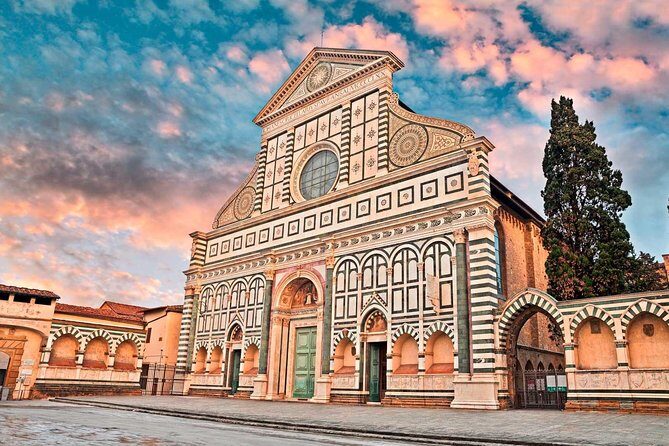
A lot of Florence walking tours are either too short to matter or too packed to breathe. This one is designed around a simple promise: you see the headline sights, but you also get the why behind them. That matters in Florence because the same street corner can feel like politics, religion, guild life, and art all at once.
You’ll be with a guide for the full time, and since it’s private, your group can set the tone—quick questions, slower wandering, or a bit more time at a viewpoint if it clicks. The tour is offered in English, and a mobile ticket is provided, which keeps logistics low-key.
One practical note: Duomo entry is not included. That’s good if you want a front-of-church learning stop without committing to a longer visit, but it also means you should plan separately if you want inside time.
You can also read our reviews of more walking tours in Florence
Piazza della Signoria: where Florence’s art and politics sit side by side
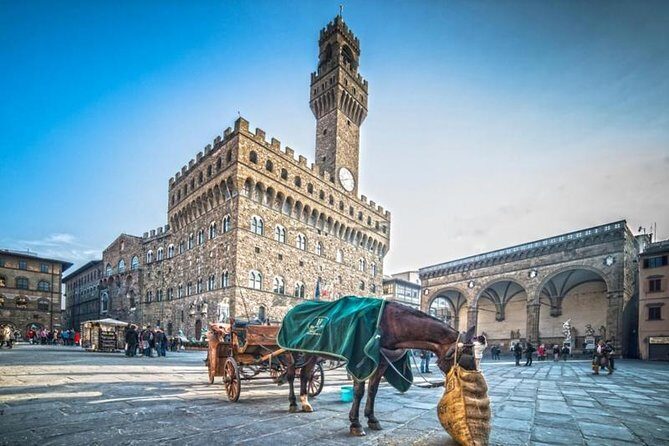
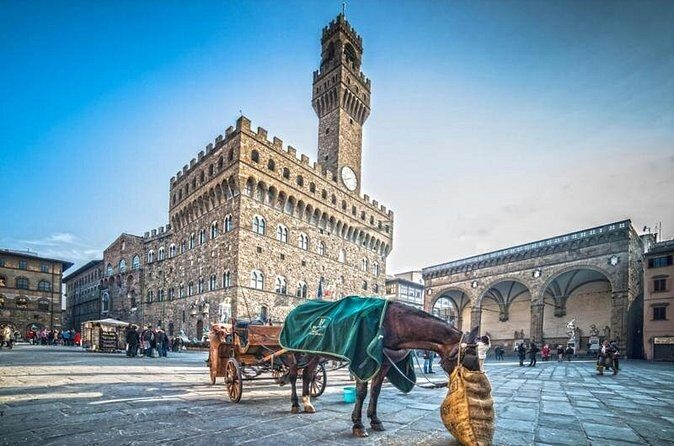
This is the square that has long acted like the city’s civic engine. I like starting here because the setting does half the teaching for you: you’re in the political center while the guide connects buildings and sculptures to the real Florentine story of power, public life, and patronage.
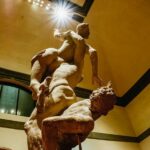
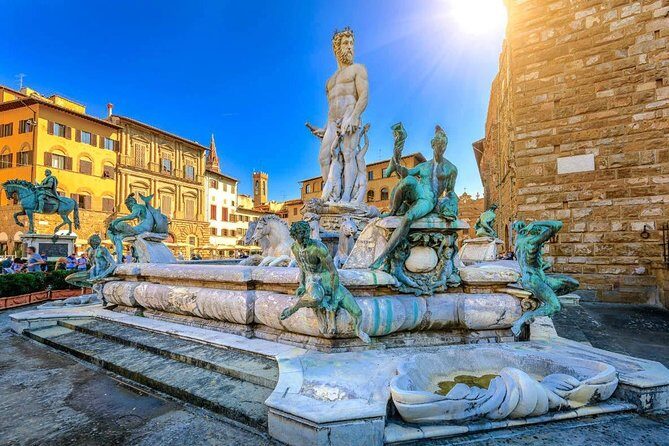
You’ll look around the area tied to the Old Palace (Florence city hall) and the Uffizi Gallery, and then the stop expands into the open-air sculpture drama under the Loggia. The Loggia della Signoria—often called the Loggia dei Lanzi—functions like an outdoor museum. You’ll meet famous statue names such as Perseus, the Medici lions, and the Rape of Polyxena.
That kind of “name plus meaning” is where a guide earns their fee. You’re not just collecting photos; you’re learning why these works mattered to the people who commissioned and displayed them. You also get the Savonarola Memorial Plaque and the Neptune Fountain nearby, both useful anchors for understanding how Florence remembered events and shaped public sentiment.
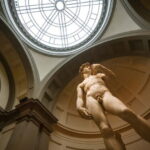
A fun detail to keep in mind: you’ll see a copy of Michelangelo’s David here, and the guide’s explanation helps you understand why the original became so famous in the first place. Even from a distance, it’s a strong way to get your mind ready for what you’ll feel when you see original-scale art elsewhere in the city.
Piazza della Repubblica: from Roman forum to Florence’s social living room
Next comes Piazza della Repubblica, and I like this stop because it shows how Florence reuses space. You’re looking at a location with Roman forum origins, then a later market identity, and today it functions like a social center—Florence’s “salotto buono,” or well-heeled living room.
The guide helps you read the square’s timeline, starting from the Forum of Florentia and pointing out the Column of Abundance. From there, it’s easier to understand why the square became a natural meeting place for artists, writers, and everyday people who wanted to be near the action.
The café names are part of that story: Caffé Gilli, Caffé Paskowski, and Caffé delle Giubbe Rosse have long served as meeting points for creatives in Florence. Even if you don’t stop for coffee, knowing that context changes how you see the crowd and the corners. It stops being just a pretty square and becomes a stage.
A practical tip: if you plan to buy something here, do it after the main stop so you don’t miss the guide’s timing cues. The tour moves smartly, and your best learning moments happen while you’re standing in the right spot.
Ponte Vecchio: the goldsmith story, the Vasari Corridor, and the view
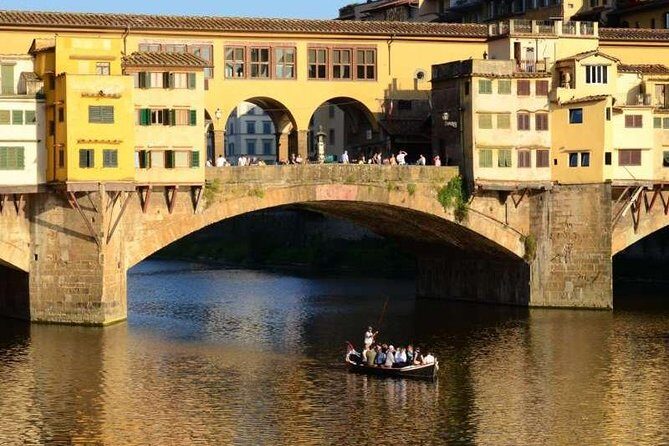
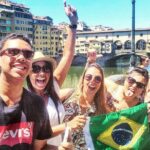
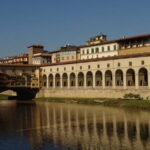
Ponte Vecchio is the headline sight, but what makes this stop valuable is how it’s explained. You’ll walk across the “old bridge” and hear the history of the wooden-shuttered goldsmith shops lined along both sides. That detail matters because the shops weren’t just decoration—they were part of the economic and social identity of the bridge.
Then the guide adds the Medici layer: the Vasari Corridor. Built in 1561 as a private aerial walkway, it let the Medici family move between Palazzo Pitti and Palazzo Vecchio safely, without risking assassination in the streets. You’re seeing a view that was designed for power movement—not just for sightseeing.
You’ll also get guidance on what to look at beyond the main postcard angle. The stop includes talk about other bridges, the hills around Florence, and the love-history of locks. Whether you care about the lock tradition or not, the guide’s point is about the way modern customs stack onto older meaning.
The best part? You end with a viewpoint that lets you connect pieces of Florence in your head: river, stone, hill line, and the architecture that makes the city feel so engineered. If you’ve ever looked at Ponte Vecchio online and felt like the real place is different, a guide helps you bridge that gap fast.
The Duomo front and Brunelleschi’s Dome innovation
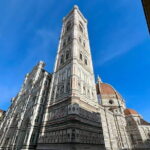
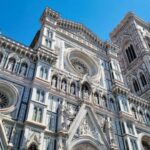
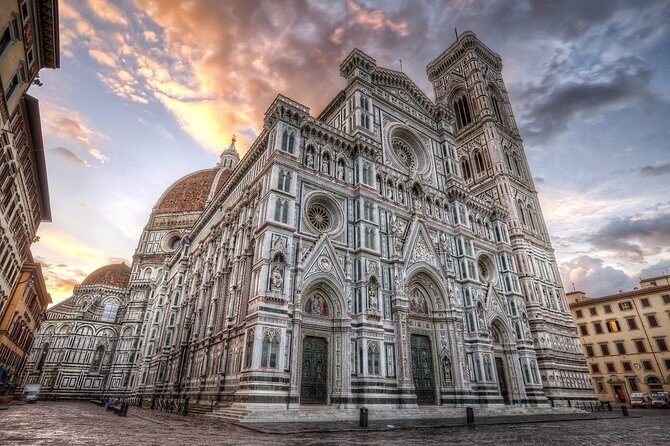
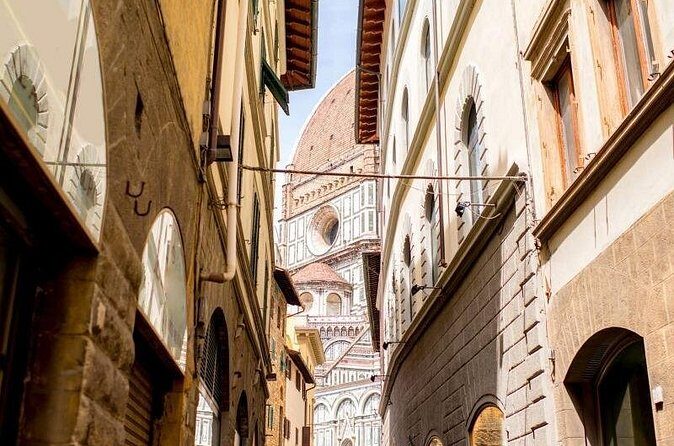
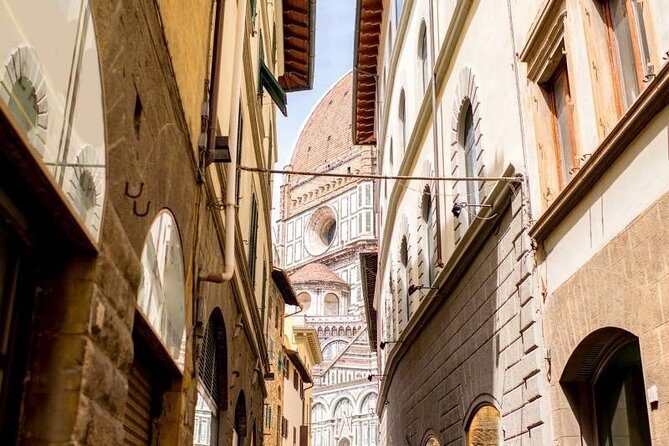
The final major sight is the Duomo—Cattedrale di Santa Maria del Fiore—viewed from the front. This is where the tour becomes less about crowds and more about understanding the landmark that anchors Florence’s skyline.
You’ll stop in front of the cathedral and learn about its history and, specifically, the innovation behind Brunelleschi’s Dome. That dome isn’t just a big round shape—it represents engineering choices that changed how people thought about building at scale.
Since admission isn’t included for this stop, you get a clean experience: learn the dome’s significance, look up and absorb the details, and then decide later if you want to go inside on your own time. For many visitors, that’s a good balance. You avoid the time sink while still leaving with a stronger mental picture.
One small reality check: the Duomo area can be busy, and you’ll likely spend a chunk of your time simply finding the best angles to see what the guide wants you to notice. If you’re the type who likes quiet, plan another short visit later in the day for extra room to breathe.
You can also read our reviews of more private tours in Florence


Price and what you’re actually paying for
At $205.58 per person for about three hours, this isn’t the cheapest way to see Florence. But private tours usually come down to one question: do you want a guide, or do you want to DIY?
Here, the value is in how the guide stitches together the stops so they don’t feel like four unrelated photo stops. Piazza della Signoria, Republic Square, Ponte Vecchio, and the Duomo each have their own “Florence vibe,” and the tour helps you understand how they connect.
You also get a few practical extras that matter on real trips: pickup is offered, the meeting point is Piazza della Repubblica if you’re staying downtown, and you’ll have a mobile ticket. There’s also mention of group discounts, which is useful if you’re booking as a small group beyond just the private core.
One more detail: tours like this are booked well in advance on average (around 104 days). That’s a sign of steady demand, so if you’re traveling during a busy season, don’t wait until the last minute.
Who this private walk suits best
This tour fits you if you want an efficient Florence introduction with real explanations and a low-stress pace. It’s especially good for:
- First-time visitors who want a guided map of the city’s key spaces
- Art + architecture fans who like explanations tied to what they’re seeing
- Small groups who prefer a private flow instead of matching other schedules
It’s also a solid option if you don’t want a full museum day. You get major civic and iconic landmarks, plus guidance on what to focus on, without being pulled into long ticket lines for entry sites.
And if your group likes food culture, Piazza della Repubblica’s café backstory gives you an easy way to choose where to stop afterward. Even a quick espresso break feels more meaningful once you know why those names mattered.
A note on timing, pacing, and how to get the most out of it
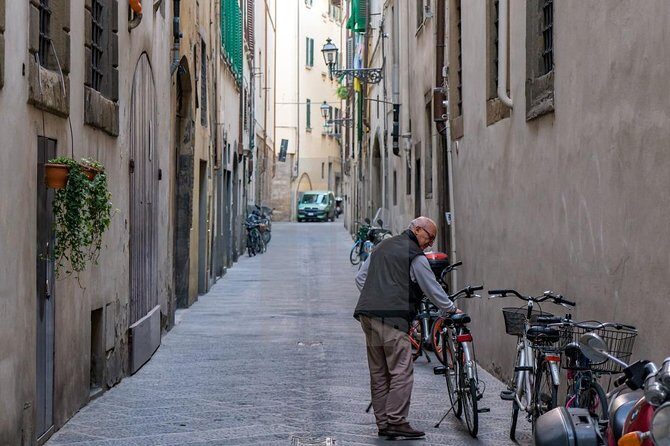
The stop timing is light on paper—think short, focused moments at each key location. In practice, that works well because you get frequent “look here” opportunities instead of one long lecture.
Still, you’ll want to show up ready to walk. Wear comfortable shoes, bring water, and expect a bit of standing time at the bridge and the cathedral front. If you need frequent breaks, talk to your guide early so they can manage the flow.
The good news: the private format helps. If you’re slow, the guide can usually adjust. If you’re fast and curious, you can ask follow-ups on the spot, especially at the squares where political and artistic layers overlap.
Should you book this Florence private walking tour?
Yes, if you want a smart, three-hour overview that connects Florence’s main landmarks to the stories behind them. The strongest reason to book is the way the guide turns key locations into a coherent picture—significant civic art at Piazza della Signoria, Roman-to-modern evolution at Piazza della Repubblica, Medici bridge history at Ponte Vecchio, and Brunelleschi’s dome innovation at the Duomo front.
Skip it or consider pairing it with other plans if you know you want a lot of interior time at the Duomo, because entry is not included here. Also, if walking is a deal-breaker for you, this may feel more physical than you’d like.
FAQ
How long is the Florence private walking tour?
It runs for about 3 hours.
What is the price per person?
The price is $205.58 per person.
Is this tour private?
Yes. It’s private, so only your group participates.
Where do we meet if we are staying downtown?
The meeting point is Piazza della Repubblica.
Is pickup offered?
Yes, pickup is offered.
What language is the tour offered in?
It’s offered in English.
Which major sights are included in the walk?
You’ll see Piazza della Signoria, Piazza della Repubblica, Ponte Vecchio, and the Duomo area in front of Cattedrale di Santa Maria del Fiore.
Is admission to the Duomo included?
No. Admission for the Duomo stop is not included.
Do I get a ticket for the tour?
Yes. A mobile ticket is provided.
What’s the cancellation window?
You can cancel for a full refund if you cancel at least 24 hours before the experience start time.
How to contact the provider after booking or for confirmation?
Confirmation is received at the time of booking, and the experience is near public transportation.

More Walking Tours in Florence

More Tours in Florence


More Tour Reviews in Florence
- Tuscany Day Trip from Florence: Siena, San Gimignano, Pisa and Lunch at a Winery
★ 5.0 · 21,634 reviews - The Best tour in Florence: Renaissance & Medici Tales – guided by a STORYTELLER
★ 5.0 · 12,316 reviews