
REVIEW · FLORENCE
Boboli Gardens Skip-the-Line Tour
Book on GetYourGuide →Operated by Florence Tours by Made of Tuscany · Bookable on GetYourGuide
Boboli Gardens is Florence with palace drama. This skip-the-line tour takes you straight into the Medici grand-dukes’ formal gardens, where you move from fountains and caves to terrace views over the city. I love how the guide turns the grounds into a story, not just a stroll. I also love the practical value of getting your time back up front with reserved entry.
Two things I especially like: you’ll learn who shaped this place and why, and you’ll see the garden’s big set pieces up close, including water features and famous landmarks tied to the Medici world. If your guide is Alessandro, you’ll be in good hands—he’s singled out for explaining the garden’s meaning, the significance of statues, and even the distant buildings you can spot from the grounds.
One drawback to plan for: this is a 2-hour walk with multiple stops and stairs/paths, so it’s not ideal if you want a slow, sit-down pace or if mobility is limited.
In This Review
- Key highlights you’ll feel fast
- Skip-the-Line Entry at Pitti Palace: Start With Time on Your Side
- Why Boboli Gardens Exist: Medici Power Played in Stone and Water
- Pacing Through the Open-Air Museum: How the Walk Is Structured
- Grotta Grande and the Buontalenti Grotto: Garden Architecture With a Plot
- Kaffeehaus Giardino di Boboli: The Viewpoint That Changes How You See Florence
- Water Features and the Fountain of Neptune: Why Boboli Feels Alive
- Where the Medici Ground Meets the Palace World
- Group Size, Private-Group Feel, and How 2 Hours Actually Works
- Price and Value: Is $178.42 Worth It?
- Who This Tour Suits Best
- Should You Book This Boboli Gardens Skip-the-Line Tour?
- FAQ
- How long is the Boboli Gardens skip-the-line tour?
- Where do I meet for the tour?
- What’s included in the price?
- Is transportation included?
- Which languages are available for the guided tour?
- Is it private or a group tour?
- Can I cancel for a full refund?
- How does the reserve now and pay later option work?
Key highlights you’ll feel fast
- Skip-the-line entry so you start seeing more right away
- Medici-era design and names explained: Tribolo, Vasari, Ammannati, Buontalenti
- Grotta Grande + Buontalenti Grotto for dramatic garden architecture
- Fountain of Neptune and water features that show how design and water work together
- Kaffeehaus Giardino di Boboli for classic terrace views and a garden-versus-city moment
- Small-group, guide-led pacing so you don’t wander lost in all those paths
Skip-the-Line Entry at Pitti Palace: Start With Time on Your Side
The tour begins at Piazza de’ Pitti, in front of the main entrance to Pitti Palace (Piazza de’ Pitti, 1). You’ll meet at a clearly marked street address area—Piazza de’ Pitti, 22 R—and then you’re off to Boboli Gardens without spending your precious vacation hours waiting in line.
In practice, this matters. Boboli is popular, and wandering around for tickets can steal the best part of the day—when the light hits the terraces and the garden feels most alive. With skip-the-line entrance tickets and a guide holding the group together, you get a smoother start and more time for the places you actually came to see.
Because this is a guided walk, you also benefit from basic orientation. The gardens can feel like a maze if you’re going solo, especially once you’re moving past fountains, cave structures, and terrace corners. A good guide helps you connect what you’re seeing with where you are in the layout.
You can also read our reviews of more tours and experiences in Florence



Why Boboli Gardens Exist: Medici Power Played in Stone and Water
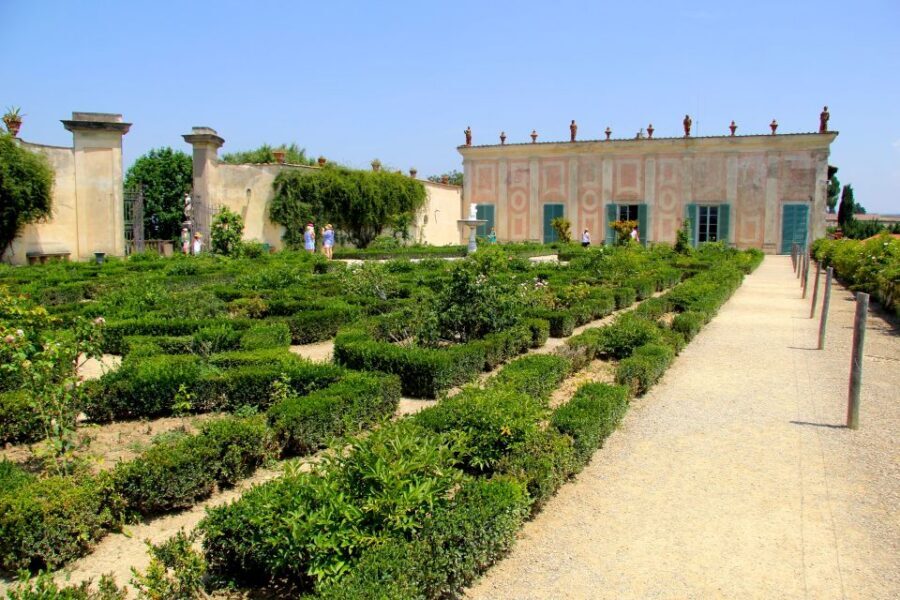
Boboli Gardens weren’t created just to be pretty. They were designed as a statement—an outdoor stage for power, wealth, and taste.
Here’s the core story you’ll hear during the walk: Luca Pitti bought land on the south side of the Arno from the Borgolo family after building his palace. Then the gardens developed into the kind of controlled, formal environment that matched the ambitions of Tuscany’s Medici grand dukes. You’re not only walking through plants and paths. You’re walking through an idea of rule and prestige.
You’ll also learn how different artists shaped the grounds over time. The original design is credited to Niccolò Tribolo. Later features are associated with Giorgio Vasari, Bartolomeo Ammannati, and Bernardo Buontalenti. That sequence is useful. It helps you stop thinking of the gardens as one uniform style and start noticing changes in tone—where the architecture feels different, where water features shift, and where the garden starts behaving like a theatre set.
If you like Renaissance and Medici Florence, this is a satisfying payoff: the garden feels like it’s connected to the palace world right beside it, not separated from it.
Pacing Through the Open-Air Museum: How the Walk Is Structured
You’ll spend about two hours moving through the gardens with a guide. The format is a steady sequence of stops rather than a long free-roam. That’s exactly what you want here, because the garden’s best elements are scattered across terraces and corners.
Your route starts in the Boboli Gardens area itself, where you’ll get the overview that makes the rest of the walk make sense. After that, you head to specific highlights: the Buontalenti grotto area, the Kaffeehaus garden viewpoint, and water features like Fontana dell’Oceano.
What I like about this structure is that it matches how Boboli is actually experienced. It’s not one monument you pass; it’s a chain of moments. You’ll move from viewpoint to viewpoint, from water feature to architectural surprise, with the guide tying them together so you don’t miss the why.
A small practical note: even though the tour is short, it’s still a walking tour. Bring comfortable shoes and expect uneven garden paths.
Grotta Grande and the Buontalenti Grotto: Garden Architecture With a Plot
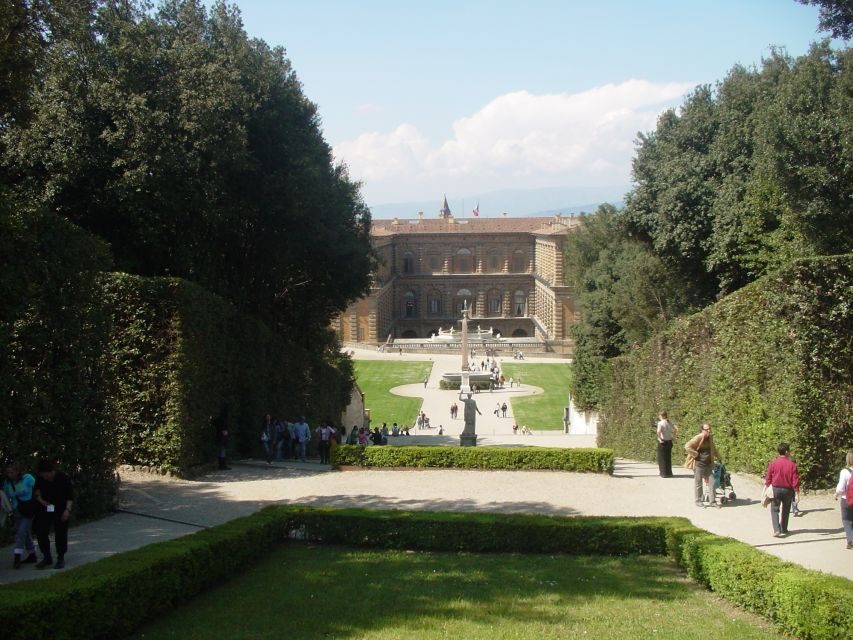
One of the most memorable parts of Boboli is how it uses dramatic structures to create surprise. A big stop on this tour is the Buontalenti Grotto (about 15 minutes).
This is the moment where the garden shifts from formal terraces to something more theatrical. You’ll see built caves within the grounds and experience the idea that the garden can be sculpted like a stage set. The grotto concept works because it mixes materials, shadows, and a sense of hidden space—so the garden doesn’t feel flat. It feels layered.
You’ll also hear about the wider collection of grotto and cave elements in Boboli, including the impressive Grotta Grande. Even if you’re not a hardcore architecture person, the impact lands. It’s one of the places where you suddenly understand why these gardens were so famous: the design isn’t just decorative; it’s engineered to produce emotion.
Potential drawback: this kind of stop can be physically tight depending on the area and how the group moves. If you prefer wide-open spaces and lots of room to take photos, you may find this section a little more crowded than the terraces.
Kaffeehaus Giardino di Boboli: The Viewpoint That Changes How You See Florence
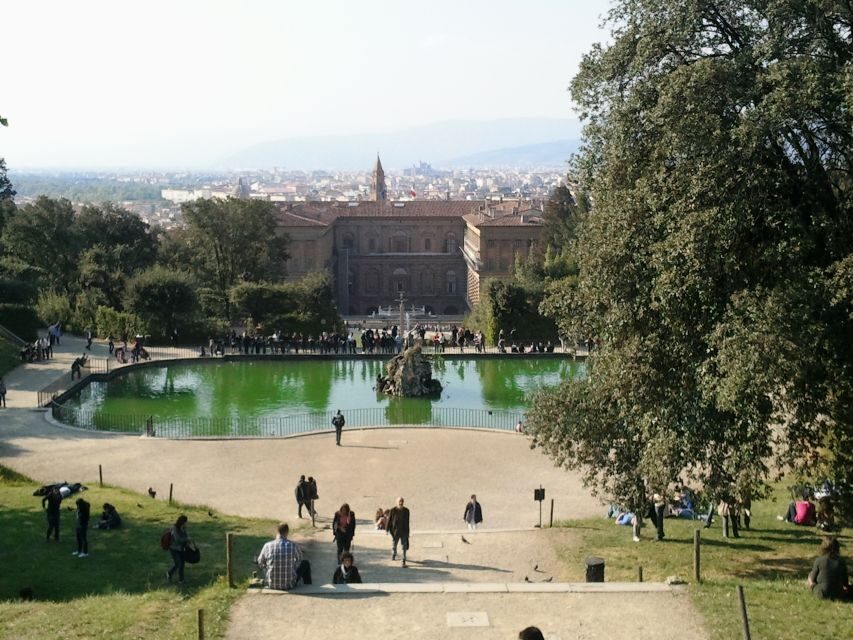
After the caves, you’ll shift to one of the tour’s most calming moments: the Kaffeehaus Giardino di Boboli stop (about 30 minutes).
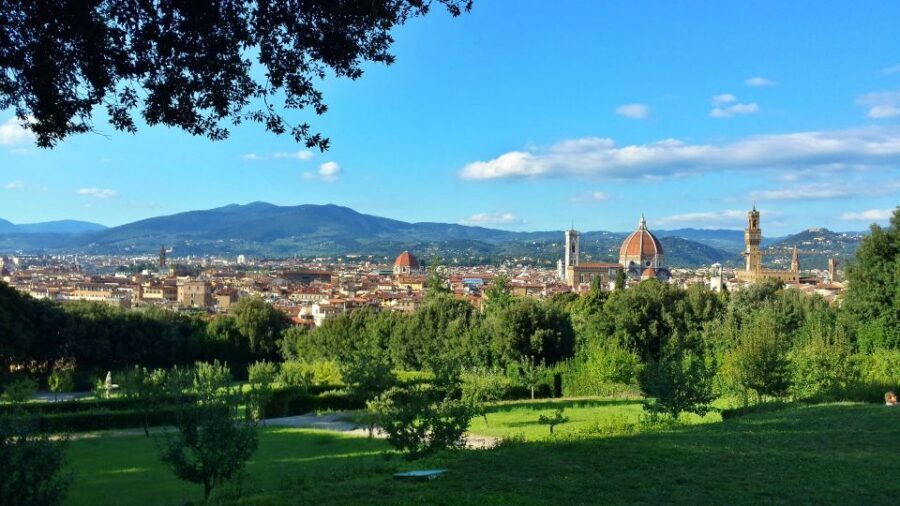
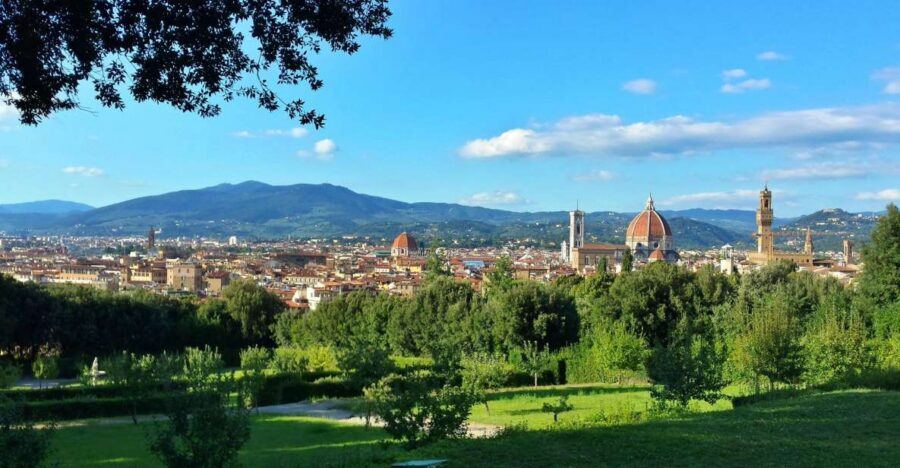
The Kaffeehaus area is basically a garden viewpoint with a built-in sense of occasion. You can look out over the countryside and surrounding Florence, and the guide helps you read what you’re seeing—how certain distances and buildings line up, and what the garden design lets you notice.
I like this part because it’s not only about statues and structures. It’s also about perspective. In a place full of carefully framed sights, a good guide shows you which views were designed on purpose, and how water features and terraces create the right sightlines.
It’s also a nice length of time. Thirty minutes gives you room to linger, ask questions, and take in the views without the tour feeling rushed.
Tip for your visit: plan to spend a few minutes longer than you think at the terrace spots. The views are genuinely part of the attraction, not a quick photo and go.
- Tuscany Day Trip from Florence: Siena, San Gimignano, Pisa and Lunch at a Winery
★ 5.0 · 21,634 reviews - The Best tour in Florence: Renaissance & Medici Tales – guided by a STORYTELLER
★ 5.0 · 12,316 reviews




Water Features and the Fountain of Neptune: Why Boboli Feels Alive
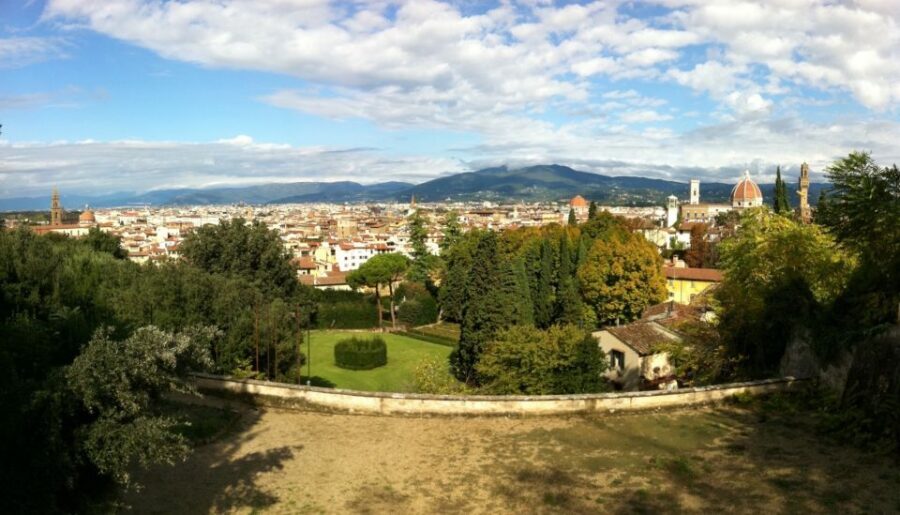
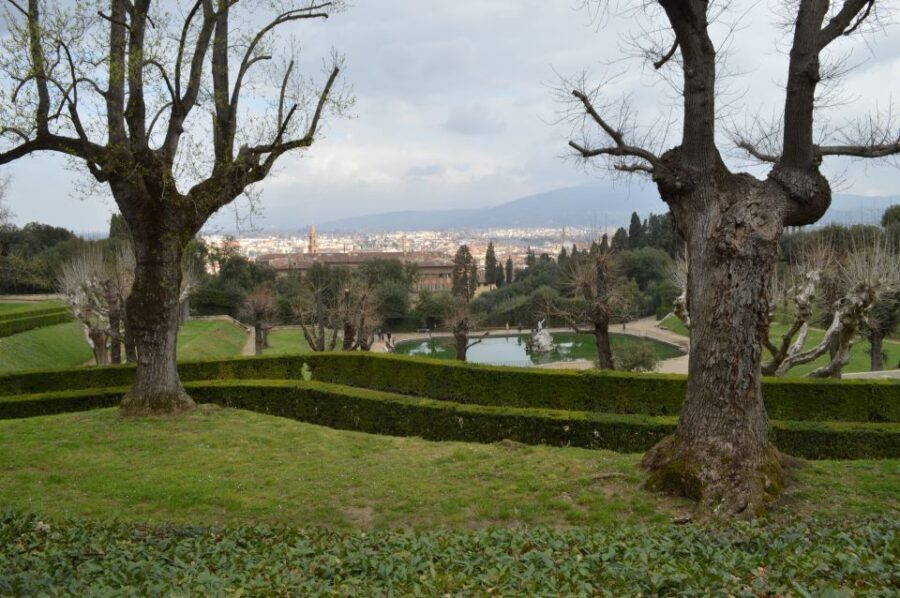
Boboli Gardens earn their reputation with water—fountains, little islands, and features that make the whole place feel kinetic even when you’re standing still.
On this tour, you’ll see the Fountain of Neptune (mentioned above the amphitheatre) and you’ll also make time at Fontana dell’Oceano (about 15 minutes). These are the kind of stops where you start noticing details you would likely miss without guidance: how the sculptures sit within the water design, and how the garden turns a fountain into a landmark.
One reason this matters for your experience: water features in historical gardens weren’t just decorative. They were part of a larger plan for spectacle and symbolism. Neptune, for example, ties the garden to classical myth and to the sense that this place was meant to feel grand and cosmopolitan.
The amphitheatre setting also changes the experience. Instead of looking at water in an open field, you’re seeing it like a performance element—framed by stone and garden architecture.
If you’re planning a photo-heavy visit, this is where you’ll want to take your time. The best shots often come when you’re positioned slightly differently than you expect.
Where the Medici Ground Meets the Palace World
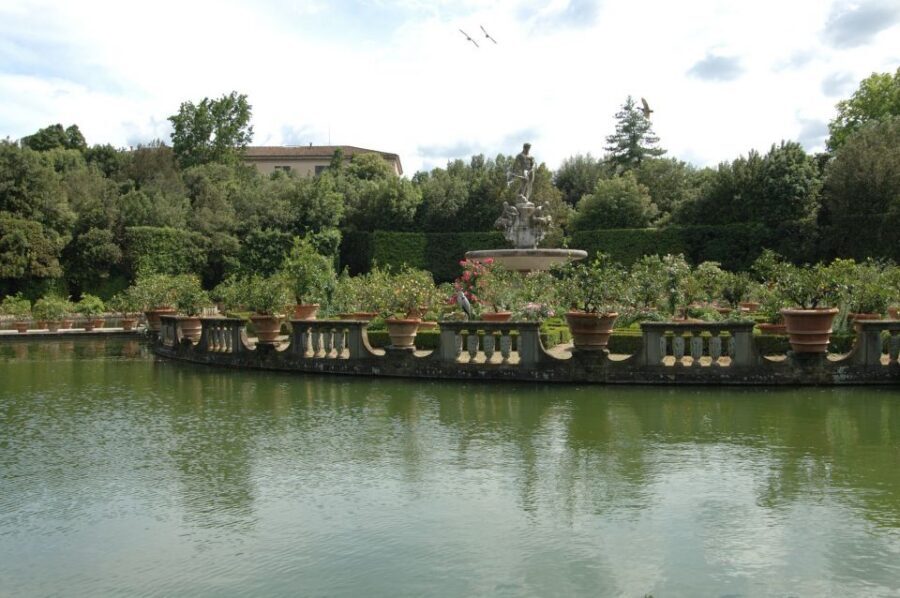
A big reason this tour feels worthwhile is that it keeps connecting Boboli to the wider Medici landscape. You’re starting at Pitti Palace territory and moving into the Medici grounds logic—so the gardens feel like a continuation, not an isolated attraction.
You’ll hear about the origins of land purchase and the development of the design across generations. You’ll also get context on major monuments in the garden setting, like structures tied to the Pitti Palace environment and major garden components.
There’s also a bonus kind of learning that shows up with strong guides: you’ll be pointed toward statues’ significance and toward the distant buildings you can spot from inside the garden. That one skill—helping you notice what’s far away—makes the garden feel bigger than it is. It turns it from a place you visited into a place you understood.
Group Size, Private-Group Feel, and How 2 Hours Actually Works
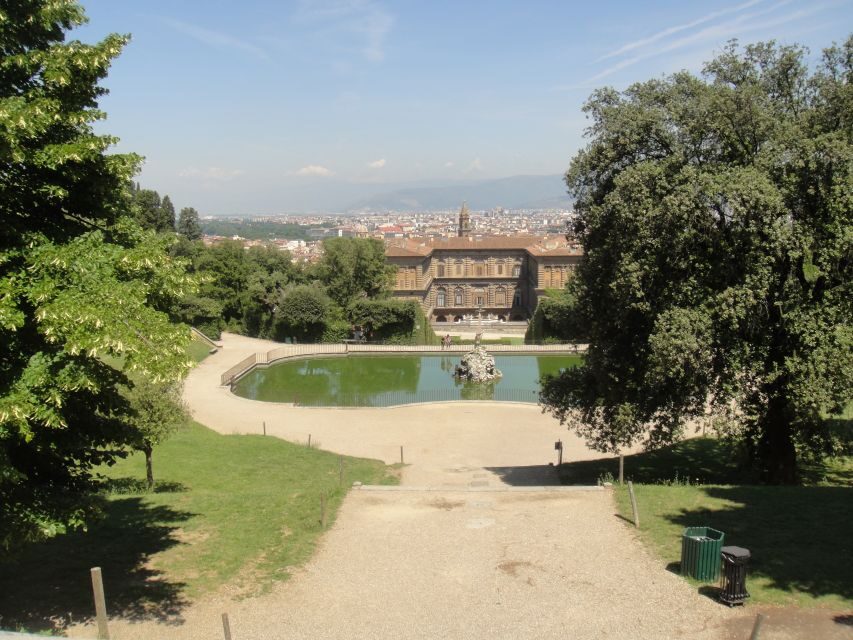
This is listed as a small group walking tour with a private group format. That combo usually means you get the benefits of a guided experience without feeling like you’re stuck in a huge crowd where questions get lost.
The time box is also honest. With 2 hours total, you’re not trying to cover everything in perfect detail. Instead, you get the garden’s signature moments in a sensible order: initial orientation, the grotto area, the Kaffeehaus viewpoint, and key water features.
I think this length works well for most people because Boboli is best in chunks. If you try to do it all on your own in one long session, you can end up exhausted and still not seeing the stories tied to each stop. A two-hour guided format helps you leave feeling satisfied rather than scattered.
Price and Value: Is $178.42 Worth It?

At $178.42 per person, this isn’t a budget add-on. You’re paying for three things that actually matter at Boboli: skip-the-line entrance tickets, a local guide, and a small-group (private group) structure.
If you’re going to visit anyway, the question becomes: will you benefit from a guide? Here’s the practical math that helps me decide.
- Boboli can be visually confusing without context. A guide helps you connect the art, architecture, and water features to the Medici story.
- Skip-the-line saves time you can’t get back, especially in peak visiting windows.
- A small-group walkthrough makes the two-hour format feel efficient, not rushed.
So I’d call this a good value if your goal is understanding and highlights, not just wandering. If you prefer independent exploration and you’re comfortable reading signage and maps on your own, you might feel the price more keenly. But if you want the gardens explained as you move through them, the cost starts to look more reasonable.
Who This Tour Suits Best
This Boboli Gardens skip-the-line experience is a strong fit if you:
- want a guided Florence garden visit instead of a solo maze
- enjoy Medici-era stories and the artists behind them (Tribolo, Vasari, Ammannati, Buontalenti)
- care about water features and want them explained, not just photographed
- like viewpoint time with a guide helping you notice distant buildings and sightlines
It may be less ideal if you:
- want zero walking and lots of free time
- need a very slow pace, long seated breaks, or minimal stairs (this info isn’t specified, so you should plan on typical garden walking)
Should You Book This Boboli Gardens Skip-the-Line Tour?
I’d book it if you want Boboli to make sense fast and you’d rather spend your time learning the place than figuring out the place. The mix of skip-the-line, a focused route, and guide-led stops like the Buontalenti grotto area, Kaffeehaus viewpoint, and Fontana dell’Oceano hits the garden’s top “why it matters” moments in a tight two hours.
Skip it only if your priority is independent strolling with no guidance and you’re confident you’ll enjoy the gardens without explanations. For most people who want the best return on their Florence time, this is a sensible, high-value choice.
FAQ
How long is the Boboli Gardens skip-the-line tour?
The tour lasts about 2 hours.
Where do I meet for the tour?
Meet at the meeting point by Pitti Palace in Piazza de’ Pitti (Piazza de’ Pitti, 1, 50125 Florence). The specific start point is listed as Piazza de’ Pitti, 22 R.
What’s included in the price?
You get skip-the-line entrance tickets, a local guide, and a small group walking tour.
Is transportation included?
No. Transportation is not included.
Which languages are available for the guided tour?
The guide is available in English, French, German, Italian, Spanish, Portuguese, and Russian.
Is it private or a group tour?
It’s listed as a small group walking tour and also as a private group format.
Can I cancel for a full refund?
Free cancellation is available up to 24 hours in advance for a full refund.
How does the reserve now and pay later option work?
You can reserve your spot and pay nothing today, keeping plans flexible.


More Skip the Line in Florence



More Tours in Florence





More Tour Reviews in Florence
- Tuscany Day Trip from Florence: Siena, San Gimignano, Pisa and Lunch at a Winery
★ 5.0 · 21,634 reviews - The Best tour in Florence: Renaissance & Medici Tales – guided by a STORYTELLER
★ 5.0 · 12,316 reviews