REVIEW · FLORENCE
Experience Florence’s Art and Architecture on a Walking Tour
Book on Viator →Operated by Free Tour Florence – Another Florence · Bookable on Viator
Florence makes sense on foot. This 2 hours 15 minutes art-and-architecture walking route is built for first-timers who want top sights without getting lost in a maze of streets. A tour leader guides you street by street, so you spend less time plotting and more time looking.
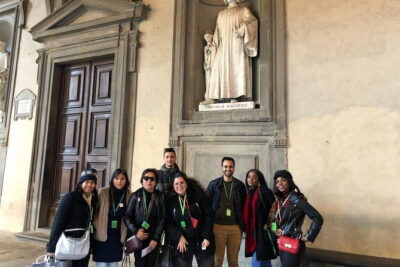
Two things I really like are the small group size (up to 20) and the guide energy. In this tour’s best moments, guides like Ludi, Natalia, and Ludovica bring Florence to life, including practical tips on where to stand for views, food ideas, and even neat finds like the wine windows.
One drawback to consider: Florence can be loud, and a few people reported that it was hard to hear at times. If sound matters to you, position yourself close to the leader and plan to use any sound gear they provide (if available on the day).
In This Review
- Key highlights at a glance
- Why This 2-Hour Florence Walk Works on a First Visit
- Meeting Point and Route: Santa Maria Novella to Santa Croce
- The Value of a Very Low Price (and Why You Still Should Tip)
- Santa Maria Novella: A Smart First Stop for Florentine Context
- Via de’ Tornabuoni and Palazzo Strozzi: Florence’s Style and Power Streets
- Piazza della Repubblica: Roman Florence in a Modern Square
- Santa Maria del Fiore, Baptistery, Giotto’s Campanile, and the Duomo Cupola
- Orsanmichele: Donatello and the Renaissance Sculpture Moment
- Piazza della Signoria: Where Florence’s Civic Theatre Lives
- Santa Croce: Dante’s Monument and a Meaningful Finish
- Pacing, Group Size, and the Hearing Reality in Crowds
- Who This Tour Is Best For (and Who Might Prefer Something Else)
- Should You Book This Florence Art and Architecture Walking Tour?
- FAQ
- How long is the walking tour?
- Where does the tour start?
- Where does the tour end?
- Is the tour offered in English?
- How much does it cost?
- Is admission included for all stops?
- Are tickets mobile?
- What’s the maximum group size?
- Is the tour suitable for most people?
- Are service animals allowed?
- Do I need good weather?
Key highlights at a glance
- A fast first-morning loop through Florence’s major art and architecture sites
- Most stops are free to enter, with the Duomo area as the main paid exception
- Small group pace that’s designed to keep you together for photos and questions
- Guides with strong English and strong storytelling, including Medici context
- Real street-level Florence, including shopping lanes and less-obvious corners
Why This 2-Hour Florence Walk Works on a First Visit
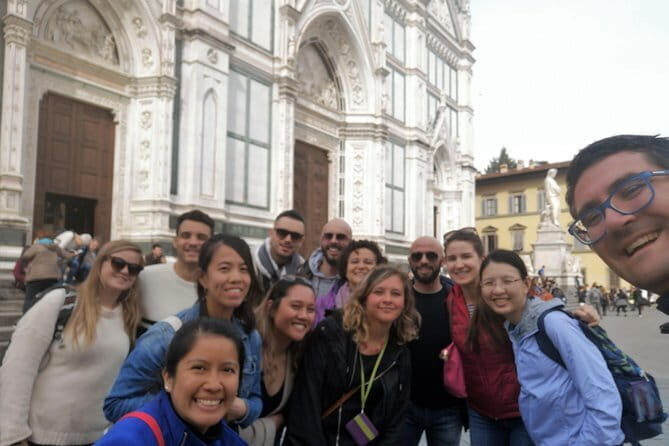
You can spend a whole day in Florence and still feel like you saw only postcards. This tour is different because it’s paced like a proper orientation walk. In a short morning, you get a route that connects churches, civic squares, and the big names in Renaissance art.
The payoff is that you start recognizing patterns. You see how Florentines used religion, politics, and money to shape the city. Then, after the walk, you’ll know what to revisit on your own.
It also helps that you’re not doing the logistics alone. You don’t need to wrestle with a map app while trying to read stonework. The leader does the hard part: grouping highlights into a logical path so you can focus on what’s in front of you.
You can also read our reviews of more walking tours in Florence

Meeting Point and Route: Santa Maria Novella to Santa Croce
The walk starts at P.za di Santa Maria Novella 4n at 10:30 am. You’ll finish at Piazza di Santa Croce 18R, near the Basilica of Santa Croce area.
That start-to-finish plan is useful. Santa Maria Novella is a good launching pad if you’re staying in central Florence or arriving by train. Santa Croce is a solid finish because it’s close to plenty of cafés and the kind of lively streets that make it easy to keep exploring right after the tour.
The route also aims to keep you moving through the city’s most important visual zones. You’ll go from the medieval church world into Renaissance civic power, then end where Florence’s literary fame is honored.
The Value of a Very Low Price (and Why You Still Should Tip)
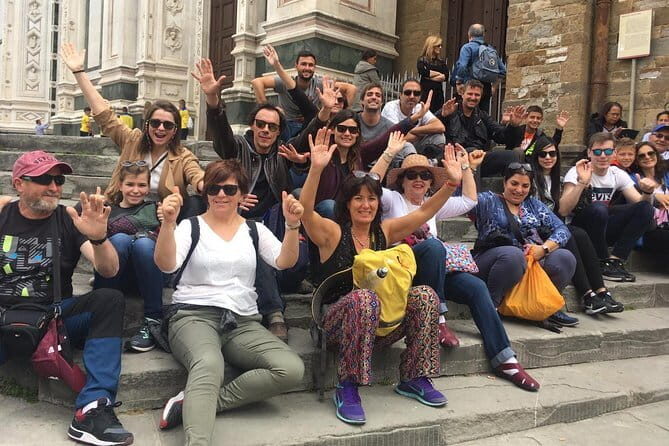
This tour is listed at $3.63 per person, and it runs about 2 hours 15 minutes. That sounds almost unreal for a guided experience, especially in a city where walking tours are often much pricier.
Here’s the practical way to think about value: the money you pay is only part of the equation. A “tip-based” mindset is common with small-group walking tours in Europe, and this one is priced in that spirit. If you like what the guide does—storytelling, pacing, useful context—you should tip accordingly.
Also note one key cost detail: nearly everything you see is free to enter, but the main exception is the Duomo complex. So your total spending is usually low, with the one area that may require extra tickets.
Santa Maria Novella: A Smart First Stop for Florentine Context
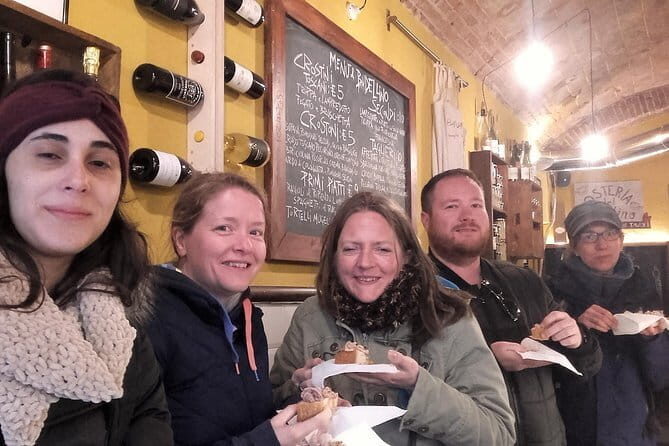
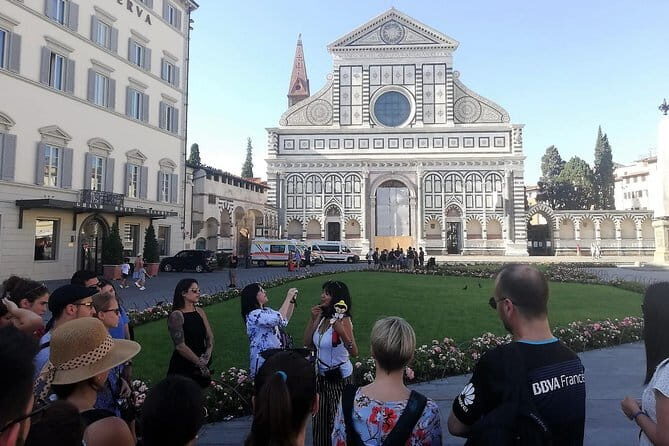
Your first stop is the Basilica of Santa Maria Novella. The entry here is free, and the time is short—about 10 minutes.
This is a great opener because it sets the tone. Santa Maria Novella sits in the tradition of Dominican church life, and it helps you understand why Florence’s art history starts so strongly with religious buildings. Even if you’re not a church person, the façade and location help you get your bearings fast.
You also get an early “big picture” framework. Once you know what to look for, the rest of the walk gets easier.
Via de’ Tornabuoni and Palazzo Strozzi: Florence’s Style and Power Streets
Next you head to Via de’ Tornabuoni, passing Piazza Antinori, shopping streets, and landmarks like Palazzo Strozzi and Piazza Santa Trinita. This section is another 10-minute block, again with free viewing.
This part matters because it shows Florence beyond its museums. The city’s wealth wasn’t hidden in galleries. It lived in palaces, street frontage, and the confidence of families who wanted their buildings to say something.
Palazzo Strozzi is especially useful as a visual anchor. It’s the kind of structure that helps you connect Renaissance civic identity with art and architecture. And walking through a major shopping lane is a reminder that Florence’s history isn’t trapped behind ticket gates.
- Tuscany Day Trip from Florence: Siena, San Gimignano, Pisa and Lunch at a Winery
★ 5.0 · 21,634 reviews - The Best tour in Florence: Renaissance & Medici Tales – guided by a STORYTELLER
★ 5.0 · 12,316 reviews


Piazza della Repubblica: Roman Florence in a Modern Square
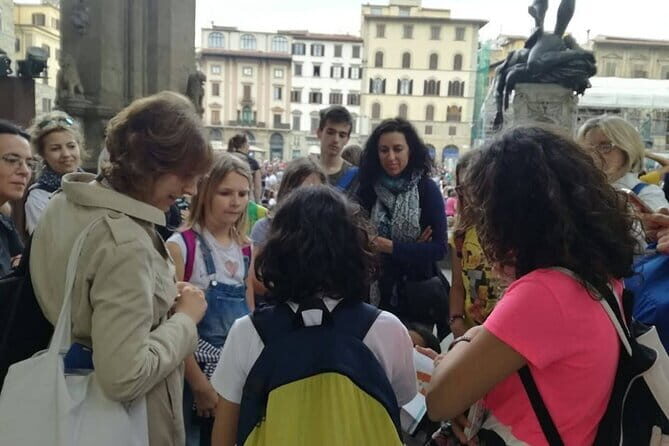
Your third stop is Piazza della Repubblica, tied to Firenze Romana. This is about 5 minutes and free.
A short stop like this can still pay off. You’ll get a quick sense of continuity—how different eras layered over each other. Florence isn’t one period. It’s a stack.
If you’re the type who likes to understand why a square looks the way it does, this little moment helps.
Santa Maria del Fiore, Baptistery, Giotto’s Campanile, and the Duomo Cupola
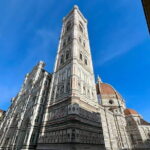
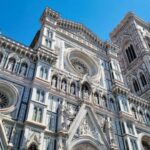
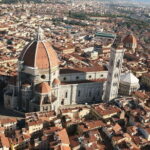
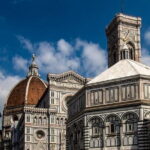
Now you hit the star attraction: the Cathedral of Santa Maria del Fiore area. You’ll also see the Battistero, Giotto’s Campanile, and Brunelleschi’s Cupola.
Time here is about 10 minutes, and this stop is listed as admission not included. So plan for the possibility that you’ll want to buy tickets separately if you decide you want to go inside.
Even with limited time, this is the most important visual cluster on the walk. The cathedral complex gives you the Renaissance “why” and the “how.” You can stand and look at the mix of artistic ambition and engineering brains.
Practical tip: if you’re trying to catch the best angles for photos, follow the leader’s positioning. People often want to wander at this stop, but the best viewpoint usually takes a moment of guidance.
Orsanmichele: Donatello and the Renaissance Sculpture Moment
Next comes Orsanmichele, plus a statue spotlight that ranges across big names like Donatello, Lorenzo Ghiberti, Giambologna, Brunelleschi, Verrocchio, Sangallo, Orcagna, and more. This is about 10 minutes, and admission is free.
This stop is a gift because it shifts you from architecture into sculpture. Florence loves stone, and Orsanmichele shows how civic groups and artists turned craftsmanship into public identity.
The statue list can feel like a lot, but it works on a walking tour because you don’t have to read labels all day. You’ll get the connection between artists, styles, and what made Florence special in that period.
If you care about Renaissance art history, this is one of the stops that sticks.
Piazza della Signoria: Where Florence’s Civic Theatre Lives
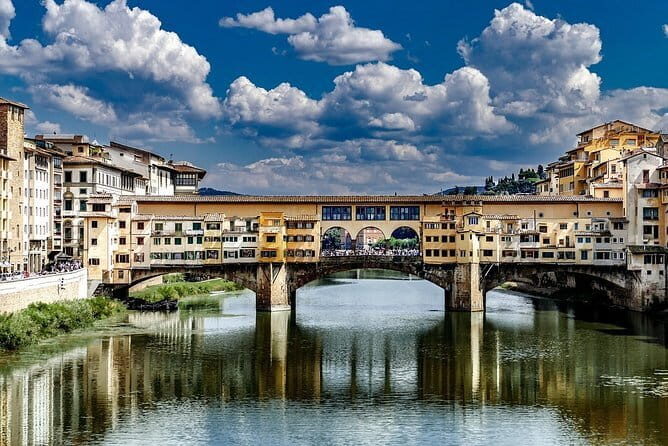
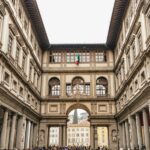
Your next major section is Piazza della Signoria, with stops that connect to major civic and artistic landmarks: Palazzo Vecchio, Uffizi, Ponte Vecchio, Loggia de’ Lanzi, Torre di Arnolfo, plus sculptures and Medici-era references like David, Marzocco, Cosimo de’ Medici, Perseo, and work associated with Cellini.
This is the longest block at about 15 minutes, and it’s free to view (with the tour’s focus on explanation rather than paid entry).
This is the heart of “Florence the city,” not just Florence the monument. Palazzo Vecchio represents political power. The nearby sculptures show how art served public messaging.
It’s also an area where you can learn how to look. Instead of just seeing famous names, you start noticing scale, placement, and symbolism. That’s how you turn a quick stop into a lasting understanding.
One thing to watch: this square can get crowded and noisy. If you’ve got trouble hearing, stand near the guide when the leader speaks.
Santa Croce: Dante’s Monument and a Meaningful Finish
You end at Basilica of Santa Croce. The time is about 10 minutes, and entry is free.
Santa Croce is a strong finale because it connects Florence to literature and memory. The tour focuses on the basilica’s history and includes a monument to Dante.
Finishing here is smart for practical travel reasons, too. When the tour ends in this area, you’re in a neighborhood that’s easy to transition into dinner plans and slow walking afterward.
If you want to keep the momentum, this is where you can branch off and explore more art, more churches, or just street life.
Pacing, Group Size, and the Hearing Reality in Crowds
The tour is designed for a maximum of 20 travelers, which usually means better movement and more interaction than big coach-style groups. A couple of people praised how the leader kept the group together and worked around timing issues like heat and busy events.
Still, one caution came up: the audio can be uneven. Some folks found it hard to hear even with a small speaker. That’s not unique to this tour, but it’s worth planning for.
Here’s what I’d do if hearing clarity matters to you:
- Arrive a little early and get as close to the guide as you can.
- Be ready to shift a step or two if the leader changes position.
- If you know you struggle in noisy places, bring your own hearing support if you normally use it.
If you prefer a tour where you can drift without listening pressure, this one still works. But if you’re the type who needs every word, choose your spot carefully.
Who This Tour Is Best For (and Who Might Prefer Something Else)
This walking tour is ideal if you want a smart, low-cost introduction to Florence’s most recognizable art-and-architecture landmarks. It’s also a good fit if you’re traveling with only a morning to spare and you want a route that makes your later self-guided exploring easier.
It’s especially helpful for first-time visitors who don’t want to memorize a checklist. The leader’s job is to connect the dots between streets, buildings, and the people behind them—like the Medici thread that shows up in the Piazza della Signoria segment.
If you already have deep architecture knowledge and want time inside major buildings for extended viewing, you might find the stopping time brief. In that case, consider using this as your orientation, then booking separate timed entry visits for the sites that call you back.
Should You Book This Florence Art and Architecture Walking Tour?
If you’re looking for a guided way to learn the city quickly, I think this is a strong booking. The combination of a short morning loop, mostly free viewing stops, and consistently positive guide feedback makes it a low-risk first step.
Book it if:
- You’re visiting Florence for the first time.
- You like a plan, but not a rigid schedule.
- You want a route that takes you from Santa Maria Novella to Santa Croce without extra thinking.
Skip it or supplement it if:
- You strongly need museum-quality time inside major sites like the Duomo complex.
- You know you have trouble hearing in crowded squares and you don’t like speaker-based audio.
FAQ
How long is the walking tour?
It lasts about 2 hours 15 minutes.
Where does the tour start?
It starts at P.za di Santa Maria Novella, 4n, 50123 Firenze FI, Italy at 10:30 am.
Where does the tour end?
It ends at Piazza di Santa Croce, 18R, 50122 Firenze FI, Italy, near the Basilica of Santa Croce.
Is the tour offered in English?
Yes, it’s offered in English.
How much does it cost?
The price is $3.63 per person.
Is admission included for all stops?
Most stops are free to enter, but the Cathedral of Santa Maria del Fiore area has admission not included.
Are tickets mobile?
Yes, the tour includes a mobile ticket.
What’s the maximum group size?
The maximum is 20 travelers.
Is the tour suitable for most people?
Yes, most travelers can participate.
Are service animals allowed?
Yes, service animals are allowed.
Do I need good weather?
The tour requires good weather. If it’s canceled due to poor weather, you’ll be offered a different date or a full refund.

More Walking Tours in Florence

More Tours in Florence


More Tour Reviews in Florence
- Tuscany Day Trip from Florence: Siena, San Gimignano, Pisa and Lunch at a Winery
★ 5.0 · 21,634 reviews - The Best tour in Florence: Renaissance & Medici Tales – guided by a STORYTELLER
★ 5.0 · 12,316 reviews