REVIEW · FLORENCE
Florence Jewish Quarter History Private Walking Tour
Book on GetYourGuide →Operated by Roso Travel · Bookable on GetYourGuide
Florence has a second story. This walking tour follows Jewish life in the Old Town from its 14th-century arrival to the horror of World War II, then brings it back to today. I especially like the way a 5-star local Jewish Quarter history expert connects big landmarks with small, meaningful details.
Two things stand out for me: you get a human timeline (not just dates), and you save real time with skip-the-line entry to the Great Synagogue and Jewish Museum on the 3-hour option. One thing to consider: the synagogue is an active place of worship, so interior access can be limited during scheduled events, and the 2-hour option does not include synagogue and museum interiors.
In This Review
- Key highlights worth your attention
- Why this Florence Jewish Quarter tour feels practical, not just historical
- Where you start: meeting near Florence Cathedral
- Piazza della Repubblica: from Old Market to the ghetto site
- Piazza della Signoria and the Medici connection
- Santa Croce Basilica: spotting the Star of David on the facade
- The former Jewish Quarter: what happened after the ghetto
- The Great Synagogue and Jewish Museum: 2 hours vs 3 hours
- The 2-hour option (what you get and what you skip)
- The 3-hour option (skip-the-line access included)
- Dress code note (you’ll be glad you read it)
- What the guide actually adds: details like your route’s hidden meanings
- Practical tips for a 2–3 hour walk in Florence
- Value for your money: why the skip-the-line can matter more than you think
- Language and comfort: who this tour suits best
- Should you book the Florence Jewish Quarter History Private Walking Tour?
- FAQ
- FAQ
- Where does the tour start?
- How long is the tour?
- What’s included in the 2-hour option?
- What’s included in the 3-hour option?
- Do I need to wait in line for the synagogue and museum?
- Is the Great Synagogue visit always fully accessible?
- What should I wear or bring for the synagogue?
- What languages are available for the guide?
- Is the tour private and how big can the group be?
- What’s the policy for changes or cancellation?
Key highlights worth your attention

- Cathedral-to-ghetto route: you start by Florence Cathedral and move through key Old Town squares tied to Jewish settlement
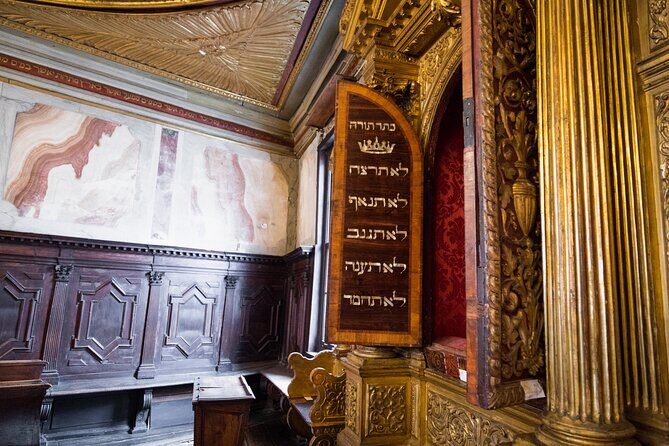
- Hidden symbols: your guide points out Jewish references, including a Jewish inscription connected to the 10 Commandments and a Star of David on Santa Croce’s facade
- A guided timeline that includes WWII: arrests, deportations, and the Holocaust are part of the story you’ll walk through
- Piazza stops with real context: Piazza della Repubblica (where the ghetto was established) and Piazza della Signoria (Medici-era commerce) shape the narrative
- Great Synagogue + Jewish Museum (3 hours): skip-the-line tickets included for immediate entry at your time slot
Why this Florence Jewish Quarter tour feels practical, not just historical
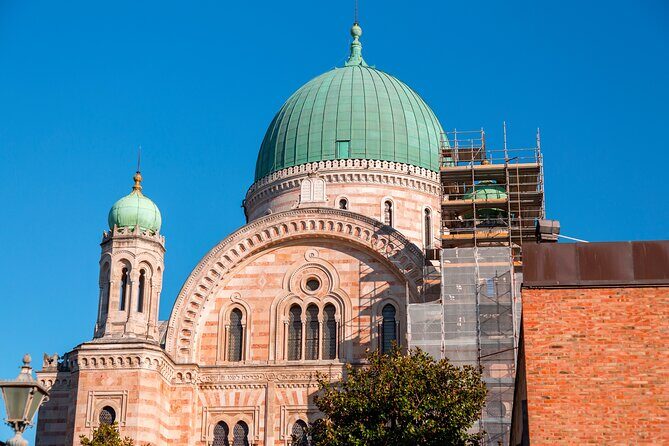
This tour works because it’s built like a route, not a lecture. You walk through Florence’s center and your guide uses buildings and squares as clues to how Jewish life changed over centuries—first growing in the 1300s, then being forced into a ghetto system, then being shattered during WWII, and finally being rebuilt in modern Florence.
I like that it does two jobs at once. It explains Jewish history and myths you might not have heard in museums, and it also helps you see Florence’s major monuments through a different lens. The result is a walk that feels like you’re reading the city with better glasses.
There’s also a big value play in the 3-hour option: skip-the-line entry to the Great Synagogue and Jewish Museum. In a crowded city, that time saving matters. You’re not just buying access—you’re buying fewer delays so your guide can keep the flow of the story.
You can also read our reviews of more walking tours in Florence
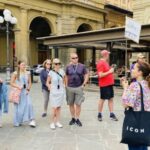

Where you start: meeting near Florence Cathedral
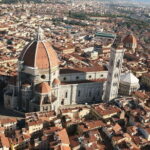
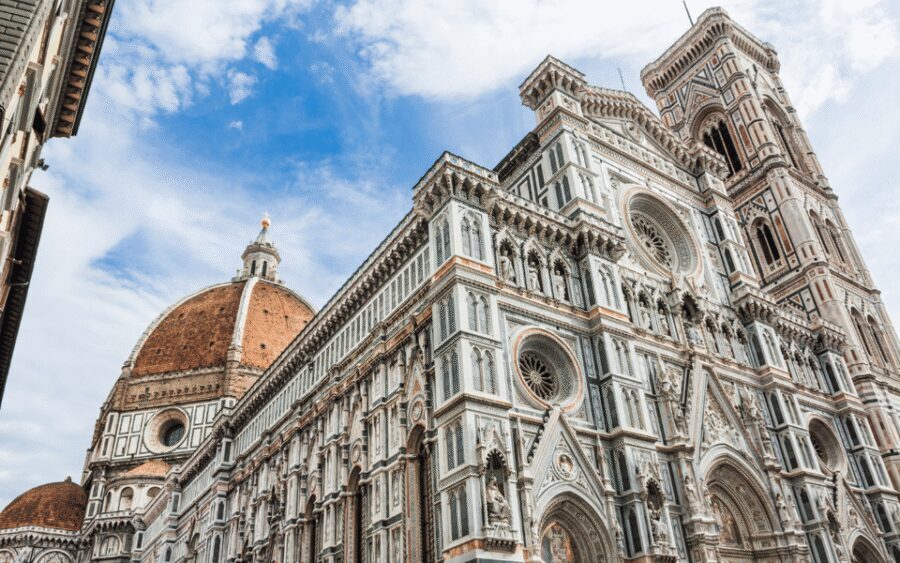
You meet at a convenient spot next to Florence Cathedral (Santa Maria del Fiore). The exact meeting point can vary by option, so it’s smart to check the email you receive the day before the tour. That message matters because the city is busy, and a precise meeting location makes the whole start smoother.
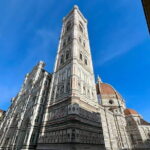
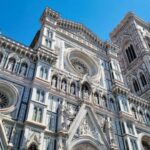
Starting by the cathedral is a clever choice. You’re not thrown into a separate neighborhood right away. You’re placed inside the main skyline of Florence, then guided toward Jewish traces that most people miss. One detail you’ll hear early: the cathedral is said to include a Jewish inscription connected to the 10 Commandments. Even if you’ve seen the cathedral before, this angle changes how you look at it.
Also, your guide meets you with enough structure that you won’t waste time figuring out where to go next. The walk stays anchored to key points in the Old Town, so even a short 2–3 hours feels like real progress.
Piazza della Repubblica: from Old Market to the ghetto site
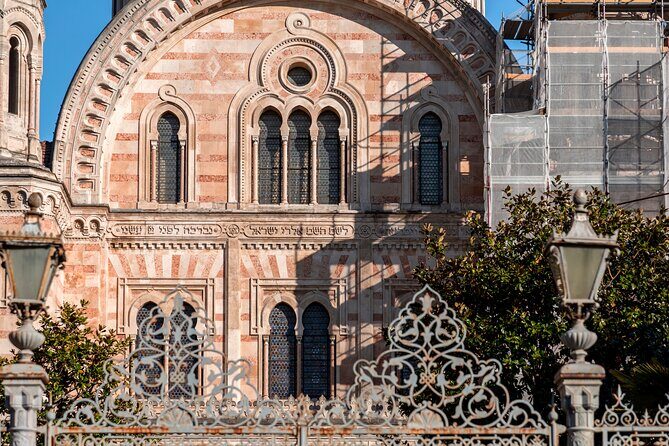
From the cathedral area, the tour moves toward Piazza della Repubblica, tied to the Old Market and the location where Florence’s Jewish Ghetto was established. This is one of those squares where it’s easy to pass quickly—bars, foot traffic, daily life. Your guide’s job is to slow you down and reframe what you’re seeing.
You’ll learn how commerce and community life were connected. Jewish people played roles in trade and business, and the tour connects that to Florence’s wider economic engine. The ghetto story here isn’t vague. You’re shown why location mattered: who could live where, who controlled movement, and how city power shaped daily life.
If you like history that feels grounded—streets and squares you can actually point to—this stop does that. It also sets up the next major square by showing how public spaces can become instruments of control.
Piazza della Signoria and the Medici connection
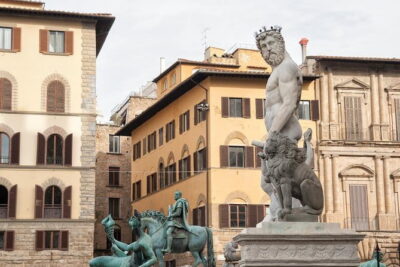
Next comes Piazza della Signoria, with Palazzo Vecchio nearby. The tour ties Jewish people’s involvement in commerce to the powerful Medici family, which is central to understanding Florence’s political and economic influence.
This is where the story gains depth. Instead of treating Jewish history as only “inside the ghetto,” the guide helps you understand how Jewish residents fit into the wider networks of Florence. You learn about the relationship between trade, power, and protection—or the lack of it—depending on the era.
And because Piazza della Signoria is one of the most recognizable public areas in Florence, it’s easy to combine two types of sightseeing. You get to appreciate the art and architecture you came for, while also learning a less typical narrative about who helped drive Florence’s economy and how that could change.
Santa Croce Basilica: spotting the Star of David on the facade
One of the most memorable moments is at Santa Croce Basilica. Your guide will show you a hidden Star of David on the facade. It’s the kind of detail that makes you feel both impressed and slightly annoyed with yourself—in a good way—because you can stand in front of a famous building and still miss what’s right there.
This stop also proves something about the whole tour: it’s not only about tragedy and oppression. It includes cultural traces—symbols, inscriptions, and small marks that show how identities can persist in public architecture even when politics is hostile.
Santa Croce is popular, so expect normal crowds. The benefit of having a guide is not that you can see more buildings—it’s that you notice more meaning in the buildings you see.
You can also read our reviews of more private tours in Florence




The former Jewish Quarter: what happened after the ghetto
After the ghetto was demolished, many Jews moved to a former Jewish Quarter area nearby. This is an important turning point, and it’s handled as part of the city’s physical change, not just as a timeline in a book.
You’ll walk through the streets where people relocated, and your guide explains why that shift mattered. Even if you don’t know the exact street history before you arrive, the tour gives you the framework to understand how forced policy translated into real movement.
This section is also where the tour’s pace helps. You don’t just hear one dramatic moment and move on. You keep connecting earlier stops—like the market and the squares—to what came next in daily life.
The Great Synagogue and Jewish Museum: 2 hours vs 3 hours

The big decision is which option you choose.
The 2-hour option (what you get and what you skip)
In the 2-hour version, you follow the footsteps around Florence and the Jewish Quarter, but tours inside the Great Synagogue and Jewish Museum are not included. You still get the core walk through the Old Town history, the symbolism, and the WWII story beats.
The 3-hour option (skip-the-line access included)
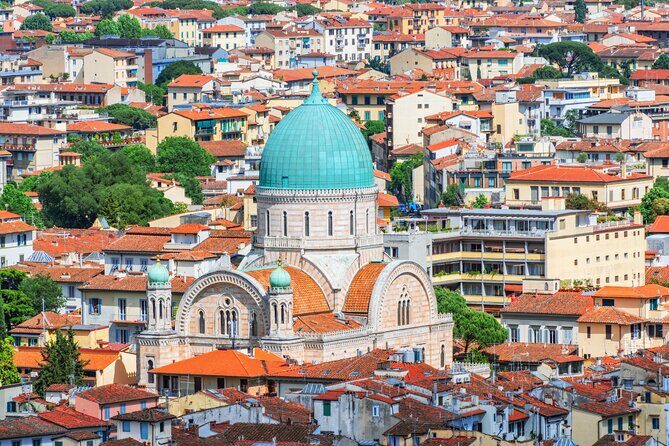
In the 3-hour version, you visit the Great Synagogue and the Jewish Museum. This is one of the main reasons to pick the longer time slot.
Skip-the-line tickets are included, so you get immediate entry at your booked time without waiting in line at the ticket office. Then you can see:
- displays of religious items and clothing
- exhibits that commemorate Holocaust victims
The Great Synagogue itself is an active place of worship, so your interior experience depends on the schedule. Your guide notes that interior access during events (Sabbath, prayer times, concerts, and similar moments) can be limited. That’s not a problem with the tour—it’s part of visiting a working religious space.
Dress code note (you’ll be glad you read it)
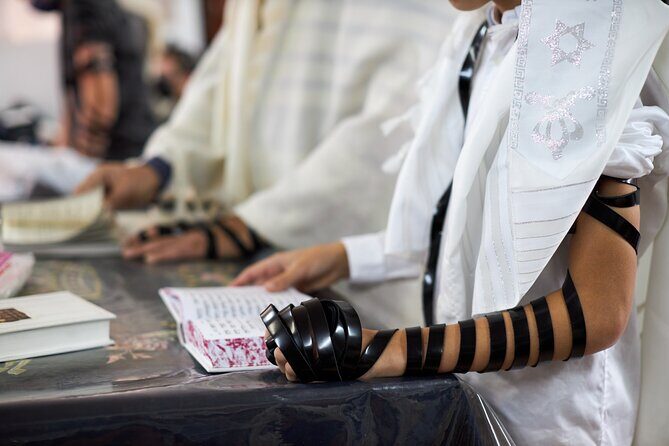
You’ll want to dress and act appropriately. Yarmulkes (skullcaps) are available on site free of charge, which makes it easier if you didn’t pack one.
What the guide actually adds: details like your route’s hidden meanings
A walking tour lives or dies by the guide’s ability to connect. And here, the guidance quality is a real selling point.
For example, one guide named Daniela comes through clearly in feedback: she’s praised for being strong on Jewish history in Florence and for also explaining Florence itself, not just the Jewish sites. That matters, because you don’t want a tour that feels like separate lists of facts. You want a guide who can braid the stories together so the walk feels coherent.
Expect your guide to:
- weave Jewish history and myths into the route
- point out the Jewish connections in big landmarks
- explain the story arc from early arrivals through the Holocaust
- show you symbolism you might otherwise miss
If you’re the type who likes to ask questions, a private group helps you actually use that time. The tour is listed as private, and group sizing is controlled: aim for a setup where you can hear the guide well.
Practical tips for a 2–3 hour walk in Florence

This is a short, dense walking itinerary. That’s good news if you don’t want a full-day plan, but it does mean you should prepare for city pace.
Here’s what I’d plan around:
- Footwear: you’re walking through central Florence, likely on uneven stone. Wear shoes that feel solid underfoot.
- Timing: pick your option based on the synagogue and museum. If you care a lot about the museum exhibits and the Holocaust displays, don’t cut it to the 2-hour version.
- Synagogue behavior: treat the Great Synagogue respectfully, and follow any instructions about access if services or events are scheduled.
- Group size listening: the tour aims for 1 licensed guide per maximum of 25 guests. If the group is larger (26–50), it will use 2 licensed guides so questions and hearing aren’t a problem.
After the walk, you can continue the experience with food. Your guide can recommend kosher options, including Balagan Café.
Value for your money: why the skip-the-line can matter more than you think
Without seeing exact pricing, I focus on value in the ways that usually affect your trip.
This tour has three value levers:
1) You get a focused route in limited time. Two hours is enough for the big historical narrative around Florence’s Jewish traces. Three hours is enough to include the museum and synagogue visit without turning it into a marathon.
2) The 3-hour option reduces waiting time. Skip-the-line tickets for the Great Synagogue and Jewish Museum mean fewer wasted minutes. In a place like Florence, those minutes can be the difference between fitting in one more stop or not.
3) You get a real guide, not just a ticket. The tour is led by a live history expert guide, with multiple languages offered. That’s what turns “I saw a building” into “I understood why it mattered.”
If you like structured city walks, the private format keeps the experience smoother. You can ask questions and get answers on the spot, instead of collecting bits of information later from your phone.
Language and comfort: who this tour suits best
The tour guide is available in multiple languages, including English, French, Italian, Polish, Russian, and Spanish. That’s helpful if you’re traveling with friends or family and want everyone to follow the story without guesswork.
It’s also listed as wheelchair accessible, which matters for a walking tour. Still, you’ll want to think practically about how your mobility needs align with a 2–3 hour city walk in historic streets. If you’re sensitive to cobblestones or long walking segments, ask in advance what the route style is for your group size and option.
This experience suits best if:
- you want a short, meaningful Florence plan
- you’re interested in Jewish history in Tuscany, not only general Renaissance Florence
- you like symbolism and architecture tied to real stories
- you prefer guided context over reading signs on your own
Should you book the Florence Jewish Quarter History Private Walking Tour?
Book it if you want Florence history that’s more than art dates and shopping streets. This tour gives you a structured timeline—from early Jewish presence in the 1300s through WWII—and it does it with stops you can actually see: cathedral area, market/ghetto square, Medici-era commerce context, Santa Croce symbolism, and the synagogue and museum on the longer option.
Don’t book it as your top choice if you’re mainly looking for interior museum time but only have two hours. The 2-hour option keeps the synagogue and museum as a next step, not the main event.
My practical advice: choose 2 hours if you want the walk and key symbolism, and choose 3 hours if the Great Synagogue and Jewish Museum exhibits—especially the Holocaust commemoration—are a priority for your trip.
FAQ
FAQ
Where does the tour start?
The meeting point is next to Florence Cathedral. The exact point may vary depending on the option you book.
How long is the tour?
The tour is offered in a 2-hour or 3-hour format.
What’s included in the 2-hour option?
The 2-hour option includes the walking tour highlights around Florence’s Jewish heritage areas, but it does not include tours inside the Great Synagogue and Jewish Museum.
What’s included in the 3-hour option?
The 3-hour option includes a visit to the Great Synagogue and the Jewish Museum, with skip-the-line tickets included.
Do I need to wait in line for the synagogue and museum?
No. Skip-the-line tickets are included for the synagogue and museum on the 3-hour option, which grants immediate entry at your booked time without waiting at the ticket office.
Is the Great Synagogue visit always fully accessible?
The Great Synagogue is an active place of worship. Interior tours during scheduled events like Sabbath, prayer times, or concerts can be limited.
What should I wear or bring for the synagogue?
Dress and act appropriately. Yarmulkes are available on site free of charge.
What languages are available for the guide?
English, French, Italian, Polish, Russian, and Spanish.
Is the tour private and how big can the group be?
It’s listed as a private group. The tour aims for 1 licensed guide per maximum of 25 guests; if there are 26–50 people, 2 licensed guides are provided.
What’s the policy for changes or cancellation?
Free cancellation is available up to 24 hours in advance for a full refund. You can also reserve now and pay later.


More Walking Tours in Florence


More Tours in Florence




More Tour Reviews in Florence
- Tuscany Day Trip from Florence: Siena, San Gimignano, Pisa and Lunch at a Winery
★ 5.0 · 21,634 reviews - The Best tour in Florence: Renaissance & Medici Tales – guided by a STORYTELLER
★ 5.0 · 12,316 reviews