REVIEW · FLORENCE
Florence: LGBTQ Renaissance Walking Tour with Mila
Book on GetYourGuide →Operated by Florence TourGuides · Bookable on GetYourGuide
Florence can be shy about its past. This tour turns quiet corners into clear stories about queer life in the Middle Ages and Renaissance. You start in central Florence with Mila, then move through major landmarks like Ponte Vecchio and Piazza della Repubblica while learning how rules, punishment, and street life shaped people.
I love the way Mila connects what you see in front of you to how society worked back then. Two standouts for me: you get the legal side (fines and punishments for sodomy, plus how laws evolved), and you also hear the street-level side, including Ponte Vecchio’s link to cruising. One thing to consider is that the topics can be heavy at times—this is not a fluff-only tour—though Mila balances seriousness with warmth and humor.
You’ll also get a smooth, sight-filled walk in just two hours. The route is dense enough that you’ll feel like you covered a lot of Florence, but it’s still realistic to enjoy on foot with a guide and a headset. If you’re hoping for a purely celebratory vibe with no difficult material, you might want to think twice.
In This Review
- Key highlights I’d plan around
- Entering Florence’s queer Renaissance, one landmark at a time
- Piazza della Repubblica with Mila: the meeting place and the tone
- The legal stuff: fines, punishments, and changing laws
- Crossing Santa Trinita Bridge toward Pitti Palace Square
- Ponte Vecchio: the queer connections you’ll actually remember
- Heading to the ancient gay district near Piazza dei Signori
- Orsanmichele Church and the denunciation boxes
- Back to Piazza della Repubblica: pulling it all together
- What the 2-hour format feels like on the ground
- Value check: is $29 worth it?
- Who should book this tour
- Should you book this Florence LGBTQ Renaissance tour with Mila?
- FAQ
- FAQ
- How long is the Florence LGBTQ Renaissance Walking Tour with Mila?
- Where do I meet Mila?
- What language is the tour in?
- Does the tour run in bad weather?
- Is the tour wheelchair accessible?
- What’s included in the price?
- Are entrance fees included?
- What major sights are covered on the route?
- Is free cancellation available?
- Can I reserve without paying right away?
Key highlights I’d plan around
- Meet Mila at Piazza della Repubblica, right by the Hard Rock Café under the Loggia
- Learn laws and punishments tied to sodomy, and how the political and social climate shifted
- Walk from Santa Trinita Bridge to Pitti Palace Square and focus on the Medici, especially Gian Gastone
- Cross Ponte Vecchio with context about its medieval and Renaissance queer connections
- See Cellini’s Perseus with the Head of Medusa in Piazza dei Signori
- Hear how Orsanmichele Church used denunciation boxes aimed at LGBTQ people, especially gay men
Entering Florence’s queer Renaissance, one landmark at a time
This tour works because it’s designed like a good history conversation: you don’t just hear facts, you connect them to real places. In Florence, the stones have memory. Mila helps you notice it, even when you’re standing in a spot that looks calm and ordinary today.
The pacing is also smart. You’re walking for about two hours, with stops tied to specific squares and streets—so your brain stays focused. And because the tour includes a headset, you’re not stuck craning your neck through noise or crowds.
You can also read our reviews of more walking tours in Florence
Piazza della Repubblica with Mila: the meeting place and the tone
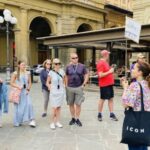
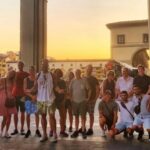
You meet Mila at Piazza della Repubblica, next to the Hard Rock Café under the Loggia. She’ll have a sign, which keeps the start from turning into an awkward scavenger hunt.
This is a great starting point because Piazza della Repubblica puts you right in the flow of central Florence. You’re close enough to landmarks that the rest of the walk feels efficient. More importantly, Mila sets the tone early: you’re there to understand secret lives and public rules in the same breath.
The legal stuff: fines, punishments, and changing laws
One of the most useful parts for me is that Mila doesn’t treat LGBTQ history like a bunch of anecdotes. She explains what the law said and what consequences could follow. You learn about punishments and fines for people deemed guilty of sodomy—and then you hear how laws changed as Italy’s political and social climate evolved.
Why this matters: it keeps the story grounded. Without this context, Florence can feel like a romantic backdrop for queer lore. With it, you understand the risk people faced, and why certain behaviors and spaces existed the way they did.
And Mila’s approach helps. Several guests mention her balance of seriousness and warmth, plus her humor where it fits. That matters because the topic can get dark, but the tour still stays human and readable.
Crossing Santa Trinita Bridge toward Pitti Palace Square
After the first central stop, you cross Santa Trinita Bridge. This is a practical move that also sets your eyes in the right direction: you get that in-between moment where Florence opens up visually before you reach another cluster of important sights.
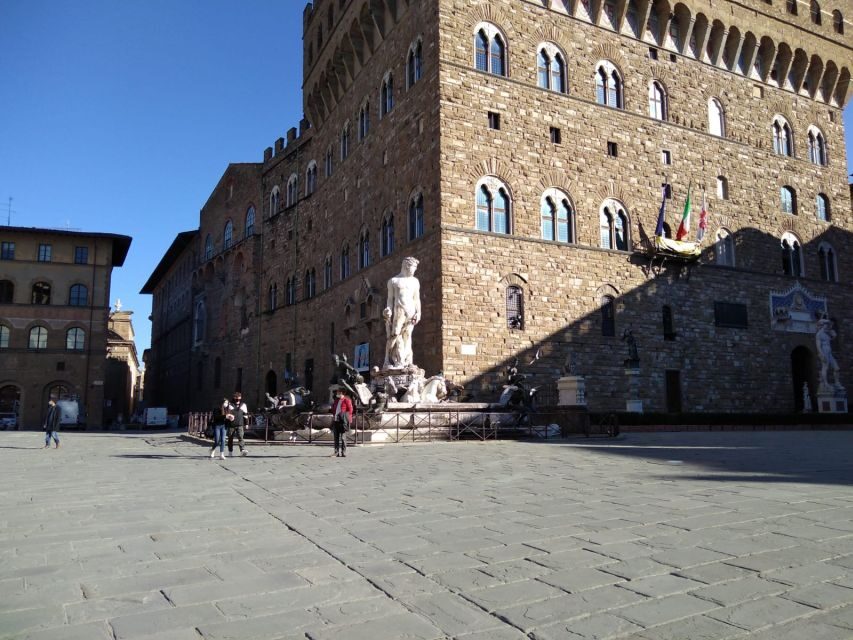
From there, you reach Pitti Palace Square. This is where the Medici story takes over. Mila walks you through the Medici family and focuses especially on the last male member, Gian Gastone—described as one of the most controversial figures in European history.
Even if you’re not a Medici superfan, this part is valuable because it shows how power, status, and politics can shape daily life. In Florence, elite families weren’t just museum names. Their choices and reputations ripple through the city’s culture.
Ponte Vecchio: the queer connections you’ll actually remember
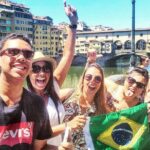
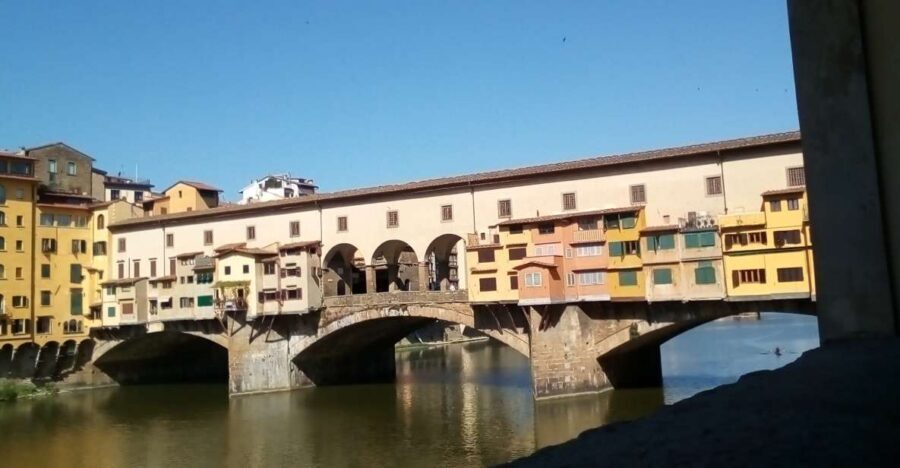
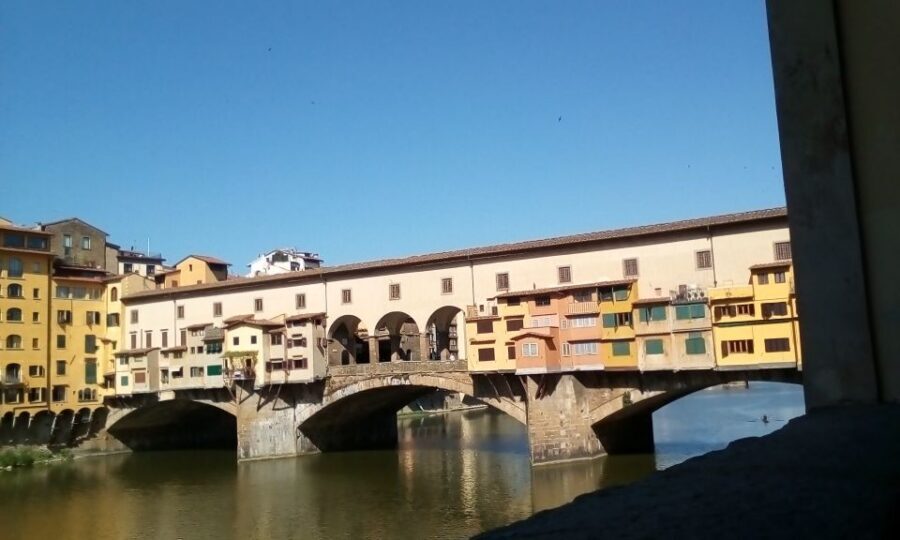
Then comes Ponte Vecchio, one of the best-known bridges in Florence. Most tours hit it like a postcard. This one treats it like a clue.
Mila explains how Ponte Vecchio became one of the most popular places for cruising in medieval and Renaissance times. The bridge’s modern fame almost hides that earlier function, so hearing it on-site makes the contrast land.
A big plus: you’re not asked to accept a story and move on. You walk across while Mila layers meaning onto what you’re seeing. That’s how your memory sticks later when you’re back in your hotel room planning your next day.
If you’re the type who likes connecting “famous sight” to “actual life,” you’ll enjoy this section a lot.
You can also read our reviews of more tours and experiences in Florence
Heading to the ancient gay district near Piazza dei Signori
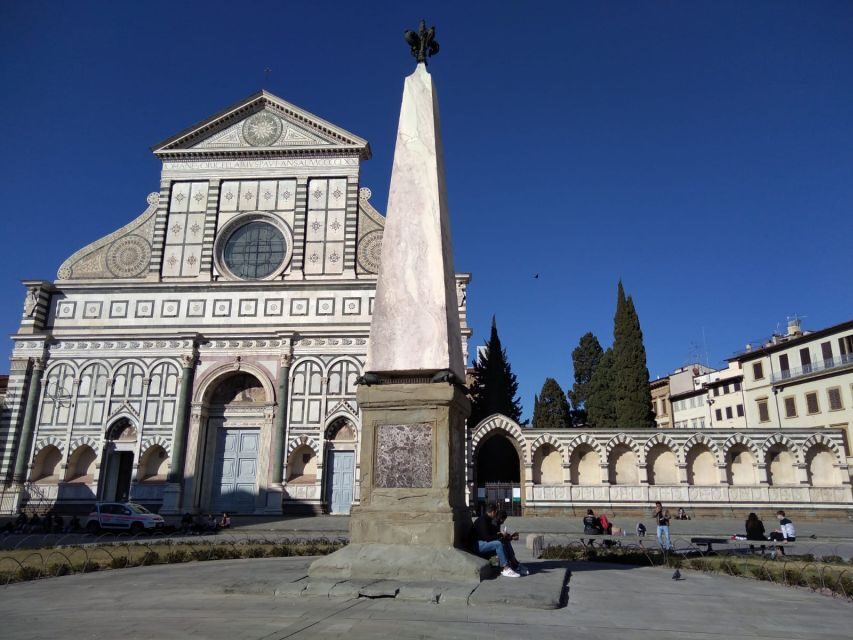
Next you move toward the ancient gay district, located near Piazza dei Signori. This is where the tour changes from political context and big monuments into a more focused street-and-square story.
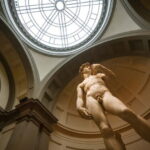
One of the landmarks you’ll encounter here is a copy of Michelangelo’s David. You’ll also see Cellini’s Perseus with the Head of Medusa (Cellini’s sculpture). These are major artistic anchors, but Mila uses them as more than quick-photo stops.
Why include art in an LGBTQ-themed walk? Because art and public spaces were part of the same social world. The city displayed symbols, and people moved through those displays with their own private lives and public constraints.
You’ll also feel a shift in mood here—still informative, but more direct about the geography of queer life in Florence.
Orsanmichele Church and the denunciation boxes
This is the most intense stop on the route. You walk to Orsanmichele Church, and Mila explains how the church hung special boxes to denounce members of the LGBTQ community, especially gay men.
Even with the guide’s balance of humor and seriousness, this is the part where you’ll likely stop and think. It’s not a comfortable story, but it’s crucial to understanding what “secret life” meant in a city where public systems could be turned against people.
Practical note: since this tour is rain or shine, you may want to bring a compact layer just in case you’re standing near church areas for longer than expected. Two hours is short, but Florence weather can change fast.
Back to Piazza della Repubblica: pulling it all together
You wrap up by returning to Piazza della Repubblica with Mila. By the end, the walk usually feels less like sightseeing and more like having a guided lens.
The tour’s final value isn’t just that you saw landmarks. It’s that you left with a clearer idea of how queer culture and repression coexisted in Florence—how laws, elite power, street life, and public art all shaped the story.
If you like tours that change the way you look at a city, this one tends to do that quickly.
What the 2-hour format feels like on the ground
Two hours is a sweet spot for Florence. It’s long enough to connect multiple areas and stories, but short enough that you’re not stuck dragging yourself around in fatigue.
You’ll cover a lot of famous places, but the route is designed around walkable connections: Piazza della Repubblica to Santa Trinita Bridge, onward to Pitti Palace Square, across Ponte Vecchio, then back toward Piazza dei Signori and Orsanmichele. That means you won’t spend half your time wondering where the tour will send you next.
Also, if you’re traveling with limited mobility, it can be a good option. One guest noted Mila’s care for a cousin with limited movements, which suggests she adapts to real-life needs when possible.
Value check: is $29 worth it?
At $29 per person for a 2-hour guided walking tour, this is strong value—especially because the tour includes a live English guide and a headset. Headsets matter in Florence. They make it easier to hear the story without fighting street noise.
You also get a focused theme rather than a general “highlights of Florence” loop. You hit major sites like Ponte Vecchio and major art stops like Cellini’s Perseus, but the tour organizes them around a specific lens: LGBTQ life, law, and social space.
Entrance fees are not included, so plan on any museum ticketing separately. But since the walk is mostly about outdoors and church-area context, you’re not likely to feel nicked by extra costs.
For me, the best part of the value is Mila herself. Guests repeatedly describe her as warm, funny when appropriate, and serious when the topic calls for it. They also note that she uses sources to verify her narratives. That combination tends to make a tour feel credible, not just entertaining.
Who should book this tour
Book this if you want:
- LGBTQ history with real-world place context (bridges, squares, and church-related denunciation practices)
- A guide who answers questions and keeps the tone balanced
- A short, efficient walk that also gives you ideas for what to see next in Florence
You might skip it if you want a light, purely scenic stroll with zero heavy content. This tour includes punishments, fines, and denunciations. Mila handles it thoughtfully, but it’s still part of the story.
Should you book this Florence LGBTQ Renaissance tour with Mila?
I think this is a smart early or mid-trip booking because it trains your eyes. After a tour like this, regular Florence landmarks feel different. Ponte Vecchio stops being just a selfie bridge. Piazza della Repubblica stops being just a meeting spot.
If you’re curious about how queer life existed alongside power and punishment, and you like history explained in plain language (with humor that doesn’t dodge the hard parts), I’d book it.
FAQ
FAQ
How long is the Florence LGBTQ Renaissance Walking Tour with Mila?
The tour lasts 2 hours.
Where do I meet Mila?
Meet Mila at Piazza della Repubblica, next to the Hard Rock Cafè under the Loggia. Mila will have a sign.
What language is the tour in?
The live tour guide speaks English.
Does the tour run in bad weather?
Yes. This tour takes place rain or shine.
Is the tour wheelchair accessible?
Yes, it is listed as wheelchair accessible.
What’s included in the price?
The tour includes a local guide, headset, and the walking tour itself.
Are entrance fees included?
No. Entrance fees are not included.
What major sights are covered on the route?
You’ll see places including Piazza della Repubblica, Santa Trinita Bridge, Pitti Palace Square, Ponte Vecchio, Piazza dei Signori (including Cellini’s Perseus with the Head of Medusa), and Orsanmichele Church, plus the surrounding area known as the ancient gay district.
Is free cancellation available?
Yes. You can cancel up to 24 hours in advance for a full refund.
Can I reserve without paying right away?
Yes. There is a reserve now & pay later option, where you keep travel plans flexible and pay nothing today.
More Walking Tours in Florence

More Tours in Florence


More Tour Reviews in Florence
- Tuscany Day Trip from Florence: Siena, San Gimignano, Pisa and Lunch at a Winery
★ 5.0 · 21,634 reviews - The Best tour in Florence: Renaissance & Medici Tales – guided by a STORYTELLER
★ 5.0 · 12,316 reviews