REVIEW · FLORENCE
LGBTQ + friendly Renaissance Gay life in Florence tour
Book on Viator →Operated by Mila Lavorini · Bookable on Viator
Florence gets a queer new lens.
This 2-hour Renaissance gay life walk takes you off the main sightseeing tracks and into places where sexuality, power, and punishment all tangled together. You’ll hear stories about queer figures from Florentine history, and you’ll get the medieval mindset behind the rules.
I really like the format: a maximum of 10 people, plus headsets, so you can actually hear your guide at each stop. I also like the focus on the city’s texture—under-the-radar corners and specific landmarks—so the tour feels like Florence, not a classroom.
One heads-up: expect adult themes. The tour includes talk of laws, penalties, accusations, and even prostitution, so it’s not a squeamish kind of outing.
In This Review
- Key things to know before you go
- Why this LGBTQ+ Florence walk feels different
- Price and logistics that actually matter (the $30.07 question)
- Meeting at Hard Rock Cafe: how the walk gets going
- Stop 1: Piazza della Repubblica and the opening story of gay life
- Stop 2: Palazzo Strozzi and the real power of laws
- Stop 3: Piazza Santa Trinita, the Spini palace, and social status
- The hidden court story: Gian Gastone de’ Medici
- Stop 4: Ponte Vecchio and Lorenzo’s philosophy of pleasure
- Stop 5: Chiasso del Buco and the medieval gay corner
- Stop 6: Piazza della Signoria, pride in the 1500s, and David’s copy
- Stop 7: Orsanmichele church and museum—sodomy accusations and prostitution
- What you’ll get out of it beyond the headlines
- Who should book this tour (and who might skip it)
- Should you book this LGBTQ+ Renaissance Gay Life tour?
- FAQ
- How long is the LGBTQ+ friendly Renaissance Gay life tour?
- What is the group size?
- What language is the tour offered in?
- Where does the tour start and end?
- What’s included in the ticket price?
- Do I need to buy admission tickets for the stops?
- What accessibility options are mentioned?
- Is there a cancellation option if my plans change?
Key things to know before you go
- Small-group pace (up to 10) with room for questions, not a rushed stampede.
- Headsets included, which helps a lot in busy piazzas and along streets.
- English tour with a clear LGBTQ+ Renaissance theme.
- Free entry at the listed stops, so you’re not budgeting for tickets.
- Stops are in central Florence, walkable and easy to stitch into a day plan.
- Mila Lavorini guides the tour, bringing empathy to heavy subjects.
Why this LGBTQ+ Florence walk feels different
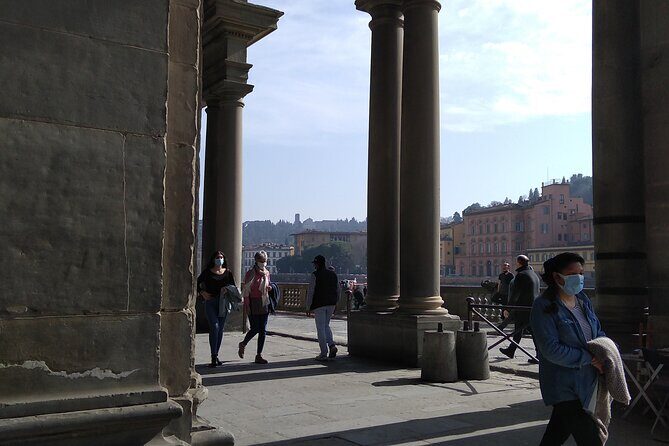
Florence can feel like it’s all marble saints and perfect symmetry. This tour tilts the camera. You’ll still see major landmarks, but the angle is human: how people loved, how communities controlled them, and how laws shaped everyday life.
What makes it work is the way the tour connects big names and big buildings to smaller, street-level realities. You’re not just handed facts. You’re guided through what those places meant in their time—palaces, government spaces, churches, and bridges that everyone walks past now.
I also appreciate the tone. The subject is heavy, but it’s framed as history and culture, not shock value. You’ll learn how medieval and Renaissance attitudes toward sexuality were tied to reputation, social standing, and official punishment. That lens makes Florence feel more real, and more complicated—in a good way.
And since it stays central and paced for conversation, it’s a smart “second look” at the city. If you already did the classic highlights, this is the tour that adds a missing layer.
You can also read our reviews of more tours and experiences in Florence
Price and logistics that actually matter (the $30.07 question)
The price is about $30.07 per person, and for Florence, that’s usually in the pocket for a guided city walk. The value comes from three practical things: you get a local guide, the group stays small (up to 10), and you get headsets included so you can hear without pressing in.
Duration is about 2 hours, so it’s not a half-day commitment. That matters in Florence, where you can lose time fast to museum lines and “just one more photo” detours. This tour is built to keep moving while still stopping long enough to learn.
You’ll also get a mobile ticket, and the tour runs in English. It starts and ends back at the meeting point, which makes it easy to plug into your day. The meeting point is the Hard Rock Cafe on Via dei Brunelleschi 1 (central Florence), and the walk loops back there at the end.
Two more practical notes: service animals are allowed, and the meeting area is near public transportation. Also, most travelers can participate, so it’s generally not an endurance challenge.
Meeting at Hard Rock Cafe: how the walk gets going
You meet at the Hard Rock Cafe, Via dei Brunelleschi 1, 50123 Firenze FI, Italy. It’s a convenient anchor point because it’s easy to find and it gives you a clear start time. Once you’re with the group, you’ll get oriented quickly and then move into the story right away.
Because the tour uses headsets, you don’t have to cram close to the guide at every stop. That sounds like a small detail until you’re standing in a square with other tourists orbiting you. Here, it helps keep the mood calmer and the learning focused.
This is also the kind of tour where questions are part of the experience. With a maximum of 10 people, you’re not shouting over a crowd. If you want clarity on how Renaissance Florence treated sexuality—or how laws worked in practice—this setup gives you a real chance to ask.
Stop 1: Piazza della Repubblica and the opening story of gay life
The tour begins at Piazza della Repubblica, where you meet your guide and get the baseline for what comes next. This first stop matters because it frames Renaissance Florence as a place with public spaces and private behaviors that people talked about constantly.
You’ll start learning about gay life in Renaissance Florence right away, not after you’ve already “seen everything.” That early context helps you understand why the later stops aren’t random. Each piazza and building is a clue.
Since the tour is under 2 hours total, your guide uses these first minutes to set up the big questions: Who had power? Who was targeted? What was tolerated publicly versus punished privately?
Stop 2: Palazzo Strozzi and the real power of laws
From the open square, you move to Palazzo Strozzi, where the theme turns toward laws and penalties. This is one of the most important stops because it connects morality to enforcement. It’s one thing to hear that people were treated differently in the Renaissance. It’s another to understand how rules were written, how they were applied, and what “punishment” could mean in everyday life.
If you like history with teeth—less comforting, more honest—this is your moment. It also sets up later stops in a helpful way: you start to see the city as a social system, not just a set of pretty sights.
A small practical win here: the stop is brief, so you won’t feel stuck outside waiting for a lecture.
- The Best tour in Florence: Renaissance & Medici Tales – guided by a STORYTELLER
★ 5.0 · 12,316 reviews




Stop 3: Piazza Santa Trinita, the Spini palace, and social status
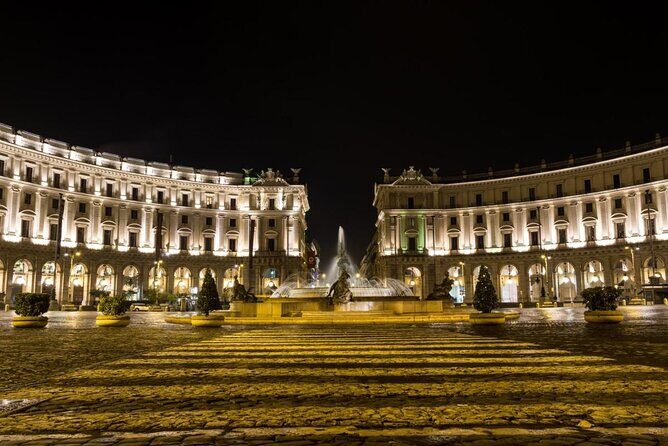
At Piazza Santa Trinita, you look at the Spini family palace. This stop is a shift from courts and laws to the world of families and status. Renaissance buildings weren’t just architecture. They were social signals—who mattered, who moved in which circles, and what kind of reputation people could build.
The guide’s job here is to help you read the city. You’re not just admiring a facade. You’re learning how power and privacy could live side by side.
And since this is still early in the tour, it keeps the pacing lively. You’ll feel the tour building a pattern: public spaces, elite spaces, then the quieter streets where evidence of “forbidden life” shows up.
The hidden court story: Gian Gastone de’ Medici
As you continue, you’ll hear about the secret and forbidden life of the last Grand Duke Gian Gastone de’ Medici. This is the kind of story that changes how you think about Florentine power. When someone at the top of the food chain has private life that doesn’t fit the official story, it tells you something about the gap between public image and private reality.
I like this kind of stop because it makes the topic feel connected to Florence, not imported. You’re seeing how the theme plays out at the highest level—then you’ll move toward streets where the consequences were different, and often harsher.
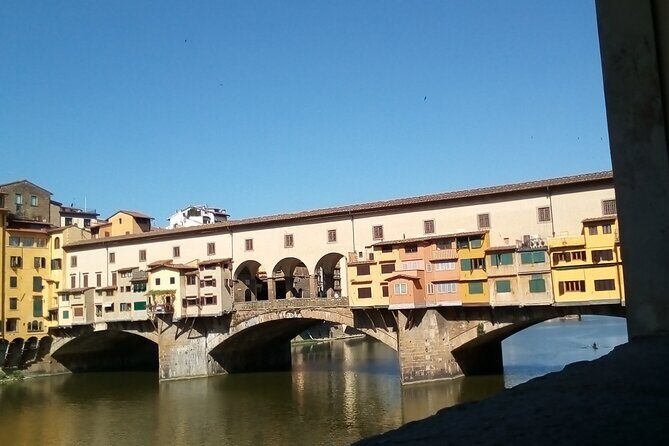
Stop 4: Ponte Vecchio and Lorenzo’s philosophy of pleasure
Next is Ponte Vecchio, a place you’ll recognize instantly even if you’ve never studied its history. Here, the focus shifts to Lorenzo and the idea of philosophy tied to a court of pleasure.
This stop is valuable because it blends image and meaning. The bridge is famous for a reason—its position, its role, its visibility. Your guide uses that setting to talk about how culture and sexuality were discussed through elite circles, and how those discussions filtered down into the broader society.
Expect a different kind of story than you get from a standard “Ponte Vecchio snapshot” tour. This one asks what people meant by pleasure, what they claimed publicly, and what they feared in private.
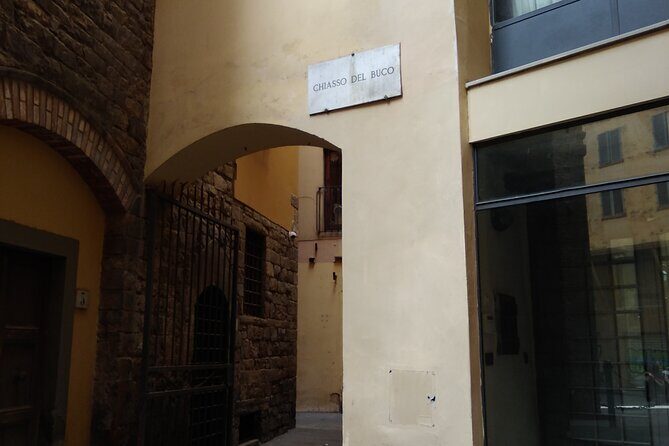
Stop 5: Chiasso del Buco and the medieval gay corner
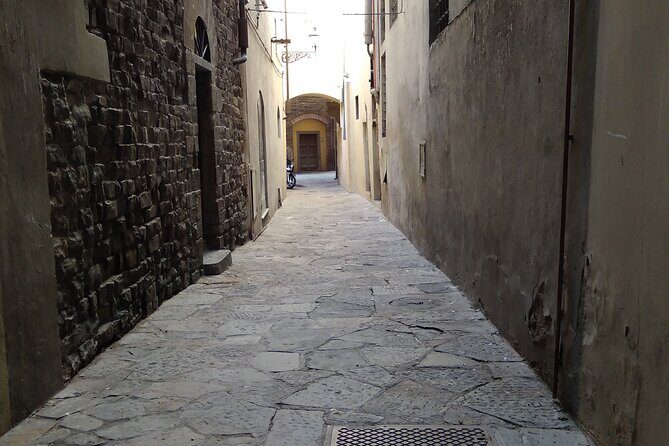
Then you walk to Chiasso del Buco, described as a medieval gay area. This is where the tour does something smart: it pulls you away from only the big icons and gives you a feel for the smaller street web where life actually happened.
You’ll get a sense of how medieval Florence could be both connected and surveilled. The guide uses the setting to explain attitudes toward sexuality—who could risk what, and why certain places mattered.
This is also one of those stops that makes great photos, but I’d use the camera sparingly. The best part is listening while you’re right there, hearing why the place has that reputation.
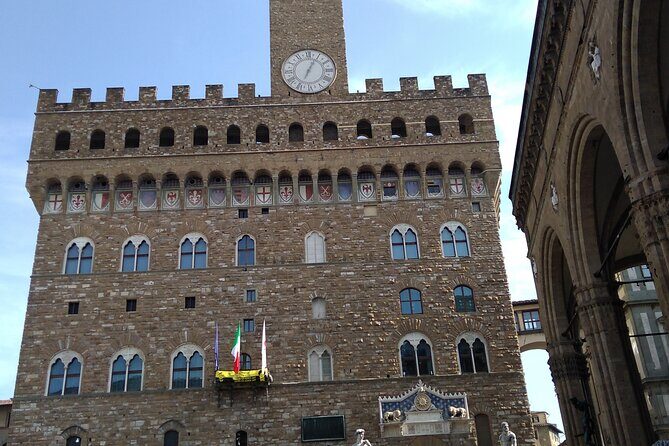
Stop 6: Piazza della Signoria, pride in the 1500s, and David’s copy
At Piazza della Signoria, the tour pauses in front of a spot framed as the seat of the first Pride in the XVI century. The stop also includes admiring a copy of Michelangelo’s David.
This is a fascinating contradiction on purpose. You’re in the heart of civic Florence—official, monumental, political—while the guide ties it to LGBTQ+ expression and visibility. Even if you know Florence’s Renaissance symbolism well, this angle forces a rethink of how public art and public identity can work together.
And yes, the Michelangelo moment is a crowd-pleaser for obvious reasons. But the key is how your guide uses that famous statue setting as a springboard into ideas about status, public display, and what counted as acceptable.
Stop 7: Orsanmichele church and museum—sodomy accusations and prostitution
The final learning stop is the Church and Museum of Orsanmichele. This is where the tour gets especially direct. You’ll hear how Leonardo da Vinci was denounced twice for sodomy and also learn about the importance of female prostitution in the social fabric of the time.
This isn’t light material. It’s also, frankly, the stop where the “Renaissance gay life” theme becomes clear as power and consequence, not just romance or gossip. The tour uses the setting to show how sexual behavior could be politicized, reported, and punished, while society also depended on systems of control and negotiation.
If you’re the type who likes facts and context more than moralizing, you’ll probably appreciate how this stop anchors the tour’s whole thesis: intimacy and law were never fully separate in Florence.
What you’ll get out of it beyond the headlines
If you’re deciding whether this tour is worth your time, think about what you want from Florence.
This walk works for you if you like:
- City history with real stakes (laws, penalties, accusations).
- Learning how culture shaped daily life, not just famous names.
- A small-group setting where you can ask questions.
- A guide who uses empathy and specificity, rather than sweeping talk.
It may not be ideal if you want:
- Only cheerful “sights and sounds.”
- A tour that avoids adult themes.
The timing also helps. With just around 2 hours, you can do it early in your trip to reframe the city, or later to add meaning to what you’ve already seen.
Who should book this tour (and who might skip it)
Book it if you want a Florence experience that feels personal and specific—LGBTQ+ friendly, grounded in locations, and focused on how Renaissance society worked. The fact that it’s capped at 10 travelers makes it easier to connect with the guide and keep the pace human.
It’s also a strong choice for couples or small groups who want to move through the city with context, not just check off landmarks. The tour format suits people who like walking plus conversation and who don’t mind discussing uncomfortable topics as part of real history.
Skip it if you’re short on time and need a classic overview only, or if you’d rather keep your Florence day free of stories involving legal penalties, denouncements, or prostitution.
Should you book this LGBTQ+ Renaissance Gay Life tour?
Here’s my straight answer: if you want Florence with a sharper social lens, this is a great use of your time. For about $30.07, you’re getting a guided route with headsets, free admission at the listed stops, and a group small enough for questions. The guide, Mila Lavorini, sets a thoughtful tone even when the subject turns tough.
If you do book, plan to stay mentally open. This tour isn’t here to sanitize the past. It’s here to explain how Renaissance Florence handled sexuality, power, and punishment—and to show you the city through that reality.
FAQ
How long is the LGBTQ+ friendly Renaissance Gay life tour?
It runs for about 2 hours.
What is the group size?
The tour has a maximum of 10 travelers.
What language is the tour offered in?
It is offered in English.
Where does the tour start and end?
It starts at the Hard Rock Cafe, Via dei Brunelleschi 1, 50123 Firenze FI, Italy and ends back at the same meeting point.
What’s included in the ticket price?
The tour includes headsets.
Do I need to buy admission tickets for the stops?
The listed stops are marked as Admission Ticket Free, and the only listed included item is headsets.
What accessibility options are mentioned?
The tour says most travelers can participate and that service animals are allowed.
Is there a cancellation option if my plans change?
Yes. It offers free cancellation. You can cancel up to 24 hours in advance for a full refund.

More LGBTQ-Friendly in Florence
More Tours in Florence

More Tour Reviews in Florence
- Tuscany Day Trip from Florence: Siena, San Gimignano, Pisa and Lunch at a Winery
★ 5.0 · 21,634 reviews - The Best tour in Florence: Renaissance & Medici Tales – guided by a STORYTELLER
★ 5.0 · 12,316 reviews