REVIEW · FLORENCE
Florence: Private City Walking Tour
Book on GetYourGuide →Operated by Florence Tours by Made of Tuscany · Bookable on GetYourGuide
Florence moves fast on foot. This private 3-hour walking tour ties together the Renaissance centerpiece sights, with an expert guide keeping you oriented across Piazza del Duomo and Ponte Vecchio. It is a smart way to see the city’s big stories without wasting time guessing what you’re looking at.
I like two things most. First, you get clear context for major landmarks, from Brunelleschi’s cathedral dome to the political power of Palazzo Vecchio. Second, the stops are paced so you cover a lot—cathedral area, Medici connections, sculpture stops, the Uffizi museum frontage, and a crossing into Oltrarno—without feeling like you’re stuck in one place forever.
The main drawback is simply physical time on your feet. Plan on a brisk city-walk for about 3 hours, and the Uffizi time is brief, so if you want a slow, in-depth museum visit, you’ll likely need an extra outing later.
In This Review
- Key highlights worth your attention
- How this Florence loop helps you get your bearings fast
- Starting at the Cathedral of Santa Maria del Fiore complex
- Via dei Calzaiuoli: a street that explains how the city worked
- Piazza della Signoria: where Florence’s civic power shows up
- La Loggia dei Lanzi sculpture stop: the art that was meant for the public
- Palazzo Medici Riccardi and the Medici story you can feel in the stone
- Dante’s house area and the Guelphs vs. Ghibellines tension
- Piazza della Repubblica: Roman roots and the city’s later layers
- Uffizi Gallery stop: a short window with big payoff
- Ponte Vecchio crossing: the shift in Florence’s mood
- Oltrarno and the church-craft side of Florence
- What the 3 hours feels like in real life
- Price and value: what $192.58 per person buys
- Who this tour suits best (and who may want another format)
- Should you book this Florence private city walking tour?
- FAQ
- How long is the Florence private city walking tour?
- Where does the tour start?
- Where does the tour end?
- Is food and drinks included?
- What sights are included on the tour?
- Is it a private tour?
- What languages are available for the live guide?
- Is the tour wheelchair accessible?
- What should I wear?
- Can I cancel after booking?
Key highlights worth your attention
- Duomo complex kickoff: Santa Maria del Fiore plus the Baptistery of San Giovanni, Giotto’s bell tower, and the famous dome design
- Medici palace story at Palazzo Medici Riccardi: power, patrons, and famous names linked to the arts
- Piazza della Signoria to La Loggia dei Lanzi: town hall, David, and standout Renaissance sculpture like Cellini’s Perseus
- Uffizi Gallery orientation stop: a focused museum stop that helps you understand what you’ll want to see later
- Ponte Vecchio crossing into Oltrarno: the shift from showpiece Florence into a more craft-and-church feel
- Private group with multilingual guide: French, German, Italian, English, and Spanish, plus wheelchair access
How this Florence loop helps you get your bearings fast
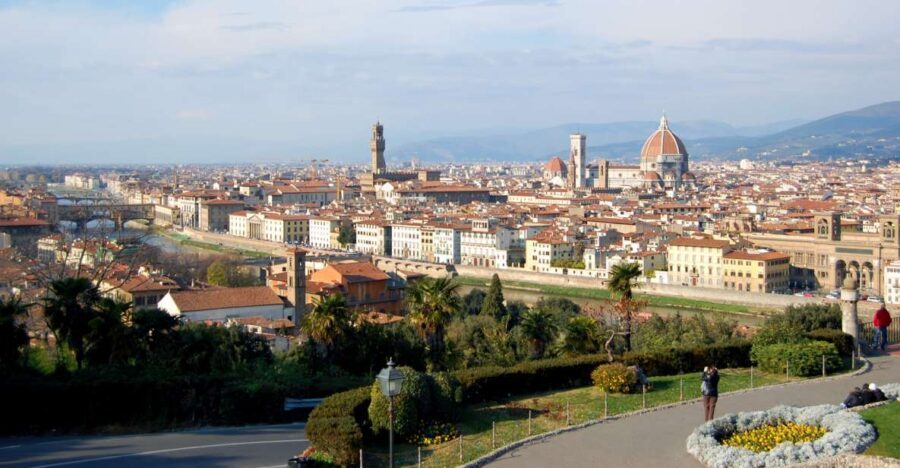
If you arrive in Florence and feel a little overwhelmed, this style of private walk is a practical fix. You start at the Cathedral of Santa Maria del Fiore and then trace a logical path through the city’s most important public spaces, so the sights start to make sense as one story instead of a pile of attractions.
You also avoid the common problem of doing everything on your own and missing the meaning. Here, the guide connects architecture to politics, art to patronage, and streets to the way Florentines lived through medieval rivalries and Renaissance ambition. You’ll still enjoy the buildings and views, but you’ll also walk away with context you can reuse the next day.
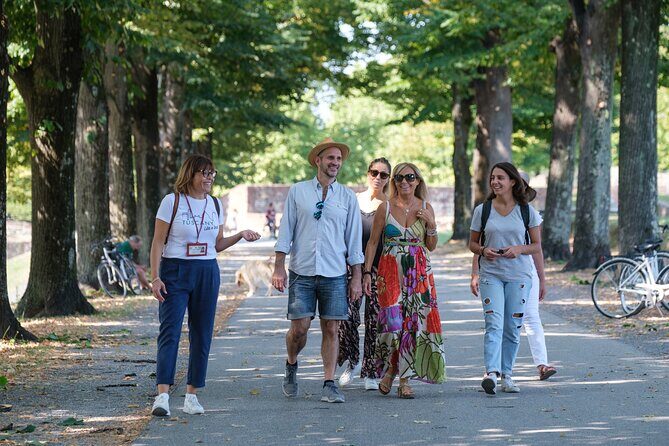
Because it is a private group, the pacing can match your questions. If you want more time at a piazza, you can ask. If you’d rather move quickly to see another landmark, the guide can keep you moving.
You can also read our reviews of more walking tours in Florence

Starting at the Cathedral of Santa Maria del Fiore complex
You begin right in front of the central door of the cathedral, which is the cleanest possible starting point. This matters because the Duomo complex is a whole world: you are not just looking at one church facade.
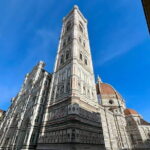
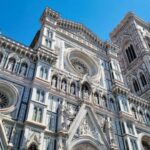
The guide leads you through Florence’s cathedral zone, including the Baptistery of San Giovanni, Santa Maria del Fiore itself, Giotto’s bell tower, and the octagonal dome designed by Filippo Brunelleschi. Even in a short guided segment, you learn how the dome’s design is part of Florence’s Renaissance identity—engineering confidence made visible.
One practical tip: this area is built for “slow looking,” but the tour keeps moving. Wear comfortable shoes so you can stand to look upward, not just walk past.
Via dei Calzaiuoli: a street that explains how the city worked
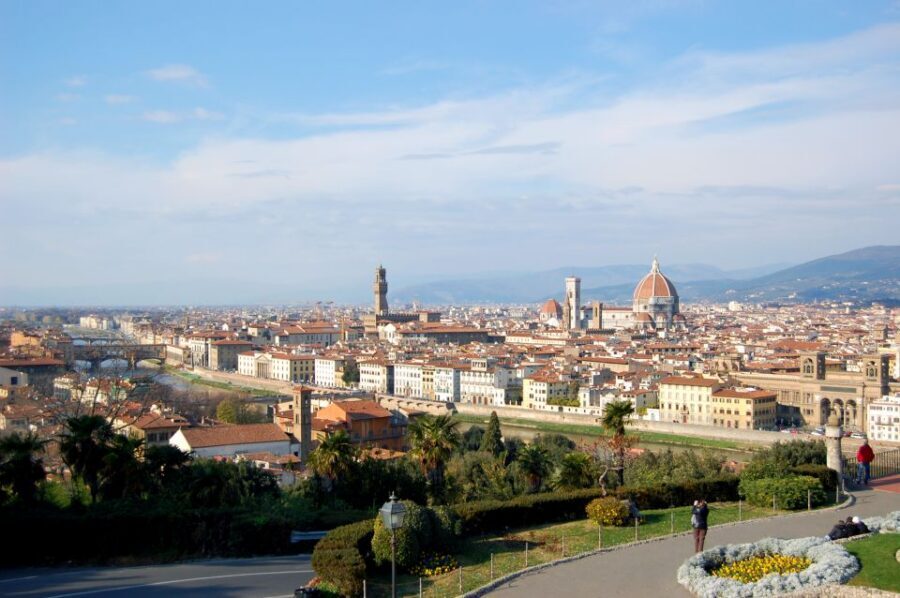
After the Duomo area, you move along Via dei Calzaiuoli, a street that helps translate Florence from monument to everyday life. This is where you start to feel the city as a network of important routes, not just a list of famous places.
The guided time here is short, so the focus is orientation and key context. You get your bearings for how people moved between power centers and religious sites, which makes the later stops in the political and art districts land harder.
If you enjoy “how the city functions” details as much as the postcard views, this quick street segment is a good use of time.
Piazza della Signoria: where Florence’s civic power shows up
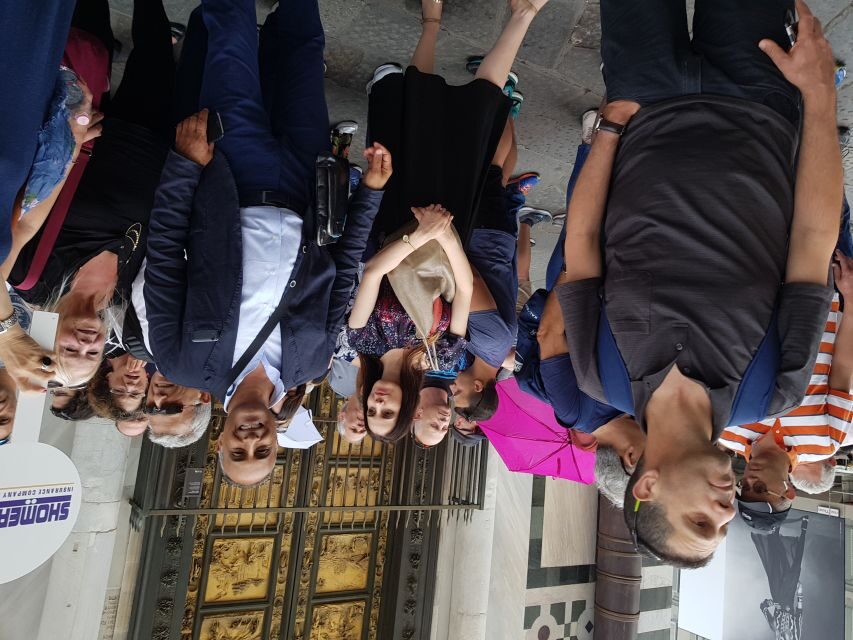
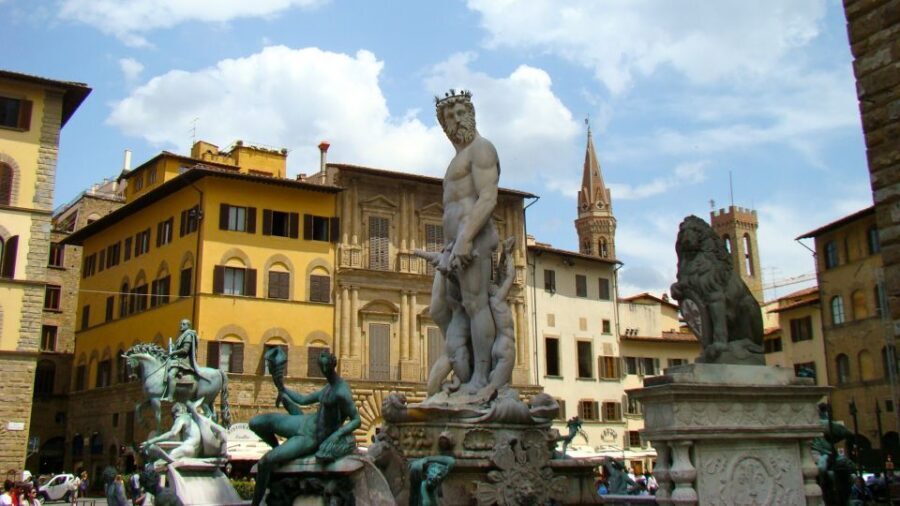
Next comes Piazza della Signoria, the center of political power. This is one of the most important spaces to understand, because Florence’s Renaissance was not only about artists and paintings—it was also about government, status, and public messaging.
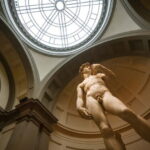
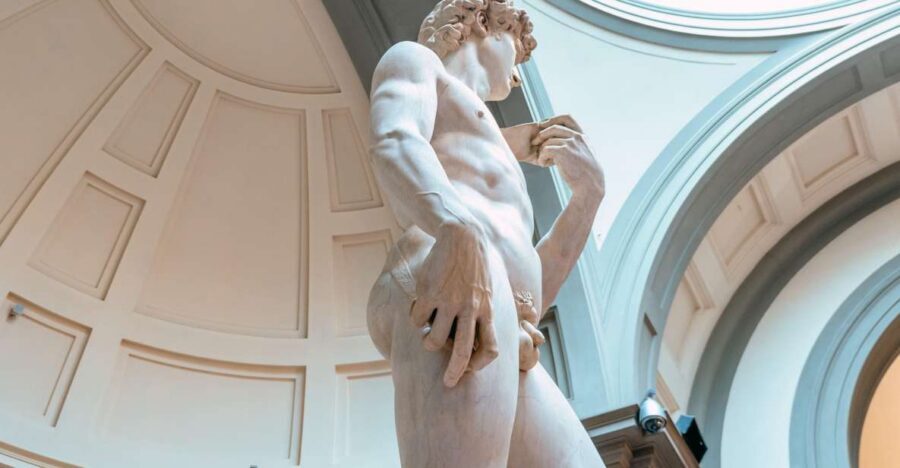
You see the town hall, Palazzo Vecchio, which the tour frames as a symbol of civil power. You also get a look at the Statue of David. Even if you’ve seen David in photos before, seeing it in the context of this square changes how you read the sculpture. It’s part of a bigger public story about Florence’s ambition.
The advantage of a guided walk here is that the square can feel like a jumble of monuments if you only glance. With a guide, you’re not just spotting famous things—you’re learning what kind of power each one represents.
La Loggia dei Lanzi sculpture stop: the art that was meant for the public
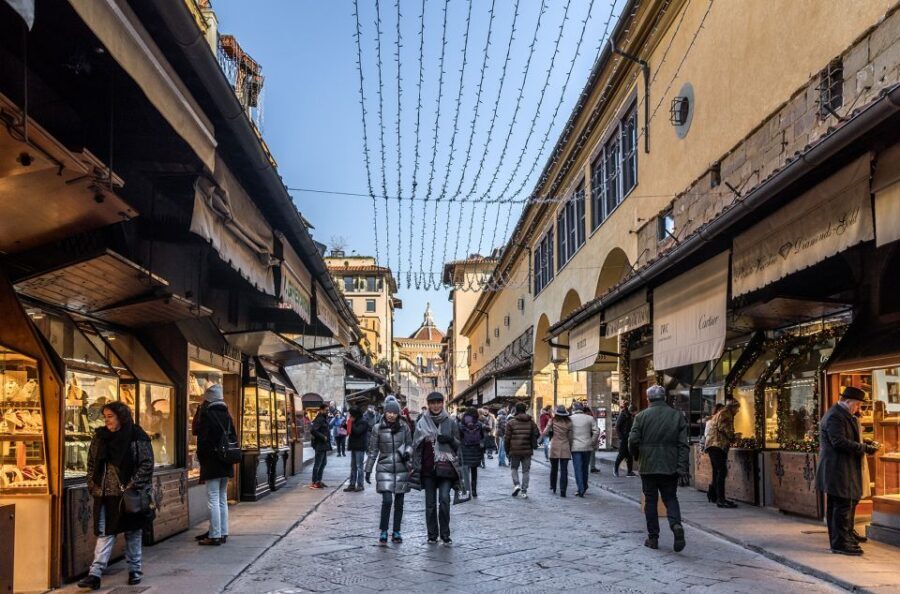
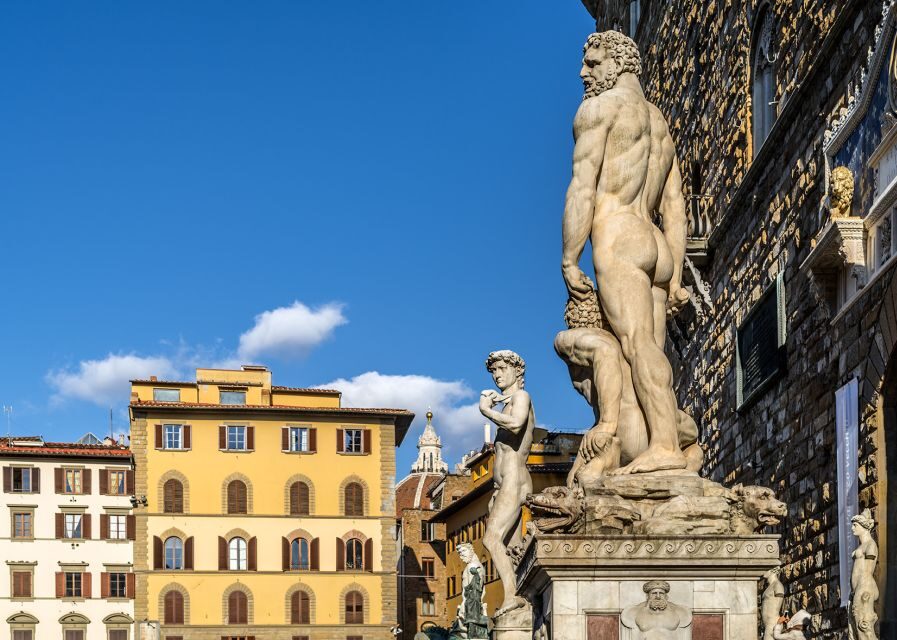
From Piazza della Signoria, you head to La Loggia dei Lanzi, where sculpture takes center stage in a semi-outdoor setting. This is a great stop because it is easier to understand sculpture when you’re not trapped inside a museum room.
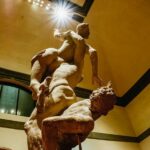
The guide points out a lineup of major works, including The Rape of the Sabine Women, Hercules, and Centaur by Giambologna, plus Perseus by Benvenuto Cellini. These names are not just labels; they connect to how Renaissance Florence showcased art as civic identity.
A quick caution: this is one of those places where people pause for photos and then shuffle on. If you want time for your own looking, keep your pace steady and take a moment at each statue rather than trying to absorb everything at once.
You can also read our reviews of more city tours in Florence
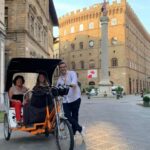

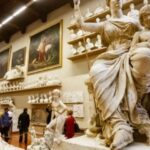

Palazzo Medici Riccardi and the Medici story you can feel in the stone
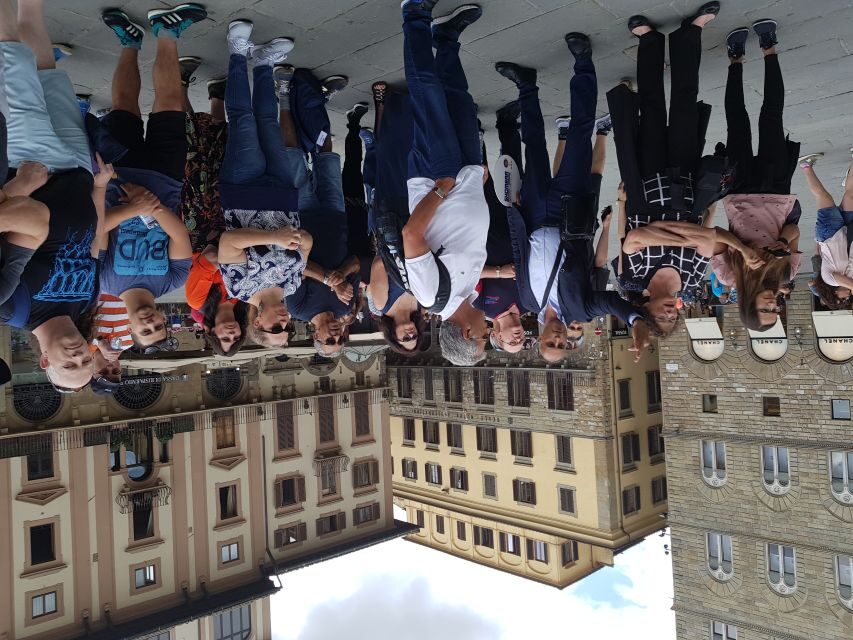
One of the tour’s strengths is how it folds in the Medici narrative at the right moment. Florence’s Renaissance was heavily shaped by patronage, and Palazzo Medici Riccardi—home of Cosimo the Elder and Lorenzo the Magnificent—sits at the heart of that story.
You also learn that this palace was tied to major artists connected to the Medici world, including Donatello, Michelangelo, Benozzo Gozzoli, and Botticelli. Even if you already know the Medici name, the guide’s framing helps you see why these families mattered: they created the demand and the stage for art.
This stop is especially good for you if you like your history with names and specific connections. Without that, the Medici can blur together as famous surnames. With a guide, they become real actors in the city’s Renaissance plot.
Dante’s house area and the Guelphs vs. Ghibellines tension
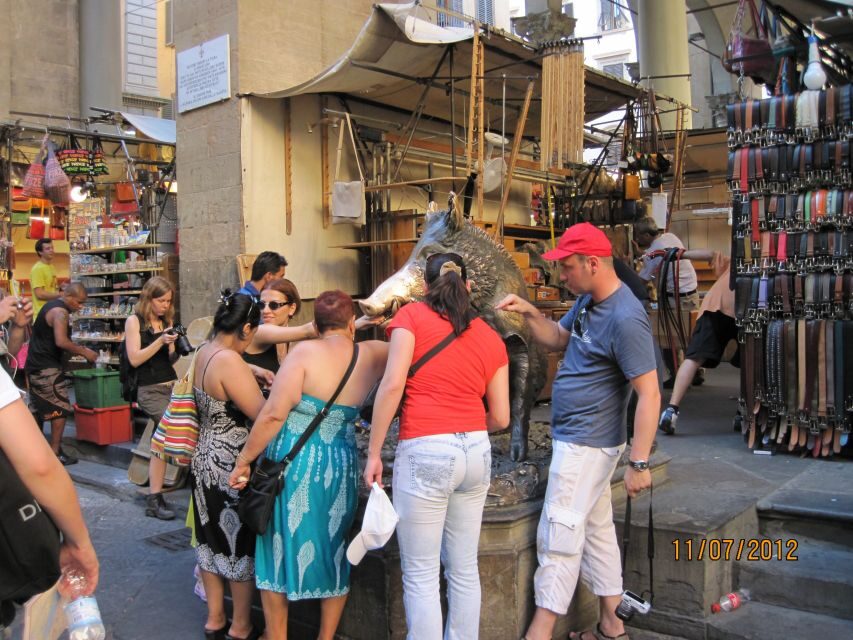
The walking route also covers the medieval Florentine era, including a stop connected to the house and church of Dante Alighieri, along with the towers associated with the Guelphs and Gibellini. This is a shift in tone from the sleek Renaissance imagery, and that contrast is part of why the tour works.
Florence’s art and architecture didn’t appear in a vacuum. Rivalries, factions, and street-level politics shaped what power looked like and where it showed up. Learning this while you are physically moving through the city helps the story stick.
If you’re the type who gets more out of a place when you understand the conflict behind it, this section is a highlight.
Piazza della Repubblica: Roman roots and the city’s later layers
You then reach Piazza della Repubblica, and the guide ties it to different eras. The tour explains the Roman era background and also connects the square to 19th-century Florence. That time-jumping can sound abstract, but in a piazza it makes real sense: the space you stand in has been reshaped over generations.
This is another “meaningful context” stop. When you know a piazza has layered histories, you look at it differently. You start noticing what is modern, what echoes earlier patterns, and why the city kept rebuilding around the same central idea: public life needs a public square.
If you want a Florence walk that includes more than the usual headline sites, Piazza della Repubblica is where you feel that extra effort.
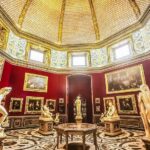
Uffizi Gallery stop: a short window with big payoff
The tour includes a stop at Uffizi Gallery with sightseeing and walking time. This is a practical approach. The Uffizi is a major museum, and a city walking tour can’t replace the museum experience—but a guided orientation stop helps you understand what you’ll likely want to prioritize later.
Think of this as a preview and a way to build momentum. If you’re planning a future museum visit, you will leave knowing that the Uffizi is not just a building with masterpieces, it is a key storage place for Renaissance ambition.
If you’re only doing one museum all week, you might still want to return for a longer visit. But if you’re splitting your time among multiple neighborhoods, this stop is an efficient way to cover a major landmark without turning the day into a single long line.
Ponte Vecchio crossing: the shift in Florence’s mood
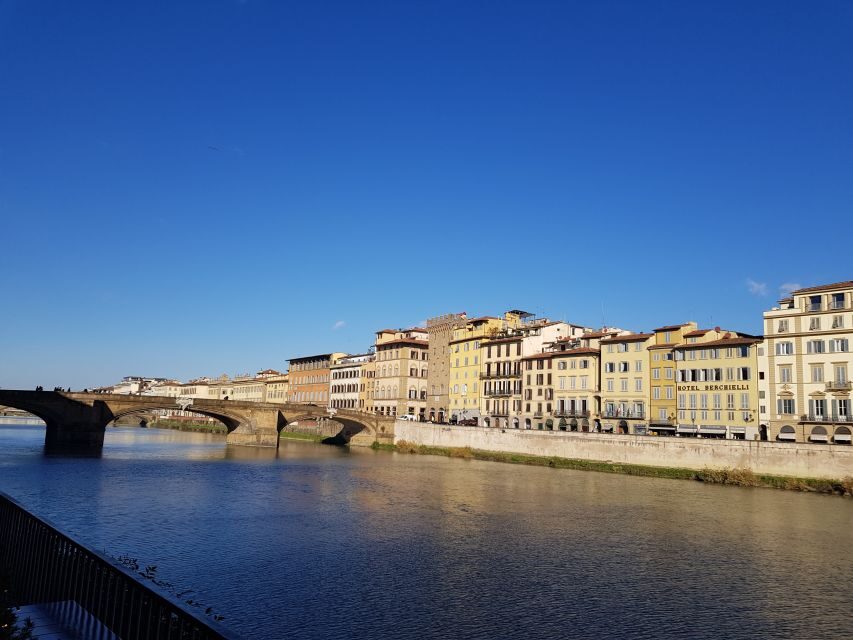
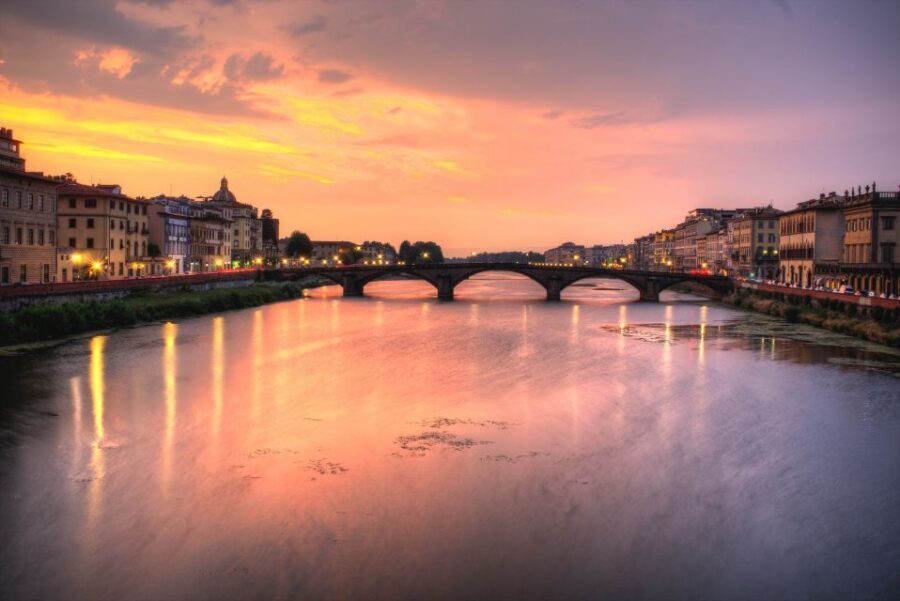
One of the iconic parts of this walk is crossing Ponte Vecchio. The guide frames it as a connector between the city center and Oltrarno, and that direction change is more than geography. It’s a change in how you read the city.
When you cross the bridge, you feel the city’s identity in motion: Florence isn’t frozen in one moment. It’s a place where old structures keep functioning, connecting neighborhoods and daily routines.
This is also a good “reset” point. After several big piazzas and monuments, a bridge crossing gives you a chance to pause, look around, and keep the energy level up.
Oltrarno and the church-craft side of Florence
After Ponte Vecchio, you head into Oltrarno, and the vibe starts to feel different—more lived-in, more arts and crafts, and more about neighborhoods than only government and museum prestige.
The tour takes you toward Palazzo Pitti and the Basilica of Santo Spirito, and you get a look at splendor in details like the splendid windows of the antiques mentioned during the stop. This kind of detail is why walking tours can beat browsing from a distance.
You also stop in the area around Piazza Santa Trinita, which gives you another public-space rhythm before you loop back toward Piazza della Repubblica and finally return to your meeting point.
What the 3 hours feels like in real life
This tour is designed to fit a Florence day without hijacking it. In about 3 hours, you cover multiple major areas: Duomo complex, civic squares, Medici connections, sculpture highlights, a museum stop, and the bridge and Oltrarno churches.
The biggest variable for your experience is your own pace. If you like to linger for photos and read every plaque, the route may feel tight. If you’re okay with short stops and learning the key points, you will feel like you’re getting an organized highlight reel with real meaning.
Also, your guide can help you move through crowd energy and keep time. Since it is a private group, the guide is not balancing multiple groups at once.
Price and value: what $192.58 per person buys
At $192.58 per person for a 3-hour private walking tour, you’re paying for expert time plus a plan that connects Florence’s major sights. For some travelers, that price is worth it because Florence is a city where meaning matters. If you’re going to spend time traveling to big landmarks anyway, a guide helps you convert that time into understanding.
The included value is straightforward: you get the expert guide. What’s not included is food and drinks, so you’ll want to budget separately if you plan to snack.
If you’re traveling with a group that shares your interests—history, architecture, sculpture, and Renaissance patronage—private format also tends to feel more efficient than piecing together multiple self-guided stops.
If you’re the type who loves reading and planning your own routes with a book in hand, you might feel you can do it cheaper on your own. But if you want the city to explain itself as you walk, the cost can make sense fast.
Who this tour suits best (and who may want another format)
This tour is a strong fit if you want a high-impact Florence overview in a limited time window, and you like learning the story behind the stone. It also works well if you prefer guided stops over committing to a full-day itinerary.
It may feel less ideal if you want a long, slow museum day at the Uffizi. Since the tour provides only brief museum sightseeing time, you’ll likely want separate time for deeper art viewing.
It also suits you if you benefit from multilingual guidance, since the guide can work in French, German, Italian, English, or Spanish.
And because it is wheelchair accessible, it is built to be workable for mobility needs, as long as you’re comfortable with a walking tour format.
Should you book this Florence private city walking tour?
Book it if you want Florence’s biggest storylines stitched together in a manageable walk: Duomo architecture, Medici patronage, civic power in Piazza della Signoria, sculpture at La Loggia dei Lanzi, a museum stop at the Uffizi, and the Oltrarno shift via Ponte Vecchio.
Skip or pair it with something else if you’re planning to spend most of your day inside major museums, since the Uffizi time here is limited. And plan your clothes for real-world weather swings—this tour has a top rating, and weather is the one thing that shows up repeatedly, so don’t assume Florence will stay the same all day.
If you want a guide-led route that keeps you oriented and gives you context you can use immediately, this is a smart choice.
FAQ
How long is the Florence private city walking tour?
The tour lasts 3 hours.
Where does the tour start?
It starts in front of the central door of the Cathedral of Santa Maria del Fiore.
Where does the tour end?
It ends back at the meeting point.
Is food and drinks included?
No. Food and drinks are not included.
What sights are included on the tour?
The tour includes the Florence Cathedral (Duomo) complex area, Piazza del Duomo, Piazza della Signoria, La Loggia dei Lanzi, Uffizi Gallery, Ponte Vecchio, Oltrarno, Palazzo Pitti, and the Basilica of Santo Spirito, plus stops connected to the Medici and Dante.
Is it a private tour?
Yes. It is a private group experience.
What languages are available for the live guide?
The guide is available in French, German, Italian, English, and Spanish.
Is the tour wheelchair accessible?
Yes, the tour is listed as wheelchair accessible.
What should I wear?
Comfortable shoes are recommended.
Can I cancel after booking?
You can cancel up to 24 hours in advance for a full refund.
More Walking Tours in Florence

More Tours in Florence



More Tour Reviews in Florence
- Tuscany Day Trip from Florence: Siena, San Gimignano, Pisa and Lunch at a Winery
★ 5.0 · 21,634 reviews - The Best tour in Florence: Renaissance & Medici Tales – guided by a STORYTELLER
★ 5.0 · 12,316 reviews