REVIEW · FLORENCE
Jewish traditions in Florence: private walking tour
Book on Viator →Operated by Florence Tours by Made of Tuscany · Bookable on Viator
Three hours, and Florence tells Jewish stories. This private walking tour strings together key city landmarks so you can follow Jewish life across centuries without rushing. You’ll start near the famous bridge area, walk through the neighborhoods that still hold traces, then finish with guided time inside the Great Synagogue of Florence and its Jewish museum.
I especially like two things. First, you get real time in the synagogue itself—enough to slow down and take in the room, not just peek and move on. Second, I like the way the route reads the city: Piazza della Repubblica is used as a way to understand the former ghetto site, even though the buildings you’d expect are gone.
One thing to consider: with a private tour, your experience depends on the guide’s focus. If you want very specific answers about Jewish daily life, Shoah-era details, and elements like mezuzahs, come with clear questions so your guide keeps the story centered on Florence’s Jewish community.
In This Review
- Key things I’d plan around
- A Jewish Florence Route That Fits a Half-Day
- Starting at Ponte Vecchio: Goldsmith Florence with a WWII link
- Borgo San Jacopo: where medieval Jewish memories linger in the Oltrarno streets
- Piazza della Repubblica: reading the former ghetto where the structures are gone
- Piazza del Duomo and the Gates of Paradise: Genesis stories in gilded bronze
- Sinagoga e Museo Ebraico: the moment the story turns from city traces to lived space
- Inside the Great Synagogue: sit, notice, and ask
- The museum visit: use the video, then read the objects
- What Private Means Here: personal attention with a tighter focus
- Price and value: what you’re paying for at $251.65 per person
- Practical details that affect your comfort (and your photos)
- Who should book this Jewish traditions tour in Florence
- Should you book this tour?
- FAQ
- How long is the Jewish traditions in Florence private walking tour?
- Is the tour private?
- What does the tour cost?
- Is the Great Synagogue and Jewish Museum admission included?
- Where does the tour start and end?
- What’s the cancellation policy?
- FAQ
- What language is the tour offered in?
- How far in advance is it usually booked?
Key things I’d plan around
- Great Synagogue interior time plus Jewish Museum access (admission included)
- Ponte Vecchio as a starting anchor, right in the heart of Florence’s classic sights
- Former ghetto traces at Piazza della Repubblica, built over what was once there
- Piazza del Duomo stop for Genesis via Ghiberti’s Gates of Paradise panels
- Private format so you can get personal attention and ask follow-ups in English
- Comfortable-shoes requirement, since the tour is a walk that packs a lot in
A Jewish Florence Route That Fits a Half-Day
This tour is built for people who want meaning, not a long slog. About 3 hours is short enough for a first-time Florence visitor, but long enough to connect the dots between medieval references and the synagogue’s role as a living landmark.
What makes the route practical is that it moves you through the city in a logical arc. You start at a major focal point, then drift into smaller streets and squares where you can notice how the Jewish community’s presence is reflected in what’s there now. By the end, you’re not just looking at architecture—you’re standing in the synagogue sanctuary area with time to sit and absorb the atmosphere.
If you’re the type who likes context as you walk, you’ll appreciate the pacing. The stops are short at the squares and viewpoint points, and longer where it counts most: at the synagogue and museum.
You can also read our reviews of more walking tours in Florence
Starting at Ponte Vecchio: Goldsmith Florence with a WWII link
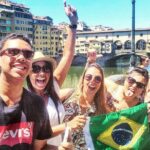
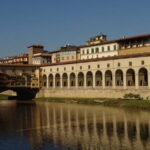
The tour begins at the Monument to Benvenuto Cellini, right by Ponte Vecchio. This is a smart way to start because Ponte Vecchio is instantly recognizable, and it’s one of those places where Florence’s identity shows up in details: the goldsmith shops and the narrow, historic feel of the bridge corridor.
You’ll also get one of the bridge’s standout stories: it’s described as the only bridge in Florence that survived the Second World War. That’s a useful framing device for the tour, because it sets up how buildings and landmarks can outlast tragedy—or at least outlast the parts of history that were meant to vanish.
Tip for your own planning: if you’re photo-minded, this is a good time to grab wide shots. Later you’ll be focused indoors and around specific architectural features, so you’ll want your outdoor images early.
Borgo San Jacopo: where medieval Jewish memories linger in the Oltrarno streets
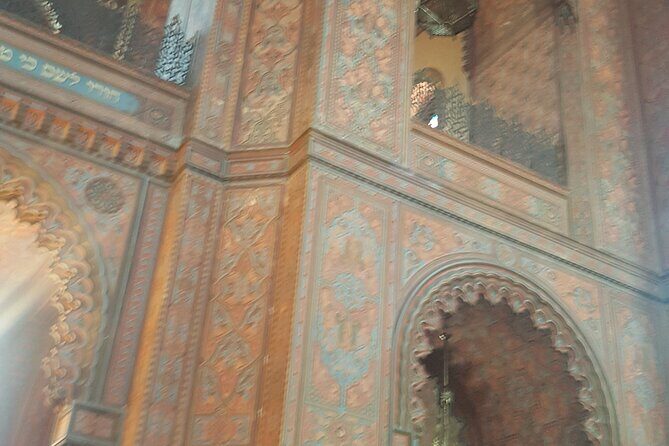
Next comes Borgo San Jacopo, in the Oltrarno area. The stop is short, but it’s meant to point you toward how Jewish presence showed up in the city’s everyday geography during the Middle Ages.
What I like about this part is that it’s not all about big monuments. It pushes you to think in terms of neighborhood life: where people lived, worked, and moved through streets. Even if you don’t see a modern sign that screams Jewish Florence, your guide is using the location as a prompt for what the community’s footprint may have looked like.
Practical note: Oltrarno streets can feel uneven underfoot. Wear shoes that handle small steps and cobbles without stress. You’ll be grateful once the tour shifts into more concentrated walking between squares.
Piazza della Repubblica: reading the former ghetto where the structures are gone
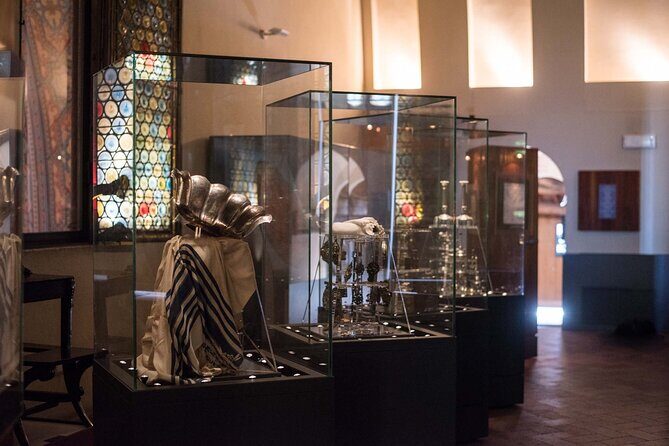
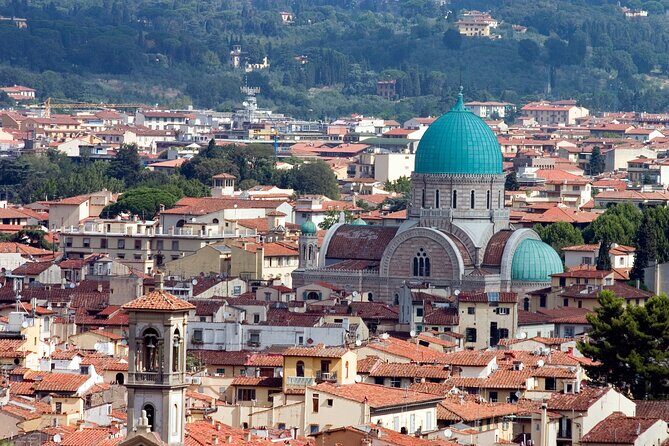
Then you move to Piazza della Repubblica. This is one of the most important stops because the square is described as being built over the ghetto area, with the ghetto now decayed and completely dismantled.
Standing in a bright 19th-century square and learning that it sits over something darker is jarring—in a good way. It forces you to understand the difference between what history left behind physically and what it left behind in memory. Your guide walks you through the idea that the “traces” of the ghetto era are there even when the architecture is no longer.
This stop is also where I’d recommend you slow down mentally. If your goal is to truly understand Jewish Florence, treat the square like a timeline. The square becomes a kind of lesson in how cities rewrite themselves.
If you care about a specific topic—like the everyday realities of life in the ghetto—ask your guide directly during this stop. Since the time here is about 30 minutes, you’ll have enough window for at least one solid question and a real answer.
Piazza del Duomo and the Gates of Paradise: Genesis stories in gilded bronze
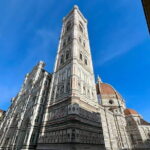
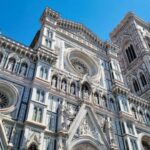
The tour’s Duomo-area stop is at Piazza del Duomo, where you’ll hear about the Gates of Paradise—Lorenzo Ghiberti’s gilded bronze work from the Renaissance period.
This may sound like a detour if you’re only chasing “Jewish sites.” But it works well here because the panels connect you to biblical storytelling, and your guide uses the Genesis stories on the gates as a way to tie religious art to shared scriptural roots. It’s also a strong Florence-once-you-see-it moment: even if you already know Ghiberti’s name, being guided through the specific panel stories changes how you look at the work.
Drawback to consider: this stop can feel more art-focused than strictly Jewish-history-focused. If you want the tour to stay centered on Florence’s Jewish community—occupations, institutions, synagogue life—make sure the guide brings it back to Jewish presence after the art explanation.
You can also read our reviews of more private tours in Florence


Sinagoga e Museo Ebraico: the moment the story turns from city traces to lived space
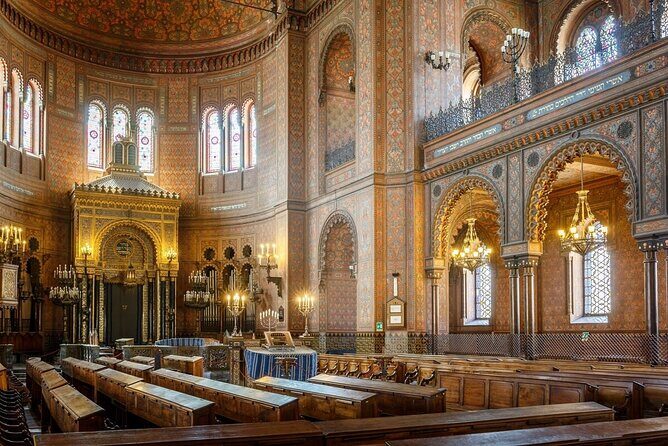
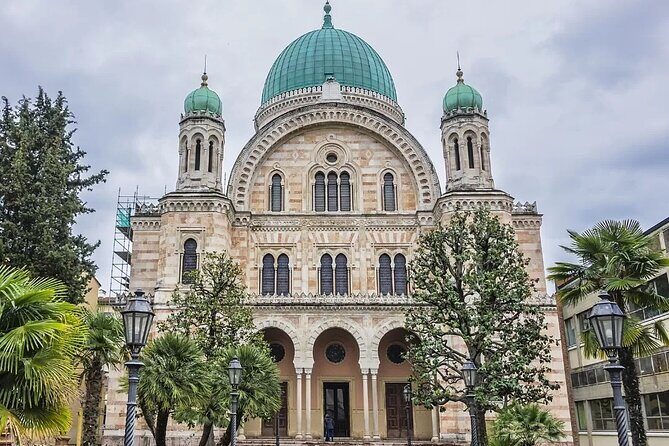
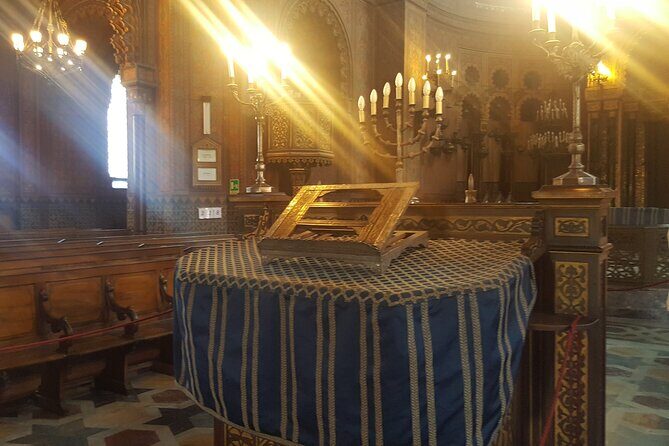
The final—and biggest—stop is Sinagoga e Museo Ebraico, the Great Synagogue of Florence and its Jewish museum. This is where the tour justifies its name. It’s a longer stop (about 1.5 hours), with admission included, so you’re not hustled out quickly.
Before you even go in, you’ll recognize the synagogue from the city panorama: the dome is copper-green, described as a famous point of view around Florence. That outside detail matters because it makes the synagogue feel like part of the city’s silhouette, not a tucked-away site you’d only find if someone handed you a map.
Inside the Great Synagogue: sit, notice, and ask
You’ll want to leave enough time to sit and take in the sanctuary atmosphere. One review specifically called out this exact idea, and it’s good advice. In a space like this, rushing turns it into sightseeing. Slowing down lets you actually feel what the space is built to carry.
Also, pay attention to the small elements your guide may mention. For example, mezuzahs came up in one critique, where the guide didn’t explain them. If mezuzahs are important to you, ask: Where are they placed and what do they signify? Even a quick answer can make the symbolism click.
If you’re particularly interested in the Shoah and memory markers, ask what memorials are present in the synagogue or museum area and what each one represents. One review noted the guide pointed out a plaque in the ground honoring a Jew killed during the Shoah, but also felt other plaques weren’t discussed. You don’t need to wait for a full list—just ask if there are additional memorial markers you should know to look for.
The museum visit: use the video, then read the objects
The museum time is where you’ll get the “how did this community live” layer. One review recommended watching the museum video, which makes sense: museum spaces often use short media to stitch together chronology and themes fast.
My practical approach: watch the video first, then go back to interpret what you’re seeing in front of you. If you try to read everything first without the video context, it can feel like a pile of facts instead of a story.
If the tour is private, you can also tailor your focus. Ask what the museum emphasizes most: daily life, community institutions, or historical events. Then let your guide point you to the most relevant displays.
What Private Means Here: personal attention with a tighter focus
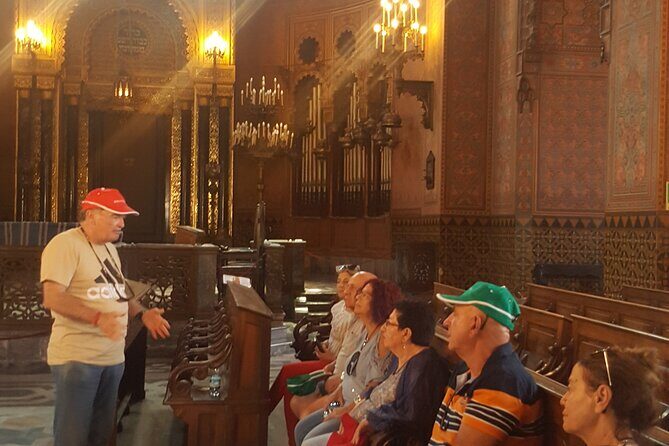
This is a private tour, meaning only your group joins, and the guide can respond to your pace. In practice, that’s huge for a topic like Jewish history in Florence, because you’ll likely have follow-up questions as you see the city “rewrite” itself over time.
I also like that there’s a wide choice of departures across the day. That’s useful if you’re building a Florence schedule around synagogue opening hours, your energy level, or even just avoiding the busiest walking times.
One more practical point: you’ll be in English. That sounds obvious, but for historical religious sites it matters. You want clear explanations, especially when you’re hearing about a ghetto site that is no longer physically intact and when the story has to be reconstructed from traces.
Price and value: what you’re paying for at $251.65 per person
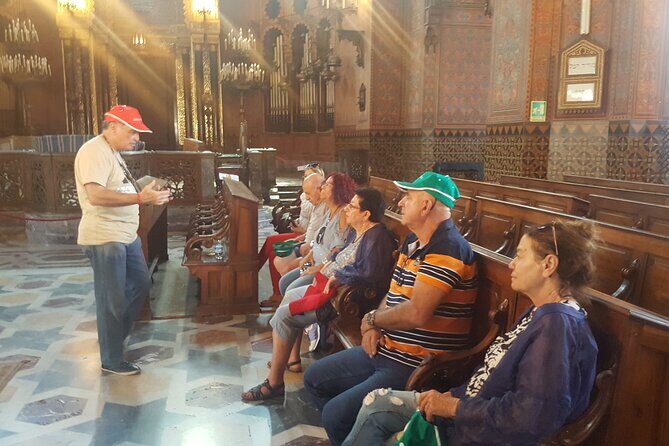
At $251.65 per person for a roughly 3-hour private walking tour, the price isn’t a bargain in the “cheap group tour” sense. You’re paying for a guide and a route that ends with guided synagogue and museum time.
The value comes from two places. First, synagogue access and museum time are included in the longer final segment, so you’re not scrambling to organize entry while you’re already in the area. Second, private format means you’re not stuck with a one-size-fits-all script.
Still, I’d be honest about the risk: one lower-rated experience criticized the guide for focusing more on personal stories and general architecture than on the specific Jewish history of Florence. That’s not something you can fully predict from the basics alone, but you can manage it by arriving with a simple goal.
Before you go, think of your top three questions, such as:
- How did Jewish life show up in Florence’s geography and neighborhoods?
- What should I specifically notice in the synagogue and museum?
- What memorials and Shoah traces are present here, and what do they mean?
When you ask those clearly, private guides tend to adjust quickly.
Practical details that affect your comfort (and your photos)
A few logistics are worth planning around because they affect how enjoyable the walk feels.
Meeting point: the start is at the Monument to Benvenuto Cellini at Ponte Vecchio. Ending point: the Synagogue and Jewish Museum of Florence at Via Luigi Carlo Farini, 6. That end location matters because you’ll finish in the historic center, not back at Ponte Vecchio.
The tour is described as near public transportation, so if you’re combining it with other stops, you won’t feel trapped. And the guidance is straightforward: wear comfortable shoes. The route is short between points, but it’s still walking.
Duration is approximate at about 3 hours. Build a little buffer before your next appointment, especially if you’re the type who wants to sit in the sanctuary and take the museum video slowly.
Who should book this Jewish traditions tour in Florence
This tour is a strong fit if you want a guided way to connect Jewish sites to the city’s physical layout. You’ll likely enjoy it if you:
- Want an efficient Florence overview focused on Jewish history
- Like walking tours with clear stops and short explanation bursts
- Prefer a private setup so you can ask targeted questions
- Are interested in the Great Synagogue and Jewish Museum experience, not just exterior views
It’s also a good match for couples or small families who want structure without a huge group. One of the best review takeaways was the call to give yourself time to sit in the sanctuary and to use the museum video.
Should you book this tour?
I’d say yes if your goal is a focused, walk-based introduction that ends in real time inside the Great Synagogue of Florence and Jewish Museum. The route is compact and practical, and the synagogue portion is long enough to make it feel like more than a photo stop.
I’d be cautious only if you know you want very granular details on specific topics—like mezuzahs and broader Shoah-era explanations—and you’re worried the guide might lean toward general Florence art talk. In that case, go in prepared with your questions so the guide steers the conversation where you need it.
FAQ
How long is the Jewish traditions in Florence private walking tour?
The tour lasts about 3 hours.
Is the tour private?
Yes. It’s a private tour/activity, so only your group participates.
What does the tour cost?
The price is $251.65 per person.
Is the Great Synagogue and Jewish Museum admission included?
Yes. Admission to the Sinagoga e Museo Ebraico is included.
Where does the tour start and end?
It starts at the Monument to Benvenuto Cellini at Ponte Vecchio and ends at the Synagogue and Jewish Museum of Florence, Via Luigi Carlo Farini, 6.
What’s the cancellation policy?
You can cancel for a full refund up to 24 hours before the experience’s start time.
FAQ
What language is the tour offered in?
The tour is offered in English.
How far in advance is it usually booked?
On average, it’s booked about 48 days in advance.
More Walking Tours in Florence

More Tours in Florence


More Tour Reviews in Florence
- Tuscany Day Trip from Florence: Siena, San Gimignano, Pisa and Lunch at a Winery
★ 5.0 · 21,634 reviews - The Best tour in Florence: Renaissance & Medici Tales – guided by a STORYTELLER
★ 5.0 · 12,316 reviews