Pasta you make yourself tastes different. This morning class in Florence has you shaping fresh dough and learning classic Tuscan methods in an old tower-house kitchen, then tasting your work with Chianti pairings. I especially like the hands-on pasta focus and the way the wines are matched to what you’re cooking. One possible drawback: it’s active cooking time, so if you want a sit-and-watch lesson, this isn’t it.
You’ll start at Santa Croce in front of the statue of Dante Alighieri, then head to the local kitchen where the lesson begins. The class is capped at 8 people, so you’re not lost in a crowd. Depending on the day, you may cook with friendly chefs such as Mario or Gonzalo, and that matters here because you’re learning by doing.
In This Review
- Key things I’d mark on your planning list
- Morning Pasta Lessons in Florence’s Old-World Kitchen
- Getting There: Meeting at Santa Croce Near Dante Alighieri
- From City Center to the Kitchen: Where the Real Cooking Starts
- The Three Pastas You’ll Learn (Pici, Tagliatelle, Tortelli)
- Pici (all’aglione) from Siena style
- Tagliatelle with mushrooms and sausage
- Classic Tuscan Tortelli filled with potatoes
- Wine Pairings: How Chianti Fits Each Pasta
- Homemade Dessert: The Sweet Finish You Make Together
- The Florence Lunch That Makes This Feel Like More Than a Class
- Price and Value: What $195.91 Is Really Buying
- Who This Class Is Best For (and Who Might Want Another Option)
- Should You Book This Florence Pasta Class?
- FAQ
- FAQ
- What time does the pasta class start?
- Where do I meet the group in Florence?
- Where does the cooking class take place?
- How long is the experience?
- What kinds of pasta will I learn to make?
- Are wines included, and how are they used?
- Do we make dessert during the class?
- What’s included in lunch?
- How big is the group?
- Is there a free cancellation option?
Key things I’d mark on your planning list
- Old tower-house kitchen: A setting built for traditional cooking, not a showroom.
- Three distinct pasta styles: Pici, tagliatelle, and potato-filled tortelli each teach a different skill.
- Wine paired to each pasta: You taste what changes when you match sauce, shape, and wine.
- Hands-on dessert: You help make the finishing course, not just receive it.
- Lunch is part of the deal: Bruschetta starter, homemade pasta, two glasses of wine, water, and coffee.
- Small group size (max 8): More attention while you roll, fill, and shape.
Morning Pasta Lessons in Florence’s Old-World Kitchen
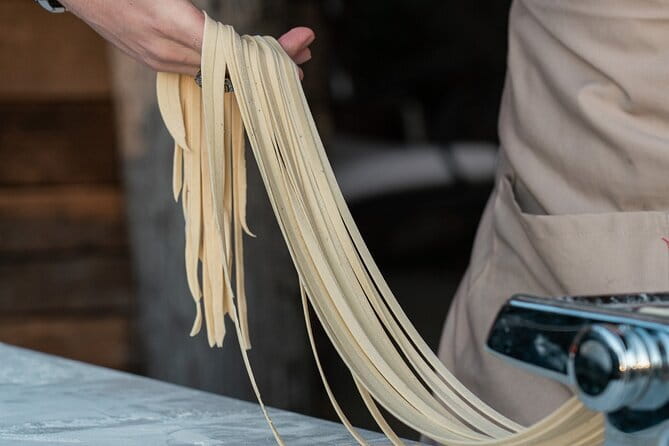
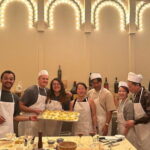
If your idea of a great Florence morning includes flour on your hands and a real meal at the end, this class fits like a well-worn apron. The experience is built around making pasta the way it’s been done in central Italy: simple tools, patient technique, and enough practice that your hands start to learn the rhythm.
What I like most is the combination of two things that don’t always meet in the same tour. First, you get a real hands-on cooking session with multiple pastas. Second, the day isn’t only about cooking—there’s Chianti pairing and a full lunch that turns your work into something you can actually enjoy right away.
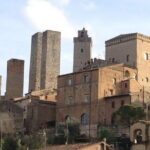
You’ll hear about old-school methods and cook in a kitchen inside an old tower house that’s been adapted into a modern workspace. They’re not selling you a stage performance. You’re learning technique, then tasting the results. That’s why it feels like a culinary time capsule without being stuck in the past.
You can also read our reviews of more tours and experiences in Florence.
- Tuscany Day Trip from Florence: Siena, San Gimignano, Pisa and Lunch at a Winery
★ 5.0 · 21,634 reviews


Getting There: Meeting at Santa Croce Near Dante Alighieri
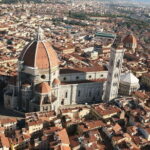
The class starts at 9:30 am at Santa Croce, right in front of the statue of Dante Alighieri. It’s a solid meeting spot because it’s easy to recognize and it anchors you in the historic center without making you hunt for some side street with zero clues.
Plan to arrive a few minutes early. Santa Croce is popular, and the area gets busy. If you’re trying to link this with a museum visit later, you’ll want to know what your post-class timing looks like—this runs about 4 hours 11 minutes.
Also note that the experience includes a mobile ticket, and it’s described as near public transportation. That’s helpful if you’re doing a tight schedule and want a low-stress way to get there.
From City Center to the Kitchen: Where the Real Cooking Starts
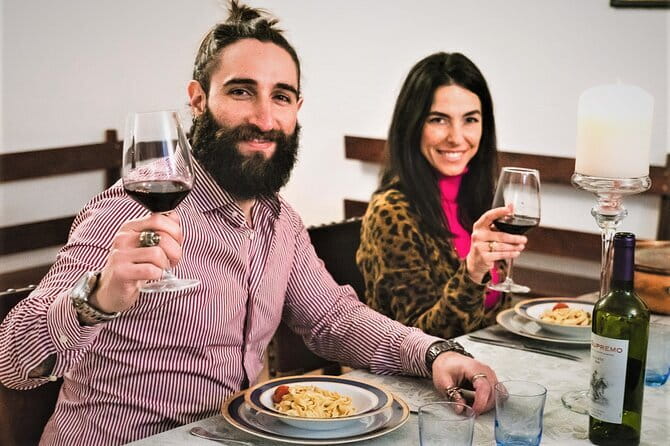
After meeting at Santa Croce, you go to a local home setting where the lesson begins. You’ll reach the cooking base via the area around Chiesa dei Santi Apostoli, then the class shifts from meeting to making.
This transition matters. You get to start in the iconic Florence center, then the class moves you into a more practical cooking space. You’re not spending the entire session walking around the city. Most of your time is spent on the food, where it counts.
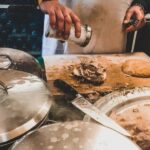
There’s also a theme in how the tour describes the kitchen: they emphasize old-world methods and are not relying on modern machinery to do the work for you. So expect that some steps are hands-on and tactile—kneading, shaping, filling, and portioning.
The Three Pastas You’ll Learn (Pici, Tagliatelle, Tortelli)
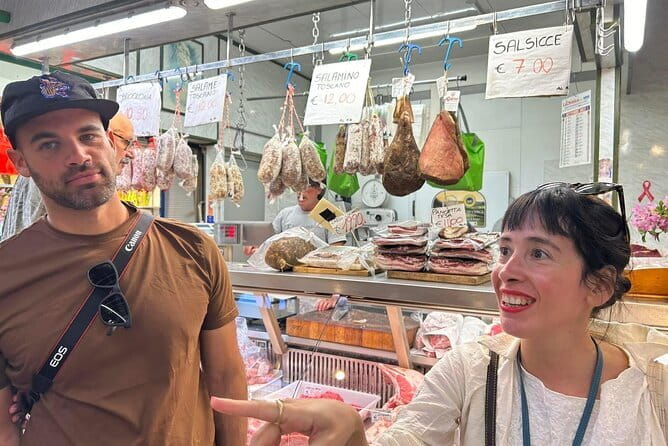
This is the heart of the class: three pasta types, each with a different technique and flavor direction. If you’re the kind of traveler who wants skills you can repeat later, this lineup helps because you won’t just learn one form.
Here’s what you’ll be making:
Pici (all’aglione) from Siena style
Pici are thick, handmade strands that feel rustic and satisfying. The “all’aglione” angle signals that garlic plays a starring role, so the pasta needs to hold its own with a bold, simple flavor. You’ll learn how to manage thickness and shape—because Pici are forgiving in the best way, but only if you’re consistent.
- The Best tour in Florence: Renaissance & Medici Tales – guided by a STORYTELLER
★ 5.0 · 12,316 reviews


Tagliatelle with mushrooms and sausage
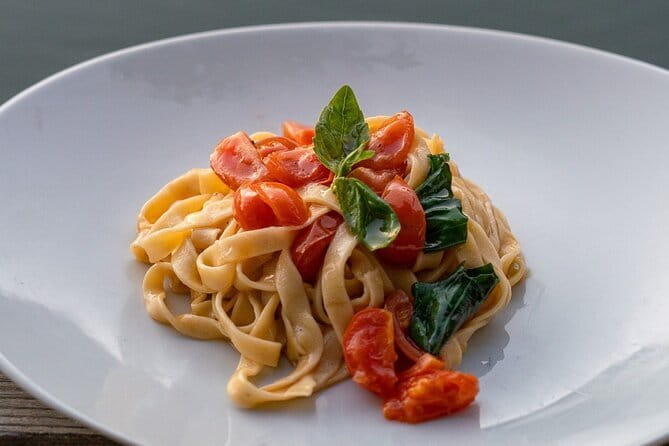
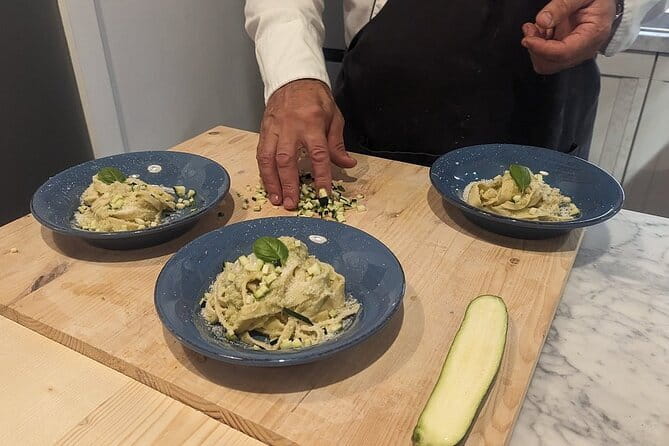
This one shifts from the rustic simplicity of Pici to a more classic, comforting pasta direction. Tagliatelle is all about cutting and shape—long ribbons that should hold sauce. The mushrooms and sausage combination is rich and savory, and that makes the pasta’s texture important. You’ll get a chance to see how your shaping impacts the way the filling and sauce feel on the plate.
Classic Tuscan Tortelli filled with potatoes
Tortelli are a different skill set entirely because you’re working with filling. A potato-filled tortelli teaches you portioning and sealing. Too little filling and it’s dry. Too much and it’s harder to close properly. This is the pasta that tends to feel the most “crafted,” and it’s often the one people remember most because the technique is so hands-on.
The big value here is not just that the pastas taste good. You’ll learn different mechanical skills: forming dough, shaping, and then filling and sealing. That’s a lot to get in one morning, and it explains why the class is structured around multiple courses instead of only one pasta station.
Wine Pairings: How Chianti Fits Each Pasta
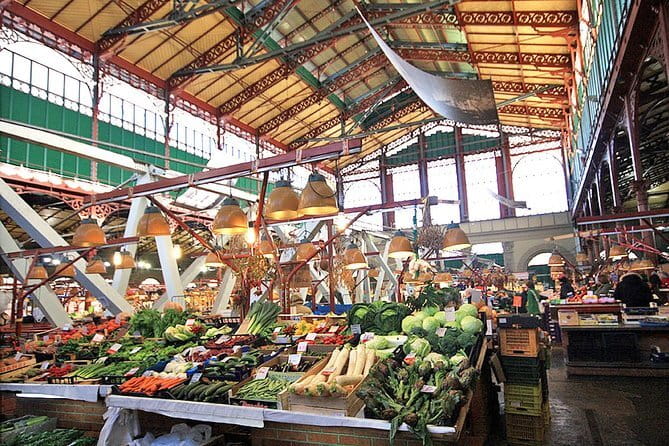
Food classes often treat wine like an afterthought. This one treats wine like part of the lesson. Each pasta type is paired with a different wine to enhance the flavor, and the overall focus is on Chianti wines.
Here’s why that’s genuinely useful for you. When you taste pasta in Italy, you notice that the pairing isn’t random. The wine choice changes the way you perceive fat, salt, and herbs, and it can make a filling feel lighter or a sauce feel deeper. In other words, you’re not just drinking because it’s included—you’re tasting a deliberate match.
Even if you’re not a wine nerd, you’ll get something practical out of this: a sense of what to pour at home when you cook something similar. And if you are a wine nerd, it’s a structured way to connect specific flavors on your plate to specific wine styles.
Homemade Dessert: The Sweet Finish You Make Together
After the main pasta work, the experience ends with a dessert prepared together. It’s not just a served sweet at the end; you help make it. That keeps the energy up and gives you a full arc: dough to filling to shaping to sauce, then the closing course.
This matters because it makes the class feel complete. You’re not racing to finish and then leaving immediately. The day closes with a shared final result, so your time in the kitchen feels like a real meal journey rather than a quick snack lesson.
The Florence Lunch That Makes This Feel Like More Than a Class
The final stop is in a typical Florence restaurant at Via Torta, 16r, 50122 Firenze FI. Lunch includes:
- an entry of traditional bruschettas
- homemade pasta
- two glasses of wine per person
- water and coffee
This is a big reason the value works. A lot of cooking classes charge a similar price but stop right after the cooking session, leaving you to scramble for lunch on your own. Here, lunch is built into the experience, and it matches the theme: Italian simplicity, made by people who know the routine.
The practical benefit for you is timing. You won’t have to decide where to eat right after a 4-hour cooking session. You already know what’s coming, and it’s the kind of meal that fits the context of what you just made.
It’s also a nice way to taste more pasta in a restaurant setting after learning the technique at the kitchen. You can compare: what you made hands-on versus what a kitchen does when it’s serving dozens of portions.
Price and Value: What $195.91 Is Really Buying
The price is $195.91 per person for about 4 hours 11 minutes, plus a lot of food and drink.
So what are you actually paying for?
- Instruction plus hands-on practice: You’re not just taste-testing; you’re learning multiple pasta techniques.
- Multiple courses: Pasta, paired wine tastings, and then dessert.
- A full sit-down lunch: Bruschettas starter, homemade pasta, two glasses of wine, plus water and coffee.
- Small group size: Max 8 people means more attention and a better chance to troubleshoot while you’re cooking.
In practical terms, this is the kind of experience that can replace two separate costs on your trip: a cooking workshop plus a restaurant lunch. If you’d otherwise spend money on a nice lunch and wine, this becomes less about the raw ticket price and more about convenience, structure, and a meal you’ll remember.
Who This Class Is Best For (and Who Might Want Another Option)
This works best if you want real skill, not only food photos. It’s also ideal if you like learning by repetition—three pasta types means you practice enough steps to feel changes in your own technique.
It’s also a good match for couples, friends, and small groups who want a shared activity during a short Florence stay. With a max of 8 people, it’s easier to feel like part of the group instead of an observer in the corner.
If you have dietary needs, you should ask ahead. One host experience described extra care for gluten and dairy free diners, but the safest move is to contact the operator before you arrive and be specific about your needs.
Who might skip it? If you’re looking for a walking tour, big sightseeing, or a mostly verbal history lesson, this will feel too hands-on and too food-focused. It’s a kitchen morning first.
Should You Book This Florence Pasta Class?
I think it’s an easy yes if you want one memorable “do it yourself” experience in Florence that ends with a real lunch and wine. The small group size, the three pasta formats, and the fact that lunch is included makes it feel like more than a cooking demo.
Book it if:
- you’re excited to shape pasta and learn technique you can repeat later
- you enjoy Chianti and want wine pairings that explain flavor choices
- you want lunch solved for you after the class
Consider another option if:
- you hate hands-on cooking and prefer watching
- you’re building a day around lots of movement and need a very flexible schedule
- you want something more focused on sightseeing than food
If you do book, show up on time, come with a good appetite, and plan your afternoon around having enjoyed a full kitchen-to-table meal.
FAQ
FAQ
What time does the pasta class start?
The start time is 9:30 am.
Where do I meet the group in Florence?
You meet at Santa Croce, in front of the statue of Dante Alighieri.
Where does the cooking class take place?
After meeting at Santa Croce, you go to a local home setting where the class begins around Chiesa dei Santi Apostoli.
How long is the experience?
It runs for about 4 hours 11 minutes (approximately).
What kinds of pasta will I learn to make?
You’ll learn to make three types of pasta: Pici (all’aglione), Tagliatelle with mushrooms and sausage, and classic Tuscan Tortelli filled with potatoes.
Are wines included, and how are they used?
Yes. Each pasta type is paired with a different wine, with Chianti wines mentioned as part of the experience.
Do we make dessert during the class?
Yes. The lunch ends with a homemade dessert prepared together.
What’s included in lunch?
Lunch includes bruschettas, homemade pasta, two glasses of wine per person, water, and coffee.
How big is the group?
The experience has a maximum of 8 travelers.
Is there a free cancellation option?
Yes. You can cancel up to 24 hours in advance for a full refund. If you cancel less than 24 hours before the start time, the amount paid is not refunded.
More Tour Reviews in Florence
- Tuscany Day Trip from Florence: Siena, San Gimignano, Pisa and Lunch at a Winery
★ 5.0 · 21,634 reviews - The Best tour in Florence: Renaissance & Medici Tales – guided by a STORYTELLER
★ 5.0 · 12,316 reviews