REVIEW · PERUGIA
Perugia Private Walking Tour with licensed guide
Book on Viator →Operated by Umbria con Me · Bookable on Viator
Perugia feels easier when someone tells you where to look. This private, English-offered walking tour focuses on real landmarks without the crowd squeeze, and you get a guide who can tailor the stories to what you care about. I like the private-group setup for questions and pace, and I also love the route that mixes the city’s big icons with the tucked-away layers like Rocca Paolina. One thing to consider: you’ll want good walking shoes for a smooth but active 2-hour stroll around uneven historic streets.
You start at Piazza Italia and work your way into the Rocca Paolina area, often described as the Perugia underground, then circle back through the city center for major sights. There’s also a stop at a classic traditional coffee shop for an espresso or cappuccino, topped with hand-whipped cream. The commentary is built around orientation and context, with practical insider tips for nearby sights and where to eat in Perugia.
In the past, guides leading this tour have included Michele, Paolo, Marco, Antonella, and Patrizia, and several of them are noted for clear explanations with humor. The walk ends back at the meeting point, so you can keep your afternoon flexible in Perugia’s historic core.
In This Review
- Key things to know before you go
- A private Perugia walk that gives you the lay of the land
- Piazza Italia and Rocca Paolina: starting in the Perugia underground
- Porta Marzia’s architecture and the route along the old walls
- Fontana Maggiore plus coffee: art, symbolism, and a reset in the middle
- Duomo di San Lorenzo: where the tour adds weight
- Arco Etrusco (of Augustus): the short but high-impact wall-door moment
- Price and value for your money in a 2-hour private tour
- Who should book this tour (and who might want something else)
- Should you book this Perugia private walking tour?
- FAQ
- How long is the Perugia private walking tour?
- Where does the tour meet?
- Is this tour private?
- What language is the tour offered in?
- How much does it cost?
- Are tickets or admissions included?
- Is food or drinks included?
- Do I get a mobile ticket?
- What is the cancellation policy?
Key things to know before you go
- Private group, licensed guide: just your group, with an official guide handling the storytelling and pacing.
- Rocca Paolina is the anchor: you get oriented fast with the Perugia underground route near Piazza Italia.
- Fontana Maggiore is central to the tour: you’ll focus on the famous marble fountain right in the heart of town.
- A coffee stop is part of the experience: espresso or cappuccino with hand-whipped cream at an old-school café.
- Admissions vary by stop: Rocca Paolina and Duomo are listed as included, while other monuments may not be.
A private Perugia walk that gives you the lay of the land
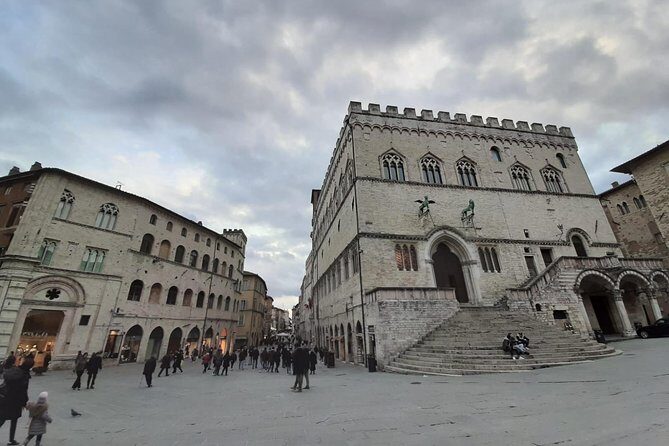
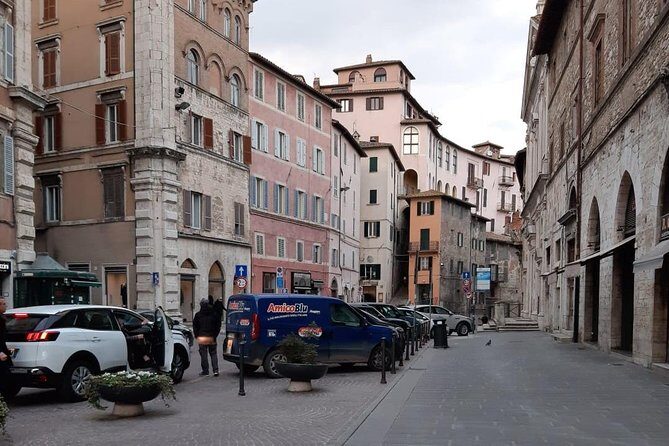
Perugia is one of those Italian towns where the landmarks feel close together but still hard to connect in your head at first. This tour helps you build that map quickly, starting from the busiest-feeling center and then guiding you through the city’s distinct “layers.”
I like that you’re not stuck listening to a generic script. Because it’s private, you can ask follow-ups as you go, whether you’re more interested in architecture, art details, or how Perugia’s history shows up in everyday street life.
Your guide also frames Perugia like a living city, not a museum room. The city has major seasonal pull, including the annual fall Chocolate festival and the summer Umbria Jazz festival, and the tour’s city-center focus matches that mood.
You can also read our reviews of more walking tours in Perugia

Piazza Italia and Rocca Paolina: starting in the Perugia underground
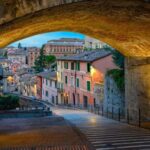
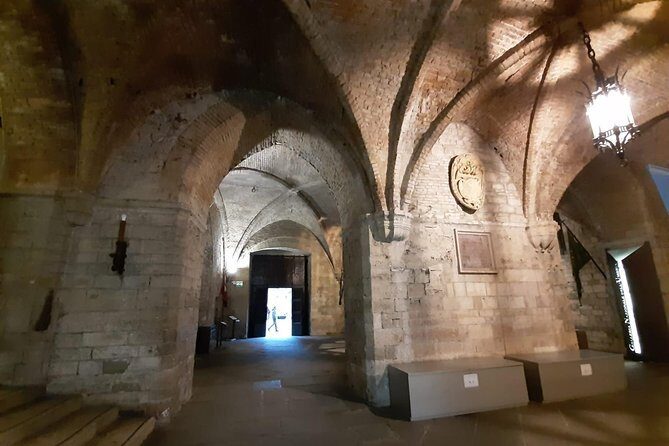
The tour kicks off at Piazza Italia (06121 Perugia PG), and from there you head toward Rocca Paolina. This is where Perugia gets interesting fast: instead of only seeing the surface streets, you also get a sense of the older city geometry that sits beneath modern life.
Rocca Paolina is right in the historical center, and there are a couple ways in mentioned for the fortress area—one at Porta Marzia and another connected to escalators linking Piazza Italia with Piazza Partigiani. That matters because it explains why this stop can feel like a quick “shortcut” to deeper context rather than a long detour.
Expect about 30 minutes focused here, with the experience structured so you come out feeling oriented. Good guides use this kind of stop to explain how cities change over time—what gets rebuilt, what gets repurposed, and what stays visible even when the streets evolve. You’re not just touring stone; you’re learning how the city’s layout shaped movement and defense.
If you’re the kind of traveler who wants your photos to have meaning, Rocca Paolina is a great starting point. It gives you a foundation before the tour shifts back to the squares and monuments.
Porta Marzia’s architecture and the route along the old walls
After Rocca Paolina, the tour includes Porta Marzia, which is built into the masonry of the fortress area. It’s described as a major work of 16th-century architecture (cinquecentesca) extended across the quarter of Colle Landone.
Even if you’re not planning to study architecture formally, this stop helps you “read” the city. Porta Marzia is the kind of place where a guide can point out how entrances and fortifications relate to broader topography—here, specifically the southern relief rising toward Perugia.
From a practical standpoint, this segment works well because it keeps you moving between major anchors without turning the day into a long bus-and-stop production. It’s also a reminder that Perugia’s historic core isn’t one monolithic “old city.” It’s multiple layers interacting: fortress structures, city gates, and older wall systems.
Fontana Maggiore plus coffee: art, symbolism, and a reset in the middle
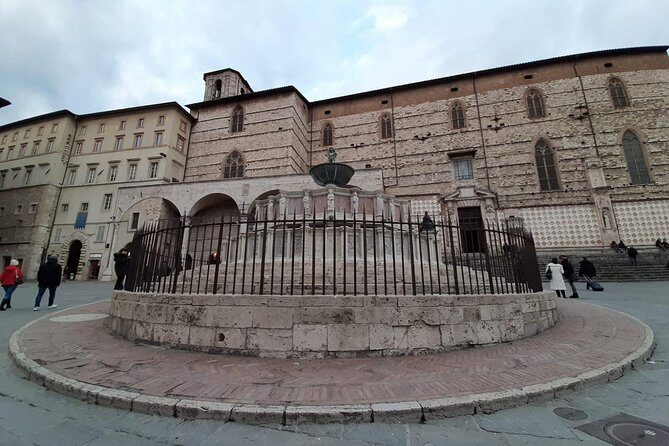
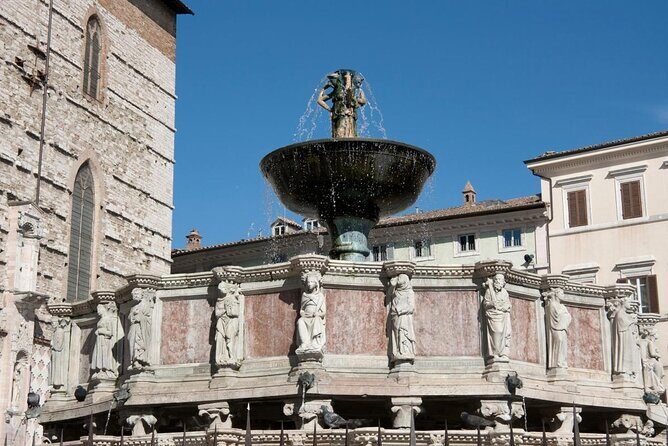
When the tour reaches Fontana Maggiore, it narrows in on one of Perugia’s most satisfying pieces of public art. The upper marble basin is described as twelve-sided, with twenty-four smooth panels of pink Assisi stone. Between those panels sit white Carrara marble statuettes set on ledges.
Here’s why this fountain is worth more than a quick look. The statuettes represent personages from the city’s history and legends, plus symbolic figures. So when your guide points out a few specific ones, the fountain stops being just pretty stone and becomes a kind of visual index to Perugia’s stories.
This stop is listed as 15 minutes, and it notes that admission is free. That’s a good value detail: you get a high-payoff landmark moment without spending time and money at the entrance window.
Just as important, there’s a coffee moment built into the flow. After you come back toward the city center, you stop at a traditional coffee shop for an espresso or cappuccino topped with hand-whipped cream. For me, this is the right kind of break: you refuel without losing your rhythm, and you also get a more local-feeling pause than a generic snack stop.
If your energy runs low while walking historic streets, this coffee break helps you stay present for the next set of sights.
Duomo di San Lorenzo: where the tour adds weight
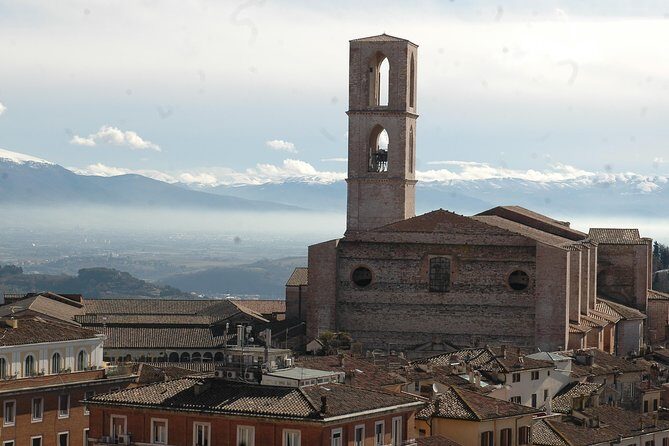
Next comes the Duomo, the Cathedral of St. Lawrence, located in the historic center on Piazza IV Novembre. The tour notes that its southern façade faces the square, so you’re positioned to take in how the cathedral visually anchors the space around it.
You’ll have about 20 minutes here, and the stop lists admission as included. That’s another value win because the cathedral visit is typically one of the best places to connect “what you saw” with “what it means.” A good guide will often help you understand why this cathedral matters in the city’s identity and how its placement influences the way people experience the piazza.
Even if you’ve seen Duomos in other parts of Italy, Perugia’s has a different feel because it sits inside a city that’s shaped by forts, gates, and layered development. The tour sets you up for that context before you reach the cathedral.
If you’re someone who likes to end a walk with a major landmark that feels grounded and final, this stop does the job.
You can also read our reviews of more guided tours in Perugia

Arco Etrusco (of Augustus): the short but high-impact wall-door moment
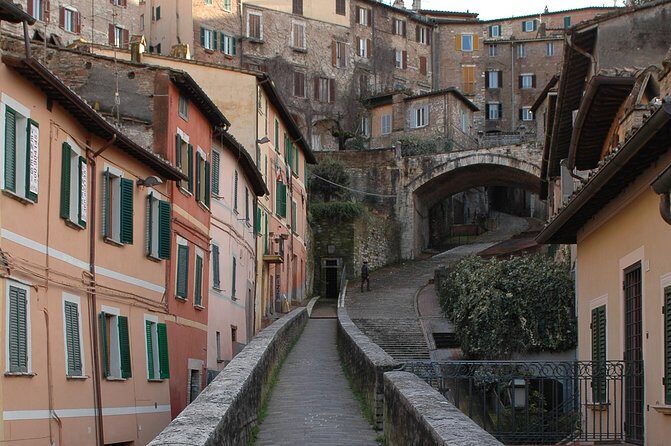
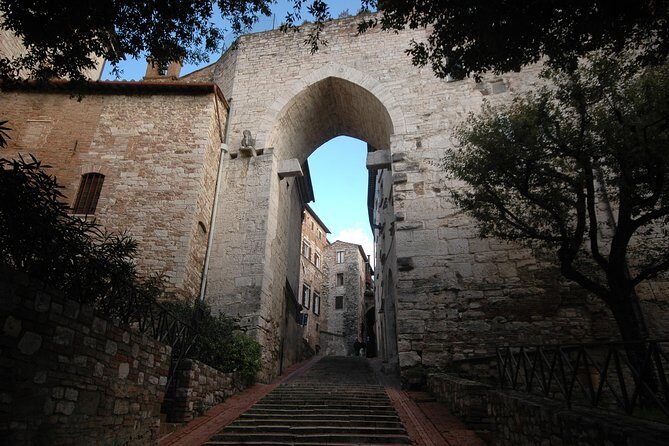
The final landmark stop is the Arco Etrusco, also known as the Arch of Augustus. It’s identified as one of seven doors in Perugia’s Etruscan walls, constructed in the second half of the 3rd century BC and later restructured from Augustus in 40 BC after the victory in the war of Perugia.
That timeline detail is exactly the kind of thing a guide can make stick. You look at a doorway-like structure and suddenly it reads like a historical document: older foundation, later political reshaping, and a city that kept rewriting its own defenses and symbols.
This stop is listed as about 10 minutes, and admission is noted as not included. So treat it like a concentrated “look-and-learn” moment—short, but memorable when the guide gives you the historical context.
By the time you finish here, the tour has taken you from fortress depths to symbolic fountain artistry to cathedral gravitas to an ancient wall feature. It’s a compact route, but the stops are chosen to show different kinds of power: military, civic/artistic, religious, and political.
Price and value for your money in a 2-hour private tour
At $144.18 per person for a 2-hour private walking tour, you’re paying for three things: licensed guidance, a private-group experience, and admission coverage for certain stops.
The value is strongest when you add up what you receive in-story, not just in entrances. Rocca Paolina and Duomo are listed as having admissions included, and Fontana Maggiore is listed as free. That means your money isn’t only going to commentary—it’s also helping cover access at the monuments where entry matters.
The private format also adds real value if you don’t want to share questions with strangers or if you have specific interests. You can steer the conversation toward what you want to notice, whether that’s symbolism in Fontana Maggiore or how gates like Porta Marzia fit into Perugia’s broader layout.
One more value angle: you’re also getting a practical orientation route. Instead of feeling like you only saw isolated highlights, you’ll come away with a sense of where key parts of town sit relative to each other, which makes planning the rest of your day easier.
Who should book this tour (and who might want something else)
This works especially well for you if:
- You want a private, guided approach rather than a large group script.
- You like art-and-history explanations tied to specific places like Fontana Maggiore and the Duomo.
- You want help turning a walk into a mental map of Perugia quickly.
You might consider a different option if you’re extremely sensitive to walking on uneven historic streets. This is still a walking tour with multiple landmark stops over roughly two hours, and comfortable shoes matter.
And because the tour is offered in English, I’d also pay attention if language fluency is crucial for you. There was at least one past experience that raised a concern about English comprehension, even though the provider’s response emphasized that guides speak excellent English. If English precision is a top priority, it’s smart to double-check what you’ll receive when you book.
Should you book this Perugia private walking tour?
Book it if you want to see Perugia’s key symbols in a smart order: fortress foundations first, then civic art at Fontana Maggiore, then the Duomo, with the Arco Etrusco and Porta Marzia completing the picture. For many people, that combination is the sweet spot between big sights and the “how the city works” context.
Skip it if you only want a casual stroll with zero structure, or if you’d rather explore at your own pace without guided admissions included at Rocca Paolina and the Duomo.
If you like walking tours that make landmarks feel readable, this one is a strong choice.
FAQ
How long is the Perugia private walking tour?
It lasts about 2 hours.
Where does the tour meet?
The meeting point is Piazza Italia, 06121 Perugia PG, Italy.
Is this tour private?
Yes. It’s a private tour/activity, and only your group participates.
What language is the tour offered in?
The tour is offered in English.
How much does it cost?
The price is $144.18 per person.
Are tickets or admissions included?
Rocca Paolina and the Duomo are listed as having admission included. Fontana Maggiore is listed as free, while Porta Marzia and the Arco Etrusco are listed as admission not included.
Is food or drinks included?
No. Food and drinks are not included.
Do I get a mobile ticket?
Yes, a mobile ticket is included.
What is the cancellation policy?
You can cancel for a full refund up to 24 hours in advance of the experience start time.