REVIEW · PERUGIA
Perugia: Entry Ticket and Guided Tour of Perugia Underground
Book on GetYourGuide →Operated by Secret Umbria · Bookable on GetYourGuide
Perugia’s past is literally under your feet. Perugia Underground takes you into the monumental Saint Lawrence Island complex under the Cathedral of Saint Lawrence, where you’ll trace the city’s story from the ancient world to the Middle Ages. You start at the cathedral cloisters and then head down about 15 meters to an archaeological route you can only visit with a guide.
I love two things right away: the layer-cake history (Etruscan, Roman, and medieval remains in one visit) and the ending VR experience that helps you picture what the area may have looked like. The tour is short—about 50 minutes—so it’s a focused hit of context without turning into an all-day project.
One consideration: the route has some flights of stairs, and it’s not suitable for people with significant mobility difficulties or wheelchairs. Also, the live guide is Italian, so plan to lean on the tablet translation if you don’t speak Italian.
In This Review
- Key highlights at a glance
- Perugia Underground: What 15 Meters Below Ground Really Means
- The Saint Lawrence Island Complex Under the Cathedral
- Etruscan to Medieval: How the Layers Tell Perugia’s Story
- The Cloister Start: Where You Begin Changes How Fast It Makes Sense
- VR Headset Finale: Seeing Perugia’s Past in 3D
- Practicalities That Affect Your Comfort (Stairs and Temperature)
- Price and Value: Is $14 Worth 50 Minutes Underground?
- Who This Tour Suits Best
- Should You Book Perugia Underground?
- FAQ
- How long is the Perugia Underground guided tour?
- Where is the meeting point for Perugia Underground?
- What language is the live guide?
- Is translation provided if I need English support?
- Does the ticket include the VR experience?
- Is Perugia Underground suitable for wheelchair users?
- What should I wear or bring for the underground area?
- Are pets, strollers, food, and drinks allowed?
Key highlights at a glance
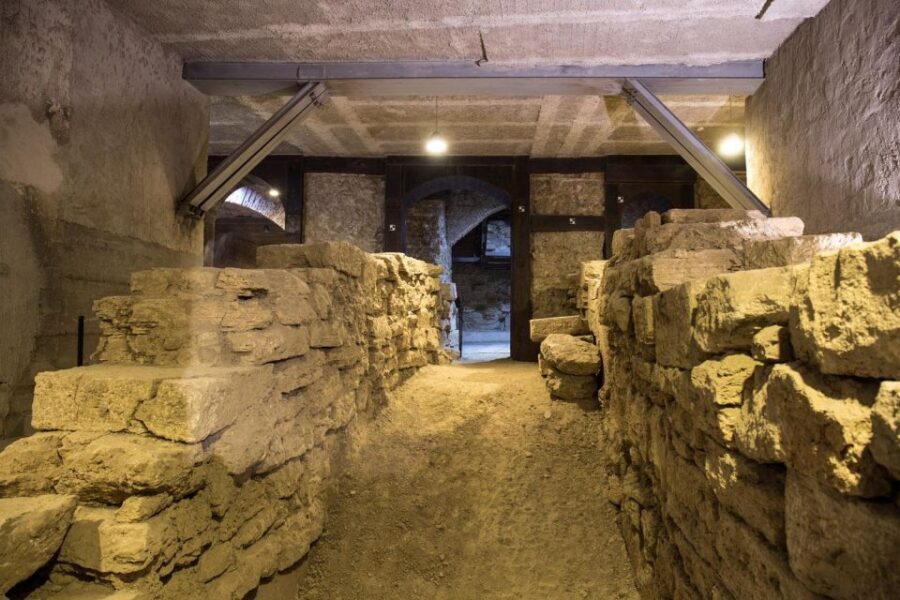
- 15 meters below the current cathedral level, in the Saint Lawrence Island complex
- Etruscan, Roman, and medieval remains shown on a guided route
- Guide-only access, which keeps the experience organized and interpretive
- VR at the end to help you “see” the city’s past in 3D
- Tablet translation available if you need English support
- Short, 50-minute format with ticket line skip
Perugia Underground: What 15 Meters Below Ground Really Means
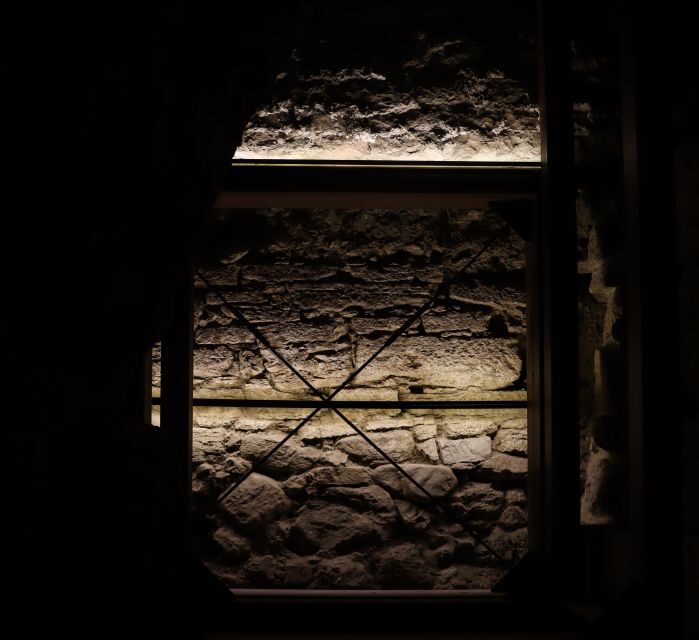
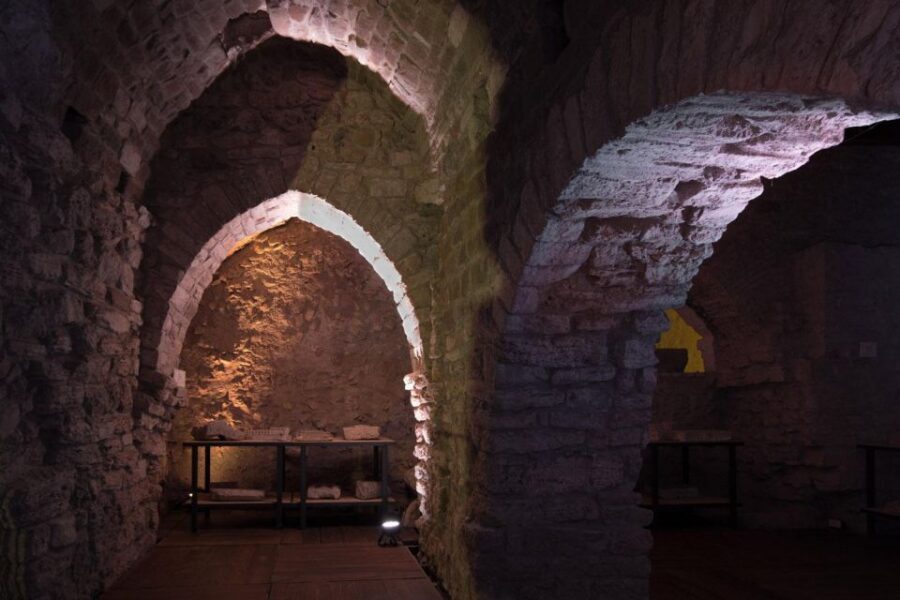
This is not a long, quiet museum stroll. You’re going down into an archaeological setting built underneath Perugia’s cathedral complex. The big promise here is altitude in reverse: you start at the cathedral cloisters and then reach about 15 meters below today’s level of the Cathedral of Saint Lawrence.
That depth matters because it changes the feel. The underground areas tend to be cool, and the experience becomes more physical and immediate. You also get a clearer sense of how a modern city can literally sit on top of older city layers—Perugia is a “stack,” not a single-era place.
The experience also has a good pace. At around 50 minutes, you won’t feel stuck. It’s enough time for the guide to connect the dots across eras without rushing you through so fast that nothing lands.
You can also read our reviews of more tours and experiences in Perugia

The Saint Lawrence Island Complex Under the Cathedral
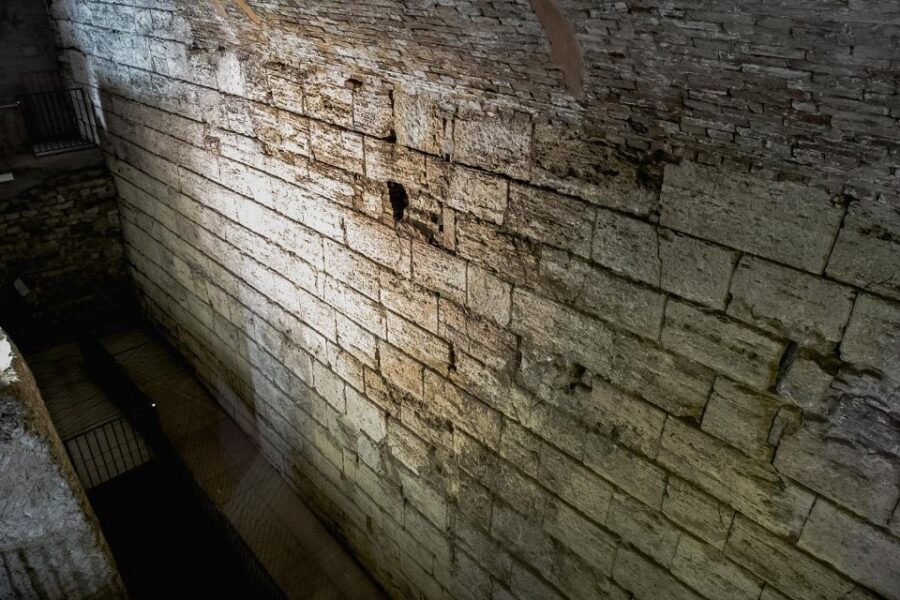
The setting is the star: the monumental complex of Saint Lawrence Island. This is the archaeological area known as Perugia Underground, and it’s part of the story of why the area around the cathedral has been such a long-term focal point.
You begin in the cloister of St. Lawrence Cathedral, then you’re guided along the archaeological path. Because it’s a route you can visit exclusively with guides, you don’t wander around guessing what you’re looking at. The guide’s job is to point out what each area represents, which is especially helpful when you’re seeing remains from different periods side by side.
There’s also a practical reason to like the organization: you’re not left to figure out how everything connects across centuries. The tour is structured to move you through the complex in a way that makes the layers understandable, not just visible.
Etruscan to Medieval: How the Layers Tell Perugia’s Story
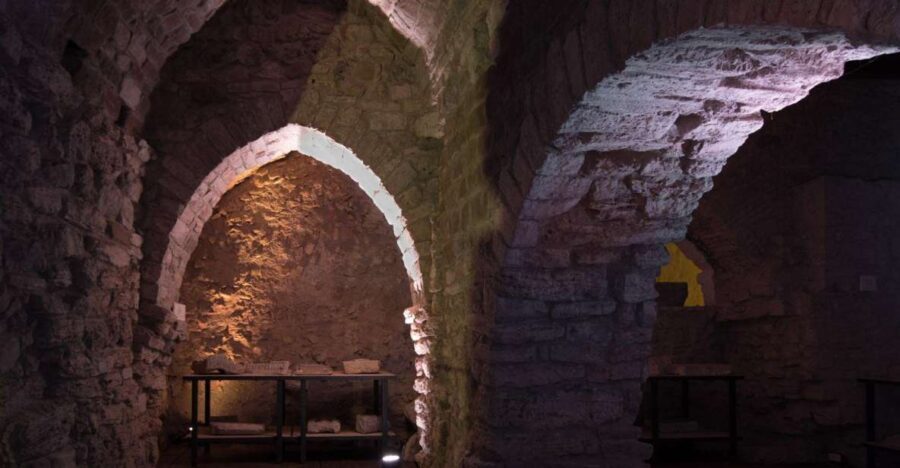
What I liked most is the clear “timeline in place” effect. You don’t just hear about Perugia in the abstract—you see how different civilizations left their mark, then you watch the narrative move forward.
The tour covers:
- Etruscan-era roots of the city
- Roman-era development and infrastructure
- Medieval remains and later phases of the complex
And the guide doesn’t treat the ruins as random fragments. You’ll hear the kind of historical connections that help you place what you’re seeing into a wider story of central Italy.
Some of the specifics you may hear about include the construction and advances attributed to the Etruscans, Roman life tied to roads and houses, and later historical episodes such as the siege of Perugia and the mention of Augustus and his gate. Even if you’re not a history deep-dive person, this kind of framing turns stone and walls into a timeline you can actually follow.
A useful detail: because the tour goes down into the hill and then back up conceptually through eras, it feels like you’re traveling backward in time. That’s the value. You leave with more than “pretty underground rooms.” You leave with a sense of how Perugia grew.
The Cloister Start: Where You Begin Changes How Fast It Makes Sense
Start matters here. Your meeting point is the ticket office and starting point in the cloister of St. Lawrence Cathedral.
You access the cloister through a large portal in Piazza IV Novembre, near the bookstore called Libreria delle Volte. This is one of those details that can save you stress: if you’re walking in circles, you’ll waste time. Get oriented before you commit to looking around.
Another plus: you get skip-the-ticket-line service. That helps when your day is already packed with Perugia stops and you’d rather not burn 30 minutes waiting for paperwork.
Also, remember this tour is guided and organized. That means arriving a few minutes early isn’t just polite—it makes it smoother. The meeting point is specific enough that I’d rather you be early than clever.
VR Headset Finale: Seeing Perugia’s Past in 3D
The VR portion is the tour’s smart closer. After you’ve walked through the remains and heard the timeline, the headset is there to connect the dots visually.
A few guides in the group style seem to use the VR moment to help people imagine:
- what spaces might have looked like in earlier periods
- how the underground complex could relate to the city above
- how the layers fit into a larger urban picture
In plain terms, VR is doing the job that photos often can’t. Stone stays stone, but VR can help you “place” it. Several participants specifically praised the VR experience as a great ending, including the way it ties into what you just learned.
If you’re the kind of traveler who learns best when you can see the before-and-after, you’ll probably find this part makes the whole visit click.
You can also read our reviews of more guided tours in Perugia





Practicalities That Affect Your Comfort (Stairs and Temperature)
Underground tours sound romantic. Then you remember stairs exist.
This one includes some flights of stairs along the route. The tour is not suitable for people with significant mobility difficulties and it’s not made for wheelchairs or strollers. If that’s you, skip it and look for an alternative Perugia option that’s flat and accessible.
Even if you’re fine on your feet, plan for the underground temperature. It’s not described as freezing, but you should expect a slight temperature change compared to the street. I’d bring a light layer or a small jacket. It’s the kind of small comfort that helps you focus on the ruins, not on wishing you were warmer.
Another practical note: the tour doesn’t allow food and drinks, and pets aren’t permitted. So keep snacks for later and travel light.
Finally, language: the live guide is Italian. The good news is you can get a tablet with translation of the visit (if necessary) and you’ll have a built-in way to follow along. If you read Italian slowly, rely on the tablet. If you don’t want to read much at all, just know that most of the spoken guiding will be in Italian.
Price and Value: Is $14 Worth 50 Minutes Underground?
At $14 per person for about 50 minutes, this can be strong value—especially for an archaeology experience that includes both a guided interpretation and technology.
Here’s why the math works:
- You’re paying for a live guide in a setting where context matters.
- You get a translation tablet, which helps make the tour usable even if you don’t speak Italian fluently.
- You also get a VR experience, which is extra production value layered on top of the walk.
Underground experiences can be expensive in many parts of Europe, and this one is positioned as a short tour rather than a long ticket that eats half your day. If your schedule is tight, the 50-minute length can be a feature, not a compromise.
The real question for value isn’t only price. It’s fit:
- If you want history you can walk through, it’s a great deal.
- If you hate reading translations and you also want a fully English spoken tour, you might feel less satisfied.
Who This Tour Suits Best
I think this works best for travelers who:
- like architecture + history more than generic sightseeing
- want a structured story across eras (Etruscan to medieval)
- enjoy short tours that don’t steal your whole afternoon
- appreciate tech add-ons when they actually support learning (VR here is part of the point)
It’s also a nice pairing with other Perugia “above ground” stops. Some visitors even use this as a preview for later forts and viewpoints, because once you understand the underground layers, the city above feels more connected.
If you need step-free access, I’d skip this one. The stairs route is a dealbreaker for many mobility needs.
Should You Book Perugia Underground?
Yes, if you want a compact, guided, multi-era history experience in the coolest possible setting: under a cathedral.
Book it if:
- you’re curious about how Perugia evolved over 2,500+ years
- you like the idea of seeing Etruscan, Roman, and medieval remains in one route
- you enjoy a short tour with a VR finale that turns explanations into images
Skip or choose another option if:
- you can’t handle stairs and rough mobility along the route
- you strongly prefer a fully English spoken guide and don’t want to rely on a tablet
If you do book, come a few minutes early at the cloister area near Libreria delle Volte, bring a light layer for the underground coolness, and treat the VR as the last step of a timeline—because that’s when the whole visit makes the most sense.
FAQ
How long is the Perugia Underground guided tour?
The tour lasts about 50 minutes.
Where is the meeting point for Perugia Underground?
Meet at the ticket office and starting point in the cloister of St. Lawrence Cathedral. The cloister is accessed through a large portal in Piazza IV Novembre next to the bookstore Libreria delle Volte.
What language is the live guide?
The live tour guide is Italian.
Is translation provided if I need English support?
Yes. A tablet is provided with translation of the visit if necessary.
Does the ticket include the VR experience?
Yes. The experience includes a VR headset segment at the end of the tour.
Is Perugia Underground suitable for wheelchair users?
No. The route is not suitable for people with significant mobility difficulties and is not suitable for wheelchair users due to stairs along the route.
What should I wear or bring for the underground area?
Bring a garment to protect yourself from the slight temperature change underground.
Are pets, strollers, food, and drinks allowed?
Pets are not allowed. Baby strollers are not allowed. Food and drinks are not allowed.