REVIEW · PERUGIA
Perugia and Assisi Full Day Tour from Perugia
Book on Viator →Operated by Umbria con Me · Bookable on Viator
One day, two hill towns. This is a tight loop through Etruscan and Roman Perugia and UNESCO Assisi, with Giotto frescoes waiting at the end. I like that the day mixes big-name art with real city atmosphere in between. The catch: it’s a lot of walking, and the basilicas have a strict dress rule (no bare shoulders or knees).
I also like that the group stays small, capped at 15. That makes it easier to move at a human pace—especially around steps and crowded church entry points. You’ll ride between cities by van, so the logistics stay simple.
Plan on starting at 10:30 am at Piazza Italia, 1860 in Perugia. Bring a light layer if it’s cool or damp, and wear clothing that works for churches. On Sundays and major holidays, guided entry inside the Basilica of St. Francis isn’t allowed, so you’ll get outside orientation and enter on your own in silence.
In This Review
- Key points to know before you go
- Getting your bearings in Perugia’s old center
- Fontana Maggiore to Duomo: Perugia in a compact walking loop
- Fontana Maggiore: the city’s sculpted centerpiece
- Rocca Paolina: a fortress inside the city
- Duomo (Cathedral of St. Lawrence): ancient foundations under later faith
- Santa Chiara: Saint Clare’s resting place
- Santa Maria sopra Minerva: an ancient temple still in use
- Arco Etrusco: the 11-meter reminder of Etruria
- Lunch pause: what’s on you (and how to handle it)
- Van ride to Assisi: why the change feels immediate
- Basilica di San Francesco: Giotto frescoes and the best way to see them
- Entrance fee reminder
- Steps, direction, and how your guide can help
- Sunday and holiday rule: inside can change
- Timing, walking level, and dress code that you can actually plan for
- Dress code: shoulders and knees are mandatory
- Price and value: is $385.32 fair for this kind of day?
- Who should book, and who should skip
- Should you book the Perugia and Assisi full day tour?
- FAQ
- What time does the tour start, and where do we meet?
- How long is the tour?
- Is lunch included?
- Are entrance fees included for the stops?
- Is there a dress code?
- What happens if I’m visiting on a Sunday or holiday?
- How big is the group?
- Is there transportation between Perugia and Assisi?
Key points to know before you go
- Cap of 15 people keeps the day feeling personal instead of rushed
- Fontana Maggiore and Rocca Paolina give you Perugia’s identity fast
- Arco Etrusco (3rd century BC) is a serious, well-preserved Roman-era statement
- Assisi’s Basilica of St. Francis is the art “anchor” of the whole trip
- Dress code enforcement is real, with shoulders and knees required
- Sunday/holiday rule changes how you experience the Basilica of St. Francis
Getting your bearings in Perugia’s old center
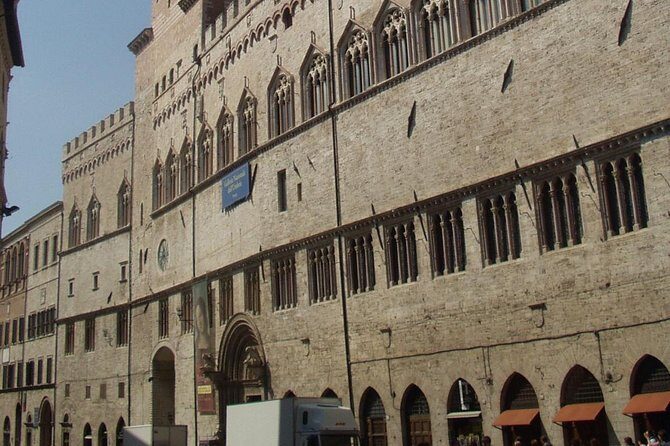
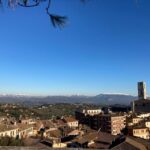
Perugia is built on slopes above the Tiber, so your first minutes are about orientation. The tour begins with a walking start from Piazza Italia, then you’ll work your way through old Perugia streets with short stops that explain what you’re seeing.
This part feels like a guided “how this city grew” lesson. You’ll also get a chance to browse local handicraft shops and wander typical little alleys, which is where Perugia starts to feel lived-in rather than staged.
You’ll notice the day’s rhythm right away: short visits, quick context, then you’re moving again. That’s why this itinerary works well for people who want a lot of highlights in only around six hours.
You can also read our reviews of more tours and experiences in Perugia
Fontana Maggiore to Duomo: Perugia in a compact walking loop
Perugia’s historic center shows layers: Etruscan foundations, Roman structures, and medieval power. The best way to experience it is to let the guide connect the dots as you go, rather than trying to read everything on your own.
Fontana Maggiore: the city’s sculpted centerpiece
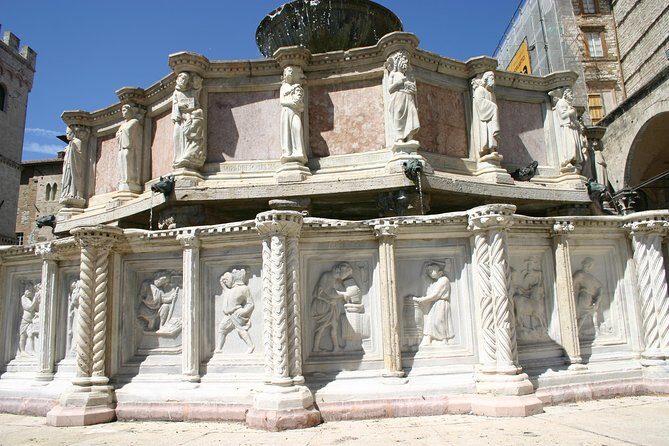
The Fontana Maggiore stop is quick—about 15 minutes—but it’s loaded with detail. The upper marble basin has twelve sides and is divided into panels made with pink Assisi stone and white Carrara marble statuettes. The figures mix people from Perugia’s stories and symbolic references, so even from a short look you’ll get a sense of how Perugia tells its own myths.
Admission here is free, so it’s a low-effort stop that pays off.
Rocca Paolina: a fortress inside the city
Next comes the Rocca Paolina, the Paolina Fortress. This is right in the historical center, and you can enter either via a door at Porta Marzia or via the escalator connection between Piazza Italia and Piazza Partigiani.
You’ll spend about 30 minutes here, and entrance is included. This isn’t just “a building with walls.” It’s a reminder that Perugia’s medieval defenses were built into the city’s daily life, not far away from it.
Practical tip: if you’re sensitive to stairs, plan to take your time through this stop. The tour’s small size helps, and guides tend to manage pacing well.
Duomo (Cathedral of St. Lawrence): ancient foundations under later faith
The Cathedral of St. Lawrence sits on Piazza IV Novembre, facing the square with a southern façade. The key idea is that an early church dedicated to St. Lawrence was built in the 9th century on top of an older Etruscan-Roman forum. That overlap is why the Duomo matters: you’re standing on layers, not a single era.
You’ll have around 20 minutes and entrance is included. This stop is a good breather between other quick hits, because the setting gives you room to regroup and reset your eyes.



Santa Chiara: Saint Clare’s resting place
Santa Chiara Basilica is dedicated to Saint Clare of Assisi, who was a follower of St. Francis and the founder of the Order of Poor Ladies (known today as the Order of Saint Clare). The church contains her remains, which gives the stop extra emotional weight without needing long explanations.
Admission is free. The time you spend here will depend on your pace, but it’s short and focused.
Santa Maria sopra Minerva: an ancient temple still in use
Santa Maria sopra Minerva is where you switch from medieval and religious spaces into something more Roman. The original Temple of Minerva dates to the 1st century, and it later became the church you see now—built in 1539 and renovated in Baroque style in the 17th century.
Entrance is included, and you’ll have about 20 minutes. The practical value here is that it shows you how buildings keep getting reused in Italy. You’ll see Roman structure survive, then get reshaped by later eras.
Arco Etrusco: the 11-meter reminder of Etruria
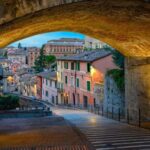
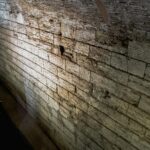
The Etruscan Monumental Arch (Arco Etrusco) is one of those stops that feels more impressive once you’re standing next to it. It’s north-oriented, part of the first city walls, and dates to the 3rd century BC.
It’s about 11 meters high, in excellent preservation, and is considered the most impressive of all ancient Etruria. You only get around 15 minutes here, but that’s enough to look up, notice the scale, and let the guide explain why it’s such a big deal.
Admission is free, so it’s a highlight you don’t have to budget extra for.
Lunch pause: what’s on you (and how to handle it)
After the Perugia walking portion, you’ll have a lunch break in between cities. Lunch is not included, so this is your planning moment.
Because you’re on a fixed schedule, I suggest you choose something close to where you can comfortably rejoin the group and keep moving. If you like local simplicity, look for a place with fast service rather than a long sit-down—this day is about momentum.
One thing I like about the structure is that you don’t lose the whole afternoon to eating. You get fed, then you’re off to Assisi for the main art pay-off.
Van ride to Assisi: why the change feels immediate
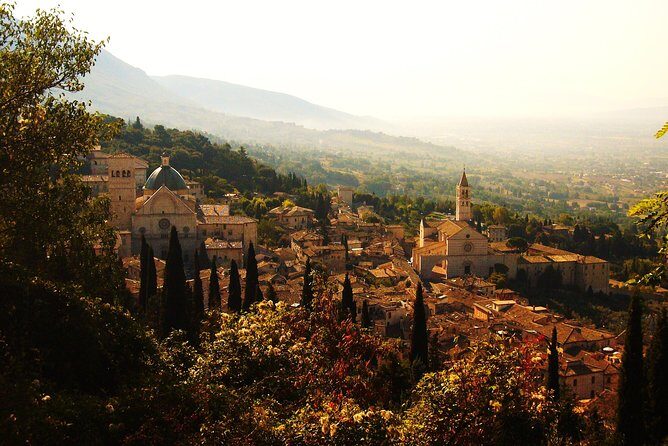
The tour uses a van with a driver to move you between Perugia and Assisi. That matters more than it sounds, because Umbria hill towns can be slow to navigate on your own.
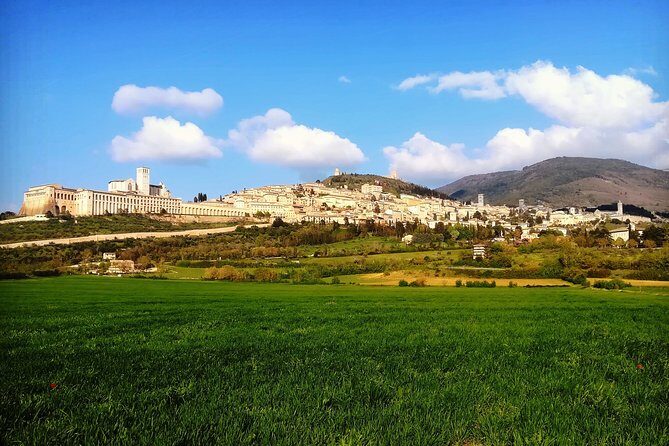
Once you’re in Assisi, the vibe shifts fast. The streets feel more pilgrimage-focused, and the pace slows just enough that you can take in the basilica complex without feeling frantic.
This segment also helps if you’re trying to do the day without turning it into a self-planned route hunt. You’ll spend your energy on sights, not on figuring out what bus goes where.
Basilica di San Francesco: Giotto frescoes and the best way to see them
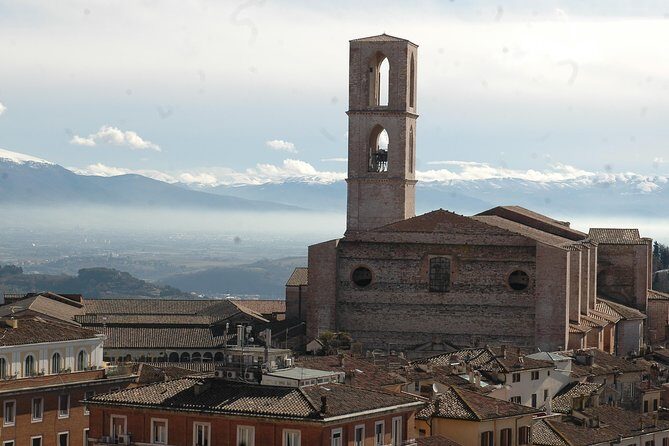
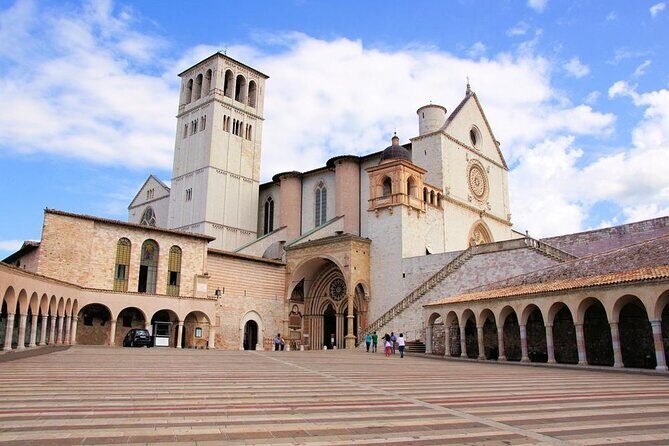
Assisi’s Basilica of Saint Francis is the big anchor of the whole tour. You’ll spend about 45 minutes at the Basilica Papale e Sacro Convento di San Francesco d’Assisi, and this is where you’ll connect with the masterpiece fresco tradition linked to Giotto (13th–14th century).
This stop isn’t only about looking at art. It’s also about context—how St. Francis’s legacy shaped Assisi into a world heritage site and a continuing spiritual destination. The guide’s job here is to point out what matters visually, and also what to notice in the setting and layout so the time doesn’t go to wandering.
Entrance fee reminder
The admission ticket for the Basilica of St. Francis is not included. The cost listed is €3.00 per person.
Steps, direction, and how your guide can help
This basilica complex can involve lots of steps and movement. One smart approach some guides use is planning the flow so you don’t end up walking the longest route back and forth. If you’re worried about stamina, tell your guide early so the route can be adjusted.
Sunday and holiday rule: inside can change
There’s an important scheduling wrinkle. On Sundays, big Catholic holidays, and national holidays, guided tours inside the Basilica of St. Francis are forbidden. In those cases, your guide explains things from outside, and you enter alone in silence.
That’s still a meaningful experience, just with a different structure. If your dates fall on one of these days, plan mentally for less commentary inside.
Timing, walking level, and dress code that you can actually plan for
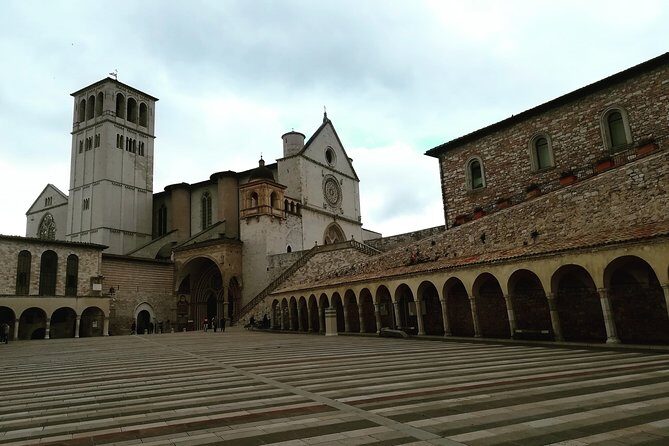
The tour asks for moderate physical fitness. That’s your signal to expect steps, uneven pavement, and some uphill walking in both cities.
The good news: small group size helps a lot. When you’re only up to 15 people, it’s easier to pause, regroup, and move at a pace that feels realistic.
Dress code: shoulders and knees are mandatory
This is non-negotiable. You need shoulders and knees covered for places of worship and selected museums. That means no shorts and no sleeveless tops for either men or women.
Also note the consequence: if you don’t meet the rule, you may be refused entry. I’d rather bring a light scarf or layer than gamble at the door.
Price and value: is $385.32 fair for this kind of day?
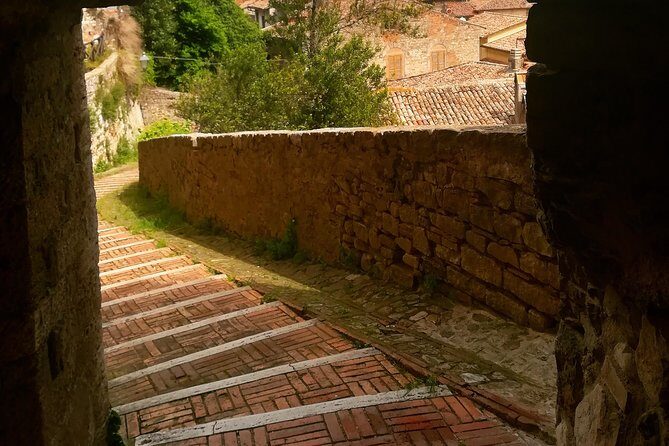
At $385.32 per person (about six hours), the price isn’t low. So you should judge value by what’s included and what that saves you.
Here’s what you get for the money:
- A professional local guide for the walking tour and the historic context
- Van transfer between Perugia and Assisi with a driver
- Entrances included for some major stops (Rocca Paolina, Duomo, Santa Maria sopra Minerva)
- Several additional sights are free to enter (Fontana Maggiore, Arco Etrusco, Santa Chiara)
- English language service
- A group cap of 15, which typically reduces waiting and crowd friction
What you pay extra for:
- Lunch (not included)
- The Basilica of St. Francis admission ticket (€3.00 per person)
For the kind of highlights you’re packing into one day—Roman and Etruscan Perugia plus Giotto-era frescoes in Assisi—this price starts to make sense if you want guidance and smooth pacing rather than self-planning.
If you’re traveling with a small group of your own, this could still be a smart deal. If you’re very price-sensitive and willing to manage your own museum timings, you might spend less on a self-guided approach—but you’ll lose the “what you’re looking at and why it matters” part.
Who should book, and who should skip
This tour fits best if you:
- Want to see both Perugia and Assisi in a single day
- Care about art and architecture across eras (Etruscan, Roman, medieval, Renaissance)
- Prefer a small group with an actual guide over a big-bus crowd
- Are comfortable with moderate walking and steps
- Can follow the church dress code
Skip it (or at least consider alternatives) if you:
- Have mobility limits that make lots of steps difficult
- Hate strict dress requirements and don’t have a workaround layer
- Want a long, slow lunch with lots of downtime
- Are traveling on a Sunday or major holiday and need guided commentary inside the Basilica of St. Francis (because that changes)
Should you book the Perugia and Assisi full day tour?
If your goal is a well-paced highlight day with real guidance, I think this is a strong choice. The Perugia portion gives you major anchors like Fontana Maggiore, Rocca Paolina, and the Arco Etrusco, then Assisi delivers the art hit at the Basilica of St. Francis with Giotto frescoes.
Book it if you’re excited to move through layers of Umbria and you can handle walking plus church attire rules. Skip it if you need a low-step day or you’re planning to ignore the dress code.
If you do book, I’d go in with one mindset: this is a fast, focused “see and understand” day. When you keep that in mind, the time flies—and the two towns start to feel connected rather than just visited.
FAQ
What time does the tour start, and where do we meet?
The tour starts at 10:30 am. You meet at Piazza Italia, 1860, 06121 Perugia PG, Italy.
How long is the tour?
The duration is about 6 hours.
Is lunch included?
No. Lunch is not included, and you’ll have a lunch break during the day.
Are entrance fees included for the stops?
Some entrances are included and some are free. The Basilica Papale e Sacro Convento di San Francesco d’Assisi has an admission fee of €3.00 per person that is not included.
Is there a dress code?
Yes. You must cover shoulders and knees for churches and selected museums. Shorts or sleeveless tops are not allowed.
What happens if I’m visiting on a Sunday or holiday?
On Sundays, big Catholic holidays, and national holidays, guided tours inside the Basilica of St. Francis are forbidden. The guide explains from outside, and you enter alone in silence.
How big is the group?
The tour has a maximum of 15 travelers.
Is there transportation between Perugia and Assisi?
Yes. The tour uses a van with a driver for the transfer between Perugia and Assisi.