REVIEW · PERUGIA
Private Bevagna Walking Tour with official guide
Book on Viator →Operated by ARTexplorer Italy · Bookable on Viator
Bevagna feels like Umbria without the noise. On this private walking tour with an official guide, you get a focused 2-hour stroll through a medieval walled town where everyday life still shows up in the town square. I love two things most: the chance to learn history in plain language from an official guide, and the way the walk connects 12th-century churches and Roman remains to what you see right now. One possible drawback: Bevagna is small, so if you only want big-ticket attractions, you may find it more atmosphere than spectacle.
Because it’s private, you set the rhythm. You can ask questions, stop for photos, and linger at the bits that catch your eye—without feeling rushed or squeezed into someone else’s pace. If your group wants a calm, local-feeling introduction to central Umbria (Perugia area), this tour fits very well.
In This Review
- Key Highlights You Should Care About
- Where Bevagna Fits in Umbria (and why it’s worth your time)
- Starting at Piazza Giuseppe Garibaldi: get your bearings fast
- Piazza Silvestri: the town’s stage, 13th century to 19th century
- The 12th-century churches: more than pretty stone
- Roman remains in the middle of town: seeing the layers
- How a private guide changes your whole experience
- The local square vibe: the everyday that makes it feel real
- Duration and pacing: a good 2-hour overview
- Price and value: when $266.48 makes sense
- Practical logistics: what you need to know before you go
- Who should book this Bevagna private tour
- Should you book the Private Bevagna Walking Tour?
- FAQ
- How long is the private Bevagna walking tour?
- Where does the tour start in Bevagna?
- Does the tour end back at the meeting point?
- How many people can be in a group booking?
- Is there an admission ticket included?
- What is included in the tour?
- What will we see during the walk?
- Is the tour private?
- What kind of ticket does the booking use?
- When should I book this tour?
Key Highlights You Should Care About
- Private group, official guide: You’re not sharing your questions with strangers.
- Medieval + Roman, close together: Churches, Roman ruins, and town landmarks in one compact loop.
- Piazza Silvestri and its key landmarks: You’ll anchor the walk in the heart of town.
- Roman bath mosaic and other ruins: Expect details that reward slow looking.
- Local rhythm over crowd energy: Great for off-peak visits or if you prefer authenticity to lines.
Where Bevagna Fits in Umbria (and why it’s worth your time)
Bevagna is in Umbria, just off the map for most day-trippers based in Perugia. It sits in a wine area connected with Montefalco’s red wines, so even if you’re not doing a wine stop, the region’s identity is part of the backdrop. What you’ll notice most, though, is the town’s feel: compact, walkable, and built for daily routines.
On this tour, you’re not just ticking boxes. You’re learning how a medieval town still functions—how residents move through the squares, where people gather, and how older structures shape the streets you’ll walk. That’s the real value here: you end up seeing Bevagna as a living place, not a museum room.
And yes, you’ll see why filmmakers and TV crews have been drawn here. The stonework, the intact feeling of older walls, and the mix of medieval and Roman fragments give it strong visual character.
You can also read our reviews of more walking tours in Perugia

Starting at Piazza Giuseppe Garibaldi: get your bearings fast
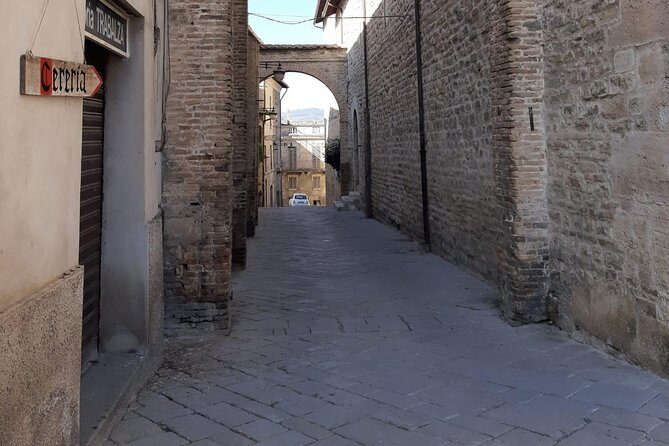
The meeting point is Piazza Giuseppe Garibaldi, 9, Bevagna. This is a practical start: you’re positioned to walk into the historic core without complex routing or confusing transfers. The tour also ends back at the same meeting point, so you’re not left wondering where your route stops.
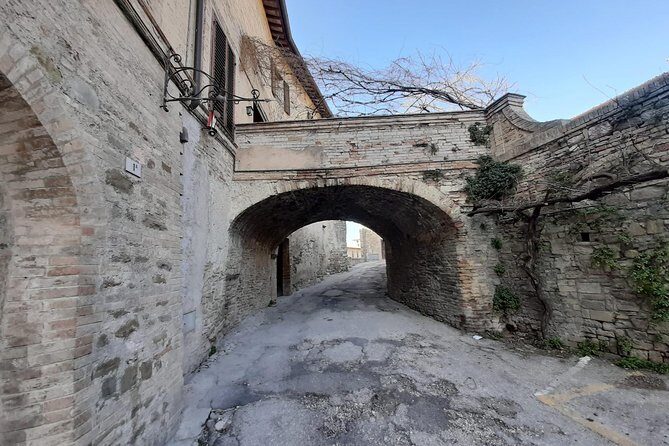
From the start, you should expect a comfortable walking pace. Since this is private, you can slow down for alley photos or speed up if your group is eager to get to the church stops. Bring good walking shoes. Bevagna’s streets are old and stone, which can feel great underfoot when you’re steady, but it’s not the same as smooth sidewalks.
If you’re arriving by car, plan to park with intention. One helpful real-world tip from past visitors: there’s an ample parking area where a camper can park for free even at night, and the historic center is a short walk away. Even if you’re not using a camper, that idea matters: you can find an easy base and then walk in.
Piazza Silvestri: the town’s stage, 13th century to 19th century
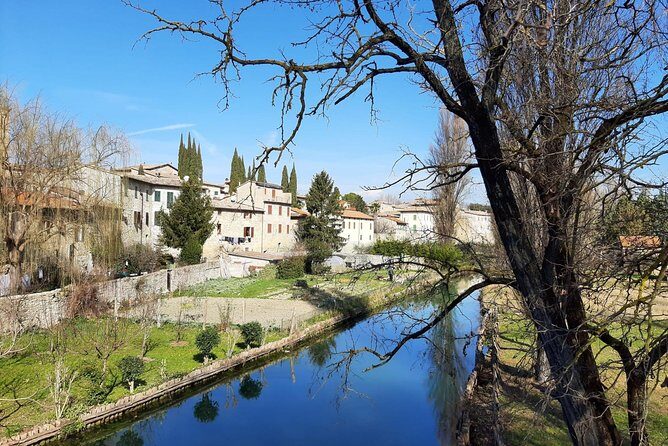
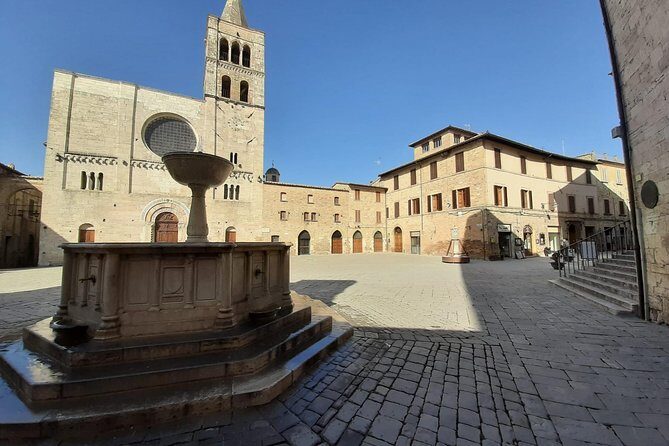
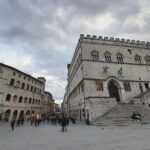
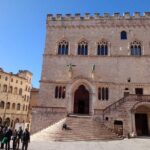
Stop one is Bevagna itself, anchored around Piazza Silvestri. This is where the town’s story becomes visible. The square includes an old 13th-century government building, and it links eras through the presence of the Teatro Torti, which is from the 19th century.
I like how this kind of start works. You’re not immediately chasing random sights. You begin where people actually gather, then you learn how power, culture, and community evolved around that space. A square is also where you can notice details quickly: street layout, sight lines to churches, and the way the town opens and narrows as you walk deeper.
If your group enjoys history but hates lectures that wander, you’ll appreciate how this tour uses the buildings as anchors. The guide helps you read the town like a map.
The 12th-century churches: more than pretty stone
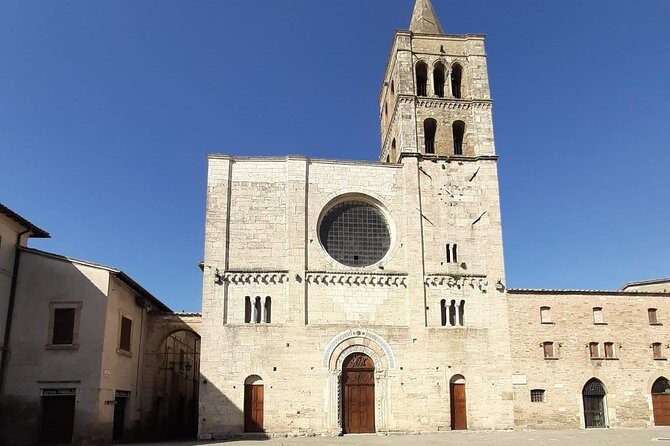
A walking tour stands or falls on its church stops, and here you get two: the 12th-century church of Saint Michael and the 12th-century church of Saint Silvester. That matters because you’re not just looking at one “wow” façade and moving on. Two churches in a compact area gives you contrast—different architectural choices, different visual details, and a clearer sense of what medieval religious life looked like in Bevagna.
Here’s what you can do to make the most of this part: don’t just photograph the exterior. Pause at doorways, look for worn edges and masonry textures, and listen to what the guide points out. Even without entering every space, you can tell that these buildings were designed to last and to frame community life.
Possible drawback to keep in mind: if you’re expecting a lot of interior time at large museums, the tour’s focus is more on guided viewing and storytelling than on long indoor visits. The duration is about 2 hours, so the guide will prioritize what gives you the best overview.
Roman remains in the middle of town: seeing the layers
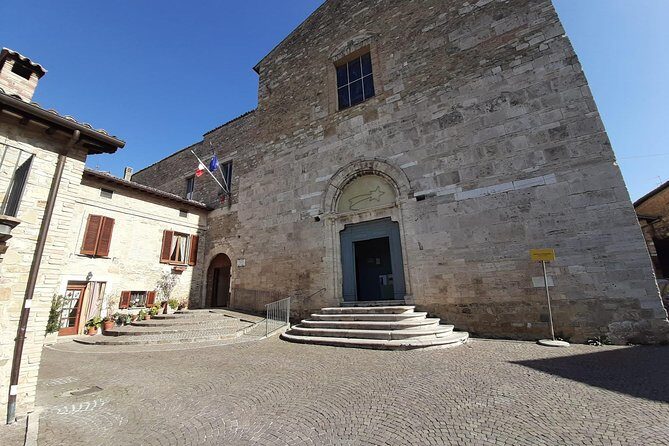
Bevagna doesn’t separate its time periods into separate stops. You’ll find Roman remains mixed into the same walking circuit as medieval churches and town squares. One of the specific highlights is the Roman bath’s mosaic.
This is a great stop for a couple reasons. First, mosaics reward close looking, and your guide can help you notice patterns and meaning instead of just seeing pretty tiles. Second, it reinforces the tour’s big idea: the town you’re walking today sits on a much older base.
You may also encounter other Roman elements such as the Roman amphitheater and a medieval house, depending on how the route is handled. The key is that the guide connects what you’re seeing—stone, ruins, street placement—to why the town developed the way it did.
If your group loves “how did this place work back then?” questions, Roman remains are perfect material. They naturally lead to talks about daily life: public spaces, bathing culture, performance spaces, and the practical stuff people needed.
You can also read our reviews of more guided tours in Perugia


How a private guide changes your whole experience
This tour is private for your group only, up to 15 people per booking, and it’s guided by an official guide. That structure changes what the visit feels like.
With a private setup, you can:
- Ask follow-up questions without worrying about slowing down others.
- Adjust the pace if one person wants extra time on the church details.
- Get clearer answers about what matters most in Bevagna, not just a quick list.
I also like that the guide’s job is to make connections. In a small town, it’s easy to see several beautiful places and still feel like you didn’t understand them. A good guide closes that gap by giving you a framework: where you are, what timeframe you’re in, and what to notice next.
This kind of tour is especially good when your group has mixed interests: one person might love architecture, another history, and another just wants to know what life looks like in town. The private format helps the guide tailor the pace to the group.
The local square vibe: the everyday that makes it feel real
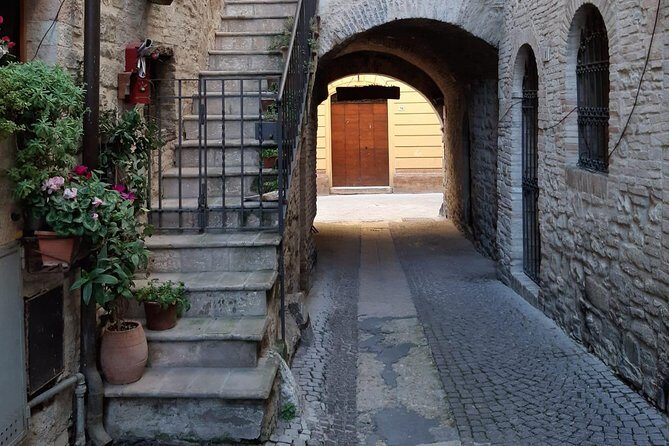
The heart of Bevagna is not just stones. It’s what happens around them. You’ll pass the kind of gathering points where locals still meet—playing cards and stopping for espresso in the main square. That’s the detail that makes the visit feel like more than sightseeing. You’re walking through a place that still has social habits, not just staged viewpoints.
This is also why Bevagna is a good antidote if you’re burned out by crowds. In some seasons, especially weekdays and off-peak months, the town can feel calm and almost like you have extra space to see. That matters because you can notice small textures: how people use doorways, how streets channel foot traffic, and where residents pause.
One small planning thought: winter and shoulder seasons can change what’s open, what feels lively, and what’s quiet. If your goal is atmosphere first, that’s not a problem. If your goal is cafés and shops open everywhere, plan your timing.
Duration and pacing: a good 2-hour overview
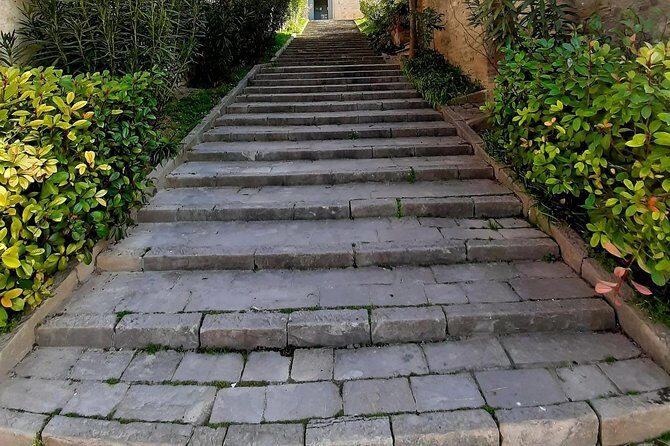
The tour runs about 2 hours. That’s enough time to cover the main sights—square landmarks, two key churches, and Roman remains—without turning your feet into a problem. Because it’s a private tour, the guide can keep it smooth for your group, whether you move quickly or want a slower, photo-friendly pace.
Here’s how to get the best result from the timing:
- Wear comfortable shoes and plan for uneven stone.
- If you want more photo time, decide early and tell the guide.
- Keep water handy, especially in warmer months.
Also, this tour is built as an experience of walking and learning, not a checklist of entries. You’ll likely get the most out of it by being present and looking closely at details.
Price and value: when $266.48 makes sense
The price is $266.48 per group, up to 15 people. That sounds high if you compare it to a per-person group tour, but private tours work differently. Your real comparison should be against other private options, and also against how many people are in your group.
Here’s the value angle I’d use:
- If you’re a small group, you’ll pay more than you would for a larger group tour.
- If you split the cost across several people, the effective price can become more reasonable quickly.
- You’re buying time with an official guide and a flexible pace, not just a route.
My practical take: book this if you want a guided overview that feels personal and local. If you’re traveling solo with no desire for a private setup, a cheaper group option might fit better. But for couples, families, or a friend group that wants to ask questions and move at your pace, it’s strong value.
Practical logistics: what you need to know before you go
This is a mobile ticket experience with instant confirmation when you book. The meeting point is Piazza Giuseppe Garibaldi, 9. The tour ends back where you started, which is a relief when you’re navigating a small historic center.
About admissions: the guided tour is included, and the itinerary notes admission ticket free. At the same time, the tour setup says admission tickets are not included, which usually means if you choose to enter any separately ticketed spots, you’d handle that. For planning, treat the tour as guide-led viewing with possible optional entries rather than a guaranteed full ticketed circuit.
Most people can participate. If you have mobility constraints, I’d use the walking time as your reality check. Two hours on old streets is doable for many, but old stone can be slow going.
Who should book this Bevagna private tour
I’d book this if:
- You want a private official guide in a small town setting.
- Your group cares about how medieval life worked, not just how things look.
- You prefer slower, authentic travel over crowded big sights.
- You want a Perugia-area day that feels distinctly Umbria, not generic.
You might skip it if:
- You only want major monuments and long interior visits.
- Your group is looking for a nightlife or food tour rather than history and architecture.
If you also plan to explore nearby, Bevagna pairs nicely with another nearby Umbrian town like Spello. One past itinerary-focused suggestion was to tack on a visit to Spello afterward, treating both as small-town palate cleansers from larger destinations.
Should you book the Private Bevagna Walking Tour?
I think you should book it if you want an easy win: a focused 2-hour guided walk through Bevagna’s best-known eras—medieval churches, Roman remains, and the town square’s everyday rhythm—with the benefit of privacy. The price is fair for a private official guide, especially if you’re splitting among more than two people. And if your favorite kind of travel is learning while you walk, this delivers.
If you’re the type who enjoys small places more when someone helps you see the details, Bevagna will reward you. If you need huge sights and lots of ticketed interiors, this may feel too quiet. For the rest of us, it’s the kind of day that leaves you with stories, not just photos.
FAQ
How long is the private Bevagna walking tour?
The tour lasts about 2 hours.
Where does the tour start in Bevagna?
The meeting point is Piazza Giuseppe Garibaldi, 9, 06031 Bevagna PG, Italy.
Does the tour end back at the meeting point?
Yes, the activity ends back at the same meeting point.
How many people can be in a group booking?
The price is per group, with up to 15 people per group.
Is there an admission ticket included?
The guided tour is included. Admission tickets are not listed as included, so if any sites require separate tickets, you would need to pay them separately.
What is included in the tour?
You get a guided tour with an official guide.
What will we see during the walk?
You’ll focus on Bevagna’s historic center, including Piazza Silvestri, 12th-century churches (Saint Michael and Saint Silvester), and Roman remains such as the Roman bath’s mosaic.
Is the tour private?
Yes. It’s private, so only your group participates.
What kind of ticket does the booking use?
It uses a mobile ticket.
When should I book this tour?
On average, it’s booked about 31 days in advance.