REVIEW · PERUGIA
Gubbio: Private walking tour with official guide
Book on Viator →Operated by Umbria con Me · Bookable on Viator
A short guided walk can make a town click fast, and Gubbio does. This private tour pairs an official, licensed guide with a story-first route through the old center, so you’re not just looking at stone—you’re learning how it all worked. I especially love how the guide sets the scene and keeps the pace steady, and I love the way Piazza Grande connects big medieval architecture to a very real local tradition.
One possible drawback: you’re limited to about two hours, so think of this as a focused introduction. If you want to linger in chapels, go deep into museum-style details, or slow down for every photo, you may feel a little time pressure.
In This Review
- Key highlights to look for
- Why Gubbio works so well for a short private walk
- Starting at Piazza dei Quaranta Martiri and getting your bearings
- Stop 1: Gubbio’s medieval atmosphere in about 30 minutes
- Piazza Grande and the Corsa dei Ceri one-tonne candle
- Duomo di Gubbio: Saint Francis, Palazzo dei Consoli, and real-life medieval stories
- Price and group value: what $289.95 per group really means
- The guide factor: Simona and Nazareno set the tone
- How to make the most of your 2-hour walk
- Who this private Gubbio tour suits best
- Should you book this Gubbio private walking tour?
- FAQ
- Is this tour private or shared?
- How long is the walking tour in Gubbio?
- What language is the tour offered in?
- Where do we meet the guide?
- Are there tickets or admissions needed for the stops?
- What is the cancellation policy?
Key highlights to look for
- Official, licensed local guide who knows the place and the stories
- Piazza Grande and the Middle Ages design behind it
- Corsa dei Ceri explained with the one-tonne candle and saint replica
- Duomo di Gubbio + key sights like Saint Francis and Palazzo dei Consoli
- No-waste pacing that avoids rushing but still keeps things moving
- Practical help in the moment, like funicular ticket support (when needed)
Why Gubbio works so well for a short private walk
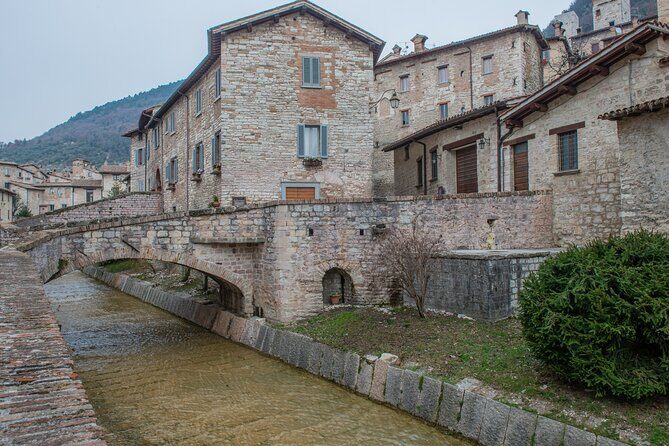
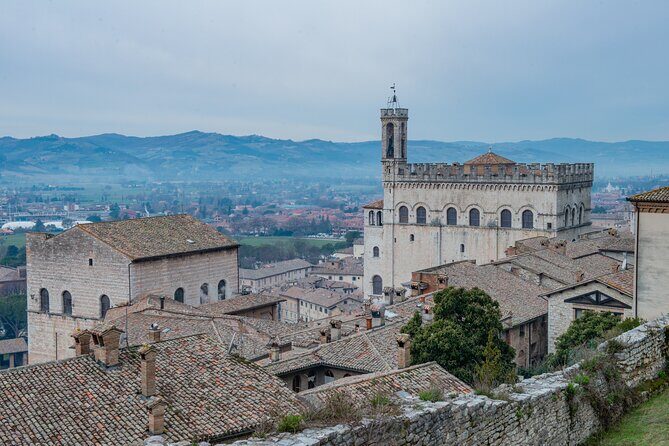
Gubbio is the kind of town where the walls seem to do the talking. In a couple of hours, you can get that atmosphere people come here for—the sense that you’ve stepped into a medieval setting and time has slowed down.
What makes this tour practical is the guide. You’re not left to decode street-by-street history on your own. Instead, the walk is structured so you hit the big visual anchors and then get the stories that make them make sense: who built what, how civic life worked, and why certain places mattered to everyday people as well as powerful families.
I also like that the tour stays human-sized. It’s private, and only your group participates (up to 15). That means you can ask questions without feeling like you’re talking into a megaphone.
And yes, you’ll walk. But it’s a walking tour designed for a manageable time window, with stops that feel purposeful rather than checkbox-y.
You can also read our reviews of more walking tours in Perugia



Starting at Piazza dei Quaranta Martiri and getting your bearings
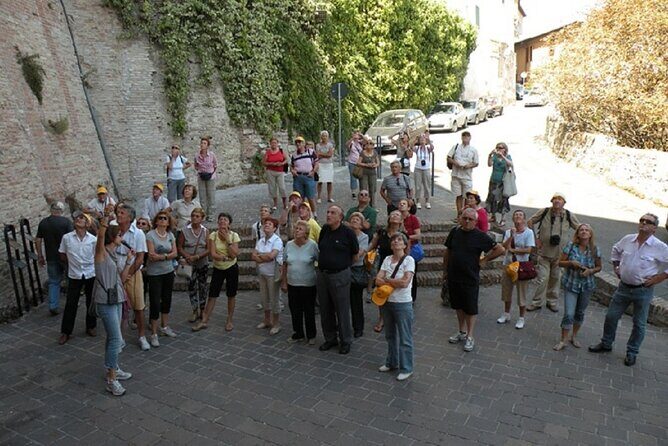
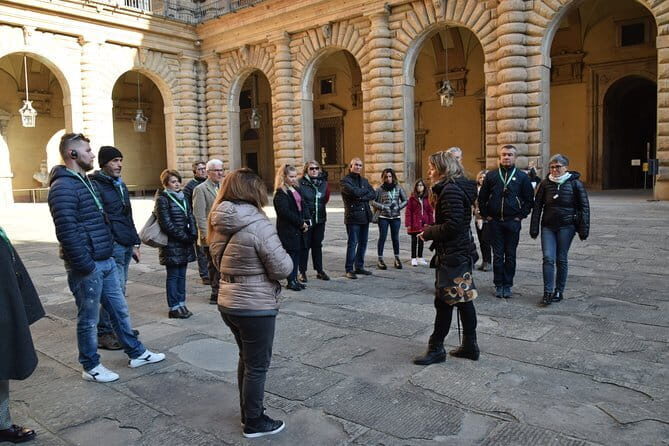
You begin at Piazza dei Quaranta Martiri, and then the guide helps you move through the old center with intention. Even if you’ve never been to Gubbio before, this kind of start matters. A medieval town can feel like a maze, so having someone point out what you’re looking at first saves you a lot of wandering.
Early on, the guide typically frames what you’ll see next—so when you reach the first major viewpoint, you’re ready for it. This is where the best tours win. You don’t just arrive at a square; you understand why it’s a square, and why people have been gathering there for centuries.
This also keeps the experience balanced. You’re not only getting facts. You’re getting the “how it feels” part too: the day-to-day reality behind the stone.
Stop 1: Gubbio’s medieval atmosphere in about 30 minutes
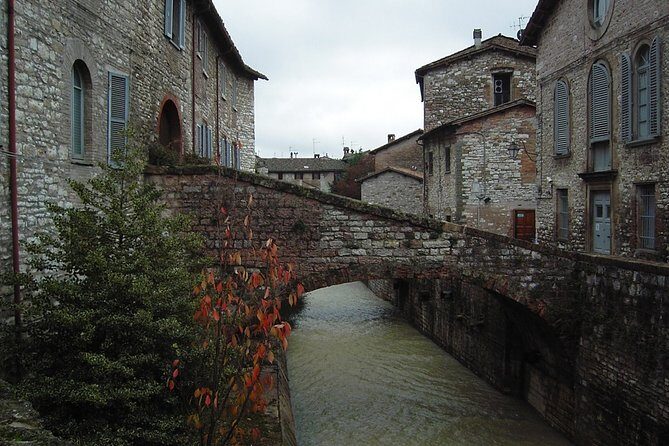
The first stop is built around atmosphere and orientation. You’ll spend roughly 30 minutes soaking in Gubbio’s old-town feel—narrow streets, heavy stone, and that medieval mood that makes the town memorable long after you leave.
This is the phase where a guide earns their pay. A good guide doesn’t just recite dates. They show you where the medieval logic lives: how the town layout fits the life of the place, and how important the old center still feels even today.
Why this matters: you’re conditioning your brain for the rest of the tour. When you get to the big civic square later, the architecture won’t feel random. It will feel like the natural center of life—almost like the town planned itself around that energy.
If you like travel that feels calm and not rushed, this opener is a solid match. Multiple guides are described as keeping things moving without making the walk feel like a sprint.
Piazza Grande and the Corsa dei Ceri one-tonne candle
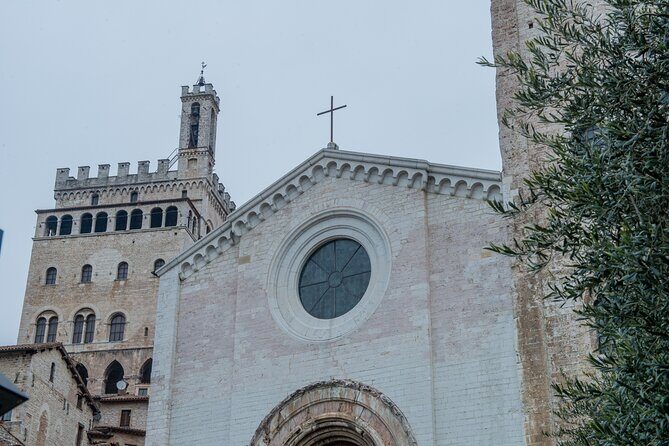
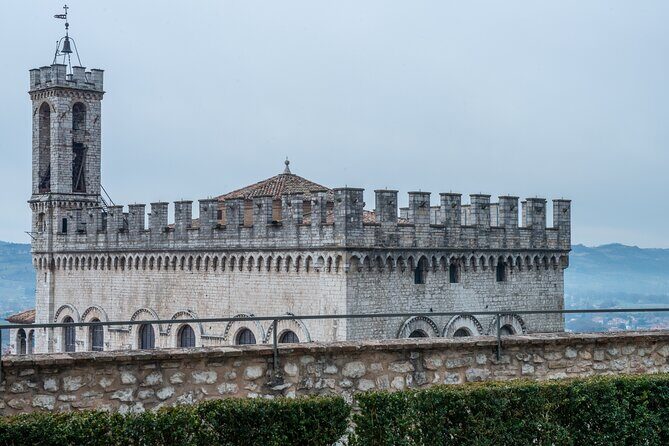
Piazza Grande is the tour’s storytelling engine, and it gets about 40 minutes. This is one of the most important spaces in Gubbio, defined by the palaces around it and the medieval plans behind it.
A standout detail you’ll hear: Gattapone, a native son of Gubbio, designed the Piazza Grande and the palaces that ring it. That name is a perfect example of why guided tours help. Without context, you’d just see pretty buildings and a wide open space. With context, you start to understand this square as a major Middle Ages project—civic power in stone.
Then comes the Corsa dei Ceri, a race that’s run almost every year since medieval times. Here’s the fun part you’ll want to visualize as the guide explains it:
- Teams from different neighbourhoods, called famiglie di ceraioli
- They carry a huge, roughly one-tonne candle
- The top includes a replica of a local saint
- The route ends near a Basilica up above the town
- The whole event is loud, with townspeople and visitors shouting as the teams go
Even if you’re not visiting in May, the explanation changes how you look at the square and the town’s vertical layout. You’ll start thinking about movement through the streets, why the square matters for gathering, and how a tradition like this needs both a stage and a climb.
Admission for the listed stop is free, which also keeps the tour feeling light on logistics and heavy on payoff.
Duomo di Gubbio: Saint Francis, Palazzo dei Consoli, and real-life medieval stories
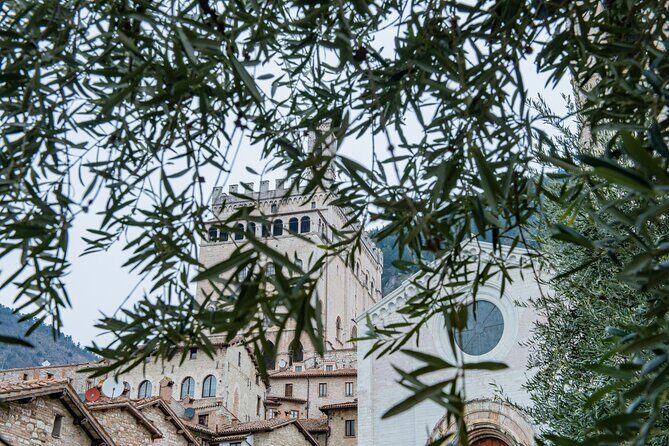
The final stretch runs about an hour and focuses on the old center’s key landmarks: the Duomo area and the surrounding places that bring the town to life.
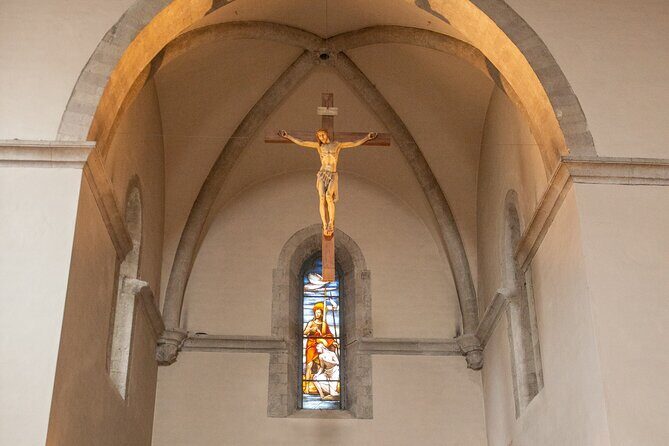
You’ll see the Cathedral (Duomo di Gubbio), plus major nearby stops that anchor the story: the church of Saint Francis, Piazza Grande again in relation to the civic buildings, and the Palazzo dei Consoli.
This is where the tour shifts from “what you’re seeing” to “how the people lived.” The guide’s role is to connect architecture to daily life—bringing in anecdotes and stories of dukes and powerful people from the past, but keeping it grounded in what those forces meant on the street.
One phrase people use about towns like this is that you feel like you’ve gone back in time. Here, it happens because the walk ties locations together instead of treating them like separate attractions. You get a sense of how a cathedral, a civic palace, and a major square all belonged to the same power system and the same rhythm of life.
Also, the pacing gets praised for being comfortable—no rushing and no wasted pauses in the middle of the medieval web. If you like your tours guided but not frantic, this portion is likely to feel just right.
Admission for the listed stop is free as well, so you’re not constantly stopping for tickets and searches.
You can also read our reviews of more guided tours in Perugia




Price and group value: what $289.95 per group really means
The price is $289.95 per group, for up to 15 people, and you’ll book it as a private experience. That pricing model can be great value—or not—depending on your group size.
Here’s the math mindset I recommend:
- If you’re traveling as a small group (couple or family), you effectively spread the guide cost across fewer people, and you get a lot of attention for the time.
- If you’re a larger group that maxes out the 15-person limit, the per-person value can drop, even though it’s still private.
Duration is about two hours, which is long enough for meaningful story time and a proper route, but short enough to avoid turning your day into “all walking, no breaks.”
A mobile ticket is included, and that’s a small but real convenience. It means you’re not scrambling with paper receipts while you’re trying to enjoy the first square.
Bottom line: for the price, you’re paying for a trained guide and a guided route through the most important parts of town—not for multiple paid admissions.
The guide factor: Simona and Nazareno set the tone
What gets repeated in the best feedback is not just knowledge. It’s how the guide teaches.
Simona is mentioned as setting the stage with interesting history and walking the center thoughtfully. She’s also praised for being kind and for handling practical details—one example: helping purchase funicular tickets and walking the group to where they boarded. If you need help navigating that kind of on-the-ground logistics during your visit, this is the kind of guide you want.
Nazareno shows up in another strong review, described as competent and cordial. The emphasis there is on professionalism and empathy, plus a tour that doesn’t feel rushed.
There’s one more subtle point: multiple descriptions stress that the tour feels unhurried. That matters in a place like Gubbio. If you get a guide who talks too fast, the town becomes background noise. If you get the right pacing, you actually absorb the town.
So if you care about the human side of touring—how a guide explains things, how long they spend with you at key corners, and whether you feel comfortable asking questions—this is the right format.
How to make the most of your 2-hour walk
A walking tour moves at the speed of comfort, not at the speed of ambition. I suggest you prepare in a simple way:
- Wear shoes that handle old stone and uneven streets without drama.
- Bring a water bottle if it’s warm; the tour doesn’t mention a scheduled break.
- Take your time with photos, but don’t slow the group at every corner—save the longest shots for Piazza Grande and the cathedral area.
- If funicular rides matter to your wider day plan, ask your guide how it fits. In at least one case, a guide supported ticket purchase and helped with boarding.
Also, arrive a few minutes early at Piazza dei Quaranta Martiri so you start calm. In old towns, starting late often means you feel rushed right away.
This tour is built around story. If you like asking why a tradition exists or how power worked in medieval society, go ahead and ask. A good guide will meet your curiosity.
Who this private Gubbio tour suits best
This experience is a strong fit if you want:
- A guided overview of Gubbio’s old center in about two hours
- Clear explanations of key landmarks and civic tradition
- A licensed local guide speaking English
- A private format where your group only participates
It’s also ideal for first-timers who want to stop guessing and start understanding. When the guide connects Piazza Grande to the Corsa dei Ceri, and connects the cathedral area to daily life and powerful figures, you leave with a mental map that lasts.
If you’re the kind of visitor who prefers totally independent wandering with a guidebook, you might still enjoy parts of Gubbio alone. But you’d miss the specific connections that make this tour feel more like a coherent story than a list of stops.
And because the tour is described as suitable for most travelers, it’s likely to work for a wide range of visitors who can manage a short walking route in an old-town setting.
Should you book this Gubbio private walking tour?
If you want a guided introduction that’s story-driven and paced well, book it. The best reason is simple: the tour uses the right places—Gubbio’s medieval core, Piazza Grande, and the cathedral area—to explain how the town’s civic life and traditions make sense. You’re not only sightseeing; you’re learning the logic of the town.
Book it if:
- You care about local tradition like the Corsa dei Ceri and want the details explained clearly
- You prefer an official, licensed guide rather than relying on vague plaques
- You like tours that don’t feel rushed
Skip it if:
- You’re chasing a long, museum-style experience with lots of free time to linger everywhere
- Your group expects a very flexible itinerary with extra stops not included in the core route
For most visitors, though, this is a smart, efficient way to see Gubbio’s most meaningful medieval corners with someone who can bring them to life.
FAQ
Is this tour private or shared?
It’s private. Only your group participates (up to 15 people).
How long is the walking tour in Gubbio?
It’s approximately 2 hours.
What language is the tour offered in?
The tour is offered in English.
Where do we meet the guide?
The meeting point is Piazza dei Quaranta Martiri, 06024 Gubbio PG, Italy, and the tour ends back at the meeting point.
Are there tickets or admissions needed for the stops?
For the listed stops, admission tickets are free.
What is the cancellation policy?
You can cancel for a full refund up to 24 hours in advance of the experience start time. If you cancel less than 24 hours before, the amount paid isn’t refunded.