REVIEW · PERUGIA
Perugia Highlights Private Tour with Local Guide
Book on Viator →Operated by Orange Umbrella Tours · Bookable on Viator
Perugia is small, but it can feel like a maze. This private walking tour helps you sort out the medieval streets fast, with a local guide who connects what you see to what came before. You’ll move past major landmarks like Palazzo dei Priori, Rocca Paolina, and even the Roman aqueduct, then pause for those hilltop views over the Umbrian countryside.
I especially like the balance here: real orientation plus real context. You get the Etruscan-to-Roman story in plain language, starting at the Arco Etrusco meeting point and working through key city sights without needing a guidebook or map.
One thing to consider: like any small-group or private arrangement, the experience depends on the guide showing up on time. There have been a couple of unhappy reports about last-minute issues, so I’d treat confirmation and day-of timing as important.
In This Review
- Key things you’ll notice on this tour
- Why Perugia Highlights works well in 3 hours
- Start at the Arco Etrusco: your bearings and your first view
- Piazza IV Novembre and Palazzo dei Priori: the city’s main stage
- Cattedrale di San Lorenzo: one city, many layers
- Passing the National Gallery area: the view angle matters
- The big finish: National Archaeological Museum of Umbria
- What you get from a private local guide (beyond the facts)
- What the walking feels like on your feet
- Price, value, and whether you’ll feel it was worth $257.21
- Logistics you should know before you go
- Should you book Perugia Highlights Private Tour?
Key things you’ll notice on this tour
- Etruscan start at the Arco Etrusco to set the historical tone right away
- Piazza IV Novembre and its monumental fountain for a quick hit of civic drama
- Cattedrale di San Lorenzo to see how layers of faith shaped the city
- A museum visit with tickets included inside a Dominican monastery setting
- A small private group feel that keeps the pace relaxed and questions easy
- Practical local tips on where to eat, shop, and sightsee, not just facts
Why Perugia Highlights works well in 3 hours
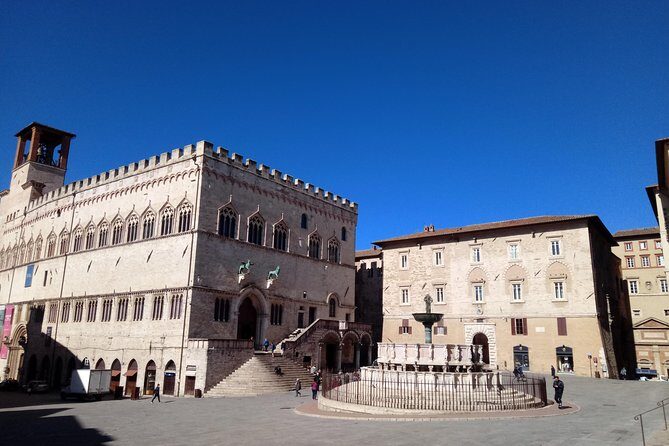
Perugia is a hill town, so even when the distances look short on a map, the streets still climb. That’s exactly why a guided walk is handy: your guide helps you connect the dots between buildings that can feel unrelated when you’re wandering solo.
This tour also makes smart use of time. You get the medieval core sights in a compact walking window, then finish with a long museum stop (about 1.5 hours) where the artifacts do the talking. If you only have a morning or a half day, this is a very efficient way to feel like you actually understand the place.
One more perk: Perugia can be easier to navigate than you’d expect thanks to an elevator system that helps you cut across the slopes. Even if you don’t use it during the tour, it’s the kind of practical local knowledge that makes your day go smoother once you’re out on your own.
You can also read our reviews of more guided tours in Perugia

Start at the Arco Etrusco: your bearings and your first view
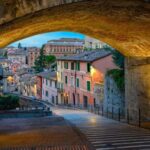
The tour meeting point is at the Etruscan Arch (Via Ulisse Rocchi, 39). This is a great start because it anchors the whole experience in Perugia’s older roots. You’re not beginning at the most obvious tourist spot; you’re beginning where the story starts.
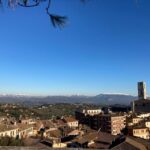
Expect a bit of orientation right away. Your guide sets the stage for what you’ll see—then you get a look out toward the broader view from this elevated corner of town. Even early in the walk, you’ll get a sense of why Perugia was built here: control, defense, and visibility across the Umbrian countryside.
If you’re the kind of traveler who hates arriving in a city and immediately feeling lost, this starting point helps. Within minutes, the streets start to make sense.
Piazza IV Novembre and Palazzo dei Priori: the city’s main stage
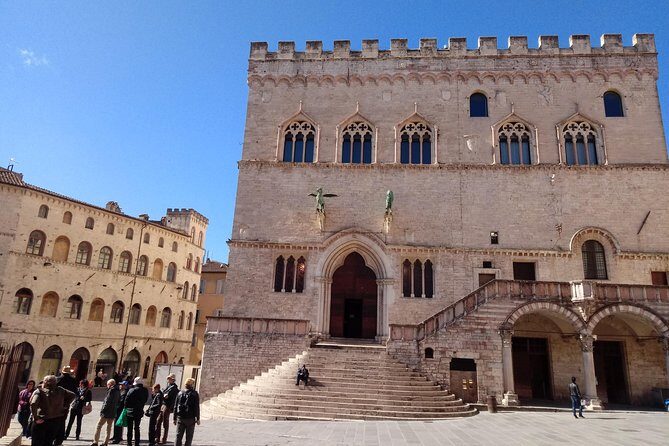
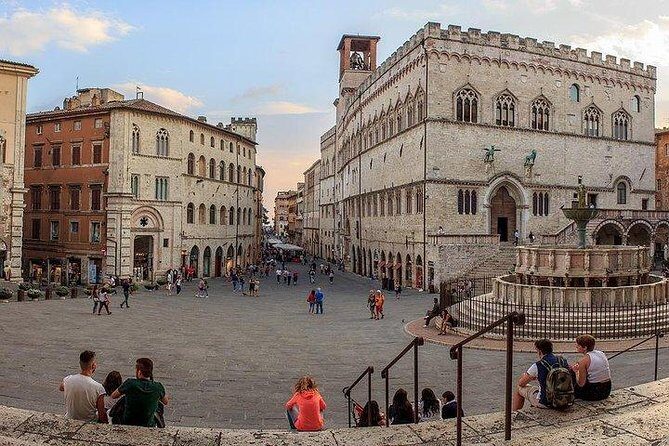
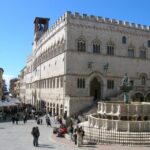
From the Etruscan arch you’ll work into Perugia’s core, and Piazza IV Novembre is the first big “wow” moment you hit at street level. This square was rebuilt in the 13th century and sits at the center of civic life.
Look up and you’ll see Palazzo dei Priori, the town hall looming above the square. It’s a reminder that medieval cities weren’t just about churches and markets; they ran on government, power, and public ceremony.
The star here is the monumental fountain in the middle of the piazza. It’s the kind of thing you can walk past on your own without really noticing—because it’s the square that draws your eyes. With a guide, you’ll learn how the fountain fits the square’s identity, and you’ll have context for why this place feels like the heart of Perugia.
This stop is short, but it’s timed well. You’re not stuck listening too long early on, and you still get a clear sense of where you are.
Cattedrale di San Lorenzo: one city, many layers
Next up is Cattedrale di San Lorenzo, a church dedicated to Lawrence (Lorenzo). According to what your guide shares, Lawrence was martyred in Rome in the 3rd century AD. That detail matters, because it helps you see the cathedral not just as architecture, but as a link between Perugia and the wider Christian world.
This is where the tour becomes more than sightseeing. Churches like this often represent how communities re-framed older identities over time—new beliefs, new patron saints, and new artistic priorities. You’ll likely notice that the cathedral feels serious and ceremonial even if you’re just walking through the outside and nearby areas during a short stop.
The practical takeaway: if you’re interested in how cities evolve, this kind of stop is a quick win. You don’t need a long museum day to catch the idea of cultural layering here.
Passing the National Gallery area: the view angle matters
At one point you’ll pass a major landmark connected to the National Gallery of the Umbria region, a building that has towered over the city center for hundreds of years. You might not spend a long time here, but it’s worth treating this as a “pause and look” moment.
High, dominant buildings change how you read a town. They act like visual anchors for your memory. When you’re later wandering the streets on your own, you’ll likely use this as your mental compass: you’ll know where you are relative to the big landmark rising above the center.
This is also where the tour’s hilltop perspective pays off. Your guide helps you understand what you’re looking at—so the view isn’t just pretty. It’s informative.
You can also read our reviews of more private tours in Perugia

The big finish: National Archaeological Museum of Umbria
The tour ends with a longer museum visit at the National Archaeological Museum of Umbria (Piazza Giordano Bruno, 10). This is the emotional and intellectual payoff, because it gathers artifacts that explain the story you heard outside.
What I like about this museum stop is the setting. It’s housed in an ancient Dominican monastery, so you’re not just looking at objects—you’re also in a historic structure. The building supports the feeling that time layers here are real, not just a slogan on a sign.
And the collection range is impressive for a half-day itinerary. You’ll see items connected to prehistoric periods, Etruscan artifacts, Roman finds, and more. The museum tickets are included, so you don’t have to budget extra or worry about buying a separate ticket last minute.
Your time here is about 1 hour 30 minutes. That’s enough to take in the major galleries without turning the day into a long slog. If you enjoy archaeology, inscriptions, or the “how do we know this?” side of history, you’ll likely stay engaged the whole visit.
What you get from a private local guide (beyond the facts)
This is the kind of tour where the guide does more than recite dates. In the best moments, the guide helps you interpret Perugia—so you’re not just collecting photos.
In particular, you’ll get tips that actually change your day:
- where to eat (so you’re not just hunting for the closest place)
- where to shop (so you’re aiming at the right neighborhoods or types of stores)
- where to sightsee next, after the tour
The small private-group setup matters here. If something sparks your interest—an architectural detail, a street layout clue, a theme about how the city developed—you can ask without feeling rushed.
A couple of guides were mentioned in past experiences by name, including Alice and Giampiero. The common thread is that the guides come across as genuinely proud of their city and willing to explain it in a way that sticks.
And if your trip includes Assisi, this tour has a practical role. Perugia can feel underrated compared to its more famous neighbor, but in a single morning you can learn why it deserves attention. One review explicitly suggested pairing it with a day trip to Assisi, and that’s a smart combo if your schedule is tight.
What the walking feels like on your feet
This tour is listed as requiring moderate physical fitness. That’s fair for a hill town. Expect some walking on medieval lanes and some uphill stretches. The good news is you’re not doing a marathon. The tour is about 3 hours total, and there are breaks tied to each stop.
You don’t need fancy gear. Good shoes are the real “ticket” here. Think traction and comfort, especially if you’re visiting on a day when stones are slippery or the weather is warm.
Also, since it’s a private tour, you’re not stuck with a large, slow-moving crowd. You’ll tend to get a more relaxed rhythm, with the guide adjusting how quickly you move through each area.
Price, value, and whether you’ll feel it was worth $257.21
At $257.21 per person for roughly 3 hours, the value depends on how you like to travel.
If you’re the type who gets tired of standing in front of landmarks trying to figure out what you’re looking at, this tour can be a good investment. A local guide saves time and mental energy. Instead of “what is this?” you get “why is it here, and what does it mean?”—and you pick up practical tips for food and shopping along the way.
The tour also includes museum tickets, which helps the math. The museum portion is about 1 hour 30 minutes, so you’re paying for a meaningful indoor visit, not just a quick street walk.
Where cost might feel less worth it is if you already know Perugia well or you prefer total independence. If you want to wander at your own pace with a self-guided audio app, you could build something cheaper. But if you want clarity and momentum with minimal planning, the private guide format justifies itself.
Logistics you should know before you go
- Start: Etruscan Arch, Via Ulisse Rocchi, 39, 06123 Perugia
- End: National Archaeological Museum of Umbria, Piazza Giordano Bruno, 10, 06121 Perugia
- The meeting area is described as near public transportation, which is useful if you’re not driving.
- You’ll receive confirmation within 48 hours of booking, subject to availability.
- You’ll get a mobile ticket, so plan on having your phone available.
One more practical note: this is described as a private tour/activity, meaning only your group participates. That’s a big deal in places like Perugia where streets are narrow and sidewalks can get tight.
Should you book Perugia Highlights Private Tour?
I’d book it if you want a focused introduction to Perugia without guesswork. This is ideal when you’re short on time, you’re new to the city, or you want to connect Etruscan, medieval, and Roman layers without reading a wall of text yourself.
I’d pause before booking if you’re very risk-averse about last-minute changes. There have been serious complaints about a guide not showing up, tied to broader staffing disruptions, and the provider indicated refunds were handled after those incidents. Those reports are the main caution flag in the information you shared.
If you do book, treat it like you would any careful tour day: show up a few minutes early, keep an eye on your confirmation, and be ready for a walking schedule that fits a moderate fitness level.
If your goal is to leave Perugia feeling oriented, informed, and ready to keep exploring on your own streets, this tour is a strong choice.