REVIEW · FLORENCE
3 hour Walking Tour Statue of David and Florence Highlights
Book on Viator →Operated by Guidaly · Bookable on Viator
Florence hits hardest when someone explains what you are actually looking at. This short tour connects Michelangelo’s David at the Accademia Gallery with the key Renaissance streets you’ll want to explore later. Two big wins for me: a local guide who turns art into real stories, and a smart route that hits the Duomo complex and the sculpture-filled squares without wasting time. The main drawback is practical: even with reserved entry for the gallery, you can still face waits, and the outdoor parts get crowded fast—rain makes it harder too.
You’ll be in a small group (up to 19) with radio headsets, which helps when you’re weaving through Florence’s tight sidewalks. Expect a lot of big sights from the outside—Duomo and Santa Croce interiors are not part of this plan—so you’ll trade inside time for broad context and great walking flow.
In This Review
- Key highlights that make this tour worth it
- Why this 3-hour Florence mix works so well
- Meeting point: how to get started without stress
- Accademia Gallery and Michelangelo’s David: the payoff stop
- Practical Accademia rules that can trip you up
- Duomo complex and Baptistery outside: big views with fast context
- A quick dress note for church areas
- Piazza della Repubblica, Orsanmichele, and the Porcellino wish
- Ponte Vecchio: a bridge with history you can feel
- Piazza della Signoria and outdoor Renaissance sculpture
- Piazza San Firenze and the Santa Croce finale
- Price and value: what you get for a small-group format
- Who should book this tour (and who might not)
- Quick decision: should you book?
- FAQ
- How long is the Statue of David and Florence highlights walking tour?
- Where does the tour start and end?
- What’s included in the price?
- Does the tour include entry inside the Duomo dome or Santa Croce church?
- Will skip-the-line tickets mean we avoid all waits at the Accademia Gallery?
- What are the Accademia Gallery restrictions for bags, drinks, and umbrellas?
- What’s the cancellation policy?
Key highlights that make this tour worth it
- Skip-the-line Accademia Gallery tickets focused on seeing David efficiently
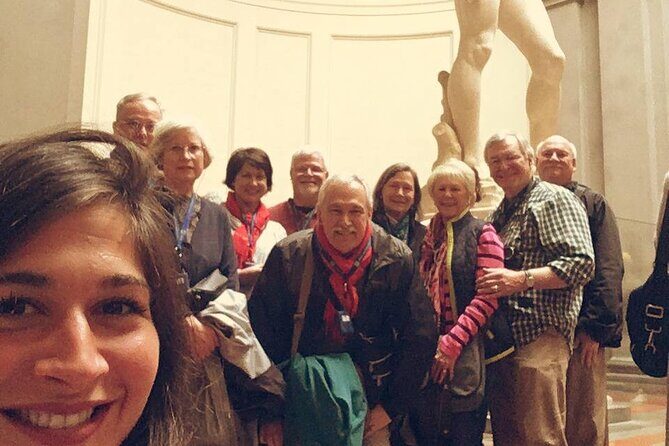
- Small-group pace (up to 19) with radio headsets for clearer explanations
- David plus Florence’s power squares like Piazza della Signoria and its sculpture displays
- Ponte Vecchio and the Medici-era Vasari Corridor view from the surviving bridge
- Florence icon stops like the Porcellino wishing ritual and Orsanmichele outside
Why this 3-hour Florence mix works so well
This tour is built for first-time Florence energy. In just a half day, you get from the art everyone came for—David—to the city’s “why it matters” landmarks: church architecture, Medici politics, and Renaissance sculpture in public space.
I also like that it does not try to stuff in too much entry-ticket hopping. You’re not forced to sprint from one building to another all day. Instead, you cover a tight loop of recognizable sights while your guide fills in the missing context, so the places start to make sense as you see them.
The other plus is how much you’re given beyond the single museum star. You’ll walk past major checkpoints—Piazza della Repubblica, Orsanmichele, Ponte Vecchio, and Santa Croce’s area—so you leave with a mental map, not just photos.
You can also read our reviews of more walking tours in Florence
Meeting point: how to get started without stress
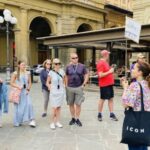
You begin at the equestrian statue of Cosimo I in Piazza della Signoria (look for the Cosimo I statue area). Your guide meets you 5–10 minutes early, and the Accademia Gallery is strict about entry time windows, so arriving late can mean you miss the tour.
For navigation, that meeting point is a good choice because it’s central and easy to orient from once you’re in the historic core. It also helps that the tour uses a mobile ticket, so you’re not hunting for paper confirmations while standing in a line.
I’d plan to do two things before you set off: wear comfy walking shoes (Florence sidewalks can feel relentless) and take a light approach with your bag, because the Accademia has rules about what you can bring inside.
Accademia Gallery and Michelangelo’s David: the payoff stop
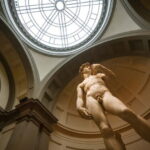
This is the reason most people book. You’ll enter the Galleria dell’Accademia using the included skip-the-line tickets, then focus on the Renaissance masterpiece: Michelangelo’s David.
Here’s the honest part: skip-the-line does not mean zero waiting. Even with reserved access, there can still be lines because the gallery only has two metal detectors and checks each traveler. In other words, you’re often saving time compared to general entry, but it’s not magic.
That said, the value is strong because you get more than standing in place. With a guide, you’re better positioned to notice what makes David such a turning point in Renaissance sculpture—how the figure’s form reads so differently once you understand the era’s ambition and artistry.
Practical Accademia rules that can trip you up
Accademia rules are specific, and they matter if you travel light or like carrying a lot.
- No drinks inside, including cans and glass bottles (water is allowed up to 0.5 liters)
- Umbrellas must close up; ones that don’t close are not allowed
- There is no cloakroom, so bulky items can be refused
- Large backpacks, helmets, and anything over 40×30×18 cm is not permitted
If you’re traveling with a bigger pack, consider leaving it in your hotel until after the tour.
Duomo complex and Baptistery outside: big views with fast context
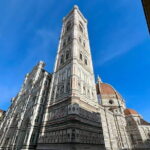
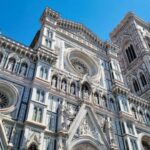
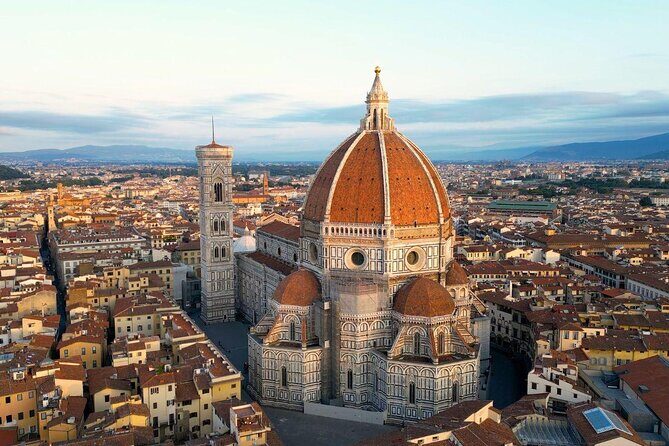
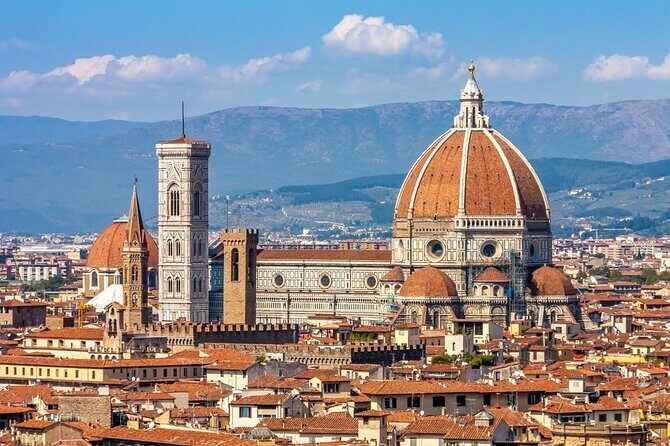
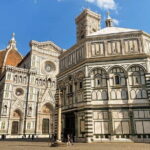
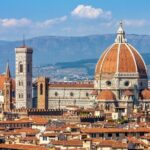
After Accademia, you keep moving through Florence’s church spine—without claiming full interior visits. You’ll admire the Cathedral of Santa Maria del Fiore from the outside, including what most people come to recognize: Giotto’s Bell Tower and Brunelleschi’s Dome.
This “outside only” format is actually a smart choice for a short tour. From the streets you still get the scale and the look of the complex, and you avoid losing the group to longer inside queues. You’ll also get immediate framing for why these pieces belong together across Gothic and Renaissance styles.
Next comes the Baptistery of St. John, again outside. You’ll spot the marble inlay work and the famous bronze doors that helped ignite Renaissance art momentum. Even without going in, you get a clear sense of how this monument anchors the city’s religious life and its artistic identity.
You can also read our reviews of more tours and experiences in Florence

A quick dress note for church areas
Even though most of this is exterior viewing, plan for church-area expectations. Entrance to places of worship is subject to restrictions, and your clothing should cover shoulders and knees. If you don’t, you might lose access to part of the tour.
Piazza della Repubblica, Orsanmichele, and the Porcellino wish
This middle stretch feels like a real walk through Florence, not just a checklist. At Piazza della Repubblica, you’re at the historical center of ancient Florentia—the location shifts in layers, moving from Roman roots to later city life.
Then comes Orsanmichele (outside). You’ll see it as the guild-era building that got repurposed into a church, with a Gothic tabernacle inside. The highlight here is Donatello’s importance—this stop includes mention of St George, one of Donatello’s early Renaissance works.
After that, it’s time for a fun break at the Fontana del Porcellino. This is Florence’s famous “wishing well” style fountain. You toss a coin into the ritual space and watch the wish tradition unfold via the boar’s mouth.
I like this stop because it breaks up the art-heavy stretches. It also gives you a low-pressure photo pause without feeling like you’re killing tour time.
Ponte Vecchio: a bridge with history you can feel
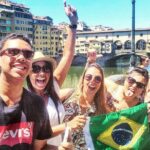
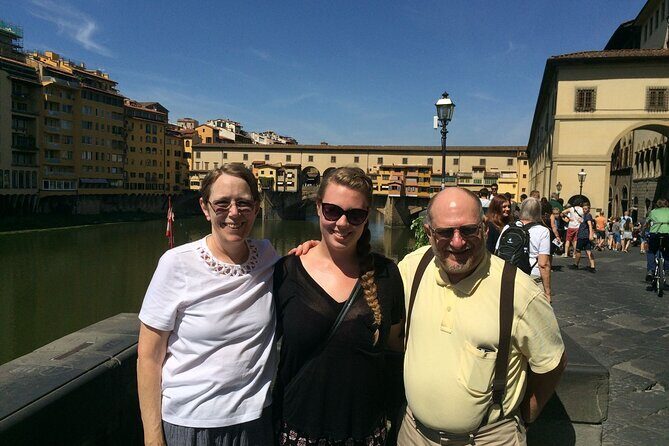
You’ll reach Ponte Vecchio, Florence’s famous bridge that survived World War II. The guide also connects it to earlier catastrophe and rebuilding—the bridge was rebuilt after the flood of 1333—which helps you see it as a living structure, not a static postcard.
What makes Ponte Vecchio extra interesting on a guided walk is the layers of power. It’s lined with shops, and you’ll also hear about the Vasari Corridor, the private passage reserved for the Lords of Florence, the Medici.
Even from street level, the bridge reads differently once you know it was part of a political machine as well as a commercial one. This is a great example of why a guide adds value: the same view becomes more meaningful when you understand what moved through it.
Piazza della Signoria and outdoor Renaissance sculpture
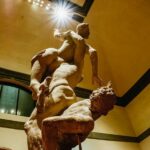
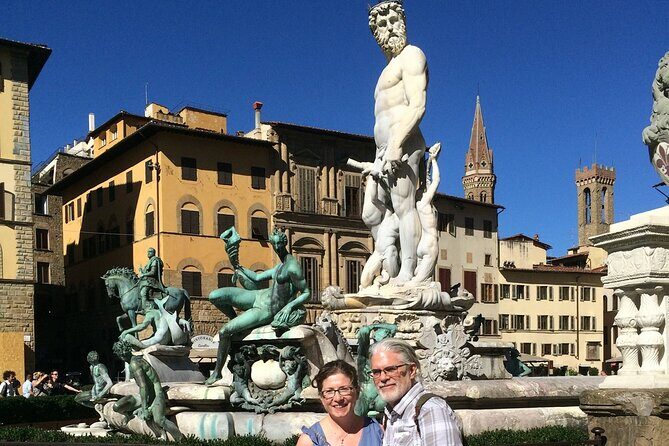
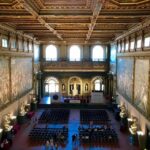
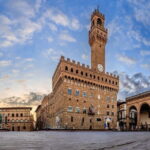
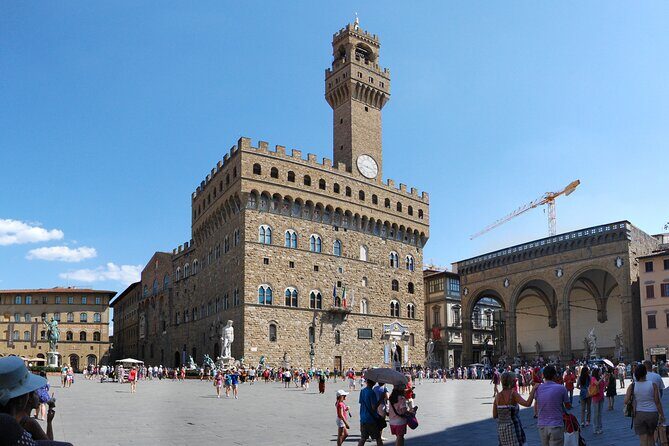
Next is Piazza della Signoria, Florence’s political center alongside Palazzo Vecchio. This square is basically an open-air sculpture gallery, and you’ll pass major works including Perseus by Cellini, the Fountain of Neptune, and Ratto delle Sabine by Giambologna.
The key benefit here is learning how public art functioned as public messaging. These sculptures weren’t only for aesthetics—they were symbols in a city where politics and Renaissance display constantly rubbed shoulders.
You’ll get an efficient dose of “how to look.” When someone explains what you’re seeing, you start noticing details you’d miss on your own—pose, symbolism, and why the placement matters.
Piazza San Firenze and the Santa Croce finale
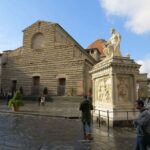
From Piazza San Firenze, the focus is on sightlines. You’ll see the Bargello palace and tower, the church of San Firenze, and a plaque connected to Da Vinci’s stay at Palazzo Gondi while he painted the Monna Lisa.
This is a short stop, but it’s a useful one. It helps you connect Florence’s art scene to the city’s geography, so later walks feel easier and more purposeful.
Then you finish outside Santa Croce. This church is a great closing note because it represents Tuscan-Gothic architecture and a major resting place for influential figures, including Michelangelo, Machiavelli, and Galileo. You’ll view it from the outside, so again, you trade interior time for a smooth ending and big-picture context.
The end point is Piazza di Santa Croce, where it’s easy to keep exploring on foot or use public transit.
Price and value: what you get for a small-group format
The listed price is $3, and while that number is striking, the real value sits in what’s included. You’re paying for:
- A local professional English-speaking guide
- Skip-the-line Accademia Gallery tickets
- Radio headsets (depending on group size)
- A small group up to 19 to keep the pace workable
Even if you could buy tickets on your own, the guide’s role is what turns a museum visit into a coherent Florence orientation. The included time at David plus the walking context across the main Renaissance checkpoints is the practical bargain.
And because the group is kept small, it’s easier to ask questions and keep up. In a city like Florence, that matters. You don’t want to lose half your tour to crowd shuffle.
Who should book this tour (and who might not)
Book this if you want a strong first-day Florence plan or you’re time-crunched. It’s especially good if you care about understanding the art and politics behind the highlights, not only collecting images.
It also suits families and small groups well, since the pace is structured and the guide can adapt for people who need to regroup. You’ll see from the awards and strong ratings that the “small group + clear explanations” combination lands well.
You might skip it or adjust expectations if you hate any line risk. Despite skip-the-line entry, the Accademia’s metal-detector setup means waits can still happen. And because major churches are outside-only on this route, you won’t get the full inside experience of the Duomo dome or Santa Croce interior.
Quick decision: should you book?
I think this is a smart booking for most visitors who want David plus a guided feel for Florence’s “big ideas” in only half a day. The guide-led route is the value engine, and the small-group setup with radio headsets makes the explanations easier to catch in a busy city.
If your ideal day is all interior museum time, then you’ll want a different plan. But if you want to get your bearings fast—with David as the anchor—this tour is an efficient, well-structured way to do it.
FAQ
How long is the Statue of David and Florence highlights walking tour?
It runs for about 3 hours.
Where does the tour start and end?
It starts at the equestrian statue of Cosimo I in Piazza della Signoria, and it ends at Piazza di Santa Croce, in front of the Santa Croce church area.
What’s included in the price?
You get a local professional English-speaking guide, Accademia Gallery skip-the-line tickets, and radio headsets depending on group size. The group is kept small (up to 19 travelers), and the tour uses a mobile ticket.
Does the tour include entry inside the Duomo dome or Santa Croce church?
No. The tour includes Cathedral complex and Santa Croce church from outside only and the surrounding area. Entry inside the Cathedral/Dome and Santa Croce church is not included.
Will skip-the-line tickets mean we avoid all waits at the Accademia Gallery?
Not guaranteed. Even with reserved entrance, you can still encounter lines because the gallery has limited metal-detector capacity and checks every traveler.
What are the Accademia Gallery restrictions for bags, drinks, and umbrellas?
You cannot bring drinks (including cans or glass bottles), and only water up to 0.5 liters is allowed. Umbrellas must close up, and there is no cloakroom, so large backpacks and bulky items over 40×30×18 cm are not allowed.
What’s the cancellation policy?
Free cancellation is available up to 24 hours before the experience start time for a full refund. If you cancel less than 24 hours in advance, the amount paid is not refunded.


More Walking Tours in Florence
More Tours in Florence


More Tour Reviews in Florence
- Tuscany Day Trip from Florence: Siena, San Gimignano, Pisa and Lunch at a Winery
★ 5.0 · 21,634 reviews - The Best tour in Florence: Renaissance & Medici Tales – guided by a STORYTELLER
★ 5.0 · 12,316 reviews