REVIEW · FLORENCE
Best of Florence walking tour – monolingual small group tour
Book on Viator →Operated by Ciao Florence Tours Srl · Bookable on Viator
Florence can feel like a lot at first. This tour helps you get your bearings fast, with a guided stroll past the city’s biggest landmarks and the smaller stories that make them click. I like that it moves at a friendly pace for a short trip, and I especially like the headsets and small group size (max 15) so you don’t lose the guide’s commentary in the crowds.
The one thing to plan around: the walking tour option does not include access to the Duomo Cathedral. You’ll see the Duomo complex from the outside and in the squares nearby, but if you want to go inside, you’ll need a separate ticket.
In This Review
- Key things I’d highlight before you go
- A smart 90 minutes to understand Florence (without stressing)
- Why headsets + a max-15 group makes this tour feel easier
- Price and what you actually get for $18
- Stop-by-stop: your Duomo-area orientation in Piazza San Giovanni
- Piazza della Repubblica: from civic heart to modern shopping square
- Mercato del Porcellino (Loggia del Mercato Nuovo): the luck and the legend
- Piazza della Signoria: where politics, art, and power overlap
- Ponte Vecchio: the bridge that changed roles and survived WWII
- Ending near Duomo Square: what you can do next
- Who this tour suits best
- Should you book Best of Florence walking tour
- FAQ
- How long is the walking tour?
- What is the price per person?
- What language is the tour offered in?
- Does the tour include access to the Duomo Cathedral?
- How big is the group?
- Where do I meet the guide?
Key things I’d highlight before you go
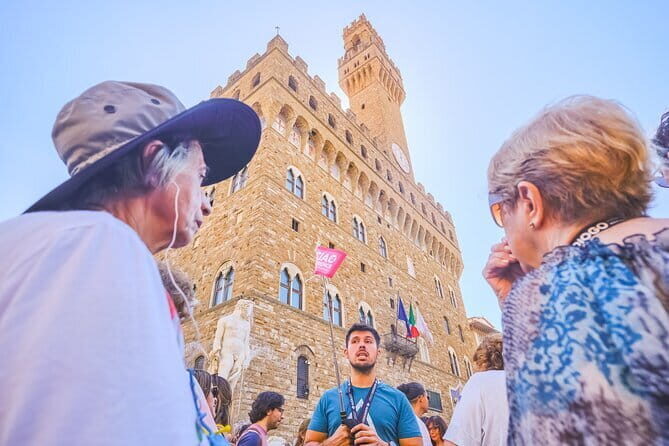
- Headsets so you can hear your guide even in busy piazzas
- Small group (max 15) keeps it less chaotic than a mass tour
- A fast orientation tour for first-timers or short stays
- The Porcellino stop with the nose-rubbing tradition and local legends
- Duomo-area views built into the route, not added as an afterthought
- English-only with a mobile ticket for easy check-in
A smart 90 minutes to understand Florence (without stressing)
If you only have a couple of days in Florence, you need a route that does two jobs at once: show you the major sights and help you understand what you’re looking at. This tour is built for that. In about 1 hour 30 minutes, you cover a string of landmark squares that sit close together, so you’re not spending your energy fighting distance.
The price is also refreshingly simple: $18 per person. For that, you get a real guide (not just a self-guided map) plus headsets, which is huge in places where people like to stop suddenly for photos. It’s the kind of value that’s easier to appreciate when you remember Florence is not small on foot, and you can’t “wing it” if you want history and orientation without guessing.
It’s also booked pretty far in advance on average (about 23 days). That’s a hint the timing is popular, so if your trip dates are firm, reserve early.
You can also read our reviews of more walking tours in Florence
Why headsets + a max-15 group makes this tour feel easier
Florence’s famous squares are gorgeous, but they can also be noisy. This is exactly where headsets change the experience. You can keep walking, keep your eyes up, and still catch what your guide is explaining—especially when you’re near the Duomo area and everyone is looking upward at the same time.
The max 15 travelers part matters too. Smaller groups mean you’re less likely to get split too far apart, and it’s easier for your guide to answer questions while moving. If you’ve ever tried to hear a guide over a gelato line and a camera-flash storm, you already know why this matters.
One more practical detail: it’s offered in English, and it’s a monolingual setup. That tends to keep the pacing smooth because everyone’s listening to the same commentary and no one has to wait for translation.
Price and what you actually get for $18
At $18, this is the kind of tour that works best as a “buy once, save time” move. You’re paying for:
- a guided route through Florence’s core squares
- a quick explanation of architecture and city life at each stop
- headsets for clear listening
- a tour that keeps you in public areas without extra entry headaches on the stops themselves
One caution: the tour notes that the Duomo Cathedral access is not included. So you’re not paying for cathedral entry here. You’re paying for orientation and context around the Duomo complex—and that’s still valuable, especially if you plan to see the inside later (with a separate ticket).
Because the tour focuses on outside viewing and key piazzas, it also tends to be more flexible than tours that depend on timed museum entry. And if you’re the type who likes to spend time lingering once the facts click, this format helps you do that.
Stop-by-stop: your Duomo-area orientation in Piazza San Giovanni
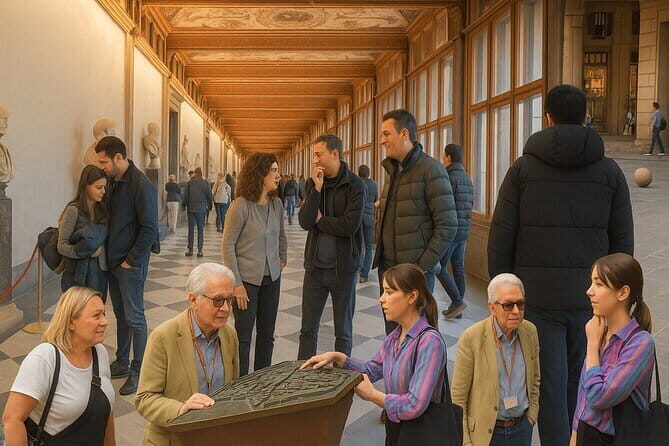
You start in the Florence center, meeting the guide near Via Camillo Cavour 18. From there, the first meaningful landmark moment lands at Piazza San Giovanni. This square is one of the best places in Florence to understand how the city “frames” the Duomo complex—because you get the big view right away.
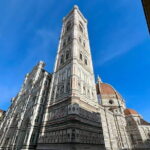
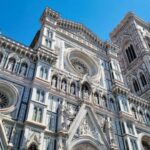
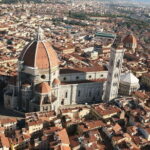
What you’ll notice fast: the skyline is dramatic. Your guide points out Brunelleschi’s Duomo, the Santa Maria del Fiore Cathedral, the San Giovanni Baptistry, and Giotto’s Bell Tower. It’s a lot to take in, but the tour gives you a short window to look, then explains what you’re actually seeing in plain terms.
This stop is also a photo-friendly pause for a reason. The cathedral-area marble colors—white with pink and green accents—show up clearly from the square. You’ll also learn why this area became such a symbol of Italy and how the complex developed over time.
Potential drawback? This is a popular area, so even with headsets, the pace can feel “packed.” Plan to move calmly and expect that others are going to stop for the same view. That’s normal here.
Piazza della Repubblica: from civic heart to modern shopping square
A short walk brings you to Piazza della Repubblica, near the Duomo zone. This stop is useful because it shows you Florence wasn’t always about designer storefronts and café seating. Your guide explains how the square functioned as a civic center—linked to different periods of leadership and public life.
What I like about this kind of stop is the mental switch it gives you. When you see the building fronts and the street rhythm today, you’re not tempted to think the square was always a “postcard spot.” Instead, you understand it as a place where people once walked through ordinary daily life—markets, announcements, and the public face of the city.
Now, the square is filled with luxury shopping and elegant cafés. That’s still enjoyable. But the tour makes it more than a shopping detour. It becomes a shortcut to understanding how Florence repurposes space without erasing all traces of what came before.
- Tuscany Day Trip from Florence: Siena, San Gimignano, Pisa and Lunch at a Winery
★ 5.0 · 21,634 reviews - The Best tour in Florence: Renaissance & Medici Tales – guided by a STORYTELLER
★ 5.0 · 12,316 reviews


Mercato del Porcellino (Loggia del Mercato Nuovo): the luck and the legend
Next you’ll move toward the Loggia del Mercato Nuovo, often tied to the story of the Porcellino—the piglet statue. This is one of those Florence moments where the city’s charm is both silly and oddly meaningful.
You’ll see the Renaissance arches of the market area, then hear how it traces back to older commercial use—opening in the 1500s as a place for vendors dealing in things like foreign silk and precious stones. The tour doesn’t let you treat this as a one-photo-only stop.
Then comes the tradition: rubbing the piglet’s nose is said to bring good luck. Your guide will explain the local legend behind it, and you’ll also get a chance to experience the ritual without turning it into chaos. (Yes, you’ll watch other people do it too. That’s part of the fun.)
If you want a practical tip: keep your camera ready, but also plan a couple of seconds where you put the camera down and just look at the statue up close. The detailing makes the whole superstition feel more like a neighborhood tradition than a gimmick.
Piazza della Signoria: where politics, art, and power overlap
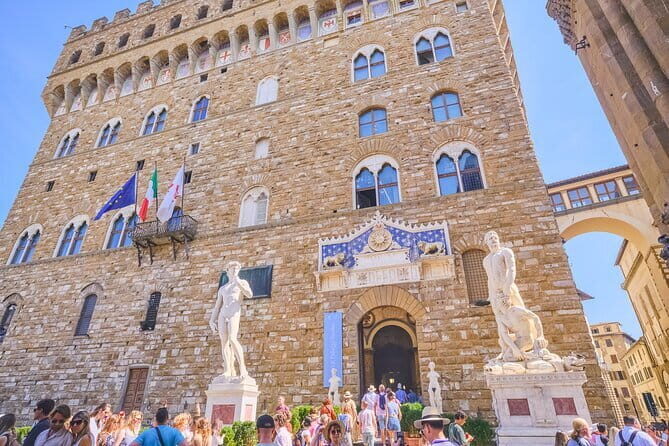
From the market area, the tour shifts into the larger civic-and-art zone at Piazza della Signoria. This is described as an open-air museum, and that label makes sense because the square holds so many layers of Florence’s public life.
It’s L-shaped, which affects how you experience it. You don’t just look straight ahead—you turn corners and the art and architecture reveal themselves in angles. Your guide explains that this was always central to government and public events: news, defense, celebrations, and meetings.
Then you connect the dots: the Medici era mattered here, and key buildings like Palazzo Vecchio anchor that power story. The Loggia dei Lanzi is part of what turns this square into a sculpture gallery in the open.
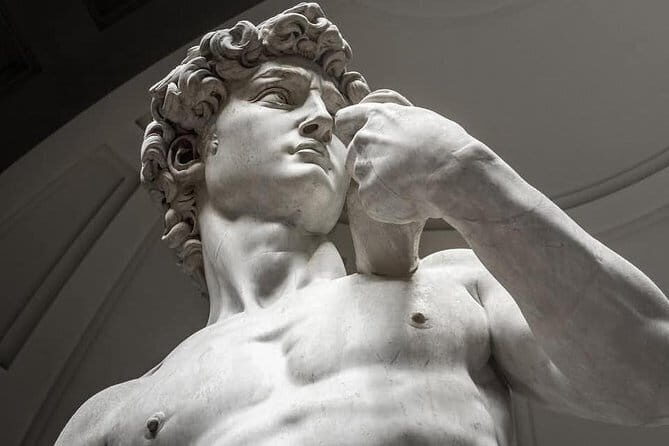
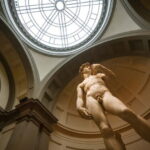
You’ll also hear a cool art fact: Michelangelo’s David was originally intended for placement here in this part of the city. Even if you don’t know the entire David story yet, this kind of detail helps you understand why Piazza della Signoria feels like the emotional center of Florence.
Small consideration: this stop is more about recognition and storytelling than “hands-on” viewing. If you love museum-style interpretation, you’ll appreciate it. If you only want to snap photos and move quickly, you may want to be ready to get through it efficiently.
Ponte Vecchio: the bridge that changed roles and survived WWII
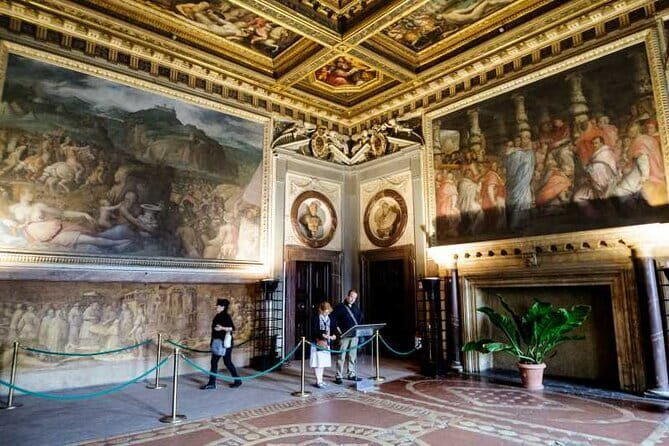
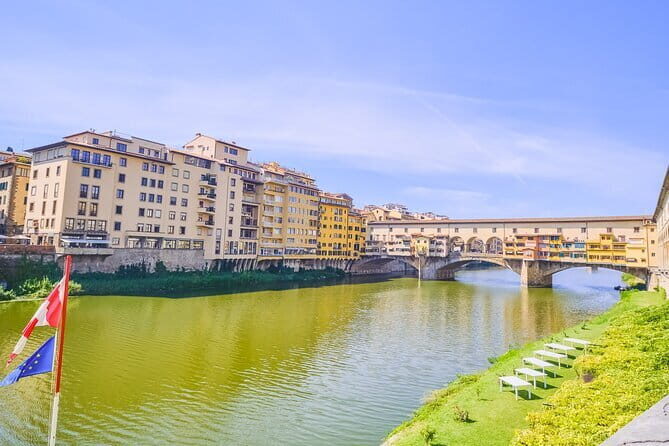
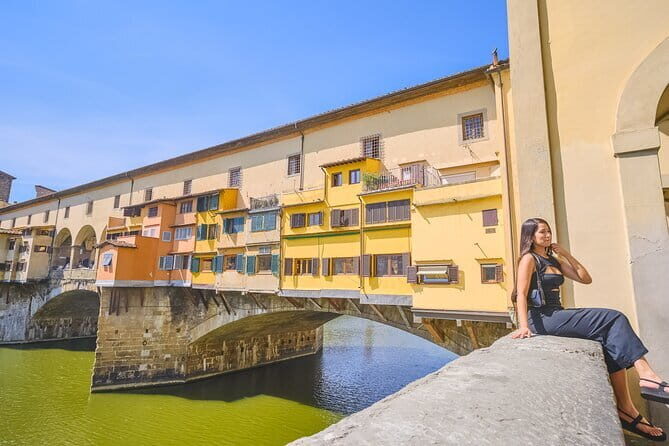
The final big landmark stop is Ponte Vecchio—a Florence symbol that now feels glamorous with jewelry shops lining the bridge. But your guide puts you back in time and shows how the bridge used to function differently.
The key story: for years, Ponte Vecchio was home to meat markets, and yes, it was a smellier place back then. Over time, the commercial use shifted toward what you see today. That transformation is one of the most interesting ways to understand a city without needing a museum ticket.
You’ll also learn why Ponte Vecchio stands out for history: it was the only bridge spared during bombings in World War 2. That fact adds emotional weight to what might otherwise be a “pretty bridge” moment.
And then you get the payoff: the view from Ponte Vecchio. It’s a classic reason people come, but the tour makes it more useful by explaining the bridge’s role and why it’s still so central in the city’s identity.
Practical moment: if you’re traveling in peak season, the bridge can get crowded. Move slowly, take your photos, and don’t fight the flow. The beauty is in the movement.
Ending near Duomo Square: what you can do next
The tour ends in the Duomo area, around Piazza di San Giovanni, where the Duomo complex is right there. This is a smart finish, because you’re leaving at a place where your next steps are easy to choose.
If your goal is cathedral interior views, remember what the tour does and doesn’t include: it’s a walking tour and does not include access to the Duomo Cathedral. So treat this as your outside orientation and your ticket to decide what to see inside next.
If you want more of Florence’s “right now” atmosphere after the tour, you’ll also be well placed to keep wandering in the direction of café stops and quieter side streets. You already learned what to look for, so your self-guided time becomes way more satisfying.
Who this tour suits best
This walking tour is a good fit if:
- you’re short on time and want a logical route through the key sights
- you want a guide to explain what you’re seeing in squares you can reach on foot
- you care about hearing the story clearly (headsets help a lot)
- you prefer small-group pacing without getting swallowed by a huge crowd
It also works well for travelers who like to return to places later. After you get the basics—Duomo complex, civic squares, Porcellino luck, Signoria art space, and Ponte Vecchio—you’ll know where to spend extra time on your own.
If you’re the type who only wants ticketed attractions and timed entry, you might find this tour more “context first.” But even then, the orientation value is hard to beat.
Should you book Best of Florence walking tour
Yes—if you want an efficient first taste of Florence’s core landmarks with real guidance and clear listening. The combination of English commentary, a max-15 group, and headsets is exactly what makes a short walking tour work instead of feel rushed.
Skip or pair it differently if your top priority is going inside the Duomo Cathedral during this exact slot, because access isn’t included here. In that case, use this tour as your orientation and then schedule cathedral entry separately.
One final nudge: wear comfortable shoes. Florence is all stone and angles, and you’ll cover a lot of ground in 90 minutes even without “long walks.” If you’re up for that, you’ll come away with a cleaner mental map of the city—and that makes everything else easier.
FAQ
How long is the walking tour?
The tour lasts about 1 hour 30 minutes.
What is the price per person?
It costs $18.00 per person.
What language is the tour offered in?
The tour is offered in English.
Does the tour include access to the Duomo Cathedral?
No. The walking tour option does not include access to the Duomo Cathedral.
How big is the group?
The tour has a maximum of 15 travelers.
Where do I meet the guide?
You meet at Via Camillo Cavour, 18, 50122 Firenze FI, Italy, and the tour ends near the Duomo area at Piazza di San Giovanni.
More Walking Tours in Florence

More Tours in Florence


More Tour Reviews in Florence
- Tuscany Day Trip from Florence: Siena, San Gimignano, Pisa and Lunch at a Winery
★ 5.0 · 21,634 reviews - The Best tour in Florence: Renaissance & Medici Tales – guided by a STORYTELLER
★ 5.0 · 12,316 reviews