REVIEW · FLORENCE
Florence Highlights: Guided Walking Tour of the Historic Center
Book on Viator →Operated by Vox City International Ltd · Bookable on Viator
That first skyline glimpse does it.
This Florence Highlights walk is built for people who want the big names and the side streets—without a stressful plan. I like the guided + self-paced structure (you get a live English guide for about 90 minutes, then the app keeps you moving), and I like that the narration is multilingual via the sightseeing app. One caution: the experience depends on group flow and guide energy, and if you get an unengaging guide day, the pace can feel a bit flat—though the audio helps you stay on track.
You start at a very findable spot at Café Firenze near Via de’ Pucci, keep the group size small (max 30), and spend the walk orbiting Florence’s power centers: churches tied to major artists, Medici-era fountains, and the views that make people point at the Duomo. If you’re the type who likes to stop for photos and look up a lot, this works well. If you want long museum time or want every stop to include ticketed interiors, you’ll need to plan separately since entry isn’t included.
In This Review
- Key things I’d focus on before you go
- Why This Florence Highlights Walk Works in Real Life
- Price and Time: What You’re Actually Paying For
- Meeting at Café Firenze: Easy Start, Clear Guide Look
- The Guided-and-Audio Setup: How to Use It Without Stress
- Stop-by-Stop: What You’ll See and Why It Matters
- The 700-Year Church Connection to Donatello
- Covered Market Atmosphere and the Piglet Fountain Moment
- Main Square Politics and a W-Shaped Detail
- Town Hall Facade and the Renaissance Symbol Look-Up
- A Medici-Era Fountain Photo Stop
- Arched Gallery Statues: A Good Break from the Open Air
- A Major Art Gallery Stop (Without Ticket Pressure)
- An Older Romanesque-Style Church
- Triangular Piazzas and Palaces with Gothic + Renaissance Sides
- A High Renaissance Palace by Baccio d’Agnolo
- Strozzi vs Medici: Rival Power in Palace Form
- Fountain of the Naiads and Statue Photo Stops
- The Medici Final-Rest Stop: A Towering Church Moment
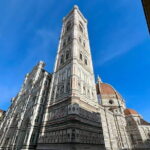
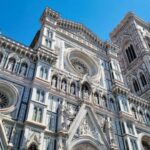
- Cathedral of Santa Maria del Fiore: Brunelleschi’s Dome
- Octagonal Baptism Building: The Centuries-Old Baptism Place
- Bell Tower: 80+ Meters of Looking Up
- Oldest Building Still Standing: Roman-Era Foundations
- Dante Alighieri Museum Stop
- The Chestnut Tower: One of the Best-Preserved
- The City of Lilies Finish: Turning Sights Into Meaning
- What’s Missing (So You Don’t Get Caught Off Guard)
- Who This Tour Suits Best
- Should You Book This Florence Highlights Walking Tour?
- FAQ
- How long is the guided walking tour?
- Is the tour offered only in English?
- Do I get an audio guide?
- What should I bring for the audio?
- Where do I meet the guide?
- Is entry to attractions included?
- What’s the group size?
- Can I leave and come back using the app?
Key things I’d focus on before you go
- Small group (max 30) keeps the walk from turning into a school bus line.
- Live English guide + multilingual audio lets you follow even when you tune out for a minute.
- App freedom means you’re not trapped only at the guide’s exact pace.
- Top landmarks plus off-tourist corners gives you variety in one route.
- Central meeting point at Café Firenze makes start time easy to manage.
- Entry not included keeps your time focused on streets and sights, not ticket lines.
Why This Florence Highlights Walk Works in Real Life
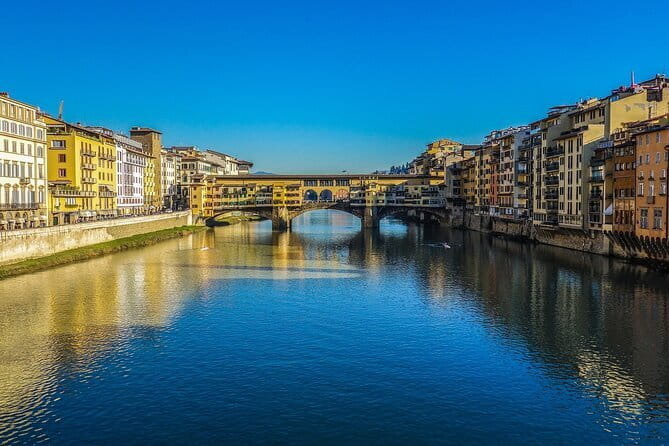
Florence can feel like two different cities at once. You’ve got the Duomo-and-bridge postcard zone, and then you’ve got the older, quieter layers where the streets tighten and the buildings tell their own story. This tour is designed to braid both together, so you get the classics while still getting some practical “what am I looking at?” help.
The route also gives you a lot of vertical moments—church facades, bell towers, palace lines you notice only when you keep looking up. That matters, because Florence rewards slow attention. A guided walk is a good way to train your eyes fast.
You can also read our reviews of more walking tours in Florence

Price and Time: What You’re Actually Paying For
At $30.12 per person, you’re paying for two things: a 90-minute guided walking experience (with live commentary in English) and a pre-recorded audio guide you can use through the app. That’s a solid value if you’d rather spend money on understanding what you’re seeing than on extra activities.
What’s not included is just as important. Entry to attractions isn’t included, so you shouldn’t expect long indoor time at galleries or churches. You’ll be out on the street and in the piazzas where the city’s design does most of the talking.
Also, this one is popular enough that it’s commonly booked about 56 days in advance. If you’re traveling in busy weeks, locking in a spot ahead helps.
Meeting at Café Firenze: Easy Start, Clear Guide Look
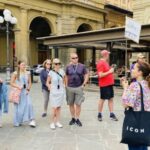
You meet at Café Firenze, Via de’ Martelli 50/r, at the corner with Via de’ Pucci. The guide is in a dark blue Vox City uniform, which makes it easier than hunting for a random umbrella. If you can, arrive about 5 minutes early so you’re not squeezed into the first shuffle of the day.
The tour ends back at the meeting point, which is handy if you’re carrying reservations later or you just want a clean reset.
The Guided-and-Audio Setup: How to Use It Without Stress
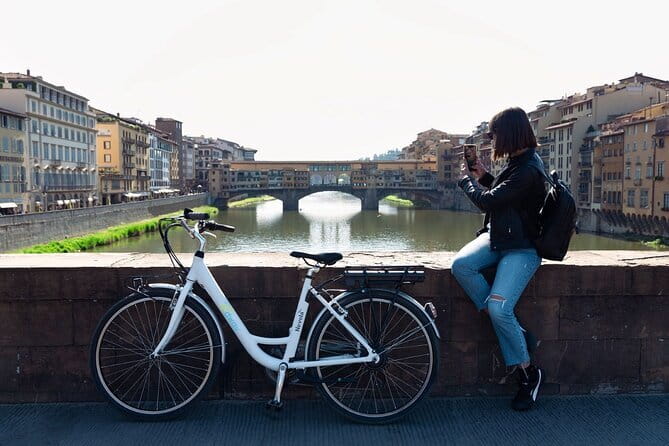
Here’s the clever part: you get a live guide for the walk, but you also get a sightseeing app with audio in English, French, German, Italian, Spanish, and Chinese. You download it by scanning the QR code on your voucher before you arrive.
That changes how you can travel. If you want to pause for a photo, check a detail, or step into a smaller side lane briefly, the app helps you keep the story going. It also means you’re not fully dependent on perfectly catching every sentence from the front of the group.
There’s also a practical note from real-world experience: the format can support joining and leaving as you go. That’s useful if you spot an unexpected café break or a short line you want to avoid later.
Stop-by-Stop: What You’ll See and Why It Matters
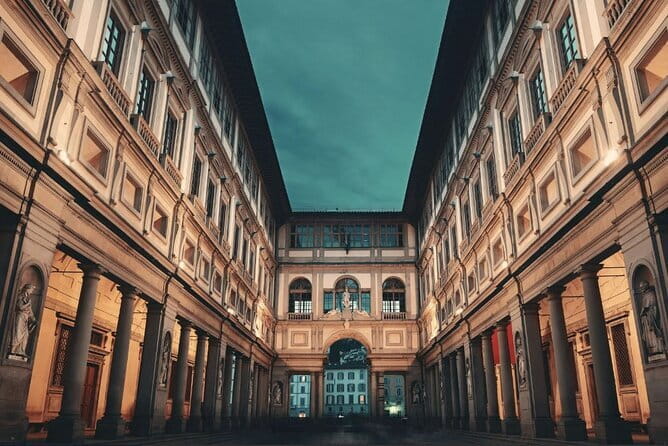
This route moves through a chain of Florence “anchors.” Expect churches, major piazzas, Medici-era civic spots, and the Duomo skyline that grabs you even when you’ve seen it in photos.
You can also read our reviews of more guided tours in Florence


The 700-Year Church Connection to Donatello
You begin with a church that’s about 700 years old, built on the site of an earlier monastery. It also houses art by Donatello, which gives your first stop a real artistic anchor instead of just a pretty facade.
Look closely at how the building carries its age. Florence churches can feel like architecture plus attitude—layers from different eras, with the art giving you a reason to slow down.
Covered Market Atmosphere and the Piglet Fountain Moment
Next comes a covered market area with Renaissance-style arches and a piglet fountain that people love for photos. This is one of the best spots to experience Florence as a working city, not just a museum town.
Even if you skip snacks (and you can), the market arcades give you shade, structure, and a sense of everyday rhythm. Take a minute here to watch how people move through the space.
Main Square Politics and a W-Shaped Detail
Then you’re guided into a main square tied to politics, where you’ll notice a distinctive W-shaped layout. That kind of detail sounds random until you realize Florence loves turning civic identity into design.
This stop is about pattern recognition: once you spot it, you start seeing how architecture, power, and symbolism mix in the same place.
Town Hall Facade and the Renaissance Symbol Look-Up
You’ll also see Florence’s town hall, a major heritage symbol and a clue to how Renaissance influence spread through public buildings. This is another stop where “look up” is the right instruction.
Don’t rush. City halls like this weren’t built just to govern—they were built to broadcast.
A Medici-Era Fountain Photo Stop
Next is a magnificent fountain created by the Medici family nearly 500 years ago. Florence does fountains differently than most places. They’re often tied to patronage, propaganda, and the kind of civic pride that shows up in stone.
Even from across the piazza, take a photo from at least two angles—some details only read when you shift your position.
Arched Gallery Statues: A Good Break from the Open Air
You’ll walk past an arched gallery with a collection of historic statues. This is the “rest stop” in architecture form: more shelter, calmer pacing, and a chance to reset your legs.
Statues in galleries also teach you something useful: you’ll start spotting how Florence arranges art like a timeline, even when you didn’t plan to study art history that day.
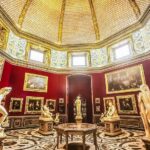
A Major Art Gallery Stop (Without Ticket Pressure)
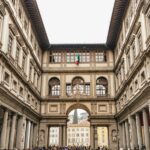
The walk continues to an iconic art gallery holding a world-class collection of Italian Renaissance works. Since entry isn’t included, you’re not planning a long museum visit here—more like a guided orientation and exterior-to-interior context.
If you later want deeper time inside, this stop helps you decide where to focus. You’ll know what kind of masterpieces you’re chasing.
An Older Romanesque-Style Church
One of the stops features an old church with Romanesque-style architecture. This gives you contrast. Romanesque can feel heavier and more grounded than later Renaissance lines, and that shift is part of Florence’s story.
This is a good moment to slow your pace and look for the building’s rhythm in arches and massing.
Triangular Piazzas and Palaces with Gothic + Renaissance Sides
You’ll then move through a triangular piazza lined with Gothic and Renaissance palaces. Triangles are rare in city planning, which is why Florence’s shapes feel so particular and photo-friendly.
If you like geometry, this section is for you. If not, it still helps you understand why Florence is so hard to memorize from postcards.
A High Renaissance Palace by Baccio d’Agnolo
Next is a High Renaissance palace designed by Baccio d’Agnolo. Florence loves “names,” and having an architect attached to the design makes it easier to connect the dots later.
Stand where you can see the facade clearly. Palaces like this reward a few minutes of patient viewing.
Strozzi vs Medici: Rival Power in Palace Form
You’ll also see a palace constructed by the Strozzi family, famous long-time rivals of the Medici. It’s one of the most satisfying parts of the route, because rivalry shows up in stone, scale, and positioning.
If you like Florence as a story of power struggles, this stop pays off. Patronage wars aren’t only written in books—they’re built into neighborhoods.
Fountain of the Naiads and Statue Photo Stops
Later you’ll walk through a popular square and take snaps of statues at the Fountain of the Naiads. This is a classic “let’s get the photo” moment, but it also works as a palate cleanser between heavy architecture blocks.
Try a low-angle photo and a straight-on photo. Naiads details can look different depending on height and light.
The Medici Final-Rest Stop: A Towering Church Moment
You’ll look up at a towering church that serves as the final resting place for several Medici family members. Even without going inside, the exterior tells you it was made to be seen and remembered.
This is one of those stops where you’ll likely end up doing the same thing everyone does in Florence: stare up, then take a second photo because the first one didn’t capture the full height.
Cathedral of Santa Maria del Fiore: Brunelleschi’s Dome
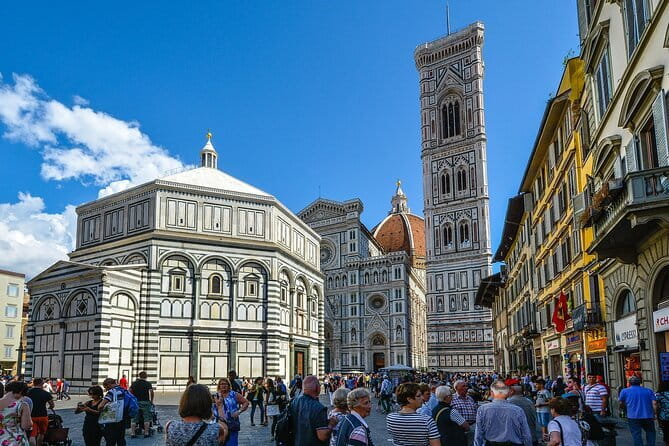
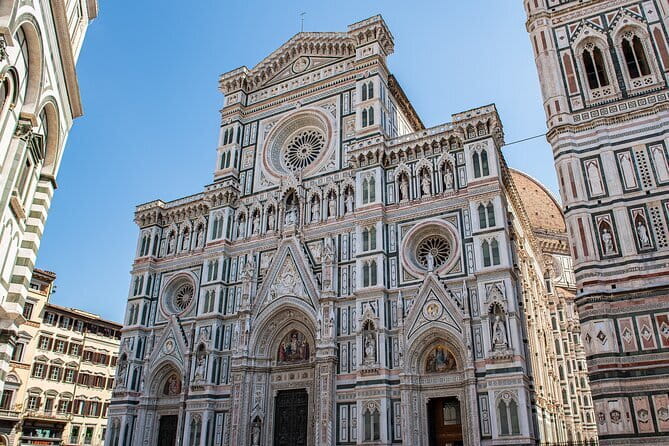
Now for the headline: the Cathedral of Santa Maria del Fiore, a UNESCO World Heritage Site, with Brunelleschi’s dome dominating the skyline. This isn’t just sight-seeing. It’s orientation for your whole day in Florence.
Watch how the dome changes depending on where you stand. From different streets, you’ll see it proportion differently, and that helps it sink in as a real structure, not a single iconic image.
Octagonal Baptism Building: The Centuries-Old Baptism Place
You’ll also see the octagonal building that was the exclusive place for baptism in Florence for centuries. This is a quick stop, but it’s meaningful because it connects civic life to religious rites over long time periods.
Again, the key is looking up and taking in the geometry. Octagons in architecture are never accidental.
Bell Tower: 80+ Meters of Looking Up
Then you’ll spot the free-standing bell tower, built almost 700 years ago and over 80 meters tall. It’s the kind of structure that makes you realize why Florence people talk in distances and heights.
If you’re tired of walking, this is a good place to stop moving for a minute and just study lines.
Oldest Building Still Standing: Roman-Era Foundations
One stop highlights the oldest building still standing in the historic center of Florence, with origins uncertain but foundations dating back to the Roman era. This is the “how old is old?” moment.
It’s also a reminder that Florence isn’t just Renaissance. The city keeps stacking eras on top of each other.
Dante Alighieri Museum Stop
You’ll pass by a historic museum dedicated to Dante Alighieri, famed for the Divine Comedy. Since entry isn’t included, you’re not doing a museum block here, but you are getting a clear point of cultural reference.
If you’re a literature fan, this is where your Florence day starts to feel personal.
The Chestnut Tower: One of the Best-Preserved
You’ll also see the Chestnut Tower, described as one of the best-preserved towers in Florence’s historic center. Towers in Florence weren’t just decoration. They were power, status, and family identity made vertical.
This stop is also great for photos that show Florence’s skyline as a patchwork of old silhouettes.
The City of Lilies Finish: Turning Sights Into Meaning
The walk closes with stops tied to Florence’s “City of Lilies” landmarks and cultural heritage. It’s a useful wrap-up because it nudges you from individual buildings into the larger idea: Florence as a place where art, government, and faith all share the same streets.
By the end, you’ll probably feel like the city has a personality. That’s what a highlights loop can do when it’s paced well.
What’s Missing (So You Don’t Get Caught Off Guard)

This tour is great at getting you oriented outside, but entry to attractions isn’t included. That means if you want to go into museums and specific churches, you’ll need to arrange that separately.
Also, you’ll need to manage your own tech. Headphones and a mobile device aren’t included, and the audio guide depends on using your own phone/tablet through the app. If you rely on your phone for navigation too, this combo can be very handy.
Who This Tour Suits Best

This is a strong fit if:
- You want a guided overview without committing to a full-day museum grind.
- You like the idea of multilingual audio while you walk.
- You want to see Florence’s skyline and civic squares in a planned route.
It may be less ideal if:
- You want lots of indoor time and guaranteed entry.
- You prefer long, quiet pacing without group timing.
- You get easily annoyed by small start-time or organizational hiccups.
There was at least one report of a late start and a more monotonous flow. If that kind of thing drives you nuts, build in a little buffer time for the day, and rely on the app audio when you want a reset.
Should You Book This Florence Highlights Walking Tour?
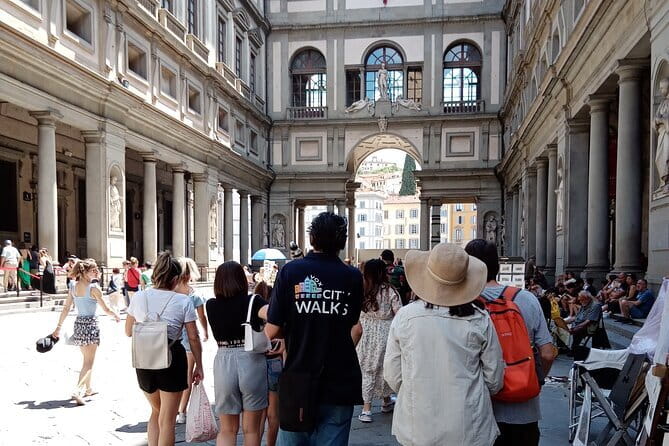
If your goal is to get your bearings fast and connect major Florence sights into one readable story, this is a very practical choice. The $30.12 price is mainly for guide commentary plus app-based audio, and that’s exactly what makes a short walk valuable in a city like Florence.
I’d book it if you’re okay with street-first sightseeing and you’re willing to add any ticketed museum time on your own later. Pass if you’re hunting for a ticket-inclusive museum day. For most first or second visits, though, this hits a sweet spot.
FAQ
How long is the guided walking tour?
The tour runs about 1 to 2 hours (with 90 minutes of guided walking time).
Is the tour offered only in English?
The live commentary is in English, and the pre-recorded audio guide is available in multiple languages (English, French, German, Italian, Spanish, and Chinese).
Do I get an audio guide?
Yes. You’ll have pre-recorded audio through a sightseeing app in the languages listed above.
What should I bring for the audio?
You’ll need your own mobile device and headphones (these are not included).
Where do I meet the guide?
Meet at Café Firenze, Via de’ Martelli 50/r, at the corner of via de’ Pucci. The guide will be wearing a dark blue Vox City uniform.
Is entry to attractions included?
No. Entry to attractions isn’t included, so you’ll need to plan tickets separately if you want to go inside.
What’s the group size?
The tour has a maximum of 30 travelers.
Can I leave and come back using the app?
The experience is set up so you can leave the tour and then locate the guide again using the app to continue.
More Walking Tours in Florence

More Tours in Florence


More Tour Reviews in Florence
- Tuscany Day Trip from Florence: Siena, San Gimignano, Pisa and Lunch at a Winery
★ 5.0 · 21,634 reviews - The Best tour in Florence: Renaissance & Medici Tales – guided by a STORYTELLER
★ 5.0 · 12,316 reviews