REVIEW · FLORENCE
Florence: Private walking guided tour
Book on Viator →Operated by Italy Pass tours · Bookable on Viator
Florence can feel like a blur. This private 1.5-hour walk helps you slow down, skip the guesswork, and connect the Medici story to major sights around the Duomo.
I particularly like how the route is built for momentum—you get the big visual hits without spending your day stuck in lines and map confusion.
Next up, I love the personal attention. With a private format, you set the rhythm, ask questions, and actually follow the guide’s logic from neighborhood to neighborhood.
One drawback to keep in mind: admissions aren’t included, and the depth of historical explanation can depend on the guide’s comfort level with English. If you want lots of inside access or very deep, detailed context, plan your expectations (and your tickets) accordingly.
In This Review
- Quick highlights you’ll notice on this walk
- Getting oriented at the Duomo (and why that matters)
- San Lorenzo, Medici Chapel area, and the street-life backdrop
- The Duomo area: Brunelleschi’s Dome and Giotto’s Bell Tower in context
- Dante’s neighborhood and the Bargello ex-prison museum feel
- Porcellino bronze statue: small, charming, and oddly memorable
- Passing Piazza della Signoria, Pitti Palace, and the power-square side of town
- Finishing at Ponte Vecchio: ending on Florence’s postcard bridge
- Price and what $180.58 per person really buys you
- Who this private walking tour fits best
- A note on guides, language, and getting the most from your time
- Should you book this Florence private walking tour?
- FAQ
- How long is the Florence private walking tour?
- What is the price per person?
- Is this tour private or shared?
- What’s included in the tour?
- Are admission tickets included?
- Where does the tour start and end?
- Is the tour friendly for people using public transportation or service animals?
- What’s the cancellation policy?
Quick highlights you’ll notice on this walk
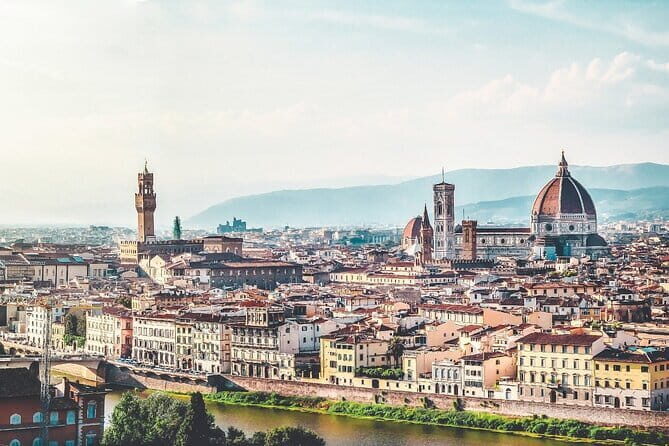
- Duomo complex views that frame Brunelleschi’s Dome and Giotto’s Bell Tower in the same walking flow
- Medici origins in the Centro Storico, starting from San Lorenzo and the Medici Chapel area
- Piazza della Signoria and Pitti Palace area passing points, so you see the power-squares and palace side of Florence
- Bargello and Dante connections, with the Bargello described as an ex-prison now turned museum
- Porcellino at street level, the bronze statue people lean in for and it’s easier to appreciate in person than in photos
- Finish at Ponte Vecchio, so the walk ends at one of the city’s most recognizable bridges
Getting oriented at the Duomo (and why that matters)
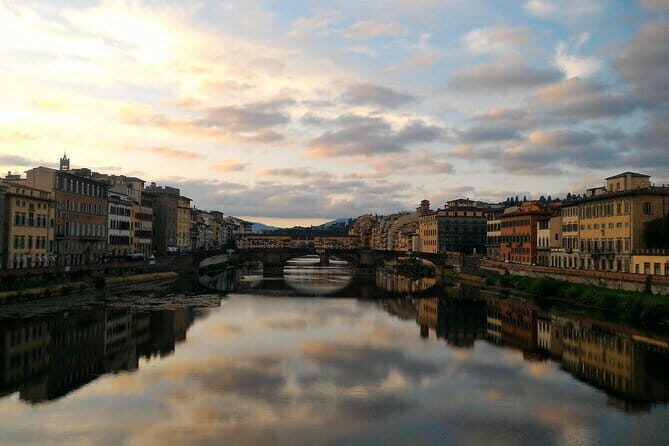
Your tour starts at the Lindt Chocolate Shop Firenze Duomo, on Piazza del Duomo 15R. That location is smart because it puts you right where Florence’s sight lines meet—between the river, the cathedral area, and the thick of the historic center.
In practice, that means you’ll spend less time figuring out where things are and more time understanding what you’re looking at. Florence rewards this. The city looks like a postcard, but the real magic is how streets, squares, and religious buildings connect to the people who controlled money and power—especially the Medici.
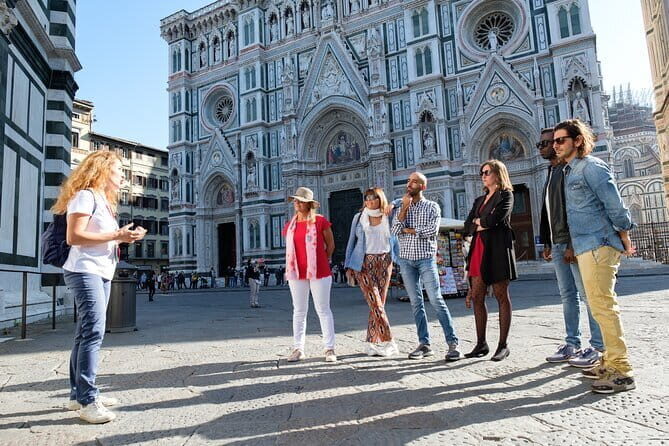
Because this is a private walking tour, you also avoid the worst kind of group-tour friction: the constant stopping and re-starting. The goal here is a smooth sequence of moments, not a slow shuffle. If you arrive a little early, take a minute to simply stand there and notice the scale—then your guide’s story will click faster.
You can also read our reviews of more walking tours in Florence
San Lorenzo, Medici Chapel area, and the street-life backdrop
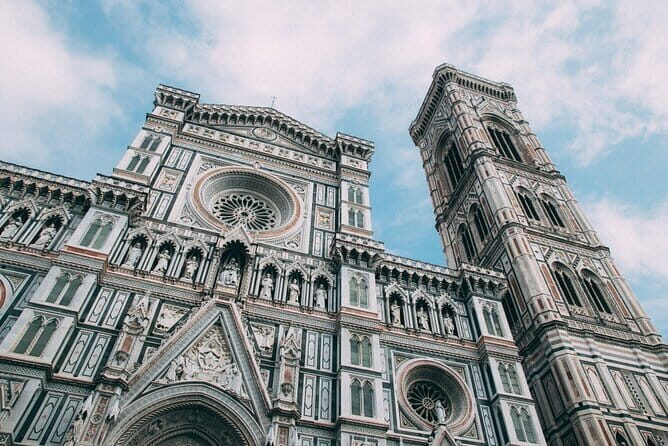
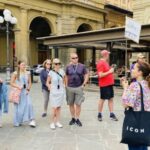
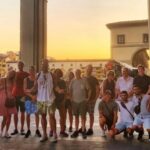
From the Centro Storico start, you’ll work your way through the San Lorenzo neighborhood area, closely tied to the Medici family. This is the part that often gets skipped when people only aim for the Duomo photo spots. Here, you get the sense that Florence didn’t just produce art in a vacuum—it was powered by families, patrons, and political strategy.
You’ll see references to the first Medici Palace in Florence and the Medici Chapel. That matters because the Medici weren’t only wealthy; they shaped what Florence became by supporting the buildings, the artworks, and the public image of their rule. Even from street level, the neighborhood gives you context for why the city looks the way it does.
You’ll also have a chance to look at an open-air market that specializes in leather goods and clothing, plus souvenirs. This isn’t just shopping time. It’s a lived-in slice of the historic center where modern tourists meet traditional commerce. If you’re the type who likes to understand how a place still functions day-to-day, this stop keeps Florence from turning into only a museum.
One practical thought: markets can be busy and narrow. If you want a slower pace, tell your guide early so they can steer you through without turning it into shoulder-to-shoulder navigation.
The Duomo area: Brunelleschi’s Dome and Giotto’s Bell Tower in context
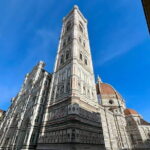
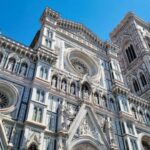
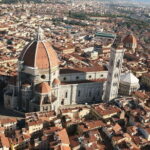
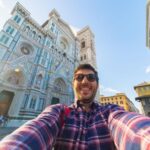
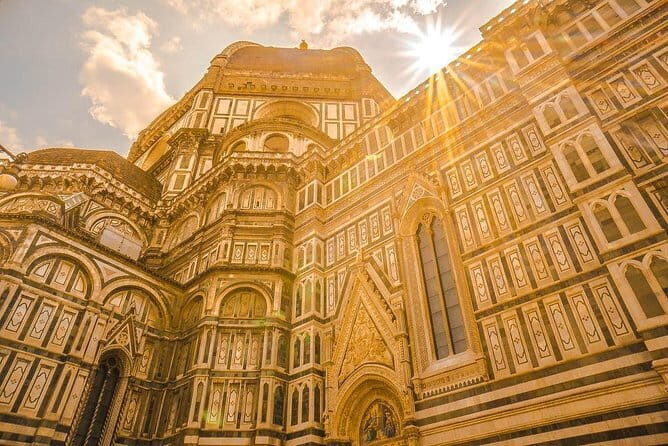
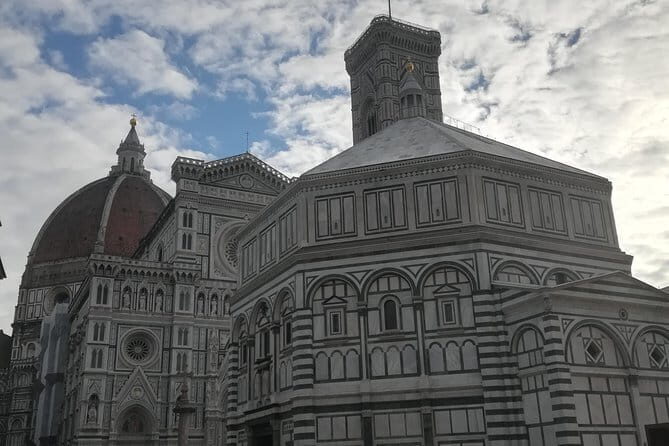
Then comes the big centerpiece: the Duomo area, where you’ll find the Baptistery, Brunelleschi’s Dome, and Giotto’s Bell Tower. Seeing these landmarks close together is like walking through the highlights of Renaissance engineering and design—within minutes, not hours.
What makes this stop valuable isn’t just the famous names. It’s how your guide can connect them into a single story of ambition and craftsmanship. Brunelleschi’s Dome isn’t just a dome; it’s a problem-solver that changed what people believed was possible. Giotto’s Bell Tower helps you understand how the city’s skyline became part of the message—visible, symbolic, and meant to last.
Also, if you’re trying to make sense of Florence’s layers, this is the best place to start. The Duomo complex is so central that it anchors the rest of what you’ll see: palaces, statues, and squares all feel related once you have this reference point.
Note: the tour indicates an admission ticket is not included. So if you want to go inside any major sites in this area, you’ll need to arrange those separately. The walk gives you the strongest value for seeing and understanding, not a guaranteed all-access ticket package.
Dante’s neighborhood and the Bargello ex-prison museum feel
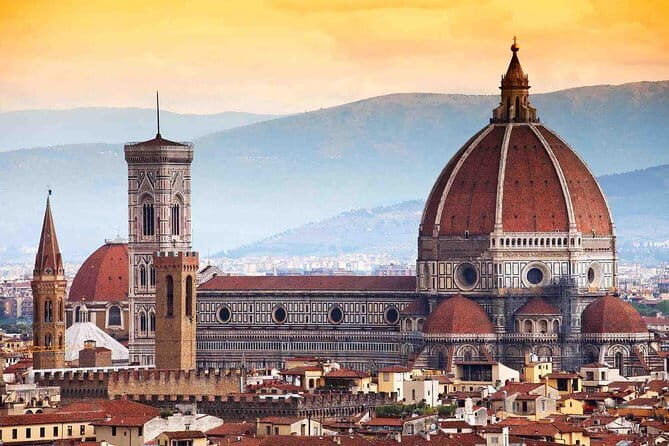
Right next to the Duomo area, your guide will point you toward Dante’s home and the Bargello. The Bargello is described as an ex-prison now a museum, which gives it a different vibe than the usual royal-palace setting.
This is where the tour becomes more than sightseeing. The Renaissance usually gets framed as art and architecture. But Florence is also justice, power, punishment, and politics. When you pair that with the Medici thread, the city starts to feel more coherent.
Even if you only catch a quick moment outside, it helps you build the mental map: where influential people lived, where institutions operated, and where history got written down in stone and walls.
If you’re curious about literature and how people lived day-to-day, this is a good angle. Florence can be very visual; the Dante connection gives it a human heartbeat. You’ll likely finish this section feeling like you understand how the city worked, not just how it looked.
Porcellino bronze statue: small, charming, and oddly memorable
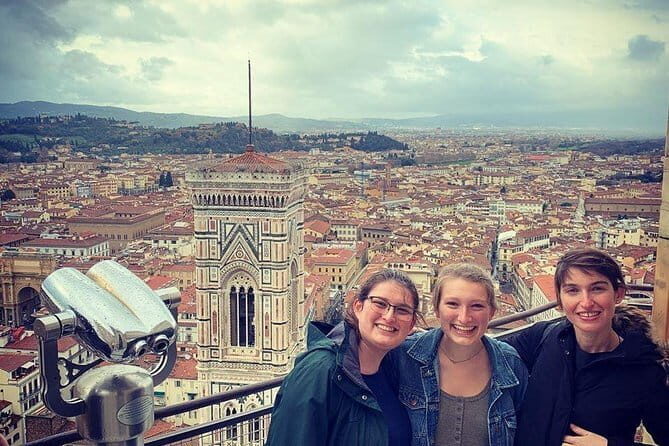
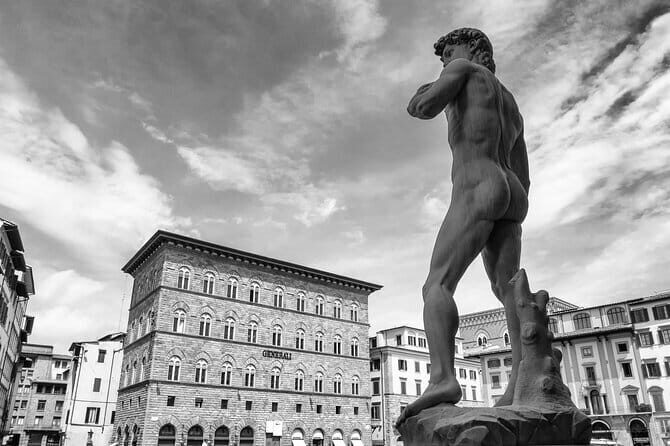
Next, you’ll get your chance to interact with Il Porcellino, the bronze “Porcellino” statue. This is one of those Florence landmarks that sounds like a quirky trivia item until you see it in real life and realize it’s become part of local ritual.
Up close, bronze statues have a different feel than photos. People touch them. They stand there long enough for your eyes to adjust. Your guide can help you appreciate why it became a must-spot. The statue is small compared to the Duomo’s scale, but it’s perfect for this kind of 90-minute walk—an intimate moment inside a city built for big statements.
This stop also helps break up the heavier architecture chunks. After domes and towers, you get something close enough to appreciate through details: texture, wear, and the way it fits into street-level Florence.
You can also read our reviews of more guided tours in Florence
Passing Piazza della Signoria, Pitti Palace, and the power-square side of town

The tour route includes stops or passing points around Piazza della Signoria and Pitti Palace. Even without getting super long dwell-time, this matters because these areas show you how Florence displayed authority in public.
Piazza della Signoria is the kind of square where the buildings and statues aren’t decorations. They’re messages. And Pitti Palace represents the opposite emotional tone from religious monuments—wealth as permanence, displayed through architecture and scale.
Walking through these zones with a guide is a shortcut to understanding what each space was built to do. If you try to figure it out solo with a map, you might see pretty buildings but miss the logic of power, patronage, and civic identity.
Because your time is limited—about 1 hour 30 minutes—this approach is efficient. You’ll see what matters most, then you can decide later if you want to return for deeper museum time or longer photo stops.
Finishing at Ponte Vecchio: ending on Florence’s postcard bridge
Your tour ends at Ponte Vecchio. That’s a strong finish. Bridges are natural viewpoints, and Ponte Vecchio is one of the best places to cap a walk because it’s visually distinctive and easy to locate for future plans.
After a loop through ducal and church-related sites, you get a final perspective that feels like a “this is Florence” moment. It also helps you transition to whatever comes next—dinner, browsing, or a self-guided wander along the river.
If you like to keep your day flexible, ending here is useful. You’re in a central, recognizable location where it’s easier to get your bearings for the rest of your itinerary. You don’t have to keep retracing steps just to find your way back to the main areas.
Price and what $180.58 per person really buys you
At $180.58 per person for about 1 hour 30 minutes, this isn’t a budget group bus deal. You’re paying for a private local guide and a tight route that aims to cover the core highlights efficiently.
Here’s how I think about value with a tour like this:
- If you want guided context and a smooth route through major sites, the private format can feel worth it quickly. Florence’s top sights are famous, but the connections are the real prize.
- If you’re expecting an all-inclusive museum ticket or long interior visits, you may feel shortchanged because admissions are not included.
- If you want a slow, deep dive into multiple museums, a 90-minute structure can feel limiting even with a flexible pace.
The best way to treat the price is as a trade: you pay to save time and effort in navigation and interpretation. You also avoid the frustration of standing in front of big monuments without knowing what you’re actually looking at.
One review included a complaint about price feeling overrated and a mismatch with the guide’s English and historical explanation. That’s the one risk worth weighing. If English depth matters a lot to you, consider choosing a clear set of questions to ask your guide at the start, so you quickly gauge whether the tour style matches your needs.
Who this private walking tour fits best
This tour makes the most sense for you if:
- You want major Florence landmarks in a short window
- You prefer having a guide translate what you’re seeing
- You like the Medici story and power dynamics behind the art
- You’d rather walk a smart route than wrestle with maps for 90 minutes
It’s also a good pick for first-time Florence visitors who want orientation. The route touches the Duomo area, Medici connections, and the move toward Ponte Vecchio, so you leave with a mental layout you can build on later.
It may be less ideal if you’re hoping for a long list of museum entries. The tour explicitly notes admission tickets are not included, so plan to treat this as guided viewing and explanation through the historic center, not a ticket-based checklist.
A note on guides, language, and getting the most from your time
Your experience depends heavily on the guide—no way around it. One guide name that came up with strong praise was Manuela Corsi, with feedback that her storytelling held attention and shared details you wouldn’t easily find in standard guide material.
Still, language comfort can vary. If you want a very detailed historical explanation in English, don’t be shy about speaking up early. Ask your first question fast, right at the start. If the guide answers confidently and clearly, you can relax. If not, adjust your expectations and focus on the visual landmarks and the broader story beats.
This is a private tour, so you don’t have to “wait your turn.” You can drive your own priorities within the route.
Should you book this Florence private walking tour?
Book it if you want an efficient, guided highlight loop that connects Florence’s Renaissance landmarks to the Medici power story, and you’d rather spend your energy learning than navigating. The private format, the focus on major sights like the Duomo area, and the ending at Ponte Vecchio make it a strong “starter tour” for a day in Florence.
Hold off if you’re primarily chasing inside access and museum tickets, since admissions aren’t included. Also reconsider if you’re very strict about needing advanced English delivery and highly detailed historical depth, since guide comfort can affect how much you get out of the stories.
If you’re flexible, curious, and ready to walk, this tour is one of the better ways to get your bearings fast and leave with a real sense of how the pieces fit.
FAQ
How long is the Florence private walking tour?
It runs for about 1 hour 30 minutes.
What is the price per person?
The price is $180.58 per person.
Is this tour private or shared?
It is private. Only your group will participate.
What’s included in the tour?
The tour includes an expert local guide.
Are admission tickets included?
Admission ticket(s) are not included.
Where does the tour start and end?
It starts at Lindt Chocolate Shop Firenze Duomo, Piazza del Duomo 15R, 50129 Firenze FI, Italy, and ends at Ponte Vecchio, 50125 Firenze FI, Italy.
Is the tour friendly for people using public transportation or service animals?
Yes. It’s near public transportation, and service animals are allowed.
What’s the cancellation policy?
You can cancel for a full refund up to 24 hours in advance. If you cancel less than 24 hours before the start time, the amount paid will not be refunded.
More Walking Tours in Florence

More Tours in Florence


More Tour Reviews in Florence
- Tuscany Day Trip from Florence: Siena, San Gimignano, Pisa and Lunch at a Winery
★ 5.0 · 21,634 reviews - The Best tour in Florence: Renaissance & Medici Tales – guided by a STORYTELLER
★ 5.0 · 12,316 reviews