REVIEW · FLORENCE
Florence: Smartphone self guided Tour
Book on GetYourGuide →Operated by ITGUIDES · Bookable on GetYourGuide
Florence fits in your pocket. This smartphone self-guided audio walk uses geo-routing so the story lines up with where you are, not where a bus driver is. I love that there’s no meeting point, so you can start when you want and move at your own speed.
I also like the format: more than 35 audio descriptions, each kept to no more than 2 minutes, and available in Italian, English, French, and German. One possible drawback is that some tracks lean toward what’s happening inside churches, so if your goal is to understand the city from street-level views only, you may feel the tour is a bit uneven.
Still, it’s a smart way to “get your bearings fast” and connect names to places while you’re walking. It’s also a good backup plan if you end up rearranging your day, since the whole experience is designed for self-paced wandering over a 6-hour window.
In This Review
- Key highlights to know before you go
- How geo-routing keeps your Florence walk from turning into a guessing game
- Your money: what $4.70 buys (and what it doesn’t)
- Santa Maria del Fiore: the Duomo as your main story anchor
- Battistero and Giotto’s Belfry: where to stop and look up
- Santa Maria Novella to Piazza della Signoria: the Renaissance center of gravity
- Palazzo Strozzi: adding context beyond the postcard icons
- San Lorenzo, the New Sagresty, and the Medici chain of influence
- Santa Croce and Cappelle medicee: a slower “names and meaning” section
- Nuovo Teatro dell’Opera delle Cascine: ending with modern Florence
- Best ways to use the Itguides app without wasting time
- Should you book this smartphone self-guided Florence tour?
- FAQ
- FAQ
- Do I need a meeting point?
- How long is the Florence smartphone self-guided tour?
- Is admission or entry tickets included?
- What languages are available in the app?
- Can I use the tour if I download it in advance?
- Is it wheelchair accessible?
- Does the tour include audio descriptions for many sights?
Key highlights to know before you go
- Geo-routing in the Itguides app helps you trigger audio at the right spots as you walk
- No meeting point means you can start where it makes sense for your day
- 35+ short audio tracks (up to 2 minutes each) are built for fast context, not lectures
- Cathedral coverage dominates (more than half of audios are about Santa Maria del Fiore)
- You can explore the core Renaissance loop across the Duomo, Signoria, San Lorenzo, and more
- No tickets included, so you’ll need to plan entrances separately if you want them
How geo-routing keeps your Florence walk from turning into a guessing game
The big advantage here isn’t that it covers Florence in an encyclopedic way. It’s that it tries to help you stay oriented while you’re moving. With the Itguides app’s geo-routing, the audio is meant to start as you reach key areas, so you’re not stuck constantly checking your map and then forgetting what you just saw.
That matters in Florence. You can easily end up standing in the wrong place for the right building—especially around the Duomo complex, where several famous landmarks sit close together but don’t always “read” clearly at street level. Geo-routing helps you line up the explanation with the view you’re actually seeing.
You’ll also like the independence factor. Since it’s a self-guided walk, you can pause for photos, detour for a coffee, and return without feeling like you’re breaking a group rhythm. In a city this walkable, that freedom is part of the value.
You can also read our reviews of more guided tours in Florence
Your money: what $4.70 buys (and what it doesn’t)
At $4.70 per person, this is priced more like a tool than a full guided tour. You’re paying for the app experience: the mobile guide (Itguides), a digital map, and 35+ short audio descriptions across top sights. You’re not paying for trained staff, and you’re not paying for admission.
The “what you don’t get” is important: tickets are not included. If you want to go inside major sites (especially the cathedral area and other churches/chapels), you’ll need to plan that separately. The audio can still help a lot for what you see outside, but entries are on your own.
Also, the tour’s target style is “useful context fast.” Each audio segment is capped at about 2 minutes. That’s great if you’re the type who wants quick identification and key ideas while walking. If you want long, detailed storytelling for every stop, this format may feel short.
Santa Maria del Fiore: the Duomo as your main story anchor
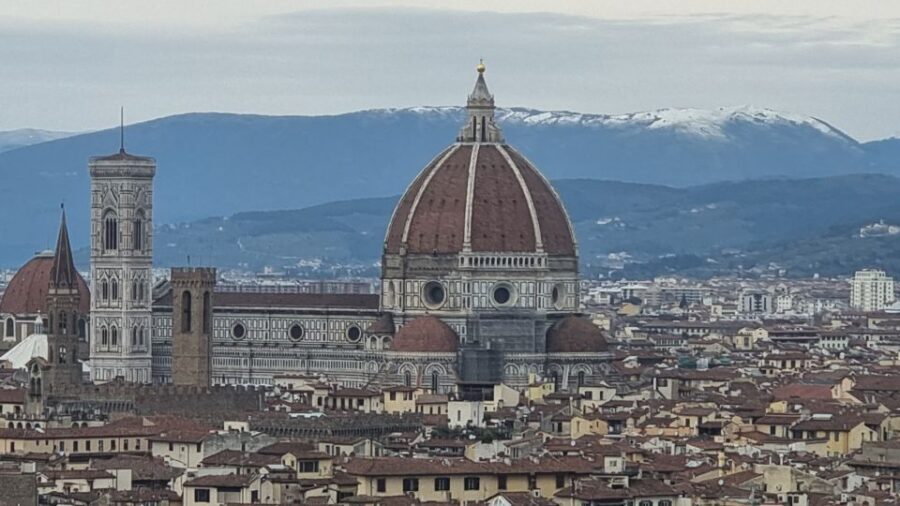
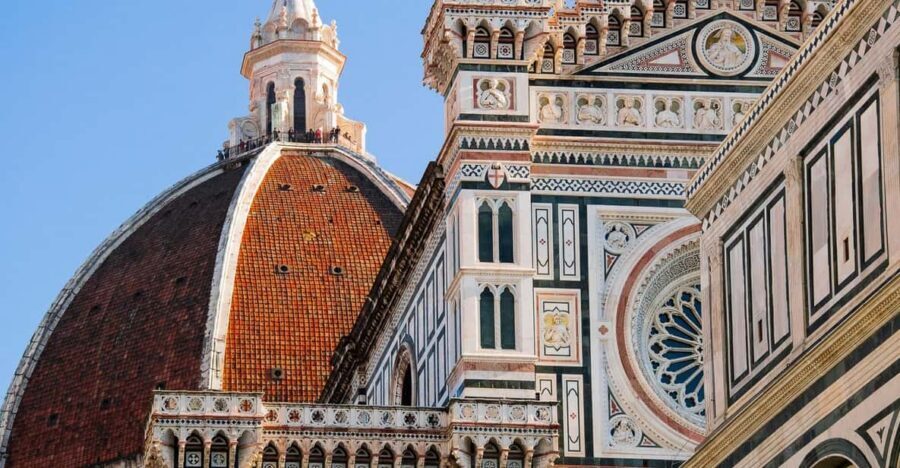
Your route’s heart is the Basilica of Santa Maria del Fiore, commonly known as the Duomo. The tour’s structure is clearly built around this area—more than half of the audios relate to the cathedral complex.
Why that’s a smart design: Florence is full of Renaissance masterpieces, but the Duomo area is where the city’s scale and ambition hit you first. When the audio keeps returning here, it’s basically telling you: take a moment, then take another, and notice more than you would on a quick pass.
Expect the guidance to focus heavily on what you can understand around the cathedral setting—how the main elements connect visually. Even if you decide not to enter every site, the audio can help you interpret what you’re looking at, which turns the area from “big famous building” into “place with a logic.”
Potential drawback to note: if your interest is mainly in exterior views and street-level landmarks, some cathedral-related content may lean toward interiors. The tour is still useful, but it may not fully match a “walk and look only” approach.
Battistero and Giotto’s Belfry: where to stop and look up
From the cathedral area, the tour concept moves outward with two obvious next anchors: the Battistero and the Giotto Tower (the belfry). These landmarks aren’t just famous names on postcards. They’re part of the same visual conversation around the cathedral complex.
The audio flow helps you “stack” meaning as you move. You’ll get quick explanations aimed at making the sites feel connected, not random stops. That’s especially helpful with these buildings, because they can look similar in style from certain angles while still being different in purpose and historical role.
Here’s how to get more out of these sections without rushing:
- Pick one solid viewpoint, then listen rather than hopping to a new corner every sentence.
- If you hear a detail you don’t see yet, take 10 extra seconds to align your angle.
If you’re traveling with someone and you both listen, the short segment length is a plus. If you’re traveling solo, it still works well because you’re not stuck waiting through long narration to get to the next highlight.
Santa Maria Novella to Piazza della Signoria: the Renaissance center of gravity
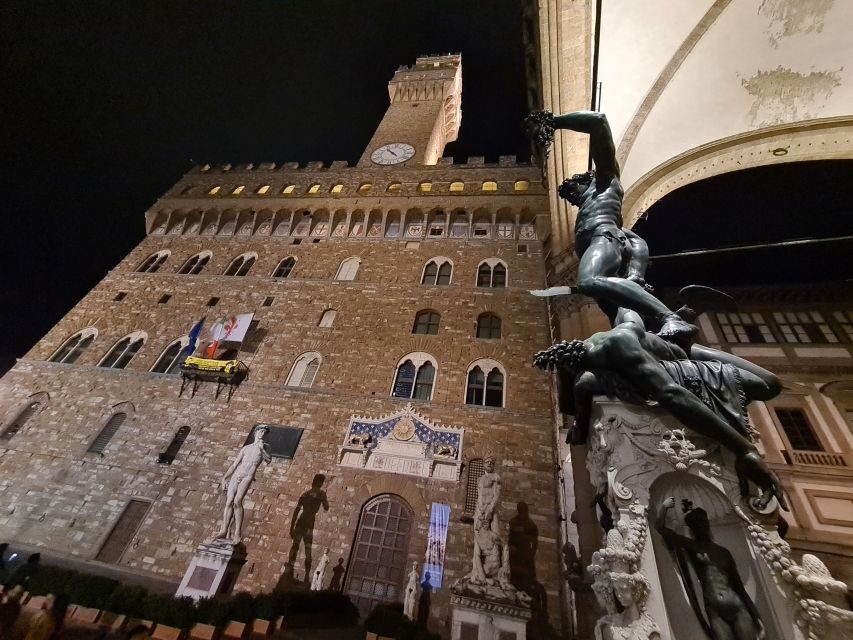
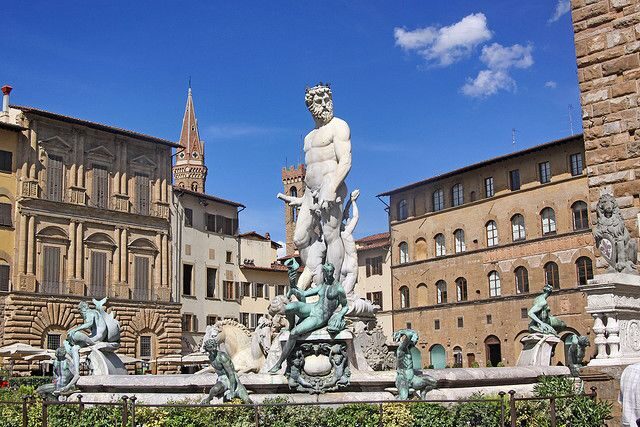
After the Duomo zone, the tour widens into Florence’s political and artistic center—Santa Maria Novella, then Piazza della Signoria and the Loggia della Signoria. This is where Florence starts to feel like a place that produced ideas, not just buildings.
Santa Maria Novella is a key stop because it adds another layer to how you read the city’s religious architecture beyond the Duomo. Then Piazza della Signoria hits you with the sense of civic power: this is where the city’s public life and Renaissance symbolism overlap.
The Loggia della Signoria is especially useful for audio listeners because it gives you something to focus on while you’re in the square. It’s easy to get overwhelmed by the scale and foot traffic, so having guided context can help you notice what’s actually worth your attention.
Practical tip: give yourself space here. If you’re trying to “speedrun” Florence on a schedule, this section will feel like a checklist. If you let it be a slow walk-with-wisdom moment, the audio becomes a real companion instead of a background track.
You can also read our reviews of more tours and experiences in Florence




Palazzo Strozzi: adding context beyond the postcard icons
Not every Florence stop is a cathedral-or-bust situation. Palazzo Strozzi fits into the tour as a reminder that Renaissance Florence wasn’t only about churches—it was also about wealthy families, banking power, and public image.
Even if you don’t go inside (since tickets aren’t included), the audio can help you understand what Palazzo Strozzi represents in the broader city story. It’s the kind of place where knowing the “why it matters” makes the architecture feel more intentional.
This is also a good moment to use the app’s flexible pacing. Because you don’t need to follow a group, you can pause longer if a facade detail catches your eye, then move on when you’re ready. That’s a big quality-of-life win in Florence, where sights sit close enough that your legs can get ahead of your brain fast.
San Lorenzo, the New Sagresty, and the Medici chain of influence
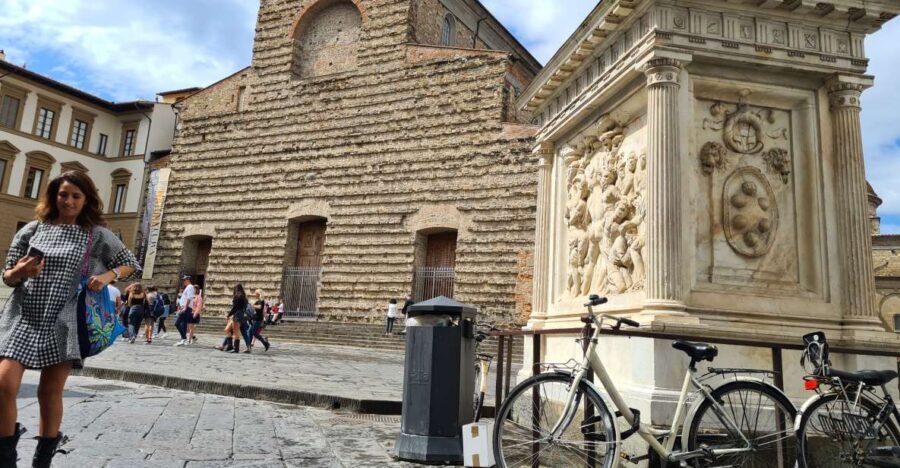
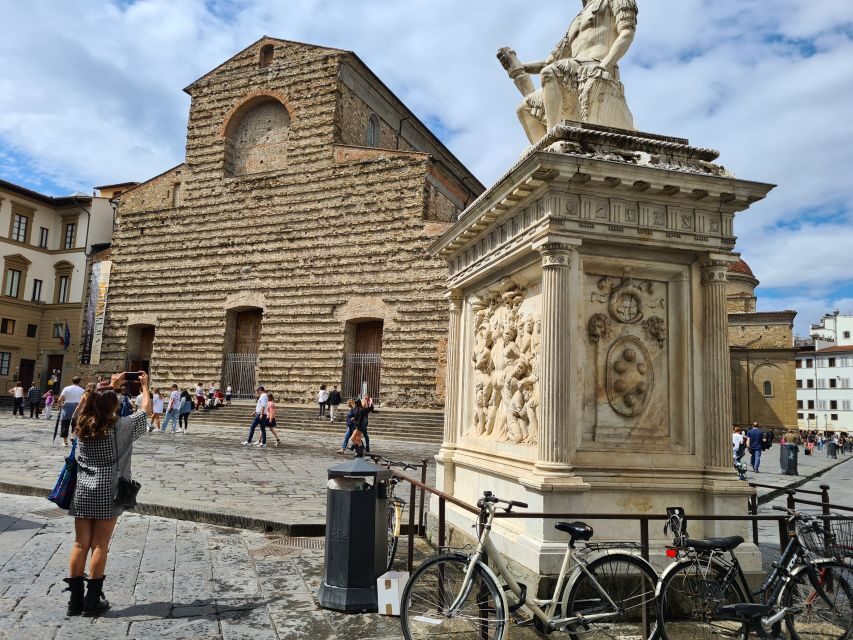
Next up are Basilica di San Lorenzo and the new Sagresty, followed by Cappelle medicee (Medici Chapels). This is the Medici zone, which means the tour isn’t just showing you beautiful spaces—it’s connecting power, patronage, and art.
If you want to understand why Florence art feels so connected to individuals and families, this is where the tour’s content can help you. The architecture and the famous names don’t float in space; they attach to history and influence.
One caution: the audio segments are capped at around 2 minutes each. That’s perfect for orientation, but it may feel light if you’re expecting deep scholarly explanation. Also, keep your expectations realistic about what the tour emphasizes. Since some tracks focus on church interiors, you’ll benefit most if you’re open to looking beyond the exterior view and letting the audio guide your attention to what matters inside.
If your day includes an entry you care about, this is a great area to plan around it. Listen near the point of interest, then decide whether to go in based on time and ticket availability.
Santa Croce and Cappelle medicee: a slower “names and meaning” section
Santa Croce brings another important Florence identity: the city’s artistic memory and the way cultural pride turns into physical places. The audio here can help you connect what you see to why it’s remembered.
Then the tour continues into Cappelle medicee, completing that Medici-related arc that gives the Renaissance its human face. These stops work best when you let the pacing loosen. Don’t treat it like a sprint from one facade to another. If you’re standing still for even 30 seconds while listening, you’ll catch more.
This part of the experience can be a strong fit for you if:
- you want the big names and what they relate to (the tour describes Renaissance figures tied to Florence),
- you like learning quick facts while walking,
- you’re okay with segments that are designed to be short.
It may not be the best fit if you’re trying to build a full, detailed education from audio alone. The tour’s design goal is quick usefulness in a limited time block.
Nuovo Teatro dell’Opera delle Cascine: ending with modern Florence
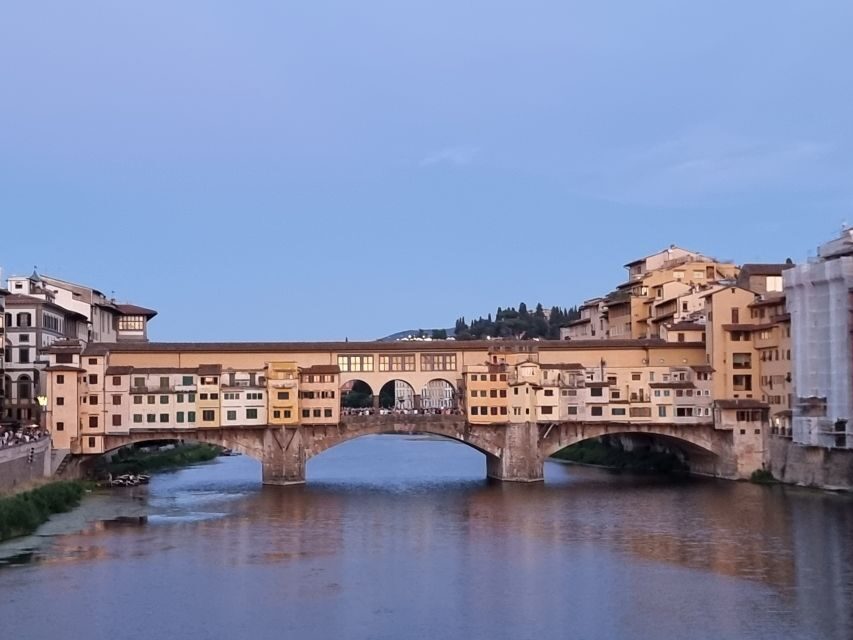
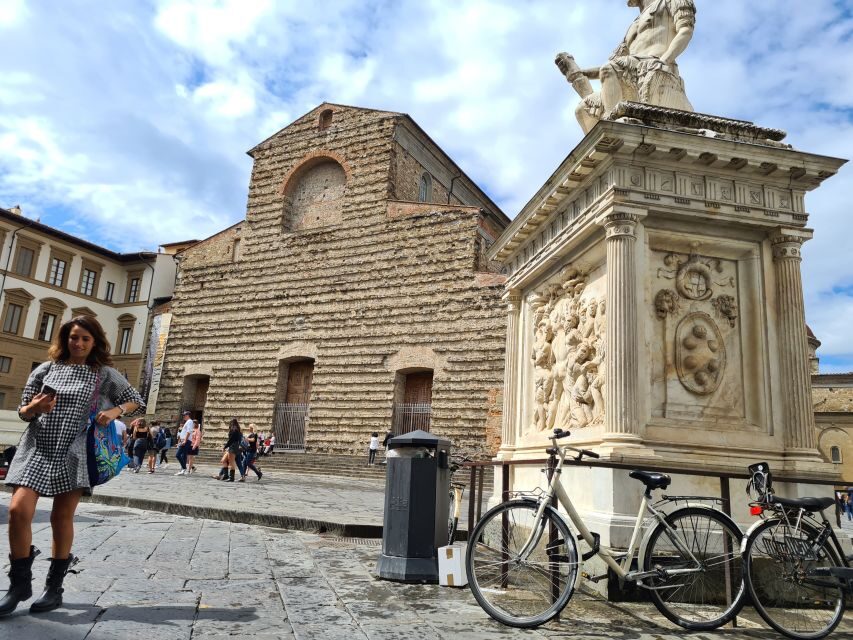
The itinerary concept includes a final stretch toward Nuovo Teatro dell’Opera delle Cascine, described as a sign of openness to the world and modernity. That’s a nice angle because it nudges you away from a purely “old masters” mindset.
This helps if your Florence day is otherwise heavy with Renaissance and religious landmarks. Ending near a modern cultural site gives your brain a place to land after the classic icons. It’s also practical: it gives you a natural “wrap-up” area so you don’t feel forced to keep marching once your energy drops.
Best ways to use the Itguides app without wasting time
This guide works best if you treat setup like part of the tour. You’ll want to download all the contents ahead of time, using a good cellular signal or Wi‑Fi. If you don’t, you may end up with gaps right when you most want the audio to kick in.
Here’s another smart move: try the free demo in the Itguides app before buying. That way, you can confirm the audio length and tone match what you want. The tour is explicitly built with short segments, which is ideal for orientation but not for everyone’s preferred learning style.
Also note: the audio is available in Italian, English, French, and German. Pick what you’ll actually enjoy when you’re tired at the end of a 6-hour walk. Switching languages mid-day can slow you down, and the experience is designed to keep momentum.
If you find you’re not using as much audio as you thought you would, that’s not necessarily a failure. Florence is a “see it first, then learn it” city. The guide can still add value even if you only rely on it at major decision points like Duomo, Signoria, and the Medici sites.
Should you book this smartphone self-guided Florence tour?
Book it if you want a low-cost, flexible way to connect the dots across Florence’s top Renaissance landmarks. At $4.70, it’s one of the better value styles of guide: quick audio, geo-routing, and a clear walkable circuit that fits into a 6-hour day.
I’d skip (or at least be cautious) if your priority is long-form storytelling or if you strongly prefer content from the outside only. Since parts of the narration may focus on interiors of churches, the match depends on how you plan to visit each site and how deep you want the explanations to go.
My rule of thumb: if you want context while walking and you’re comfortable handling tickets yourself, this is a strong fit. If you want a guided deep narrative and admissions handled for you, this style won’t replace that kind of tour.
FAQ
FAQ
Do I need a meeting point?
No. This is a self audio tour, and the meeting point is not needed. You can start where you want.
How long is the Florence smartphone self-guided tour?
The duration is listed as 6 hours.
Is admission or entry tickets included?
No. Tickets are not included.
What languages are available in the app?
The audio guide is available in Italian, English, French, and German.
Can I use the tour if I download it in advance?
Yes. It’s recommended to download all the contents with a good cellular signal or Wi-Fi before you start.
Is it wheelchair accessible?
It is marked wheelchair accessible.
Does the tour include audio descriptions for many sights?
Yes. The audio guide has more than 35 audio descriptions, each lasting no more than 2 minutes, and more than half are about the Cathedral of Santa Maria del Fiore.
More Guided Tours in Florence


More Tours in Florence




More Tour Reviews in Florence
- Tuscany Day Trip from Florence: Siena, San Gimignano, Pisa and Lunch at a Winery
★ 5.0 · 21,634 reviews - The Best tour in Florence: Renaissance & Medici Tales – guided by a STORYTELLER
★ 5.0 · 12,316 reviews