REVIEW · FLORENCE
Florence: Vasari Corridor and Uffizi Gallery Exclusive Tour
Book on GetYourGuide →Operated by Florence Tours by Made of Tuscany · Bookable on GetYourGuide
Florence has a secret route through power. This exclusive-style outing threads you from the Uffizi Gallery into the Vasari Corridor, where Florence looks totally different once you’re above the street level and moving like a Medici insider. I love that you get a guided look at world-famous masterpieces first, instead of rushing straight into the novelty of the corridor.
The second thing I really like is the way the tour connects art to the city’s rules of access. You learn why Giorgio Vasari built the corridor in 1565 and how it helped Cosimo I de’ Medici move between palaces without mixing with ordinary people.
The main consideration? The Vasari Corridor is a special passage, not a long second museum. At 45 minutes in the corridor, it can feel short if you’re expecting rooms full of extra artworks. And since the Uffizi is still the Uffizi, you may find certain highlighted works unavailable on specific dates.
In This Review
- Key highlights to look for
- Start at the Uffizi: where the tour makes the corridor make sense
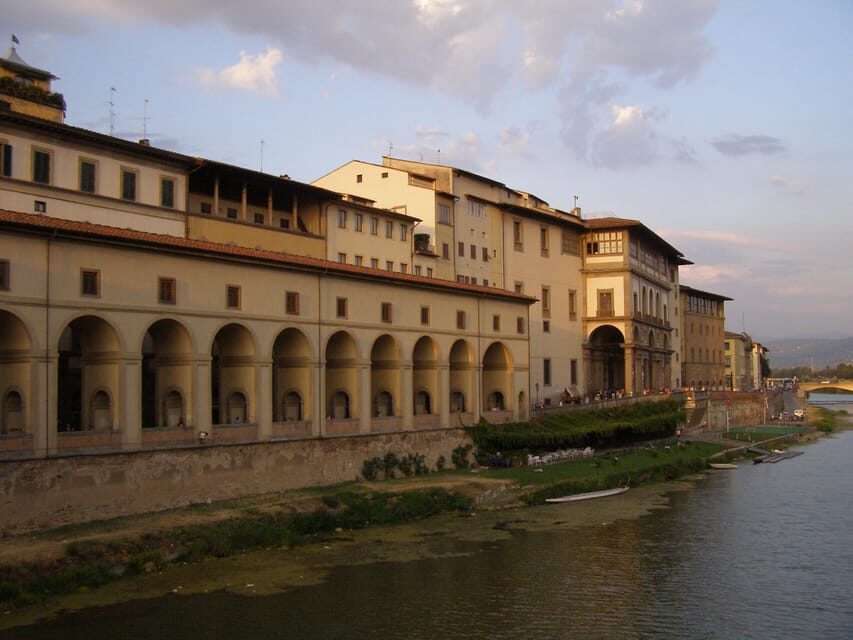
- The Vasari Corridor: a passage built for secrecy and status
- Ponte Vecchio from above: the view that changes your Florence map
- Art, power, and the Medici connection you can actually feel
- Practicalities that affect your comfort (more than you’d think)
- Price and value: what $324 buys you in Florence time
- Who should book this tour
- Should you book this Florence Vasari Corridor and Uffizi exclusive tour?
- FAQ
- Where is the meeting point for the tour?
- Does the tour include both the Uffizi Gallery and the Vasari Corridor?
- How long is the tour, and how much time is spent in each part?
- What famous artworks are covered during the Uffizi portion?
- What restrictions should I know before I go inside?
- Is the tour wheelchair accessible?
- What do I need to bring with me?
- What languages are available for the live guide?
Key highlights to look for
- Direct access from the Uffizi means you start with the art and then step into the corridor without the usual scramble.
- A 45-minute Vasari Corridor walk gives you a rare, elevated view of Florence’s streets and bridges.
- Ponte Vecchio from above is the view you’ll keep picturing later, because it changes how the river and shops make sense.
- Medici and Vasari context turns the corridor from a fun walk into a story about control, privacy, and prestige.
- Guides like Jadranka and Francesca have been praised for connecting paintings, Florentine history, and Medici details with clarity and even humor.
Start at the Uffizi: where the tour makes the corridor make sense
The tour starts at the Neptune Fountain in Signoria Square, and you’ll head into the Uffizi as your first major stop. Plan on using this opening time well, because the Uffizi portion is where you build the art context you’ll carry into the corridor walk.
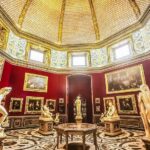
Your Uffizi time is guided for about 2 hours, and the focus is on big-name works you already know from postcards—but you get help seeing what matters in them. The itinerary highlights pieces like Botticelli’s Venus, Michelangelo’s Tondo Doni, Leonardo da Vinci’s Annunciation, and Titian’s Venus of Urbino. Those aren’t random choices. They’re the kind of anchors that help you understand why Florence’s court culture prized certain artists and themes.
One practical perk here is pacing. Inside a museum like the Uffizi, it’s easy to get stuck behind shoulders. When you’re with a guide, you can often get positioned to actually see, then move before crowds grind the experience down. Private-group style also means you’re less likely to be swept into a generic “stand here, look briefly” rhythm.
You can also read our reviews of more museum experiences in Florence


The Vasari Corridor: a passage built for secrecy and status
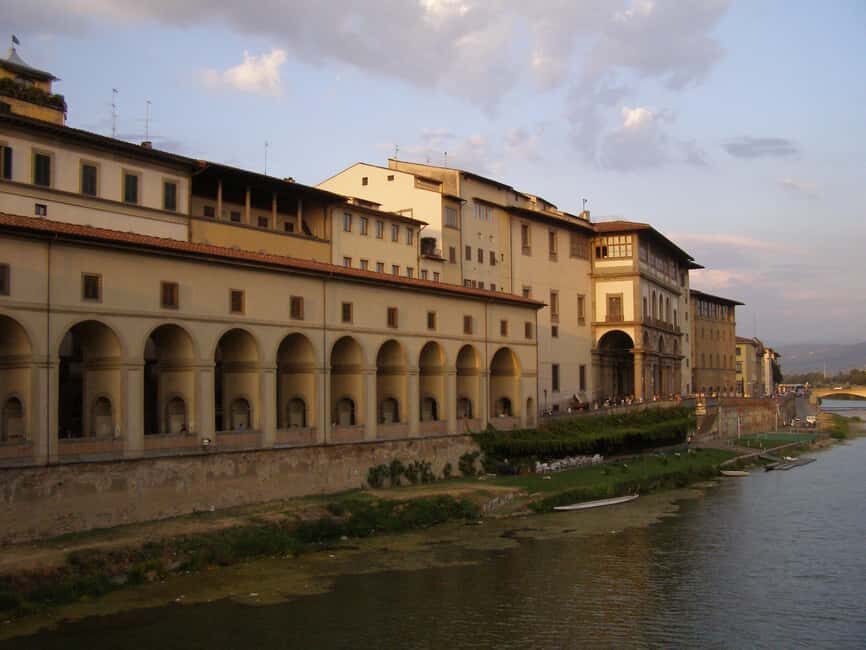
After the Uffizi, you move into the star of the show: the Vasari Corridor. This is exclusive access, not just a normal viewing route, and that changes what the experience feels like. Instead of thinking of the corridor as a museum add-on, you experience it as a working connection between places.
You’ll spend about 45 minutes walking through the corridor with your guide. The big lesson is historical: the corridor was commissioned in 1565 and designed by Giorgio Vasari, and it took only five months to build. That speed matters because it suggests something urgent—this was not a decorative flourish. It was a solution.
The tour frames it as the Prince’s Path, created so Cosimo I de’ Medici could travel between palaces without mixing with ordinary people. That’s the key to how you should think about the walk. You’re not just touring architecture. You’re walking through a statement about privacy, security, and rank.
Also, reset your expectations before you go in. One caution: the corridor is a passage. It’s not meant to be a long series of galleries. If you expected a packed, art-filled detour, you might feel the time goes by quickly. But if you treat it like a rare “Florence from above” experience, the 45 minutes tends to land perfectly.
Ponte Vecchio from above: the view that changes your Florence map
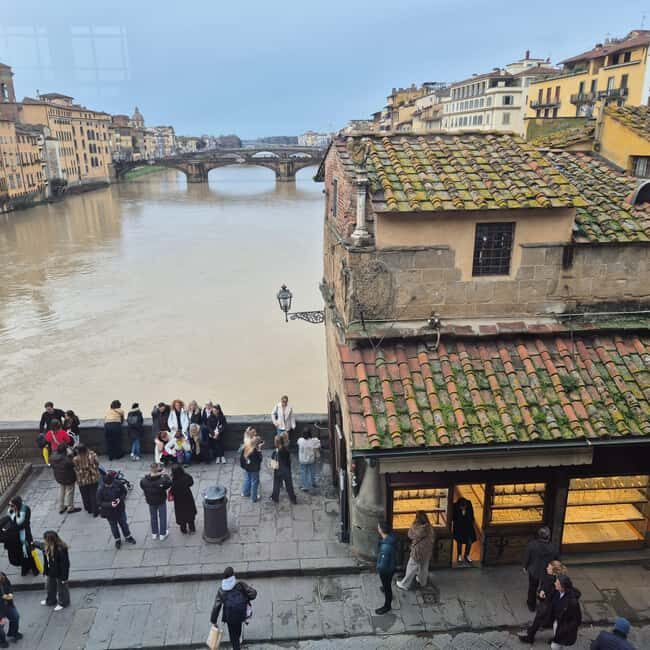
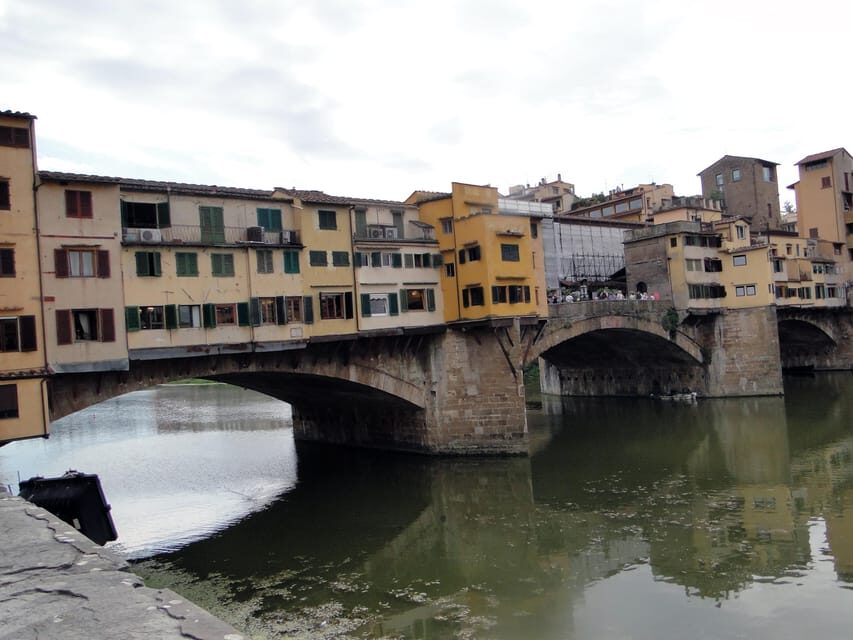
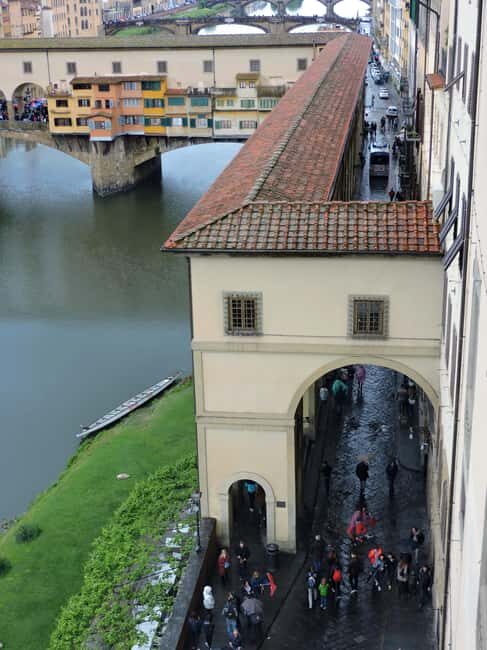
Crossing the Ponte Vecchio while on this route is where a lot of people start understanding why the corridor is such a big deal. From street level, Ponte Vecchio is all shops and motion. From the corridor level, you get a more geometric view—river, bridge, buildings, and sightlines all snap into place.
This is also where the tour’s perspective storytelling kicks in. You’re moving through a corridor that was designed to control who sees what and when. So every glance out windows or along the corridor feels a bit like you’re studying a city plan the Medici would recognize.
If you like architecture and urban layout, you’ll appreciate the “up” vantage. Even if you’ve been to Florence before, this view can be surprisingly new because you’re seeing the bridge and the surrounding streets from a protected, elevated line.
Art, power, and the Medici connection you can actually feel
What I like about this tour is that it doesn’t treat the Vasari Corridor as a standalone attraction. It ties your walking route back to why the Medici mattered for art and access in the first place.
Once you’ve spent time in the Uffizi looking at works commissioned and admired within court culture, the corridor becomes more than a scenic walk. You start noticing the logic: the corridor connects palaces without drawing the public crowd into elite spaces. It’s a physical system for controlling movement and visibility.
That’s also why certain guide approaches really shine. In the past, guides like Jadranka have been praised for linking stories to specific artworks and connecting Medici power to how artists rose. Another guide, Francesca, has stood out for bringing history and painting context together in a way that keeps the talk understandable and not heavy.
One more tip: keep your eyes on the guide for what to notice during the corridor. The corridor’s most interesting details tend to be easy to miss if you’re just sightseeing with your phone.
Practicalities that affect your comfort (more than you’d think)
This is a private group tour with a live guide. That matters because you’re not negotiating a herd. You also get multiple languages: Italian, English, Spanish, French, and German. If you’re traveling with someone who wants clear explanations in their own language, this is a real advantage.
The tour is listed as wheelchair accessible, which is helpful to know if you need an alternative pace. Still, come prepared: you’ll be walking through major museum spaces and then a corridor passage with rules about what you can bring.
So do a little “Florence luggage triage” before the day. The tour does not allow large bags, backpacks, food and drinks, or plastic bottles, and oversize luggage is out. Bring a passport or ID card. This kind of restriction is common for exclusive-access experiences, and it helps keep entries smoother.
One logistics note that can help your brain: even though the meeting point is the Neptune Fountain in Signoria Square, the tour begins at the Uffizi Gallery. Expect a short transition.
Also, your tour finishes at the Grotta del Buontalenti. That’s a handy end point if you want to wander nearby afterward, but it also means the day isn’t structured around returning to your starting location.
- Tuscany Day Trip from Florence: Siena, San Gimignano, Pisa and Lunch at a Winery
★ 5.0 · 21,634 reviews - The Best tour in Florence: Renaissance & Medici Tales – guided by a STORYTELLER
★ 5.0 · 12,316 reviews



Price and value: what $324 buys you in Florence time
At $324 per person for about 2.5 hours, this is not a casual add-on. You’re paying for two things that usually cost money and patience separately: exclusive corridor access and a guided Uffizi experience.
Here’s how I judge the value. If you want to see the Uffizi independently, you still spend time lining up and piecing together a plan. If you want the corridor experience, you’re dealing with restrictions and access that most visitors don’t get. This tour combines both, and it includes exclusive access to the Vasari Corridor plus Uffizi skip-the-ticket-line access.
Private-group style also reduces friction. When a guide knows where to stand and how to pace stops, you spend more time actually seeing and less time waiting for a crowd to thin.
Is it pricey? Yes. Is it worth it? For the right kind of visitor, it is. If you’re the type who enjoys “how the city works” as much as “what masterpieces look like,” the Medici + architecture + elevated views combo is exactly the payoff.
If you’re only after a quick highlight list and a relaxed museum stroll, you might prefer a more open-ended Uffizi visit and then plan a different (non-corridor) Florence route.
Who should book this tour
I’d put this on your shortlist if you:
- Want Uffizi masterpieces explained with context, not just names.
- Like architecture and city planning, especially how power shapes access.
- Enjoy short, focused experiences with exclusive access.
- Prefer private-group pacing over big-group shuffle.
You might skip it if you:
- Need a long, slow-paced museum day where you can wander freely.
- Expect the corridor to feel like a full museum with many artworks.
- Get easily irritated by the idea of “on some days, not everything is viewable,” because museum availability can vary.
Should you book this Florence Vasari Corridor and Uffizi exclusive tour?
If you’re willing to pay for time savings and rare access, I think this is a strong choice. The pairing is smart: the Uffizi gives you art context, then the Vasari Corridor gives you the physical context of Medici control.
My advice is to book if you love seeing Florence from unusual angles and you want a guide to connect the dots between artworks, artists, and how the Medici shaped what could be seen and by whom. Book with realistic expectations for pacing—45 minutes in the corridor is the point, not an entire additional museum day.
FAQ
Where is the meeting point for the tour?
You meet in front of the Neptune Fountain in Signoria Square, Florence.
Does the tour include both the Uffizi Gallery and the Vasari Corridor?
Yes. You’ll get a guided tour of the Uffizi Gallery first, then exclusive access to the Vasari Corridor with a guided walk.
How long is the tour, and how much time is spent in each part?
The full experience lasts about 2.5 hours, with around 2 hours for the Uffizi and about 45 minutes walking through the Vasari Corridor.
What famous artworks are covered during the Uffizi portion?
The tour highlights works including Botticelli’s Venus, Michelangelo’s Tondo Doni, Leonardo da Vinci’s Annunciation, and Titian’s Venus of Urbino.
What restrictions should I know before I go inside?
You should not bring oversize luggage, food and drinks, luggage or large bags, backpacks, or plastic bottles.
Is the tour wheelchair accessible?
Yes, it is listed as wheelchair accessible.
What do I need to bring with me?
Bring a passport or an ID card.
What languages are available for the live guide?
The live guide is available in Italian, English, Spanish, French, and German.
More Museum Experiences in Florence

More Tours in Florence



More Tour Reviews in Florence
- Tuscany Day Trip from Florence: Siena, San Gimignano, Pisa and Lunch at a Winery
★ 5.0 · 21,634 reviews - The Best tour in Florence: Renaissance & Medici Tales – guided by a STORYTELLER
★ 5.0 · 12,316 reviews