REVIEW · FLORENCE
Santa Croce Church Guided Tour in Florence
Book on GetYourGuide →Operated by StarEurope Tours · Bookable on GetYourGuide
Florence gets serious fast inside Santa Croce. In just about an hour, you’ll move through world-famous names and real working art—Giotto frescoes, Donatello detail work, and the kind of architecture that makes you stop mid-step. I especially like how a certified guide keeps the place readable and how the radio system means you won’t miss the explanations while you’re looking up.
My second favorite part is the concentration of big ideas. You’re not just admiring paintings; you’re seeing why this church earned the nickname Temple of the Italian Glories, plus how later artists (and later patrons) left their mark in chapels and tombs. One drawback to plan for: the dress code is strict, and if you don’t cover knees and shoulders (no shorts, no sleeveless tops), you can be refused entry without a redo.
In This Review
- Key points I’d mark on your Florence map
- Why Santa Croce feels like a greatest-hits album
- Meeting at Dante Alighieri: start on time, start smart
- Inside the Basilica: Gaddi frescoes and Giotto’s storytelling power
- The Donatello and Niccolini moments you might miss on your own
- Brunelleschi’s Cappella de’ Pazzi: architecture that feels calm
- Cemetery area and the “back to life” restoration story
- Finishing with the Bell Tower, Crypt, and 16 chapels
- Price and value: is $69 worth it in Florence?
- Who this tour suits best (and who might want a different plan)
- Practical tips so you don’t lose time at the door
- Should you book this Santa Croce guided tour?
- FAQ
- How long is the Santa Croce Church guided tour?
- Where do I meet for the tour?
- What is included in the price?
- What languages are offered?
- What dress code do I need?
- Is the tour wheelchair accessible?
Key points I’d mark on your Florence map
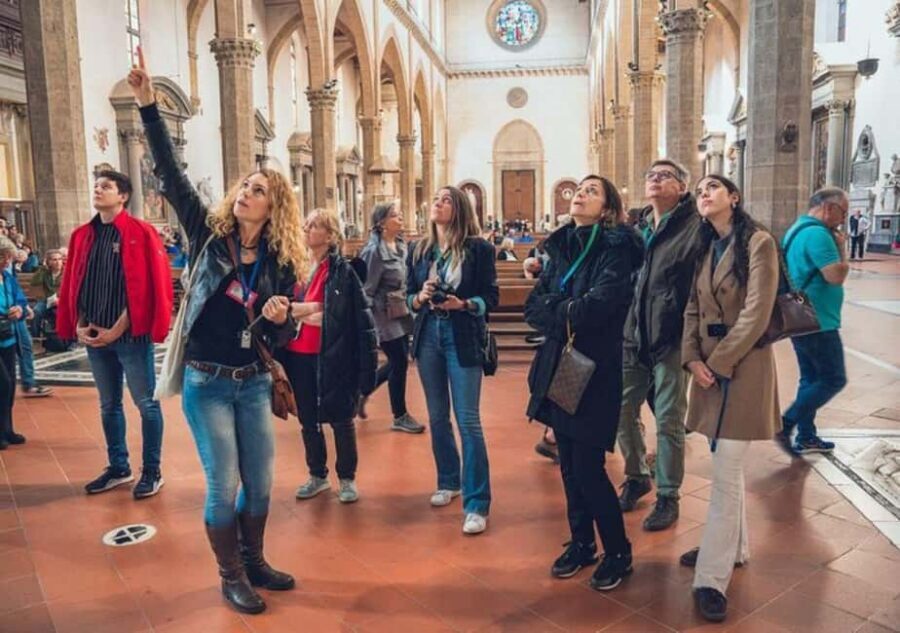
- Official certified guide + radio system: you hear the story without craning your neck
- Michelangelo’s legacy is here: Santa Croce is a true “who’s who” stop
- Giotto and Donatello details: look closely and you’ll notice why people keep coming back
- Brunelleschi’s Cappella de’ Pazzi: architectural harmony in a smaller, calmer setting
- Monumental cemetery restoration: flood-damaged paintings are back to view
- Optional wine tasting add-on: Tuscan wines with appetizers, guided by a wine expert
Why Santa Croce feels like a greatest-hits album
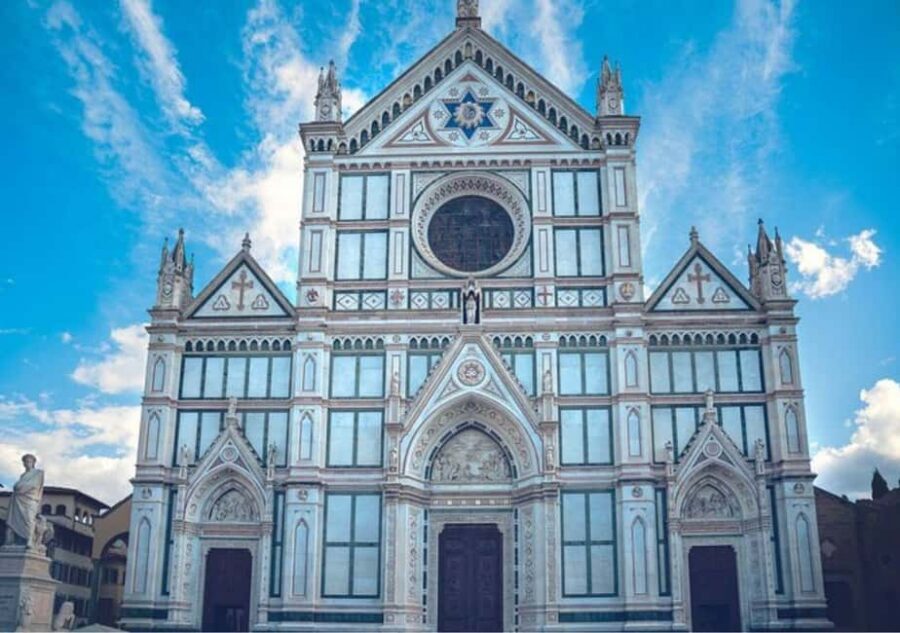
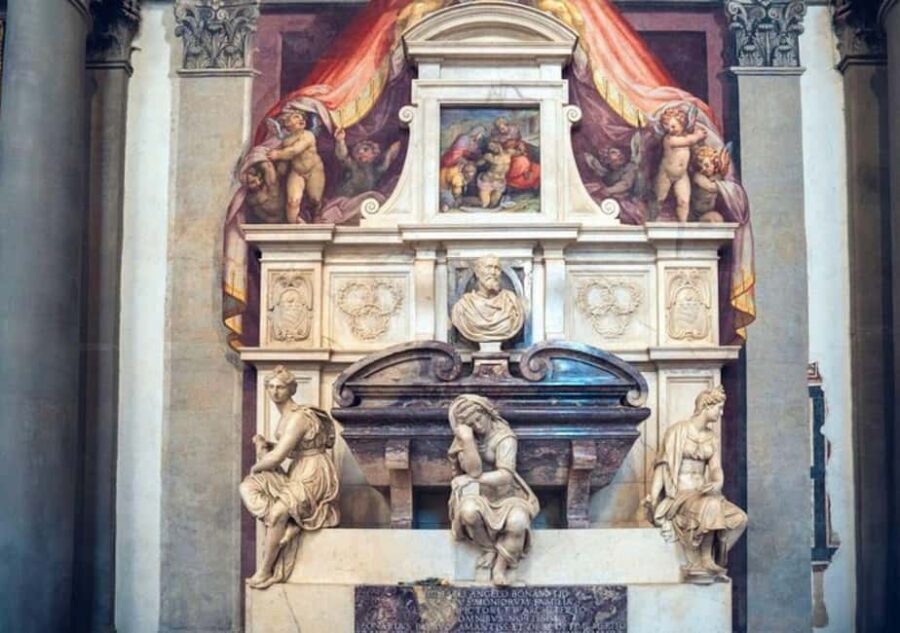
Santa Croce is one of those places where the whole building seems built around memory. It’s the final resting place for iconic Italians like Michelangelo, Galileo, and Machiavelli, so the vibe isn’t only spiritual—it’s civic. Florence didn’t keep these names in a museum. It kept them in a working church, with art and storytelling layered on top.
Before you even reach the doors, you’re in Piazza di Santa Croce, the same square that lights up with Calcio Storico in June. That matters because the setting reminds you Santa Croce isn’t frozen in time. It lives in real city rhythms—even if your feet are the ones doing the walking.
You can also read our reviews of more guided tours in Florence
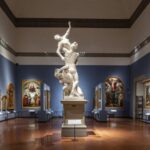
Meeting at Dante Alighieri: start on time, start smart
Your meeting point is next to the Statue of Dante Alighieri in Piazza della Santa Croce (Piazza della Santa Croce, 1 Firenze). Show up 15 minutes early so you can get grouped up and avoid the classic Florence problem: everything is close, until it isn’t. If you’re late, the tour won’t wait for you.
Once you’re inside the church, you’ll see why a planned route helps. Santa Croce is visually busy, and the main point of a guided visit is to prevent the “I saw a lot but remembered little” trap. You’ll get a sequence that keeps the art connected: who’s where, what you’re looking at, and why it matters.
Inside the Basilica: Gaddi frescoes and Giotto’s storytelling power
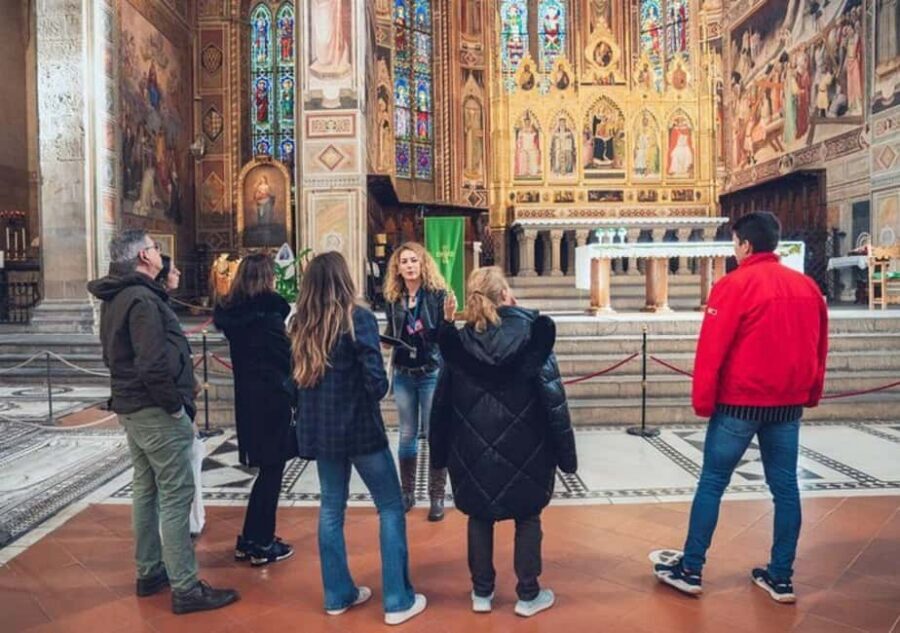
The heart of the visit is the Basilica of Santa Croce, a Renaissance art showcase that rewards you for slowing down. You’ll start with the fresco work in the Cappella Maggiore, where you can admire paintings by Gaddi. These frescos tell the story of Santa Croce itself, so it’s a strong way to orient yourself. Instead of drifting from chapel to chapel randomly, you learn the church’s “why” early, then the “what” makes sense.
Then come the Bardi and Peruzzi Chapels, where you’ll see Giotto’s scenes from the lives of St. Francis and St. John. Giotto’s strength isn’t fancy trick lighting—it’s narrative clarity. In a guided tour format, you’ll have the chance to understand what you’re looking at, not just admire the fact that it’s old and famous.
This stop is a great place to ask yourself a question: do I want to be impressed, or do I want to understand? Santa Croce is ideal for understanding, especially when your guide is actively pointing out what to focus on.
The Donatello and Niccolini moments you might miss on your own
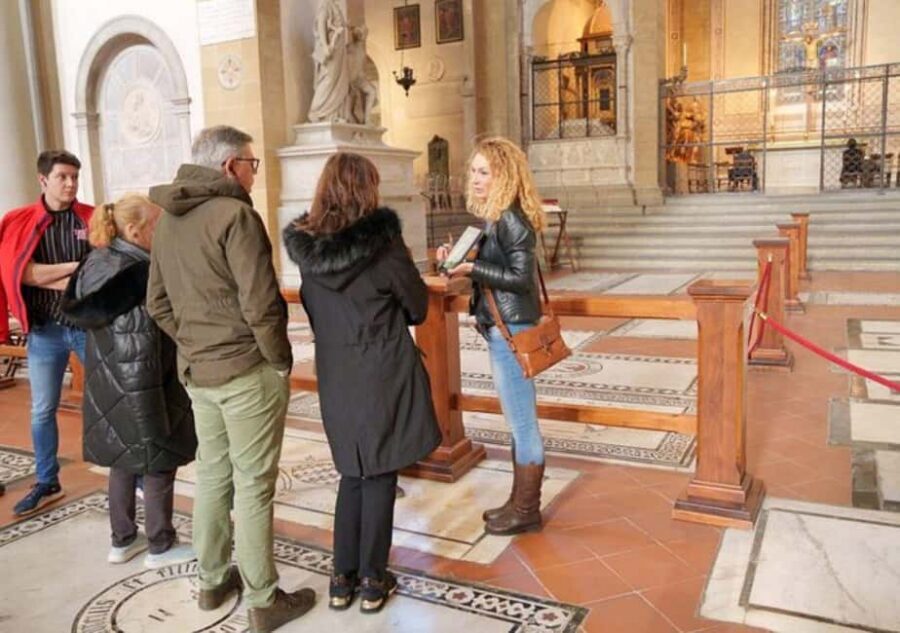
As you move through the space, the tour points out smaller but memorable landmarks. To the left of the entrance, you’ll see an inspiring memorial dedicated to Niccolini, a playwright who’s described here as a forerunner of the Statue of Liberty. It’s a nice reminder that Florence’s creative influence didn’t stay local.
You’ll also learn about Donatello’s jewel-like crucifix, described as a Renaissance masterpiece. The key value of a guided visit is that Donatello can be easy to walk past if you don’t know what you’re hunting for. With a guide, you get the reading of the object—the kind of detail-oriented explanation that turns a quick glance into a real moment.
This is where I’d expect you to start looking with intention. Not every stop will feel like a “wow” on the first look, but Donatello’s work is the kind that grows on you once someone helps you see what to notice.
Brunelleschi’s Cappella de’ Pazzi: architecture that feels calm
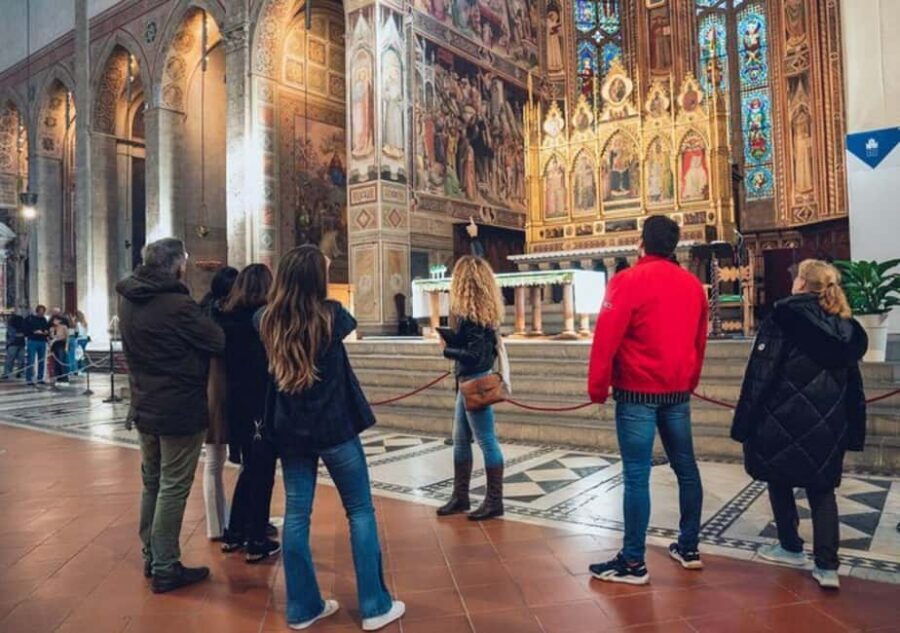
Next you get an architectural payoff in Brunelleschi’s Cappella de’ Pazzi. Even if you’re not a dedicated architecture person, you’ll probably feel the difference. The chapel’s harmony is the point: it’s a moment where the building’s design becomes part of the experience, not background noise.
This stop also works well because it breaks the rhythm. Early on, you’re absorbing fresco scenes and sculptures. Here, the focus shifts to structure and proportion. That contrast helps your brain store the visit instead of just tagging it as a famous church.
If you like “I can see the logic of this place” experiences, this is one of Santa Croce’s strongest reasons to go with a guide rather than self-guided wandering.
- Tuscany Day Trip from Florence: Siena, San Gimignano, Pisa and Lunch at a Winery
★ 5.0 · 21,634 reviews - The Best tour in Florence: Renaissance & Medici Tales – guided by a STORYTELLER
★ 5.0 · 12,316 reviews


Cemetery area and the “back to life” restoration story
One of the more affecting parts of this tour is the monumental cemetery area. Restoration has brought flood-damaged paintings back to life, so you’re not just looking at preserved art—you’re seeing the result of recovery work.
This is also an emotional pivot. Churches can feel like they’re only about the living, but here the space quietly asks you to consider legacy, loss, and memory. In a one-hour tour, it’s a meaningful way to end the art sightseeing with something heavier than aesthetics.
When restoration is part of the conversation, you tend to look more carefully. You start asking, what was damaged, what was saved, and what you can still feel in the artwork today.
Finishing with the Bell Tower, Crypt, and 16 chapels
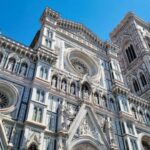
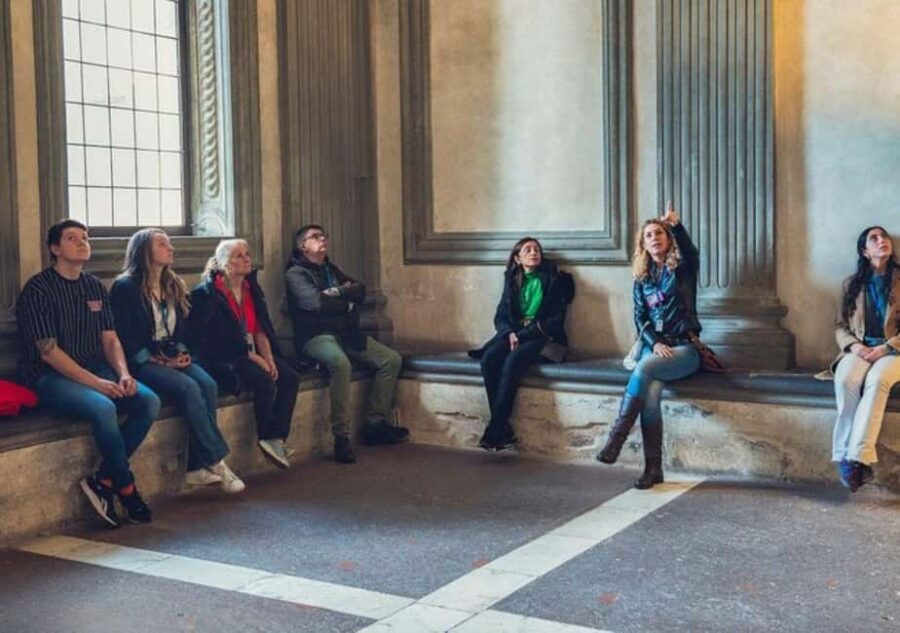
The tour’s route then leads outside again to admire the polychrome marble façade, and you’ll wrap up with the Bell Tower, the Crypt, and all 16 chapels. It’s a lot to fit, which is why the time matters: this isn’t a leisurely church stroll. It’s a “see the important parts in a smart order” visit.
You’ll likely spend the last stretch moving between spaces that feel different in temperature, light, and sound. Crypts and chapels naturally slow you down. Even if you’re moving quickly for the tour schedule, the space nudges you toward quiet attention.
At the end, you’re free to revisit highlights at your leisure. That’s a practical perk: go back to the chapel where you want one more look, or linger where the guide’s explanation made something click.
Price and value: is $69 worth it in Florence?
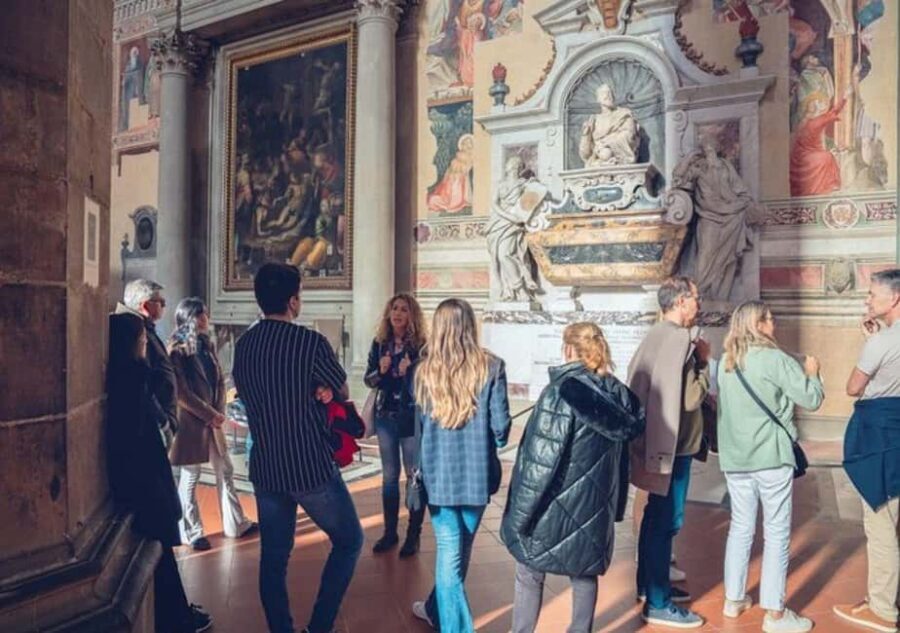
The price is $69 per person for a tour lasting about 1 hour, including:
- an official certified guide
- a radio system
- entrance tickets and reservations
For Florence, that combination is usually what makes a guided museum-church visit feel worth it. You’re paying for access and context. Without a guide, you can still enjoy Santa Croce, but you’d likely spend more time asking questions you don’t know how to ask—or missing key details that take the art from famous to meaningful.
If you add the wine upgrade, the experience can run about 1.5 hours total. The wine option includes guided tasting by a wine expert plus a platter of Tuscan appetizers. This can be great if you’re the type who likes a switch in pace: art first, then a more social tasting moment before you head off to your next stop.
Who this tour suits best (and who might want a different plan)
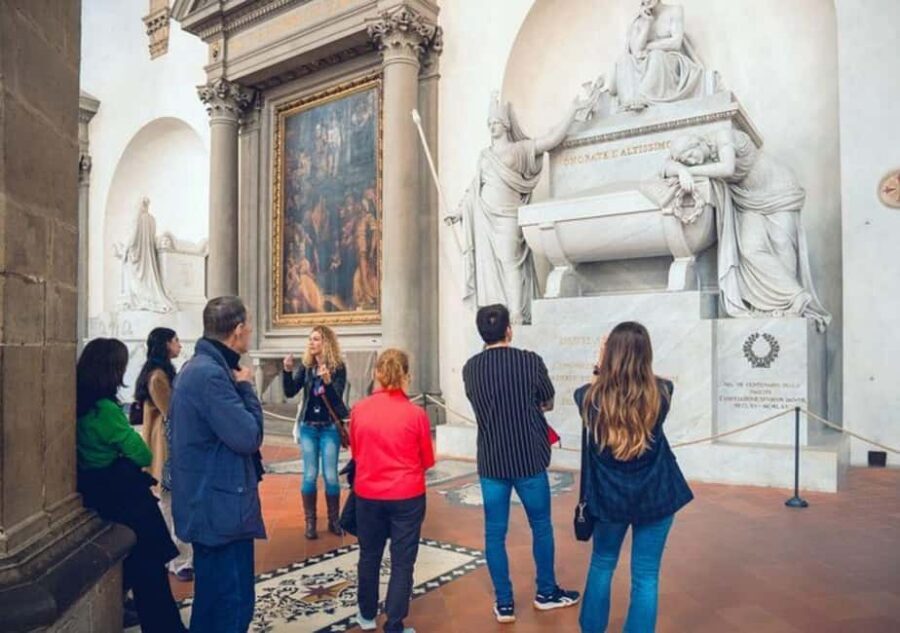
This one-hour structure works best if:
- you want the Santa Croce highlights without turning your day into a research project
- you appreciate guided explanations while you’re actively looking at art
- you have limited time but still want tombs, chapels, and major artworks
It may not be the best fit if you want to sit in silence for long stretches or if you’re trying to slow-walk every inch with no schedule at all. Santa Croce can reward that style—but this particular tour is built for efficiency and clarity.
Also, the tour is wheelchair accessible, and the information notes wheelchair and stroller accessibility, which is a real plus if you’re managing mobility needs in a dense historic area. Comfortable shoes still matter. Florence isn’t designed for slow flip-flops.
Practical tips so you don’t lose time at the door
Plan around the dress code. For worship spaces and selected museums, you need knees and shoulders covered for both men and women. That means no shorts and no sleeveless tops. If you show up dressed wrong, you can be refused entry with no reschedule or refund.
Bring an ID or passport, and wear shoes you trust on stone floors. Weather matters too because it operates in all conditions, and you’ll be moving outside briefly. A light layer is often smart in Tuscany—sun can turn into wind fast.
On the guide side, the experience has been praised for guide quality and clarity. Names like Cinthia and Ilaria have come up with comments about being friendly, patient, and speaking excellent English. That kind of guide skill matters here because Santa Croce’s art history is dense, and good guidance helps you avoid the “I saw it but didn’t absorb it” feeling.
One more note: there has been at least one case where a guide didn’t show up for a booking. That’s rare in the context of how these tours normally run, but it’s a reminder to keep your phone charged and your start-time window realistic.
Should you book this Santa Croce guided tour?
I’d book it if you want the fastest path to Santa Croce’s biggest hits—tombs of major Italian figures, Giotto fresco scenes, Donatello’s crucifix details, Brunelleschi’s chapel harmony, and the restoration story in the cemetery area—without guessing your way through. $69 feels fair because you’re getting guide expertise, radio assistance, and reserved entry, all wrapped into a focused about-one-hour visit.
I’d consider the wine option if you want to turn the stop into a fuller Tuscan break. Art then wine is a good combo when you’re pacing your Florence day and want something relaxed after chapel intensity.
FAQ
How long is the Santa Croce Church guided tour?
The tour lasts about 1 hour. If you choose the wine tasting option, it becomes about 1.5 hours.
Where do I meet for the tour?
Meet next to the Statue of Dante Alighieri in Piazza della Santa Croce, 1 Firenze. Arrive 15 minutes early.
What is included in the price?
Included are an official certified guide, a radio system, and entrance tickets and reservations. If you select the wine option, wine tasting and appetizers are included too.
What languages are offered?
The live guide is available in French, Italian, English, German, and Spanish.
What dress code do I need?
No shorts or sleeveless tops. Knees and shoulders must be covered for both men and women.
Is the tour wheelchair accessible?
Yes. The tour is wheelchair accessible, and it’s also described as stroller accessible.
More Guided Tours in Florence
More Tours in Florence


More Tour Reviews in Florence
- Tuscany Day Trip from Florence: Siena, San Gimignano, Pisa and Lunch at a Winery
★ 5.0 · 21,634 reviews - The Best tour in Florence: Renaissance & Medici Tales – guided by a STORYTELLER
★ 5.0 · 12,316 reviews