REVIEW · FLORENCE
Skip the Line: Guided Tour of Michelangelo’s David at Accademia
Book on Viator →Operated by Crown Tours · Bookable on Viator
David feels bigger up close.
This guided skip-the-line experience at Florence’s Accademia Gallery is built around one big moment—standing in front of Michelangelo’s David—but it doesn’t stop there. You’ll get a clear, guided path through the museum so the art feels connected, not like random rooms you rush through.
I also like that the tour covers more than the headline statue. You’ll move beyond David to see the museum’s musical instruments collection and Michelangelo’s Prisoners, including why some figures were left unfinished. It’s a smarter use of your hour than doing Accademia on your own and trying to guess what matters.
One thing to keep in mind: Florence crowds can make check-in feel chaotic. With a meeting at Via Ricasoli 39 and groups forming at the entrance, I’d plan to arrive a few minutes early so you can spot the Crown Tours team fast and avoid stress.
In This Review
- Key things to know before you go
- Why Accademia’s David tour beats going solo
- Via Ricasoli 39: check-in and finding Crown Tours fast
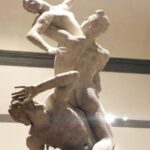
- Colosso Hall first: Rape of the Sabines sets the tone
- The Musical Instruments room: the Medici connection you might miss
- Michelangelo’s Prisoners: why unfinished figures hit hard
- Facing David: how to actually look at Michelangelo’s details
- Plaster cast-making: the craft lesson that makes marble make sense
- Paintings and the Late Gothic pivot with Lorenzo Monaco
- Timing, group size, and crowd reality inside the museum
- Price and value: is $32.44 a good deal?
- Should you book this David skip-the-line tour?
- FAQ
- FAQ
- How long is the Skip-the-Line guided tour of Michelangelo’s David?
- What language is the tour offered in?
- What is the price per person?
- Where do I meet the guide?
- Does this tour include museum admission?
- How many people are in the group?
- Can I cancel and get a refund?
Key things to know before you go
- Priority entry to the Accademia helps you get moving quickly toward David without burning time in the main bottleneck.
- Colosso Hall stop gives you context first, including the Rape of the Sabines and how the guide frames Florence’s art story.
- Musical instruments at Accademia puts Medici-era violins and antique pianos in the same conversation as Renaissance sculpture and design.
- Michelangelo’s Prisoners teaches you to look at unfinished stone and what it reveals about his process.
- Plaster cast-making display explains how artists trained and refined forms before carving marble.
- Late Gothic Hall with Lorenzo Monaco rounds out the visit with a clear before-and-after shift toward Renaissance style.
Why Accademia’s David tour beats going solo
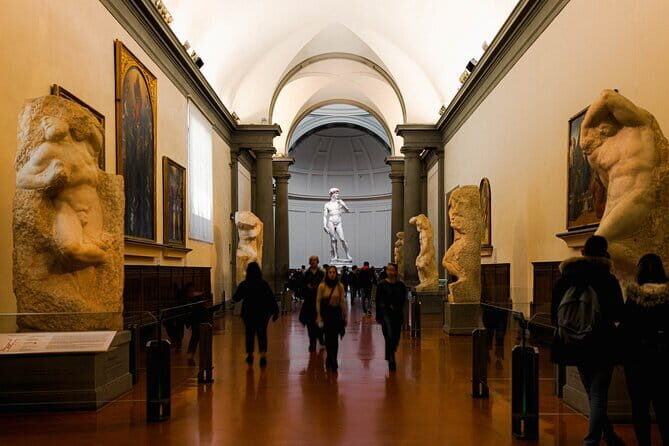
Accademia is one of those places where a good plan matters. The museum is famous for one statue, yes, but the real win is how long it takes to find your rhythm inside—lines at the entrance, crowd flow through corridors, and the fact that the best moments are spread across multiple rooms.
A guided skip-the-line format changes the whole feel of the visit. Instead of spending your energy figuring out where to stand and what to read, you’re given a route that keeps you moving. And because the group is capped at 19 people, you’re less likely to get swallowed by the herd.
This tour is also built around context. David isn’t presented as an isolated celebrity statue. You get framing moments—Rape of the Sabines in Colosso Hall, Michelangelo’s earlier working ideas in the Prisoners room, and even craft methods like plaster casts. By the time you reach David, you’re primed to notice details.
You can also read our reviews of more guided tours in Florence
Via Ricasoli 39: check-in and finding Crown Tours fast
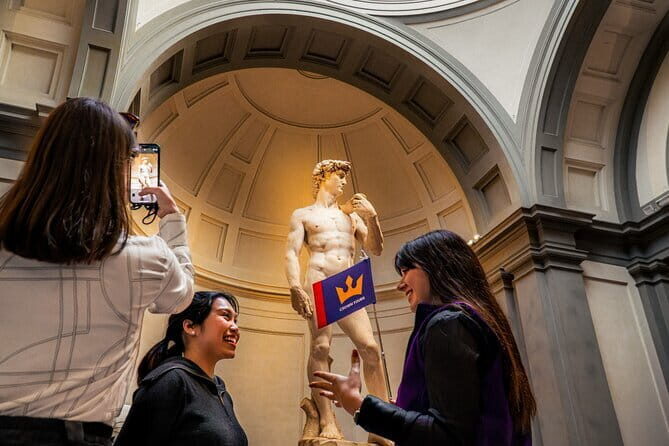
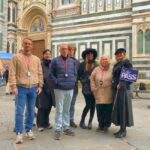
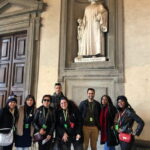
Your day starts at Via Ricasoli 39, 50122 Firenze FI. You’re looking for the Crown Tours flag and team members in purple attire. The meeting point doubles as the ticket redemption point, and the tour ends back there.
This sounds simple, but Florence can turn simple into messy—especially when multiple tours cluster near the entrance. I’d use two tactics:
- Arrive early enough to calmly locate the flag and confirm your group.
- Keep your phone handy for the booking confirmation you received at the time of booking, just in case.
Also note the tour is near public transportation. That matters because once you step into the museum area, you don’t want your schedule tied to a faraway stop. Build in a little buffer so you don’t sprint from transit and arrive out of breath.
Colosso Hall first: Rape of the Sabines sets the tone
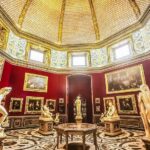
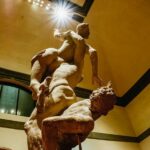
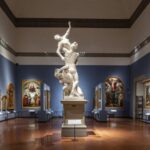
Before you rush to David, you’ll stop at the Accademia entrance area and head into Colosso Hall, named for its striking centerpiece: the Rape of the Sabines.
What I like about starting here is that it prevents the classic first-day mistake: seeing the museum as one huge photo stop. The guide uses this moment to set up the bigger artistic evolution of Florence. You’re learning what kind of drama Renaissance art loved—movement, emotion, and the human body treated like high drama in stone.
Practical note: this is a short stop in the tour flow. So treat it as orientation. You’re not trying to linger; you’re trying to learn enough to make the later rooms click.
The Musical Instruments room: the Medici connection you might miss
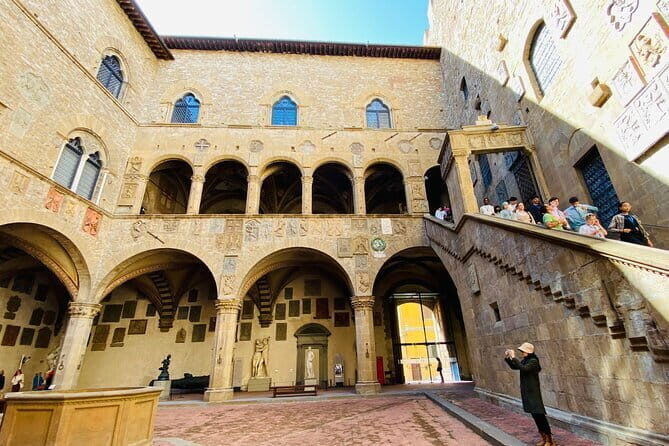
One of the best surprises in this tour is that it doesn’t just orbit around sculpture. You’ll head into the museum’s Musical Instruments area, where you can see Medici-era violins, antique pianos, and Stradivari masterpieces.
Why this matters for your visit: Renaissance art wasn’t one department. Crafts, design, performance, and patronage were tangled together. Hearing the museum story through the lens of instruments helps you understand the culture that surrounded these artists, not just the artists’ final products.
If you love details, this is a great angle. And even if you don’t, it adds variety in a museum that can otherwise feel repetitive: stand here, stare there, move on. Musical instruments give your eyes and brain a different kind of focus.
Michelangelo’s Prisoners: why unfinished figures hit hard

Next up is Michelangelo’s Prisoners. These are sculptures that seem to be struggling out of stone—figures that feel alive even when they are incomplete.
The guide’s job here is key. You’re not just looking at shapes; you’re learning the story behind why these figures were left unfinished and what that tells you about Michelangelo’s creative process. That explanation changes how you read the work. Instead of thinking the pieces look incomplete by mistake, you start thinking about the decisions and experimentation behind them.
Drawback to consider: because this part of the route is popular, you may feel crowd pressure like in any major museum room. If you’re the type who needs personal space to really study sculpture, go with the flow and use the guide’s cues to move at the pace that keeps the group moving.
You can also read our reviews of more tours and experiences in Florence

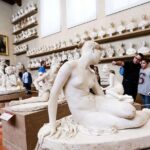
Facing David: how to actually look at Michelangelo’s details
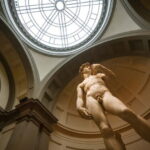
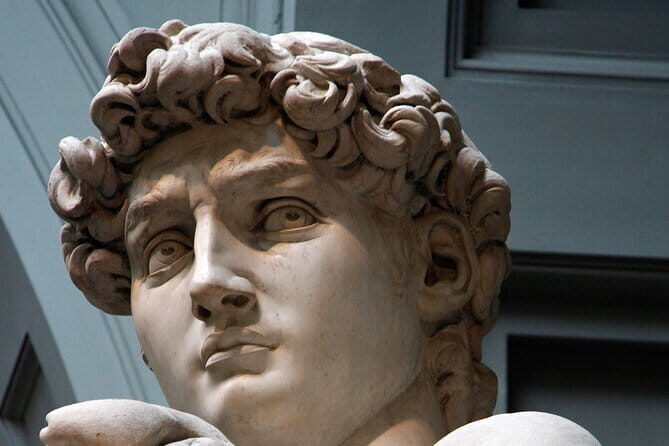
Then you get the moment: David Di Michelangelo.
This is where the guidance really pays off. Without a guide, many people stand in front of David and take photos. With a guide, you’re nudged to look at the statue like a technical achievement and an emotional one. The guide helps you decode details such as the intensity in the eyes and the precision of the muscles.
Here’s what I’d recommend you do once you’re in front:
- Give yourself permission to step back once and take in the whole form.
- Then come forward for a second pass on facial expression and hand/arm tension.
- Don’t rush. Even in a guided format, you’ll get more value if you slow down for two focused looks.
Because David is the star, the room can be busy. But this is also why priority access matters. You want your energy for the statue, not spent fighting entry lines.
Plaster cast-making: the craft lesson that makes marble make sense
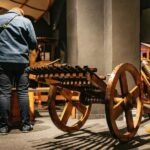
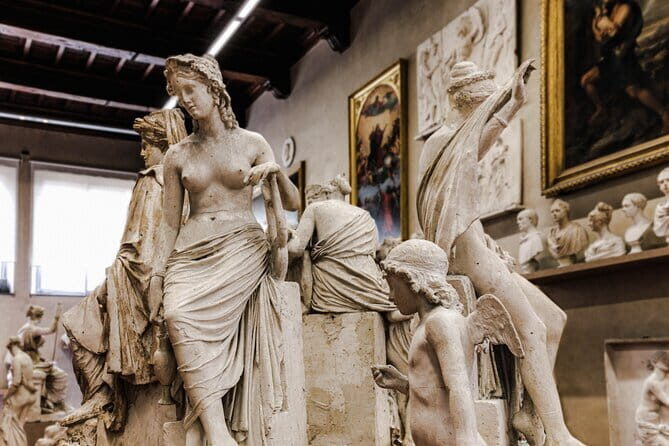
After David, you’ll see a fascinating display on plaster cast-making. This is a practical craft side of sculpture that many museum visits ignore.
The idea: before carving marble, artists used lifelike replicas to perfect proportions and forms. In this tour, the guide explains how plaster casts were part of the workflow artists used throughout history, so you can understand the statue not as a miracle that appeared overnight, but as work built by method.
This stop tends to land well if you like process and production. Even if you only have a basic interest in art, it’s a refreshing reminder that great art is usually a lot of preparation, not a single lightning-strike moment.
Paintings and the Late Gothic pivot with Lorenzo Monaco

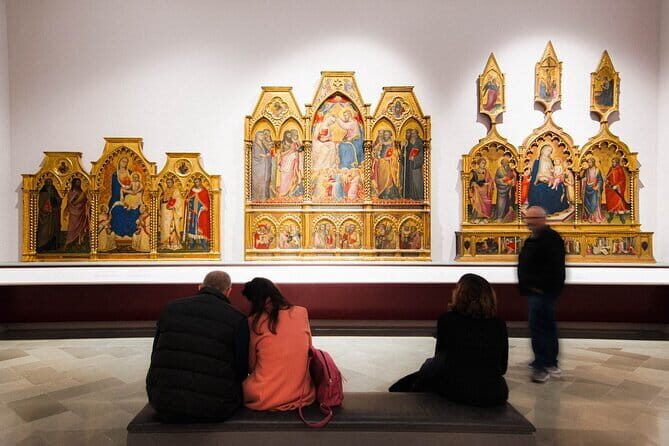
The later part of the tour broadens beyond sculpture again. You’ll move through works of Renaissance and Baroque masters—paintings that shaped Florence’s artistic landscape—and then end in the Late Gothic Hall with works by Lorenzo Monaco.
I like this finish because it gives you a visual timeline. By the time you’ve seen Renaissance sculpture and Michelangelo’s working ideas, the transition into Late Gothic style helps you understand how quickly tastes and techniques shifted around Florence.
If you’re trying to build a mental map of art periods, this ending is a useful capstone. It also helps you avoid the situation where you leave Accademia thinking only one artist exists in the building. Spoiler: the museum is a whole conversation.
Timing, group size, and crowd reality inside the museum
The tour runs about 1 hour and is offered in English. That hour is paced with short, intentional stops—some around 5 to 9 minutes—so you see the major anchors without getting stuck in one room too long.
The maximum group size of 19 is a big practical advantage. Smaller groups generally move better through tight passages and make it easier to stay with the guide when the entrance area turns chaotic. You still may face crowd flow inside the museum, especially on busy days, but the guide’s routing keeps you from wandering.
There’s also a reality check: even with priority entry, you may still encounter lines as you approach the most crowded points inside. On some days, the wait people report outside is around 30 minutes, though it’s still considered worthwhile to reach David close up. If you’re visiting during a holiday or peak week, build extra time into your overall Florence plan so this museum doesn’t squeeze the rest of your day.
Price and value: is $32.44 a good deal?
At $32.44 per person, you’re paying for three things:
- Priority entrance that reduces time lost to lines.
- A professional guide who connects the art into a story.
- Access included for the museum components you visit, with the tour also featuring a downloadable audio guide.
Is it worth it? For most people, yes—especially if you’re only doing Accademia once. The reason isn’t just the David headline. You’re also getting musical instruments, Prisoners, plaster cast-making, and a Late Gothic room with Lorenzo Monaco. That’s a lot of “what to look at” for a single one-hour block.
And because the tour is structured, you don’t have to spend time deciding what room comes first. You walk in with questions like what makes Michelangelo’s unfinished works meaningful, and you walk out with a clearer answer.
Should you book this David skip-the-line tour?
If you want the David experience and you’d like the rest of Accademia to make sense, this is a strong pick. The best fit is anyone who:
- cares about seeing more than one statue and wants a guided route,
- likes short explanations that help you look better,
- prefers a smaller group experience in a crowded museum.
There are a couple of caution flags to keep in mind. A small number of cancellations or no-show issues have been reported for this type of tour format. That doesn’t mean it happens every time, but it does mean you should take your planning seriously: arrive early at Via Ricasoli 39, keep your confirmation handy, and double-check your meeting point so you can correct course quickly if anything feels off.
My bottom line: book it if you want a well-paced hour that turns David into more than a photo. Skip it only if you’re determined to explore completely on your own and you already know exactly which rooms to prioritize inside Accademia.
FAQ
FAQ
How long is the Skip-the-Line guided tour of Michelangelo’s David?
The tour lasts about 1 hour.
What language is the tour offered in?
The tour is offered in English.
What is the price per person?
The price is $32.44 per person.
Where do I meet the guide?
You meet at Via Ricasoli 39, 50122 Firenze FI, Italy, and the tour ends back at the same meeting point.
Does this tour include museum admission?
Yes. Admission ticket access is included for each of the listed stops.
How many people are in the group?
The tour has a maximum of 19 travelers.
Can I cancel and get a refund?
You can cancel for a full refund if you cancel at least 24 hours before the experience’s start time.

More Guided Tours in Florence

More Tours in Florence



More Tour Reviews in Florence
- Tuscany Day Trip from Florence: Siena, San Gimignano, Pisa and Lunch at a Winery
★ 5.0 · 21,634 reviews - The Best tour in Florence: Renaissance & Medici Tales – guided by a STORYTELLER
★ 5.0 · 12,316 reviews