
REVIEW · FLORENCE
3-Hour Historic WhoDunIt Tour in Florence
Book on GetYourGuide →Operated by ACCORD Italy Smart Tours · Bookable on GetYourGuide
A murder mystery in Florence sounds fun, fast. This 3-hour historic who-dun-it has you follow clues around the city center, using a game booklet instead of a live guide. It’s built around an actual-sounding Renaissance crime idea, with suspects you’ll narrow down as you look closely at what’s in front of you.
Two things I really like: you get to see major Florence sights plus lesser-known corners on the same route, and the format turns sightseeing into an active scavenger hunt. One thing to consider: it’s self-guided and booklet-based, so if you’re expecting a theatrically guided mystery with lots of “evidence” revealed, you may feel like you’re mostly doing a walk-and-answer city quiz.
In This Review
- Key Things to Know Before You Start
- A Murder Case You Solve on Your Own in Florence
- Where to Meet and How the 3 Hours Typically Feels
- Following Clues Through Piazza and Monument Stops
- What’s Included (and What You Supply Yourself)
- Price and Logistics: Is $27 Good Value Here?
- Group Size, Pace, and Who This Tour Fits
- Your Mystery-Winner Moment and the Gift
- Practical Tips That Make the Clues Easier
- Potential Frustrations to Plan For
- Should You Book This 3-Hour Historic WhoDunIt Tour?
- FAQ
- How long is the tour?
- What does it cost?
- Is there a guide with you?
- Where do I meet the group?
- What’s included in the price?
- What should I bring?
- Is the tour wheelchair accessible?
- How big is the group?
- What languages are offered?
- What’s the cancellation policy?
Key Things to Know Before You Start

- Self-guided, not guided: you’ll have a game booklet, but no guide on the route.
- Clues are observation-heavy: you’ll need to stop, look, and answer questions on-site.
- 3 hours can stretch: the experience is sold as 3 hours, but plan for extra time if you read carefully and wander.
- Small group setup: limited to 10 participants, though your solving is still independent.
- Winner gets a gift: the tour includes a prize, but you’ll need to be confident with the answers.
A Murder Case You Solve on Your Own in Florence

This is not a “sit down and hear a story” tour. You’re out in the streets trying to solve a Renaissance-style murder by following prompts in your booklet. The city becomes your game board. Every clue nudges you toward the next location, where you’ll spot details and use them to answer questions and decide who did it.
The tone is detective play—magnifying glass and deerstalker hat are optional if you want the full costume vibe. I like this approach because it lowers the pressure. Instead of trying to memorize facts, you’re chasing answers one stop at a time. You’ll get to feel like you’re working the case, even though you’re also sightseeing.
Just be aware what “solve the murder” usually means in a self-guided format: it’s about observation. You’re not waiting for someone to unlock secret history. You’re reading, looking closely, and making choices from the information you can actually see around you. If you enjoy that kind of puzzle energy, you’ll probably have a good time.
You can also read our reviews of more historical tours in Florence



Where to Meet and How the 3 Hours Typically Feels
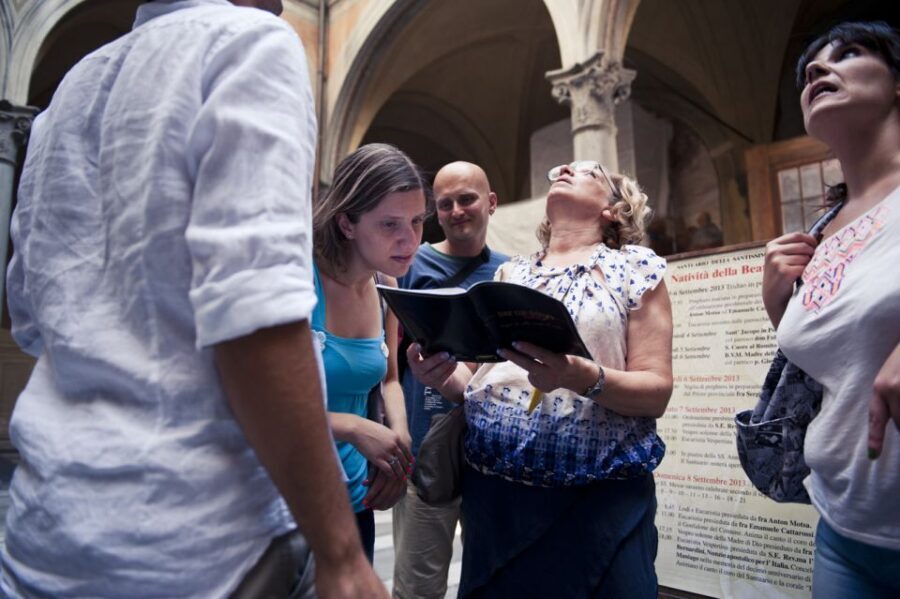
You meet at 2nd floor – Piazza Madonna degli Aldobrandini 8. That address matters because you’re not just meeting at a public square and wandering off—you’re meeting at a specific pickup point, on a specific floor. When you arrive, give yourself a few minutes to confirm you’re in the right place before the game starts.
The tour is priced and timed as 3 hours, but the real duration depends on you. You’ll be walking between stops and stopping often to read and look. If you’re traveling with kids, you might naturally pause more. If you’re the type who double-checks each answer, you’ll move slower too. In other words: treat the 3-hour label as a planning baseline, not a strict finish line.
One nice detail is the small-group limit: up to 10 participants. Since you’re self-guided, that number doesn’t affect your personal pace much, but it can help the check-in flow. It also tends to mean less crowding around the key stopping points than the big-bus crowd.
Following Clues Through Piazza and Monument Stops
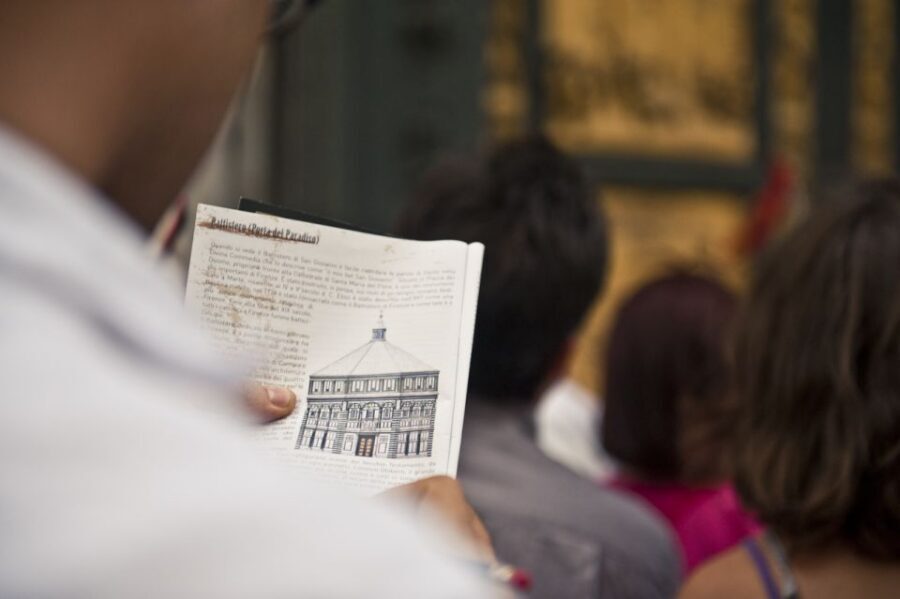
The route is built to show you a mix: some of Florence’s recognizable sights, plus spots that feel more like you’re cutting through the city than checking boxes. The clues are spread out, so you don’t just sprint between two famous monuments and call it a day. You’ll likely experience a rhythm of walk-stop-answer-walk-stop-answer.
One clue type you should expect is close-looking and counting. For example, there’s at least one question tied to the Loggia dei Lanzi, specifically about how many female statues you can see there. That’s the kind of prompt that makes the tour feel like a real puzzle: you have to go to the exact place and focus on the specific details.
Here’s the practical advantage: answers don’t require special tickets or complex logistics. If you already planned a Florence walking day, this can plug right into your schedule without forcing additional entries. You just use what you can see from the public areas as you go.
If you’re prone to rushing, slow down. Missing a tiny detail can send your logic off in the wrong direction later in the booklet. Think of each stop like a small chapter in a larger case file.
What’s Included (and What You Supply Yourself)
What you get is simple: a game booklet and a gift for the winner. There’s no guide included, so your booklet is the “engine” of the experience. That also means there’s no one standing there to explain how the clues work or to help you interpret what you’re looking at.
So come prepared to read and work. I’d bring a pen (or pencil). One small but real irritation is when a tour booklet expects written answers and you don’t have a writing tool. Even if the booklet provides blank space, having your own pen saves time and frustration.
Comfort matters too. This is a walking tour with frequent stops. Wear shoes that can handle old stone and long stretches. Also, keep your phone charged enough for basic things like navigation and photo referencing—if you need to zoom in on a detail for later answers.
Price and Logistics: Is $27 Good Value Here?
At $27 per person, the value question comes down to your expectations. If you want an interactive, guide-led mystery with storytelling, character, and explanations, then this format can feel expensive—because you’re paying for the booklet and the structure, not a live detective.
But if you like two things—self-paced wandering and puzzle-solving—this can feel more fair. Florence is one of the best cities in Italy for this kind of activity because the streets and facades reward attention. You’ll keep looking up, scanning carvings, and paying attention to what you might normally skip.
The “winner gets a gift” detail helps tip the scale if you’re competitive or traveling as a group. It’s also a nice little emotional finish: you reach a conclusion and leave with a tangible reward.
Still, I’d be honest with yourself about what you’ll pay for. You’re not buying secret access, a private guide, or exclusive venues. You’re buying a structured walk plus a mystery challenge. If you treat it that way, the price makes more sense.
You can also read our reviews of more tours and experiences in Florence






Group Size, Pace, and Who This Tour Fits
The tour is wheelchair accessible, which is a strong plus for travelers who need step-free routes and careful pacing. It’s also limited to 10 participants, which keeps it from turning into a crowded stampede.
Who it suits best:
- Families and older kids who enjoy games and solving clues during a city walk.
- Couples or solo travelers who want something interactive without hiring a full private guide.
- People who already know Florence pretty well and want a reason to revisit key sights with fresh attention.
Who might be less happy:
- Travelers who want deep historical context delivered by a guide.
- People who dislike lots of stopping and reading.
- Anyone who hates route repetition or feels frustrated when a walking loop feels longer than expected.
The experience is more “detective worksheet in the city” than “cinematic whodunit with actors.” If you’re expecting theatrical drama, you might feel let down. If you’re expecting a walking puzzle, you’ll likely feel more in control.
Your Mystery-Winner Moment and the Gift
This tour doesn’t just end with your last clue. The format includes a gift for the winner, which adds motivation while you’re still in the middle of the case.
What you can’t assume: you’re not told in the details you’re given how scoring works, how many winners there are, or how the final answers are checked. So plan to treat the booklet as your guide to the conclusion rather than a test where someone will coach your logic.
To maximize your chances of finishing strong, do two things as you go:
- Don’t guess early. If you can confirm a detail visually, do it.
- Keep your place in the booklet. The clue sequence matters, and it’s easy to lose your momentum if you have to retrace steps.
Even if you don’t win, the experience’s real payoff is the way it changes your city-watching—from autopilot to investigation mode.
Practical Tips That Make the Clues Easier
This is where small preparation pays off.
1) Bring a pen
If the booklet wants written answers, having your own is a low-effort win.
2) Slow your eyes down
For clue sites like statue counts or façade details, you’ll want to take a careful look before moving on. A quick glance can turn into the wrong count later.
3) Take a photo when it matters
When you spot something you’ll likely need again—like a sculpture detail—snap a quick reference image. You can use it if you forget, without re-walking every section.
4) Keep your pace realistic
This is sold as a 3-hour experience. Build in a little buffer for longer stops, bathroom breaks, and the natural time it takes to solve puzzles thoughtfully.
5) Read the booklet fully before your first big stop
If you start answering on the fly, you can miss what later questions are asking for.
Potential Frustrations to Plan For
The biggest potential downside is also the core design: you’re doing this without a guide. That can be great—more freedom, less scheduling pressure. It can also be annoying when you want someone to clarify expectations or explain why a clue is asking for something specific.
Another common friction point with this kind of self-guided mystery is how it feels under time pressure. If you rush, you can end up backtracking. If you take it slow, it can start to run beyond the “3 hours” promise.
Finally, the mystery may feel like a city walk with observation questions rather than a deep, evidence-based investigation. If your idea of a whodunit includes secret interviews, dramatic reveals, or a guide explaining motives, you might find yourself wanting more narrative. Adjust your mindset: this is a game that rides on Florence’s architecture and details.
Should You Book This 3-Hour Historic WhoDunIt Tour?
I’d book it if you want a structured, walkable puzzle in Florence and you’re happy doing the work yourself. If you enjoy counting details, spotting clues on buildings, and turning sightseeing into a challenge, $27 can be a fun use of a half-day.
I would skip it if you want a guide to lead the story, or if you dislike routes where you move between multiple squares and monuments with frequent stops. Also skip it if you hate spending time reading a booklet as your main activity.
A good middle ground strategy: pair it with a flexible sightseeing day. That way, even if the case takes longer than planned or you decide to extend your walk afterward, you’re not stuck with the stress of tight timing.
FAQ
How long is the tour?
The duration is 3 hours.
What does it cost?
The price is $27 per person.
Is there a guide with you?
No. The tour does not include a guide. You use the game booklet for the self-guided experience.
Where do I meet the group?
Meet at 2nd floor – Piazza Madonna degli Aldobrandini 8.
What’s included in the price?
Included items are the game booklet and a gift for the winner.
What should I bring?
Bring comfortable walking shoes, and you may want to bring a pen or pencil to help with answering in the booklet. A magnifying glass and deerstalker hat are optional.
Is the tour wheelchair accessible?
Yes, it is listed as wheelchair accessible.
How big is the group?
It’s a small group with a limit of up to 10 participants.
What languages are offered?
The tour details you provided do not clearly list the languages.
What’s the cancellation policy?
You can cancel up to 24 hours in advance for a full refund.




More Historical Tours in Florence



More Tours in Florence






More Tour Reviews in Florence
- Tuscany Day Trip from Florence: Siena, San Gimignano, Pisa and Lunch at a Winery
★ 5.0 · 21,634 reviews - The Best tour in Florence: Renaissance & Medici Tales – guided by a STORYTELLER
★ 5.0 · 12,316 reviews