REVIEW · FLORENCE
Florence Renaissance walking tour
Book on Viator →Operated by Slow Tour Tuscany · Bookable on Viator
Florence surprises you when you stop staring up. This 2-hour Florence Renaissance walking tour strings together the Duomo area, Medici landmarks, and the bridges of Michelangelo with a guide who can explain what you’re actually looking at. You’ll also get Giotto’s Campanile and the Baptistery in the main piazza, plus an included visit inside the UNESCO-listed Duomo.
I especially like two things. First, you’re not just checking boxes. You’re learning how Renaissance design and Gothic structure connect in real places, so the cathedral makes sense instead of just impressing. Second, the tour uses a headset set of earphones, which helps you follow commentary while you’re walking through busy streets and squares.
One thing to consider: some major stops need extra admission. The Uffizi and Palazzo Pitti aren’t included, and even where you’ll admire sights like the Baptistery door, the ticket details vary by stop. Also, one recent note was that the guide can be soft spoken at times—your earphones should help, but come ready to adjust volume.
In This Review
- Key highlights at a glance
- Why this Renaissance walk feels different from the usual Duomo dash
- Meeting at Lungarno degli Acciaiuoli: start with an easy plan
- The walk begins with bridges and Medici-era Florence
- Piazza della Signoria to the route of power: Pitti Palace and the fashion side
- Oltrarno crafts and the artisan rhythm you can actually feel
- Piazza della Repubblica: a Roman core under the Renaissance spotlight
- Piazza del Duomo finale: Brunelleschi’s dome and the golden Baptistery door
- Price and value: what $40.33 gets you in real time
- Small group reality: why “private” time matters
- Who this tour suits best (and who should skip it)
- Should you book the Florence Renaissance walking tour?
- FAQ
- How long is the Florence Renaissance walking tour?
- How much does the tour cost?
- What’s included with the tour?
- Is entry to the Duomo included?
- Are tickets for the Uffizi Gallery and Palazzo Pitti included?
- How big is the group?
- Where does the tour start and end?
- What time does the tour begin?
- Are earphones provided?
- Is there free cancellation?
Key highlights at a glance
- UNESCO Duomo entry plus cathedral-focused storytelling
- Art historian guide with clear, question-friendly commentary
- Small private group setting (up to about 12 adults)
- Earphones to keep you synced while you move
- Oltrarno crafts stop for hands-on artisan flavor
- A Medici to Michelangelo walking route that links sights logically
Why this Renaissance walk feels different from the usual Duomo dash
The Duomo is famous for a reason. But it can also feel like a quick photo stop unless someone puts it in context. This tour does that job. You’ll see Florence’s Cathedral area with the right frame: what’s Gothic, what’s Renaissance, and why the design choices matter.
What makes it work is the flow. Instead of isolating the Duomo, you connect it to the city’s power and taste—starting with Medici influence and moving through squares tied to art, politics, and daily life. When you finally reach the cathedral area, you’ll understand what you’re looking at beyond the basics.
And yes, you’ll get the big visual hits along the way: Giotto’s bell tower, the Baptistery area, and the dome by Brunelleschi when you’re in Piazza del Duomo. The tour is short enough to stay enjoyable, but structured enough that you feel like you’re learning something real.
You can also read our reviews of more walking tours in Florence

Meeting at Lungarno degli Acciaiuoli: start with an easy plan
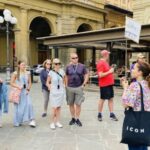
The tour starts at Lungarno degli Acciaiuoli 10 (near public transportation), and it ends at Piazza del Duomo. Since you’re walking through central Florence, I recommend you plan to arrive a little early, grab water nearby if you need it, and use the first minutes to orient yourself.
Start time is 11:00 am, and the tour runs about 2 hours. That matters because the timing keeps you from being stuck in long lines for too long. You also get a clear endpoint: you’ll finish right where most people want to go anyway, at the cathedral area.
The tour uses a mobile ticket, which is convenient. Just make sure you have your phone charged enough for the day—Florence streets and photos eat battery fast.
The walk begins with bridges and Medici-era Florence
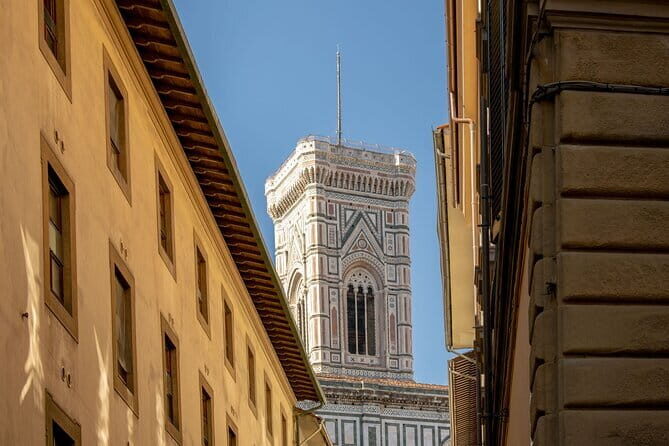
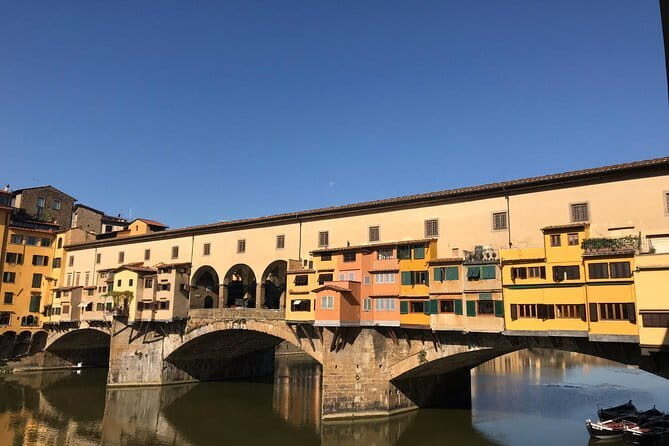
One of the first treats is seeing the oldest bridge in Florence. It’s a small stop on the route, but it does something useful: it reminds you Florence isn’t just a museum town. This is a working city where people cross the river every day, and the historic core still shapes movement.
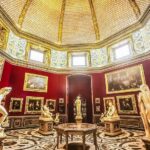
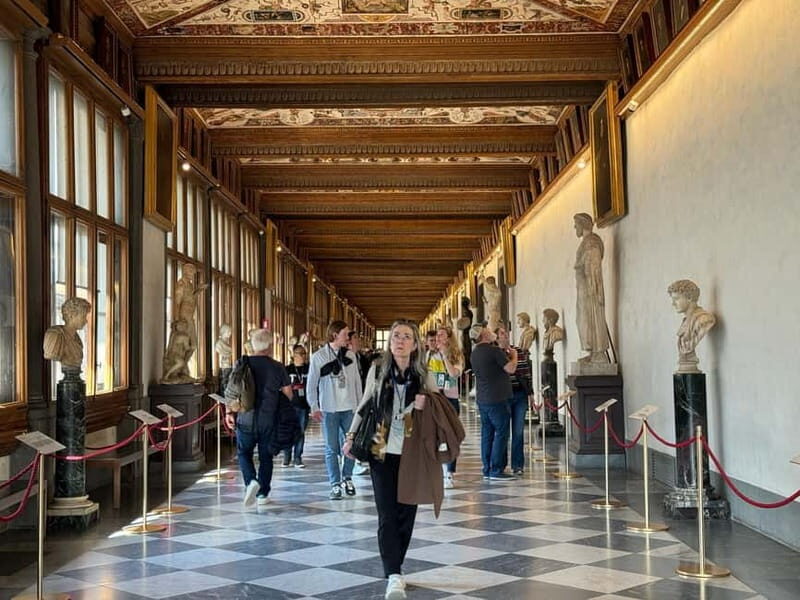
From there, you head toward a Medici-centered art world. There’s a stop at Gallerie Degli Uffizi where you’ll learn about the Medici family and how their art collections shaped Florence’s cultural identity. The catch is right in the structure of the tour: this is a short moment and Uffizi admission is not included. So don’t expect a museum deep dive here. Instead, treat it like a compass point that sets up what you’ll notice later if you choose to return.
Next comes Piazza della Signoria, a square that feels like an open-air gallery. You’ll admire the space and get close to the impressive replica of Michelangelo’s David. This portion is marked as included, and even if you’re not stepping inside anything, the square itself is doing the work of history—statues, architecture, and civic space all in one.
The practical value of these early stops: you’ll start building a mental map. After a few minutes, you’ll know where you are in the Florence story, and you’ll spot connections instead of seeing separate landmarks.
Piazza della Signoria to the route of power: Pitti Palace and the fashion side
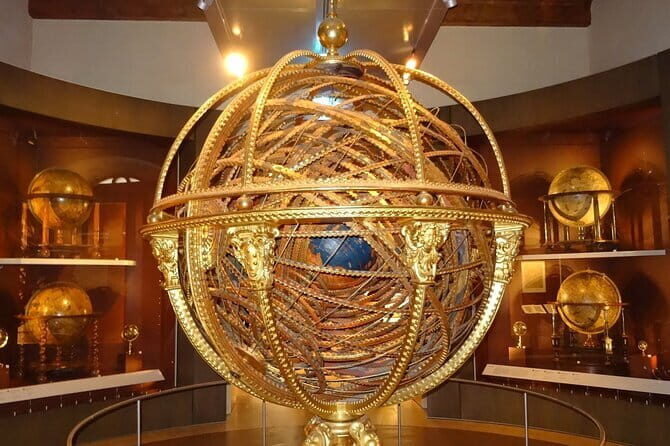
The walk continues along the renewed passage up toward Pitti Palace. You’ll get a sense of how Medici influence stretches beyond one neighborhood. Palazzo Pitti is also a short stop, with admission not included, so think of it as orientation and atmosphere—learning why it mattered and what kind of power it represented.
Then you shift to Oltrarno, the side of the Arno where the feel can turn more local and craft-focused. You stop at a few artcrafts lab places to see Tuscan typical artisans. This is one of the best parts for me because it breaks the pattern of only seeing art in museum form. You’re getting a glimpse of craft traditions that survived the centuries, and it helps the rest of the tour land better.
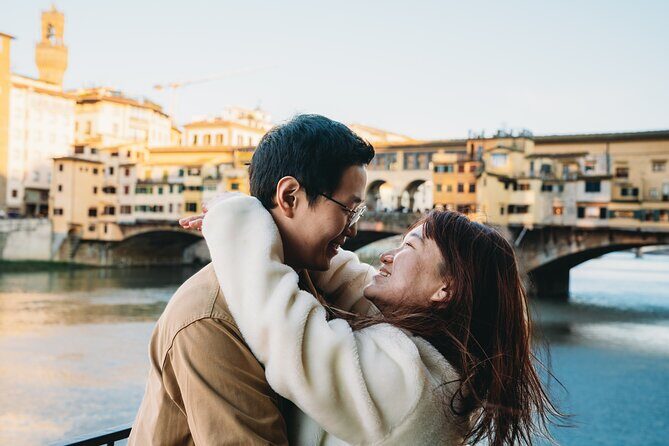
After that, the route takes you across the river with a big visual payoff. You’ll walk on a bridge designed by Michelangelo, and you’ll enjoy a stunning view on Ponte Vecchio. This isn’t just a postcard moment; it’s a great way to understand how Florence uses height, river views, and street edges to create drama. The city is built to be seen while you’re moving.
There’s also time for the road of fashion. Even if shopping isn’t your thing, the shopping streets are part of Florence’s story, and the guide’s commentary helps you connect commerce, art patronage, and city identity.
Oltrarno crafts and the artisan rhythm you can actually feel
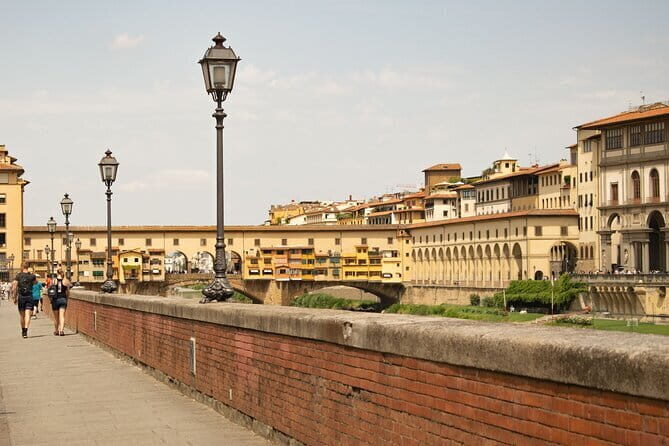
Oltrarno is often talked about in broad terms. Here, you get something more practical: a brief look into craft spaces. Even with limited time, you can pick up what you should watch for when you wander on your own after the tour.
What you’ll likely notice is the difference between craft and fine art. Fine art tends to show ideas and finished masterpieces. Craft shows process and repeated skill—hands, materials, patience. That shift makes the Renaissance conversation feel less abstract.
This stop is also marked as included for admissions. That means you’re not spending extra money for the craft part, which helps the tour keep its value intact. If you’re trying to choose between a cathedral-only tour and a longer city story, Oltrarno is a strong reason to pick this one.
One more point: the tour provides earphones, which helps here. Craft spaces can be quiet, and your guide’s pacing matters. With earphones, you’ll be able to catch the explanation even when you’re close to other groups.
- The Best tour in Florence: Renaissance & Medici Tales – guided by a STORYTELLER
★ 5.0 · 12,316 reviews




Piazza della Repubblica: a Roman core under the Renaissance spotlight
You’ll end up at Piazza della Repubblica, which the tour frames as an ancient Roman city center. The value here is in perspective. Florence can feel like it only existed in the Renaissance. A stop like this nudges you to remember the older city layers underneath.
This part includes time to admire the square itself, and it’s short—about 10 minutes. But it’s enough for your brain to reset before the big finale at the cathedral piazza.
If you like walking tours that don’t treat Florence like a single era theme park, this Roman reminder is a win. It helps you see the city as a timeline.
Piazza del Duomo finale: Brunelleschi’s dome and the golden Baptistery door

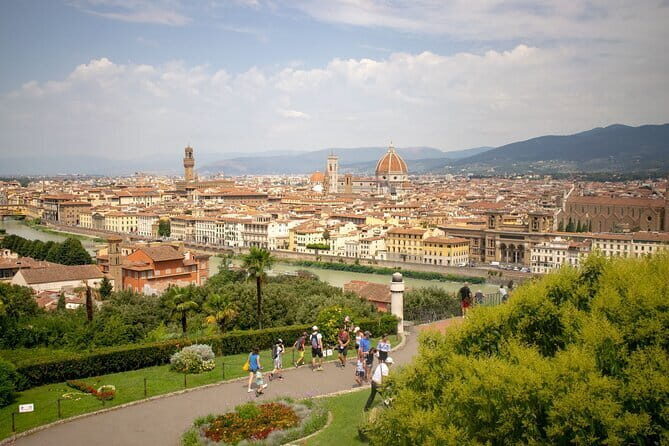
The last and most important stop is Piazza del Duomo. You get around 15 minutes for the cathedral area focus, and this is where the tour really earns its keep.
You’ll admire:
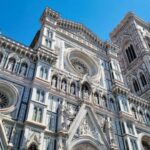
- the Cathedral itself (formally the Cattedrale di Santa Maria del Fiore)
- the Cupola by Brunelleschi
- the golden door of the Baptistery
Then you’ll go inside the cathedral for about 1 hour, as part of the included UNESCO-listed Duomo visit.
This is the part where the guide’s art-history approach changes your experience. Without context, the Duomo can feel like a single massive statement. With context, you’ll notice the logic: Gothic structure and the Renaissance design choices living side by side. You’ll also hear explanations connected to what you saw earlier in the walk—how Florence’s taste, patronage, and ambition shaped the visual language.
Practical note: the stops around the Baptistery door have admission not included details listed for that segment. So expect to see and understand the Baptistery from the piazza rather than treat it as a guaranteed inside visit. If you want more, you can always plan a separate ticket later.
Price and value: what $40.33 gets you in real time
At $40.33 per person for an approximately 2-hour tour, value depends on what you get included versus what you’d pay anyway in Florence. Here’s how I’d think about it:
What you’re paying for:
- a professional art historian guide
- guided walking through multiple key areas
- earphones so the commentary stays with you
- the included visit inside the Duomo
What you might pay separately:
- extra admissions for Uffizi and Palazzo Pitti (both listed as not included)
- other ticketed components can vary by stop
For many people, the Duomo entry alone is the anchor. Then the walking portion adds city logic: Medici sites, civic squares, and the craft side of Florence. In other words, you’re not just buying access—you’re buying interpretation.
Also, the group size is small. The highlights mention a maximum of 12 adults in the private party, while the overall activity cap is noted as maximum 15 travelers. Either way, you’re unlikely to feel lost in a crowd. A small group makes questions easier too, and one comment noted the guide was excellent at answering questions.
If you’re on a tight schedule and you want a Renaissance-fluent experience without spending all day, this price can feel fair. If you want a full museum day with long stays inside the Uffizi or Pitti, this tour is probably not the one to satisfy that alone.
Small group reality: why “private” time matters
This is set up so you’re not dealing with a huge herd. You can ask questions without yelling. You can hear the guide through earphones. And if you luck into a very small party, the tour can feel personal.
One recent experience highlighted that it was just two people on the walk. That’s not something you should count on, but it shows what the format allows when the schedule fills lightly. Even without that luck, a maximum adult count around a dozen tends to keep things moving at a human pace.
A minor caution: one note said the guide can be a bit soft spoken, making parts harder to hear. With earphones included, that risk is reduced. Still, if you’re sensitive to audio, try to keep your earphone volume up to a comfortable level early, not after you’ve missed a key explanation.
Who this tour suits best (and who should skip it)
This tour is ideal if you:
- want the Duomo experience with real context
- like Renaissance art but also want the surrounding squares that make it make sense
- prefer a short, focused walk instead of an all-day museum marathon
- enjoy small-group guidance with earphones and time for questions
- want a taste of Oltrarno artisan culture without planning a separate craft visit
Skip it or consider adding separate plans if you:
- want long interior time in places like the Uffizi or Palazzo Pitti (admissions are not included there and stops are brief)
- need plenty of time to linger at every photo spot (this is structured and timed)
- rely on a fully accessible route with minimal walking (the tour is designed for walking through the central core, and the info only says most people can participate)
Children must be accompanied by an adult, and the overall tour is positioned as manageable for most people.
Should you book the Florence Renaissance walking tour?
If your main goal is to get past the Duomo “look but don’t understand” problem, I’d book it. The combination of an art historian guide, included Duomo entry, and earphones makes it a practical choice. You’ll leave with a clearer sense of how Florence’s Renaissance power ties into Gothic structure, Medici patronage, and the city’s public spaces.
I’d only hesitate if you’re hoping for fully included museum entries at the Uffizi and Palazzo Pitti. This tour helps you connect the dots; it doesn’t try to replace those big-ticket visits.
If you want a smart 2-hour Florence primer that ends right where the action is, this one fits.
FAQ
How long is the Florence Renaissance walking tour?
It’s about 2 hours.
How much does the tour cost?
The price is $40.33 per person.
What’s included with the tour?
You get a professional art historian guide, a guided walk, a single-language tour, and a set of earphones. The Duomo visit is also included.
Is entry to the Duomo included?
Yes, the tour includes entry to the UNESCO-listed Florence Cathedral (Cattedrale di Santa Maria del Fiore).
Are tickets for the Uffizi Gallery and Palazzo Pitti included?
No. Those stops are listed as admission not included.
How big is the group?
The tour highlights mention a maximum of 12 adults in the private party, and the overall activity maximum is 15 travelers.
Where does the tour start and end?
It starts at Lungarno degli Acciaiuoli, 10, 50123 Firenze FI, Italy and ends at Piazza del Duomo, 50122 Firenze FI, Italy.
What time does the tour begin?
The start time is 11:00 am.
Are earphones provided?
Yes, you’ll receive a set of earphones to follow the guide’s explanations clearly.
Is there free cancellation?
Yes. You can cancel for a full refund up to 24 hours in advance of the experience start time.

More Walking Tours in Florence


More Tours in Florence


More Tour Reviews in Florence
- Tuscany Day Trip from Florence: Siena, San Gimignano, Pisa and Lunch at a Winery
★ 5.0 · 21,634 reviews - The Best tour in Florence: Renaissance & Medici Tales – guided by a STORYTELLER
★ 5.0 · 12,316 reviews