REVIEW · FLORENCE
5 Mornings Still Life Painting Guided Workshop in Florence
Book on Viator →Operated by The Florence Studio · Bookable on Viator
Florence can teach you to see.
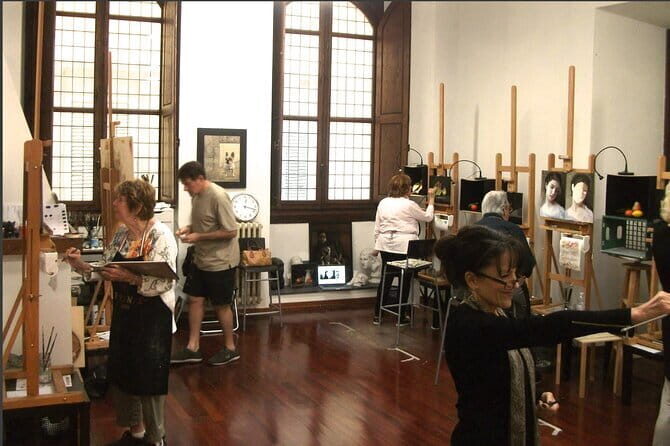
This 5-morning oil painting still life workshop is built for people who want real skills, not just a quick art stop. You work in a light-filled studio in the historic center and spend 15 hours going from a set-up still life to a finished painting you can take home.
I especially love the small group setup (max 10), because it means you’re not stuck copying a generic demo. I also love that your instructor, Laura, teaches you the why behind the method, so even if you’re a beginner, you leave with a process you can repeat later.
One thing to consider: this is a true time commitment. Five mornings means your Florence schedule needs breathing room, and the full value comes from showing up every day and doing the practice.
In This Review
- Key highlights that make this workshop worth your time
- A five-morning oil still-life course in Florence that actually teaches
- Where the session happens matters more than you might think
- How the 15-hour flow works from sketch to finished oil painting
- Lecture and demo: learn the tools before you use them
- Set up your still life: objects and props from the studio
- Draw in Sight Size: the foundation for accurate proportions
- Transfer to an oil primed linen panel: make it real
- Tonal underpainting: get the light and dark relationships right
- Full color and finishing details: bring it to life
- Sight Size in plain terms: why this method helps beginners
- Color mixing and oil painting workflow: practical skills you can reuse
- Small-group attention: what you gain from max 10 students
- Taking your painting home from Florence without drama
- Value and price: what $789.39 buys you (and what to compare)
- Who this workshop is best for in Florence
- Picking your start day without messing up your calendar
- Should you book this Florence still-life painting workshop?
Key highlights that make this workshop worth your time
- Max 10 students for close, practical coaching while you draw and paint
- Sight Size drawing method (used notably by John Singer Sargent) to help you get proportions right
- Step-by-step oil workflow: tonal underpainting to full color to finishing details
- Real still-life setup using available studio objects and props
- Packing help for your painting, so you can transport your work home more easily
A five-morning oil still-life course in Florence that actually teaches
If you’ve ever thought, I like art, but I don’t know how to start, this workshop meets you where you are. The format is simple: you spend three hours each morning painting a still life with guided instruction, then you build up your work in layers until it looks like the subject instead of like a guess.
The most useful part is that the class doesn’t treat painting as a black box. You get a lecture and demonstration of materials and methods, then a structured sequence: set up the still life, draw it using Sight Size, transfer to an oil primed linen panel, lay in a tonal underpainting, and then move into full color and finishing details.
Florence is an art city, sure. But this experience goes beyond sightseeing. You’ll learn a repeatable approach that can follow you home. That’s the real payoff: the confidence to start another painting without needing someone to step in and rescue it.
You can also read our reviews of more guided tours in Florence
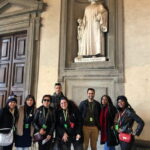
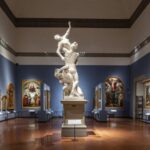
Where the session happens matters more than you might think
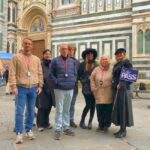
This workshop meets at Borgo Santi Apostoli, 18, in central Florence. The address puts you in the historic-center orbit, which is convenient for planning: you’re not commuting across the city, and you’re close to the kind of streets that make you want to wander before and after class.
The studio setting is described as a dream-like space, and that vibe isn’t just fluff. A painting workshop depends on small, practical things: good light, a comfortable pace, and enough room to set up your work. A palazzo studio in Florence tends to deliver on atmosphere, and the instructor team (Laura and Frank) clearly focuses on making you feel at ease from the first moment.
It also helps that the group is small. With a maximum of 10 travelers, you’re more likely to get direct feedback on your drawing and color choices, not just general advice that fits everyone. If you’ve ever tried to learn something while a room full of people interrupts the instructor, you’ll appreciate the quieter attention here.
How the 15-hour flow works from sketch to finished oil painting
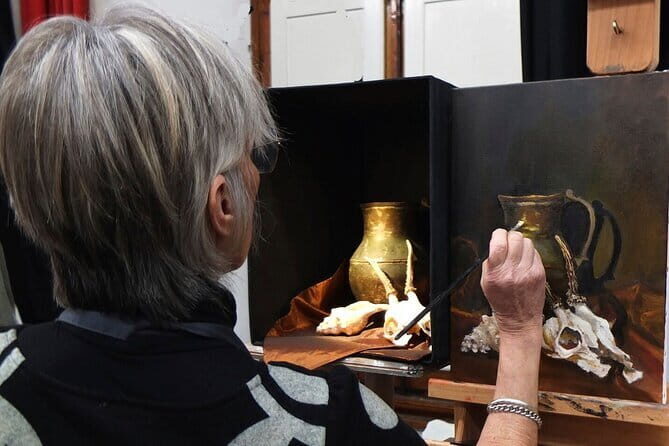
You’re signing up for 5 mornings, about 3 hours each day, for a total of 15 hours. The day starts at 10:00 am, and the activity ends back at the meeting point. That timing is friendly for morning energy and also gives you afternoons free for Florence.
Here’s the learning sequence you’ll follow, and why each step matters:
Lecture and demo: learn the tools before you use them
At the start, you get a lecture and demonstration of materials and methods and how color mixing works. This is the part that saves you from random mixing. Instead of buying colors and hoping for the best, you learn a system.
If you’re brand new, this is your safety net. If you’re more experienced, it’s still useful because it gets you thinking in terms of values and mixing choices, not just “pretty colors.”
Set up your still life: objects and props from the studio
You then set up a simple still life using available objects and props at the studio. The setup matters because it becomes your reference for the whole week. The more “ordinary” the items are, the more the skill shows through—real painting ability comes from handling shapes, edges, and light, not from choosing a complicated subject.
You can also read our reviews of more tours and experiences in Florence





Draw in Sight Size: the foundation for accurate proportions
Next you draw your still life using Sight Size—a method famously associated with John Singer Sargent. The idea is to compare the world in front of you to your sketch using visual measurement, which helps you avoid the classic beginner mistake: your objects look close, but they’re subtly wrong.
This is the step that turns painting from guesswork into observation. When your drawing is solid, the paint stage becomes about modeling and color, not correcting proportions.
Transfer to an oil primed linen panel: make it real
After drawing, you transfer the sketch to an oil primed linen panel. That detail matters because it ties your work to an oil-painting workflow. It’s not just paper practice.
Then you move into the stage that makes paintings look believable: values first.
Tonal underpainting: get the light and dark relationships right
You paint a tonal underpainting to establish values—basically the contrast between light and dark shapes. This is one of the most powerful habits you can learn as a painter. Even if you’re excited to jump into color, the tonal underpainting is what keeps your painting from looking flat or like separate colored patches.
Full color and finishing details: bring it to life
Once your values are in place, you paint in full color and then finish with details. The structure keeps you from rushing. You build the illusion step-by-step until the still life looks solid and coherent.
Sight Size in plain terms: why this method helps beginners
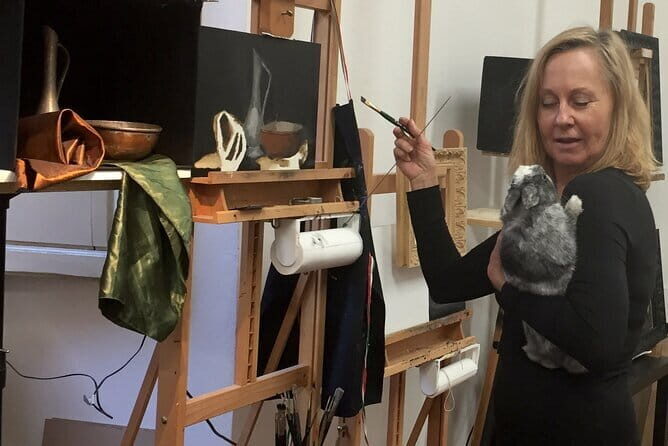
Sight Size sounds fancy, but the result is simple: it helps you match what you see instead of what you think you see. In practice, you’re training your eye to measure relationships—one shape to another, one proportion to another—while you draw.
This matters in Florence because you’ll likely be surrounded by strong visual cues all day: architecture, signage, art everywhere. Sight Size anchors you to your subject and keeps your sketch from drifting into “typical” proportions that don’t match your actual still life.
And the best part is that you don’t need artistic talent for it. You need a method you can repeat. That’s exactly what this workshop emphasizes: fundamentals, materials, and color mixing taught in a clear sequence.
If you want to bring home something you can be proud of, this is where that begins.
Color mixing and oil painting workflow: practical skills you can reuse
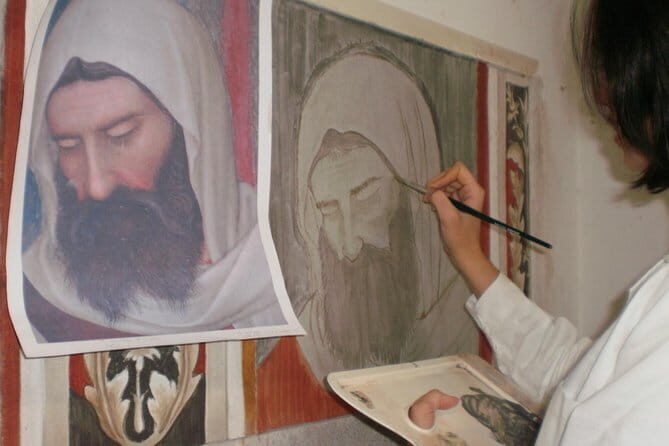
You’ll spend time learning how to mix color as part of the instruction, not just as an offhand tip. Most beginners struggle in one of two ways: either colors look muddy, or they don’t match the subject’s value relationships. Color mixing lessons help you avoid both.
Then the tonal underpainting step reinforces the lesson: your painting needs structure before it needs decoration. By the time you start full color, you already have a map of the composition’s light and dark.
Finally, the finishing details stage is where your painting stops looking like a blocked-in study. You add the touches that clarify edges, improve focus, and make shapes read clearly.
If you’re an experienced painter, you’ll still benefit from having someone walk you through this order. Too many artists jump around. This course nudges you back to a process that works.
Small-group attention: what you gain from max 10 students
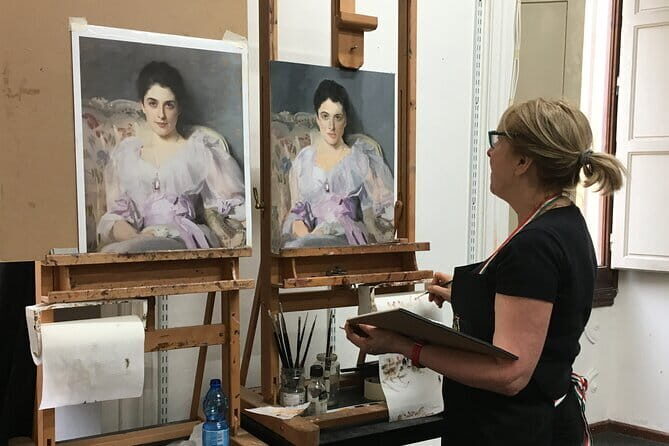
The workshop caps at 10 travelers, and the result is personal guidance. That’s not a marketing line; it’s the difference between getting one quick suggestion and getting real correction.
When you’re drawing, feedback on proportion and placement can prevent a cascade of later problems. When you’re mixing color, you want someone to help you troubleshoot—not just tell you to try harder. And when you’re doing tonal underpainting, knowing what to adjust (and what not to) is the fastest route to a painting that looks right.
The instructor team is Laura and Frank. The reviews point out how comfortable students felt and how generous and knowledgeable Laura is. That kind of teaching style matters in a workshop, because it makes you more willing to try, make mistakes, and adjust without panic.
Taking your painting home from Florence without drama
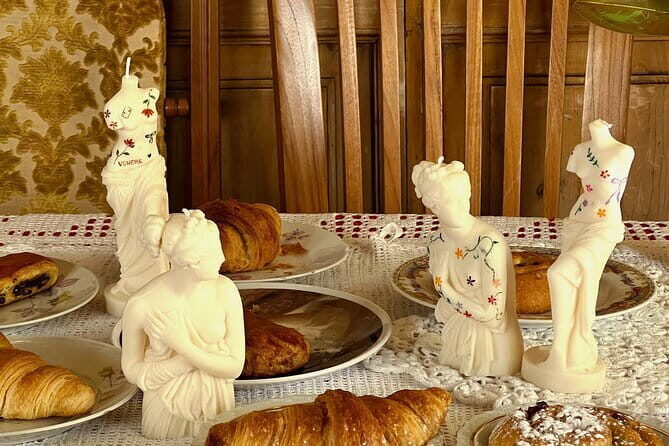
By the end, you leave with a unique artwork—your own still life on an oil primed linen panel. That alone is a strong reason to book, because it’s real creative work you can frame or display later.
One especially practical detail: they will pack your painting for easy transport home with you. That’s a big deal when you’re traveling. Oil on linen panels aren’t the kind of souvenir you want to wrap with whatever tape you happen to find in a pharmacy.
So you get the experience of learning in Florence plus a tangible piece of it that doesn’t disappear into your suitcase chaos.
Value and price: what $789.39 buys you (and what to compare)
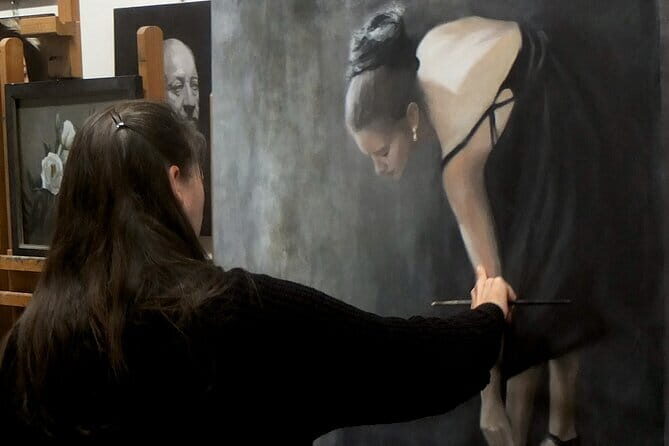
At $789.39 per person, this isn’t a budget activity. But you’re paying for more than “a class.” You’re buying:
- 15 hours of guided instruction over five mornings
- A structured teaching sequence from drawing to tonal underpainting to full color
- Small-group teaching with maximum 10 students
- Use of an oil painting workflow that culminates in a finished piece
- Packing help for transport
If you compare this to the cost of supplies plus taking multiple private sessions plus studio access, the price starts to look more reasonable. Also, the long-format teaching matters: five mornings gives your brain time to learn and practice, not just watch and hope.
Another value point: the instruction is personalized for each student, and it’s suitable for beginners and more advanced students. That means you’re less likely to feel bored if you already paint—or intimidated if you don’t.
Who this workshop is best for in Florence
This is ideal if you want to learn oil still-life painting with a clear method. It’s also a good match if you’re traveling solo or with a partner who wants a slower, more hands-on Florence experience.
You’ll probably feel right at home if:
- You’ve never painted but want a beginner-friendly path
- You’ve painted before and want structured help with values and color
- You like learning by doing, not just taking a walking tour
- You want an authentic Florence memory you can take home
It may be less suitable if you’re hoping for a casual, no-pressure creative session while you keep dropping in and out. The workshop rewards attendance every morning, because the sequence builds.
Picking your start day without messing up your calendar
You can choose to start on any weekday. The workshop teaches Mondays to Fridays, and if you choose a start day like Tuesday, your last day would be the following Monday. That structure is helpful because it lets you align class timing with the rest of your Florence trip, instead of forcing you into one fixed week.
The start time is 10:00 am, so plan for a relaxed morning. You’ll want energy for the drawing and painting work.
Should you book this Florence still-life painting workshop?
I think you should book it if you want something more grounded than a souvenir photo and you’re willing to commit to five focused mornings. The strongest reasons are the small-group guidance, the Sight Size approach, and the clear oil workflow from drawing through tonal underpainting to finished detail. You’re not just experimenting—you’re learning a process that sticks.
If your goal is casual dabbling with no follow-through, you might find it too structured. But if your goal is skill, confidence, and a painting you’ll actually want to keep, this course is a smart use of your time in Florence.

More Workshops & Classes in Florence

More Guided Tours in Florence

More Tour Reviews in Florence
- Tuscany Day Trip from Florence: Siena, San Gimignano, Pisa and Lunch at a Winery
★ 5.0 · 21,634 reviews - The Best tour in Florence: Renaissance & Medici Tales – guided by a STORYTELLER
★ 5.0 · 12,316 reviews