REVIEW · PERUGIA
Spello, Roman mosaics and Renaissance masterpieces – Private Tour
Book on Viator →Operated by Blue Cat Tours · Bookable on Viator
Roman mosaics in a tiny Umbrian town. Spello packs a lot into a short walk, and this private, English-guided route is built to make sense of it fast. I like the way the tour anchors everything in the Villa dei Mosaici first, then carries you straight into Renaissance masterpieces by Pinturicchio.
Two standout parts: the mosaics, with their lively birds, grape harvest scenes, and wild animals like panthers and sea monsters, and the church interiors where art details are meant to be studied up close. One thing to consider: the walk includes an ascending road, so if you’re not great with uphill stretches, plan slow and wear good shoes.
In This Review
- Key points to know before you go
- Quick orientation in Spello’s old walls
- Villa dei Mosaici: where Roman Pompeii-style magic meets Spello
- Entering medieval Spello through the Roman Porta Consolare
- Chiesa di Santa Maria Maggiore and Sant’Andrea Apostolo in short time
- Cappella Baglioni: ceramics underfoot and fresco details above
- Torri di Properzio and Porta Venere: a Roman gate plus a medieval skyline
- Value for money: tickets included, guide interpretation, short-and-sweet pacing
- How to use this tour even if you also explore on your own
- Who should book this private Spello tour
- Should you book this tour?
- FAQ
- How long is the private Spello tour?
- What does the tour cost?
- Is the tour in English?
- Is this tour private?
- Where does the tour start and end?
- What stops are included?
- Are admission tickets included?
- Does the tour involve walking uphill?
- How far in advance should I book?
- What is the cancellation policy?
Key points to know before you go
- Villa dei Mosaici first, so the Roman story clicks quickly
- Pinturicchio’s name matters here: you’ll see work credited to the Little Painter
- Baglioni Chapel includes the floor in view, not just frescoes
- Deruta ceramics add texture you can actually spot and follow
- Porta Venere ends the tour with Roman stone and medieval towers
- Private format means you can ask questions at a steady pace
Quick orientation in Spello’s old walls
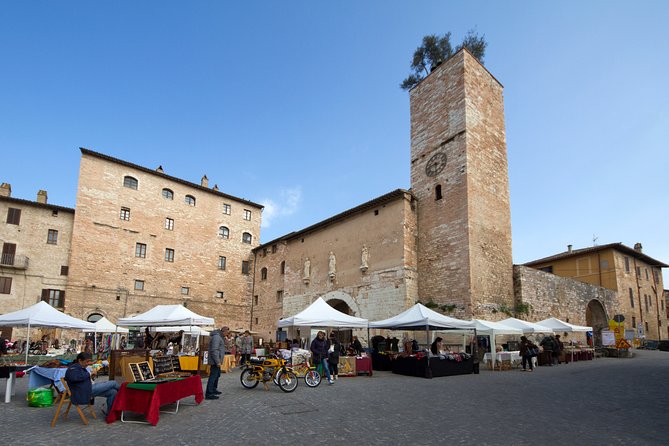
This tour meets you in Spello, at Via Paolina Schicchi Fagotti, 7. You’ll finish up near Venus’ Gate, by Via Torri di Properzio, 37. That end point matters: instead of looping back the same way, you close with a viewpoint tied to the city’s Roman and medieval layers.
Spello is compact, but it’s not flat. The route includes an ascending road, and that changes how you should think about timing. With only about 1 hour 30 minutes, the guide keeps stops tight and focused—so bring water, and treat this as a “high points” visit rather than a slow afternoon stroll.
You can also read our reviews of more tours and experiences in Perugia.

Villa dei Mosaici: where Roman Pompeii-style magic meets Spello
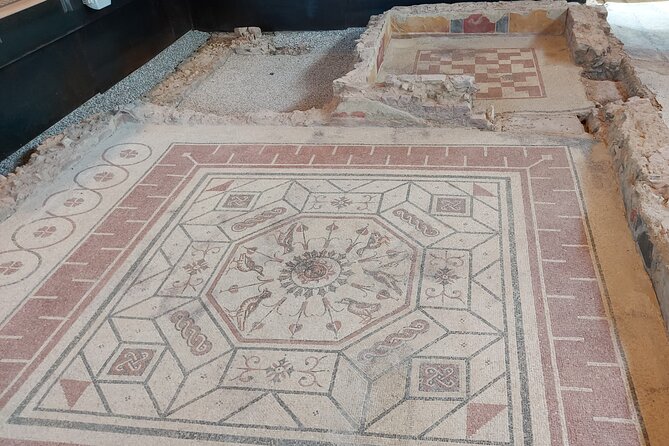
The first stop is Villa dei Mosaici, one of the biggest archaeological finds to come out of the last couple of decades. This place sits inside the ancient Roman setting known as Splendidissima Colonia Julia, a name associated with Emperor Augustus. The idea is simple but powerful: you’re not just looking at beautiful art; you’re seeing how the Romans lived and displayed the countryside they wanted to imagine.
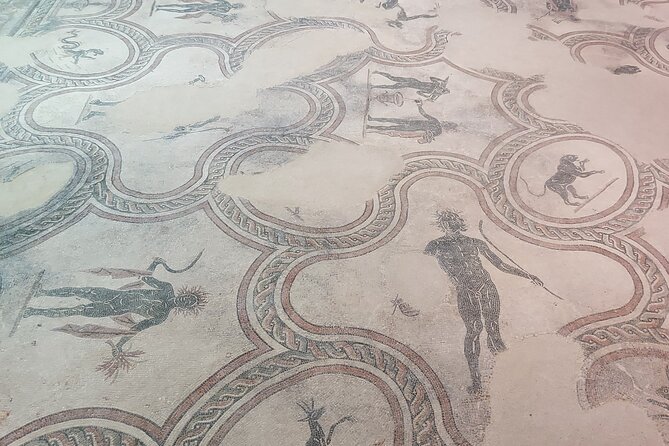
What I like about starting here is that the mosaics give you instant visual language. The scenes connect to Umbrian countryside themes, including wild birds and grape harvest imagery. Then the villa shifts from familiar to surprising, with exotic and fantastic animals—think panthers and sea monsters—woven into the same decorative world. It’s a reminder that Roman tastes were both practical and theatrical.
The time here is about 45 minutes, and the admission ticket is included. That duration is just right for mosaics, because you need a little time to notice how the figures relate to each other and how the colors are meant to read as a whole. If you go too fast, you miss the “story” inside the floor.
A practical note: mosaics are often visually best when you can stay put and look carefully. The guided element helps you slow down without feeling stuck. One review described how the guide brought the mosaics to life even in heat—exactly what you want when the day is hot and you’re trying to focus through discomfort.
Entering medieval Spello through the Roman Porta Consolare
After the villa, you transition into the medieval heart of town, guided by the idea of walking through time. You enter Spello via the Roman Porta Consolare (Consular Gate), and that sets up what comes next: a blend of medieval alleys and major church spaces.
This part of the tour is about getting your bearings. Spello’s street feel can look like any small Umbrian town until you know what layers you’re walking across. Passing through a Roman gate is one of those small moves that instantly makes the town read differently.
From there, the tour focuses on churches tied to Renaissance talent—especially Pinturicchio, often nicknamed the Little Painter. The guide’s job is not just to point out paintings, but to help you understand what you’re actually looking at and why it mattered to people at the time.
Chiesa di Santa Maria Maggiore and Sant’Andrea Apostolo in short time
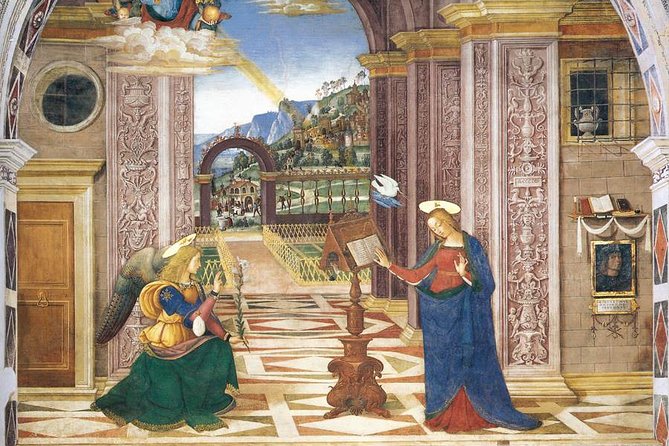
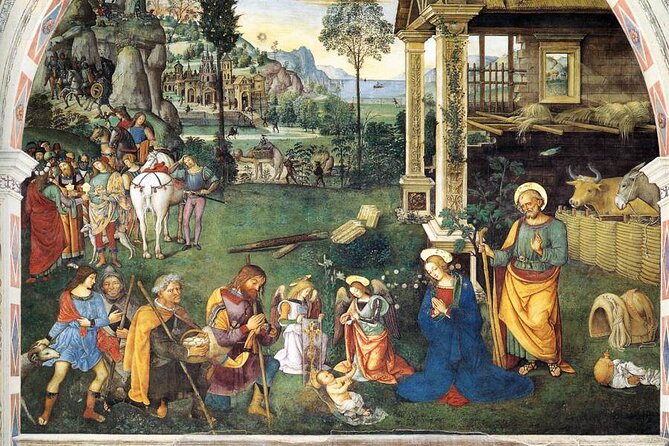
Next up is Chiesa di Santa Maria Maggiore, with a specific stop inside Sant’Andrea Apostolo. This is where the tour turns the volume up on art history. You’ll see a sixteenth-century masterpiece painted by Pinturicchio.
Why this is worth a guided visit: Pinturicchio’s work can feel “busy” if you don’t know what to look for. A prepared guide can help you sort what’s decorative from what’s meaningful, and where to concentrate your attention so you don’t end up with the general impression of beautiful but ungraspable scenes.
This stop is about 15 minutes, and ticket admission is included. Fifteen minutes in a church isn’t long, so you’ll want to treat this as a focused orientation. If you’re hoping for a slow, museum-style reading of every detail, you may still want to come back later on your own. But if your goal is to understand the main highlights without wasting your whole day, this structure makes sense.
Cappella Baglioni: ceramics underfoot and fresco details above
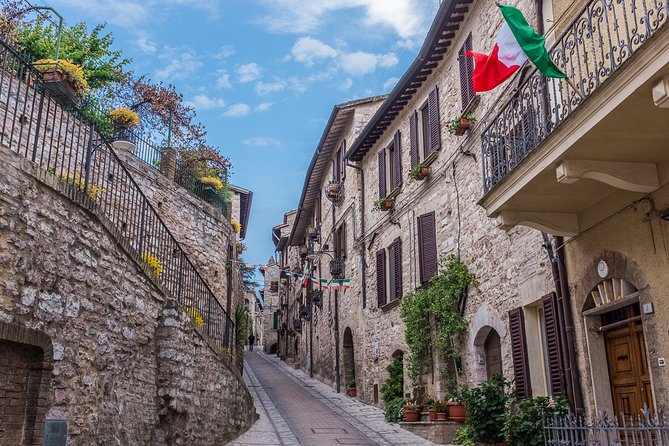
The tour then moves to Cappella Baglioni, also tied to Pinturicchio. This is one of those places where the guide’s interpretation really matters, because the chapel isn’t just a single artwork. It’s a whole environment—frescoes, a distinctive Deruta ceramic floor, and a personal touch from the artist himself.
Here’s what you’ll focus on:
- Pinturicchio’s frescoes in the Baglioni Chapel
- The floor made of Deruta ceramics, which you can actually observe as part of the experience rather than a distant ornament
- The famous self-portrait of Pinturicchio, which adds a human element and makes the artwork feel less anonymous
The tour allotment for this portion is about 15 minutes, and admission is included again. That might sound brief, but it’s timed to keep you moving. In a short-format route like this, the guide can also help you spot the chapel’s “attention points,” like where the self-portrait sits and how the ceramic floor interacts with the visual framing of the space.
One balanced takeaway from feedback I’ve seen on similar short art-focused routes: the art is gorgeous, and the guide preparation really helps—but the history can feel like it could go further if you’re a serious scholar type. If that’s you, use this as the first visit that sparks curiosity, then return later for deeper study.


Torri di Properzio and Porta Venere: a Roman gate plus a medieval skyline
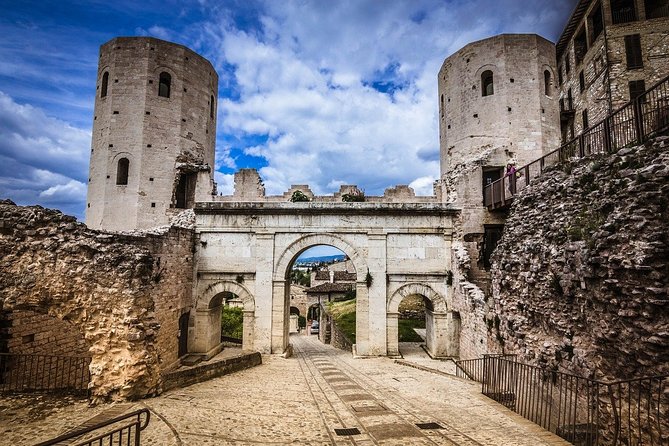
The final stop is Torri di Properzio e Porta Venere. You’ll see Porta Venere, built in Roman times, and then notice how later centuries changed the view. The Roman gate is flanked by the mighty towers of Properzio, shaped by the Middle Ages.
This ending works for two reasons. First, it gives you a different kind of “art”—architecture instead of paint and mosaics. Second, it adds the payoff moment: a breathtaking view of the Umbrian valley.
The time here is about 15 minutes, and tickets are included. Think of this as your last breath of the day: you step back from close-up details and let the town’s structure and scenery make sense together. If your legs are feeling the uphill stretch, this is usually where you’re thankful the tour doesn’t keep dragging.
Value for money: tickets included, guide interpretation, short-and-sweet pacing
At $116.55 per person for about 1 hour 30 minutes, the price looks “serious” until you account for what’s baked in. Admission tickets are included for each stop, including Villa dei Mosaici and the church/chapel sites. That matters because in Italy, entry fees can stack up quickly when you try to DIY multiple interiors.
What you’re also paying for is the “how to look” part. Roman mosaics and Renaissance painting rewards attention. A good guide helps you read scenes instead of just photographing them. One highlight from the guide experience: Serena was singled out for bringing the mosaics and paintings to life, even during a heatwave. That’s not a small thing. In warm weather, you don’t just need information—you need a way to stay focused and comfortable enough to enjoy the art.
Now, the tradeoff: a short private tour means shorter time in each location. If you’re the type who wants to linger—sat on a bench, read every plaque, sketch details—this may feel too compact. But if you want the main threads of Spello’s Roman-to-Renaissance story in one go, the pacing is efficient.
Also worth noting: it’s offered in English, with a mobile ticket, and it’s private, so only your group participates. If you’re traveling with friends who want the same tempo, private format keeps the visit from turning into a rushed line.
How to use this tour even if you also explore on your own
This itinerary is designed like a guided “greatest hits reel,” and that’s useful even if you plan to wander independently afterward.
A smart approach:
- Do this tour first if you want context. Once you know what to look for, your free time in Spello becomes more rewarding.
- If your schedule is tight, use this as your art-and-archaeology anchor, then spend extra time outside the stops on the medieval streets you now understand better.
- If you’re already staying in Spello and you’re planning multiple days, you may find some pieces easy to revisit on your own later—especially since the town is compact and the sites are well-defined.
The tour feels especially worth it if you care about art interpretation. If you only want the mosaic highlight and you’re comfortable learning from signage, you might not need a guide. But if you’re hoping to understand why the scenes were chosen and what the Renaissance artists were doing, the guide adds a lot.
Who should book this private Spello tour
This is a strong fit for:
- People with limited time in Perugia area who want a focused, high-value Spello visit
- Art lovers interested in Pinturicchio, plus the specific experience of the Baglioni Chapel and its floor
- Anyone curious about Roman life beyond walls and gates—mosaics tell a different kind of story
- Travelers who want a private format and can enjoy a steady walking pace with a short uphill segment
It may be less ideal if:
- You prefer long stays inside sites and don’t like time limits
- You have mobility limits that make short uphill stretches hard (the walking includes an ascending road, and the tour is built for movement)
- You want a deep academic lecture; the route is structured to fit into 90 minutes, not a full day
Should you book this tour?
I’d book it if you want the fastest way to connect Roman mosaics with Renaissance painting in a compact town. The mix of Villa dei Mosaici, Pinturicchio sites in Santa Maria Maggiore and the Baglioni Chapel, and the ending at Porta Venere gives you a satisfying arc from ancient to later centuries. And since admission tickets are included, the overall value holds up well for a short visit.
I would skip it if you’re planning a long multi-day stay and you know you’ll do your own slow wandering. Spello is the kind of place where you can absolutely explore independently, and if you’re happy with signage and photos, that could be enough.
If you’re on a time crunch and you want the art to make sense as you walk, this private tour is a smart way to spend your limited hours.
FAQ
How long is the private Spello tour?
It’s about 1 hour 30 minutes.
What does the tour cost?
The price is $116.55 per person.
Is the tour in English?
Yes, it’s offered in English.
Is this tour private?
Yes. It’s private, and only your group participates.
Where does the tour start and end?
It starts at Via Paolina Schicchi Fagotti, 7, 06038 Spello PG, Italy, and ends at Venus’ Gate, by Via Torri di Properzio, 37, 06038 Spello PG, Italy.
What stops are included?
You’ll visit Villa dei Mosaici, Chiesa di Santa Maria Maggiore (including a look at Sant’Andrea Apostolo), Cappella Baglioni, and Torri di Properzio and Porta Venere.
Are admission tickets included?
Yes. Admission tickets are included for the stops listed during the tour.
Does the tour involve walking uphill?
Yes, the walking tour includes an ascending road.
How far in advance should I book?
On average, it’s booked about 52 days in advance.
What is the cancellation policy?
Free cancellation is available. You can cancel up to 24 hours in advance for a full refund. If you cancel less than 24 hours before the start time, the amount paid is not refunded.