REVIEW · PERUGIA
Private Guided Tour of Perugia and its Art Jewels
Book on Viator →Operated by Tour Guide Assisi · Bookable on Viator
Perugia’s stone streets have a way of teaching. This private guided tour strings together some of the city’s most art-forward sights, with time to pause, look closely, and understand what you’re seeing without feeling rushed.
I especially love how the experience is built around major medieval landmarks you can actually see and orient yourself with (not just talk about). I also like the personal, story-rich guiding style that turns architecture and sculpture into something you remember—highlighted again and again in reviews praising Maura Baldoni for making the city feel alive.
One thing to consider: most of the stops are outdoors and walking-focused, so plan on comfortable shoes and a steady pace for the full loop through the center.
In This Review
- Key highlights you’ll care about
- Perugia’s art shows up fast, if you know where to look
- Price and group value for up to 15 people
- A simple walking loop that ends in the city’s photo magnet
- Rocca Paolina: the fortress that explains Perugia’s power
- Piazza Italia: a rebuilt square with a lesson in change
- Giardini Carducci: viewpoints that help you orient the whole city
- Corso Vannucci and Palazzo dei Priori: the elegant spine of Perugia
- Collegio del Cambio: medieval finance with a ticket add-on
- Fontana Maggiore: the medieval masterpiece you’ll keep thinking about
- Cattedrale di San Lorenzo: the facade you judge, the interior you appreciate
- Porta Sole and the photo-friendly medieval corners
- What makes this tour especially good with kids or mixed interests
- Should you book the Private Guided Tour of Perugia and its Art Jewels?
- FAQ
- How long is the private guided tour of Perugia?
- Is this tour in English?
- How many people can be in the private group?
- Where does the tour start and where does it end?
- What ticket format do I get?
- Are entrance tickets included for all stops?
- Do I need private transportation?
- Is this really private?
- What hours is the tour available during the 2026 season?
- Can I cancel for a full refund?
Key highlights you’ll care about
- A private group up to 15 means quieter, more flexible pacing than standard tours
- Rocca Paolina gives instant context for Perugia’s Baglioni-era power
- Fontana Maggiore is the star moment, with major sculptural work by the Pisano brothers
- Corso Vannucci and Palazzo dei Priori viewpoints help you read the city like a map
- One paid add-on is listed (Collegio del Cambio), while most other stops are free
- The guide approach is praised as warm and engaging, including for families
Perugia’s art shows up fast, if you know where to look
Perugia can feel like one long “wait, what is that?” city—in a good way. You’ll see grand facades, carved stone, and views that make you understand why people built right here instead of anywhere else. The tour is smart because it doesn’t treat art as museum-only. It treats it as part of everyday streets.
You’ll walk through the medieval core and keep coming back to a simple theme: Perugia was shaped by power, money, religion, and pride. In about 2 hours 30 minutes, you get a clear backbone for the city. That means when you continue on your own afterward, you won’t just wander—you’ll recognize patterns.
A big plus: the guiding style is repeatedly described as friendly and story-driven. Reviews call out how Maura Baldoni makes connections across history, art, and daily life without turning the whole experience into a lecture. If you like learning that feels like conversation, this fits.
You can also read our reviews of more guided tours in Perugia

Price and group value for up to 15 people

The price is $300.40 per group for up to 15 people, for about 2 hours 30 minutes. That pricing structure is what makes this tour potentially good value.
If your group fills close to the limit, the effective cost per person drops a lot. Even without filling it, it can still be a practical splurge compared with paying separate individual tour fares—especially if you’re traveling with friends or family. The private format matters too: you don’t have a rigid herd pace, and you can spend an extra minute on a detail you care about.
Just keep your expectations aligned: you’re paying for guided interpretation and organization, not for added conveniences like private transportation. So the best value comes when your group is happy to meet, walk, and focus on the art and architecture close up.
A simple walking loop that ends in the city’s photo magnet
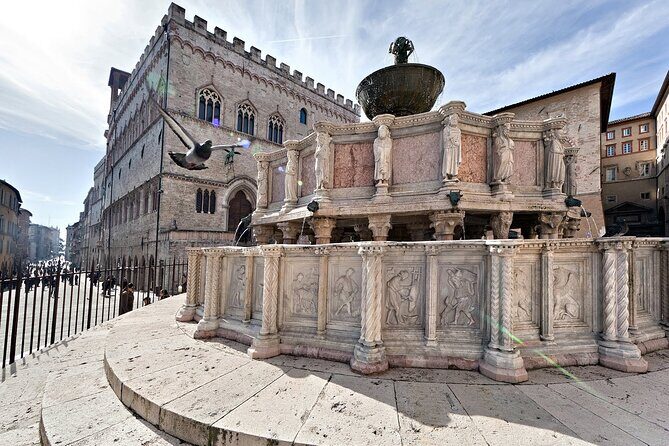
This works as a classic center-city circuit. You start at 06121 Perugia and the tour ends in front of Piazza IV Novembre and the Fontana Maggiore. That ending point is useful because it’s one of the easiest places to continue your day: grab a coffee, browse nearby streets, or branch out toward other sights.
Also, the timing stays realistic. Most stops are short—often around 10 to 25 minutes—so you’re not stuck in long transitions. You’ll get multiple “anchor” moments rather than one big museum detour.
One practical note: private transportation isn’t included, so plan to rely on meeting logistics and public transit nearby (listed for the tour). This is the kind of experience that shines when you’re already comfortable navigating on foot in a historic center.
Rocca Paolina: the fortress that explains Perugia’s power
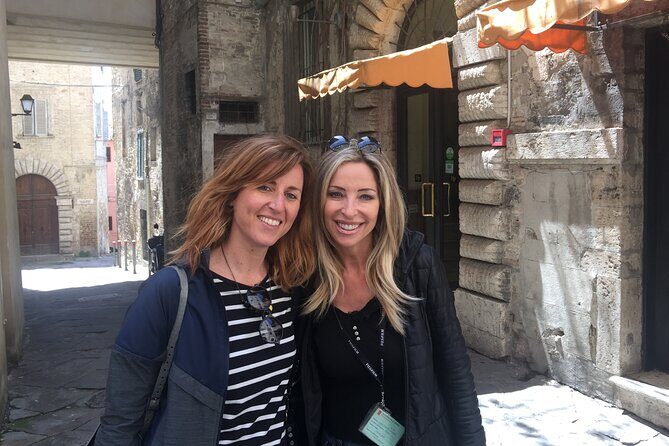
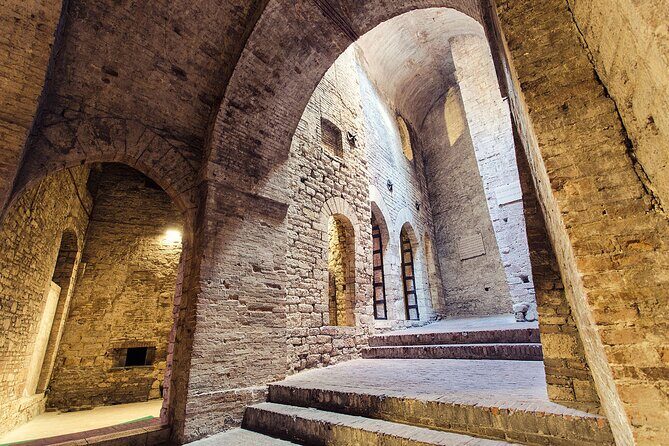
You begin at Rocca Paolina, where Perugia’s political muscle is written into the stone. This is the kind of site that’s hard to appreciate if you pass by it like scenery. With guidance, it turns into a story about control, conflict, and rebuilding—especially during the era when Perugia was a major city of the Baglioni.
Expect an “instant context” stop. You’ll take in the fortress perspective and the idea that this place wasn’t built for decoration. It was built to hold authority. The stop is about 20 minutes, which is long enough to understand the big picture and still keep momentum for the rest of the loop.
Potential drawback: if you’re hoping for lots of indoor time or modern comfort, this is more about the historical structure and what it signaled at the time. Wear shoes you can trust on uneven surfaces.
Piazza Italia: a rebuilt square with a lesson in change
Next comes Piazza Italia, tied to the city’s history of destruction and rebuilding. The tour highlights the fact that this area was recently rebuilt after damage connected to the Rocca. Even if you don’t know the background before you arrive, the guided framing helps you read why the square looks the way it does today.
A roughly 20-minute pause here is valuable because it breaks the tour’s rhythm. You’re not only chasing medieval details—you’re also learning how modern Perugia overlays older layers.
The main benefit is perspective. You’ll see that the city isn’t preserved in a bubble. It has been rebuilt, reshaped, and reinterpreted. That makes later stops—especially the sculptural ones—feel more grounded.
You can also read our reviews of more private tours in Perugia

Giardini Carducci: viewpoints that help you orient the whole city
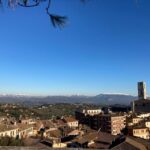
At Giardini Carducci, you get what I think is one of the most practical parts of this tour: a view that helps your brain build a map. From here, you can take in the medieval city structure and look out over the Umbrian Valley.
The stop is short—about 10 minutes—but it’s the kind of short that pays off later. When you look at the streets after this, you’ll understand which lines of movement head where and why some buildings dominate the skyline.
If your group loves photos, this is a good moment to grab them without feeling like you’re interrupting the tour flow.
Corso Vannucci and Palazzo dei Priori: the elegant spine of Perugia
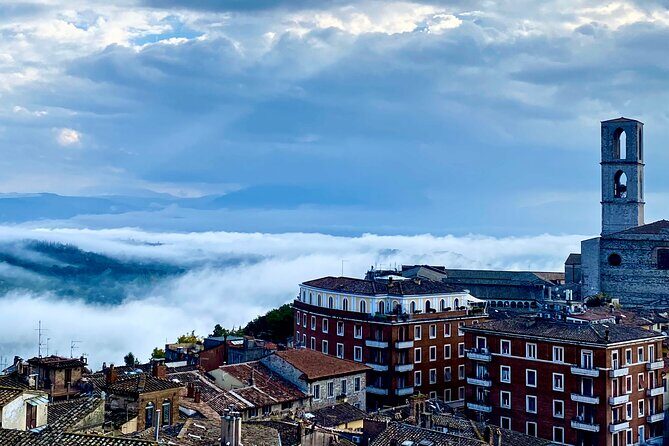
Then you move along Corso Vannucci, Perugia’s elegant promenade. This is where the city’s style becomes obvious. You’re not just seeing random streets—you’re walking a central artery.
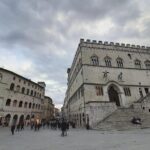
Along the way, you’ll admire Palazzo dei Priori, and the guidance helps you see it as more than a pretty building. It represents civic identity: where authority displayed itself and where important decisions played out.
This portion takes about 15 minutes. It’s long enough for a slow walk, a good look at the facade, and to settle into the city’s tempo. If your group is used to faster tours, this segment feels like a breather without losing meaning.
Collegio del Cambio: medieval finance with a ticket add-on
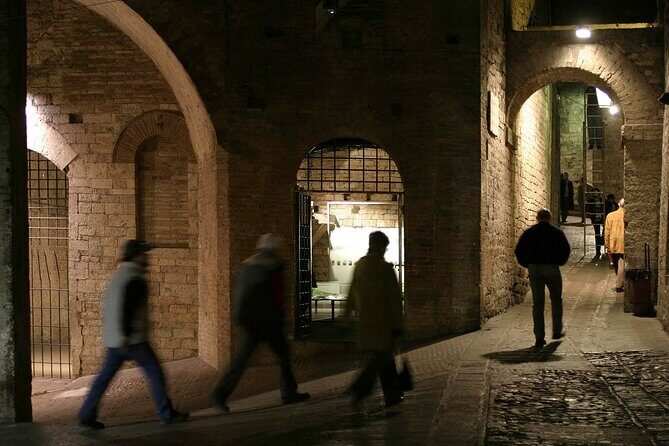
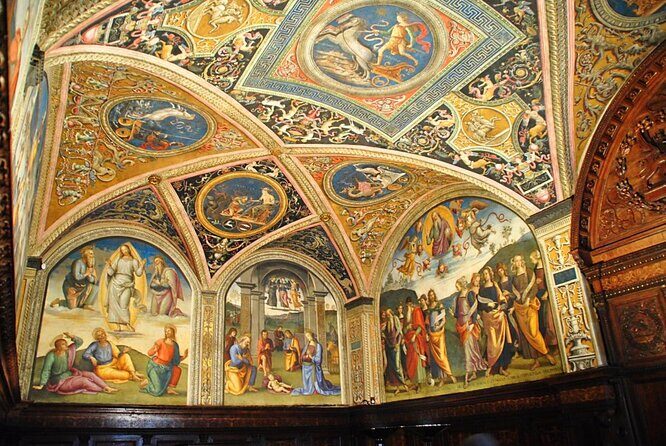
Collegio del Cambio is about 30 minutes and it’s the stop that most clearly signals a shift from public landmarks to a specialized interior experience. The focus here is the medieval banking world and the powerful guild of money changers.
Here’s the practical part: admission is not included. So if you want to go inside, you’ll need to pay the site ticket separately.
This stop can be a hit or miss depending on your tastes. If you like social history—who held power, how trade worked, how money moved—you’ll likely enjoy it a lot. If you prefer purely outdoor views and monument photos, you might find the interior less of a priority than the fountain or cathedral.
Either way, having this stop in the mix adds depth. Perugia isn’t only about churches and statues. It’s also about the people who made the city function.
Fontana Maggiore: the medieval masterpiece you’ll keep thinking about
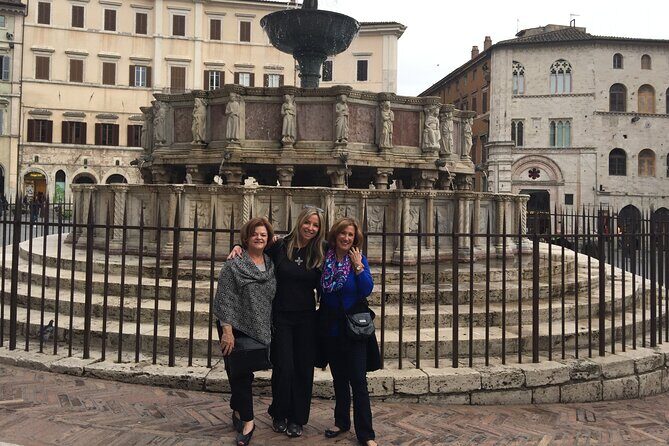
Now for the big one: Fontana Maggiore. It’s described as one of Italy’s most fascinating medieval fountains, and with good reason. You’ll be looking at major sculptural work attributed to Giovanni and Nicola Pisano—and this is the moment where the tour earns its headline.
The time here is about 25 minutes, which is enough to slow down and notice how the fountain isn’t just one “cool” view. It’s layers of detail meant for careful looking. With a guide, you’ll understand the symbolism and why medieval artisans treated fountains like public art statements.
This is also a great stop to ask your guide to point out what you might miss on your own. Stone carvings and sculptural programs can look overwhelming without a guide’s help. The reward is that once you understand what you’re looking at, the fountain becomes memorable rather than just impressive.
Cattedrale di San Lorenzo: the facade you judge, the interior you appreciate
Next is the Cattedrale di San Lorenzo. You’ll admire the cathedral’s fourteenth-century facade first, then the tour shifts to the interior’s style, including a note on delicate Baroque taste inside.
The stop is about 20 minutes. That’s a sweet spot: long enough to take in the exterior character and still get a sense of what changes once you step inside.
If you love architectural contrasts, this cathedral makes sense. A medieval exterior with a later interior style can feel like reading two chapters of the same story. A guide helps you avoid the common trap of focusing only on surface appearance.
Practical tip: if your group includes people who are short on patience, make sure they still spend a few minutes at the facade and then only a brief stretch in the interior. The guided framing helps everyone get something out of the time.
Porta Sole and the photo-friendly medieval corners
Two final stops bring you back to the “walking and looking” part of Perugia.
First is Porta Sole, known for its breathtaking view of the city. The stop is about 10 minutes, and it’s exactly the kind of quick viewpoint that makes the rest of the walk feel meaningful. When you stand somewhere that changes your perspective, you start understanding why the city’s layout matters.
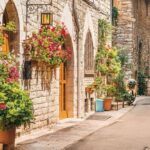
Then you go to Via Maesta delle Volte, a charming alley where you can take unforgettable photos. Expect about 10 minutes here—mostly about atmosphere, angles, and those medieval details you can’t fully plan for.
These two stops are also a smart emotional close. After the heavier “art and meaning” moments—fortress, cathedral, fountain—you end on lighter, more sensory sights. That’s how you keep the day from feeling like nonstop brain work.
What makes this tour especially good with kids or mixed interests
Based on reviews, this guide style works well even when families are along. The common theme is engagement without boredom, plus explanations that don’t talk down. If you have children, this matters. A tour can be educational and still keep energy high.
For adults, the advantage is that each stop has a clear purpose. Even when you’re looking at stone and sculpture, the guidance keeps connecting it to why it exists in the city—civic power, religious art, guild life, or the way Perugia defended itself.
If your group includes a mix—one person who loves art, one who loves history, one who mainly wants photos—this tour gives each person something real to hold onto.
Should you book the Private Guided Tour of Perugia and its Art Jewels?
Book it if you want an efficient, art-focused introduction to Perugia’s medieval core, without dealing with a crowded group pace. It’s especially worth it when:
- you’re traveling with friends or family and can split the per-group cost
- you love city walking tours that explain what you’re seeing
- you care about sculpture and architectural meaning, not just pretty views
- you want a guide who tells stories in a warm, engaging way (Maura Baldoni is repeatedly praised for this)
Skip it or consider adjusting expectations if:
- your group hates walking and wants mostly indoor time
- you prefer very long museum-style visits (this is short stops, big variety)
- you’re not interested in a medieval “finance” stop like Collegio del Cambio, especially since admission isn’t included
If you’re unsure, treat this as your “read the city” tour. After it, you’ll be better equipped to explore Perugia on your own and spot the art details that first made you stop.
FAQ
How long is the private guided tour of Perugia?
It runs for about 2 hours 30 minutes.
Is this tour in English?
Yes, it is offered in English.
How many people can be in the private group?
The tour price is for a group of up to 15 people.
Where does the tour start and where does it end?
It starts at 06121 Perugia, Province of Perugia, Italy, and ends in front of the Fontana Maggiore at Piazza IV Novembre, Perugia.
What ticket format do I get?
You receive a mobile ticket.
Are entrance tickets included for all stops?
Most stops are listed as free admission, but Collegio del Cambio has admission marked as not included.
Do I need private transportation?
Private transportation is not included. The tour is listed as near public transportation, so plan to meet by using local transit and walking.
Is this really private?
Yes. It is a private tour/activity, and only your group will participate.
What hours is the tour available during the 2026 season?
The listed opening hours are 8:00 AM to 5:00 PM, Monday through Sunday, for 03/03/2026 through 12/31/2026.
Can I cancel for a full refund?
Yes. You can cancel up to 24 hours in advance for a full refund.